

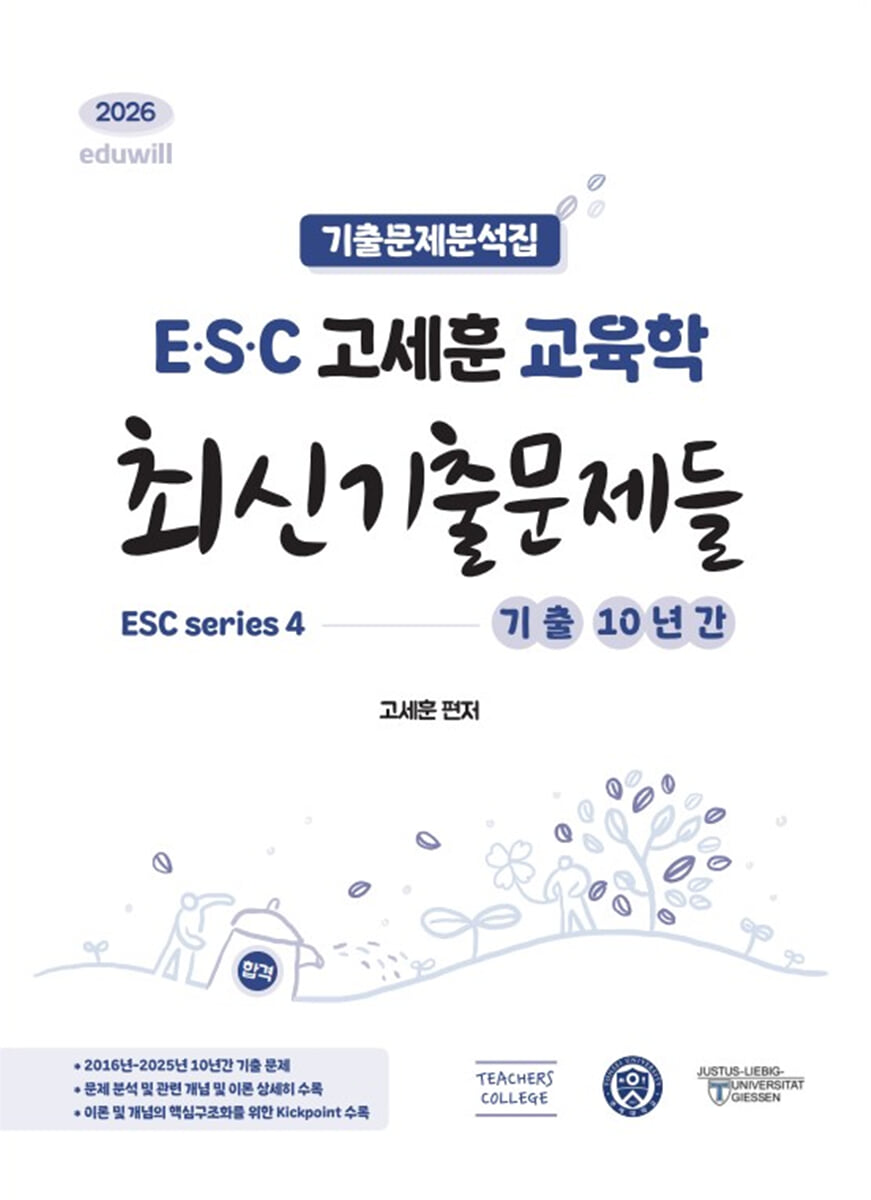
2026 ESC Ko Se-hoon Education Latest Past Exam Questions Series 4
 |
Description
Book Introduction
A Thought on Getting Back to Basics: How to Grow Every Day Without Being Addicted to Routine
We've spent quite a bit of time looking into educational concepts and theories together.
To avoid becoming addicted to that repetitive routine and suffocating from the vagueness of theories and concepts, I'd like to take the time to specifically segment out the forms, content, and meaning of the concepts and theories of education that have been presented over the past seven years.
By breaking down and differentiating how the concepts and theories of education have diversely revealed themselves over time under the name of problems, and sometimes by integrating the broken down pieces back together, we aim to understand the logic behind the questions posed by the concepts and theories of education.
Ironically, I think this process will take us back to perhaps the most fundamental foundations of pedagogical concepts and theories.
So again, I think this will be another daily routine that makes a difference, making our pedagogical understanding and knowledge more solid and more reliable.
So I think it will bring back some tension and healthy anxiety for us, and it will create momentum that will allow us to grow little by little, without getting addicted to the routine.
We are carefully introducing the second book in the ESC series of educational theories by Ko Se-hun.
I hope that through lectures and the teachers' sharp feedback, this book will serve as another passageway for me and you to overcome vague optimism and enter a time where you can feel a more concrete and vivid expectation of life.
As always, I bless all the teachers who are with us and pray for their healthy success...
Viel Glueck! .....
I would like to express my deepest gratitude and appreciation to Ms. Kim Ji-hye, who worked diligently as an assistant teacher and will soon be assigned to the Gwangju Office of Education to fulfill her sacred duty as a public servant, and to Mr. Kim Mu-hwa, who taught students at school and provided various advice and assistance regarding this book.
November 2022, with a hint of winter, from Ko Se-hoon
Ahead of the publication of the second collection of past exam questions
While the first set of recent exam questions covered the seven-year period from 2016 to 2022, the second set of recent exam questions added questions from the last three years (2023-2025), completing a comprehensive analysis of the past exam questions spanning a total of ten years.
Where possible, we've tried to provide detailed, in-depth explanations for each problem, and added kickpoints to help organize key theories and concepts into tables.
Above all, in this revised edition, the questions from previous exams have been rearranged in order of appearance within each category within the field of education.
So I think we'll be able to see a little more specifically how the problems are presented and varied within a certain category.
I hope that through the history of past exam questions, you can gain more understanding and confidence in educational issues, and that you can increase the specificity and depth of your studies. As always, I wish you all the best of luck.
October 2025, winter-like autumn weather, buttoning up my collar, Go Se-hoon's dream
We've spent quite a bit of time looking into educational concepts and theories together.
To avoid becoming addicted to that repetitive routine and suffocating from the vagueness of theories and concepts, I'd like to take the time to specifically segment out the forms, content, and meaning of the concepts and theories of education that have been presented over the past seven years.
By breaking down and differentiating how the concepts and theories of education have diversely revealed themselves over time under the name of problems, and sometimes by integrating the broken down pieces back together, we aim to understand the logic behind the questions posed by the concepts and theories of education.
Ironically, I think this process will take us back to perhaps the most fundamental foundations of pedagogical concepts and theories.
So again, I think this will be another daily routine that makes a difference, making our pedagogical understanding and knowledge more solid and more reliable.
So I think it will bring back some tension and healthy anxiety for us, and it will create momentum that will allow us to grow little by little, without getting addicted to the routine.
We are carefully introducing the second book in the ESC series of educational theories by Ko Se-hun.
I hope that through lectures and the teachers' sharp feedback, this book will serve as another passageway for me and you to overcome vague optimism and enter a time where you can feel a more concrete and vivid expectation of life.
As always, I bless all the teachers who are with us and pray for their healthy success...
Viel Glueck! .....
I would like to express my deepest gratitude and appreciation to Ms. Kim Ji-hye, who worked diligently as an assistant teacher and will soon be assigned to the Gwangju Office of Education to fulfill her sacred duty as a public servant, and to Mr. Kim Mu-hwa, who taught students at school and provided various advice and assistance regarding this book.
November 2022, with a hint of winter, from Ko Se-hoon
Ahead of the publication of the second collection of past exam questions
While the first set of recent exam questions covered the seven-year period from 2016 to 2022, the second set of recent exam questions added questions from the last three years (2023-2025), completing a comprehensive analysis of the past exam questions spanning a total of ten years.
Where possible, we've tried to provide detailed, in-depth explanations for each problem, and added kickpoints to help organize key theories and concepts into tables.
Above all, in this revised edition, the questions from previous exams have been rearranged in order of appearance within each category within the field of education.
So I think we'll be able to see a little more specifically how the problems are presented and varied within a certain category.
I hope that through the history of past exam questions, you can gain more understanding and confidence in educational issues, and that you can increase the specificity and depth of your studies. As always, I wish you all the best of luck.
October 2025, winter-like autumn weather, buttoning up my collar, Go Se-hoon's dream
- You can preview some of the book's contents.
Preview
index
Chapter 01
Fundamentals of Education · 1
(1) Concept of education ·································································································· 3
(2) Types of education ························································································ 5
Chapter 02
Korean Education History · 7
(1) Education in the Three Kingdoms Period ···························································································· 9
(2) Education in the Goryeo Dynasty ····························································································· 10
(3) Education in the Joseon Dynasty ······················································································································· 12
(4) Education during the Enlightenment and Japanese Colonial Periods ···························································· 22
Chapter 03
Western Education History and Philosophy · 27
(1) Ancient education ······················································································· 29
(2) Education in the Middle Ages and the Reformation Period ························································ 33
(3) Modern Education ································································································· 39
(4) Education in the early 20th century ··········································································· 44
(5) Education in the late 20th century ························································································ 50
Chapter 04
Curriculum · 59
(1) Types of Curriculum ············································································· 61
(2) Curriculum theory and curriculum development model ········································································ 70
(3) Organization of the curriculum ············································································· 76
(4) 2009 Revised, 2015 Revised and 2022 Revised Curriculum ················································· 79 Goh Se-Hoon Education
esc series 4 past exam questions analysis collection
Chapter 05
Educational Evaluation · 87
(1) Types of educational evaluation ············································································· 89
(2) Quality of evaluation ················································································· 96
(3) Question Analysis ········································································································· 104
(4) Evaluation of the definitional domain ································································································· 105
Chapter 06
Educational Statistics and Educational Research · 107
(1) Educational Statistics ··································································································· 109
(2) Educational Research ··································································································· 111
Chapter 07
Educational Psychology · 117
(1) Development ············································································································ 119
(2) Individual differences ········································································································· 129
(3) Learning Theory ··································································································· 136
(4) Learning Motivation Theory ································································································ 152
Chapter 08
Life Guidance and Counseling Theory · 157
(1) Life Guidance ··································································································· 159
(2) Career Theory ··································································································· 162
(3) Juvenile Delinquency Counseling ···························································································· 163
(4) Counseling Theory ······································································································ 164Contents
Chapter 09
Educational Methods and Engineering · 177
(1) Systematic approach to teaching and learning model ···························································· 179
(2) Constructivist approach to teaching and learning model ······································································ 193
(3) Teaching Methods ······································································································ 198
(4) Use of teaching media and ICT ················································································· 203
Chapter 10
Education Society and Lifelong Education System · 211
(1) Macro Approach ·················································································· 213
(2) Microscopic approach ·················································································· 227
(3) Educational Inequality and Equality ······················································································· 231
(4) Lifelong education ······································································································ 241
(5) Lifelong Learning System ································································································ 251
Chapter 11
Educational Administration · 267
(1) Concept of educational administration ···························································································· 269
(2) School Organization Theory ··················································································· 275
(3) Job Motivation Theory ················································································ 286
(4) Leadership Theory ······································································································ 291
(5) Decision-making model and education policy ············································································· 296
(6) Scholarship theory ········································································································· 303
(7) Educational Finance Theory ··················································································· 308
(8) Classroom Management Theory ················································································································ 320 Goh Se-Hoon Education
esc series 4 past exam questions analysis collection
Chapter 12
Education-Related Law · 323
(1) System and format of education law ················································································· 325
(2) Regional-level governance system ·················································································································· 326
(3) School-level governance system ············································································ 331
(4) Faculty personnel administration ···························································································· 335
(5) Other educational matters ····························································································· 345
(6) Act on Prevention of and Countermeasures against School Violence ················································· 349
(7) Act on Prevention of and Compensation for School Safety Accidents ············································ 354
(8) Article 31 of the Constitution and the Basic Education Act ·································································································· 355
Fundamentals of Education · 1
(1) Concept of education ·································································································· 3
(2) Types of education ························································································ 5
Chapter 02
Korean Education History · 7
(1) Education in the Three Kingdoms Period ···························································································· 9
(2) Education in the Goryeo Dynasty ····························································································· 10
(3) Education in the Joseon Dynasty ······················································································································· 12
(4) Education during the Enlightenment and Japanese Colonial Periods ···························································· 22
Chapter 03
Western Education History and Philosophy · 27
(1) Ancient education ······················································································· 29
(2) Education in the Middle Ages and the Reformation Period ························································ 33
(3) Modern Education ································································································· 39
(4) Education in the early 20th century ··········································································· 44
(5) Education in the late 20th century ························································································ 50
Chapter 04
Curriculum · 59
(1) Types of Curriculum ············································································· 61
(2) Curriculum theory and curriculum development model ········································································ 70
(3) Organization of the curriculum ············································································· 76
(4) 2009 Revised, 2015 Revised and 2022 Revised Curriculum ················································· 79 Goh Se-Hoon Education
esc series 4 past exam questions analysis collection
Chapter 05
Educational Evaluation · 87
(1) Types of educational evaluation ············································································· 89
(2) Quality of evaluation ················································································· 96
(3) Question Analysis ········································································································· 104
(4) Evaluation of the definitional domain ································································································· 105
Chapter 06
Educational Statistics and Educational Research · 107
(1) Educational Statistics ··································································································· 109
(2) Educational Research ··································································································· 111
Chapter 07
Educational Psychology · 117
(1) Development ············································································································ 119
(2) Individual differences ········································································································· 129
(3) Learning Theory ··································································································· 136
(4) Learning Motivation Theory ································································································ 152
Chapter 08
Life Guidance and Counseling Theory · 157
(1) Life Guidance ··································································································· 159
(2) Career Theory ··································································································· 162
(3) Juvenile Delinquency Counseling ···························································································· 163
(4) Counseling Theory ······································································································ 164Contents
Chapter 09
Educational Methods and Engineering · 177
(1) Systematic approach to teaching and learning model ···························································· 179
(2) Constructivist approach to teaching and learning model ······································································ 193
(3) Teaching Methods ······································································································ 198
(4) Use of teaching media and ICT ················································································· 203
Chapter 10
Education Society and Lifelong Education System · 211
(1) Macro Approach ·················································································· 213
(2) Microscopic approach ·················································································· 227
(3) Educational Inequality and Equality ······················································································· 231
(4) Lifelong education ······································································································ 241
(5) Lifelong Learning System ································································································ 251
Chapter 11
Educational Administration · 267
(1) Concept of educational administration ···························································································· 269
(2) School Organization Theory ··················································································· 275
(3) Job Motivation Theory ················································································ 286
(4) Leadership Theory ······································································································ 291
(5) Decision-making model and education policy ············································································· 296
(6) Scholarship theory ········································································································· 303
(7) Educational Finance Theory ··················································································· 308
(8) Classroom Management Theory ················································································································ 320 Goh Se-Hoon Education
esc series 4 past exam questions analysis collection
Chapter 12
Education-Related Law · 323
(1) System and format of education law ················································································· 325
(2) Regional-level governance system ·················································································································· 326
(3) School-level governance system ············································································ 331
(4) Faculty personnel administration ···························································································· 335
(5) Other educational matters ····························································································· 345
(6) Act on Prevention of and Countermeasures against School Violence ················································· 349
(7) Act on Prevention of and Compensation for School Safety Accidents ············································ 354
(8) Article 31 of the Constitution and the Basic Education Act ·································································································· 355
GOODS SPECIFICS
- Date of issue: October 28, 2025
- Page count, weight, size: 386 pages | 190*260*30mm
- ISBN13: 9791198833723
- ISBN10: 1198833726
You may also like
카테고리
korean


korean

![GQ KOREA Mark (Monthly): December [2025]](http://librairie.coreenne.fr/cdn/shop/files/8ef265dbbfbf186523ed75ba7319009d.jpg?v=1765340328&width=3840)


