

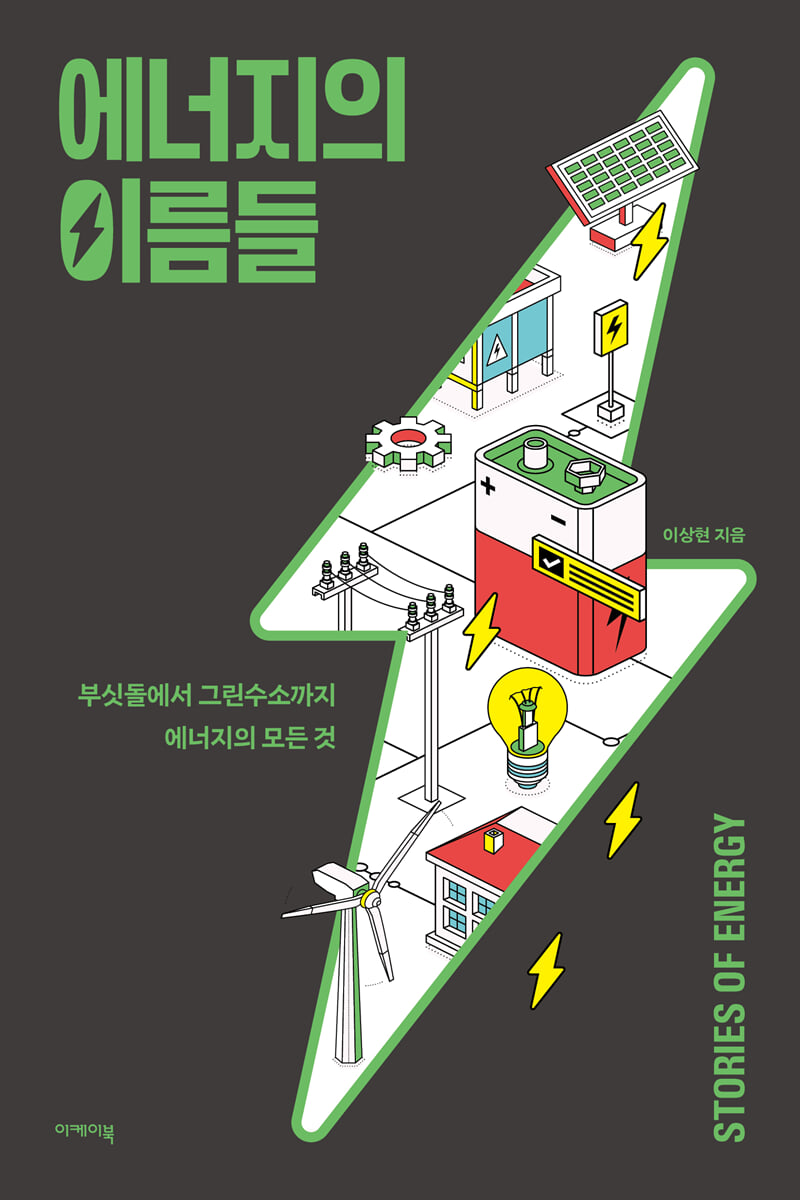
Names of Energy
 |
Description
Book Introduction
Reading a World Connected by Energy
What would happen if even one of the energies we observe around us disappeared from our daily lives? A world without light energy would be filled with darkness.
If there was no thermal energy, we would have to sleep in thick jackets like penguins in the winter.
If electricity disappears, we may have to live like primitive people in the distant past, before we had any home appliances.
If you remove potential energy, streams and rivers will not flow, and the water will stagnate and rot.
Without kinetic energy, basketballs and baseballs would not travel very far and would quickly stop as soon as they leave your hand.
If we take away the sound energy, we can no longer hear the beautiful singing voices of idol singers.
The properties of energy are the driving force that moves the world and the principle that explains natural phenomena.
There are records showing that humans have been using fire for about 1.5 million years.
Since time immemorial, humans have sought and used minimal energy sources to protect themselves from changes and dangers in the external environment and to survive.
The era of capturing fireflies in glass bottles to light up instead of using electric lights is a story so old that it deserves a place in history museums.
When petroleum was first introduced in the late Joseon Dynasty around 1880, the light energy used to light lamps was a surprising discovery that changed the world.
Energy flows along the footsteps of human civilization.
This book follows the journey of various energies used by mankind, revealing the fascinating stories hidden within them one by one.
Let's also imagine together what kind of energy the Earth will use in 10 years, 100 years from now.
What would happen if even one of the energies we observe around us disappeared from our daily lives? A world without light energy would be filled with darkness.
If there was no thermal energy, we would have to sleep in thick jackets like penguins in the winter.
If electricity disappears, we may have to live like primitive people in the distant past, before we had any home appliances.
If you remove potential energy, streams and rivers will not flow, and the water will stagnate and rot.
Without kinetic energy, basketballs and baseballs would not travel very far and would quickly stop as soon as they leave your hand.
If we take away the sound energy, we can no longer hear the beautiful singing voices of idol singers.
The properties of energy are the driving force that moves the world and the principle that explains natural phenomena.
There are records showing that humans have been using fire for about 1.5 million years.
Since time immemorial, humans have sought and used minimal energy sources to protect themselves from changes and dangers in the external environment and to survive.
The era of capturing fireflies in glass bottles to light up instead of using electric lights is a story so old that it deserves a place in history museums.
When petroleum was first introduced in the late Joseon Dynasty around 1880, the light energy used to light lamps was a surprising discovery that changed the world.
Energy flows along the footsteps of human civilization.
This book follows the journey of various energies used by mankind, revealing the fascinating stories hidden within them one by one.
Let's also imagine together what kind of energy the Earth will use in 10 years, 100 years from now.
- You can preview some of the book's contents.
Preview
index
ㆍThis book's structure 4
Energy Classification Table 6 at a Glance
7 Carbon-Neutral Technologies at a Glance
ㆍReading the World Connected by Energy 8
ㆍThe first story: The world of energy that began in nature
1 Energy and Natural Phenomena 29
2 Humans who discovered flint 35
3 Energy in Life 41
4 Types of Energy Consumption 49
5 Two Laws for Understanding Energy 57
6 Natural Natural Energy 62
ㆍSecond Story: Our Old Friend, Natural Resources
1 Black Stone Coal 79
2 Oil that ruled the world 86
3 Natural Gas as Clean Energy 95
4 Nuclear energy source Uranium 102
ㆍThird Story: Mysterious Renewable Energy
1 Renewable Energy for All 122
2 Newly Discovered Energy 138
ㆍFourth Story: Energy Preparing for the Future
1 Clean, Pure Hydrogen 158
2 Final Energy Electricity 166
3 Energy Storage Systems 172
4 Taming Carbon 179
5 Smart Energy Management 186
ㆍFifth Story: Earth's Smiling Energy Habits
1 Energy Efficiency 202
2 Environmental protection is another way to save energy 209
3 Righteous Actions 214
4 We Change the World 220
5 Energy Consumers with Ecological Citizenship 226
ㆍOne Step Toward Energy 232
Reference material 234
Energy Classification Table 6 at a Glance
7 Carbon-Neutral Technologies at a Glance
ㆍReading the World Connected by Energy 8
ㆍThe first story: The world of energy that began in nature
1 Energy and Natural Phenomena 29
2 Humans who discovered flint 35
3 Energy in Life 41
4 Types of Energy Consumption 49
5 Two Laws for Understanding Energy 57
6 Natural Natural Energy 62
ㆍSecond Story: Our Old Friend, Natural Resources
1 Black Stone Coal 79
2 Oil that ruled the world 86
3 Natural Gas as Clean Energy 95
4 Nuclear energy source Uranium 102
ㆍThird Story: Mysterious Renewable Energy
1 Renewable Energy for All 122
2 Newly Discovered Energy 138
ㆍFourth Story: Energy Preparing for the Future
1 Clean, Pure Hydrogen 158
2 Final Energy Electricity 166
3 Energy Storage Systems 172
4 Taming Carbon 179
5 Smart Energy Management 186
ㆍFifth Story: Earth's Smiling Energy Habits
1 Energy Efficiency 202
2 Environmental protection is another way to save energy 209
3 Righteous Actions 214
4 We Change the World 220
5 Energy Consumers with Ecological Citizenship 226
ㆍOne Step Toward Energy 232
Reference material 234
Into the book
It is said to be about 1/80th of the amount of electricity produced by a thermal power plant in one hour.
It is enough to light 100,000 small light bulbs used in kitchens for one hour.
The power of lightning, a natural phenomenon, is simply astonishing.
Not only humans, but even demons fighting against God will not be able to defeat him.
If we could know when and where lightning strikes, it would be great to store it and use it as energy.
--- p.17
Depending on the purpose and method, energy is converted through several stages.
Natural energy starts from primary energy, then changes to secondary energy, and then to final energy.
In some cases, more steps may be required before it becomes available to consumers.
Of course, in this case, the initial energy amount is not transferred to the end.
Because losses occur during the conversion process.
Energy loss occurs due to external interference, such as friction, and is also called energy dissipation.
Electricity is lost as it travels from power plants to homes along kilometers of wire.
This happens because some of it is converted into heat energy due to the resistance that occurs as it passes through the wire.
This is called power loss.
The phenomenon of the fried soboro bread cooling down when it arrives at your home is also an energy loss.
--- p.54
If we look at the principle of the Gyeyoungbae, there is a cylindrical passage in the center of the wine glass.
This passage is connected by two holes, one leading from the inside of the glass to the bottom, and the other through which the alcohol flows out when it reaches a certain level.
When the glass is filled with more than 70% of alcohol, pour it through the hole at the bottom of the glass.
It is designed to open the passage that connects.
The hidden secret of the Gyeyoungbae is the principle of the siphon.
To prevent the alcohol from leaking out, the top of the column inside the glass should be filled to a level that is slightly below the height of the hole.
This is a glass that gives us a glimpse into the wisdom of living a life without greed by using positional energy according to height.
--- p.56
Pikachu in the animated series Pokémon generates electrical energy from its ball.
Pikachu gains chemical energy from food it eats, converts it into electrical energy, and stores it in its balls.
The electricity that fills the ball like a battery is released whenever you use a lightning-like technique.
It can also be charged with an electric shower, like an electric car.
Charmander in Pokémon consumes the same food and converts it into heat energy.
Fireflies, which can breathe fire from their mouths, squirt fuel from their mouths that satisfies the combustion conditions.
Pokémon, which eat food and freely convert energy, are works of imagination.
How great would it be if a device could be developed that could freely convert energy in reality?
Even a discharged smartphone can be revived at any time.
--- p.61
Depending on how much carbon remains, they are classified as anthracite coal, bituminous coal, brown coal, and peat coal.
Lignite is a type of coal that is relatively low in carbon.
When we say coal, we generally mean anthracite coal, which is the type mainly produced in mines in our country.
Thermal power plants in our country use bituminous coal as their primary fuel.
--- p.81
Radiation is a powerful energy source that can kill plants and animals or cause genetic mutations.
It can penetrate paper, wood, and thin concrete walls, causing buildings to collapse, and if it passes through living organisms, it kills or deforms their cells.
Radiation comes from nuclear energy fuel that has undergone a fission process.
It takes 10,000 years to dispose of spent nuclear fuel until its radioactivity stabilizes.
It will take 10,000 years for harmful radiation emissions to stop affecting the ecosystem.
While it has the advantage of being a powerful energy source, it also has the problem of having to safely store waste for a long time.
In short, the nuclear energy we use is a burden that we pass on to future generations over a long period of time, 10,000 years.
--- p.107
The fact that light has both particle and wave properties was proven in 1923 by Arthur Compton (1892-1962).
Compton brought together Newton, Einstein, and Huygens in history and reconciled them.
The secret of the night sky, discovered through long research, is that it is made up of tiny particles of light that possess both wave and particle properties.
Today, look up and observe the night sky carefully.
You will see a twinkling starlight made up of tiny dots.
--- p.145
Hydrogen is being developed for use as a fuel in power plants because it releases a lot of heat energy when burned.
When combined with oxygen, it generates electrical energy and does not emit any greenhouse gases.
Hydrogen-fueled cars are also nicknamed air purifiers on the road because they absorb oxygen to react with hydrogen while also removing pollutants from the air.
Hydrogen cars are a novel and clean energy vehicle of the future that emits only water through the reaction of hydrogen fuel and oxygen.
--- p.148
Carbon-neutral fuel (E-fuel: Electricity-based Fuel) is a type of artificial oil made by synthesizing clean hydrogen with carbon dioxide.
It is created by capturing carbon dioxide emitted from factories or existing in the atmosphere and chemically combining it with clean hydrogen.
Since the carbon dioxide used at this time is collected from the air, using the fuel does not create additional new pollutants.
That's why it's called a carbon-neutral fuel.
This means that even if you use fuel made this way, carbon emissions will not increase.
Carbon neutrality means that the amount of carbon dioxide emitted by humans during their activities is absorbed or eliminated by forests or machines, so that the amount of carbon dioxide remaining in the air becomes '0'.
--- p.163
When forests or woodlands store carbon dioxide through photosynthesis, it is called green carbon.
When organisms in marine ecosystems such as oceans and rivers absorb carbon dioxide, it is called blue carbon.
Carbon, which means carbon, refers to carbon compounds among greenhouse gases.
Plants, which served as mankind's first source of energy as fuel, have since shifted their role to absorbing and storing carbon dioxide.
It is enough to light 100,000 small light bulbs used in kitchens for one hour.
The power of lightning, a natural phenomenon, is simply astonishing.
Not only humans, but even demons fighting against God will not be able to defeat him.
If we could know when and where lightning strikes, it would be great to store it and use it as energy.
--- p.17
Depending on the purpose and method, energy is converted through several stages.
Natural energy starts from primary energy, then changes to secondary energy, and then to final energy.
In some cases, more steps may be required before it becomes available to consumers.
Of course, in this case, the initial energy amount is not transferred to the end.
Because losses occur during the conversion process.
Energy loss occurs due to external interference, such as friction, and is also called energy dissipation.
Electricity is lost as it travels from power plants to homes along kilometers of wire.
This happens because some of it is converted into heat energy due to the resistance that occurs as it passes through the wire.
This is called power loss.
The phenomenon of the fried soboro bread cooling down when it arrives at your home is also an energy loss.
--- p.54
If we look at the principle of the Gyeyoungbae, there is a cylindrical passage in the center of the wine glass.
This passage is connected by two holes, one leading from the inside of the glass to the bottom, and the other through which the alcohol flows out when it reaches a certain level.
When the glass is filled with more than 70% of alcohol, pour it through the hole at the bottom of the glass.
It is designed to open the passage that connects.
The hidden secret of the Gyeyoungbae is the principle of the siphon.
To prevent the alcohol from leaking out, the top of the column inside the glass should be filled to a level that is slightly below the height of the hole.
This is a glass that gives us a glimpse into the wisdom of living a life without greed by using positional energy according to height.
--- p.56
Pikachu in the animated series Pokémon generates electrical energy from its ball.
Pikachu gains chemical energy from food it eats, converts it into electrical energy, and stores it in its balls.
The electricity that fills the ball like a battery is released whenever you use a lightning-like technique.
It can also be charged with an electric shower, like an electric car.
Charmander in Pokémon consumes the same food and converts it into heat energy.
Fireflies, which can breathe fire from their mouths, squirt fuel from their mouths that satisfies the combustion conditions.
Pokémon, which eat food and freely convert energy, are works of imagination.
How great would it be if a device could be developed that could freely convert energy in reality?
Even a discharged smartphone can be revived at any time.
--- p.61
Depending on how much carbon remains, they are classified as anthracite coal, bituminous coal, brown coal, and peat coal.
Lignite is a type of coal that is relatively low in carbon.
When we say coal, we generally mean anthracite coal, which is the type mainly produced in mines in our country.
Thermal power plants in our country use bituminous coal as their primary fuel.
--- p.81
Radiation is a powerful energy source that can kill plants and animals or cause genetic mutations.
It can penetrate paper, wood, and thin concrete walls, causing buildings to collapse, and if it passes through living organisms, it kills or deforms their cells.
Radiation comes from nuclear energy fuel that has undergone a fission process.
It takes 10,000 years to dispose of spent nuclear fuel until its radioactivity stabilizes.
It will take 10,000 years for harmful radiation emissions to stop affecting the ecosystem.
While it has the advantage of being a powerful energy source, it also has the problem of having to safely store waste for a long time.
In short, the nuclear energy we use is a burden that we pass on to future generations over a long period of time, 10,000 years.
--- p.107
The fact that light has both particle and wave properties was proven in 1923 by Arthur Compton (1892-1962).
Compton brought together Newton, Einstein, and Huygens in history and reconciled them.
The secret of the night sky, discovered through long research, is that it is made up of tiny particles of light that possess both wave and particle properties.
Today, look up and observe the night sky carefully.
You will see a twinkling starlight made up of tiny dots.
--- p.145
Hydrogen is being developed for use as a fuel in power plants because it releases a lot of heat energy when burned.
When combined with oxygen, it generates electrical energy and does not emit any greenhouse gases.
Hydrogen-fueled cars are also nicknamed air purifiers on the road because they absorb oxygen to react with hydrogen while also removing pollutants from the air.
Hydrogen cars are a novel and clean energy vehicle of the future that emits only water through the reaction of hydrogen fuel and oxygen.
--- p.148
Carbon-neutral fuel (E-fuel: Electricity-based Fuel) is a type of artificial oil made by synthesizing clean hydrogen with carbon dioxide.
It is created by capturing carbon dioxide emitted from factories or existing in the atmosphere and chemically combining it with clean hydrogen.
Since the carbon dioxide used at this time is collected from the air, using the fuel does not create additional new pollutants.
That's why it's called a carbon-neutral fuel.
This means that even if you use fuel made this way, carbon emissions will not increase.
Carbon neutrality means that the amount of carbon dioxide emitted by humans during their activities is absorbed or eliminated by forests or machines, so that the amount of carbon dioxide remaining in the air becomes '0'.
--- p.163
When forests or woodlands store carbon dioxide through photosynthesis, it is called green carbon.
When organisms in marine ecosystems such as oceans and rivers absorb carbon dioxide, it is called blue carbon.
Carbon, which means carbon, refers to carbon compounds among greenhouse gases.
Plants, which served as mankind's first source of energy as fuel, have since shifted their role to absorbing and storing carbon dioxide.
--- p.209
Publisher's Review
From nature to the future, the story of the forces that have moved humanity.
Our daily lives are driven by various energies, such as light energy, electrical energy, kinetic energy, and thermal energy that we use when we wake up in the morning.
The substances that create this energy are called 'energy resources' or 'energy sources', and they are essential for our survival.
Energy sources are converted into various forms of energy so that they can be utilized anytime, anywhere.
This book divides the process of energy change into five themes, examining the history and future of human energy.
The first story explores the source of energy through natural, natural energy.
The second tells the story of the resources that have sustained human civilization: black coal, the oil that moved the world, natural gas, which leads to clean energy, and even uranium, the raw material for nuclear energy.
Third, we will look at renewable resources such as solar and bio-energy, as well as hydrogen energy and fuel cells, which are attracting new attention.
The fourth topic introduces sustainable energy innovations for future generations.
The final story explores sustainable lifestyles that embrace energy efficiency, environmental protection, just action, and ecological citizenship.
Without energy, nothing happens.
Science is a powerful weapon for understanding and explaining nature.
The disciplines of life science, earth science, physics, and chemistry guide us to understand natural phenomena.
It plays a role similar to a spoon, chopsticks, knife, or fork that helps you eat food deliciously.
Energy is a core concept that appears without fail in all scientific fields.
There are countless phenomena that cannot be explained without energy.
For example, during the life cycle of a plant, light energy is converted into the chemical energy needed for plant growth through photosynthesis using water and carbon dioxide.
Chemical energy is the nutrient for plants.
Water receives heat energy from the atmosphere and evaporates into water vapor. When it loses energy, it condenses and falls to the ground as raindrops.
If you put water in the freezer, it loses energy and turns into ice.
A shooting star in the night sky is a phenomenon in which a small celestial body passes through the Earth's atmosphere and burns up with high heat energy due to friction.
All these processes can be explained by energy.
"Science and Energy": A time to enrich your understanding of energy concepts and consider energy ethics.
To understand energy more fully, we need imagination as well as science.
Each subheading introduces astronomical stories and Greek myths related to energy that fit the theme.
Imagine the origins of energy descending from the sky, and explore how ancient people understood the stars and nature.
… Stories of Mythology and AstronomyㆍPrometheus's Gift, FireㆍThe Mysterious Cup, and the Hidden Potential Energy in the GyeyoungbaeㆍZeus's Gift, PandoraㆍThe Discovery of Light and the Birth of Stars: A Story of Looking at the Essence of Energy from the Perspective of the UniverseㆍNames Given to Stars, ConstellationsㆍBeyond the Earth to the Universe: The Next Energy Stage for HumanityㆍEnergy NomadsㆍThe True Nature of the Sun, the Infinite Energy SourceㆍEnergy Conversion of Pokémon: The Fact that Even Imaginary Beings Move Using Various Types of Energy…
Additionally, we take time to reflect on energy for today and tomorrow through social stories.
Energy is more than just a scientific concept; it is also a matter of social responsibility and choice.
Together with our readers, we explore the energy ethics, environmental issues, and future technologies we face today.
… Turn off the lights for an hour for the Earth, limited materials, resources, gases emitted from the body, etc.
From ecology to carbon neutrality, how much do you know about the climate crisis?
The way living things, including humans, live in nature is called 'ecology'.
‘Energy’ is an essential element that is essential for humankind to eat, wear, and live.
People can't travel or exercise, which they enjoy, if their bodies don't have energy.
In the future, as seen in science fiction movies, the science and technology that efficiently produce and manage energy will become increasingly important to enable numerous robots and machines to move.
The main culprit of the climate crisis is ‘carbon dioxide.’
Just as eating cookies creates waste, using fossil fuels emits carbon dioxide.
He is a villain who is raising the temperature of the Earth.
Carbon dioxide accounts for 0.03% of the atmosphere and is an essential gas for plants to create nutrients through photosynthesis.
However, it is important to maintain a balance so that the use of fossil fuels does not increase carbon dioxide levels.
Greenhouse gases are gases that have the property of trapping heat energy emitted by the Earth.
The Kyoto Protocol, adopted in 1997, stipulated six major greenhouse gases.
Carbon dioxide, methane, nitrous oxide, hydrofluorocarbons, perfluorocarbons, sulfur hexafluoride.
These gases are a major cause of global warming, and the international community is continuing its efforts to reduce them.
Since the beginning of human activity, the amount of carbon dioxide and methane emissions has increased every year due to the use of fossil fuels such as coal and oil, and both are gases containing carbon (C).
'Carbon neutrality' means that the carbon dioxide that we produce when we breathe or drive a car and use electricity is absorbed and eliminated by forests or special machines.
So, in the end, it refers to a state where the amount of carbon dioxide emitted into the air becomes '0'.
Just like if you boil ramen and drink all the broth, food waste becomes '0'.
Let me introduce seven carbon-neutral technologies to protect a clean Earth.
Green remodeling and carbon-neutral buildings, green hydrogen, smart energy management, energy storage systems, space-based solar power generation, carbon capture, utilization, and storage, and carbon-neutral fuels.
Reducing Your Carbon Footprint: From Individuals to Businesses
All living things are interconnected and live together on Earth.
For us who live on Earth, protecting the environment is an indispensable moral responsibility and a promise we must keep.
South Korea emits 15.5 tons of carbon dioxide, a greenhouse gas that increases global temperature, per person per year.
We emit carbon throughout our lives, both at school and at home, including transportation, food, heating and cooling, water, and shopping.
If we make an effort, we can reduce our carbon emissions.
If each and every person reduces their carbon emissions and ecological citizens around the world participate, we can significantly reduce the carbon emissions that are causing the climate crisis.
What about companies that produce energy and manufacture products? The Samcheok coal-fired power plant, which began operation in 2025, emits 12.82 million tons of carbon dioxide annually.
The equivalent amount of carbon dioxide emitted by 830,000 citizens comes from two generators.
It's a huge carbon footprint.
In our country, the top 10 companies account for 46% of all carbon emissions.
No matter how much citizens save and conserve energy, they cannot reduce the carbon emissions emitted by companies.
Carbon reduction must be led by businesses rather than individuals.
If an individual's carbon footprint is like an ant's leg, a corporation's is like a dinosaur's footprint.
'Carbon footprint' refers to the total amount of carbon dioxide emitted directly or indirectly during human activities or the production and consumption of products.
Only by properly understanding science and energy can we accurately identify the culprits of the climate crisis.
If each and every person reduces their carbon emissions and ecological citizens around the world participate, we can significantly reduce the carbon emissions that are causing the climate crisis.
Our daily lives are driven by various energies, such as light energy, electrical energy, kinetic energy, and thermal energy that we use when we wake up in the morning.
The substances that create this energy are called 'energy resources' or 'energy sources', and they are essential for our survival.
Energy sources are converted into various forms of energy so that they can be utilized anytime, anywhere.
This book divides the process of energy change into five themes, examining the history and future of human energy.
The first story explores the source of energy through natural, natural energy.
The second tells the story of the resources that have sustained human civilization: black coal, the oil that moved the world, natural gas, which leads to clean energy, and even uranium, the raw material for nuclear energy.
Third, we will look at renewable resources such as solar and bio-energy, as well as hydrogen energy and fuel cells, which are attracting new attention.
The fourth topic introduces sustainable energy innovations for future generations.
The final story explores sustainable lifestyles that embrace energy efficiency, environmental protection, just action, and ecological citizenship.
Without energy, nothing happens.
Science is a powerful weapon for understanding and explaining nature.
The disciplines of life science, earth science, physics, and chemistry guide us to understand natural phenomena.
It plays a role similar to a spoon, chopsticks, knife, or fork that helps you eat food deliciously.
Energy is a core concept that appears without fail in all scientific fields.
There are countless phenomena that cannot be explained without energy.
For example, during the life cycle of a plant, light energy is converted into the chemical energy needed for plant growth through photosynthesis using water and carbon dioxide.
Chemical energy is the nutrient for plants.
Water receives heat energy from the atmosphere and evaporates into water vapor. When it loses energy, it condenses and falls to the ground as raindrops.
If you put water in the freezer, it loses energy and turns into ice.
A shooting star in the night sky is a phenomenon in which a small celestial body passes through the Earth's atmosphere and burns up with high heat energy due to friction.
All these processes can be explained by energy.
"Science and Energy": A time to enrich your understanding of energy concepts and consider energy ethics.
To understand energy more fully, we need imagination as well as science.
Each subheading introduces astronomical stories and Greek myths related to energy that fit the theme.
Imagine the origins of energy descending from the sky, and explore how ancient people understood the stars and nature.
… Stories of Mythology and AstronomyㆍPrometheus's Gift, FireㆍThe Mysterious Cup, and the Hidden Potential Energy in the GyeyoungbaeㆍZeus's Gift, PandoraㆍThe Discovery of Light and the Birth of Stars: A Story of Looking at the Essence of Energy from the Perspective of the UniverseㆍNames Given to Stars, ConstellationsㆍBeyond the Earth to the Universe: The Next Energy Stage for HumanityㆍEnergy NomadsㆍThe True Nature of the Sun, the Infinite Energy SourceㆍEnergy Conversion of Pokémon: The Fact that Even Imaginary Beings Move Using Various Types of Energy…
Additionally, we take time to reflect on energy for today and tomorrow through social stories.
Energy is more than just a scientific concept; it is also a matter of social responsibility and choice.
Together with our readers, we explore the energy ethics, environmental issues, and future technologies we face today.
… Turn off the lights for an hour for the Earth, limited materials, resources, gases emitted from the body, etc.
From ecology to carbon neutrality, how much do you know about the climate crisis?
The way living things, including humans, live in nature is called 'ecology'.
‘Energy’ is an essential element that is essential for humankind to eat, wear, and live.
People can't travel or exercise, which they enjoy, if their bodies don't have energy.
In the future, as seen in science fiction movies, the science and technology that efficiently produce and manage energy will become increasingly important to enable numerous robots and machines to move.
The main culprit of the climate crisis is ‘carbon dioxide.’
Just as eating cookies creates waste, using fossil fuels emits carbon dioxide.
He is a villain who is raising the temperature of the Earth.
Carbon dioxide accounts for 0.03% of the atmosphere and is an essential gas for plants to create nutrients through photosynthesis.
However, it is important to maintain a balance so that the use of fossil fuels does not increase carbon dioxide levels.
Greenhouse gases are gases that have the property of trapping heat energy emitted by the Earth.
The Kyoto Protocol, adopted in 1997, stipulated six major greenhouse gases.
Carbon dioxide, methane, nitrous oxide, hydrofluorocarbons, perfluorocarbons, sulfur hexafluoride.
These gases are a major cause of global warming, and the international community is continuing its efforts to reduce them.
Since the beginning of human activity, the amount of carbon dioxide and methane emissions has increased every year due to the use of fossil fuels such as coal and oil, and both are gases containing carbon (C).
'Carbon neutrality' means that the carbon dioxide that we produce when we breathe or drive a car and use electricity is absorbed and eliminated by forests or special machines.
So, in the end, it refers to a state where the amount of carbon dioxide emitted into the air becomes '0'.
Just like if you boil ramen and drink all the broth, food waste becomes '0'.
Let me introduce seven carbon-neutral technologies to protect a clean Earth.
Green remodeling and carbon-neutral buildings, green hydrogen, smart energy management, energy storage systems, space-based solar power generation, carbon capture, utilization, and storage, and carbon-neutral fuels.
Reducing Your Carbon Footprint: From Individuals to Businesses
All living things are interconnected and live together on Earth.
For us who live on Earth, protecting the environment is an indispensable moral responsibility and a promise we must keep.
South Korea emits 15.5 tons of carbon dioxide, a greenhouse gas that increases global temperature, per person per year.
We emit carbon throughout our lives, both at school and at home, including transportation, food, heating and cooling, water, and shopping.
If we make an effort, we can reduce our carbon emissions.
If each and every person reduces their carbon emissions and ecological citizens around the world participate, we can significantly reduce the carbon emissions that are causing the climate crisis.
What about companies that produce energy and manufacture products? The Samcheok coal-fired power plant, which began operation in 2025, emits 12.82 million tons of carbon dioxide annually.
The equivalent amount of carbon dioxide emitted by 830,000 citizens comes from two generators.
It's a huge carbon footprint.
In our country, the top 10 companies account for 46% of all carbon emissions.
No matter how much citizens save and conserve energy, they cannot reduce the carbon emissions emitted by companies.
Carbon reduction must be led by businesses rather than individuals.
If an individual's carbon footprint is like an ant's leg, a corporation's is like a dinosaur's footprint.
'Carbon footprint' refers to the total amount of carbon dioxide emitted directly or indirectly during human activities or the production and consumption of products.
Only by properly understanding science and energy can we accurately identify the culprits of the climate crisis.
If each and every person reduces their carbon emissions and ecological citizens around the world participate, we can significantly reduce the carbon emissions that are causing the climate crisis.
GOODS SPECIFICS
- Date of issue: November 11, 2025
- Page count, weight, size: 240 pages | 140*210*20mm
- ISBN13: 9791186222782
- ISBN10: 1186222786
You may also like
카테고리
korean


korean

![GQ KOREA Mark (Monthly): December [2025]](http://librairie.coreenne.fr/cdn/shop/files/8ef265dbbfbf186523ed75ba7319009d.jpg?v=1765340328&width=3840)


