

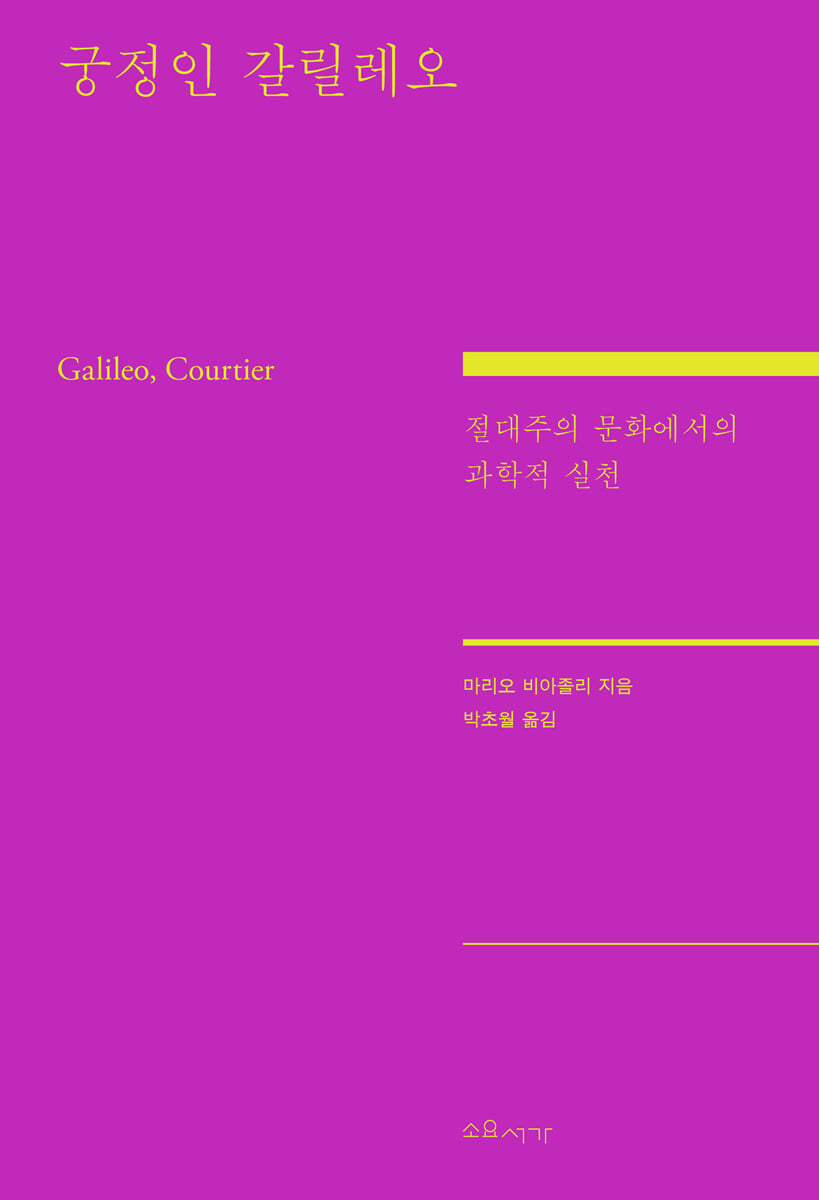
Galileo, the courtier
 |
Description
Book Introduction
Galileo became a courtier
Reinventing himself as 'the philosopher and mathematician of the Grand Duke'.
Mario Biaggioli's 『Galileo the Courtier』 (1993), considered a classic in the history of science, has been translated and published in Korea for the first time in 32 years.
This book analyzes, through a wealth of primary sources, how Galileo justified Copernicanism and mathematical natural philosophy within the absolutist court culture.
This book does not portray an indomitable hero who defended the truth against religious persecution.
It tells of Galileo, a 'courtier' who strategically exploited the complex patronage networks of absolutist court society.
Scientific truth is not achieved through the activity of pure reason in a transparent vacuum.
It is constructed within a social and political context.
The real story of Galileo is right here.
Just as important as his scientific discoveries is how he reconstructed his social identity.
After discovering Jupiter's moons with a telescope he had personally improved, Galileo dedicated them to the Medici family and in return received the unprecedented title of "Philosopher and Mathematician to the Grand Duke."
During the period when Aristotelian philosophy was dominant, mathematicians were not even qualified to discuss the principles of the universe.
However, Galileo opened up new scientific possibilities through the institutional foundation of the Medici court and the authority of the monarch.
Biazzoli meticulously reconstructs this process, showing that the birth of modern science was not simply the emergence of new observational tools or theories, but rather a fundamental shift in the social position and legitimation of knowledge producers.
Reinventing himself as 'the philosopher and mathematician of the Grand Duke'.
Mario Biaggioli's 『Galileo the Courtier』 (1993), considered a classic in the history of science, has been translated and published in Korea for the first time in 32 years.
This book analyzes, through a wealth of primary sources, how Galileo justified Copernicanism and mathematical natural philosophy within the absolutist court culture.
This book does not portray an indomitable hero who defended the truth against religious persecution.
It tells of Galileo, a 'courtier' who strategically exploited the complex patronage networks of absolutist court society.
Scientific truth is not achieved through the activity of pure reason in a transparent vacuum.
It is constructed within a social and political context.
The real story of Galileo is right here.
Just as important as his scientific discoveries is how he reconstructed his social identity.
After discovering Jupiter's moons with a telescope he had personally improved, Galileo dedicated them to the Medici family and in return received the unprecedented title of "Philosopher and Mathematician to the Grand Duke."
During the period when Aristotelian philosophy was dominant, mathematicians were not even qualified to discuss the principles of the universe.
However, Galileo opened up new scientific possibilities through the institutional foundation of the Medici court and the authority of the monarch.
Biazzoli meticulously reconstructs this process, showing that the birth of modern science was not simply the emergence of new observational tools or theories, but rather a fundamental shift in the social position and legitimation of knowledge producers.
- You can preview some of the book's contents.
Preview
index
● Acknowledgements
Prologue: Courtly Culture and the Justification of Science
● Chapter 1 Galileo's Self-Formation
Chapter 2 Discovery and Etiquette
● Chapter 3: Anatomy of a Court Debate
Chapter 4: The Anthropology of Incommensurability
● Interlude: The World's Theater, Rome
Chapter 5: The Comet of the Court
Chapter 6: Structuring Galileo's Trial
● From Epilogue Sponsorship to the Academy: A Hypothesis
Translator's Note
● References
● Search
Prologue: Courtly Culture and the Justification of Science
● Chapter 1 Galileo's Self-Formation
Chapter 2 Discovery and Etiquette
● Chapter 3: Anatomy of a Court Debate
Chapter 4: The Anthropology of Incommensurability
● Interlude: The World's Theater, Rome
Chapter 5: The Comet of the Court
Chapter 6: Structuring Galileo's Trial
● From Epilogue Sponsorship to the Academy: A Hypothesis
Translator's Note
● References
● Search
Into the book
For dramatic changes in cosmology to be embraced, the very system of disciplines studying the universe had to be drastically reorganized.
As you know, this has been a very long process.
Ultimately, the legitimization of Copernican astronomy meant that the hierarchical reorganization of the liberal arts had succeeded, and accordingly, the social status of mathematicians also rose.
...
While the traditional hierarchy of disciplines was firmly accepted within the university, things were different at court.
The court was a place where status was determined by the favor of the monarch, not by the discipline to which one belonged.
--- p.26
Galileo used two methods alternately.
He used the resources he could obtain from the Medici without embarrassing them, thereby gaining their trust, and he used the consent he gained to further strengthen his relationship with them and connect his discoveries to their image.
By the end of this process, Galileo had slowly hitched his carriage to the Medici.
More importantly, they used their power in this process.
--- p.294
Galileo's argument shocked not only Aristotle's theory of motion and change based on the elements, but also his concept of argument.
Aristotelians viewed buoyancy as an instance of natural motion, but Galileo limited the scope of Aristotle's concept of natural motion and thus questioned the classification of causes that the Aristotelians had developed within their cosmological framework.
--- p.402~403
The objects that mathematics was suited to deal with were abstract entities.
The truth of mathematical theorems could not be transferred from the realm of mathematics to the realm of physics, that is, from immaterial to material existence.
Likewise, mathematicians were considered to remain within the boundaries of static and kinematic analysis of natural phenomena.
In reality, mathematics (being an abstract, i.e. non-physical, discipline) could not explain the causes of change, or more specifically, the causes of motion.
Such an explanation required corresponding physical principles, and that was the province of philosophy, not mathematics.
One of the points on which the Aristotelians criticized Galileo was that he was not qualified to provide sound physical principles to support his claims and arguments.
--- p.460
We can revisit the question of whether Galileo's commitment to Copernicanism was the cause or the effect of his move to the court.
As some readers may have noticed, I have avoided framing this question in terms of 'cause and effect'... Thanks to Copernicus, Galileo secured the foundation he needed to present himself as a philosopher rather than a mathematician, and at the same time, to actually obtain that title at court.
In a sense, Copernicanism was a 'natural' choice for those, like Galileo, who aspired to high social and professional status, and the court was the most suitable social space to legitimize such an unusual socio-professional identity.
--- p.471~472
The court patronage system ultimately brought Galileo's career to a dramatic end, but it also provided him with a powerful foundation in the process.
Even when things went against him, as they did in 1616 when Copernicus's books were banned, Galileo might have been in much more serious trouble if he had not cultivated such connections with so many cardinals, high clergy, and Roman nobles.
The fact that Galileo's name was not mentioned in the 1616 judgment may have been due to the enormous privileges he received as a philosopher of the Grand Duke.
--- p.522~523
We would like to examine the sponsor-dependent aspect that the existing interpretation did not pay attention to in the trial.
The following analysis will focus on two dimensions of the decline of the gun barrel.
The first dimension is that the monarch used the rhetoric of betrayal to justify the removal of a once close vassal.
The second dimension is that, in order to maintain the image of absolute monarchy, the fall of the magnate also had to be seen as 'absolute': terrible, irreversible, and very firmly decided.
--- p.698
The Galileo trial was not a trial in the modern sense.
Like most 'falls of the barrel', it was nothing short of a sacrificial ritual.
Precisely because of his closeness to the Pope, Galileo could not have been a normal defendant.
There could not have been any discourse that would have revealed the 'humanity' and weakness of the sponsor who allowed such a vile person to approach him.
--- p.718
Rome was not only the seat of the most important monarchical court in Italy, but also a place where patronage was more intertwined and where power, for better or worse, was exercised more frequently than anywhere else, due to the periodic shifts in power structures caused by the frequent change of popes.
The unique character and power of the Roman court were highly attractive to any ambitious vassal, but Galileo had another reason to seek strong patronage with Rome.
Galileo attempted to reinterpret the papal monarch's scriptures (the Bible) to justify his new socio-professional identity, Copernicanism, and mathematical analysis of the physical world.
As a result, Galileo could gain more from Roman patronage than other vassals, but for the same reason he could also lose more.
As you know, this has been a very long process.
Ultimately, the legitimization of Copernican astronomy meant that the hierarchical reorganization of the liberal arts had succeeded, and accordingly, the social status of mathematicians also rose.
...
While the traditional hierarchy of disciplines was firmly accepted within the university, things were different at court.
The court was a place where status was determined by the favor of the monarch, not by the discipline to which one belonged.
--- p.26
Galileo used two methods alternately.
He used the resources he could obtain from the Medici without embarrassing them, thereby gaining their trust, and he used the consent he gained to further strengthen his relationship with them and connect his discoveries to their image.
By the end of this process, Galileo had slowly hitched his carriage to the Medici.
More importantly, they used their power in this process.
--- p.294
Galileo's argument shocked not only Aristotle's theory of motion and change based on the elements, but also his concept of argument.
Aristotelians viewed buoyancy as an instance of natural motion, but Galileo limited the scope of Aristotle's concept of natural motion and thus questioned the classification of causes that the Aristotelians had developed within their cosmological framework.
--- p.402~403
The objects that mathematics was suited to deal with were abstract entities.
The truth of mathematical theorems could not be transferred from the realm of mathematics to the realm of physics, that is, from immaterial to material existence.
Likewise, mathematicians were considered to remain within the boundaries of static and kinematic analysis of natural phenomena.
In reality, mathematics (being an abstract, i.e. non-physical, discipline) could not explain the causes of change, or more specifically, the causes of motion.
Such an explanation required corresponding physical principles, and that was the province of philosophy, not mathematics.
One of the points on which the Aristotelians criticized Galileo was that he was not qualified to provide sound physical principles to support his claims and arguments.
--- p.460
We can revisit the question of whether Galileo's commitment to Copernicanism was the cause or the effect of his move to the court.
As some readers may have noticed, I have avoided framing this question in terms of 'cause and effect'... Thanks to Copernicus, Galileo secured the foundation he needed to present himself as a philosopher rather than a mathematician, and at the same time, to actually obtain that title at court.
In a sense, Copernicanism was a 'natural' choice for those, like Galileo, who aspired to high social and professional status, and the court was the most suitable social space to legitimize such an unusual socio-professional identity.
--- p.471~472
The court patronage system ultimately brought Galileo's career to a dramatic end, but it also provided him with a powerful foundation in the process.
Even when things went against him, as they did in 1616 when Copernicus's books were banned, Galileo might have been in much more serious trouble if he had not cultivated such connections with so many cardinals, high clergy, and Roman nobles.
The fact that Galileo's name was not mentioned in the 1616 judgment may have been due to the enormous privileges he received as a philosopher of the Grand Duke.
--- p.522~523
We would like to examine the sponsor-dependent aspect that the existing interpretation did not pay attention to in the trial.
The following analysis will focus on two dimensions of the decline of the gun barrel.
The first dimension is that the monarch used the rhetoric of betrayal to justify the removal of a once close vassal.
The second dimension is that, in order to maintain the image of absolute monarchy, the fall of the magnate also had to be seen as 'absolute': terrible, irreversible, and very firmly decided.
--- p.698
The Galileo trial was not a trial in the modern sense.
Like most 'falls of the barrel', it was nothing short of a sacrificial ritual.
Precisely because of his closeness to the Pope, Galileo could not have been a normal defendant.
There could not have been any discourse that would have revealed the 'humanity' and weakness of the sponsor who allowed such a vile person to approach him.
--- p.718
Rome was not only the seat of the most important monarchical court in Italy, but also a place where patronage was more intertwined and where power, for better or worse, was exercised more frequently than anywhere else, due to the periodic shifts in power structures caused by the frequent change of popes.
The unique character and power of the Roman court were highly attractive to any ambitious vassal, but Galileo had another reason to seek strong patronage with Rome.
Galileo attempted to reinterpret the papal monarch's scriptures (the Bible) to justify his new socio-professional identity, Copernicanism, and mathematical analysis of the physical world.
As a result, Galileo could gain more from Roman patronage than other vassals, but for the same reason he could also lose more.
--- p.732~733
Publisher's Review
Galileo, designing his own position.
From Mathematician to Philosopher: Strategies for Social Ascent
The academic world of 16th and 17th century Europe was structured according to a strict hierarchy.
Natural philosophers had the exclusive right to investigate the nature and causes of the universe, while mathematicians were merely technicians who calculated and predicted the movements of celestial bodies.
Because mathematics was considered a discipline that dealt with abstract entities, it was not qualified to explain the causes of the physical world.
Biagioli places Galileo within the context of this academic hierarchy.
For Galileo, who started out as a mathematician, simply presenting observational evidence was not enough to justify his cosmological claims.
He needed a social status that would allow him to be recognized as a philosopher.
The naming of the four celestial bodies orbiting Jupiter as the "Medici Stars" and their dedication to Cosimo II was both an astronomical discovery and a political gift.
This discovery earned Galileo the unprecedented title of "philosopher and mathematician to the Grand Duke," finally giving him the social authority to speak out about the structure of the universe.
The Court as a Stage: Science and Spectacle
With his new title, Galileo became active in the court.
He held telescope demonstrations to show the celestial bodies to the nobility, and gave spectacular performances using experiments and observations in the buoyancy and sunspot debates.
His style of argument was not simply one of academic proof, but a kind of performance that shone with rhetorical skills to ridicule his opponents and persuade his audience.
The court was a dual space for Galileo.
On the one hand, it was a social stage for unfolding a new natural philosophy, but on the other hand, it was an unstable foundation subject to the whims of the monarch.
The Archduke's favor provided him with a powerful source of patronage, but the logic of the patronage system ultimately led to Galileo's dramatic downfall.
When Copernicus's books were banned in 1616, Galileo's position as philosopher to the Grand Duke saved him from great trouble.
But the humiliation he had to endure at the trial in 1633 was not unrelated to the cruel ritual of court politics: the downfall of the favorites.
How does a paradigm shift occur?
A century after Copernicus proposed the heliocentric theory, the theory was still discussed only among a small number of scholars.
By the time of Galileo, the heliocentric theory had entered a new phase, and it was not simply thanks to telescopic observations.
Observational evidence was necessary but not sufficient.
The question Biagioli raises is clear.
Is scientific argument alone sufficient for a new scientific theory to replace an existing system? Galileo's case shows otherwise.
For Copernicanism to be accepted, the very hierarchy of academic disciplines had to be reorganized.
Mathematicians had to be elevated from mere calculators to philosophers who explain the principles of nature.
Galileo used the authority of the Medici court as a springboard to drive these changes.
The key point this book reveals is that the production and reception of knowledge operate simultaneously on both epistemological and social levels.
Galileo proposed a new methodology of observation and experimentation, but negotiations with Aristotelians were necessary to gain recognition for the legitimacy of his methodology.
Unlike universities, the royal court was a space where the traditional academic hierarchy was relatively flexible, and where the monarch's authority could guarantee the legitimacy of knowledge.
For a new science to emerge, a new social identity for scientists was also necessary.
New horizons in the study of the history of science
Since its publication in 1993, this book has been cited over 1,000 times and has become a classic in the fields of history of science and science and technology studies.
Biazzoli's originality lies in his unprecedented reconstruction of Galileo.
In analyzing Galileo's career, he reads the relationship between the social and epistemic legitimation of science in the language of power.
The Galileo he portrays is a strategist who uses various sources of support to rise to the upper ranks of the epistemological and socio-professional hierarchy.
Through this, Viazzoli traces the emergence of a non-dogmatic form of scientific discourse after the disappearance of the social system of science based on patronage networks, the culture of debate with the nature of entertainment and performance, and the concept of trust based on personal relationships.
Biazzoli's analysis presents scientific revolutions not as a simple replacement of theories, but as a process in which the social conditions of knowledge production are reorganized.
This provided a new paradigm for the study of the history of science and has since become an important reference point for numerous researchers exploring the relationship between science and society.
How is truth recognized?
Today, science operates within a complex network of sponsorship among universities, research institutes, corporations, and governments.
Research funding, patent competition, academic politics, and securing public trust are realities facing modern scientists.
Galileo's story remains relevant in that the production and justification of scientific knowledge is not purely epistemological.
This book provides deep insights into how science operates within society and under what conditions new knowledge is justified.
It is a must-read for those studying the history, philosophy, and science and technology studies, and will be a fascinating case study for anyone interested in the relationship between knowledge and power.
Above all, this book asks us:
How is truth recognized? What role do social and political factors play in this process? These questions remain relevant even today.
From Mathematician to Philosopher: Strategies for Social Ascent
The academic world of 16th and 17th century Europe was structured according to a strict hierarchy.
Natural philosophers had the exclusive right to investigate the nature and causes of the universe, while mathematicians were merely technicians who calculated and predicted the movements of celestial bodies.
Because mathematics was considered a discipline that dealt with abstract entities, it was not qualified to explain the causes of the physical world.
Biagioli places Galileo within the context of this academic hierarchy.
For Galileo, who started out as a mathematician, simply presenting observational evidence was not enough to justify his cosmological claims.
He needed a social status that would allow him to be recognized as a philosopher.
The naming of the four celestial bodies orbiting Jupiter as the "Medici Stars" and their dedication to Cosimo II was both an astronomical discovery and a political gift.
This discovery earned Galileo the unprecedented title of "philosopher and mathematician to the Grand Duke," finally giving him the social authority to speak out about the structure of the universe.
The Court as a Stage: Science and Spectacle
With his new title, Galileo became active in the court.
He held telescope demonstrations to show the celestial bodies to the nobility, and gave spectacular performances using experiments and observations in the buoyancy and sunspot debates.
His style of argument was not simply one of academic proof, but a kind of performance that shone with rhetorical skills to ridicule his opponents and persuade his audience.
The court was a dual space for Galileo.
On the one hand, it was a social stage for unfolding a new natural philosophy, but on the other hand, it was an unstable foundation subject to the whims of the monarch.
The Archduke's favor provided him with a powerful source of patronage, but the logic of the patronage system ultimately led to Galileo's dramatic downfall.
When Copernicus's books were banned in 1616, Galileo's position as philosopher to the Grand Duke saved him from great trouble.
But the humiliation he had to endure at the trial in 1633 was not unrelated to the cruel ritual of court politics: the downfall of the favorites.
How does a paradigm shift occur?
A century after Copernicus proposed the heliocentric theory, the theory was still discussed only among a small number of scholars.
By the time of Galileo, the heliocentric theory had entered a new phase, and it was not simply thanks to telescopic observations.
Observational evidence was necessary but not sufficient.
The question Biagioli raises is clear.
Is scientific argument alone sufficient for a new scientific theory to replace an existing system? Galileo's case shows otherwise.
For Copernicanism to be accepted, the very hierarchy of academic disciplines had to be reorganized.
Mathematicians had to be elevated from mere calculators to philosophers who explain the principles of nature.
Galileo used the authority of the Medici court as a springboard to drive these changes.
The key point this book reveals is that the production and reception of knowledge operate simultaneously on both epistemological and social levels.
Galileo proposed a new methodology of observation and experimentation, but negotiations with Aristotelians were necessary to gain recognition for the legitimacy of his methodology.
Unlike universities, the royal court was a space where the traditional academic hierarchy was relatively flexible, and where the monarch's authority could guarantee the legitimacy of knowledge.
For a new science to emerge, a new social identity for scientists was also necessary.
New horizons in the study of the history of science
Since its publication in 1993, this book has been cited over 1,000 times and has become a classic in the fields of history of science and science and technology studies.
Biazzoli's originality lies in his unprecedented reconstruction of Galileo.
In analyzing Galileo's career, he reads the relationship between the social and epistemic legitimation of science in the language of power.
The Galileo he portrays is a strategist who uses various sources of support to rise to the upper ranks of the epistemological and socio-professional hierarchy.
Through this, Viazzoli traces the emergence of a non-dogmatic form of scientific discourse after the disappearance of the social system of science based on patronage networks, the culture of debate with the nature of entertainment and performance, and the concept of trust based on personal relationships.
Biazzoli's analysis presents scientific revolutions not as a simple replacement of theories, but as a process in which the social conditions of knowledge production are reorganized.
This provided a new paradigm for the study of the history of science and has since become an important reference point for numerous researchers exploring the relationship between science and society.
How is truth recognized?
Today, science operates within a complex network of sponsorship among universities, research institutes, corporations, and governments.
Research funding, patent competition, academic politics, and securing public trust are realities facing modern scientists.
Galileo's story remains relevant in that the production and justification of scientific knowledge is not purely epistemological.
This book provides deep insights into how science operates within society and under what conditions new knowledge is justified.
It is a must-read for those studying the history, philosophy, and science and technology studies, and will be a fascinating case study for anyone interested in the relationship between knowledge and power.
Above all, this book asks us:
How is truth recognized? What role do social and political factors play in this process? These questions remain relevant even today.
GOODS SPECIFICS
- Date of issue: October 1, 2025
- Page count, weight, size: 836 pages | 990g | 140*205*40mm
- ISBN13: 9791199202641
- ISBN10: 1199202649
You may also like
카테고리
korean


korean

![ELLE 엘르 스페셜 에디션 A형 : 12월 [2025]](http://librairie.coreenne.fr/cdn/shop/files/b8e27a3de6c9538896439686c6b0e8fb.jpg?v=1766436872&width=3840)


