

Bukhansan Forest Guide
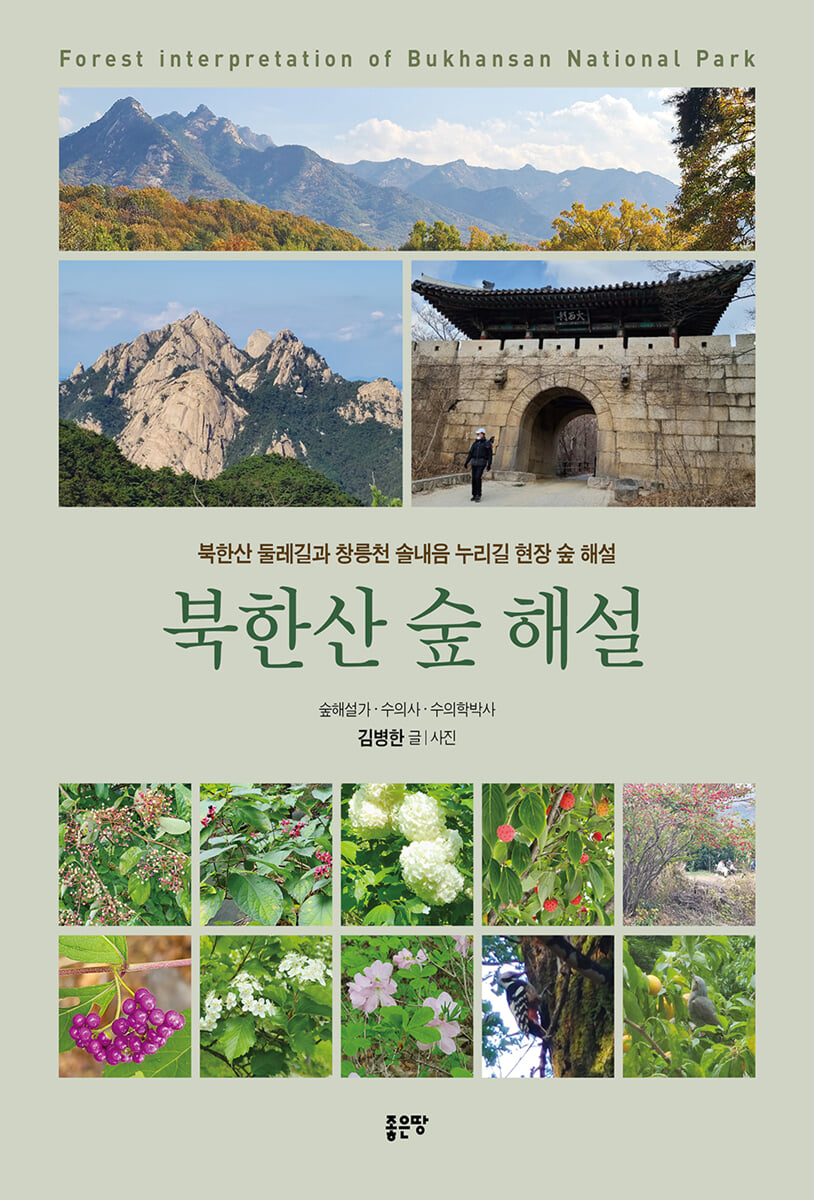 |
Description
Book Introduction
This is Korea's first on-site forest guidebook, printed and explained in a book, the trees and forests encountered while walking along the Changneungcheon Solnaeum Nurigil Trail in Goyang City, adjacent to the Bukhansan National Park Trail.
Until now, forest interpretation has been done orally by forest interpreters on site for forest visitors.
Therefore, by providing one-time commentary with limited content to a small number of visitors, visitors were unable to remember most of the knowledge they learned on site.
And there are many internet programs that search for flowers, so there are many apps that can easily tell you the name and characteristics of a flower by simply taking a picture of it and uploading it, but there are few apps that can easily search for a tree you are curious about, and even if there were, it was difficult to trust the information.
The author is a forest interpreter who has developed an interest in forests and trees while exploring famous mountains across the country for over 20 years, and a veterinarian who cherishes and loves mountains and forests. This guidebook was written based on the author's own photographic records of the mountain's outstanding scenery, flora and fauna, and cultural assets, which he took while climbing up and down Bukhansan for over 10 years.
The text includes a total of 135 tree species, including 84 species that can be observed in Bukhansan Mountain and 51 species that are similar or need to be distinguished, along with seasonal photos.
Each tree is accompanied by ecological characteristics, historical and cultural significance, and even descriptions from literary works, allowing readers to understand not only the trees but also the forest from various perspectives.
Additionally, the book includes approximately 900 high-resolution photographs taken by the author himself, helping readers identify trees on the spot and deeply appreciate nature.
With this one book, you will be able to easily understand the identity and stories of the trees you encounter in the mountains and fields of the central region, including Bukhansan Mountain.
Until now, forest interpretation has been done orally by forest interpreters on site for forest visitors.
Therefore, by providing one-time commentary with limited content to a small number of visitors, visitors were unable to remember most of the knowledge they learned on site.
And there are many internet programs that search for flowers, so there are many apps that can easily tell you the name and characteristics of a flower by simply taking a picture of it and uploading it, but there are few apps that can easily search for a tree you are curious about, and even if there were, it was difficult to trust the information.
The author is a forest interpreter who has developed an interest in forests and trees while exploring famous mountains across the country for over 20 years, and a veterinarian who cherishes and loves mountains and forests. This guidebook was written based on the author's own photographic records of the mountain's outstanding scenery, flora and fauna, and cultural assets, which he took while climbing up and down Bukhansan for over 10 years.
The text includes a total of 135 tree species, including 84 species that can be observed in Bukhansan Mountain and 51 species that are similar or need to be distinguished, along with seasonal photos.
Each tree is accompanied by ecological characteristics, historical and cultural significance, and even descriptions from literary works, allowing readers to understand not only the trees but also the forest from various perspectives.
Additionally, the book includes approximately 900 high-resolution photographs taken by the author himself, helping readers identify trees on the spot and deeply appreciate nature.
With this one book, you will be able to easily understand the identity and stories of the trees you encounter in the mountains and fields of the central region, including Bukhansan Mountain.
- You can preview some of the book's contents.
Preview
index
introduction
Ⅰ.
The Importance of Bukhansan Mountain's Trail and Forests
1.
Geological characteristics of Bukhansan Mountain
2.
Introduction to the Bukhansan Mountain Trail Overview and Forest Interpretation Section
3.
Summary of Earth's epochs and the appearance of plants and animals
4.
The deep connection between forests and culture
5.
Forests and the Origin of Civilization
6.
Tree names and meaning of existence
7.
The Birth of the Earth, the Evolution of Forests, and Their Use
8.
Analysis of the public value of our country's forests
9.
Forest healing theory
10.
We propose a campaign to designate one forest (tree) per person.
Ⅱ.
Introducing the outstanding scenery of Bukhansan Mountain
1.
View of Bukhansan Mountain to the south from Heungguksa Temple and the observatory
2.
A view of Bukhansan Mountain to the south from the mountain behind Heungguk Temple (Nogosan Mountain)
3.
View of Bukhansan Mountain from the southern part of downtown Seoul, looking north.
4.
A close-up view of Bukhansan Mountain from inside Bukhansan Mountain
5.
Bukhansan National Park Dobong District scenery
Ⅲ.
Preparing a forest commentary for the Bukhansan Mountain Trail
1.
Overview and reference materials for the Bukhansan Mountain Forest Trail
2.
Getting to the area by public transportation
Ⅳ.
Forest Commentary 1: Sanseong Entrance - Guksadang (Bamgol Farm) Section
Bukhansanseong Entrance - Hyoja Security Center Section
1.
oak (Fagaceae)
2.
Pine tree (Pine family)
2-1.
Guide to the valley's barrier-free trail
3.
Willow (Salvaceae)
4.
acacia tree (legume)
5.
Pine (Pinaceae)
6.
Dogwood (Dogwood family)
7.
Rose (Rosaceae)
8.
Legumes (legumes)
9.
Verbenaceae (Verbenaceae)
10.
Indonggwa (Indonggwa)
10-1.
White sugar tree (Indonesian family, see: Introduction to improved species of the Japanese honeysuckle)
11.
Magnolia (Magnoliaceae)
12.
Quercus serrata (Fagaceae)
13.
Research on oak-related materials
13-1.
acorn weevil
14.
Oak tree (Ferris serrata)
15.
Quercus chinensis (Fagaceae)
16.
Quercus serrata (Fagaceae)
16-1.
Japanese oak (Fagaceae, not found in this area, reference material)
17.
Attention (attention and)
18.
Juniper (Cupressaceae)
19.
Cornelian cherry (Corneliaceae)
20.
Willow (Salicaceae)
21.
Oleander (Oleaceae)
22.
Maple (Maple family)
23.
Mulberry (Moraceae)
24.
Jujube tree (buckthorn family)
25.
Fallen Hong (Asteraceae)
26.
Tangerine tree (Rutaceae)
27.
Quince tree (Rosaceae)
28.
Aralia elata (Araliaceae)
29.
Korean pine (five-leafed pine, pine family)
30.
Misennamu (Oleaceae family)
31.
White pine (Pinaceae)
31-1.
Quercus serrata (Fagaceae)
〈Hyoja Security Center - Park Tae-seong Memorial Monument Section〉
32.
pepper tree (Capsicum family)
33.
buckthorn tree (Cypressaceae)
34.
Chinese maple (Maple family)
35.
Zelkova (elmaceae)
36.
Cherry tree (Rosaceae)
37.
Metasequoia (Cupressaceae)
37-1.
Korean pine (Pinaceae)
37-2.
Bansong (Pinaceae)
38.
fir tree (pine family)
38-1.
Introduction to Gwanseongsa Temple
39.
Golden pine (Golden pine family)
40.
Fir (Pinaceae)
41.
Western arborvitae (Cupressaceae)
42.
Birch (Birch family)
43.
Water maple (Birch family)
43-1.
Verbenaceae (Verbenaceae)
44.
Spear tree (Verbenaceae)
45.
Bottlebrush tree (Honeysuckle family)
46.
Camellia sinensis (Araceae)
47.
Japanese larch (Pinaceae)
48.
Noodle tree (Rosaceae)
49.
Red bean tree (Rosaceae)
50.
Hazelnut (Birch family)
50-1.
acacia tree (legume)
51.
Ginger tree (laurel family)
52.
rigid pine (Pinaceae)
52-1.
Quercus serrata (Fagaceae)
53.
Lilium candidum (Liliaceae)
54.
Rhododendron (Ericaceae)
55.
poison ivy (Red lacquer family)
56.
Prickly ash (Rutaceae)
56-1.
poison ivy (Red lacquer family)
57.
Stink bug tree (Stink bug family)
57-1.
Great clown bug
58.
Old oak (Cupressaceae)
59.
Japanese magnolia (Magnoliaceae)
60.
Azalea (Ericaceae)
61.
Azalea (Ericaceae)
61-1.
Cherry tree (Rosaceae)
62.
Lesser Phellodendron (Honeysuckle family)
63.
ash tree (Oleaceae)
64.
Alder (Birch family)
Park Tae-seong Memorial Monument - Bamgol Park Ranger Station Section
64-1.
Park Tae-seong's Jeongryeobi
65.
Son-in-law's bread (Apiaceae)
65-1.
Oak, oak, chestnut (all in the Fagaceae family), and ash (Lonicera japonica)
65-2.
Spruce (Verbenaceae) and Hazel (Birchaceae)
66.
Hwabaek (Cupressaceae)
66-1.
Bukhansan Mountain's flagship species, the Great Spotted Woodpecker
67.
Ginkgo tree (Ginkgoaceae)
68.
Eucommia ulmoides (Eucommia family)
69.
Boxwood (Boxwood family)
70.
Leather tree (Lycodon grandiflorus)
71.
Cornus officinalis (Cornus officinalis)
V.
Forest Commentary 2: Solnaeum Nurigil (Changneungcheon Stream)
〈Hyoja Security Center Stop - Sagimakgol Stop Section〉
72.
Conversation tree (legume)
73.
Horse chestnut (Horse chestnut family)
74.
Silver birch (willow family)
75.
Elm (Urmaceae)
76.
Redwood (Lacaceae)
77.
Gaeodong (Clematis family)
78.
elm (Araliaceae)
79.
true elm (elmaceae)
80.
Aralia elata (Araliaceae)
80-1.
Flowering tree (Honeysuckle family, reference material)
81.
pea (legume)
82.
Lily tree (Tulip tree, Magnolia family)
83.
Plum tree (Rosaceae)
84.
Apricot tree (Rosaceae)
84-1.
Straight-legged copper
References
Ⅰ.
The Importance of Bukhansan Mountain's Trail and Forests
1.
Geological characteristics of Bukhansan Mountain
2.
Introduction to the Bukhansan Mountain Trail Overview and Forest Interpretation Section
3.
Summary of Earth's epochs and the appearance of plants and animals
4.
The deep connection between forests and culture
5.
Forests and the Origin of Civilization
6.
Tree names and meaning of existence
7.
The Birth of the Earth, the Evolution of Forests, and Their Use
8.
Analysis of the public value of our country's forests
9.
Forest healing theory
10.
We propose a campaign to designate one forest (tree) per person.
Ⅱ.
Introducing the outstanding scenery of Bukhansan Mountain
1.
View of Bukhansan Mountain to the south from Heungguksa Temple and the observatory
2.
A view of Bukhansan Mountain to the south from the mountain behind Heungguk Temple (Nogosan Mountain)
3.
View of Bukhansan Mountain from the southern part of downtown Seoul, looking north.
4.
A close-up view of Bukhansan Mountain from inside Bukhansan Mountain
5.
Bukhansan National Park Dobong District scenery
Ⅲ.
Preparing a forest commentary for the Bukhansan Mountain Trail
1.
Overview and reference materials for the Bukhansan Mountain Forest Trail
2.
Getting to the area by public transportation
Ⅳ.
Forest Commentary 1: Sanseong Entrance - Guksadang (Bamgol Farm) Section
Bukhansanseong Entrance - Hyoja Security Center Section
1.
oak (Fagaceae)
2.
Pine tree (Pine family)
2-1.
Guide to the valley's barrier-free trail
3.
Willow (Salvaceae)
4.
acacia tree (legume)
5.
Pine (Pinaceae)
6.
Dogwood (Dogwood family)
7.
Rose (Rosaceae)
8.
Legumes (legumes)
9.
Verbenaceae (Verbenaceae)
10.
Indonggwa (Indonggwa)
10-1.
White sugar tree (Indonesian family, see: Introduction to improved species of the Japanese honeysuckle)
11.
Magnolia (Magnoliaceae)
12.
Quercus serrata (Fagaceae)
13.
Research on oak-related materials
13-1.
acorn weevil
14.
Oak tree (Ferris serrata)
15.
Quercus chinensis (Fagaceae)
16.
Quercus serrata (Fagaceae)
16-1.
Japanese oak (Fagaceae, not found in this area, reference material)
17.
Attention (attention and)
18.
Juniper (Cupressaceae)
19.
Cornelian cherry (Corneliaceae)
20.
Willow (Salicaceae)
21.
Oleander (Oleaceae)
22.
Maple (Maple family)
23.
Mulberry (Moraceae)
24.
Jujube tree (buckthorn family)
25.
Fallen Hong (Asteraceae)
26.
Tangerine tree (Rutaceae)
27.
Quince tree (Rosaceae)
28.
Aralia elata (Araliaceae)
29.
Korean pine (five-leafed pine, pine family)
30.
Misennamu (Oleaceae family)
31.
White pine (Pinaceae)
31-1.
Quercus serrata (Fagaceae)
〈Hyoja Security Center - Park Tae-seong Memorial Monument Section〉
32.
pepper tree (Capsicum family)
33.
buckthorn tree (Cypressaceae)
34.
Chinese maple (Maple family)
35.
Zelkova (elmaceae)
36.
Cherry tree (Rosaceae)
37.
Metasequoia (Cupressaceae)
37-1.
Korean pine (Pinaceae)
37-2.
Bansong (Pinaceae)
38.
fir tree (pine family)
38-1.
Introduction to Gwanseongsa Temple
39.
Golden pine (Golden pine family)
40.
Fir (Pinaceae)
41.
Western arborvitae (Cupressaceae)
42.
Birch (Birch family)
43.
Water maple (Birch family)
43-1.
Verbenaceae (Verbenaceae)
44.
Spear tree (Verbenaceae)
45.
Bottlebrush tree (Honeysuckle family)
46.
Camellia sinensis (Araceae)
47.
Japanese larch (Pinaceae)
48.
Noodle tree (Rosaceae)
49.
Red bean tree (Rosaceae)
50.
Hazelnut (Birch family)
50-1.
acacia tree (legume)
51.
Ginger tree (laurel family)
52.
rigid pine (Pinaceae)
52-1.
Quercus serrata (Fagaceae)
53.
Lilium candidum (Liliaceae)
54.
Rhododendron (Ericaceae)
55.
poison ivy (Red lacquer family)
56.
Prickly ash (Rutaceae)
56-1.
poison ivy (Red lacquer family)
57.
Stink bug tree (Stink bug family)
57-1.
Great clown bug
58.
Old oak (Cupressaceae)
59.
Japanese magnolia (Magnoliaceae)
60.
Azalea (Ericaceae)
61.
Azalea (Ericaceae)
61-1.
Cherry tree (Rosaceae)
62.
Lesser Phellodendron (Honeysuckle family)
63.
ash tree (Oleaceae)
64.
Alder (Birch family)
Park Tae-seong Memorial Monument - Bamgol Park Ranger Station Section
64-1.
Park Tae-seong's Jeongryeobi
65.
Son-in-law's bread (Apiaceae)
65-1.
Oak, oak, chestnut (all in the Fagaceae family), and ash (Lonicera japonica)
65-2.
Spruce (Verbenaceae) and Hazel (Birchaceae)
66.
Hwabaek (Cupressaceae)
66-1.
Bukhansan Mountain's flagship species, the Great Spotted Woodpecker
67.
Ginkgo tree (Ginkgoaceae)
68.
Eucommia ulmoides (Eucommia family)
69.
Boxwood (Boxwood family)
70.
Leather tree (Lycodon grandiflorus)
71.
Cornus officinalis (Cornus officinalis)
V.
Forest Commentary 2: Solnaeum Nurigil (Changneungcheon Stream)
〈Hyoja Security Center Stop - Sagimakgol Stop Section〉
72.
Conversation tree (legume)
73.
Horse chestnut (Horse chestnut family)
74.
Silver birch (willow family)
75.
Elm (Urmaceae)
76.
Redwood (Lacaceae)
77.
Gaeodong (Clematis family)
78.
elm (Araliaceae)
79.
true elm (elmaceae)
80.
Aralia elata (Araliaceae)
80-1.
Flowering tree (Honeysuckle family, reference material)
81.
pea (legume)
82.
Lily tree (Tulip tree, Magnolia family)
83.
Plum tree (Rosaceae)
84.
Apricot tree (Rosaceae)
84-1.
Straight-legged copper
References
Publisher's Review
The joy of understanding the forest while walking around Bukhansan Mountain
Korea's first on-site forest guidebook featuring 135 tree species
Bukhansan is a familiar national park to those living in the metropolitan area and a famous mountain visited by nearly 10 million visitors annually.
However, while it is easy to return home after taking in the beautiful scenery, few people know the names and stories of the trees they pass by on the road.
『Bukhansan Forest Commentary』 is a book that resolves this regret.
The author is a veterinarian who has dedicated his life to research. He is also a certified forest interpreter and an expert in the field of forest interpretation who has studied forests and trees on Mt. Bukhan and shared his knowledge.
In this book, he organized the trees he observed while walking the 10th and 11th sections of the Bukhansan Mountain Trail and the Solnaeum Nurigil Trail along the adjacent Changneungcheon Stream, in the order of the trail movement.
Each tree is accompanied by vivid seasonal photographs, descriptions of its characteristics, ecology, comparisons with similar species, historical records, and even passages from Korean literature related to the tree.
Through this, readers can go beyond simply 'knowing the names of trees' and gain a new understanding of the deep cultural and emotional connection between trees and humans.
The book's greatest strength is its structure that reflects the real-life situation.
Readers can walk around the trail holding the book and encounter trees and forests in the order guided in the book.
It provides an experience similar to walking with a forest guide, and you can explore the trail at any time, regardless of the season, by comparing the photos in the book with the actual site, as if playing a hidden picture game.
Additionally, the approximately 900 color photographs included in the book help anyone, even non-tree experts, easily identify trees and understand the forest.
"Bukhansan Forest Guide" will serve as a guide for frequent visitors to Bukhansan, as well as for anyone who wants to experience the breath of nature in the city, helping them understand trees and forests and realize the importance of preserving the natural ecosystem.
With this book, the forests of Bukhansan Mountain, familiar from exploring the surrounding trails, will present a completely new landscape.
Korea's first on-site forest guidebook featuring 135 tree species
Bukhansan is a familiar national park to those living in the metropolitan area and a famous mountain visited by nearly 10 million visitors annually.
However, while it is easy to return home after taking in the beautiful scenery, few people know the names and stories of the trees they pass by on the road.
『Bukhansan Forest Commentary』 is a book that resolves this regret.
The author is a veterinarian who has dedicated his life to research. He is also a certified forest interpreter and an expert in the field of forest interpretation who has studied forests and trees on Mt. Bukhan and shared his knowledge.
In this book, he organized the trees he observed while walking the 10th and 11th sections of the Bukhansan Mountain Trail and the Solnaeum Nurigil Trail along the adjacent Changneungcheon Stream, in the order of the trail movement.
Each tree is accompanied by vivid seasonal photographs, descriptions of its characteristics, ecology, comparisons with similar species, historical records, and even passages from Korean literature related to the tree.
Through this, readers can go beyond simply 'knowing the names of trees' and gain a new understanding of the deep cultural and emotional connection between trees and humans.
The book's greatest strength is its structure that reflects the real-life situation.
Readers can walk around the trail holding the book and encounter trees and forests in the order guided in the book.
It provides an experience similar to walking with a forest guide, and you can explore the trail at any time, regardless of the season, by comparing the photos in the book with the actual site, as if playing a hidden picture game.
Additionally, the approximately 900 color photographs included in the book help anyone, even non-tree experts, easily identify trees and understand the forest.
"Bukhansan Forest Guide" will serve as a guide for frequent visitors to Bukhansan, as well as for anyone who wants to experience the breath of nature in the city, helping them understand trees and forests and realize the importance of preserving the natural ecosystem.
With this book, the forests of Bukhansan Mountain, familiar from exploring the surrounding trails, will present a completely new landscape.
GOODS SPECIFICS
- Date of issue: September 5, 2025
- Page count, weight, size: 464 pages | 188*257*30mm
- ISBN13: 9791138846547
- ISBN10: 1138846546
You may also like
카테고리
korean


korean

![GQ KOREA Mark (Monthly): December [2025]](http://librairie.coreenne.fr/cdn/shop/files/8ef265dbbfbf186523ed75ba7319009d.jpg?v=1765340328&width=3840)


