

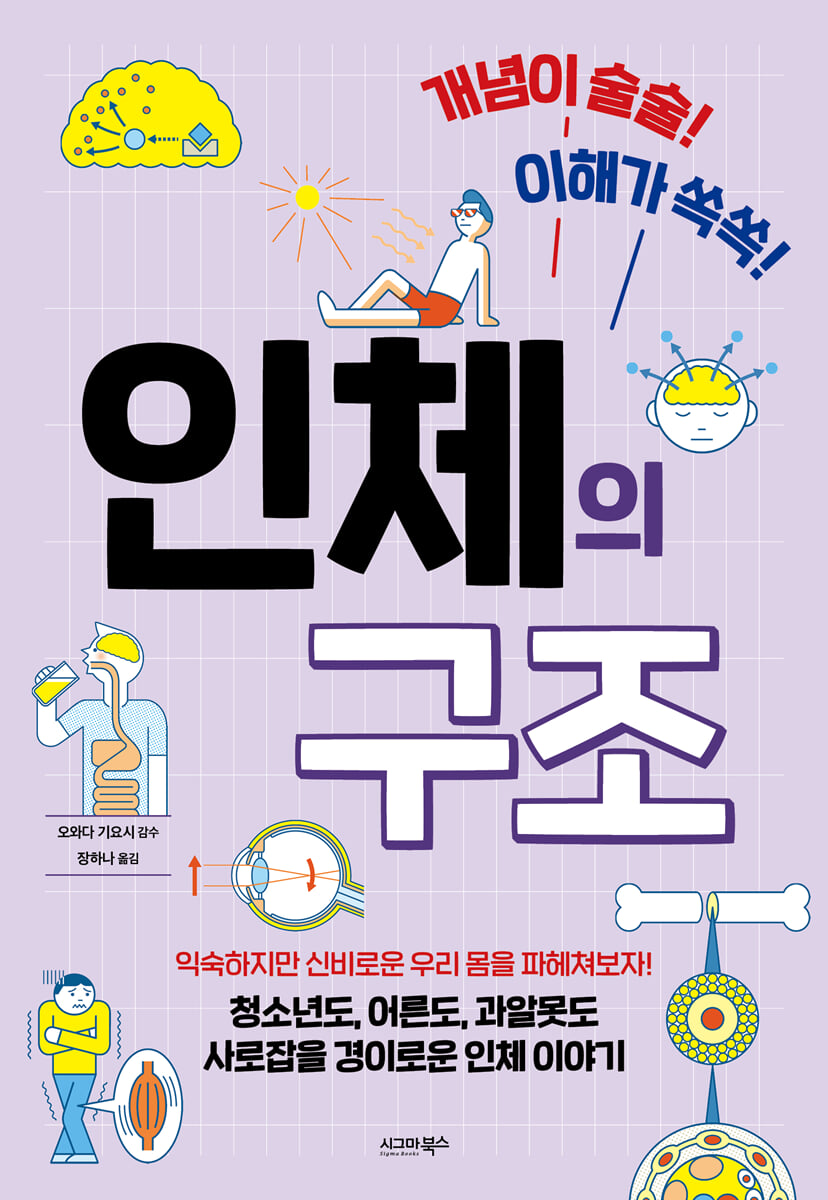
Structure of the human body
 |
Description
Book Introduction
Let's explore our familiar yet mysterious body!
A wondrous story about the human body that will captivate young people, adults, and even science novices.
Why do people need to sleep? Why do our eyesight deteriorate? How do wounds heal? What's the difference between the right and left brains? Are there genes that make us more prone to weight gain? Why do we age and die?
The human body is like a vast universe surrounded by all kinds of mysteries.
Although we may not be able to perceive it in our daily lives, there are actually sophisticated scientific mechanisms at work in various aspects of the human body that we take for granted.
Say goodbye to rigid terminology and complex anatomy charts! "Concepts Made Easy! Easy to Understand! The Structure of the Human Body" is a book exploring the human body, written with accessible explanations and adorable illustrations that make it accessible to everyone, from teenagers to adults, and even "science novice" alike.
Through the 90 themes introduced in this book, let's discover the wondrous secrets hidden within our bodies, both familiar and unfamiliar!
A wondrous story about the human body that will captivate young people, adults, and even science novices.
Why do people need to sleep? Why do our eyesight deteriorate? How do wounds heal? What's the difference between the right and left brains? Are there genes that make us more prone to weight gain? Why do we age and die?
The human body is like a vast universe surrounded by all kinds of mysteries.
Although we may not be able to perceive it in our daily lives, there are actually sophisticated scientific mechanisms at work in various aspects of the human body that we take for granted.
Say goodbye to rigid terminology and complex anatomy charts! "Concepts Made Easy! Easy to Understand! The Structure of the Human Body" is a book exploring the human body, written with accessible explanations and adorable illustrations that make it accessible to everyone, from teenagers to adults, and even "science novice" alike.
Through the 90 themes introduced in this book, let's discover the wondrous secrets hidden within our bodies, both familiar and unfamiliar!
- You can preview some of the book's contents.
Preview
index
preface
Chapter 1.
I want to know! All about the human body
01 What does our body look like?
02 The smallest unit that makes up the body? The structure of the 'cell'
03 What are the "five senses"? Where and what do we feel?
Secret of the Human Body ① Among sight, hearing, and smell, what do humans excel at more than animals?
04 What is "immunity"? What is its structure?
05 Why do pollen allergies occur?
06 What does 'viral infection' mean?
07 Why do headaches occur? What types are there?
08 Why do I get a fever or chills when I have a cold?
09 Why do people need to sleep?
10. What are dreams? REM and non-REM sleep.
● Human Body Story 1 What happens to a person if they don’t sleep for a long time?
11 What is yawning? Why do we yawn when we don't sleep?
12 Why do people get drunk when they drink alcohol?
13 What are blood types? What are the differences between blood types?
14 Why do tears flow?
15 Why do people have different eye colors?
● Human Body Story 2 Can you dodge a flying bullet?
16 Why do these sensations arise? ‘Ouch!’, ‘It’s hot!’
17 Why does hair grow?
18 What is 'stress'? Why do we feel it?
19 Why do people get sleepy?
20 What is the principle of 'vaccine'?
● Human Body Story 3: What is the "Strength of a Burning House"? Can such strength be demonstrated in everyday life?
Why is gaining 21 pounds bad for your health?
22 Why does growth stop in the middle?
23 Why can't I quit smoking?
24 What's so great about iPS cells?
25 What kind of person is a genius?
● Human Body Story 4 Digitizing the human brain? Is artificial brain development possible?
Medical Great ① Andreas Vesalius
Chapter 2.
I see! The structure of the human body
26 Why do people have bones?
27 What are bones made of?
28 What are muscles? What do they do?
Secret of the human body ② How much weight can a person lift?
29 What role do blood vessels play?
30 What is the structure of cells in blood, such as 'red blood cells'?
Secret of the human body ③ How fast does blood circulate throughout the body?
31. The Structure of Bone Marrow: Creating Blood
32 What is the 'lymph' that spreads throughout the body?
33 Why do eyes get worse?
34 How can we hear sound with our ears?
35 Are the ears responsible for a person's sense of balance?
36 What is 'smell'? What is a good smell and what is a bad smell?
37 How does 'taste' feel?
38 How do people regulate their body temperature?
Secret of the Human Body ④ What body temperature can a person tolerate?
39 What role does a person's 'skin' play?
40 Regulating Circulation in the Body? The Structure of the Kidney
41 Is drinking too much bad for your liver?
42 What is a 'fart'? The structure of a fart.
43 What are hiccups? Why do they occur?
44 More than 60% of the body? The structure of 'water' in the human body
Secret of the Human Body ⑤ How long can a person live by drinking only water?
45 Why do cavities occur?
46 How are nutrients from food absorbed?
47 How can food reach the stomach when you are lying down?
48 What are gut bacteria? How many are there?
Why is Chapter 49 called the 'second brain'?
50 What is lipids? Why do we need them?
51 How do wounds and bones heal?
52 Regulating the Internal Environment? The Structure of Hormones
53 What is the principle of artificial insemination?
● Human Body Story 5 Is it really possible to cryopreserve the human body?
Medical Great ② Kitazato Shibasaburo
Chapter 3.
Aha! The human brain, nerves, and genes
54 What is the structure of the human 'brain'?
55 What is the difference between the right and left brain?
● Human Body Story 6 People only use 10% of their brain?
56 How much can a person remember?
57 Why don't people forget how to ride a bike?
58 Why do I get motion sickness and 3D motion sickness?
59 Where do emotions and bodily responses come from?
60 What is 'depression'? How does it relate to the brain?
61 What is a "nerve"? What role does it play?
62 Why is the force of movement different for each finger?
63 What is 'reflex nerve'?
64 Why do people unconsciously breathe air?
65 Why does my heart beat so fast?
66 What is a Gene? ① The Structure of Genetic Information
67 What is a gene? ② The function of DNA
Secrets of the Human Body ⑥ How far back can we find our ancestors through genes?
68 What determines the differences between men and women?
Are there different types of genes? Dominant and recessive genes.
Is the tendency to gain weight easily after 70 years old inherited?
71 How to determine paternity using genes?
72 Why do morning people and evening people exist?
73 Why do people grow old?
74 What is 'cancer'?
Secrets of the Human Body ⑦ Is it possible to change the body into one that is free from disease through gene therapy?
75 What is 'death'?
Chapter 1.
I want to know! All about the human body
01 What does our body look like?
02 The smallest unit that makes up the body? The structure of the 'cell'
03 What are the "five senses"? Where and what do we feel?
Secret of the Human Body ① Among sight, hearing, and smell, what do humans excel at more than animals?
04 What is "immunity"? What is its structure?
05 Why do pollen allergies occur?
06 What does 'viral infection' mean?
07 Why do headaches occur? What types are there?
08 Why do I get a fever or chills when I have a cold?
09 Why do people need to sleep?
10. What are dreams? REM and non-REM sleep.
● Human Body Story 1 What happens to a person if they don’t sleep for a long time?
11 What is yawning? Why do we yawn when we don't sleep?
12 Why do people get drunk when they drink alcohol?
13 What are blood types? What are the differences between blood types?
14 Why do tears flow?
15 Why do people have different eye colors?
● Human Body Story 2 Can you dodge a flying bullet?
16 Why do these sensations arise? ‘Ouch!’, ‘It’s hot!’
17 Why does hair grow?
18 What is 'stress'? Why do we feel it?
19 Why do people get sleepy?
20 What is the principle of 'vaccine'?
● Human Body Story 3: What is the "Strength of a Burning House"? Can such strength be demonstrated in everyday life?
Why is gaining 21 pounds bad for your health?
22 Why does growth stop in the middle?
23 Why can't I quit smoking?
24 What's so great about iPS cells?
25 What kind of person is a genius?
● Human Body Story 4 Digitizing the human brain? Is artificial brain development possible?
Medical Great ① Andreas Vesalius
Chapter 2.
I see! The structure of the human body
26 Why do people have bones?
27 What are bones made of?
28 What are muscles? What do they do?
Secret of the human body ② How much weight can a person lift?
29 What role do blood vessels play?
30 What is the structure of cells in blood, such as 'red blood cells'?
Secret of the human body ③ How fast does blood circulate throughout the body?
31. The Structure of Bone Marrow: Creating Blood
32 What is the 'lymph' that spreads throughout the body?
33 Why do eyes get worse?
34 How can we hear sound with our ears?
35 Are the ears responsible for a person's sense of balance?
36 What is 'smell'? What is a good smell and what is a bad smell?
37 How does 'taste' feel?
38 How do people regulate their body temperature?
Secret of the Human Body ④ What body temperature can a person tolerate?
39 What role does a person's 'skin' play?
40 Regulating Circulation in the Body? The Structure of the Kidney
41 Is drinking too much bad for your liver?
42 What is a 'fart'? The structure of a fart.
43 What are hiccups? Why do they occur?
44 More than 60% of the body? The structure of 'water' in the human body
Secret of the Human Body ⑤ How long can a person live by drinking only water?
45 Why do cavities occur?
46 How are nutrients from food absorbed?
47 How can food reach the stomach when you are lying down?
48 What are gut bacteria? How many are there?
Why is Chapter 49 called the 'second brain'?
50 What is lipids? Why do we need them?
51 How do wounds and bones heal?
52 Regulating the Internal Environment? The Structure of Hormones
53 What is the principle of artificial insemination?
● Human Body Story 5 Is it really possible to cryopreserve the human body?
Medical Great ② Kitazato Shibasaburo
Chapter 3.
Aha! The human brain, nerves, and genes
54 What is the structure of the human 'brain'?
55 What is the difference between the right and left brain?
● Human Body Story 6 People only use 10% of their brain?
56 How much can a person remember?
57 Why don't people forget how to ride a bike?
58 Why do I get motion sickness and 3D motion sickness?
59 Where do emotions and bodily responses come from?
60 What is 'depression'? How does it relate to the brain?
61 What is a "nerve"? What role does it play?
62 Why is the force of movement different for each finger?
63 What is 'reflex nerve'?
64 Why do people unconsciously breathe air?
65 Why does my heart beat so fast?
66 What is a Gene? ① The Structure of Genetic Information
67 What is a gene? ② The function of DNA
Secrets of the Human Body ⑥ How far back can we find our ancestors through genes?
68 What determines the differences between men and women?
Are there different types of genes? Dominant and recessive genes.
Is the tendency to gain weight easily after 70 years old inherited?
71 How to determine paternity using genes?
72 Why do morning people and evening people exist?
73 Why do people grow old?
74 What is 'cancer'?
Secrets of the Human Body ⑦ Is it possible to change the body into one that is free from disease through gene therapy?
75 What is 'death'?
Detailed image
.jpg)
Into the book
There is still much unknown about the human anatomy.
Why do we find children and grandchildren so lovable, why do we find even the baby animals of other animals like dogs, cats, and birds cute, why do fertilized eggs develop into human forms, why are the changes that occur in parents as they age not initialized in the fertilized egg and passed on to the next generation?
In this way, we live our lives accepting our own bodies without any doubts, with a passive attitude of, "That's how we were born."
--- p.4
While awake, people think, learn, and experience many things.
At that time, the brain works hard and receives memories or information.
When you fall asleep at night, your brain tries to organize and process the memories and information it has gained through its activities during the day.
During this process, the brain becomes activated, and pieces of past information or various memories are connected to each other or new imaginations are added.
As a result, it is believed that strange scenes that cannot occur in reality appear in dreams.
--- p.32
Eye color refers to the color of the iris.
The iris is made up of smooth muscle that controls the size of the pupil and thus the amount of light that enters through the pupil.
On the surface, pigment cells containing melanin pigment are scattered in a mesh pattern.
The color of the eyes appears different due to differences in the amount, concentration, and distribution of this melanin pigment.
--- p.44
Sometimes, the malfunctioning of certain areas of the brain can lead to the development of specific areas, resulting in extraordinary abilities.
People who are classified as mentally or intellectually disabled but at the same time demonstrate genius-like abilities are called 'savant syndrome'.
They display genius-like talents in fields such as mathematics, art, music, and memory, such as being able to perform mental calculations of dozens of digits in an instant or accurately reproduce a photograph they briefly saw.
Savant syndrome is thought to be a condition in which certain parts of the brain are hyperactive.
--- p.68
The eye can focus because a thin muscle called the ciliary body adjusts the thickness of the lens.
If this function does not work properly, your eyesight will deteriorate.
Also, if the eyeball becomes distorted and the depth changes, or if the cornea or lens becomes bumpy and unsmooth, vision deteriorates.
--- p.92
Hiccups are mainly caused by a blockage in the diaphragm (also called the diaphragm) located below the lungs.
This is a phenomenon in which the respiratory muscles (which may in some cases be other accessory muscles of breathing) suddenly spasm, producing a 'hiccup' sound.
It often occurs when swallowing hot or spicy food, eating or drinking too quickly, making loud noises or laughing loudly, or when air fills the esophagus or lungs, or when it is caused by diseases such as gastrointestinal disorders, uremia, brain tumors, or alcoholism.
--- p.114
Memory is the process of remembering (recalling) surrounding information, maintaining the remembered information so as not to forget it, and recalling (recalling) the maintained information when necessary.
New information is initially stored in short-term memory, but if left there, it quickly disappears.
When you recall something repeatedly or connect it with other knowledge, it becomes long-term memory.
Once long-term memories are established, they can last for months or even a lifetime.
There are memories that are hard to forget, like being able to sing a song you memorized as a child.
--- p.148
Cells have a lifespan.
When new cells that perform the same function are needed, they proliferate and are replaced, and then proliferation stops.
This structure can be maintained because the cells and the genes within the cells are preserved normally.
As long as genes function normally and cell division occurs, cells continue to function with a certain lifespan.
If this structure breaks down due to some trigger, cells that have lost their original form and lifespan will begin to divide and multiply infinitely.
This is cancer.
Cancer cells take over the place of normal cells and spread by destroying surrounding tissues (cancer invasion).
Why do we find children and grandchildren so lovable, why do we find even the baby animals of other animals like dogs, cats, and birds cute, why do fertilized eggs develop into human forms, why are the changes that occur in parents as they age not initialized in the fertilized egg and passed on to the next generation?
In this way, we live our lives accepting our own bodies without any doubts, with a passive attitude of, "That's how we were born."
--- p.4
While awake, people think, learn, and experience many things.
At that time, the brain works hard and receives memories or information.
When you fall asleep at night, your brain tries to organize and process the memories and information it has gained through its activities during the day.
During this process, the brain becomes activated, and pieces of past information or various memories are connected to each other or new imaginations are added.
As a result, it is believed that strange scenes that cannot occur in reality appear in dreams.
--- p.32
Eye color refers to the color of the iris.
The iris is made up of smooth muscle that controls the size of the pupil and thus the amount of light that enters through the pupil.
On the surface, pigment cells containing melanin pigment are scattered in a mesh pattern.
The color of the eyes appears different due to differences in the amount, concentration, and distribution of this melanin pigment.
--- p.44
Sometimes, the malfunctioning of certain areas of the brain can lead to the development of specific areas, resulting in extraordinary abilities.
People who are classified as mentally or intellectually disabled but at the same time demonstrate genius-like abilities are called 'savant syndrome'.
They display genius-like talents in fields such as mathematics, art, music, and memory, such as being able to perform mental calculations of dozens of digits in an instant or accurately reproduce a photograph they briefly saw.
Savant syndrome is thought to be a condition in which certain parts of the brain are hyperactive.
--- p.68
The eye can focus because a thin muscle called the ciliary body adjusts the thickness of the lens.
If this function does not work properly, your eyesight will deteriorate.
Also, if the eyeball becomes distorted and the depth changes, or if the cornea or lens becomes bumpy and unsmooth, vision deteriorates.
--- p.92
Hiccups are mainly caused by a blockage in the diaphragm (also called the diaphragm) located below the lungs.
This is a phenomenon in which the respiratory muscles (which may in some cases be other accessory muscles of breathing) suddenly spasm, producing a 'hiccup' sound.
It often occurs when swallowing hot or spicy food, eating or drinking too quickly, making loud noises or laughing loudly, or when air fills the esophagus or lungs, or when it is caused by diseases such as gastrointestinal disorders, uremia, brain tumors, or alcoholism.
--- p.114
Memory is the process of remembering (recalling) surrounding information, maintaining the remembered information so as not to forget it, and recalling (recalling) the maintained information when necessary.
New information is initially stored in short-term memory, but if left there, it quickly disappears.
When you recall something repeatedly or connect it with other knowledge, it becomes long-term memory.
Once long-term memories are established, they can last for months or even a lifetime.
There are memories that are hard to forget, like being able to sing a song you memorized as a child.
--- p.148
Cells have a lifespan.
When new cells that perform the same function are needed, they proliferate and are replaced, and then proliferation stops.
This structure can be maintained because the cells and the genes within the cells are preserved normally.
As long as genes function normally and cell division occurs, cells continue to function with a certain lifespan.
If this structure breaks down due to some trigger, cells that have lost their original form and lifespan will begin to divide and multiply infinitely.
This is cancer.
Cancer cells take over the place of normal cells and spread by destroying surrounding tissues (cancer invasion).
--- p.186
Publisher's Review
Genes, sleep, immunity, emotions, cells, brain…
The human body is full of mysteries!
Modern science is advancing at a rapid pace, and the scope of the world that humans can reach is also expanding infinitely.
But despite these innovations, there are still surprising areas that remain mysterious.
It is our 'body'.
It was just four years ago, in 2021, that two scientists who discovered the mechanism by which humans sense temperature and touch were awarded the Nobel Prize in Physiology or Medicine.
In that sense, humans live without even properly understanding their own structure.
Humans are born as if thrown into this unknown world, and grow up perceiving various objects and people and receiving stimulation from their five senses.
In this way, our life is a series of passive processes of understanding the external world that already exists.
However, human civilization could only advance by asking the question, "Why?" to the world's laws and uncovering the secrets hidden behind them.
This is also true in the realm of the body.
Humans have created various tools to make daily life more convenient and improve the environment based on what they have learned from studying the human body.
Cutting-edge technologies such as the Internet, game screens, keyboards, and controllers are also designed to be easy to use, taking into account the structure of the human five senses and hands and feet.
I want to use it right away tomorrow
An exciting human body textbook
"Concepts Flow! Easy to Understand! The Structure of the Human Body" is a scientific book that explains 90 themes related to the human body in an easy-to-understand manner, from the smallest unit of the body, the cell, to the inevitable experience of death that we all must face at some point.
First, Chapter 1, "I Want to Know! All About the Human Body," focuses on various conditions and phenomena commonly found in the human body, such as viruses, allergies, blood types, colds, and stress.
Next, Chapter 2, "That's Right! The Structure of the Human Body," delves into the structure of each organ in the human body, focusing on bones, muscles, blood, the five senses, digestion, and absorption.
The final three chapters, "Aha! The Human Brain, Nerves, and Genes," explain the structure and operating principles of the brain, nerves, and genes, which are particularly mysterious in our bodies.
Throughout the text, we have also included a wealth of useful reading material.
"What happens if people don't sleep?", "Is it possible to digitize the human brain?", "How much weight can a person lift?", "How long does it take for blood to circulate through the body?", and other intriguing topics that will make you want to know the answers right away are introduced based on famous experiments and the latest research results.
The human body is too mysterious to be simply explained as 'we were just born that way.'
Through this book, which tells the story of the human body, which is close yet distant, familiar yet unfamiliar, in the easiest and most entertaining way possible, I hope you will experience the joy of the moment when what you took for granted becomes no longer so.
The human body is full of mysteries!
Modern science is advancing at a rapid pace, and the scope of the world that humans can reach is also expanding infinitely.
But despite these innovations, there are still surprising areas that remain mysterious.
It is our 'body'.
It was just four years ago, in 2021, that two scientists who discovered the mechanism by which humans sense temperature and touch were awarded the Nobel Prize in Physiology or Medicine.
In that sense, humans live without even properly understanding their own structure.
Humans are born as if thrown into this unknown world, and grow up perceiving various objects and people and receiving stimulation from their five senses.
In this way, our life is a series of passive processes of understanding the external world that already exists.
However, human civilization could only advance by asking the question, "Why?" to the world's laws and uncovering the secrets hidden behind them.
This is also true in the realm of the body.
Humans have created various tools to make daily life more convenient and improve the environment based on what they have learned from studying the human body.
Cutting-edge technologies such as the Internet, game screens, keyboards, and controllers are also designed to be easy to use, taking into account the structure of the human five senses and hands and feet.
I want to use it right away tomorrow
An exciting human body textbook
"Concepts Flow! Easy to Understand! The Structure of the Human Body" is a scientific book that explains 90 themes related to the human body in an easy-to-understand manner, from the smallest unit of the body, the cell, to the inevitable experience of death that we all must face at some point.
First, Chapter 1, "I Want to Know! All About the Human Body," focuses on various conditions and phenomena commonly found in the human body, such as viruses, allergies, blood types, colds, and stress.
Next, Chapter 2, "That's Right! The Structure of the Human Body," delves into the structure of each organ in the human body, focusing on bones, muscles, blood, the five senses, digestion, and absorption.
The final three chapters, "Aha! The Human Brain, Nerves, and Genes," explain the structure and operating principles of the brain, nerves, and genes, which are particularly mysterious in our bodies.
Throughout the text, we have also included a wealth of useful reading material.
"What happens if people don't sleep?", "Is it possible to digitize the human brain?", "How much weight can a person lift?", "How long does it take for blood to circulate through the body?", and other intriguing topics that will make you want to know the answers right away are introduced based on famous experiments and the latest research results.
The human body is too mysterious to be simply explained as 'we were just born that way.'
Through this book, which tells the story of the human body, which is close yet distant, familiar yet unfamiliar, in the easiest and most entertaining way possible, I hope you will experience the joy of the moment when what you took for granted becomes no longer so.
GOODS SPECIFICS
- Date of issue: September 5, 2025
- Page count, weight, size: 192 pages | 398g | 145*210*14mm
- ISBN13: 9791168623934
- ISBN10: 1168623936
You may also like
카테고리
korean


korean

![ELLE 엘르 스페셜 에디션 A형 : 12월 [2025]](http://librairie.coreenne.fr/cdn/shop/files/b8e27a3de6c9538896439686c6b0e8fb.jpg?v=1766436872&width=3840)


