

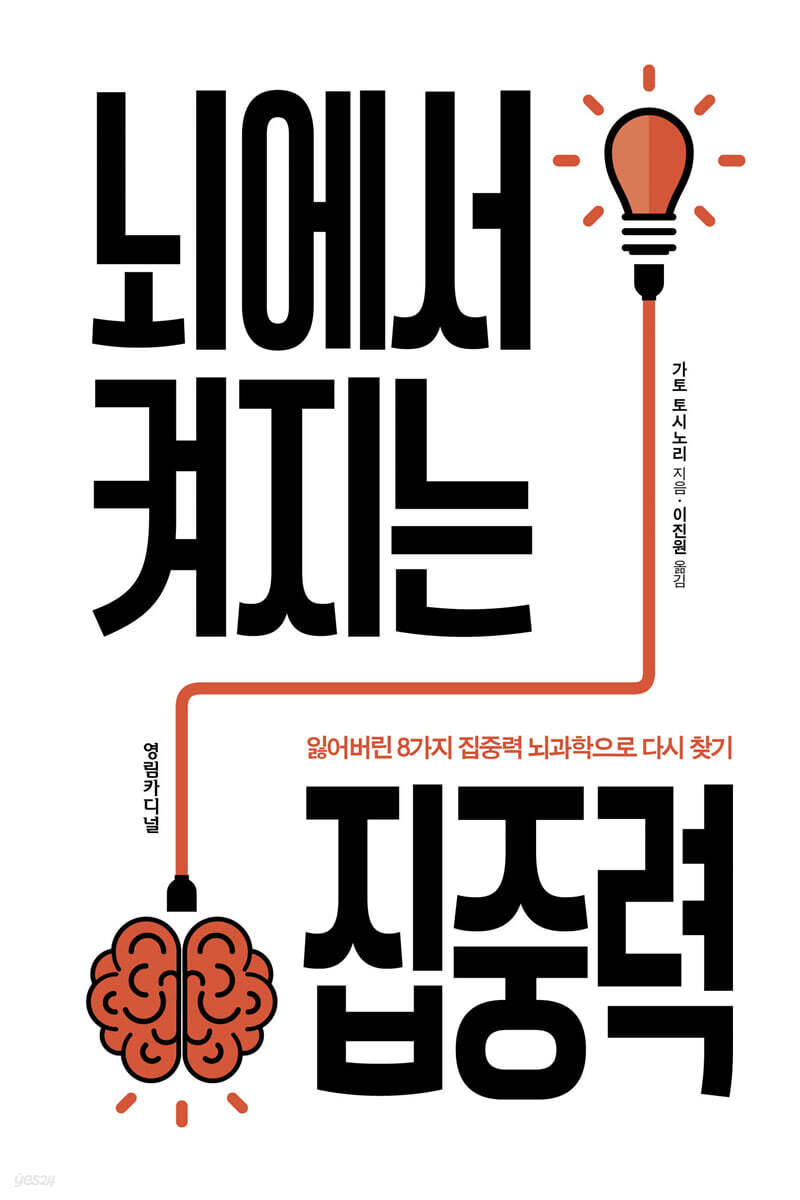
Concentration that turns on in the brain
 |
Description
Book Introduction
I can't concentrate
Is it because of my brain and not me?
What a neuroscientist says
Hidden deep in my head
How to find your focus switch
We've all probably had the experience of being unable to concentrate while working or studying, so we kept looking away or doing something else on our smartphones or computers.
So, when we don't get good grades or can't finish work on time, we tend to blame ourselves, saying it was because we lacked mental strength or willpower.
But did you know that it was actually my brain that was the problem?
The author, an authority on Japanese brain science research and author of numerous books on the brain, argues in this book that the eight brain regions, called "brain bungees," are each responsible for different types of concentration, and that we can ultimately achieve concentration only when we create a state in which the brain can sufficiently concentrate so that these regions are organically connected and work together.
Through this book, let's learn how to discover and turn on the concentration switch in our brain that we didn't know existed.
Is it because of my brain and not me?
What a neuroscientist says
Hidden deep in my head
How to find your focus switch
We've all probably had the experience of being unable to concentrate while working or studying, so we kept looking away or doing something else on our smartphones or computers.
So, when we don't get good grades or can't finish work on time, we tend to blame ourselves, saying it was because we lacked mental strength or willpower.
But did you know that it was actually my brain that was the problem?
The author, an authority on Japanese brain science research and author of numerous books on the brain, argues in this book that the eight brain regions, called "brain bungees," are each responsible for different types of concentration, and that we can ultimately achieve concentration only when we create a state in which the brain can sufficiently concentrate so that these regions are organically connected and work together.
Through this book, let's learn how to discover and turn on the concentration switch in our brain that we didn't know existed.
- You can preview some of the book's contents.
Preview
index
Entering
Prologue: What You Need to Know to Develop True Concentration
Features and structure of this book
Why can't I concentrate in a meeting if my listening skills are weak?
Chapter 1.
8 Ways to Train Your Brain's Focus
First, change your definition of concentration.
The brain is divided into eight regions according to their functions.
What people who are good at organizing and those who are good at studying have in common
My training method is different from that of my role model.
[Column] Teacher, Please Tell Us! The Story of Real Concentration ①
Chapter 2.
8 Focus Networks to Maximize Your Focus
If you want to increase your concentration time in any situation,
What is teamwork between brain cells?
[Column] Teacher, Please Tell Us! The Story of Real Concentration ②
Chapter 3.
Creating a structure that allows the brain to focus naturally
A reluctant mind can be controlled
Why does my concentration decrease when I keep doing the same thing?
You can't start without a clear goal.
Setting a deadline focuses the brain.
A mindset that naturally turns on the focus switch
The reward for doing something you don't want to do is doing something you like.
What reward does the brain focus on the most?
Put off the impossible and start with the possible.
Preparation is necessary to focus in real life.
[Column] Teacher, Please Tell Us! The Story of Real Concentration ③
Chapter 4.
How to Create a Focused Brain Without Effort
Avoid angry people when concentrating.
What's disturbing my concentration now is my past self
The most important time of the day is sleep time
Sleeping for more than eight hours improves concentration.
High priority tasks are done in the morning.
Just a five-minute walk can help you regain your concentration.
You have to sit correctly to concentrate properly.
When you feel dazed, reset your brain with deep breathing and walking.
Concentration comes from food
The more you chew, the better your concentration becomes.
[Column] Teacher, Please Tell Us! The Story of Real Concentration④
In conclusion
References
Prologue: What You Need to Know to Develop True Concentration
Features and structure of this book
Why can't I concentrate in a meeting if my listening skills are weak?
Chapter 1.
8 Ways to Train Your Brain's Focus
First, change your definition of concentration.
The brain is divided into eight regions according to their functions.
What people who are good at organizing and those who are good at studying have in common
My training method is different from that of my role model.
[Column] Teacher, Please Tell Us! The Story of Real Concentration ①
Chapter 2.
8 Focus Networks to Maximize Your Focus
If you want to increase your concentration time in any situation,
What is teamwork between brain cells?
[Column] Teacher, Please Tell Us! The Story of Real Concentration ②
Chapter 3.
Creating a structure that allows the brain to focus naturally
A reluctant mind can be controlled
Why does my concentration decrease when I keep doing the same thing?
You can't start without a clear goal.
Setting a deadline focuses the brain.
A mindset that naturally turns on the focus switch
The reward for doing something you don't want to do is doing something you like.
What reward does the brain focus on the most?
Put off the impossible and start with the possible.
Preparation is necessary to focus in real life.
[Column] Teacher, Please Tell Us! The Story of Real Concentration ③
Chapter 4.
How to Create a Focused Brain Without Effort
Avoid angry people when concentrating.
What's disturbing my concentration now is my past self
The most important time of the day is sleep time
Sleeping for more than eight hours improves concentration.
High priority tasks are done in the morning.
Just a five-minute walk can help you regain your concentration.
You have to sit correctly to concentrate properly.
When you feel dazed, reset your brain with deep breathing and walking.
Concentration comes from food
The more you chew, the better your concentration becomes.
[Column] Teacher, Please Tell Us! The Story of Real Concentration④
In conclusion
References
Detailed image
.jpg)
Into the book
Many people think of concentration as a mental strength issue.
I believe that if you just put your mind to it, you can concentrate, and if you have the will, you can do it for hours.
However, this premise is wrong.
Concentration is not a matter of will or determination, such as mental strength or perseverance.
Concentration is not an innate talent or a special ability built into the body.
So where does concentration come from?
The answer is our brain.
Concentration is created in the brain.
Therefore, if you want to improve your concentration, the fastest and most certain way is to understand the structure of the brain and use it correctly.
---From "Entering"
In fact, the brain is divided into eight regions.
And each has a different role (function).
Depending on what you are doing, the areas of the brain that are activated (actively working) change, such as the areas that are activated when you think and judge, the areas that are activated when you see something, the areas that are activated when you convey something to someone else, and the areas that are activated when you exercise.
Different types of concentration mean different areas of the brain are activated.
For example, when you concentrate on reading, the visual areas of your brain react actively, and when you concentrate on what your teacher is saying, the auditory areas of your brain become activated.
---From "Prologue_What You Need to Know to Develop True Concentration"
Our human brain contains over 100 billion nerve cells.
These nerve cells are responsible for transmitting and processing information.
And each nerve cell has its own specialty.
Cells with the same specialty (that perform the same function), such as cells responsible for movement, cells responsible for hearing, and cells responsible for memory, form a group.
For example, it is similar to how departments within a company are divided by role, such as sales, development, planning, and public relations.
Even within the brain, each area has its own unique role, such as the area responsible for movement, the area responsible for memory, and the area responsible for thinking.
---From "The brain is divided into eight regions according to their functions"
When the surroundings are cluttered, the visual brain area responsible for visual focus is overstimulated or the gaze is scattered, putting a strain on the brain.
For example, if your desk is messy, just looking at it will confuse your brain and reduce your ability to concentrate.
Also, it is easy to become distracted when things related to hobbies or entertainment come into view.
Therefore, it is best to store these items that interfere with studying in an out-of-sight place, such as a drawer or bag.
People who live in an organized room and people who live in a messy room have different brain states.
---From "What People Who Are Good at Organizing and Those Who Are Good at Studying"
When do you want to focus? Don't you think, "I wish I could focus both when reading and when listening to the teacher!"? I completely understand that feeling.
But the reality is not that simple.
Most people would say, 'I can concentrate when I read, but I can't concentrate at all when I listen to the teacher.'
When I do ○○, I can concentrate, but when I try to do ××, there are times when I can't concentrate.
The reason why concentration is only demonstrated in certain situations is because the brain's development did not proceed evenly.
---From "If you want to increase your concentration time in any situation"
Each part of our brain has its own unique role.
But they don't work individually.
The brain organically cooperates with the focus created by the eight cerebral cortex to cope with various situations.
They form networks by connecting adjacent brain regions or connecting distant brain regions.
In soccer, several players cooperate to pass the ball back and forth to achieve the goal of scoring points.
Similarly, in the brain, the focus created by multiple brain regions cooperates toward a single goal.
When humans perform certain actions, a specific brain region does not work alone, but rather multiple brain regions work together as a team.
---From "What is team play between brain cells?"
The brain's ON/OFF switching is the smooth adjustment of the state of concentration (ON) and the state of no concentration (OFF).
Once this is possible, you can naturally enter into focus mode.
You might think, 'Is that really possible?' but in fact, we already experience the brain turning on and off in our daily lives.
For example, when taking a written exam at school, when the bell rings to signal the start of the exam, the ON switch turns on and you focus on solving the problem.
When the bell rings to indicate the end of the test, it turns OFF and recognizes that the test is over.
In movie theaters, lighting also acts as a switch for the brain.
When the lights inside the theater dim, it turns on and focuses on the screen (recognizing the start of the movie).
When the ending credits roll and the lights come up, your brain recognizes that the movie is over and goes into OFF mode.
---From "A Reluctant Mind Can Be Controlled"
As explained earlier, the clearer the purpose and reason for doing something, the easier it is for the brain to switch on (to focus).
The important thing when setting goals is to find joy and find what works for you.
The brain has a tendency to do things it is good at, things it finds interesting, and things it likes, but not things it is bad at or dislikes.
If you say, 'I have to do this.'
But in reality, if you think negatively, saying, 'I'm tired and don't want to do it,' cooperation between brain regions does not proceed smoothly, which puts the brakes on concentration.
---From "A way of thinking that naturally turns on the focus switch"
It's okay to play games as long as you set a rule of three minutes before you start studying and stick to it strictly once a week.
But it usually won't end once a week.
Besides, once you start playing the game, it's hard to quit.
Most people continue playing games because the brain has a tendency to repeat the pleasure it feels.
And as the game time increases due to thoughts like 'just a little more' or 'just until I finish this game', the brain becomes worn out and it affects studies and work.
---From "The compensation for doing something you don't want to do is doing something you like"
Concentration is a skill that the brain creates, but on the other hand, it can be thought of as something that comes from the past.
Can you understand what I mean?
Coming from the past means that I am influenced by the habits I have had since before today (the past).
The reason why I can't concentrate now is because of my past self.
For example, if you are sleep deprived after staying up all night and feeling drowsy, you will not be able to concentrate.
At this point, you can see that what happened last night is still having an effect.
People who eat dinner late (or go to bed right after dinner) end up going to bed while digestion is still incomplete.
Then, the brain cannot rest properly because it continues to communicate with the intestines even during sleep.
The bad habit of eating dinner late the night before is putting a strain on your brain the next day.
I believe that if you just put your mind to it, you can concentrate, and if you have the will, you can do it for hours.
However, this premise is wrong.
Concentration is not a matter of will or determination, such as mental strength or perseverance.
Concentration is not an innate talent or a special ability built into the body.
So where does concentration come from?
The answer is our brain.
Concentration is created in the brain.
Therefore, if you want to improve your concentration, the fastest and most certain way is to understand the structure of the brain and use it correctly.
---From "Entering"
In fact, the brain is divided into eight regions.
And each has a different role (function).
Depending on what you are doing, the areas of the brain that are activated (actively working) change, such as the areas that are activated when you think and judge, the areas that are activated when you see something, the areas that are activated when you convey something to someone else, and the areas that are activated when you exercise.
Different types of concentration mean different areas of the brain are activated.
For example, when you concentrate on reading, the visual areas of your brain react actively, and when you concentrate on what your teacher is saying, the auditory areas of your brain become activated.
---From "Prologue_What You Need to Know to Develop True Concentration"
Our human brain contains over 100 billion nerve cells.
These nerve cells are responsible for transmitting and processing information.
And each nerve cell has its own specialty.
Cells with the same specialty (that perform the same function), such as cells responsible for movement, cells responsible for hearing, and cells responsible for memory, form a group.
For example, it is similar to how departments within a company are divided by role, such as sales, development, planning, and public relations.
Even within the brain, each area has its own unique role, such as the area responsible for movement, the area responsible for memory, and the area responsible for thinking.
---From "The brain is divided into eight regions according to their functions"
When the surroundings are cluttered, the visual brain area responsible for visual focus is overstimulated or the gaze is scattered, putting a strain on the brain.
For example, if your desk is messy, just looking at it will confuse your brain and reduce your ability to concentrate.
Also, it is easy to become distracted when things related to hobbies or entertainment come into view.
Therefore, it is best to store these items that interfere with studying in an out-of-sight place, such as a drawer or bag.
People who live in an organized room and people who live in a messy room have different brain states.
---From "What People Who Are Good at Organizing and Those Who Are Good at Studying"
When do you want to focus? Don't you think, "I wish I could focus both when reading and when listening to the teacher!"? I completely understand that feeling.
But the reality is not that simple.
Most people would say, 'I can concentrate when I read, but I can't concentrate at all when I listen to the teacher.'
When I do ○○, I can concentrate, but when I try to do ××, there are times when I can't concentrate.
The reason why concentration is only demonstrated in certain situations is because the brain's development did not proceed evenly.
---From "If you want to increase your concentration time in any situation"
Each part of our brain has its own unique role.
But they don't work individually.
The brain organically cooperates with the focus created by the eight cerebral cortex to cope with various situations.
They form networks by connecting adjacent brain regions or connecting distant brain regions.
In soccer, several players cooperate to pass the ball back and forth to achieve the goal of scoring points.
Similarly, in the brain, the focus created by multiple brain regions cooperates toward a single goal.
When humans perform certain actions, a specific brain region does not work alone, but rather multiple brain regions work together as a team.
---From "What is team play between brain cells?"
The brain's ON/OFF switching is the smooth adjustment of the state of concentration (ON) and the state of no concentration (OFF).
Once this is possible, you can naturally enter into focus mode.
You might think, 'Is that really possible?' but in fact, we already experience the brain turning on and off in our daily lives.
For example, when taking a written exam at school, when the bell rings to signal the start of the exam, the ON switch turns on and you focus on solving the problem.
When the bell rings to indicate the end of the test, it turns OFF and recognizes that the test is over.
In movie theaters, lighting also acts as a switch for the brain.
When the lights inside the theater dim, it turns on and focuses on the screen (recognizing the start of the movie).
When the ending credits roll and the lights come up, your brain recognizes that the movie is over and goes into OFF mode.
---From "A Reluctant Mind Can Be Controlled"
As explained earlier, the clearer the purpose and reason for doing something, the easier it is for the brain to switch on (to focus).
The important thing when setting goals is to find joy and find what works for you.
The brain has a tendency to do things it is good at, things it finds interesting, and things it likes, but not things it is bad at or dislikes.
If you say, 'I have to do this.'
But in reality, if you think negatively, saying, 'I'm tired and don't want to do it,' cooperation between brain regions does not proceed smoothly, which puts the brakes on concentration.
---From "A way of thinking that naturally turns on the focus switch"
It's okay to play games as long as you set a rule of three minutes before you start studying and stick to it strictly once a week.
But it usually won't end once a week.
Besides, once you start playing the game, it's hard to quit.
Most people continue playing games because the brain has a tendency to repeat the pleasure it feels.
And as the game time increases due to thoughts like 'just a little more' or 'just until I finish this game', the brain becomes worn out and it affects studies and work.
---From "The compensation for doing something you don't want to do is doing something you like"
Concentration is a skill that the brain creates, but on the other hand, it can be thought of as something that comes from the past.
Can you understand what I mean?
Coming from the past means that I am influenced by the habits I have had since before today (the past).
The reason why I can't concentrate now is because of my past self.
For example, if you are sleep deprived after staying up all night and feeling drowsy, you will not be able to concentrate.
At this point, you can see that what happened last night is still having an effect.
People who eat dinner late (or go to bed right after dinner) end up going to bed while digestion is still incomplete.
Then, the brain cannot rest properly because it continues to communicate with the intestines even during sleep.
The bad habit of eating dinner late the night before is putting a strain on your brain the next day.
---From "What's interrupting my concentration now is my past self"
Publisher's Review
Concentration is not a mental ability.
It's the power of the brain!
The brain's secret to creating concentration,
What are the 8 areas of focus?
Whenever I see students who have achieved great results on exams through intense concentration, such as those who got perfect scores on the CSAT or passed the civil service exam, or colleagues who have achieved high results by concentrating on their work, I have probably felt resentful of myself for wasting time by constantly picking up and putting down my smartphone instead of focusing properly on my studies or work.
And then, every time you check your report card or work performance, you blame yourself, thinking, "Why is my concentration so poor?" or "Am I just not the type to concentrate?" and sit down at your desk, but other thoughts keep popping into your head. You may have given up, thinking that successful people, unlike you, are born with a high level of concentration.
In fact, there is no one who lacks concentration.
Everyone has concentration, but we often mistakenly believe that we don't have it.
Everyone has moments when they become so absorbed in something that they forget about time when playing their favorite game or completely forget about their surroundings when watching their favorite drama.
Why does the brain, which focuses well when doing something you enjoy, become unresponsive when studying or working? It's because the brain isn't in a state where it can focus. In other words, its focus switch isn't turned on, it's in an OFF state.
If we could just figure out how to turn our brain's focus switch ON at will, we could focus anytime, anywhere.
The author, a neurologist and medical doctor specializing in brain science and brain MRI diagnosis, confesses that contrary to the common belief that the author of this book must have had good concentration from the beginning because he is a doctor, he had no talent for reading from a young age and suffered from dyslexia to the point that it took him twice as long to read than other people.
Rather, because he had less concentration than others, the author overcame dyslexia through 40 years of brain research and realized the truth that 'concentration is a power created by the brain', 'if you train your brain, concentration will increase regardless of age', and 'if you train your concentration, your life will change'.
Based on the author's research revealed in this book, let's learn how our brains can focus when needed.
Is my brain easy to focus on?
Brain struggling to focus?
Now in a way that suits you
Let's train our brain
Contrary to popular belief, there is more than just one type of concentration.
The author diagnosed the brains of over 10,000 people, from fetuses to the very elderly, and discovered that there are eight types of concentration depending on the brain area, or 'brain area': thinking, communication, understanding, emotion, movement, vision, memory, and hearing.
Each focus usually works together to form a network of several things. If you use the wrong focus on the task you need to focus on, or use focus that is not absolutely necessary, you will not be able to focus properly overall.
Therefore, first, we need to analyze what kind of concentration is required for this task and strengthen that concentration so that the brain can focus efficiently.
To improve concentration, you also need training that allows your brain to freely switch between the ON state, where you focus, and the OFF state, where you don't focus.
Just as the bell that signals the start of an exam turns your brain on and focuses on solving problems, you learn how to freely turn your brain's focus switch on and off through various means that can keep your brain in focus mode, such as frequently changing the brain addresses that are consciously activated to avoid boredom or setting clear goals so that you only use the designated brain addresses.
Lastly, we will also introduce ways to naturally train and optimize your brain by changing your lifestyle habits without even realizing it, such as through exercise, posture, and food that are good for concentration.
It is known that the number of nerve cells in the brain decreases around the age of 1, but that does not mean that the brain stops growing.
Our brains have so many potential cells waiting to grow that they cannot all be used, and brain function is affected not only by the number of neurons but also by the network between neurons. Regardless of age, the more we use our brain, the more the network develops.
As long as the brain grows, concentration does not decline.
With this book, I hope you will learn how to use the eight brain regions evenly and continue to train your brain, thereby further developing your concentration.
It's the power of the brain!
The brain's secret to creating concentration,
What are the 8 areas of focus?
Whenever I see students who have achieved great results on exams through intense concentration, such as those who got perfect scores on the CSAT or passed the civil service exam, or colleagues who have achieved high results by concentrating on their work, I have probably felt resentful of myself for wasting time by constantly picking up and putting down my smartphone instead of focusing properly on my studies or work.
And then, every time you check your report card or work performance, you blame yourself, thinking, "Why is my concentration so poor?" or "Am I just not the type to concentrate?" and sit down at your desk, but other thoughts keep popping into your head. You may have given up, thinking that successful people, unlike you, are born with a high level of concentration.
In fact, there is no one who lacks concentration.
Everyone has concentration, but we often mistakenly believe that we don't have it.
Everyone has moments when they become so absorbed in something that they forget about time when playing their favorite game or completely forget about their surroundings when watching their favorite drama.
Why does the brain, which focuses well when doing something you enjoy, become unresponsive when studying or working? It's because the brain isn't in a state where it can focus. In other words, its focus switch isn't turned on, it's in an OFF state.
If we could just figure out how to turn our brain's focus switch ON at will, we could focus anytime, anywhere.
The author, a neurologist and medical doctor specializing in brain science and brain MRI diagnosis, confesses that contrary to the common belief that the author of this book must have had good concentration from the beginning because he is a doctor, he had no talent for reading from a young age and suffered from dyslexia to the point that it took him twice as long to read than other people.
Rather, because he had less concentration than others, the author overcame dyslexia through 40 years of brain research and realized the truth that 'concentration is a power created by the brain', 'if you train your brain, concentration will increase regardless of age', and 'if you train your concentration, your life will change'.
Based on the author's research revealed in this book, let's learn how our brains can focus when needed.
Is my brain easy to focus on?
Brain struggling to focus?
Now in a way that suits you
Let's train our brain
Contrary to popular belief, there is more than just one type of concentration.
The author diagnosed the brains of over 10,000 people, from fetuses to the very elderly, and discovered that there are eight types of concentration depending on the brain area, or 'brain area': thinking, communication, understanding, emotion, movement, vision, memory, and hearing.
Each focus usually works together to form a network of several things. If you use the wrong focus on the task you need to focus on, or use focus that is not absolutely necessary, you will not be able to focus properly overall.
Therefore, first, we need to analyze what kind of concentration is required for this task and strengthen that concentration so that the brain can focus efficiently.
To improve concentration, you also need training that allows your brain to freely switch between the ON state, where you focus, and the OFF state, where you don't focus.
Just as the bell that signals the start of an exam turns your brain on and focuses on solving problems, you learn how to freely turn your brain's focus switch on and off through various means that can keep your brain in focus mode, such as frequently changing the brain addresses that are consciously activated to avoid boredom or setting clear goals so that you only use the designated brain addresses.
Lastly, we will also introduce ways to naturally train and optimize your brain by changing your lifestyle habits without even realizing it, such as through exercise, posture, and food that are good for concentration.
It is known that the number of nerve cells in the brain decreases around the age of 1, but that does not mean that the brain stops growing.
Our brains have so many potential cells waiting to grow that they cannot all be used, and brain function is affected not only by the number of neurons but also by the network between neurons. Regardless of age, the more we use our brain, the more the network develops.
As long as the brain grows, concentration does not decline.
With this book, I hope you will learn how to use the eight brain regions evenly and continue to train your brain, thereby further developing your concentration.
GOODS SPECIFICS
- Date of issue: May 30, 2025
- Page count, weight, size: 200 pages | 336g | 140*210*20mm
- ISBN13: 9788984012691
- ISBN10: 8984012696
You may also like
카테고리
korean


korean

![GQ KOREA Mark (Monthly): December [2025]](http://librairie.coreenne.fr/cdn/shop/files/8ef265dbbfbf186523ed75ba7319009d.jpg?v=1765340328&width=3840)


