

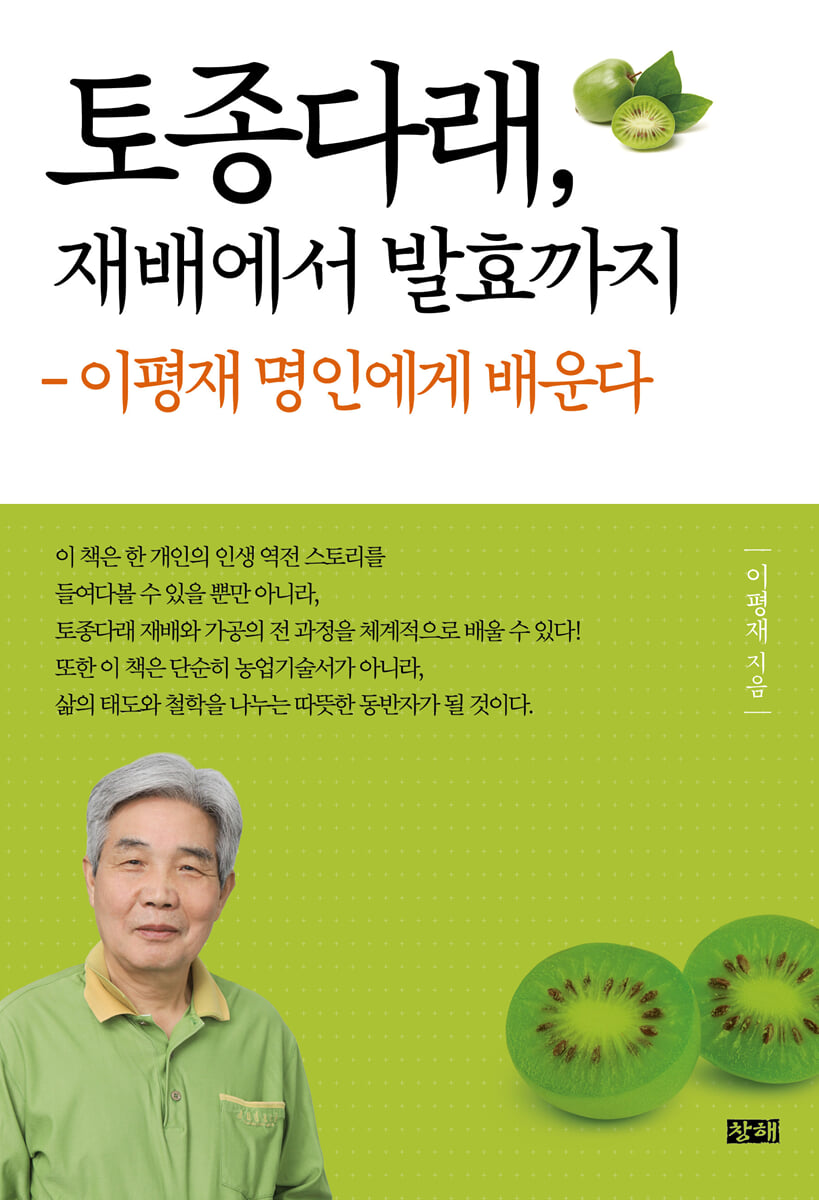
Native persimmons, from cultivation to fermentation
 |
Description
Book Introduction
『Native Pear, From Cultivation to Fermentation』 is not simply an agricultural technology book,
We will be your warm companions who share your attitude and philosophy of life!
- This book not only provides a glimpse into the story of one person's life transformation,
It provides an opportunity to systematically learn the entire process of cultivating and processing native persimmons.
"Native Pear, From Cultivation to Fermentation - Learn from Master Lee Pyeong-jae" provides great courage to those considering returning to farming or the mountains.
For those seeking to escape the city and find a new path in nature, Master Lee Pyeong-jae's story will be a ray of light.
This book is a record of the path I have walked.
I don't just want to tell my success story.
I am still learning.
I hope that this book will serve as a small reference for those who dream of farming, and furthermore, will provide courage to those who are seeking a turning point in their lives.
I want to convey through my own experience how valuable it is to overcome failure and find a new path, and how much that process helps people grow.
We will be your warm companions who share your attitude and philosophy of life!
- This book not only provides a glimpse into the story of one person's life transformation,
It provides an opportunity to systematically learn the entire process of cultivating and processing native persimmons.
"Native Pear, From Cultivation to Fermentation - Learn from Master Lee Pyeong-jae" provides great courage to those considering returning to farming or the mountains.
For those seeking to escape the city and find a new path in nature, Master Lee Pyeong-jae's story will be a ray of light.
This book is a record of the path I have walked.
I don't just want to tell my success story.
I am still learning.
I hope that this book will serve as a small reference for those who dream of farming, and furthermore, will provide courage to those who are seeking a turning point in their lives.
I want to convey through my own experience how valuable it is to overcome failure and find a new path, and how much that process helps people grow.
- You can preview some of the book's contents.
Preview
index
Recommendation 1 _ I hope this will be of great help in promoting the proper understanding of native persimmons.
(Kim Myeong-pil: Director of Southern Academic Forest, College of Agriculture and Life Sciences, Seoul National University)
Recommendation 2_ I hope that the success story of the persimmon industry will provide a new path for Korean farmers and give hope to more farmers.
(Cho Yun-seop: Director of the Horticultural Research Institute, Jeollanam-do Agricultural Research and Extension Services)
Recommendation 3 - A practical guide that provides valuable lessons to all those concerned about the future of agriculture and forestry.
(Lee Gap-yeon: Doctor of Agriculture, former professor at Suncheon National University, director of the National Forest Variety Management Center, Korea Forest Service)
Prologue _ A small reference book for those who dream of farming
Part 1.
Act 2: Starting Over in the Mountains
Chapter 1.
A new beginning
1.
From Hell to the Mountains: The IMF Crisis and the Decision to Return to Farming and the Mountains
2.
The Call of Baekunsan: A New Life Found in Nature
3.
First Encounter with Darae: A Fate Created by Childhood Memories
Chapter 2.
Forge your own path
1.
The Path of Learning: Learning Agricultural Technology and the Language of Nature
2.
Finding Hope: Pride as a Farmer
3.
The Master's Philosophy: Life Lessons Learned Through Failure and Challenge
Part 2.
Master Techniques Chapter 5: The Secrets of Native Pear Cultivation and Fermentation
Chapter 1.
Discovery and Understanding of Native Daerae
1.
The History of Native Persimmons: Our People's Traditional Fruit
2.
A Study on the Characteristics and Varieties of Persimmons
3.
The Science of Efficacy: The Health Benefits of Small Fruits, Herbal Medicine, Wild Vegetables, and Sap Collection
Chapter 2.
Cultivation techniques
1.
Soil Management and Drainage Installation: The Optimal Environment for Zelkova Trees
2.
Water and Nutrition: How to Care for Your Persimmon Tree
3.
Pest Control: Eco-Friendly and Effective Methods
Chapter 3.
Varieties breeding and development
1.
Rich Morning, Rich Candle, and Rich Sunset: The Birth of Three Innovative Varieties
2.
The Secret of Breeding: Master Research and Perseverance
3.
Korean Native Pear Goes Global: A Global Vision and Prospects for Korean Fruit
Chapter 4.
Harvesting and processing
1.
The Art of Harvesting: The Best Time and Method
2.
The Secret of Ripening: Techniques for Improving Flavor and Storage
3.
Fermentation and maturation are an art: the process that adds value to persimmons.
Chapter 5.
The beauty of asexual reproduction
1.
When and how to take cuttings
2.
When and how to graft
Chapter 6: Pre-emptive strikes are essential
1.
The purpose of pruning: a key technique in jujube cultivation.
2.
Shaping and Pruning: The Essentials of Jujube Cultivation
3.
Summer Preparation: Careful Care of Persimmon Growing
4.
Winter Preparation: A Key Task That Announces the Beginning of Persimmon Cultivation
Chapter 7.
Agricultural Philosophy and the Future
1.
Farming is a science: You can succeed even after retirement.
2.
A Path for Young Farmers: Farming Requires Studying, Too
3.
Farming is also management: The secrets of running a farm
Epilogue _ Wisdom for Young Farmers
(Kim Myeong-pil: Director of Southern Academic Forest, College of Agriculture and Life Sciences, Seoul National University)
Recommendation 2_ I hope that the success story of the persimmon industry will provide a new path for Korean farmers and give hope to more farmers.
(Cho Yun-seop: Director of the Horticultural Research Institute, Jeollanam-do Agricultural Research and Extension Services)
Recommendation 3 - A practical guide that provides valuable lessons to all those concerned about the future of agriculture and forestry.
(Lee Gap-yeon: Doctor of Agriculture, former professor at Suncheon National University, director of the National Forest Variety Management Center, Korea Forest Service)
Prologue _ A small reference book for those who dream of farming
Part 1.
Act 2: Starting Over in the Mountains
Chapter 1.
A new beginning
1.
From Hell to the Mountains: The IMF Crisis and the Decision to Return to Farming and the Mountains
2.
The Call of Baekunsan: A New Life Found in Nature
3.
First Encounter with Darae: A Fate Created by Childhood Memories
Chapter 2.
Forge your own path
1.
The Path of Learning: Learning Agricultural Technology and the Language of Nature
2.
Finding Hope: Pride as a Farmer
3.
The Master's Philosophy: Life Lessons Learned Through Failure and Challenge
Part 2.
Master Techniques Chapter 5: The Secrets of Native Pear Cultivation and Fermentation
Chapter 1.
Discovery and Understanding of Native Daerae
1.
The History of Native Persimmons: Our People's Traditional Fruit
2.
A Study on the Characteristics and Varieties of Persimmons
3.
The Science of Efficacy: The Health Benefits of Small Fruits, Herbal Medicine, Wild Vegetables, and Sap Collection
Chapter 2.
Cultivation techniques
1.
Soil Management and Drainage Installation: The Optimal Environment for Zelkova Trees
2.
Water and Nutrition: How to Care for Your Persimmon Tree
3.
Pest Control: Eco-Friendly and Effective Methods
Chapter 3.
Varieties breeding and development
1.
Rich Morning, Rich Candle, and Rich Sunset: The Birth of Three Innovative Varieties
2.
The Secret of Breeding: Master Research and Perseverance
3.
Korean Native Pear Goes Global: A Global Vision and Prospects for Korean Fruit
Chapter 4.
Harvesting and processing
1.
The Art of Harvesting: The Best Time and Method
2.
The Secret of Ripening: Techniques for Improving Flavor and Storage
3.
Fermentation and maturation are an art: the process that adds value to persimmons.
Chapter 5.
The beauty of asexual reproduction
1.
When and how to take cuttings
2.
When and how to graft
Chapter 6: Pre-emptive strikes are essential
1.
The purpose of pruning: a key technique in jujube cultivation.
2.
Shaping and Pruning: The Essentials of Jujube Cultivation
3.
Summer Preparation: Careful Care of Persimmon Growing
4.
Winter Preparation: A Key Task That Announces the Beginning of Persimmon Cultivation
Chapter 7.
Agricultural Philosophy and the Future
1.
Farming is a science: You can succeed even after retirement.
2.
A Path for Young Farmers: Farming Requires Studying, Too
3.
Farming is also management: The secrets of running a farm
Epilogue _ Wisdom for Young Farmers
Detailed image

Into the book
While walking around Baekunsan Mountain, I happened to discover a native persimmon.
Although it was a small and simple fruit, it contained the vitality of the mountain.
I remembered the sweet little fruits my mother gave me when I was little.
The taste of the persimmon was not simply the taste of fruit.
It felt like a gift from nature to me.
Looking at the persimmons, I thought of the possibility of a new life in nature.
After losing everything in the city, I wanted to learn how to live in harmony with nature.
The persimmon became the starting point.
I felt that nature was speaking to me through that little fruit.
“Find a new path here.”
But the first year with the walnut tree was by no means easy.
Knowing nothing, I had to learn how to pick up a shovel, level the ground, and plant seeds.
Growing persimmons was not an easy task.
They faced constant challenges such as pests, weather changes, and soil problems.
You need to know what soil is suitable, how much water is needed, and how to manage pests and diseases.
Through books, lectures, and field experiences, I learned little by little about persimmons.
There were many failures.
There were cases where crops were lost due to neglect of pests and diseases, or crops withered due to improper environmental conditions.
But I didn't give up.
I wanted to feel that peace again, the peace I felt under the zelkova tree as a child, and that kept me going.
Every time I experienced failure, I thought about what went wrong and how I could improve.
And I learned a lot in the process.
As time passed, the persimmon trees eventually grew strong and began to bear fruit.
The moment of the first harvest was an indescribable thrill.
After years of hard work, I was able to develop a variety of persimmons.
The varieties named 'Rich Morning', 'Rich Candle', and 'Rich Sunset' each had different tastes and characteristics.
These varieties were more than just the result of my farming.
It was the fruition of the path I walked to rebuild my life.
Today, too, I live on Baekun Mountain, growing persimmons.
Nature is still teaching me, and I am still learning.
In farming, I found the strength to overcome failure and frustration.
And that strength is what drives me to keep moving forward.
Farming was the door that opened a new life for me and the path that allowed me to find hope again.
Now I don't see pears as just a fruit.
Da-rae is my life, my philosophy, and my future.
I must confess that the first five years of farming were a series of failures.
The biggest cause was a mistake in breed selection.
There are numerous varieties of each crop, and I didn't realize at the time how important it was to choose the one that suited the local environment and market demand.
At that time, I thought farming was simply about plowing the land and planting seeds.
But that was only the surface of agriculture.
Agriculture is a complex system that involves numerous factors such as climate, soil, and ecosystem.
Successful farming begins with understanding and harmoniously managing all these elements.
Living in communion with nature was much more sophisticated and detailed than I had expected.
After five years, I began to understand the true value of agriculture.
By building the fundamentals of agriculture, such as selecting differentiated varieties, managing soil, and controlling pests and diseases, we have gradually achieved results.
This process was not simply about farming, but a journey of communing with nature and growing myself.
Looking back, those initial failures weren't just simple frustrations.
They were a valuable stepping stone for me to become a better farmer.
I was able to get to where I am today by not being afraid of failure and constantly learning and challenging myself.
Farming is about cultivating the land, but it is also about cultivating yourself.
The lessons and learnings I gained from this process have made me a stronger and richer person.
There are more than 13 species of native Korean pear trees growing on Baekunsan Mountain in Gwangyang.
This shows that this region has a climate and soil suitable for growing persimmons.
However, people around me questioned my plan, saying, “Who would buy native kiwis when they are big and sweet?”
I thought the opposite.
The judgment was that “it is possible because it is something that others do not do.”
In today's terms, it was a reverse idea.
To industrialize native persimmons, I collaborated with the Jeollanam-do Agricultural Research and Extension Services and the National Institute of Forest Science to develop new varieties.
This became a turning point in persimmon farming.
Among the varieties I have bred, there are some with large seeds, a fragrant aroma, high sugar content, and excellent storage properties.
I want to share the excellence of native persimmons with producers and consumers, so I disclose everything about native persimmons and give lectures.
We will continue to lead the way in promoting the value and branding of native persimmons.
Farming is a series of failures and challenges.
From the moment you plant the seeds to the moment you harvest, every process is a battle against uncertainty.
When I first entered the agricultural field, I believed that the logic and experience I had gained in the business world would be useful in agriculture.
But nature shattered my thoughts.
Uncontrollable factors like weather, pests, and soil conditions didn't work out as I planned.
Failure was inevitable.
But instead of frustrating me, that failure taught me humility and a willingness to learn.
Farming gave me a philosophy.
Nature never lies.
If the seeds I sow do not grow properly, it is because I did something wrong.
Farming was like a mirror reflecting my life.
It was clear how hard I tried and how careful I was.
Also, the biggest lesson I learned through failure and challenges was humility.
I realized that humans are small and inadequate beings in front of nature.
I thought I had everything under control, but nature always showed me the limits of humanity.
This realization made me more humble and motivated me to strive for harmony with nature.
Now I want to share the lessons I've learned through farming with more people.
I want to convey that failure is not something to be feared, but rather an opportunity for growth.
Agriculture is not simply growing crops on land.
It is an art created by humans and nature together, and a philosophy that enriches our lives.
Based on this philosophy, I will continue to learn and grow together with nature without fearing failure or challenges.
That is my farming philosophy.
--- 「Part 1.
From "Life Act 2: Starting Again in the Mountains"
In the Goryeo Dynasty song “Cheongsanbyeolgok,” the persimmon appears as “a fruit that can be commonly eaten in the mountains.”
This document clearly shows how familiar the pear was to the people of that time.
The pear is a fruit that can be easily gathered in mountainous areas and is a natural snack and source of energy.
Although it was a simple and humble ingredient obtained from nature, its value was deeply rooted in people's daily lives.
Entering the Joseon Dynasty, the persimmon began to be used as a medicinal plant rather than just a simple fruit.
In traditional oriental medicine, it is recorded that persimmon is effective in relieving severe thirst, reducing fever, being a diuretic, strengthening the intestines, increasing appetite, and improving stomach health.
Especially in mountainous areas, persimmons have become a readily available natural remedy and an essential resource for alleviating hunger.
Since the 2000s, as interest in health foods has grown, the high vitamin C content and antioxidant properties of native persimmons have attracted attention.
For example, academic journals such as the Journal of the Korean Society of Food and Nutrition and the Journal of Agricultural Sciences have reported that native Korean persimmons contain ingredients that promote beneficial antioxidant effects in the human body and help strengthen the immune system.
Vitamin C is known to contribute to collagen synthesis in the body, boost immunity, and prevent oxidative damage to cells, and its antioxidant properties are known to help slow aging and prevent chronic diseases.
The scientific name for the persimmon is Actinidia arguta, and it is a deciduous broadleaf vine belonging to the genus Actinidia of the family Actinidiaceae.
In Korea, it is called by various names such as da-rae, wild da-rae, mountain da-rae, true da-rae, and native da-rae, and in English, it is called Bower Actinidia and Siberian Gooseberry.
In Chinese characters, it is written as Mihu-ri (未後李) and Mihu-do (未後桃).
The persimmon is a vigorous vine that can grow up to 20 m in length and 15 cm in stem diameter.
Vertically, it prefers shaded areas, such as valleys with flowing water below 1,600 m above sea level.
Geographically, it is distributed throughout Korea, as well as northern China, the mountainous regions of western Japan, and southern Siberia.
Worldwide, there are 2 to 15 genera and approximately 280 to 560 species of persimmons, and in Korea, four species are mainly native: persimmon, wild persimmon, rat persimmon, and island persimmon.
In addition to these, variants such as hairy, green, and flat berries have been reported.
The male and female persimmons are separate trees, blooming in mid to late May and ripening in September to October.
The fruit is mostly oval or round, and has a green, hairless surface.
In the central region, it can be harvested from late August to late September, and in the southern region, it can be harvested from mid-September to mid-October.
The sugar content ranges from 15 to 20 Brix, and the fruit weight varies from 5 to 22 g.
It is evaluated as a health food with excellent taste and containing various nutrients.
Vitamin C, which is abundant in persimmons, has a powerful antioxidant effect.
It is effective in removing active oxygen, preventing cell aging, and strengthening the immune system.
In particular, persimmons are known to be effective in preventing and treating scurvy, and have been used as a natural remedy for the sick since ancient times.
Native persimmons contain high antioxidant content.
In particular, vitamin C and polyphenols are representative ingredients, and they play an important role in removing active oxygen and preventing cell damage.
According to research, the vitamin C content of native persimmons is two to three times higher than that of New Zealand kiwis.
It helps to recover from fatigue and strengthen immunity, and has the effect of inhibiting aging.
I was able to experience the antioxidant effect while studying fermented juice processed from persimmons.
The persimmon tree has the characteristic of growing well in both sunny and shady places.
It is also highly adaptable to most soils, but it grows best in deep, fertile sandy loam soils.
An ideal location for growing persimmons is one where half of the daily sunlight hours are sunny and the other half are shady.
However, growth may be impaired in highly acidic soil, so it is desirable to maintain soil acidity at a neutral level.
In the southern regions, kiwi growers are increasingly switching to crops of persimmons.
Compared to other fruits, persimmons require fewer stages of cultivation and fewer pest control procedures, making them a popular crop for farmers and mountaineers.
Additionally, persimmons are relatively easy to cultivate and manage, making them suitable for older farmers.
For example, a farm in Gangwon Province converted its existing pear tree cultivation to persimmon cultivation, reducing work time by half and improving profitability.
New Zealand is a country that has achieved world-wide fame for its kiwifruit (Actinidia deliciosa) industry, and has recently also turned its attention to growing jujubes (Actinidia arguta).
The persimmon is considered a high-potential crop in New Zealand, and research and expansion of cultivation areas are exploring the potential for sustainable industrialization.
For planting azalea trees, a gentle slope and well-drained area such as a foothill or hillside is suitable.
When planting in a field or a field, it is essential to dig ditches for drainage.
Soil management and vine planting are key techniques in cultivating jujube trees.
Proper drainage, soil improvement, and efficient vine installation can ensure healthy growth and high-quality fruit production for your persimmon trees.
The case of our Boojeong Farm demonstrates how important a planned and systematic approach is in agriculture.
My experience and know-how will be a useful guide for anyone who wants to grow persimmon trees.
I believe that breeding is not simply an extension of agricultural technology, but an artistic process that requires the passion, perseverance, and creative thinking of farmers.
In particular, to develop varieties that are competitive in the global market, it is necessary to go beyond simply increasing productivity and quality, and to incorporate characteristics and stories that consumers desire.
The breeding of persimmon varieties began in this very process, and was achieved through countless trials and errors, patience, and constant observation and research.
Breeding persimmons is a task that requires a lot of patience and effort.
For 17 years, I have strived to maximize the potential of native Korean pears, create new varieties, and expand the pride of Korean agriculture to the world.
Rich Morning, Rich Candle, and Rich Sunset, which were born during this process, went beyond simply developing varieties and became the key to opening a new path for the persimmon industry.
These three varieties are early maturing, mid-maturing, and late maturing, respectively, and each have different characteristics and strengths, providing farmers with diversity and possibilities.
The road to breeding varieties was longer and more arduous than expected.
Especially, the process of growing a relatively under-recognized crop like persimmon into a world-class variety is impossible without patience and passion.
Over the course of 17 years, I have developed three varieties: Rich Sunset, Rich Candle, and Rich Morning. I have personally experienced the thorough effort and time required for breeding.
However, the rewards and results gained from the process were worth it, surpassing all the difficulties.
The future of the persimmon that I dream of is not limited to its success as a simple fruit.
The persimmon can be a tool to show the world the potential of our country's agriculture and a key to revitalizing the local economy.
I hope that the persimmon will become more than just a crop that generates income; it will become a window through which our country's agriculture communicates with the world.
I believe that persimmons can become a source of pride for Korea.
The persimmon is not just a simple fruit.
It is a precious heritage that contains our nature, traditions, and agricultural technology.
Sharing this heritage with the world will not be an easy challenge, but I feel every day that it is worth it.
We will continue to make every effort to globalize Da-rae.
I believe that this journey is not simply my work, but a path for the future of all agriculture in Korea.
Enzymes simplify complex chemical reactions through highly specific and rapid catalysis.
This is an important function that helps chemical reactions in the body proceed smoothly.
Enzymes can be broadly divided into two types.
Catabolism refers to a reaction that breaks down a substance, and anabolism refers to a reaction that synthesizes a substance.
These two processes combine to form metabolism.
The importance of enzymes in agriculture is growing.
There are increasing cases of using enzymes to promote crop growth or improve storage properties.
In particular, agriculture using fermentation is a representative example where the role of enzymes stands out.
Fermentation is a process that uses enzymes produced by microorganisms to produce beneficial metabolites, which contributes to improving the quality of agricultural products and creating added value.
Research on enzymes is actively being conducted not only in agriculture but also in the medical and food industries.
Recently, there has been an increasing effort to develop customized enzymes suitable for specific crops through genetic engineering.
These enzymes can increase crop disease and pest resistance, extend post-harvest storage, and provide consumers with better taste and nutrition.
I believe that enzyme research is a key to changing the future of agriculture.
The use of enzymes can go beyond simply increasing production and contribute to achieving sustainability and environmental protection simultaneously.
Bujeon Farm will continue to experiment with and share various agricultural technologies utilizing enzymes, striving to enable more farmers to enjoy the benefits of enzymes.
The quality of fermented persimmon juice is determined from the selection of ingredients.
Fresh native persimmons provide the flavor and nutrients that are essential for the fermentation process, and sugar is used as an energy source for the microorganisms to function.
Using a dedicated fermentation container is also an important step.
Care must be taken when selecting containers, especially since the acidic environment created during fermentation can damage plastic containers.
Fermentation is not simply a traditional technique, but a sophisticated process based on scientific knowledge and an understanding of nature.
I strive to maximize the value of persimmons through the fermentation process, thereby bringing agriculture closer to consumers.
Fermented persimmon products are an innovative agricultural product that combines taste, health, and sustainability, and we plan to explore further possibilities in the future.
Fermentation is not just about preserving fruit; it's the key to opening new avenues in agriculture.
Perilla vinegar is a product with value beyond just a seasoning or health drink.
Through the fermentation process, persimmons are not only wonderful on their own, but also transform into various forms and uses, revealing even greater potential.
I believe that through persimmon fermentation and vinegar production, agriculture must move beyond simply growing and selling crops and toward creating added value by combining science and creativity.
Fermentation is a fusion of nature, science, and human creativity.
Through this, we hope that persimmons will go beyond the image of a traditional Korean fruit and establish themselves as a global health food.
Agriculture is not simply labor; it is a creative process that combines nature, science, and human wisdom.
Even after retirement, farming can offer new challenges and fulfillment.
Through agriculture, I experience the joy of understanding nature, connecting with the community, and creating a sustainable future.
Farming is not just a job for me, it is a philosophy of life and a passion.
I hope that through this article, many people will realize the value and potential of agriculture and gain the courage to take on new challenges.
Although it was a small and simple fruit, it contained the vitality of the mountain.
I remembered the sweet little fruits my mother gave me when I was little.
The taste of the persimmon was not simply the taste of fruit.
It felt like a gift from nature to me.
Looking at the persimmons, I thought of the possibility of a new life in nature.
After losing everything in the city, I wanted to learn how to live in harmony with nature.
The persimmon became the starting point.
I felt that nature was speaking to me through that little fruit.
“Find a new path here.”
But the first year with the walnut tree was by no means easy.
Knowing nothing, I had to learn how to pick up a shovel, level the ground, and plant seeds.
Growing persimmons was not an easy task.
They faced constant challenges such as pests, weather changes, and soil problems.
You need to know what soil is suitable, how much water is needed, and how to manage pests and diseases.
Through books, lectures, and field experiences, I learned little by little about persimmons.
There were many failures.
There were cases where crops were lost due to neglect of pests and diseases, or crops withered due to improper environmental conditions.
But I didn't give up.
I wanted to feel that peace again, the peace I felt under the zelkova tree as a child, and that kept me going.
Every time I experienced failure, I thought about what went wrong and how I could improve.
And I learned a lot in the process.
As time passed, the persimmon trees eventually grew strong and began to bear fruit.
The moment of the first harvest was an indescribable thrill.
After years of hard work, I was able to develop a variety of persimmons.
The varieties named 'Rich Morning', 'Rich Candle', and 'Rich Sunset' each had different tastes and characteristics.
These varieties were more than just the result of my farming.
It was the fruition of the path I walked to rebuild my life.
Today, too, I live on Baekun Mountain, growing persimmons.
Nature is still teaching me, and I am still learning.
In farming, I found the strength to overcome failure and frustration.
And that strength is what drives me to keep moving forward.
Farming was the door that opened a new life for me and the path that allowed me to find hope again.
Now I don't see pears as just a fruit.
Da-rae is my life, my philosophy, and my future.
I must confess that the first five years of farming were a series of failures.
The biggest cause was a mistake in breed selection.
There are numerous varieties of each crop, and I didn't realize at the time how important it was to choose the one that suited the local environment and market demand.
At that time, I thought farming was simply about plowing the land and planting seeds.
But that was only the surface of agriculture.
Agriculture is a complex system that involves numerous factors such as climate, soil, and ecosystem.
Successful farming begins with understanding and harmoniously managing all these elements.
Living in communion with nature was much more sophisticated and detailed than I had expected.
After five years, I began to understand the true value of agriculture.
By building the fundamentals of agriculture, such as selecting differentiated varieties, managing soil, and controlling pests and diseases, we have gradually achieved results.
This process was not simply about farming, but a journey of communing with nature and growing myself.
Looking back, those initial failures weren't just simple frustrations.
They were a valuable stepping stone for me to become a better farmer.
I was able to get to where I am today by not being afraid of failure and constantly learning and challenging myself.
Farming is about cultivating the land, but it is also about cultivating yourself.
The lessons and learnings I gained from this process have made me a stronger and richer person.
There are more than 13 species of native Korean pear trees growing on Baekunsan Mountain in Gwangyang.
This shows that this region has a climate and soil suitable for growing persimmons.
However, people around me questioned my plan, saying, “Who would buy native kiwis when they are big and sweet?”
I thought the opposite.
The judgment was that “it is possible because it is something that others do not do.”
In today's terms, it was a reverse idea.
To industrialize native persimmons, I collaborated with the Jeollanam-do Agricultural Research and Extension Services and the National Institute of Forest Science to develop new varieties.
This became a turning point in persimmon farming.
Among the varieties I have bred, there are some with large seeds, a fragrant aroma, high sugar content, and excellent storage properties.
I want to share the excellence of native persimmons with producers and consumers, so I disclose everything about native persimmons and give lectures.
We will continue to lead the way in promoting the value and branding of native persimmons.
Farming is a series of failures and challenges.
From the moment you plant the seeds to the moment you harvest, every process is a battle against uncertainty.
When I first entered the agricultural field, I believed that the logic and experience I had gained in the business world would be useful in agriculture.
But nature shattered my thoughts.
Uncontrollable factors like weather, pests, and soil conditions didn't work out as I planned.
Failure was inevitable.
But instead of frustrating me, that failure taught me humility and a willingness to learn.
Farming gave me a philosophy.
Nature never lies.
If the seeds I sow do not grow properly, it is because I did something wrong.
Farming was like a mirror reflecting my life.
It was clear how hard I tried and how careful I was.
Also, the biggest lesson I learned through failure and challenges was humility.
I realized that humans are small and inadequate beings in front of nature.
I thought I had everything under control, but nature always showed me the limits of humanity.
This realization made me more humble and motivated me to strive for harmony with nature.
Now I want to share the lessons I've learned through farming with more people.
I want to convey that failure is not something to be feared, but rather an opportunity for growth.
Agriculture is not simply growing crops on land.
It is an art created by humans and nature together, and a philosophy that enriches our lives.
Based on this philosophy, I will continue to learn and grow together with nature without fearing failure or challenges.
That is my farming philosophy.
--- 「Part 1.
From "Life Act 2: Starting Again in the Mountains"
In the Goryeo Dynasty song “Cheongsanbyeolgok,” the persimmon appears as “a fruit that can be commonly eaten in the mountains.”
This document clearly shows how familiar the pear was to the people of that time.
The pear is a fruit that can be easily gathered in mountainous areas and is a natural snack and source of energy.
Although it was a simple and humble ingredient obtained from nature, its value was deeply rooted in people's daily lives.
Entering the Joseon Dynasty, the persimmon began to be used as a medicinal plant rather than just a simple fruit.
In traditional oriental medicine, it is recorded that persimmon is effective in relieving severe thirst, reducing fever, being a diuretic, strengthening the intestines, increasing appetite, and improving stomach health.
Especially in mountainous areas, persimmons have become a readily available natural remedy and an essential resource for alleviating hunger.
Since the 2000s, as interest in health foods has grown, the high vitamin C content and antioxidant properties of native persimmons have attracted attention.
For example, academic journals such as the Journal of the Korean Society of Food and Nutrition and the Journal of Agricultural Sciences have reported that native Korean persimmons contain ingredients that promote beneficial antioxidant effects in the human body and help strengthen the immune system.
Vitamin C is known to contribute to collagen synthesis in the body, boost immunity, and prevent oxidative damage to cells, and its antioxidant properties are known to help slow aging and prevent chronic diseases.
The scientific name for the persimmon is Actinidia arguta, and it is a deciduous broadleaf vine belonging to the genus Actinidia of the family Actinidiaceae.
In Korea, it is called by various names such as da-rae, wild da-rae, mountain da-rae, true da-rae, and native da-rae, and in English, it is called Bower Actinidia and Siberian Gooseberry.
In Chinese characters, it is written as Mihu-ri (未後李) and Mihu-do (未後桃).
The persimmon is a vigorous vine that can grow up to 20 m in length and 15 cm in stem diameter.
Vertically, it prefers shaded areas, such as valleys with flowing water below 1,600 m above sea level.
Geographically, it is distributed throughout Korea, as well as northern China, the mountainous regions of western Japan, and southern Siberia.
Worldwide, there are 2 to 15 genera and approximately 280 to 560 species of persimmons, and in Korea, four species are mainly native: persimmon, wild persimmon, rat persimmon, and island persimmon.
In addition to these, variants such as hairy, green, and flat berries have been reported.
The male and female persimmons are separate trees, blooming in mid to late May and ripening in September to October.
The fruit is mostly oval or round, and has a green, hairless surface.
In the central region, it can be harvested from late August to late September, and in the southern region, it can be harvested from mid-September to mid-October.
The sugar content ranges from 15 to 20 Brix, and the fruit weight varies from 5 to 22 g.
It is evaluated as a health food with excellent taste and containing various nutrients.
Vitamin C, which is abundant in persimmons, has a powerful antioxidant effect.
It is effective in removing active oxygen, preventing cell aging, and strengthening the immune system.
In particular, persimmons are known to be effective in preventing and treating scurvy, and have been used as a natural remedy for the sick since ancient times.
Native persimmons contain high antioxidant content.
In particular, vitamin C and polyphenols are representative ingredients, and they play an important role in removing active oxygen and preventing cell damage.
According to research, the vitamin C content of native persimmons is two to three times higher than that of New Zealand kiwis.
It helps to recover from fatigue and strengthen immunity, and has the effect of inhibiting aging.
I was able to experience the antioxidant effect while studying fermented juice processed from persimmons.
The persimmon tree has the characteristic of growing well in both sunny and shady places.
It is also highly adaptable to most soils, but it grows best in deep, fertile sandy loam soils.
An ideal location for growing persimmons is one where half of the daily sunlight hours are sunny and the other half are shady.
However, growth may be impaired in highly acidic soil, so it is desirable to maintain soil acidity at a neutral level.
In the southern regions, kiwi growers are increasingly switching to crops of persimmons.
Compared to other fruits, persimmons require fewer stages of cultivation and fewer pest control procedures, making them a popular crop for farmers and mountaineers.
Additionally, persimmons are relatively easy to cultivate and manage, making them suitable for older farmers.
For example, a farm in Gangwon Province converted its existing pear tree cultivation to persimmon cultivation, reducing work time by half and improving profitability.
New Zealand is a country that has achieved world-wide fame for its kiwifruit (Actinidia deliciosa) industry, and has recently also turned its attention to growing jujubes (Actinidia arguta).
The persimmon is considered a high-potential crop in New Zealand, and research and expansion of cultivation areas are exploring the potential for sustainable industrialization.
For planting azalea trees, a gentle slope and well-drained area such as a foothill or hillside is suitable.
When planting in a field or a field, it is essential to dig ditches for drainage.
Soil management and vine planting are key techniques in cultivating jujube trees.
Proper drainage, soil improvement, and efficient vine installation can ensure healthy growth and high-quality fruit production for your persimmon trees.
The case of our Boojeong Farm demonstrates how important a planned and systematic approach is in agriculture.
My experience and know-how will be a useful guide for anyone who wants to grow persimmon trees.
I believe that breeding is not simply an extension of agricultural technology, but an artistic process that requires the passion, perseverance, and creative thinking of farmers.
In particular, to develop varieties that are competitive in the global market, it is necessary to go beyond simply increasing productivity and quality, and to incorporate characteristics and stories that consumers desire.
The breeding of persimmon varieties began in this very process, and was achieved through countless trials and errors, patience, and constant observation and research.
Breeding persimmons is a task that requires a lot of patience and effort.
For 17 years, I have strived to maximize the potential of native Korean pears, create new varieties, and expand the pride of Korean agriculture to the world.
Rich Morning, Rich Candle, and Rich Sunset, which were born during this process, went beyond simply developing varieties and became the key to opening a new path for the persimmon industry.
These three varieties are early maturing, mid-maturing, and late maturing, respectively, and each have different characteristics and strengths, providing farmers with diversity and possibilities.
The road to breeding varieties was longer and more arduous than expected.
Especially, the process of growing a relatively under-recognized crop like persimmon into a world-class variety is impossible without patience and passion.
Over the course of 17 years, I have developed three varieties: Rich Sunset, Rich Candle, and Rich Morning. I have personally experienced the thorough effort and time required for breeding.
However, the rewards and results gained from the process were worth it, surpassing all the difficulties.
The future of the persimmon that I dream of is not limited to its success as a simple fruit.
The persimmon can be a tool to show the world the potential of our country's agriculture and a key to revitalizing the local economy.
I hope that the persimmon will become more than just a crop that generates income; it will become a window through which our country's agriculture communicates with the world.
I believe that persimmons can become a source of pride for Korea.
The persimmon is not just a simple fruit.
It is a precious heritage that contains our nature, traditions, and agricultural technology.
Sharing this heritage with the world will not be an easy challenge, but I feel every day that it is worth it.
We will continue to make every effort to globalize Da-rae.
I believe that this journey is not simply my work, but a path for the future of all agriculture in Korea.
Enzymes simplify complex chemical reactions through highly specific and rapid catalysis.
This is an important function that helps chemical reactions in the body proceed smoothly.
Enzymes can be broadly divided into two types.
Catabolism refers to a reaction that breaks down a substance, and anabolism refers to a reaction that synthesizes a substance.
These two processes combine to form metabolism.
The importance of enzymes in agriculture is growing.
There are increasing cases of using enzymes to promote crop growth or improve storage properties.
In particular, agriculture using fermentation is a representative example where the role of enzymes stands out.
Fermentation is a process that uses enzymes produced by microorganisms to produce beneficial metabolites, which contributes to improving the quality of agricultural products and creating added value.
Research on enzymes is actively being conducted not only in agriculture but also in the medical and food industries.
Recently, there has been an increasing effort to develop customized enzymes suitable for specific crops through genetic engineering.
These enzymes can increase crop disease and pest resistance, extend post-harvest storage, and provide consumers with better taste and nutrition.
I believe that enzyme research is a key to changing the future of agriculture.
The use of enzymes can go beyond simply increasing production and contribute to achieving sustainability and environmental protection simultaneously.
Bujeon Farm will continue to experiment with and share various agricultural technologies utilizing enzymes, striving to enable more farmers to enjoy the benefits of enzymes.
The quality of fermented persimmon juice is determined from the selection of ingredients.
Fresh native persimmons provide the flavor and nutrients that are essential for the fermentation process, and sugar is used as an energy source for the microorganisms to function.
Using a dedicated fermentation container is also an important step.
Care must be taken when selecting containers, especially since the acidic environment created during fermentation can damage plastic containers.
Fermentation is not simply a traditional technique, but a sophisticated process based on scientific knowledge and an understanding of nature.
I strive to maximize the value of persimmons through the fermentation process, thereby bringing agriculture closer to consumers.
Fermented persimmon products are an innovative agricultural product that combines taste, health, and sustainability, and we plan to explore further possibilities in the future.
Fermentation is not just about preserving fruit; it's the key to opening new avenues in agriculture.
Perilla vinegar is a product with value beyond just a seasoning or health drink.
Through the fermentation process, persimmons are not only wonderful on their own, but also transform into various forms and uses, revealing even greater potential.
I believe that through persimmon fermentation and vinegar production, agriculture must move beyond simply growing and selling crops and toward creating added value by combining science and creativity.
Fermentation is a fusion of nature, science, and human creativity.
Through this, we hope that persimmons will go beyond the image of a traditional Korean fruit and establish themselves as a global health food.
Agriculture is not simply labor; it is a creative process that combines nature, science, and human wisdom.
Even after retirement, farming can offer new challenges and fulfillment.
Through agriculture, I experience the joy of understanding nature, connecting with the community, and creating a sustainable future.
Farming is not just a job for me, it is a philosophy of life and a passion.
I hope that through this article, many people will realize the value and potential of agriculture and gain the courage to take on new challenges.
--- From the text
Publisher's Review
"Native Daerae, From Cultivation to Fermentation - Learn from Master Lee Pyeong-jae" is more than just one man's farming story; it's a vivid record of his passion, perseverance, and deep love for agriculture!
“Master Lee Pyeong-jae is a unique craftsman and innovator in this field, so much so that the mere mention of native persimmons is associated with his life.
But his life wasn't always smooth sailing. After his business failed due to the IMF foreign exchange crisis, he retreated into the mountains, seeking a new direction in his life.
That choice became the starting point for a major change in the agricultural industry in South Korea today.
"Native Daerae, From Cultivation to Fermentation - Learn from Master Lee Pyeong-jae" is more than just one man's farming story; it is a vivid record of his passion, perseverance, and deep love for agriculture.
In this book, we can not only glimpse the story of one individual's life transformation, but also systematically learn the entire process of cultivating and processing native persimmons.
-From the “Recommendation” (Kim Myeong-pil, Director of Southern Academic Forest, College of Agriculture and Life Sciences, Seoul National University)
“Learning from Master Lee Pyeong-jae, from Cultivation to Fermentation,” based on the experience and know-how of Master Lee Pyeong-jae, is a valuable resource that provides practical guidance to those interested in the pear industry.
In particular, he transformed the persimmon, which was nothing more than a vine-like wild plant, from a simple fruit producer to a key product of the high value-added food industry.
At a time when agriculture is facing a crisis, he has built a sustainable agricultural model by combining specialized production and processing technologies with his unique perspective and creative approach.
“I hope that the success story of Bujeon Farm’s persimmon industry will provide a new path for Korean farmers and bring hope to more farmers.”
-From the 〈Recommendation〉 (Cho Yun-seop, Director of the Horticultural Research Institute, Jeollanam-do Agricultural Research and Extension Services)
“『Native Pear, From Cultivation to Fermentation - Learn from Master Lee Pyeong-jae』 is not just a simple technical book.
This is a success story of one person pioneering the entire process, from variety development to distribution and processing, and a practical guide that provides valuable lessons for all those contemplating the future of agriculture and forestry.
His challenges and achievements, which began with a single plant called the persimmon, serve as a model for new possibilities in agriculture and forestry, and also provide valuable direction for future farmers.
I sincerely hope that this book goes beyond simply imparting knowledge and, reflecting on the success of Master Lee Pyeong-jae, will serve as an opportunity to create countless other agricultural masters.”
-From the recommendation (Gap-yeon Lee, Ph.D. in Agricultural Sciences, former professor at Suncheon National University, director of the National Forest Variety Management Center, Korea Forest Service)
This book is not simply a guide to agricultural techniques; it is a warm companion that shares life's attitude and philosophy.
Sometimes, when life's challenges seem scary and change seems difficult, read this book.
It will come as a practical lesson that we can apply to our lives.
The recently published 『Native Pear, From Cultivation to Fermentation - Learn from Master Lee Pyeong-jae』 is divided into two parts.
〈Part 1.
Act 2 of Life: Starting Again in the Mountains 〈Life Act 2: Starting Again in the Mountains〉 is the autobiographical story of Lee Pyeong-jae, a pioneer of native persimmons, and is divided into two chapters (Chapter 1.
A New Beginning, Chapter 2.
It is divided into “Forging My Own Path” and contains the author’s passion and struggles for native persimmons over the past 20 years.
〈Part 2.
Chapter 7 of Master's Techniques: The Secret of Native Pear Cultivation and Fermentation〉 is divided into 7 chapters (Chapter 1.
Discovery and Understanding of Native Persimmons, Chapter 2.
Cultivation techniques, Chapter 3.
Breeding and Development of Varieties, Chapter 4.
Harvesting and Processing, Chapter 5.
The Beauty of Asexual Reproduction, Chapter 6.
Pre-planning is essential, Chapter 7.
It is divided into agricultural philosophy and future and is covered in detail.
The book 『Native Persimmon, From Cultivation to Fermentation』, which includes a total of 170 photo illustrations in parts 1 and 2, is unique in that it is designed so that you can cultivate and ferment native persimmons yourself just by looking at the book.
Therefore, 『Native Da-rae, From Cultivation to Fermentation - Learn from Master Lee Pyeong-jae』 will be a book like a shower that moistens dry land for those who are interested in native da-rae, as well as for those who dream of returning to farming or the countryside.
“Master Lee Pyeong-jae is a unique craftsman and innovator in this field, so much so that the mere mention of native persimmons is associated with his life.
But his life wasn't always smooth sailing. After his business failed due to the IMF foreign exchange crisis, he retreated into the mountains, seeking a new direction in his life.
That choice became the starting point for a major change in the agricultural industry in South Korea today.
"Native Daerae, From Cultivation to Fermentation - Learn from Master Lee Pyeong-jae" is more than just one man's farming story; it is a vivid record of his passion, perseverance, and deep love for agriculture.
In this book, we can not only glimpse the story of one individual's life transformation, but also systematically learn the entire process of cultivating and processing native persimmons.
-From the “Recommendation” (Kim Myeong-pil, Director of Southern Academic Forest, College of Agriculture and Life Sciences, Seoul National University)
“Learning from Master Lee Pyeong-jae, from Cultivation to Fermentation,” based on the experience and know-how of Master Lee Pyeong-jae, is a valuable resource that provides practical guidance to those interested in the pear industry.
In particular, he transformed the persimmon, which was nothing more than a vine-like wild plant, from a simple fruit producer to a key product of the high value-added food industry.
At a time when agriculture is facing a crisis, he has built a sustainable agricultural model by combining specialized production and processing technologies with his unique perspective and creative approach.
“I hope that the success story of Bujeon Farm’s persimmon industry will provide a new path for Korean farmers and bring hope to more farmers.”
-From the 〈Recommendation〉 (Cho Yun-seop, Director of the Horticultural Research Institute, Jeollanam-do Agricultural Research and Extension Services)
“『Native Pear, From Cultivation to Fermentation - Learn from Master Lee Pyeong-jae』 is not just a simple technical book.
This is a success story of one person pioneering the entire process, from variety development to distribution and processing, and a practical guide that provides valuable lessons for all those contemplating the future of agriculture and forestry.
His challenges and achievements, which began with a single plant called the persimmon, serve as a model for new possibilities in agriculture and forestry, and also provide valuable direction for future farmers.
I sincerely hope that this book goes beyond simply imparting knowledge and, reflecting on the success of Master Lee Pyeong-jae, will serve as an opportunity to create countless other agricultural masters.”
-From the recommendation (Gap-yeon Lee, Ph.D. in Agricultural Sciences, former professor at Suncheon National University, director of the National Forest Variety Management Center, Korea Forest Service)
This book is not simply a guide to agricultural techniques; it is a warm companion that shares life's attitude and philosophy.
Sometimes, when life's challenges seem scary and change seems difficult, read this book.
It will come as a practical lesson that we can apply to our lives.
The recently published 『Native Pear, From Cultivation to Fermentation - Learn from Master Lee Pyeong-jae』 is divided into two parts.
〈Part 1.
Act 2 of Life: Starting Again in the Mountains 〈Life Act 2: Starting Again in the Mountains〉 is the autobiographical story of Lee Pyeong-jae, a pioneer of native persimmons, and is divided into two chapters (Chapter 1.
A New Beginning, Chapter 2.
It is divided into “Forging My Own Path” and contains the author’s passion and struggles for native persimmons over the past 20 years.
〈Part 2.
Chapter 7 of Master's Techniques: The Secret of Native Pear Cultivation and Fermentation〉 is divided into 7 chapters (Chapter 1.
Discovery and Understanding of Native Persimmons, Chapter 2.
Cultivation techniques, Chapter 3.
Breeding and Development of Varieties, Chapter 4.
Harvesting and Processing, Chapter 5.
The Beauty of Asexual Reproduction, Chapter 6.
Pre-planning is essential, Chapter 7.
It is divided into agricultural philosophy and future and is covered in detail.
The book 『Native Persimmon, From Cultivation to Fermentation』, which includes a total of 170 photo illustrations in parts 1 and 2, is unique in that it is designed so that you can cultivate and ferment native persimmons yourself just by looking at the book.
Therefore, 『Native Da-rae, From Cultivation to Fermentation - Learn from Master Lee Pyeong-jae』 will be a book like a shower that moistens dry land for those who are interested in native da-rae, as well as for those who dream of returning to farming or the countryside.
GOODS SPECIFICS
- Date of issue: March 31, 2025
- Page count, weight, size: 280 pages | 506g | 153*224*20mm
- ISBN13: 9791171740345
- ISBN10: 1171740344
You may also like
카테고리
korean


korean

![GQ KOREA Mark (Monthly): December [2025]](http://librairie.coreenne.fr/cdn/shop/files/8ef265dbbfbf186523ed75ba7319009d.jpg?v=1765340328&width=3840)


