

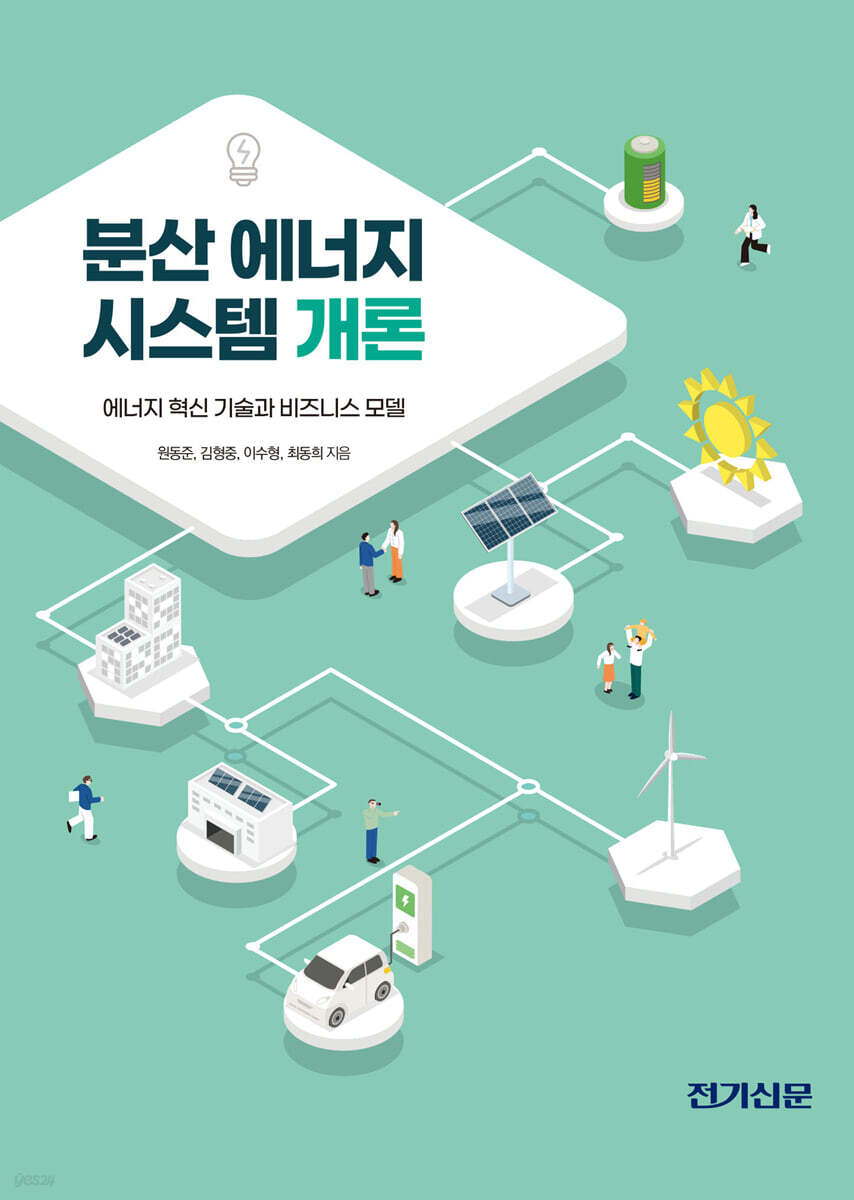
Introduction to Distributed Energy Systems
 |
Description
Book Introduction
Distributed energy is moving beyond a simple technical concept and is becoming a problem directly related to the challenges of our time: expanding renewable energy, achieving energy independence, and securing power grid stability.
The existing power grid supplies electricity from large-scale power plants through transmission lines. However, as regional power imbalances and the difficulty of constructing transmission facilities increase, the introduction of a distributed power system is becoming inevitable.
Amidst these changes, "Introduction to Distributed Energy Systems" explains the limitations and challenges of the current centralized power grid and analyzes, through empirical cases, the role that distributed systems can play in achieving power grid stability, energy independence, and carbon neutrality goals.
Furthermore, through a comparison of policies across countries, we will identify the direction and institutional challenges Korea must overcome, while also examining the economic feasibility and investment prospects of distributed energy projects from various perspectives.
The existing power grid supplies electricity from large-scale power plants through transmission lines. However, as regional power imbalances and the difficulty of constructing transmission facilities increase, the introduction of a distributed power system is becoming inevitable.
Amidst these changes, "Introduction to Distributed Energy Systems" explains the limitations and challenges of the current centralized power grid and analyzes, through empirical cases, the role that distributed systems can play in achieving power grid stability, energy independence, and carbon neutrality goals.
Furthermore, through a comparison of policies across countries, we will identify the direction and institutional challenges Korea must overcome, while also examining the economic feasibility and investment prospects of distributed energy projects from various perspectives.
index
Part 1: Why Distributed Energy?
Part 2: Distributed Energy Technologies
Part 3: Distributed Energy Business and Utilization
Part 4: Distributed Energy Policy
Part 2: Distributed Energy Technologies
Part 3: Distributed Energy Business and Utilization
Part 4: Distributed Energy Policy
Detailed image

Into the book
In an era of climate crisis that goes beyond climate change, our lives are also undergoing great changes.
Efforts by each country to achieve carbon neutrality to overcome the climate crisis have now expanded beyond mere matters of necessity to impact our industrial competitiveness, energy system, and overall economic life.
Our country is also at a major turning point where it must simultaneously achieve national goals such as achieving the NDC goals, expanding the supply of renewable energy, and revitalizing new energy industries.
To achieve this, it is inevitable to move away from the centralized energy supply system that has been our country's current energy supply system and toward a distributed energy system.
The transition to a distributed energy system will be both a responsibility and an opportunity for future generations.
We hope everyone will join us on this bold journey toward distributed energy.
Efforts by each country to achieve carbon neutrality to overcome the climate crisis have now expanded beyond mere matters of necessity to impact our industrial competitiveness, energy system, and overall economic life.
Our country is also at a major turning point where it must simultaneously achieve national goals such as achieving the NDC goals, expanding the supply of renewable energy, and revitalizing new energy industries.
To achieve this, it is inevitable to move away from the centralized energy supply system that has been our country's current energy supply system and toward a distributed energy system.
The transition to a distributed energy system will be both a responsibility and an opportunity for future generations.
We hope everyone will join us on this bold journey toward distributed energy.
--- From the text
Publisher's Review
As climate change mitigation and the expansion of renewable energy emerge as global challenges, building a decentralized power generation and consumption system is becoming a key topic in the energy industry. Advances in AI, big data, and Fourth Industrial Revolution technologies are driving continued growth in electricity demand. However, regional imbalances in power supply and demand and difficulties in building power plants and transmission lines are pushing existing centralized power grids to their limits.
Distributed energy is moving beyond a simple technical concept and is becoming a problem directly related to the challenges of our time: expanding renewable energy, achieving energy independence, and securing power grid stability.
The existing power grid supplies electricity from large-scale power plants through transmission lines. However, as regional power imbalances and the difficulty of constructing transmission facilities increase, the introduction of a distributed power system is becoming inevitable.
Amidst these changes, "Introduction to Distributed Energy Systems" explains the limitations and challenges of the current centralized power grid and analyzes, through empirical cases, the role that distributed systems can play in achieving power grid stability, energy independence, and carbon neutrality goals.
Furthermore, through a comparison of policies across countries, we will identify the direction and institutional challenges Korea must overcome, while also examining the economic feasibility and investment prospects of distributed energy projects from various perspectives.
The first part of 'Introduction to Distributed Energy Systems', which consists of four parts, delves into what distributed energy is and why it is needed at this point in time.
Part 2, which covers distributed energy technologies, examines key technologies such as renewable energy, distributed power generation, energy storage systems (ESS), sector coupling, and microgrids in detail.
Part 3 highlights future businesses and applications leveraging this, and introduces the latest trends in distributed energy markets and transactions, distribution network operators (DSOs), virtual power plants (VPPs), and non-augmentation alternatives (NWAs).
The final part, Part 4, focuses on the analysis of distributed energy policies and systems, covering the Special Act on the Promotion of Distributed Energy, policy challenges, and future prospects.
This book was co-authored by professors and institutional experts with expertise in distributed energy, power systems, and smart grids.
It contains the perspectives of experts who have actually participated in the planning of distributed energy policies and systems, including Professor Won Dong-jun of Inha University, Director Kim Hyeong-jung of the Korea Energy Agency, Professor Lee Su-hyung of Kongju National University, and Professor Choi Dong-hee of Kongju National University.
The book is expected to be of practical help to a wide range of readers, including university textbooks, business professionals, students preparing for employment and qualification exams, and local government officials responsible for the expansion of distributed energy.
In particular, it is expected to become a must-read for practitioners, policy makers, and researchers.
Each chapter presents problems for readers to consider together, enhancing the learning effect while also allowing for practical application.
The Electric Newspaper, which published the book, stated, “Distributed energy is now an irreversible trend and will become a major driving force that will transform the electric power industry in the future.” The book also said, “This book encompasses not only technical understanding but also policy and economic feasibility, and will provide useful insights not only to practitioners but also to researchers, policymakers, and general readers.”
The authors stated, “We hope that through this book, readers will acquire new knowledge, develop business models utilizing distributed energy, and further contribute to the creation of new systems,” adding, “Our goal is to provide a practical roadmap for the transformation of the energy system.”
The Electric Newspaper published 'Introduction to Distributed Energy Systems' on the 14th.
[Provided by Electric Newspaper]
As we transition from centralized power grids to decentralized energy systems, how should we respond?
"Introduction to Distributed Energy Systems" broadens readers' perspectives by encompassing technological, policy, and economic factors at a time when the electric power industry is undergoing a paradigm shift.
This book goes beyond simply introducing concepts; it analyzes the feasibility of building distributed energy systems based on real-world examples and concrete data.
In particular, it highlights the role of distributed energy in power grid stability and renewable energy expansion, and is characterized by addressing various business models and technological challenges.
Through the operating principles and application cases of new power systems such as microgrids, energy storage systems (ESS), and virtual power plants (VPPs), readers can experience firsthand the changes that distributed energy will bring to real-life and industry.
It will serve as a useful guide not only for researchers, policymakers, and business practitioners contemplating energy transition, but also for anyone seeking to understand future energy systems.
Distributed power systems are no longer a story of the future.
With "Introduction to Distributed Energy Systems," let's understand the current trends and develop a vision to prepare for the future.
Distributed energy is moving beyond a simple technical concept and is becoming a problem directly related to the challenges of our time: expanding renewable energy, achieving energy independence, and securing power grid stability.
The existing power grid supplies electricity from large-scale power plants through transmission lines. However, as regional power imbalances and the difficulty of constructing transmission facilities increase, the introduction of a distributed power system is becoming inevitable.
Amidst these changes, "Introduction to Distributed Energy Systems" explains the limitations and challenges of the current centralized power grid and analyzes, through empirical cases, the role that distributed systems can play in achieving power grid stability, energy independence, and carbon neutrality goals.
Furthermore, through a comparison of policies across countries, we will identify the direction and institutional challenges Korea must overcome, while also examining the economic feasibility and investment prospects of distributed energy projects from various perspectives.
The first part of 'Introduction to Distributed Energy Systems', which consists of four parts, delves into what distributed energy is and why it is needed at this point in time.
Part 2, which covers distributed energy technologies, examines key technologies such as renewable energy, distributed power generation, energy storage systems (ESS), sector coupling, and microgrids in detail.
Part 3 highlights future businesses and applications leveraging this, and introduces the latest trends in distributed energy markets and transactions, distribution network operators (DSOs), virtual power plants (VPPs), and non-augmentation alternatives (NWAs).
The final part, Part 4, focuses on the analysis of distributed energy policies and systems, covering the Special Act on the Promotion of Distributed Energy, policy challenges, and future prospects.
This book was co-authored by professors and institutional experts with expertise in distributed energy, power systems, and smart grids.
It contains the perspectives of experts who have actually participated in the planning of distributed energy policies and systems, including Professor Won Dong-jun of Inha University, Director Kim Hyeong-jung of the Korea Energy Agency, Professor Lee Su-hyung of Kongju National University, and Professor Choi Dong-hee of Kongju National University.
The book is expected to be of practical help to a wide range of readers, including university textbooks, business professionals, students preparing for employment and qualification exams, and local government officials responsible for the expansion of distributed energy.
In particular, it is expected to become a must-read for practitioners, policy makers, and researchers.
Each chapter presents problems for readers to consider together, enhancing the learning effect while also allowing for practical application.
The Electric Newspaper, which published the book, stated, “Distributed energy is now an irreversible trend and will become a major driving force that will transform the electric power industry in the future.” The book also said, “This book encompasses not only technical understanding but also policy and economic feasibility, and will provide useful insights not only to practitioners but also to researchers, policymakers, and general readers.”
The authors stated, “We hope that through this book, readers will acquire new knowledge, develop business models utilizing distributed energy, and further contribute to the creation of new systems,” adding, “Our goal is to provide a practical roadmap for the transformation of the energy system.”
The Electric Newspaper published 'Introduction to Distributed Energy Systems' on the 14th.
[Provided by Electric Newspaper]
As we transition from centralized power grids to decentralized energy systems, how should we respond?
"Introduction to Distributed Energy Systems" broadens readers' perspectives by encompassing technological, policy, and economic factors at a time when the electric power industry is undergoing a paradigm shift.
This book goes beyond simply introducing concepts; it analyzes the feasibility of building distributed energy systems based on real-world examples and concrete data.
In particular, it highlights the role of distributed energy in power grid stability and renewable energy expansion, and is characterized by addressing various business models and technological challenges.
Through the operating principles and application cases of new power systems such as microgrids, energy storage systems (ESS), and virtual power plants (VPPs), readers can experience firsthand the changes that distributed energy will bring to real-life and industry.
It will serve as a useful guide not only for researchers, policymakers, and business practitioners contemplating energy transition, but also for anyone seeking to understand future energy systems.
Distributed power systems are no longer a story of the future.
With "Introduction to Distributed Energy Systems," let's understand the current trends and develop a vision to prepare for the future.
GOODS SPECIFICS
- Date of issue: March 14, 2025
- Page count, weight, size: 295 pages | 185*257*20mm
- ISBN13: 9791199096202
- ISBN10: 1199096202
You may also like
카테고리
korean


korean

![GQ KOREA Mark (Monthly): December [2025]](http://librairie.coreenne.fr/cdn/shop/files/8ef265dbbfbf186523ed75ba7319009d.jpg?v=1765340328&width=3840)


