

Korean wild flowers
 |
Description
Book Introduction
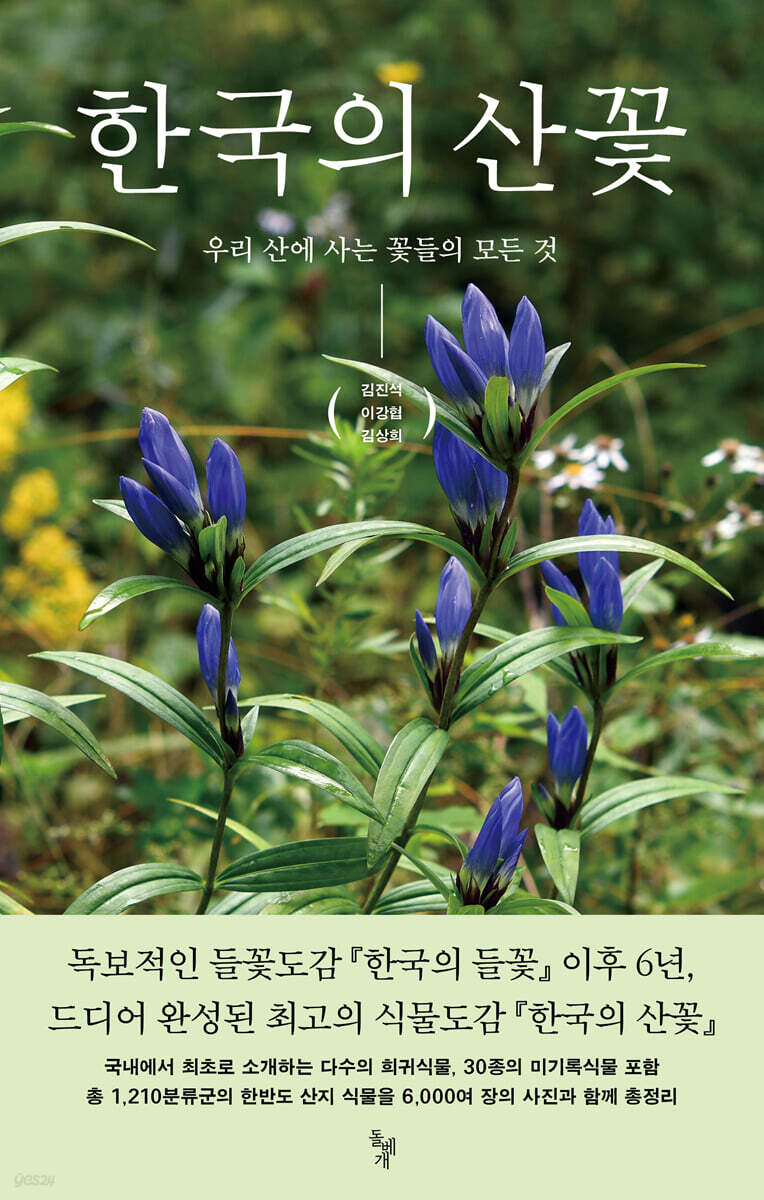
Six years after the publication of the unique wildflower guide 『Wildflowers of Korea』,
The ultimate Korean plant guide is finally complete.
A must-read for plant researchers and enthusiasts
The richest and most detailed record of the flowers that live in our mountains.
Finally, the best Korean plant guide, 『Korean Wildflowers』, has been completed.
This latest work, following the unrivaled wildflower guide 『Wildflowers of Korea』 (selected as Science Book of the Year by [Popular Science] in 2018) and the tree guide 『Trees of Korea』, most trusted by experts, is also full of substantial records and data that will surely meet the expectations of many who have been eagerly awaiting its publication.
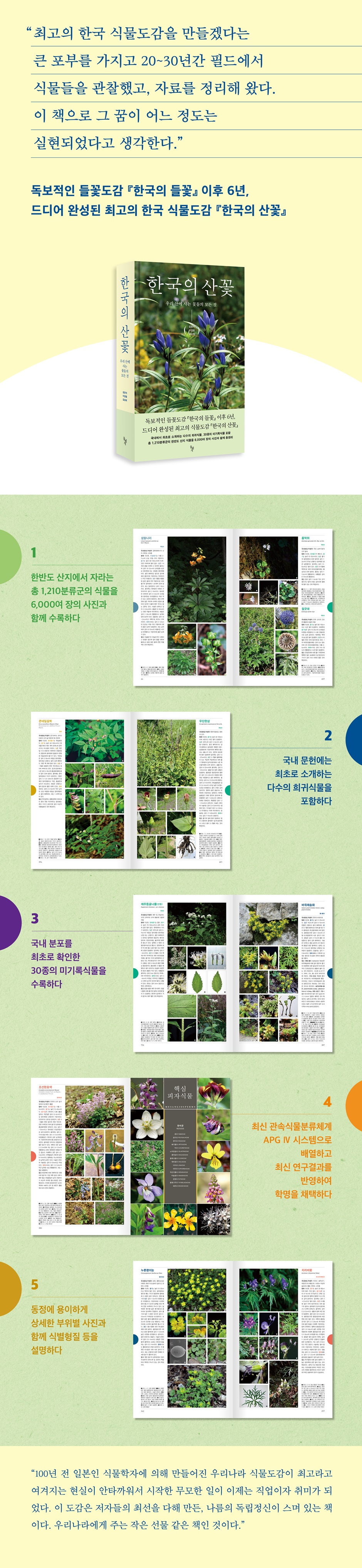
『Korean Mountain Flowers』, which contains a total of 1,210 taxa of plants growing in the mountains of the Korean Peninsula along with approximately 6,000 photographs, helps to confirm identification characteristics and facilitates identification through up to 12 photos of each plant part.
It includes many rare plants that have never been introduced in domestic literature, such as Ganggye large water tank, Geumgangpoa grass, flower dandelion, Seolryeongsa grass, thin-leaved dandelion, Udan scrofula, and large four-leafed dandelion. It also confirms the domestic distribution for the first time by registering 30 unrecorded plants, such as Geumgangsan thistle, broadleaf sedum, Seorakbunchui, Jeju denggolnamul, and Halla rattail.
It was arranged according to the latest vascular plant classification system, APG Ⅳ system, and the scientific name was adopted reflecting the latest research results.
We have investigated and comprehensively organized as much as possible the plants that were difficult to classify in the academic world due to lack of data, such as the genus Zandae, the genus Deunggolnamul, and the singa.
The ultimate Korean plant guide is finally complete.
A must-read for plant researchers and enthusiasts
The richest and most detailed record of the flowers that live in our mountains.
Finally, the best Korean plant guide, 『Korean Wildflowers』, has been completed.
This latest work, following the unrivaled wildflower guide 『Wildflowers of Korea』 (selected as Science Book of the Year by [Popular Science] in 2018) and the tree guide 『Trees of Korea』, most trusted by experts, is also full of substantial records and data that will surely meet the expectations of many who have been eagerly awaiting its publication.
『Korean Mountain Flowers』, which contains a total of 1,210 taxa of plants growing in the mountains of the Korean Peninsula along with approximately 6,000 photographs, helps to confirm identification characteristics and facilitates identification through up to 12 photos of each plant part.
It includes many rare plants that have never been introduced in domestic literature, such as Ganggye large water tank, Geumgangpoa grass, flower dandelion, Seolryeongsa grass, thin-leaved dandelion, Udan scrofula, and large four-leafed dandelion. It also confirms the domestic distribution for the first time by registering 30 unrecorded plants, such as Geumgangsan thistle, broadleaf sedum, Seorakbunchui, Jeju denggolnamul, and Halla rattail.
It was arranged according to the latest vascular plant classification system, APG Ⅳ system, and the scientific name was adopted reflecting the latest research results.
We have investigated and comprehensively organized as much as possible the plants that were difficult to classify in the academic world due to lack of data, such as the genus Zandae, the genus Deunggolnamul, and the singa.
- You can preview some of the book's contents.
Preview
index
5 at the beginning of the book
Current Status and Habitat of Vascular Plants on the Korean Peninsula 13
Note 25
Core angiosperms MESANGIOSPERMS
Independent Lineage
Chloranthaceae 28
Magnolias MAGNOLIIDS
ARISTOLOCHIACEAE 29
Monocots
Araceae and ARACEAE 33
TOFIELDIACEAE 40
NARTHECIACEAE 43
BURMANNIACEAE 44
DIOSCOREACEAE 45
Triuridaceae 47
COLCHICACEAE 48
MELANTHIACEAE 50
SMILACACEAE 56
Lily and LILIACEAE 57
ORCHIDACEAE 69
Yellow Star Dendrobium and HYPOXIDACEAE 118
Iris family IRIDACEAE 118
Daylily ASPHODELACEAE 123
Amaryllidaceae AMARYLLIDACEAE 129
ASPARAGACEAE 144
Commelinaceae 166
Juncaceae 167
CYPERACEAE 172
Poaceae 220
Eudicots
Ranunculales
Papaveraceae 274
Berberidaceae 292
Ranunculaceae 295
Superrosids
Saxifragales
Paeonia japonica and PAEONIACEAE 348
SAXIFRAGACEAE 351
Crassulaceae family CRASSULACEAE 371
Rose Army ROSIDS
Legumes and FABACEAE 390
Polygalaceae 407
Rosaceae 410
Nettle and URTICACEAE 431
Cucurbitaceae 440
Celastraceae 442
Oxalidaceae 442
CLUSIACEAE 443
Violet and VIOLACEAE 446
LINACEAE 479
Euphorbia melanogaster 479
Geraniaceae 484
Onagraceae 487
Rutaceae 493
THYMELAEACEAE 493
BRASSICACEAE 495
Superasterids
CARYOPHYLLACES
Polygonaceae 508
Caryophyllaceae 520
ASTERIDS
Hydrangea HYDRANGEACEAE 540
BALSAMINACEAE 540
POLEMONIACEAE 543
Primrose family PRIMULACEAE 544
Ericaceae 554
Rubiaceae 560
Gentianaceae 571
APOCYNACEAE 580
Boraginaceae 584
Solanaceae 591
Ginseng and SCROPHULARIACEAE 593
ACANTHACEAE 602
LAMIACEAE 603
Wrinkled leaves and MAZACEAE 630
PHRYMACEAE 630
Heat and OROBANCHACEAE 631
Campanulaceae 643
Asteraceae 656
ADOXACEAE 738
Indong and CAPRIFOLIACEAE 738
Araliaceae 745
Mountain and APIACEAE 746
Glossary 786
Reference 791
Search | Scientific Name 800
Search | Country Name 818
Current Status and Habitat of Vascular Plants on the Korean Peninsula 13
Note 25
Core angiosperms MESANGIOSPERMS
Independent Lineage
Chloranthaceae 28
Magnolias MAGNOLIIDS
ARISTOLOCHIACEAE 29
Monocots
Araceae and ARACEAE 33
TOFIELDIACEAE 40
NARTHECIACEAE 43
BURMANNIACEAE 44
DIOSCOREACEAE 45
Triuridaceae 47
COLCHICACEAE 48
MELANTHIACEAE 50
SMILACACEAE 56
Lily and LILIACEAE 57
ORCHIDACEAE 69
Yellow Star Dendrobium and HYPOXIDACEAE 118
Iris family IRIDACEAE 118
Daylily ASPHODELACEAE 123
Amaryllidaceae AMARYLLIDACEAE 129
ASPARAGACEAE 144
Commelinaceae 166
Juncaceae 167
CYPERACEAE 172
Poaceae 220
Eudicots
Ranunculales
Papaveraceae 274
Berberidaceae 292
Ranunculaceae 295
Superrosids
Saxifragales
Paeonia japonica and PAEONIACEAE 348
SAXIFRAGACEAE 351
Crassulaceae family CRASSULACEAE 371
Rose Army ROSIDS
Legumes and FABACEAE 390
Polygalaceae 407
Rosaceae 410
Nettle and URTICACEAE 431
Cucurbitaceae 440
Celastraceae 442
Oxalidaceae 442
CLUSIACEAE 443
Violet and VIOLACEAE 446
LINACEAE 479
Euphorbia melanogaster 479
Geraniaceae 484
Onagraceae 487
Rutaceae 493
THYMELAEACEAE 493
BRASSICACEAE 495
Superasterids
CARYOPHYLLACES
Polygonaceae 508
Caryophyllaceae 520
ASTERIDS
Hydrangea HYDRANGEACEAE 540
BALSAMINACEAE 540
POLEMONIACEAE 543
Primrose family PRIMULACEAE 544
Ericaceae 554
Rubiaceae 560
Gentianaceae 571
APOCYNACEAE 580
Boraginaceae 584
Solanaceae 591
Ginseng and SCROPHULARIACEAE 593
ACANTHACEAE 602
LAMIACEAE 603
Wrinkled leaves and MAZACEAE 630
PHRYMACEAE 630
Heat and OROBANCHACEAE 631
Campanulaceae 643
Asteraceae 656
ADOXACEAE 738
Indong and CAPRIFOLIACEAE 738
Araliaceae 745
Mountain and APIACEAE 746
Glossary 786
Reference 791
Search | Scientific Name 800
Search | Country Name 818
Detailed image
Publisher's Review
About the flowers that live in our mountains
The richest and most detailed records
“I started this reckless endeavor out of regret that the Korean plant guide created by a Japanese botanist 100 years ago is considered the best guide, and now it has become my job and hobby.
The authors have observed plants in the field for 20 to 30 years and compiled data by referencing domestic and foreign literature, with the grand ambition of creating the best Korean plant guide that is reliable, readable, and easy to study.
“I believe that dream has been realized to some extent with the publication of ‘Korean Wildflowers.’” ― ‘Preface’
The period when the plant guide created by a Japanese botanist 100 years ago was considered the best Korean guide has now come to a complete end with the publication of 『Korean Wild Flowers』.
With the grand ambition of creating the best Korean plant guide by Koreans themselves, our researchers have traveled the entire Korean peninsula and surrounding regions for 30 years, 'not skipping difficult or annoying tasks, and not cheating or being lazy in repetitive tasks'. The sincere and steady efforts of our researchers have finally been culminated in this book.
At its core is the authors' precious love for flowers and plants, and for life on the Korean Peninsula and the Earth, with the hope that "the noble and precious plants that contain the entire history of nature will not disappear from our land but will be shared with our descendants and future generations."
That is why I was able to undertake this enormous task with such care and detail, recording the joy of discovering new plant life, and sometimes with a sense of sadness at the disappearance of rare plants from their native habitats.
With the publication of Korea's premier field plant guide, researchers and enthusiasts will enjoy even more enrichment in their hiking, observation, and research.
This is why 『Korean Wildflowers』 is “a small gift to our country” and also a welcome gift to the many readers who have long awaited its publication.
Author's Note
“Many people around me have been curious about when ‘Korean Wildflowers’ would be published and have been looking forward to its release.
One of the greetings I get from not only acquaintances but also readers of 『Trees of Korea』 and 『Wildflowers of Korea』 whom I am meeting for the first time is, 'When will 『Wildflowers of Korea』 come out?'
These expectations and encouragement have been the driving force that allowed the authors to enjoy the arduous work in the gloomy forest or in front of the stuffy computer.” “Perhaps most of those who have studied plants for a long time have trusted foreign plant guides, especially Japanese plant guides, and used them as reference for identification.
The same was true for the authors.
Even now, the books I keep closest to me are Japanese plant guides.
What started as a reckless endeavor out of regret over the fact that the Korean plant guide created by a Japanese botanist 100 years ago is considered the best guide has now become both a profession and a hobby.
The authors have observed plants in the field for 20 to 30 years and compiled data by referencing domestic and foreign literature, with the grand ambition of creating the best Korean plant guide that is reliable, readable, and easy to study.
“I believe that dream has come true to some extent with the publication of ‘Korean Wildflowers.’”
“This guide is a ‘small gift to our country,’ a book imbued with the spirit of independence, created by the authors to the best of their ability and position.
I worked on the guidebook with the mindset of a craftsman who puts his heart and soul into creating a masterpiece, one drop at a time.
“I never skipped tasks that I didn’t want to do because they were difficult or annoying, and I never resorted to tricks or was lazy when it came to repetitive tasks.” “Above all, I hope that people who go out to see plants will have a considerate heart so that they can always bloom healthy and pretty flowers in their respective places without interfering with the flow of nature as much as possible.
“I hope that the noble and precious plants that contain the entire history of nature will not disappear from our land and will be shared with future generations.”
- From the preface
The richest and most detailed records
“I started this reckless endeavor out of regret that the Korean plant guide created by a Japanese botanist 100 years ago is considered the best guide, and now it has become my job and hobby.
The authors have observed plants in the field for 20 to 30 years and compiled data by referencing domestic and foreign literature, with the grand ambition of creating the best Korean plant guide that is reliable, readable, and easy to study.
“I believe that dream has been realized to some extent with the publication of ‘Korean Wildflowers.’” ― ‘Preface’
The period when the plant guide created by a Japanese botanist 100 years ago was considered the best Korean guide has now come to a complete end with the publication of 『Korean Wild Flowers』.
With the grand ambition of creating the best Korean plant guide by Koreans themselves, our researchers have traveled the entire Korean peninsula and surrounding regions for 30 years, 'not skipping difficult or annoying tasks, and not cheating or being lazy in repetitive tasks'. The sincere and steady efforts of our researchers have finally been culminated in this book.
At its core is the authors' precious love for flowers and plants, and for life on the Korean Peninsula and the Earth, with the hope that "the noble and precious plants that contain the entire history of nature will not disappear from our land but will be shared with our descendants and future generations."
That is why I was able to undertake this enormous task with such care and detail, recording the joy of discovering new plant life, and sometimes with a sense of sadness at the disappearance of rare plants from their native habitats.
With the publication of Korea's premier field plant guide, researchers and enthusiasts will enjoy even more enrichment in their hiking, observation, and research.
This is why 『Korean Wildflowers』 is “a small gift to our country” and also a welcome gift to the many readers who have long awaited its publication.
Author's Note
“Many people around me have been curious about when ‘Korean Wildflowers’ would be published and have been looking forward to its release.
One of the greetings I get from not only acquaintances but also readers of 『Trees of Korea』 and 『Wildflowers of Korea』 whom I am meeting for the first time is, 'When will 『Wildflowers of Korea』 come out?'
These expectations and encouragement have been the driving force that allowed the authors to enjoy the arduous work in the gloomy forest or in front of the stuffy computer.” “Perhaps most of those who have studied plants for a long time have trusted foreign plant guides, especially Japanese plant guides, and used them as reference for identification.
The same was true for the authors.
Even now, the books I keep closest to me are Japanese plant guides.
What started as a reckless endeavor out of regret over the fact that the Korean plant guide created by a Japanese botanist 100 years ago is considered the best guide has now become both a profession and a hobby.
The authors have observed plants in the field for 20 to 30 years and compiled data by referencing domestic and foreign literature, with the grand ambition of creating the best Korean plant guide that is reliable, readable, and easy to study.
“I believe that dream has come true to some extent with the publication of ‘Korean Wildflowers.’”
“This guide is a ‘small gift to our country,’ a book imbued with the spirit of independence, created by the authors to the best of their ability and position.
I worked on the guidebook with the mindset of a craftsman who puts his heart and soul into creating a masterpiece, one drop at a time.
“I never skipped tasks that I didn’t want to do because they were difficult or annoying, and I never resorted to tricks or was lazy when it came to repetitive tasks.” “Above all, I hope that people who go out to see plants will have a considerate heart so that they can always bloom healthy and pretty flowers in their respective places without interfering with the flow of nature as much as possible.
“I hope that the noble and precious plants that contain the entire history of nature will not disappear from our land and will be shared with future generations.”
- From the preface
GOODS SPECIFICS
- Date of issue: February 28, 2025
- Format: Hardcover book binding method guide
- Page count, weight, size: 832 pages | 1,620g | 152*240*38mm
- ISBN13: 9791194442110
- ISBN10: 1194442110
You may also like
카테고리
korean


korean

![GQ KOREA Mark (Monthly): December [2025]](http://librairie.coreenne.fr/cdn/shop/files/8ef265dbbfbf186523ed75ba7319009d.jpg?v=1765340328&width=3840)


