

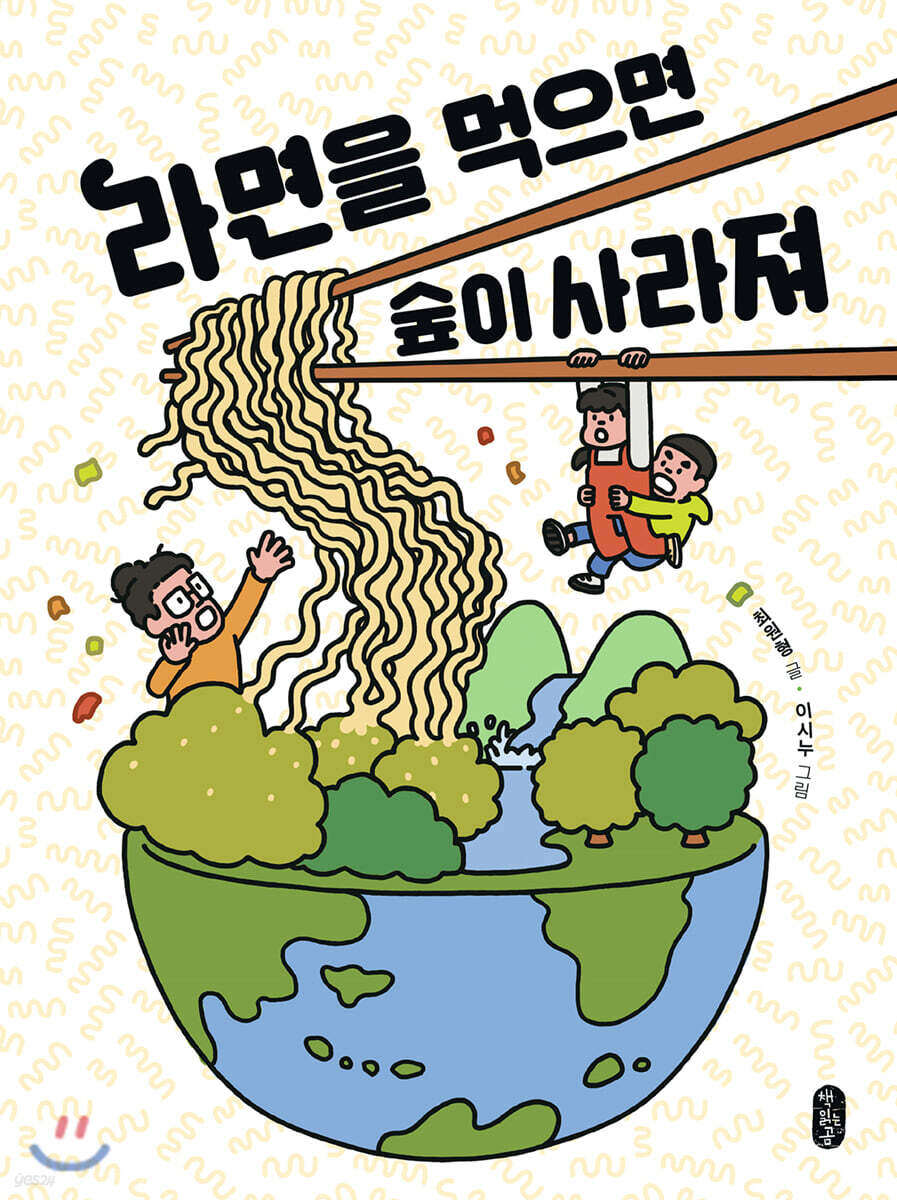
If you eat ramen, the forest disappears
 |
Description
Book Introduction
“All life on Earth is very closely connected!”
An environmental book that shows us the connections between us and the world.
The world we live in is interconnected.
A small action we take today can have a huge impact on other creatures or the environment tomorrow.
"If You Eat Ramen, the Forest Disappears" is a book that shows how the clothes I wear today, the ramen I eat today, and the dolphin show I enjoyed today affect other living creatures and the environment.
An environmental book that shows us the connections between us and the world.
The world we live in is interconnected.
A small action we take today can have a huge impact on other creatures or the environment tomorrow.
"If You Eat Ramen, the Forest Disappears" is a book that shows how the clothes I wear today, the ramen I eat today, and the dolphin show I enjoyed today affect other living creatures and the environment.
- You can preview some of the book's contents.
Preview
index
1.
winter
1.
Dream of a goose being plucked
2.
I want to make a snowman!
3.
If you eat ramen, the forest disappears
4.
Please protect the butterfly's food plants.
5.
Wait for the swallow!
2.
spring
1.
Ecological corridor, let's live together!
2.
The sparrow's complaint
3.
If the soil is healthy, we are healthy too.
4.
If the bees disappear, we disappear too.
5.
White horse, come back
3.
summer
1.
Saving electricity can save polar bears.
2.
Feeding plastic to baby birds?
3.
Don't take Nemo's house!
4.
Make way for the ducks
5.
Live well, Jedol
4.
autumn
1.
Salmon feed the forest
2.
Dung beetles, circulating dung!
3.
Ecological rivers, life exists there too
4.
Protect the tidal flats!
5.
The glass wall is a graveyard for birds!
6.
Don't buy a puppy, adopt one.
Conclusion
winter
1.
Dream of a goose being plucked
2.
I want to make a snowman!
3.
If you eat ramen, the forest disappears
4.
Please protect the butterfly's food plants.
5.
Wait for the swallow!
2.
spring
1.
Ecological corridor, let's live together!
2.
The sparrow's complaint
3.
If the soil is healthy, we are healthy too.
4.
If the bees disappear, we disappear too.
5.
White horse, come back
3.
summer
1.
Saving electricity can save polar bears.
2.
Feeding plastic to baby birds?
3.
Don't take Nemo's house!
4.
Make way for the ducks
5.
Live well, Jedol
4.
autumn
1.
Salmon feed the forest
2.
Dung beetles, circulating dung!
3.
Ecological rivers, life exists there too
4.
Protect the tidal flats!
5.
The glass wall is a graveyard for birds!
6.
Don't buy a puppy, adopt one.
Conclusion
Detailed image
Publisher's Review
“Do well when you have the chance!”
Ecological and environmental stories told through the voices of animals
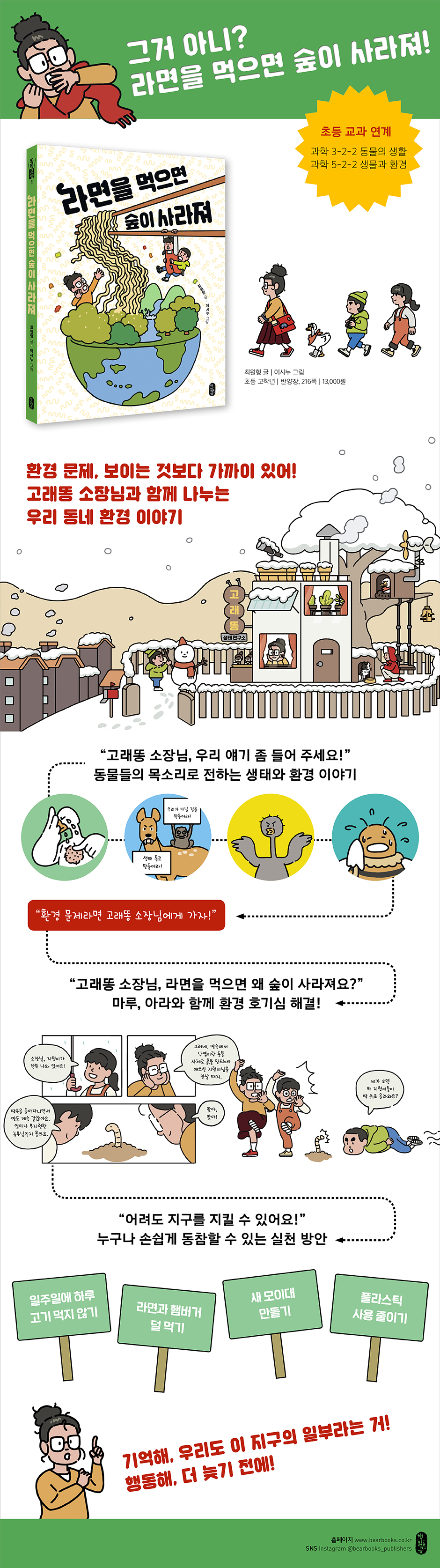
An ecological research institute in a small town, with a very special director.
He is a modern-day Dolittle teacher who loves animals so much that he can talk to them. He is the owner of Whale Poop.
The name Whale Poop is said to have been given by the person himself because he wanted to help save the ecosystem, like whale poop, which helps prevent global warming.
The whale poop owner is already famous among the animals around him.
So, there is not a single quiet day at the Whale Poop Ecology Research Institute.
This book contains environmental stories brought by animal guests who visited the Whale Poop Ecology Research Institute throughout the year, from winter to the following fall.
Geese that escaped the farm because they could not bear the pain of having their feathers plucked out alive, red-spotted butterflies that are disappearing along with their food plant, the giraffe plant, due to environmental changes, frogs and toads that cannot go to lay eggs because of roads, sparrows that have difficulty communicating with their young because of road noise, bees that have a hard time surviving because of pesticides… … .
As we listen to the stories shared by the owner and the animals, we begin to see environmental problems around us that we had previously overlooked.
What negative impacts does this problem have on plants and animals, and even on ourselves?
This book goes beyond just informing us about environmental issues.
We provide specific, easy-to-do activities that anyone can do to help children become more involved in problem-solving.
Skip meat one day a week, eat less ramen and hamburgers, build bird feeders for birds that struggle to find food in the winter, and reduce your use of plastic—these are all things you can do without much effort or sacrifice.
And perhaps, like wearing a mask, this is a promise that children are better able to keep than adults.
“Environmental problems are closer than they seem!”
Environmental stories of our neighborhoods in our country
When we think of 'environmental issues', we often think of them as something far removed from our lives.
The media often shows images of polar bears precariously standing on narrow patches of ice or the Amazon rainforest on fire.
However, environmental problems are happening all around us right now.
We just pass by without knowing.
The problems we ignored or pretended not to know about are coming back to us like a boomerang even at this very moment.
Because everything that exists on this Earth is connected to each other.
This is the message that Choi Won-hyung, the director of the Buddhist Ecological Content Research Institute who wrote this book, wanted to convey to children.
So, this book vividly tells the story of the environment in our neighborhood.
The story of Naeseongcheon in Yeongju, Gyeongsangbuk-do, where the white-cheeked black duck lived, the story of the family of white-cheeked black ducks moving from Changwon, Gyeongsangnam-do, the story of Jedol, a dolphin who was illegally captured and released in the waters off Jeju Island… … .
I hope these stories will serve as an opportunity for children to reflect on things they may have overlooked.
Furthermore, I hope that this will be of some small help in protecting the future environment in which children will live.
The first step into the world of deep and broad knowledge!
The first book in the Smart Culture series
"If You Eat Ramen, the Forest Disappears" is the first book in the "Smart Culture" series of new educational books for older children presented by Book Reading Bear.
At Book Reading Bear, we plan to continue publishing children's books that will lead older children into a world of deep and broad knowledge.
Ecological and environmental stories told through the voices of animals
An ecological research institute in a small town, with a very special director.
He is a modern-day Dolittle teacher who loves animals so much that he can talk to them. He is the owner of Whale Poop.
The name Whale Poop is said to have been given by the person himself because he wanted to help save the ecosystem, like whale poop, which helps prevent global warming.
The whale poop owner is already famous among the animals around him.
So, there is not a single quiet day at the Whale Poop Ecology Research Institute.
This book contains environmental stories brought by animal guests who visited the Whale Poop Ecology Research Institute throughout the year, from winter to the following fall.
Geese that escaped the farm because they could not bear the pain of having their feathers plucked out alive, red-spotted butterflies that are disappearing along with their food plant, the giraffe plant, due to environmental changes, frogs and toads that cannot go to lay eggs because of roads, sparrows that have difficulty communicating with their young because of road noise, bees that have a hard time surviving because of pesticides… … .
As we listen to the stories shared by the owner and the animals, we begin to see environmental problems around us that we had previously overlooked.
What negative impacts does this problem have on plants and animals, and even on ourselves?
This book goes beyond just informing us about environmental issues.
We provide specific, easy-to-do activities that anyone can do to help children become more involved in problem-solving.
Skip meat one day a week, eat less ramen and hamburgers, build bird feeders for birds that struggle to find food in the winter, and reduce your use of plastic—these are all things you can do without much effort or sacrifice.
And perhaps, like wearing a mask, this is a promise that children are better able to keep than adults.
“Environmental problems are closer than they seem!”
Environmental stories of our neighborhoods in our country
When we think of 'environmental issues', we often think of them as something far removed from our lives.
The media often shows images of polar bears precariously standing on narrow patches of ice or the Amazon rainforest on fire.
However, environmental problems are happening all around us right now.
We just pass by without knowing.
The problems we ignored or pretended not to know about are coming back to us like a boomerang even at this very moment.
Because everything that exists on this Earth is connected to each other.
This is the message that Choi Won-hyung, the director of the Buddhist Ecological Content Research Institute who wrote this book, wanted to convey to children.
So, this book vividly tells the story of the environment in our neighborhood.
The story of Naeseongcheon in Yeongju, Gyeongsangbuk-do, where the white-cheeked black duck lived, the story of the family of white-cheeked black ducks moving from Changwon, Gyeongsangnam-do, the story of Jedol, a dolphin who was illegally captured and released in the waters off Jeju Island… … .
I hope these stories will serve as an opportunity for children to reflect on things they may have overlooked.
Furthermore, I hope that this will be of some small help in protecting the future environment in which children will live.
The first step into the world of deep and broad knowledge!
The first book in the Smart Culture series
"If You Eat Ramen, the Forest Disappears" is the first book in the "Smart Culture" series of new educational books for older children presented by Book Reading Bear.
At Book Reading Bear, we plan to continue publishing children's books that will lead older children into a world of deep and broad knowledge.
GOODS SPECIFICS
- Publication date: October 23, 2020
- Format: Paperback book binding method guide
- Pages, weight, size: 216 pages | 436g | 165*225*12mm
- ISBN13: 9791158362072
- ISBN10: 1158362072
- KC Certification: Certification Type: Conformity Confirmation
You may also like
카테고리
korean


korean

![GQ KOREA Mark (Monthly): December [2025]](http://librairie.coreenne.fr/cdn/shop/files/8ef265dbbfbf186523ed75ba7319009d.jpg?v=1765340328&width=3840)


