

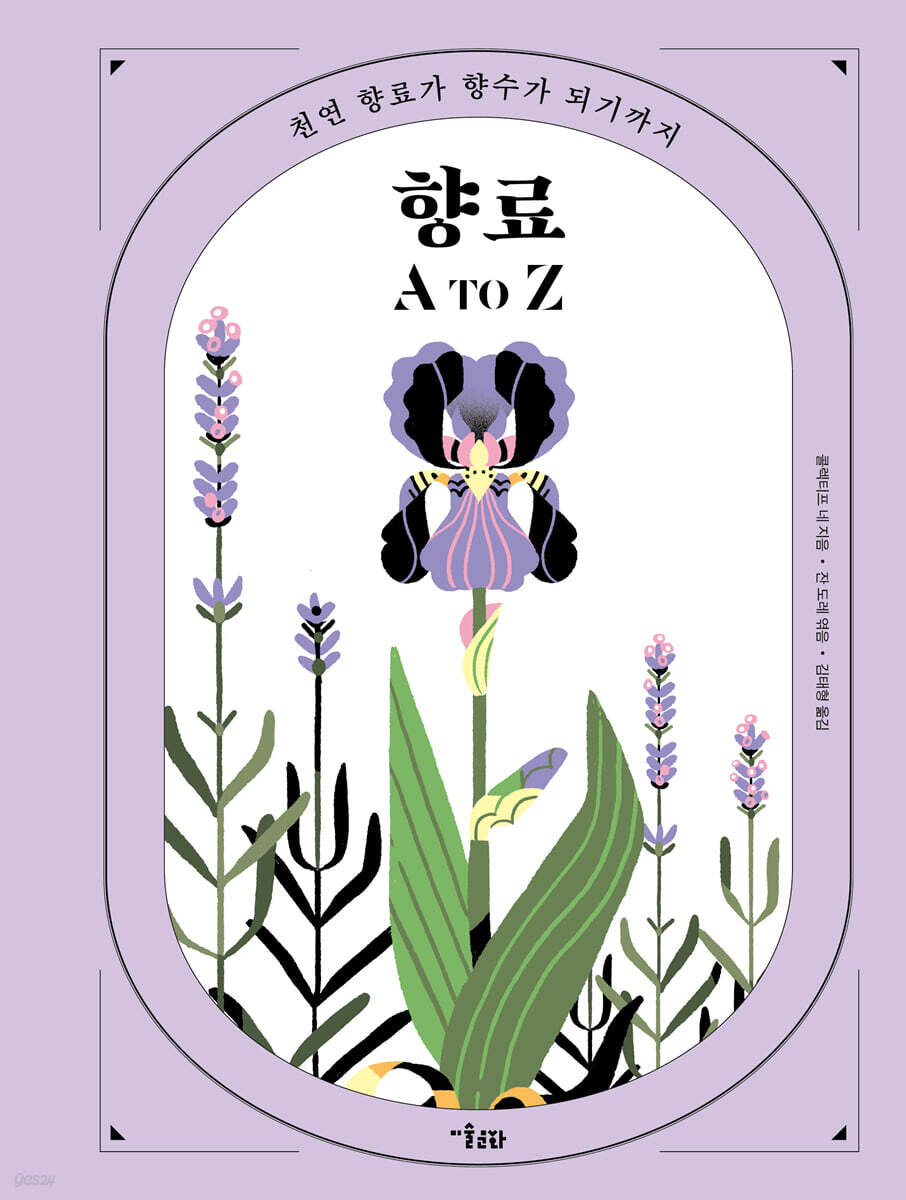
Fragrance A to Z
 |
Description
Book Introduction
A must-read for fragrance lovers: "Perfume A to Z"
That second story!
From natural fragrances to perfume,
A World Tour of Fragrance Ingredients
Vanilla, jasmine, bergamot, ylang ylang, lemon, lavender…
We invite you on a secret journey with fragrant plants.
That second story!
From natural fragrances to perfume,
A World Tour of Fragrance Ingredients
Vanilla, jasmine, bergamot, ylang ylang, lemon, lavender…
We invite you on a secret journey with fragrant plants.
- You can preview some of the book's contents.
Preview
index
introduction
The Journey of Spice
Origins of Synthetic Fragrances
SIMPPAR: Continuing a 30-Year History
Tourner Equipment, the Art of Transformation
A World Tour of Fragrance Ingredients
Pink pepper | Bergamot | Amber wood | Agarwood | Blackcurrant bud | Roman chamomile
Cinnamon | Cardamom | Virginia Cedarwood | Cistus/Labdanum | Lemon | Copaiba
Frankincense | Orange Blossom | Sweet Vernal Grass | Guaiac Wood | Rose Geranium
Ginger | Ambrette Seed | Iris | Jasmine Grandiflorum | Lactone Ingredients | Lavender
Musk | Muguet Note | Patchouli | Pine Derivative | Black Pepper | Damask Rose
Sandalwood | Tuberose | Vanilla | Vetiver | Ylang-ylang
The steering system of the future
ACS International's Next-Generation Musk, Ambretolide HC
Firmenich's Natural Extraction Methods for the Next Decade
Givaudan's Five Carbon Pass
Reinventing the Cold Treatment with E-Pure Jungle Essence
Natural raw materials created using Naturamol's biotechnology
Phytoprod, a Moroccan company that cultivates fragrant plants in a virtuous cycle
Madagascar, a land of innovation for Symrise
supplement
Perfume Glossary
If you want to know more
Acknowledgements
About the Author
Translator's Note
Illustration credits
The Journey of Spice
Origins of Synthetic Fragrances
SIMPPAR: Continuing a 30-Year History
Tourner Equipment, the Art of Transformation
A World Tour of Fragrance Ingredients
Pink pepper | Bergamot | Amber wood | Agarwood | Blackcurrant bud | Roman chamomile
Cinnamon | Cardamom | Virginia Cedarwood | Cistus/Labdanum | Lemon | Copaiba
Frankincense | Orange Blossom | Sweet Vernal Grass | Guaiac Wood | Rose Geranium
Ginger | Ambrette Seed | Iris | Jasmine Grandiflorum | Lactone Ingredients | Lavender
Musk | Muguet Note | Patchouli | Pine Derivative | Black Pepper | Damask Rose
Sandalwood | Tuberose | Vanilla | Vetiver | Ylang-ylang
The steering system of the future
ACS International's Next-Generation Musk, Ambretolide HC
Firmenich's Natural Extraction Methods for the Next Decade
Givaudan's Five Carbon Pass
Reinventing the Cold Treatment with E-Pure Jungle Essence
Natural raw materials created using Naturamol's biotechnology
Phytoprod, a Moroccan company that cultivates fragrant plants in a virtuous cycle
Madagascar, a land of innovation for Symrise
supplement
Perfume Glossary
If you want to know more
Acknowledgements
About the Author
Translator's Note
Illustration credits
Detailed image

Into the book
Perfumers and fragrance producers work closely together and form a strong bond.
Because good ingredients are needed to create a good fragrance.
While natural fragrances create magical resonance within the formula, synthetic fragrances expand the perfumer's creativity into areas that cannot be achieved with natural products, such as marine or fruity notes.
--- From the "Preface"
Pink Pepper has a wonderful freshness and a sophisticated touch, making it a great choice for men's, women's, or unisex fragrances.
As with its culinary uses, pink pepper provides dynamic and intense top notes.
I've often used pink pepper when blending niche brand perfumes that I can afford despite their high price tag.
--- From "Pink Pepper"
Roman chamomile essential oil has been widely used in aromatherapy, natural cosmetics, and perfumery for many years.
What makes this ingredient so popular is its fruity, liqueur-like flavor profile.
If you were to describe Roman chamomile in one word, it would be 'goat' smell.
To be more specific, it is closer to the smell of hay, pears, or dust than the smell of goats themselves.
This ingredient can be used as a supporting ingredient in aromatic men's perfumes as well as floral women's perfumes, and can naturally emerge from the top notes of a leather accord.
--- From "Roman Chamomile"
To preserve the health of the tree, pine resin is harvested only once every two to three years.
In areas where forest exploitation is widespread, humans and the environment are particularly interdependent.
“No matter how much the market forces us to produce, we must take care of the workers who harvest the trees and resin.”
--- From "Copaiba"
Ambrette seed, one of the most expensive raw materials in the perfumer's palette, is a low-yielding and difficult-to-grow crop.
It all starts with a variety of hibiscus, an annual plant that grows in the tropical highlands of Latin America.
The yellow flowers, which grow to a height of 2-3 meters, wither and then turn into capsules filled with small, snail-shaped seeds.
These seeds are harvested by hand, dried in the sun, sorted, and then washed again by hand.
Finally, after drying in a well-ventilated area, all that remains is to pack and ship.
--- From "Ambrette Seed"
Grown in Tamil Nadu and Karnataka, tuberose is a common flower in India, used to decorate women's hair at weddings, to decorate temples during religious ceremonies, and to be made into necklaces and garlands.
Although perfumers use only about 10 percent of the total tuberose production, they are enthusiastic about the beautiful fragrance of this flower, known in Hindi as Rajni Gandha.
--- From "Tuberose"
I associate vetiver with African countries and deserts.
Maybe it's because I was born in North Africa.
Dry land, dust, and yellow-colored landscape...
Vetiver evokes exotic places.
If vetiver were a person, it would be Indiana Jones.
--- From "Vetiver"
Through these unfamiliar and unfriendly, yet fragrant, letters, we transcend time and space.
When a paragraph ends, I close my eyes and perform a series of actions as if I have reached the moment of encountering a fragrance.
If you are turning the last page of this book, you have already taken your first step into a world from which there is no return.
How blessed I am to be cursed to worship fragments of fragrance! I send my comradely tribute to you, who will join me in the pursuit of raw materials.
Because good ingredients are needed to create a good fragrance.
While natural fragrances create magical resonance within the formula, synthetic fragrances expand the perfumer's creativity into areas that cannot be achieved with natural products, such as marine or fruity notes.
--- From the "Preface"
Pink Pepper has a wonderful freshness and a sophisticated touch, making it a great choice for men's, women's, or unisex fragrances.
As with its culinary uses, pink pepper provides dynamic and intense top notes.
I've often used pink pepper when blending niche brand perfumes that I can afford despite their high price tag.
--- From "Pink Pepper"
Roman chamomile essential oil has been widely used in aromatherapy, natural cosmetics, and perfumery for many years.
What makes this ingredient so popular is its fruity, liqueur-like flavor profile.
If you were to describe Roman chamomile in one word, it would be 'goat' smell.
To be more specific, it is closer to the smell of hay, pears, or dust than the smell of goats themselves.
This ingredient can be used as a supporting ingredient in aromatic men's perfumes as well as floral women's perfumes, and can naturally emerge from the top notes of a leather accord.
--- From "Roman Chamomile"
To preserve the health of the tree, pine resin is harvested only once every two to three years.
In areas where forest exploitation is widespread, humans and the environment are particularly interdependent.
“No matter how much the market forces us to produce, we must take care of the workers who harvest the trees and resin.”
--- From "Copaiba"
Ambrette seed, one of the most expensive raw materials in the perfumer's palette, is a low-yielding and difficult-to-grow crop.
It all starts with a variety of hibiscus, an annual plant that grows in the tropical highlands of Latin America.
The yellow flowers, which grow to a height of 2-3 meters, wither and then turn into capsules filled with small, snail-shaped seeds.
These seeds are harvested by hand, dried in the sun, sorted, and then washed again by hand.
Finally, after drying in a well-ventilated area, all that remains is to pack and ship.
--- From "Ambrette Seed"
Grown in Tamil Nadu and Karnataka, tuberose is a common flower in India, used to decorate women's hair at weddings, to decorate temples during religious ceremonies, and to be made into necklaces and garlands.
Although perfumers use only about 10 percent of the total tuberose production, they are enthusiastic about the beautiful fragrance of this flower, known in Hindi as Rajni Gandha.
--- From "Tuberose"
I associate vetiver with African countries and deserts.
Maybe it's because I was born in North Africa.
Dry land, dust, and yellow-colored landscape...
Vetiver evokes exotic places.
If vetiver were a person, it would be Indiana Jones.
--- From "Vetiver"
Through these unfamiliar and unfriendly, yet fragrant, letters, we transcend time and space.
When a paragraph ends, I close my eyes and perform a series of actions as if I have reached the moment of encountering a fragrance.
If you are turning the last page of this book, you have already taken your first step into a world from which there is no return.
How blessed I am to be cursed to worship fragments of fragrance! I send my comradely tribute to you, who will join me in the pursuit of raw materials.
--- From the "Translator's Note"
Publisher's Review
From ancient times to the present, ‘fragrance’ has been loved by mankind!
A story of plants that colorfully colored the perfumer's palette
The fact that trade routes for spices and incense existed even before the Silk Road, which carried tin and silk, is evidence of the long history of incense.
In fact, ancient people used various methods, such as trade and war, to obtain the spices needed for sacrifices, medicine, and perfume.
Incense and myrrh are considered to be the oldest aromatic substances used by humans, and it is said that ancient people traveled thousands of kilometers to obtain these spices.
Besides these, there are various plants that have been used by ordinary people to make themselves stand out or to treat diseases.
Various fragrances such as chocolate, tobacco, vanilla, patchouli, clove, ylang-ylang, and rosewood gradually leave their places of origin and color the perfumer's palette.
Fragrant plants, once a symbol of human interaction, gradually deviated from their original purpose and became the center of power struggles and objects of greed.
As Spain and Portugal colonized the Americas, India, and Indonesia, a struggle began over resources, including some aromatic raw materials.
At this time, many raw materials, including vanilla and chocolate from the American continent, cloves from Indonesia, musk extracted from Asian musk deer, and coffee, were transported to Europe by land and sea.
Fragrant plants became more widespread in modern times as European colonial rule intensified.
The phenomenon of chasing scents became a fad not only among the bourgeoisie and aristocracy of 19th-century Europe, but also among elites around the world.
In this way, the history of raw material distribution is entering a new phase, changing with the development of the fragrance industry, European colonization, globalization of ideas and trade, technological and cultural progress, and chemical innovation.
Growers who grow diverse crops in diverse locations exist in a complementary and interdependent manner rather than competing with one another, supplying natural fragrances that enrich the perfumer's palette.
While the supply and distribution of natural fragrances was once built on the foundation of unequal colonial relations, today they are moving towards a sustainable development model that progressively considers climate, economic, and social issues.
From the characteristics of each raw material to the cultivation and extraction process,
Fragrant plants are reborn as captivating perfumes.
From natural fragrances like pink pepper, bergamot, cinnamon, lemon, and frankincense to musk, muguet notes, pine derivatives, and lactone raw materials… 『Fragrance A to Z』 carefully selects and introduces the finest, rare, and iconic raw materials that exist in a perfumer's palette.
It contains the entire story of fragrance, from descriptions of each raw material and the cultivation and processing methods of small-scale producers and international companies that focus on them, to harvesting raw materials and using fragrances, and sustainable development methods that meet social and environmental standards.
The raw material identification card provides various information such as the raw material's original name, etymology, fragrance notes, main ingredients, as well as the harvest time, extraction method, yield, production volume, and production site.
Lastly, we select perfumes that use the raw material and tell you about the brand, perfumer, year of release, perfumery method, scent notes, and behind-the-scenes stories related to perfume development.
Bottega Veneta's first Eau de Parfum, Bottega Veneta (2011), featured spicy notes highlighted by pink pepper, while Estée Lauder's Youth Dew (1953), considered the first major success for the American perfume industry at a time when the public only preferred French brands, featured cinnamon.
Brazilian brand Natura's "Ecos Alma" (2019) is reminiscent of the Amazon through essential oils of plants native to the vast primeval forest, and features the smoky scent of copaiba balm.
Considered one of the first modern perfumes, Ubigang's Fougère Royale (1882) was the origin of the Fougère series and achieved innovation through its abstract interpretation of nature.
Here, the floral nuances of rose geranium bloom harmoniously.
Lavender is in full force in Caron's Pur un Homme (1934), one of the first perfumes aimed exclusively at men.
From famous perfumes that you can recognize just by hearing their names to perfumes that are popular with today's generation.
If I knew what ingredients were used in what perfume and how, the scent I was wearing today would feel even more special.
This book will be a gift to all who love incense, worship incense, and choose incense.
A story of plants that colorfully colored the perfumer's palette
The fact that trade routes for spices and incense existed even before the Silk Road, which carried tin and silk, is evidence of the long history of incense.
In fact, ancient people used various methods, such as trade and war, to obtain the spices needed for sacrifices, medicine, and perfume.
Incense and myrrh are considered to be the oldest aromatic substances used by humans, and it is said that ancient people traveled thousands of kilometers to obtain these spices.
Besides these, there are various plants that have been used by ordinary people to make themselves stand out or to treat diseases.
Various fragrances such as chocolate, tobacco, vanilla, patchouli, clove, ylang-ylang, and rosewood gradually leave their places of origin and color the perfumer's palette.
Fragrant plants, once a symbol of human interaction, gradually deviated from their original purpose and became the center of power struggles and objects of greed.
As Spain and Portugal colonized the Americas, India, and Indonesia, a struggle began over resources, including some aromatic raw materials.
At this time, many raw materials, including vanilla and chocolate from the American continent, cloves from Indonesia, musk extracted from Asian musk deer, and coffee, were transported to Europe by land and sea.
Fragrant plants became more widespread in modern times as European colonial rule intensified.
The phenomenon of chasing scents became a fad not only among the bourgeoisie and aristocracy of 19th-century Europe, but also among elites around the world.
In this way, the history of raw material distribution is entering a new phase, changing with the development of the fragrance industry, European colonization, globalization of ideas and trade, technological and cultural progress, and chemical innovation.
Growers who grow diverse crops in diverse locations exist in a complementary and interdependent manner rather than competing with one another, supplying natural fragrances that enrich the perfumer's palette.
While the supply and distribution of natural fragrances was once built on the foundation of unequal colonial relations, today they are moving towards a sustainable development model that progressively considers climate, economic, and social issues.
From the characteristics of each raw material to the cultivation and extraction process,
Fragrant plants are reborn as captivating perfumes.
From natural fragrances like pink pepper, bergamot, cinnamon, lemon, and frankincense to musk, muguet notes, pine derivatives, and lactone raw materials… 『Fragrance A to Z』 carefully selects and introduces the finest, rare, and iconic raw materials that exist in a perfumer's palette.
It contains the entire story of fragrance, from descriptions of each raw material and the cultivation and processing methods of small-scale producers and international companies that focus on them, to harvesting raw materials and using fragrances, and sustainable development methods that meet social and environmental standards.
The raw material identification card provides various information such as the raw material's original name, etymology, fragrance notes, main ingredients, as well as the harvest time, extraction method, yield, production volume, and production site.
Lastly, we select perfumes that use the raw material and tell you about the brand, perfumer, year of release, perfumery method, scent notes, and behind-the-scenes stories related to perfume development.
Bottega Veneta's first Eau de Parfum, Bottega Veneta (2011), featured spicy notes highlighted by pink pepper, while Estée Lauder's Youth Dew (1953), considered the first major success for the American perfume industry at a time when the public only preferred French brands, featured cinnamon.
Brazilian brand Natura's "Ecos Alma" (2019) is reminiscent of the Amazon through essential oils of plants native to the vast primeval forest, and features the smoky scent of copaiba balm.
Considered one of the first modern perfumes, Ubigang's Fougère Royale (1882) was the origin of the Fougère series and achieved innovation through its abstract interpretation of nature.
Here, the floral nuances of rose geranium bloom harmoniously.
Lavender is in full force in Caron's Pur un Homme (1934), one of the first perfumes aimed exclusively at men.
From famous perfumes that you can recognize just by hearing their names to perfumes that are popular with today's generation.
If I knew what ingredients were used in what perfume and how, the scent I was wearing today would feel even more special.
This book will be a gift to all who love incense, worship incense, and choose incense.
GOODS SPECIFICS
- Date of issue: December 12, 2024
- Format: Hardcover book binding method guide
- Page count, weight, size: 272 pages | 740g | 175*234*23mm
- ISBN13: 9791192768298
- ISBN10: 1192768299
You may also like
카테고리
korean


korean

![ELLE 엘르 스페셜 에디션 A형 : 12월 [2025]](http://librairie.coreenne.fr/cdn/shop/files/b8e27a3de6c9538896439686c6b0e8fb.jpg?v=1766436872&width=3840)


