

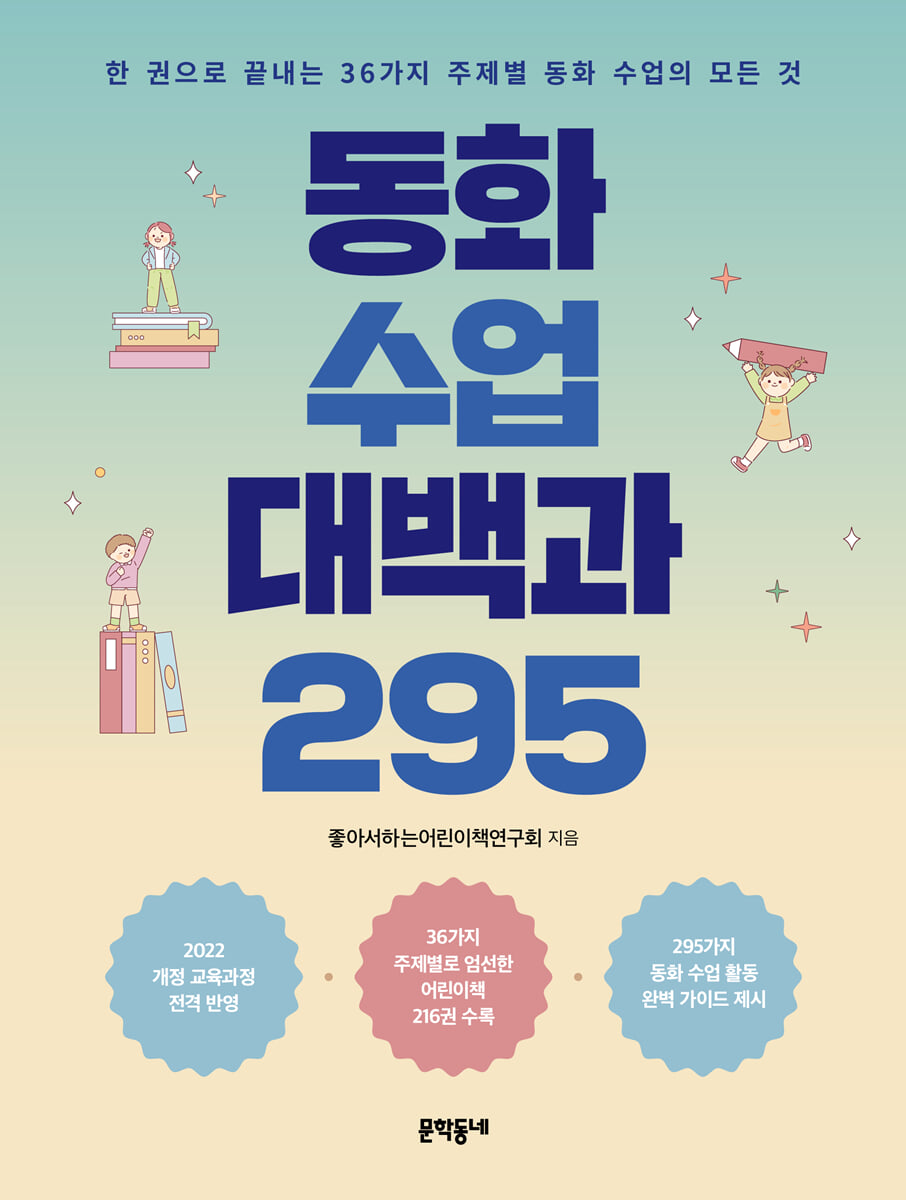
Fairy Tale Class Encyclopedia 295
 |
Description
Book Introduction
“After picture books, there are fairy tales.”
Encourage your child to read at least one book on his/her own.
The teachers of the 'Children's Book Research Group' who do it because they like it's revealing their know-how!
“When I was little, I had to read to my child to fall asleep, but now he only watches comics and YouTube.” “I’m transitioning from picture books to fairy tales, but he’s having a hard time because there’s suddenly a lot of text.” Children these days, who have been exposed to short videos like YouTube and Reels from a young age, find reading boring and tedious.
Teachers and parents are increasingly concerned with questions like, "How can I make children enjoy reading fairy tales?", "Which fairy tale book should I start reading among the numerous fairy tale books?", and "It would be nice if someone could recommend books appropriate for each age, by topic, and by difficulty level."
For those who feel overwhelmed when faced with a picture book, 12 current teachers from the 'Children's Book Research Group for Love' have joined forces.
Teachers who have been teaching fairy tales in the classroom for many years have selected 36 topics (3 per month) reflecting the academic calendar and the 2022 revised curriculum, and have selected books that fit each topic, richly incorporating their expertise into the 『Encyclopedia of Fairy Tale Classes 295』.
In order to naturally enter the world of fairy tales through picture books, the gap between the first fairy tale you read and the picture book should not be large.
Along with this, the charm that can only be felt in fairy tales must reach the hearts of children.
Fairy tales use sentences rather than pictures to convey the content.
So, the sentences in fairy tales are expressed in such specific and detailed way that the story naturally comes to mind.
Although it requires a bit more breathing and hip strength than picture books, the sentences also have the charm of holding the body as it sways.
The first fairy tales that children encounter should have short texts so that they can be read in relatively short bursts, and the sentences should be simple and concise so that children can easily approach them. In addition, there should be many sentences that allow them to feel the beauty of the Korean language and vivid expressions that stimulate the five senses so that it is easy to imagine the content.
Page 501
Encourage your child to read at least one book on his/her own.
The teachers of the 'Children's Book Research Group' who do it because they like it's revealing their know-how!
“When I was little, I had to read to my child to fall asleep, but now he only watches comics and YouTube.” “I’m transitioning from picture books to fairy tales, but he’s having a hard time because there’s suddenly a lot of text.” Children these days, who have been exposed to short videos like YouTube and Reels from a young age, find reading boring and tedious.
Teachers and parents are increasingly concerned with questions like, "How can I make children enjoy reading fairy tales?", "Which fairy tale book should I start reading among the numerous fairy tale books?", and "It would be nice if someone could recommend books appropriate for each age, by topic, and by difficulty level."
For those who feel overwhelmed when faced with a picture book, 12 current teachers from the 'Children's Book Research Group for Love' have joined forces.
Teachers who have been teaching fairy tales in the classroom for many years have selected 36 topics (3 per month) reflecting the academic calendar and the 2022 revised curriculum, and have selected books that fit each topic, richly incorporating their expertise into the 『Encyclopedia of Fairy Tale Classes 295』.
In order to naturally enter the world of fairy tales through picture books, the gap between the first fairy tale you read and the picture book should not be large.
Along with this, the charm that can only be felt in fairy tales must reach the hearts of children.
Fairy tales use sentences rather than pictures to convey the content.
So, the sentences in fairy tales are expressed in such specific and detailed way that the story naturally comes to mind.
Although it requires a bit more breathing and hip strength than picture books, the sentences also have the charm of holding the body as it sways.
The first fairy tales that children encounter should have short texts so that they can be read in relatively short bursts, and the sentences should be simple and concise so that children can easily approach them. In addition, there should be many sentences that allow them to feel the beauty of the Korean language and vivid expressions that stimulate the five senses so that it is easy to imagine the content.
Page 501
- You can preview some of the book's contents.
Preview
index
prolog.
How to use this book
March.
Start with self-exploration
First topic of March.
Inferiority complex and self-esteem
Second topic for March.
Self-management and emotional regulation
Topic for the third week of March.
School life and community
april.
Grow up in my own way
First topic for April.
Concerns about appearance and individuality
Second topic for April.
Sex education and respect for life
Third topic for April.
Dreams and career path
May.
Building strong relationships without hurting others
First topic for May.
Conflict and Relationships
Second topic for May.
Language Use and Problem Solving
Third topic for May.
School Violence and Friendship
June.
Conflict and communication with friends
First topic for June.
Alienation and socialization
Second topic for June.
New encounters and partings
Third topic for June.
Smart use of SNS
July.
Understanding and communicating with your family
First topic of July.
Family Exploration
Second topic for July.
Family communication
Third topic for July.
death of a family member
August.
Living with diverse families
First topic of August.
diverse families
Second topic for August.
grandparents
Third topic for August.
domestic violence
September.
Taking a step towards social issues
First topic of September.
Ecology and environmental pollution
Second topic for September.
animal rights
Third topic for September.
Equality and Gender Equality
october.
See as much as you know, think as much as you see
First topic of October.
economic activity
Second topic for October.
History and People
Third topic for October.
War and Peace
November. Broaden your perspective on the world through science fiction.
First topic of November.
Imagination and Adventure
Second topic for November.
robot
Third topic for November.
Space, infinite possibilities
december.
Adventure and imagination freely
First topic of December.
Fantasy and fantasy
Second topic for December.
Mystery and Detective
Third topic for December.
Games and Virtual Reality
january.
Study smartly with textbooks linked to the curriculum
First topic of January.
Korean
Second topic of January.
society
Third topic for January.
science
february.
Wisely Transitioning from Picture Books to Fairy Tales
First topic of February.
First book to read
Second topic for February.
Life fairy tales
Third topic for February.
Series fairy tales
How to use this book
March.
Start with self-exploration
First topic of March.
Inferiority complex and self-esteem
Second topic for March.
Self-management and emotional regulation
Topic for the third week of March.
School life and community
april.
Grow up in my own way
First topic for April.
Concerns about appearance and individuality
Second topic for April.
Sex education and respect for life
Third topic for April.
Dreams and career path
May.
Building strong relationships without hurting others
First topic for May.
Conflict and Relationships
Second topic for May.
Language Use and Problem Solving
Third topic for May.
School Violence and Friendship
June.
Conflict and communication with friends
First topic for June.
Alienation and socialization
Second topic for June.
New encounters and partings
Third topic for June.
Smart use of SNS
July.
Understanding and communicating with your family
First topic of July.
Family Exploration
Second topic for July.
Family communication
Third topic for July.
death of a family member
August.
Living with diverse families
First topic of August.
diverse families
Second topic for August.
grandparents
Third topic for August.
domestic violence
September.
Taking a step towards social issues
First topic of September.
Ecology and environmental pollution
Second topic for September.
animal rights
Third topic for September.
Equality and Gender Equality
october.
See as much as you know, think as much as you see
First topic of October.
economic activity
Second topic for October.
History and People
Third topic for October.
War and Peace
November. Broaden your perspective on the world through science fiction.
First topic of November.
Imagination and Adventure
Second topic for November.
robot
Third topic for November.
Space, infinite possibilities
december.
Adventure and imagination freely
First topic of December.
Fantasy and fantasy
Second topic for December.
Mystery and Detective
Third topic for December.
Games and Virtual Reality
january.
Study smartly with textbooks linked to the curriculum
First topic of January.
Korean
Second topic of January.
society
Third topic for January.
science
february.
Wisely Transitioning from Picture Books to Fairy Tales
First topic of February.
First book to read
Second topic for February.
Life fairy tales
Third topic for February.
Series fairy tales
Detailed image

Publisher's Review
Twelve months of the year, make the most of it
A Complete Guide to 295 Fairy Tale Classroom Activities
The current elementary school teacher management team of the 'Children's Book Research Group that I Like', an educational group that shares educational content based on children's books, has taken on the major themes of starting with self-exploration (March), growing true to myself (April), building strong relationships without causing hurt (May), understanding and communicating with family (July), and wisely moving from picture books to fairy tales (February) and introduces 216 children's books covering detailed topics such as inferiority complex and self-esteem, concerns about appearance and being myself, school violence and friendship, wise SNS activities, family exploration, diverse families, ecology and environmental pollution, equality and gender awareness.
We have carefully designed a series of fairy tale class activities that will help children grow, covering a wide range of books from first reading books to fairy tales and educational books.
It also includes examples of 295 activities conducted with children, providing helpful guidance on how to conduct fairy tale classes in real-life settings.
These days, students' literacy and concentration skills are declining due to excessive use of digital media before they are even accustomed to reading books.
By following the activities in 『Fairy Tale Class Encyclopedia 295』, which awaken children's interest and foster an active attitude, they will be able to naturally build not only vocabulary and literacy but also thinking skills.
The experience of reading a book from cover to cover leaves a special resonance in children, like returning home after a long journey.
This isn't simply about finding out the ending of a story; it's a journey of fully experiencing a complete world, turning hundreds of pages one by one.
Children share emotional connections with the main character as they grapple with and grow within the overall context of the story.
Children who have gained experience in reading comprehension have confidence.
The sense of accomplishment that comes from knowing, "I can read this thick book all the way through!" gives me the courage to move on to the next book.
The overwhelming feeling of excitement and pride I felt the moment I closed the bookcase became the driving force for my child to live as a lifelong reader.
The 36 themed fairy tales and classroom activities introduced in this book will help children develop a deeper connection with books.
Our first goal is not grand.
It's a start when a child reads even just one fairy tale from beginning to end on his or her own.
That one fairy tale will leave a special mark on a child's life.
_prolog
Linked to the 2022 revised curriculum
216 carefully selected, high-quality fairy tale books by topic
A Fairy Tale Lesson Bible for Teachers, Parents, and Reading Instructors
"I want to teach a proper fairy tale class, but how should I determine the topic and flow?" "How can I conduct a fairy tale class that is fun and engaging for children?" From selecting a good fairy tale book to organizing the lesson based on it to pique children's interest, the preparation process for a fairy tale class is no easy feat.
The 295 fairy tale lessons in 『Encyclopedia of Fairy Tale Lessons 295』 are practical guides that vividly capture the essence of the real world, as they contain only activities that the 12 authors have personally experienced and proven effective in practicing with children.
From personal issues like inferiority complex and self-esteem, dreams and career paths, school violence and friendships to social issues like multicultural families, animal rights, equality and gender awareness, economic activities, and war and peace, we have selected 36 themes that will broaden children's worlds and compiled 72 picture books, two per theme.
The 72 themed picture books are marked at different levels, such as lower grades, middle grades, and upper grades, so they can be used according to the level.
Additionally, the achievement standards for the '2022 Revised Curriculum' are organized by topic, providing practical tips for teachers concerned about how picture book class activities are linked to the actual curriculum and classroom management and student guidance.
In addition, 'One Step Further' added 4 books per topic, bringing the total to 216 books to encourage additional reading activities.
If you continue to teach fairy tales consistently, you will meet children whose mental muscles have become stronger and whose perspective on society has become more solid.
“I don’t have anything I like, anything I’m good at, anything I want to be?” Some children answer this way when asked about their future aspirations.
What should we do with these children?
There happens to be a book with a welcome protagonist.
The main character, Su-ah, is better at lying down and lazing around than I am at walking around and looking around.
I'm not good at studying, and I have no intention of working hard enough to the point of death.
Still, he is a protagonist with a unique side.
I'm having a hard time thinking about writing about my future hopes for my school assignment.
In fact, Su-ah has a hidden hope for the future.
I'm a plastic surgeon, but I can't tell anyone else.
Because I can't study.
It's obvious that you'll only end up embarrassed.
So, Su-ah decides to look for other future hopes.
In this book, Su-ah's journey to discover her future aspirations is not only incredibly exciting, but also provides a lot to think about.
Let's join the 'Finding Future Hopes for Sua, Who Can't Study' project with children who don't have anything they like or are good at, or who don't have anything they want to be, or who can't confidently talk about their dreams.
Pages 89-90
The first step toward developing reading habits and improving literacy skills.
An invitation to a fairy tale world that connects children and the world.
In the authors' previous work, 『Encyclopedia of Picture Book Classes 261』, they laid the foundation for emotional connection between children and teachers through picture book classes. In this 『Encyclopedia of Fairy Tale Classes 295』, they go one step further and establish a solid framework to help children grow internally.
The transition from picture books to fairy tales is an important turning point that determines what kind of relationship a child will have with books in the future.
At this age, many children become distant from books, saying, “This book is boring because there are too many words.”
The management of the 'Children's Book Research Group', who felt sorry for children who were bored because they did not realize the charm of picture books, revealed their secret method, saying that children must first be able to read at least one book from start to finish.
The first step toward becoming closer to books is for children to realize the joy of reading through fairy tale classes.
By reading fairy tales and working individually or in groups, children naturally complete the book, experience a sense of accomplishment, and gain the courage to move on to the next book.
Rather than just understanding the plot, you can read fairy tales deeply, empathize with the emotions of various characters, and broaden your horizons by experiencing various lives vicariously.
Additionally, by thinking about 'what would I have done in this situation', you develop not only imagination and critical thinking skills, but also empathy.
With the proliferation of smartphones and the development of media, the number of children who find reading difficult is increasing.
To capture the attention of these children, we included a variety of external materials, such as YouTube videos, newspaper articles, and song lyrics, that were related to the topic, to broaden their thinking.
『Encyclopedia of Fairy Tale Classes 295』, a solid link between children and literature, classrooms and books.
It will serve as a 'bible for fairy tale classes' for those struggling with reading education.
A Complete Guide to 295 Fairy Tale Classroom Activities
The current elementary school teacher management team of the 'Children's Book Research Group that I Like', an educational group that shares educational content based on children's books, has taken on the major themes of starting with self-exploration (March), growing true to myself (April), building strong relationships without causing hurt (May), understanding and communicating with family (July), and wisely moving from picture books to fairy tales (February) and introduces 216 children's books covering detailed topics such as inferiority complex and self-esteem, concerns about appearance and being myself, school violence and friendship, wise SNS activities, family exploration, diverse families, ecology and environmental pollution, equality and gender awareness.
We have carefully designed a series of fairy tale class activities that will help children grow, covering a wide range of books from first reading books to fairy tales and educational books.
It also includes examples of 295 activities conducted with children, providing helpful guidance on how to conduct fairy tale classes in real-life settings.
These days, students' literacy and concentration skills are declining due to excessive use of digital media before they are even accustomed to reading books.
By following the activities in 『Fairy Tale Class Encyclopedia 295』, which awaken children's interest and foster an active attitude, they will be able to naturally build not only vocabulary and literacy but also thinking skills.
The experience of reading a book from cover to cover leaves a special resonance in children, like returning home after a long journey.
This isn't simply about finding out the ending of a story; it's a journey of fully experiencing a complete world, turning hundreds of pages one by one.
Children share emotional connections with the main character as they grapple with and grow within the overall context of the story.
Children who have gained experience in reading comprehension have confidence.
The sense of accomplishment that comes from knowing, "I can read this thick book all the way through!" gives me the courage to move on to the next book.
The overwhelming feeling of excitement and pride I felt the moment I closed the bookcase became the driving force for my child to live as a lifelong reader.
The 36 themed fairy tales and classroom activities introduced in this book will help children develop a deeper connection with books.
Our first goal is not grand.
It's a start when a child reads even just one fairy tale from beginning to end on his or her own.
That one fairy tale will leave a special mark on a child's life.
_prolog
Linked to the 2022 revised curriculum
216 carefully selected, high-quality fairy tale books by topic
A Fairy Tale Lesson Bible for Teachers, Parents, and Reading Instructors
"I want to teach a proper fairy tale class, but how should I determine the topic and flow?" "How can I conduct a fairy tale class that is fun and engaging for children?" From selecting a good fairy tale book to organizing the lesson based on it to pique children's interest, the preparation process for a fairy tale class is no easy feat.
The 295 fairy tale lessons in 『Encyclopedia of Fairy Tale Lessons 295』 are practical guides that vividly capture the essence of the real world, as they contain only activities that the 12 authors have personally experienced and proven effective in practicing with children.
From personal issues like inferiority complex and self-esteem, dreams and career paths, school violence and friendships to social issues like multicultural families, animal rights, equality and gender awareness, economic activities, and war and peace, we have selected 36 themes that will broaden children's worlds and compiled 72 picture books, two per theme.
The 72 themed picture books are marked at different levels, such as lower grades, middle grades, and upper grades, so they can be used according to the level.
Additionally, the achievement standards for the '2022 Revised Curriculum' are organized by topic, providing practical tips for teachers concerned about how picture book class activities are linked to the actual curriculum and classroom management and student guidance.
In addition, 'One Step Further' added 4 books per topic, bringing the total to 216 books to encourage additional reading activities.
If you continue to teach fairy tales consistently, you will meet children whose mental muscles have become stronger and whose perspective on society has become more solid.
“I don’t have anything I like, anything I’m good at, anything I want to be?” Some children answer this way when asked about their future aspirations.
What should we do with these children?
There happens to be a book with a welcome protagonist.
The main character, Su-ah, is better at lying down and lazing around than I am at walking around and looking around.
I'm not good at studying, and I have no intention of working hard enough to the point of death.
Still, he is a protagonist with a unique side.
I'm having a hard time thinking about writing about my future hopes for my school assignment.
In fact, Su-ah has a hidden hope for the future.
I'm a plastic surgeon, but I can't tell anyone else.
Because I can't study.
It's obvious that you'll only end up embarrassed.
So, Su-ah decides to look for other future hopes.
In this book, Su-ah's journey to discover her future aspirations is not only incredibly exciting, but also provides a lot to think about.
Let's join the 'Finding Future Hopes for Sua, Who Can't Study' project with children who don't have anything they like or are good at, or who don't have anything they want to be, or who can't confidently talk about their dreams.
Pages 89-90
The first step toward developing reading habits and improving literacy skills.
An invitation to a fairy tale world that connects children and the world.
In the authors' previous work, 『Encyclopedia of Picture Book Classes 261』, they laid the foundation for emotional connection between children and teachers through picture book classes. In this 『Encyclopedia of Fairy Tale Classes 295』, they go one step further and establish a solid framework to help children grow internally.
The transition from picture books to fairy tales is an important turning point that determines what kind of relationship a child will have with books in the future.
At this age, many children become distant from books, saying, “This book is boring because there are too many words.”
The management of the 'Children's Book Research Group', who felt sorry for children who were bored because they did not realize the charm of picture books, revealed their secret method, saying that children must first be able to read at least one book from start to finish.
The first step toward becoming closer to books is for children to realize the joy of reading through fairy tale classes.
By reading fairy tales and working individually or in groups, children naturally complete the book, experience a sense of accomplishment, and gain the courage to move on to the next book.
Rather than just understanding the plot, you can read fairy tales deeply, empathize with the emotions of various characters, and broaden your horizons by experiencing various lives vicariously.
Additionally, by thinking about 'what would I have done in this situation', you develop not only imagination and critical thinking skills, but also empathy.
With the proliferation of smartphones and the development of media, the number of children who find reading difficult is increasing.
To capture the attention of these children, we included a variety of external materials, such as YouTube videos, newspaper articles, and song lyrics, that were related to the topic, to broaden their thinking.
『Encyclopedia of Fairy Tale Classes 295』, a solid link between children and literature, classrooms and books.
It will serve as a 'bible for fairy tale classes' for those struggling with reading education.
GOODS SPECIFICS
- Date of issue: January 13, 2025
- Page count, weight, size: 540 pages | 170*225*35mm
- ISBN13: 9791141608668
- ISBN10: 1141608669
You may also like
카테고리
korean


korean

![GQ KOREA Mark (Monthly): December [2025]](http://librairie.coreenne.fr/cdn/shop/files/8ef265dbbfbf186523ed75ba7319009d.jpg?v=1765340328&width=3840)


