

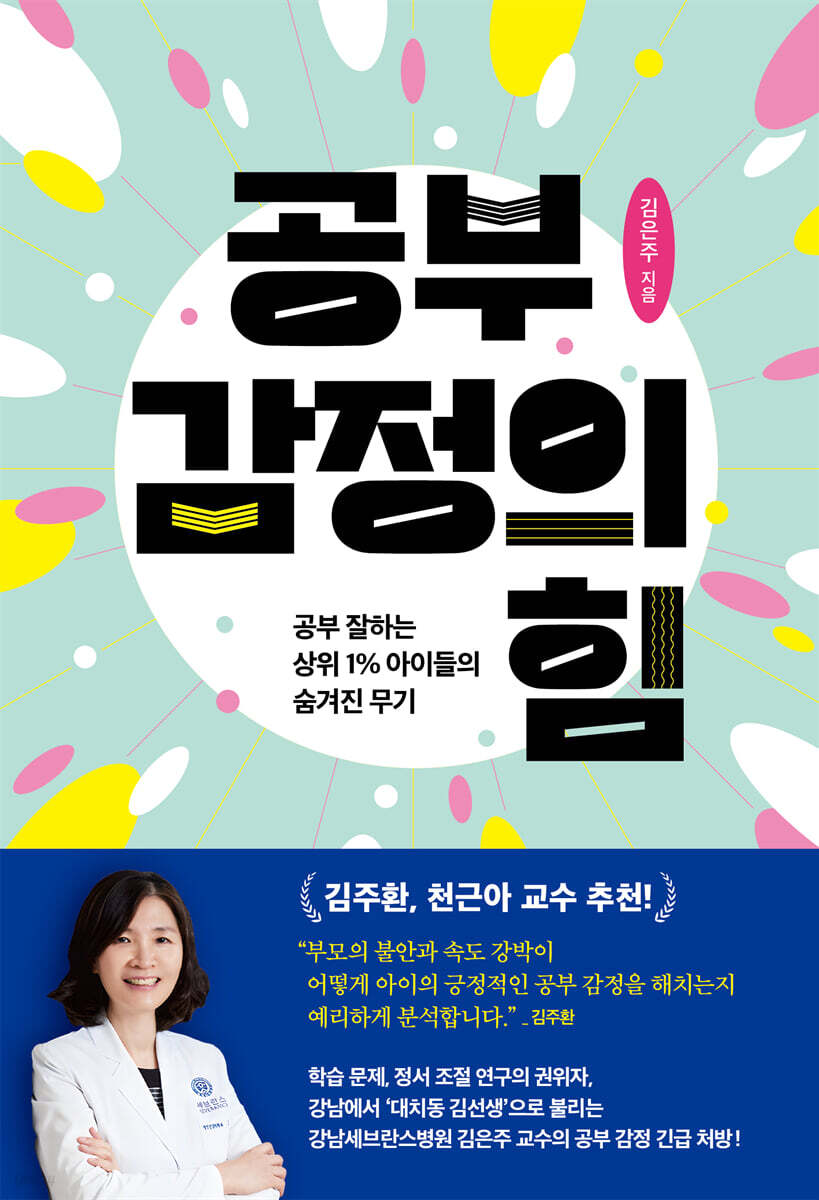
The Power of Study Emotions
 |
Description
Book Introduction
Recommended by Professor Kim Joo-hwan and Professor Cheon Geun-ah!
“My child, who used to listen well and study well, has changed.”
Grades plummet… What are the 'critical mistakes' made by mothers in Daechi-dong?
An authority on learning problems and emotional regulation research,
In Gangnam, he is called 'Mr. Kim of Daechi-dong'.
Gangnam Severance Hospital Professor Eun-ju Kim's emergency prescription for 'study emotions'!
“Studying alone is not enough.
“It is emotions that lead children to action.” Professor Eun-Joo Kim’s 『The Power of Emotional Studying』 is a book that focuses on the ‘emotional study’ that influences children’s grades, and is a book that contains everything about the ‘emotional study’ from temperament to development and intrinsic motivation.
The author, Professor Eun-ju Kim, is an authority on learning problems and emotional regulation research, and is a psychiatrist with extensive experience treating learning problems in children in Daechi-dong at Gangnam Severance Hospital, so she is called “Daechi-dong Dr. Kim” among Gangnam parents.
In this book, the author shows the reality of children suffering from 'study scars' and 'learned helplessness', and at the same time dissects 'study emotions' in detail, pointing out the side effects that can occur when parents overlook their children's 'study emotions'.
Furthermore, the author persuasively presents specific examples and demonstrates that no matter how intelligent a child is or how good the learning environment is, if a child's love for studying is disrupted, academic achievement will inevitably be limited, and if studying becomes painful, academic achievement will become even more difficult.
This book offers practical and realistic advice on how to instill a "positive study mindset" in children, what parents can do to foster "emotional control," and how to approach children based on their temperament. From temperament-specific emotional coaching using the TCI test to methods for fostering emotional control, this book comprehensively covers everything related to "study motivation."
Parents who are currently or will be fighting the college entrance exam war, parents who are struggling with their children's academics, and parents who want to turn studying into a joy rather than a pain will find useful insights in this book.
“My child, who used to listen well and study well, has changed.”
Grades plummet… What are the 'critical mistakes' made by mothers in Daechi-dong?
An authority on learning problems and emotional regulation research,
In Gangnam, he is called 'Mr. Kim of Daechi-dong'.
Gangnam Severance Hospital Professor Eun-ju Kim's emergency prescription for 'study emotions'!
“Studying alone is not enough.
“It is emotions that lead children to action.” Professor Eun-Joo Kim’s 『The Power of Emotional Studying』 is a book that focuses on the ‘emotional study’ that influences children’s grades, and is a book that contains everything about the ‘emotional study’ from temperament to development and intrinsic motivation.
The author, Professor Eun-ju Kim, is an authority on learning problems and emotional regulation research, and is a psychiatrist with extensive experience treating learning problems in children in Daechi-dong at Gangnam Severance Hospital, so she is called “Daechi-dong Dr. Kim” among Gangnam parents.
In this book, the author shows the reality of children suffering from 'study scars' and 'learned helplessness', and at the same time dissects 'study emotions' in detail, pointing out the side effects that can occur when parents overlook their children's 'study emotions'.
Furthermore, the author persuasively presents specific examples and demonstrates that no matter how intelligent a child is or how good the learning environment is, if a child's love for studying is disrupted, academic achievement will inevitably be limited, and if studying becomes painful, academic achievement will become even more difficult.
This book offers practical and realistic advice on how to instill a "positive study mindset" in children, what parents can do to foster "emotional control," and how to approach children based on their temperament. From temperament-specific emotional coaching using the TCI test to methods for fostering emotional control, this book comprehensively covers everything related to "study motivation."
Parents who are currently or will be fighting the college entrance exam war, parents who are struggling with their children's academics, and parents who want to turn studying into a joy rather than a pain will find useful insights in this book.
- You can preview some of the book's contents.
Preview
index
Prologue: Why Studying Emotions Matters
Chapter 1: Children of Daechi-dong
A mother's anxiety feeds Daechi-dong
Speed Obsession and Parental Burnout
Studying Emotions That Parents Shouldn't Miss
The importance of learning at your child's level
Chapter 2: Why Emotions Are Important to Learning
Emotions are an important resource
Emotions are guides to learning.
Learning without emotion is inefficient.
To encourage positive study habits
The Hidden Key to Learning Achievement: Emotions
Emotional Intelligence (EQ) and Intelligence Quotient (IQ)
Chapter 3: When Your Emotions Are Hurt
trauma from studying
Parent-Child Academic Conflicts: The School Life of Daechi-dong Kids
“If you don’t study, your life will be ruined.”
Children wavering at the crossroads of academic advancement
Hurtful words from parents
Chapter 4: Understanding Your Child's Temperament and Emotions
Each child has a different temperament.
Reading temperament reveals learning
Why Prerequisite Learning and Temperament Matter
Can I send my child to a specialized high school?
Chapter 5: Study Emotions Affect Learning Achievement
Four Learning Emotions
Learning emotions in peer relationships
Positive and negative study emotions
Goals that influence study emotions
When growth through learning becomes the learning goal
Chapter 6 Things to keep in mind at each stage of development
The role of parents changes with each stage of development.
Infants and Toddlers: The Foundation of Learning, Attachment
Elementary School: Self-Regulation Determines Studying
Middle and High School: Intrinsic Motivation Essential for Children
The ability to regulate emotions grows through waiting.
The side effects of specialized high school entrance exams
Motivation to study begins with autonomy.
Chapter 7: Emotional Regulation for My Child
How to Create Positive Study Emotions
What's more important than compensation
How to improve your emotional regulation skills
Chapter 8: When a Child is Sick from Studying
Children who have given up on studying
Moderate anxiety and severe anxiety
Students' test anxiety
Panic attack that feels like death
A depressed child with no hope
Does my child have 'quiet ADHD'?
Children with perfectionist tendencies and obsessive-compulsive disorder
When a child's efforts are betrayed
Children with passive-aggressive behavior
Children who grew up dependent
Children who find studying boring
Chapter 9: For a Positive Study Feeling
Improve concentration, working memory, and executive function.
Increased concentration in everyday life
How to Raise a Self-Planning Child
Small achievements foster intrinsic motivation.
Grit Enhancement Program to Build Mental Strength
Digital Media: Regulation, Not Regulation
Epilogue: There's always a reason why children have a hard time.
References
Chapter 1: Children of Daechi-dong
A mother's anxiety feeds Daechi-dong
Speed Obsession and Parental Burnout
Studying Emotions That Parents Shouldn't Miss
The importance of learning at your child's level
Chapter 2: Why Emotions Are Important to Learning
Emotions are an important resource
Emotions are guides to learning.
Learning without emotion is inefficient.
To encourage positive study habits
The Hidden Key to Learning Achievement: Emotions
Emotional Intelligence (EQ) and Intelligence Quotient (IQ)
Chapter 3: When Your Emotions Are Hurt
trauma from studying
Parent-Child Academic Conflicts: The School Life of Daechi-dong Kids
“If you don’t study, your life will be ruined.”
Children wavering at the crossroads of academic advancement
Hurtful words from parents
Chapter 4: Understanding Your Child's Temperament and Emotions
Each child has a different temperament.
Reading temperament reveals learning
Why Prerequisite Learning and Temperament Matter
Can I send my child to a specialized high school?
Chapter 5: Study Emotions Affect Learning Achievement
Four Learning Emotions
Learning emotions in peer relationships
Positive and negative study emotions
Goals that influence study emotions
When growth through learning becomes the learning goal
Chapter 6 Things to keep in mind at each stage of development
The role of parents changes with each stage of development.
Infants and Toddlers: The Foundation of Learning, Attachment
Elementary School: Self-Regulation Determines Studying
Middle and High School: Intrinsic Motivation Essential for Children
The ability to regulate emotions grows through waiting.
The side effects of specialized high school entrance exams
Motivation to study begins with autonomy.
Chapter 7: Emotional Regulation for My Child
How to Create Positive Study Emotions
What's more important than compensation
How to improve your emotional regulation skills
Chapter 8: When a Child is Sick from Studying
Children who have given up on studying
Moderate anxiety and severe anxiety
Students' test anxiety
Panic attack that feels like death
A depressed child with no hope
Does my child have 'quiet ADHD'?
Children with perfectionist tendencies and obsessive-compulsive disorder
When a child's efforts are betrayed
Children with passive-aggressive behavior
Children who grew up dependent
Children who find studying boring
Chapter 9: For a Positive Study Feeling
Improve concentration, working memory, and executive function.
Increased concentration in everyday life
How to Raise a Self-Planning Child
Small achievements foster intrinsic motivation.
Grit Enhancement Program to Build Mental Strength
Digital Media: Regulation, Not Regulation
Epilogue: There's always a reason why children have a hard time.
References
Detailed image

Into the book
“Some children excel in grades through elementary and middle school, and after entering prestigious gifted high schools, science high schools, specialized high schools, and autonomous private high schools, they build a wall between themselves and their studies. This can be a huge problem for parents.
If anxious parents hurriedly look for a new academy and tell their child to go there, the child will become irritated and angry at the parents, refuse to come out of his or her room, his or her grades will plummet, and the relationship with the parents will continue to deteriorate, creating a vicious cycle.
This is one of the most common types of consultations I encounter in my clinic.
What did these children's parents miss? They were incredibly successful as learning managers, having established a private education roadmap early on, ensuring their children progressed through advanced learning at a prestigious academy in Daechi-dong, and ultimately helped them get into their desired high schools. What did they overlook in this process?
--- p.6
“There is one repertoire that parents who visit hospitals or clinics often talk about.
“Until elementary school, he was an excellent student who did well in school and was even a class officer. However, when he entered middle school, his grades began to fall behind because he made the wrong friends or became addicted to social media and games.”
--- p.57
“If your heart races and your hands tremble just hearing the word ‘math,’ then it’s nearly impossible to do well in math.
Recently, as the Korean language section of the college entrance exam has become longer and more difficult, the number of children who momentarily lose their minds and become dazed or overwhelmed with tension just by looking at the Korean language test, which is the first subject on the exam, is increasing.
This is a phenomenon that occurs when the test environment and fear response are combined.”
--- p.66
“Woo-seok was a third-year middle school boy who was very smart and had a good physique, standing over 180 centimeters tall.
He said that he came to seek treatment because he was experiencing severe depression and anxiety after failing to get into a science high school.
When I asked if she was really upset, she said, “I feel bad for Mom.
“What should I do about my mom?” the big boy cried, tears streaming down his face.
--- p.82
“A middle school student came to his mother and confided in her after hearing this.
"Did I even ask my parents to give birth to me? If they brought me into this difficult world without asking, they should take responsibility. Why are you telling me they didn't give birth to me to see this?"
--- pp.87~88
“When children reach the third year of middle school, there is a question that parents ask a lot.
"Is Daechi-dong the right fit for my child?" "Should I send my child to a specialized or autonomous high school, or would it be better to just send them to a regular high school?" Parents wonder if their child will be able to withstand this frustration, considering that if they enter a highly competitive school like a specialized or autonomous high school, their grades will likely be lower than those of a regular high school. Considering their child's personality and social skills, parents often wonder if their child will be able to withstand this frustration.
“I want to send my child to a prestigious high school with an excellent academic curriculum and a conducive learning environment, but these schools often put their grades at a disadvantage, so I want to determine if my child has the temperament to withstand such pressure.”
--- p.116
"How can we naturally inspire students to feel a positive desire to study?" This is a question that many educators constantly grapple with.
Especially during middle and high school, ‘learning motivation’ is a very important factor in helping children continue to study hard.
Until the early elementary school years, children mainly study for external motivations, such as pocket money, toys, or recognition from parents, teachers, and friends.
However, the validity period of this external motivation is not very long.
These days, it's not very common to buy things that even fifth graders want.”
--- p.163
"Soo-hyeon was a third-year middle school student, a bright and unique boy. His IQ was relatively high, around 130, but he was very tired of cram schools, having been shuttled from one to the next, eating lunch in the car since childhood.
Even after entering middle school, I continued to clash with my mother over the academy issue.
One day, Su-hyeon said this.
“I figured out a way to quit school.
“If you swear at the teacher and the teaching assistant, they will fire you from the academy.” In fact, Su-hyeon said that he went to the academy and acted tough and intentionally behaved badly.
When I asked him why he hated that academy so much, he said the first reason was because his mother made him go there.”
--- pp.190~191
“Childhood and adolescent depression can be confusing for parents.
During this period, depression does not necessarily manifest itself as a sad mood.
It can also manifest as severe mood swings, irritability, anger, flight, deviant behavior, and physical aches.
And especially, adolescent depression has a characteristic called 'mood reactivity', so when something fun happens or when friends ask to play, the child goes out and has fun, so the child does not seem depressed in the eyes of the parents.
So, in the end, many parents end up regretting it after realizing the danger signals their children are sending.”
--- pp.201~202
“Recently, there has been an increase in cases where parents bring their middle and high school students for testing, saying, ‘Does my child have ADHD too?’ when their child’s grades are dropping.
I first ask my parents what it was like when they were little.
Then, it is said that most people were quiet and focused when they were young.
In elementary school, because there are no tests and the studying is not difficult, ADHD is often not detected among children with high intelligence, even if they are slightly distracted.
However, as students enter middle and high school and the amount and difficulty of studying increases, their grades drop, and parents begin to suspect that their child may have quiet ADHD and may have overlooked it.”
--- p.227
“For children, digital media has become not only a means of learning, but also a means of leisure and making friends.
Studying online, communicating with friends on social media, and playing games, it has become something I can't live without.
These days, children have only experienced a world with Wi-Fi since they were born.
Parents need to understand that their children cannot imagine a world without smartphones.
That is why it is realistically difficult to ask children to ‘be patient’ or ‘spend less.’
“Usually, the problem of digital media use begins to surface in earnest around the end of elementary school.”
--- pp.273~274
“If you raise your children by ignoring their emotions and only emphasizing academics, they will not know their own emotions well even as teenagers.
So, even though they are in a difficult situation, there are many children who do not realize that it is difficult and feel guilty about the difficulty because they are lacking.
Because I've been running without much time since I was young, I think I'm lacking if I can't keep up.
So when I rest, I get anxious.
There are so many kids like that.
Even when I rest or sleep, I feel anxious, and even when I play, I feel anxious and cannot play comfortably.
“There are many children who feel more comfortable when they go to the academy and sit there, even if it means going to sleep.”
If anxious parents hurriedly look for a new academy and tell their child to go there, the child will become irritated and angry at the parents, refuse to come out of his or her room, his or her grades will plummet, and the relationship with the parents will continue to deteriorate, creating a vicious cycle.
This is one of the most common types of consultations I encounter in my clinic.
What did these children's parents miss? They were incredibly successful as learning managers, having established a private education roadmap early on, ensuring their children progressed through advanced learning at a prestigious academy in Daechi-dong, and ultimately helped them get into their desired high schools. What did they overlook in this process?
--- p.6
“There is one repertoire that parents who visit hospitals or clinics often talk about.
“Until elementary school, he was an excellent student who did well in school and was even a class officer. However, when he entered middle school, his grades began to fall behind because he made the wrong friends or became addicted to social media and games.”
--- p.57
“If your heart races and your hands tremble just hearing the word ‘math,’ then it’s nearly impossible to do well in math.
Recently, as the Korean language section of the college entrance exam has become longer and more difficult, the number of children who momentarily lose their minds and become dazed or overwhelmed with tension just by looking at the Korean language test, which is the first subject on the exam, is increasing.
This is a phenomenon that occurs when the test environment and fear response are combined.”
--- p.66
“Woo-seok was a third-year middle school boy who was very smart and had a good physique, standing over 180 centimeters tall.
He said that he came to seek treatment because he was experiencing severe depression and anxiety after failing to get into a science high school.
When I asked if she was really upset, she said, “I feel bad for Mom.
“What should I do about my mom?” the big boy cried, tears streaming down his face.
--- p.82
“A middle school student came to his mother and confided in her after hearing this.
"Did I even ask my parents to give birth to me? If they brought me into this difficult world without asking, they should take responsibility. Why are you telling me they didn't give birth to me to see this?"
--- pp.87~88
“When children reach the third year of middle school, there is a question that parents ask a lot.
"Is Daechi-dong the right fit for my child?" "Should I send my child to a specialized or autonomous high school, or would it be better to just send them to a regular high school?" Parents wonder if their child will be able to withstand this frustration, considering that if they enter a highly competitive school like a specialized or autonomous high school, their grades will likely be lower than those of a regular high school. Considering their child's personality and social skills, parents often wonder if their child will be able to withstand this frustration.
“I want to send my child to a prestigious high school with an excellent academic curriculum and a conducive learning environment, but these schools often put their grades at a disadvantage, so I want to determine if my child has the temperament to withstand such pressure.”
--- p.116
"How can we naturally inspire students to feel a positive desire to study?" This is a question that many educators constantly grapple with.
Especially during middle and high school, ‘learning motivation’ is a very important factor in helping children continue to study hard.
Until the early elementary school years, children mainly study for external motivations, such as pocket money, toys, or recognition from parents, teachers, and friends.
However, the validity period of this external motivation is not very long.
These days, it's not very common to buy things that even fifth graders want.”
--- p.163
"Soo-hyeon was a third-year middle school student, a bright and unique boy. His IQ was relatively high, around 130, but he was very tired of cram schools, having been shuttled from one to the next, eating lunch in the car since childhood.
Even after entering middle school, I continued to clash with my mother over the academy issue.
One day, Su-hyeon said this.
“I figured out a way to quit school.
“If you swear at the teacher and the teaching assistant, they will fire you from the academy.” In fact, Su-hyeon said that he went to the academy and acted tough and intentionally behaved badly.
When I asked him why he hated that academy so much, he said the first reason was because his mother made him go there.”
--- pp.190~191
“Childhood and adolescent depression can be confusing for parents.
During this period, depression does not necessarily manifest itself as a sad mood.
It can also manifest as severe mood swings, irritability, anger, flight, deviant behavior, and physical aches.
And especially, adolescent depression has a characteristic called 'mood reactivity', so when something fun happens or when friends ask to play, the child goes out and has fun, so the child does not seem depressed in the eyes of the parents.
So, in the end, many parents end up regretting it after realizing the danger signals their children are sending.”
--- pp.201~202
“Recently, there has been an increase in cases where parents bring their middle and high school students for testing, saying, ‘Does my child have ADHD too?’ when their child’s grades are dropping.
I first ask my parents what it was like when they were little.
Then, it is said that most people were quiet and focused when they were young.
In elementary school, because there are no tests and the studying is not difficult, ADHD is often not detected among children with high intelligence, even if they are slightly distracted.
However, as students enter middle and high school and the amount and difficulty of studying increases, their grades drop, and parents begin to suspect that their child may have quiet ADHD and may have overlooked it.”
--- p.227
“For children, digital media has become not only a means of learning, but also a means of leisure and making friends.
Studying online, communicating with friends on social media, and playing games, it has become something I can't live without.
These days, children have only experienced a world with Wi-Fi since they were born.
Parents need to understand that their children cannot imagine a world without smartphones.
That is why it is realistically difficult to ask children to ‘be patient’ or ‘spend less.’
“Usually, the problem of digital media use begins to surface in earnest around the end of elementary school.”
--- pp.273~274
“If you raise your children by ignoring their emotions and only emphasizing academics, they will not know their own emotions well even as teenagers.
So, even though they are in a difficult situation, there are many children who do not realize that it is difficult and feel guilty about the difficulty because they are lacking.
Because I've been running without much time since I was young, I think I'm lacking if I can't keep up.
So when I rest, I get anxious.
There are so many kids like that.
Even when I rest or sleep, I feel anxious, and even when I play, I feel anxious and cannot play comfortably.
“There are many children who feel more comfortable when they go to the academy and sit there, even if it means going to sleep.”
--- p.281
Publisher's Review
Recommended by Professor Kim Joo-hwan and Professor Cheon Geun-ah!
An authority on learning problems and emotional regulation research,
In Gangnam, he is called 'Mr. Kim of Daechi-dong'.
Gangnam Severance Hospital Professor Eun-ju Kim's emergency study aid prescription!
“This book provides a concrete picture of the realities of children suffering from ‘study trauma’ and ‘learned helplessness,’ and keenly analyzes how parental anxiety and obsession with speed undermine a child’s positive learning experience.”
Kim Joo-hwan (Professor, Department of Journalism and Public Relations, Yonsei University; author of Grit, Inner Communication, and Resilience)
"This book provides parents with concrete, scientifically-based advice on how to foster positive learning habits in their children when developing learning strategies."
- Cheon Geun-ah (Professor of Psychiatry, Yonsei University College of Medicine, Director of the Department of Child Psychiatry, Severance Hospital, Author of "Cheon Geun-ah's Slow Child Parenting Class")
Why is emotional learning important? When emotions are disrupted, studying becomes painful, and when studying becomes painful, academic achievement becomes even more elusive.
In her book, “The Power of Study Emotions,” Professor Eun-Joo Kim of the Department of Psychiatry at Gangnam Severance Hospital dissects the reality that makes children anxious and the “study emotions” in detail, and points out the side effects that can arise when parents overlook their children’s “study emotions.”
No matter how intelligent a child is or how good the learning environment is, if a child's motivation to study is destroyed, academic achievement will inevitably be limited.
In this book, the author advises parents to first examine their child's characteristics and emotions, such as whether learning is taking into account the child's temperament and developmental stage, whether the child is overwhelmed by studying, and whether the child is giving meaning to studying on his or her own.
This book is a parenting book in which the author, who works at Gangnam Severance Hospital, realized the importance of the "study feeling" while treating numerous children in Daechi-dong. It focuses on how the "study feeling" affects children's learning and lives, and how they can develop a positive "study feeling."
Professor Eun-ju Kim is an authority on learning problems and emotional regulation research, and is a psychiatrist who is called “Daechi-dong Dr. Kim” among Gangnam parents due to her extensive experience treating learning problems in children in Daechi-dong.
In 2023, the author's column for JoongAng Ilbo, "My son who was good at studying has changed, Daechi-dong mom's 'critical mistake'," was selected as number one in the 'JoongAng Ilbo Hello Parents Best Content Column Top 3' and became a hot topic.
“Studying alone is not enough.
“It is emotions that lead a child to action.”
Dissecting the "studying emotion" that influences children's grades
Brain science-based child education coaching based on 20 years of clinical experience
Everything About the Emotions of Studying, From Temperament to Development to Intrinsic Motivation
The author dissects and analyzes each of the important factors that influence the 'study emotion', much like a specialist examines a patient's symptoms and identifies the underlying causes.
It comprehensively examines how each factor, including the entrance exam-centered education system, the emphasis on grades, the child's temperament, developmental stage, learning difficulty, goals pursued, autonomy, and intrinsic motivation, influence children's "study emotions."
When learning strategies do not take into account a child's temperament, when learning is ahead of their developmental stage, when learning difficulty increases anxiety, when the learning goal pursued emphasizes "results" rather than "process," and when it is directed toward eliminating intrinsic motivation, children's "study emotions" are bound to flow in a negative direction.
Moreover, when multiple factors overlap, children feel a great deal of pressure to study, and in severe cases, they experience study scars or study trauma.
For example, children in the Daechi-dong private education system, which is famous for its excessive competition and ultra-fast pre-learning, such as the 4-year-old civil service exam and the 7-year-old civil service exam, are likely to be exposed to 'study scars', 'learned helplessness', and 'test anxiety' at high frequencies due to learning strategies that do not match their temperament or developmental stage.
Based on his experience treating learning problems in children in Daechi-dong, the author delves into each factor that influences the "studying emotion," such as "temperament" and "developmental stage," while also introducing various clinical case studies to illustrate the multi-layered difficulties faced by children preparing for college entrance exams.
It also offers specific solutions on how to foster intrinsic motivation and raise children who are good at emotional regulation.
In particular, this book provides detailed explanations of the TCI psychological test, which is based on brain science, and children's temperaments. The learning patterns and customized learning strategies for each child's temperament based on the TCI psychological test will provide useful help to parents who are very interested in their children's learning.
According to this book, emotions are the 'guides' that lead learning.
Many people say, “You should exclude emotions when studying,” but the author argues that we should instead focus more on the “emotions of studying.”
Not only are most actions and decisions rooted in emotions, but learning efficiency and motivation can vary greatly depending on the direction in which emotions operate.
This is why the author says in this book, “You should look at your emotions before your grades.”
This has also been scientifically proven.
Recently, there has been active research in academic circles on the relationship between emotional intelligence and academic achievement. It has been revealed that 'emotional understanding', which allows one to effectively describe the causes and effects of emotions, and 'emotional regulation ability', which enhances positive emotions and alleviates negative emotions, play a very important role in academic achievement.
For a child to have a positive attitude toward studying, they must have the ability to manage their emotions effectively in the face of fierce academic competition and in family and peer relationships.
Even if it is not necessarily about studying, the ability to control emotions is an essential quality for children to live in.
When parents help their children learn to process and express their emotions, they are giving them a powerful weapon that will serve them well for a long time.
Our country's education system and college entrance exams are among the most competitive in the world.
However, even if there are problems with our education policy, it is difficult to deny our country's education system at an individual level, and even more difficult to change it.
Taking this into account, this book offers very practical and realistic advice on how to instill a "positive study mindset" in children given the current reality, what parents should do to foster "emotional control skills," and how to approach children according to their temperament.
Parents who are currently or will be fighting the college entrance exam war, parents who are struggling with their children's academics, and parents who want to turn studying into a joy rather than a pain will find useful insights in this book.
An authority on learning problems and emotional regulation research,
In Gangnam, he is called 'Mr. Kim of Daechi-dong'.
Gangnam Severance Hospital Professor Eun-ju Kim's emergency study aid prescription!
“This book provides a concrete picture of the realities of children suffering from ‘study trauma’ and ‘learned helplessness,’ and keenly analyzes how parental anxiety and obsession with speed undermine a child’s positive learning experience.”
Kim Joo-hwan (Professor, Department of Journalism and Public Relations, Yonsei University; author of Grit, Inner Communication, and Resilience)
"This book provides parents with concrete, scientifically-based advice on how to foster positive learning habits in their children when developing learning strategies."
- Cheon Geun-ah (Professor of Psychiatry, Yonsei University College of Medicine, Director of the Department of Child Psychiatry, Severance Hospital, Author of "Cheon Geun-ah's Slow Child Parenting Class")
Why is emotional learning important? When emotions are disrupted, studying becomes painful, and when studying becomes painful, academic achievement becomes even more elusive.
In her book, “The Power of Study Emotions,” Professor Eun-Joo Kim of the Department of Psychiatry at Gangnam Severance Hospital dissects the reality that makes children anxious and the “study emotions” in detail, and points out the side effects that can arise when parents overlook their children’s “study emotions.”
No matter how intelligent a child is or how good the learning environment is, if a child's motivation to study is destroyed, academic achievement will inevitably be limited.
In this book, the author advises parents to first examine their child's characteristics and emotions, such as whether learning is taking into account the child's temperament and developmental stage, whether the child is overwhelmed by studying, and whether the child is giving meaning to studying on his or her own.
This book is a parenting book in which the author, who works at Gangnam Severance Hospital, realized the importance of the "study feeling" while treating numerous children in Daechi-dong. It focuses on how the "study feeling" affects children's learning and lives, and how they can develop a positive "study feeling."
Professor Eun-ju Kim is an authority on learning problems and emotional regulation research, and is a psychiatrist who is called “Daechi-dong Dr. Kim” among Gangnam parents due to her extensive experience treating learning problems in children in Daechi-dong.
In 2023, the author's column for JoongAng Ilbo, "My son who was good at studying has changed, Daechi-dong mom's 'critical mistake'," was selected as number one in the 'JoongAng Ilbo Hello Parents Best Content Column Top 3' and became a hot topic.
“Studying alone is not enough.
“It is emotions that lead a child to action.”
Dissecting the "studying emotion" that influences children's grades
Brain science-based child education coaching based on 20 years of clinical experience
Everything About the Emotions of Studying, From Temperament to Development to Intrinsic Motivation
The author dissects and analyzes each of the important factors that influence the 'study emotion', much like a specialist examines a patient's symptoms and identifies the underlying causes.
It comprehensively examines how each factor, including the entrance exam-centered education system, the emphasis on grades, the child's temperament, developmental stage, learning difficulty, goals pursued, autonomy, and intrinsic motivation, influence children's "study emotions."
When learning strategies do not take into account a child's temperament, when learning is ahead of their developmental stage, when learning difficulty increases anxiety, when the learning goal pursued emphasizes "results" rather than "process," and when it is directed toward eliminating intrinsic motivation, children's "study emotions" are bound to flow in a negative direction.
Moreover, when multiple factors overlap, children feel a great deal of pressure to study, and in severe cases, they experience study scars or study trauma.
For example, children in the Daechi-dong private education system, which is famous for its excessive competition and ultra-fast pre-learning, such as the 4-year-old civil service exam and the 7-year-old civil service exam, are likely to be exposed to 'study scars', 'learned helplessness', and 'test anxiety' at high frequencies due to learning strategies that do not match their temperament or developmental stage.
Based on his experience treating learning problems in children in Daechi-dong, the author delves into each factor that influences the "studying emotion," such as "temperament" and "developmental stage," while also introducing various clinical case studies to illustrate the multi-layered difficulties faced by children preparing for college entrance exams.
It also offers specific solutions on how to foster intrinsic motivation and raise children who are good at emotional regulation.
In particular, this book provides detailed explanations of the TCI psychological test, which is based on brain science, and children's temperaments. The learning patterns and customized learning strategies for each child's temperament based on the TCI psychological test will provide useful help to parents who are very interested in their children's learning.
According to this book, emotions are the 'guides' that lead learning.
Many people say, “You should exclude emotions when studying,” but the author argues that we should instead focus more on the “emotions of studying.”
Not only are most actions and decisions rooted in emotions, but learning efficiency and motivation can vary greatly depending on the direction in which emotions operate.
This is why the author says in this book, “You should look at your emotions before your grades.”
This has also been scientifically proven.
Recently, there has been active research in academic circles on the relationship between emotional intelligence and academic achievement. It has been revealed that 'emotional understanding', which allows one to effectively describe the causes and effects of emotions, and 'emotional regulation ability', which enhances positive emotions and alleviates negative emotions, play a very important role in academic achievement.
For a child to have a positive attitude toward studying, they must have the ability to manage their emotions effectively in the face of fierce academic competition and in family and peer relationships.
Even if it is not necessarily about studying, the ability to control emotions is an essential quality for children to live in.
When parents help their children learn to process and express their emotions, they are giving them a powerful weapon that will serve them well for a long time.
Our country's education system and college entrance exams are among the most competitive in the world.
However, even if there are problems with our education policy, it is difficult to deny our country's education system at an individual level, and even more difficult to change it.
Taking this into account, this book offers very practical and realistic advice on how to instill a "positive study mindset" in children given the current reality, what parents should do to foster "emotional control skills," and how to approach children according to their temperament.
Parents who are currently or will be fighting the college entrance exam war, parents who are struggling with their children's academics, and parents who want to turn studying into a joy rather than a pain will find useful insights in this book.
GOODS SPECIFICS
- Date of issue: September 30, 2025
- Page count, weight, size: 288 pages | 460g | 140*205*17mm
- ISBN13: 9791164053391
You may also like
카테고리
korean


korean

![GQ KOREA Mark (Monthly): December [2025]](http://librairie.coreenne.fr/cdn/shop/files/8ef265dbbfbf186523ed75ba7319009d.jpg?v=1765340328&width=3840)


