

Personalized recommendation algorithms for AI agents
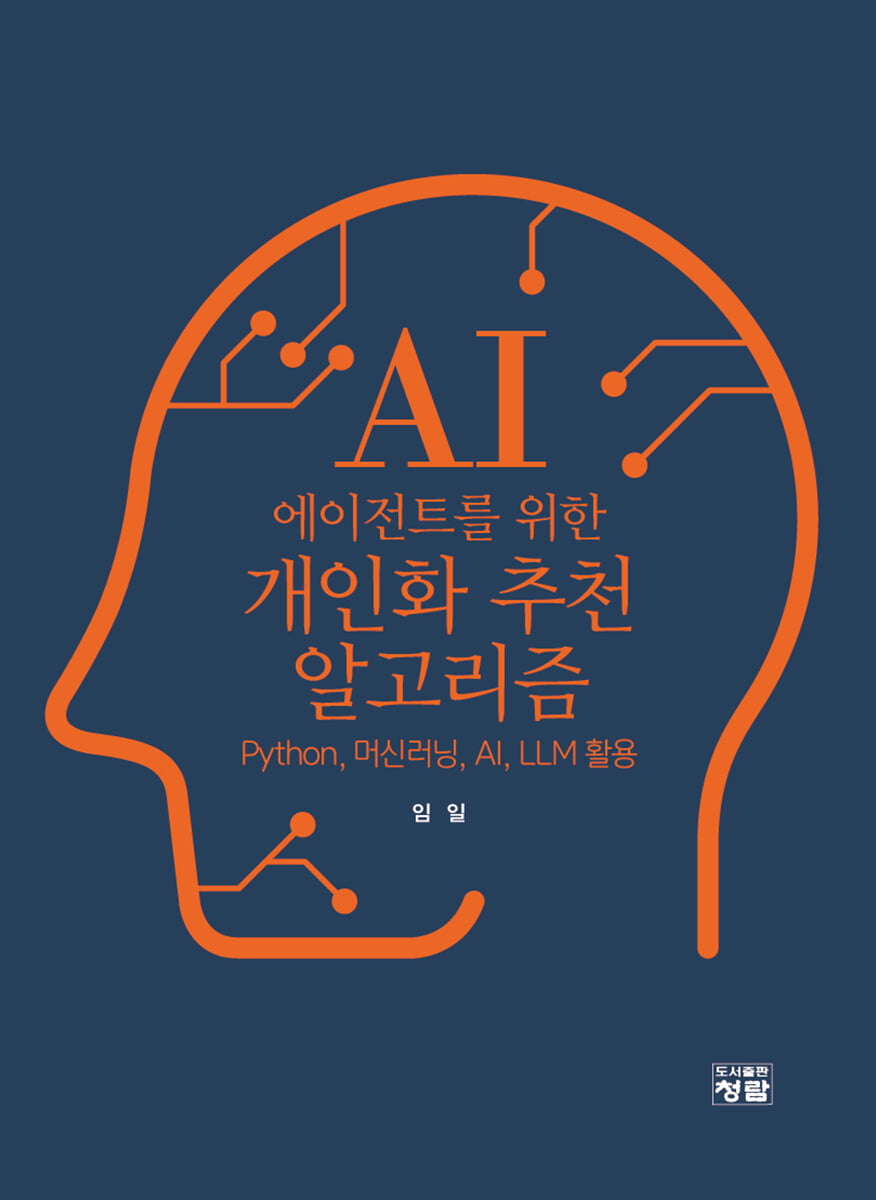 |
Description
Book Introduction
It doesn't cover everything about personalized recommendation technology.
Implementing a real personalized recommendation system requires an understanding of algorithms as well as data preprocessing and large-scale data processing, but these topics are not covered in this book.
This book explains the basic principles of each algorithm and provides examples of how each algorithm can be implemented in Python.
Since the main purpose of this book is not to explain algorithms mathematically, the formulas are limited to those absolutely necessary for understanding the algorithms.
We have also added practice problems to help readers understand and give them the opportunity to practice on their own.
Implementing a real personalized recommendation system requires an understanding of algorithms as well as data preprocessing and large-scale data processing, but these topics are not covered in this book.
This book explains the basic principles of each algorithm and provides examples of how each algorithm can be implemented in Python.
Since the main purpose of this book is not to explain algorithms mathematically, the formulas are limited to those absolutely necessary for understanding the algorithms.
We have also added practice problems to help readers understand and give them the opportunity to practice on their own.
index
Chapter 1: Introduction to Recommendation Systems
1.1 Main recommendation algorithms
1.2 Recommendation System Application Cases
Chapter 2 Basic Recommendation Systems
2.1 Reading Data
2.2 Popular product method
2.3 Measuring the accuracy of the recommendation system
2.4 Recommendations by User Group
2.5 Content-based filtering recommendations
Chapter 3 Collaborative Filtering (CF) Recommendation Systems
3.1 Principles of Collaborative Filtering
3.2 Similarity Index
3.3 Basic CF Algorithm
3.4 CF with Neighbors in Mind
3.5 Determining the optimal neighborhood size
3.6 CF considering users' evaluation tendencies
3.7 Other ways to improve CF accuracy
3.8 User-based CF and Item-based CF
3.9 Performance Measurement Indicators of Recommendation Systems
Chapter 4 Matrix Factorization (MF)-based Recommendations
4.1 Principle of Matrix Factorization (MF) method
4.2 MF Algorithm Using Stochastic Gradient Descent (SGD)
4.3 Basic MF Algorithm Using SGD
4.4 Train/Test Separate MF Algorithm
4.5 Finding the optimal parameters for MF
4.6 MF and SVD
Chapter 5 Factorization Machines (FM)
5.1 FM standard
5.2 Modification of FM formula
5.3 Learning FM
5.4 FM data transformation
5.5 Implementing FM in Python
Chapter 6: Recommendation Systems Using Deep Learning
6.1 Converting Matrix Factorization (MF) to a Neural Network
6.2 Implementing MF with Keras
6.3 Recommendation System Using Deep Learning
6.4 Adding Variables to a Deep Learning Model
Chapter 7 Recommendations Using Autoencoders (AE)
7.1 Auto Encoder Principle
7.2 Implementation of a Recommendation System Using Auto Encoders
Chapter 8 Recommendation Systems Using Transformers
8.1 Transformer
8.2 How to use Transformer for recommendations
8.3 Implementing a Recommendation System with Transformer
Chapter 9 Recommendations Using Large Language Models (LLMs)
9.1 Recommendation Methods Using LLM
9.2 Recommendations using prompting
9.3 Recommendations using embeddings
Chapter 10 Hybrid Recommender Systems
10.1 Advantages of Hybrid Recommender Systems
10.2 Principles of Hybrid Recommender Systems
10.3 Example of a Hybrid Recommender System (Combination of CF and MF)
Chapter 11 Using Sparse Matrices for Large-Scale Data Processing
11.1 Sparse matrix concept and use in Python
11.2 Applying Sparse Matrices to Recommendation Algorithms
Chapter 12 Issues in Building Recommendation Systems
12.1 New Users and Items (Cold Start Problem)
12.2 Scalability
12.3 How to Use Recommendations (Presentation)
12.4 Using Binary Data
12.5 Obtaining indirect evaluation data from users
1.1 Main recommendation algorithms
1.2 Recommendation System Application Cases
Chapter 2 Basic Recommendation Systems
2.1 Reading Data
2.2 Popular product method
2.3 Measuring the accuracy of the recommendation system
2.4 Recommendations by User Group
2.5 Content-based filtering recommendations
Chapter 3 Collaborative Filtering (CF) Recommendation Systems
3.1 Principles of Collaborative Filtering
3.2 Similarity Index
3.3 Basic CF Algorithm
3.4 CF with Neighbors in Mind
3.5 Determining the optimal neighborhood size
3.6 CF considering users' evaluation tendencies
3.7 Other ways to improve CF accuracy
3.8 User-based CF and Item-based CF
3.9 Performance Measurement Indicators of Recommendation Systems
Chapter 4 Matrix Factorization (MF)-based Recommendations
4.1 Principle of Matrix Factorization (MF) method
4.2 MF Algorithm Using Stochastic Gradient Descent (SGD)
4.3 Basic MF Algorithm Using SGD
4.4 Train/Test Separate MF Algorithm
4.5 Finding the optimal parameters for MF
4.6 MF and SVD
Chapter 5 Factorization Machines (FM)
5.1 FM standard
5.2 Modification of FM formula
5.3 Learning FM
5.4 FM data transformation
5.5 Implementing FM in Python
Chapter 6: Recommendation Systems Using Deep Learning
6.1 Converting Matrix Factorization (MF) to a Neural Network
6.2 Implementing MF with Keras
6.3 Recommendation System Using Deep Learning
6.4 Adding Variables to a Deep Learning Model
Chapter 7 Recommendations Using Autoencoders (AE)
7.1 Auto Encoder Principle
7.2 Implementation of a Recommendation System Using Auto Encoders
Chapter 8 Recommendation Systems Using Transformers
8.1 Transformer
8.2 How to use Transformer for recommendations
8.3 Implementing a Recommendation System with Transformer
Chapter 9 Recommendations Using Large Language Models (LLMs)
9.1 Recommendation Methods Using LLM
9.2 Recommendations using prompting
9.3 Recommendations using embeddings
Chapter 10 Hybrid Recommender Systems
10.1 Advantages of Hybrid Recommender Systems
10.2 Principles of Hybrid Recommender Systems
10.3 Example of a Hybrid Recommender System (Combination of CF and MF)
Chapter 11 Using Sparse Matrices for Large-Scale Data Processing
11.1 Sparse matrix concept and use in Python
11.2 Applying Sparse Matrices to Recommendation Algorithms
Chapter 12 Issues in Building Recommendation Systems
12.1 New Users and Items (Cold Start Problem)
12.2 Scalability
12.3 How to Use Recommendations (Presentation)
12.4 Using Binary Data
12.5 Obtaining indirect evaluation data from users
Publisher's Review
Personalized recommendations refer to analyzing each individual's interests and preferences and recommending information or products that match those interests and preferences.
With the ability to collect detailed information about customers, personalized recommendations are becoming increasingly popular and a key foundational technology for companies developing new services.
Personalized recommendation technology is fundamentally used to provide recommendation services like Amazon or Netflix, but it can also be applied to various fields such as advertising or web page design that require personalized services.
Another area where recommendation algorithms are being used more recently is AI agents. These agents are AI systems that understand individual users' preferences and needs and perform various tasks on their behalf.
The tasks AI agents perform for users range from relatively simple tasks like collecting and organizing information to scheduling, deciding on products to purchase, and negotiating on behalf of the user. For AI agents to function effectively, understanding the user's preferences and needs is paramount, and personalized recommendation algorithms are well-suited for this purpose.
This is because understanding an individual's preferences is fundamental to providing personalized recommendations.
The primary goal of this book is to help readers understand how major personalized recommendation algorithms work.
To this end, this book covers the overall content of personalized recommendation technology, especially personalized recommendation technology using continuous values.
Specifically, it covers machine learning algorithms such as collaborative filtering and matrix factorization, as well as deep learning recommendation algorithms.
We also explain recommendations for using large language models (LLMs), which are widely used these days.
Here, we briefly discuss hybrid recommendation systems that combine multiple recommendation algorithms and the issues involved in building recommendation systems.
This book does not cover everything about personalized recommendation techniques.
Implementing a real personalized recommendation system requires an understanding of algorithms as well as data preprocessing and large-scale data processing, but these topics are not covered in this book.
This book explains the basic principles of each algorithm and provides examples of how each algorithm can be implemented in Python.
Since the main purpose of this book is not to explain algorithms mathematically, the formulas are limited to those absolutely necessary for understanding the algorithms.
We have also added practice problems to help readers understand and give them the opportunity to practice on their own.
When writing this book, I tried to structure it so that even those without deep knowledge of computers or mathematics could easily understand the workings of personalized recommendation algorithms.
However, the coding part using Python is explained under the assumption that you have basic knowledge of Python.
In other words, the basic grammar of Python or the basic explanations of Numpy, Pandas, Tensorflow, etc. were omitted, and the focus was on explaining algorithms that utilize them.
Among the analysis techniques, SGD (Stochastic Gradient Descent) is explained as an important technique, so basic knowledge of it is also necessary.
Additionally, to understand recommendation algorithms that use Transformer or LLM, a basic understanding of the Transformer algorithm and LLM is required.
For readers who are not familiar with this, it is recommended that they first learn the basics of Python syntax, how to use additional modules such as Numpy, Pandas, and Tensorflow, the basics of SGD, Transformer, and LLM, and then read this book.
If you follow this book from beginning to end, I believe you will understand the basic principles of various algorithms for personalized recommendation systems.
I hope this book will be helpful to those interested in or conducting research on building recommendation systems, personalized systems, and AI agents utilizing these systems.
With the ability to collect detailed information about customers, personalized recommendations are becoming increasingly popular and a key foundational technology for companies developing new services.
Personalized recommendation technology is fundamentally used to provide recommendation services like Amazon or Netflix, but it can also be applied to various fields such as advertising or web page design that require personalized services.
Another area where recommendation algorithms are being used more recently is AI agents. These agents are AI systems that understand individual users' preferences and needs and perform various tasks on their behalf.
The tasks AI agents perform for users range from relatively simple tasks like collecting and organizing information to scheduling, deciding on products to purchase, and negotiating on behalf of the user. For AI agents to function effectively, understanding the user's preferences and needs is paramount, and personalized recommendation algorithms are well-suited for this purpose.
This is because understanding an individual's preferences is fundamental to providing personalized recommendations.
The primary goal of this book is to help readers understand how major personalized recommendation algorithms work.
To this end, this book covers the overall content of personalized recommendation technology, especially personalized recommendation technology using continuous values.
Specifically, it covers machine learning algorithms such as collaborative filtering and matrix factorization, as well as deep learning recommendation algorithms.
We also explain recommendations for using large language models (LLMs), which are widely used these days.
Here, we briefly discuss hybrid recommendation systems that combine multiple recommendation algorithms and the issues involved in building recommendation systems.
This book does not cover everything about personalized recommendation techniques.
Implementing a real personalized recommendation system requires an understanding of algorithms as well as data preprocessing and large-scale data processing, but these topics are not covered in this book.
This book explains the basic principles of each algorithm and provides examples of how each algorithm can be implemented in Python.
Since the main purpose of this book is not to explain algorithms mathematically, the formulas are limited to those absolutely necessary for understanding the algorithms.
We have also added practice problems to help readers understand and give them the opportunity to practice on their own.
When writing this book, I tried to structure it so that even those without deep knowledge of computers or mathematics could easily understand the workings of personalized recommendation algorithms.
However, the coding part using Python is explained under the assumption that you have basic knowledge of Python.
In other words, the basic grammar of Python or the basic explanations of Numpy, Pandas, Tensorflow, etc. were omitted, and the focus was on explaining algorithms that utilize them.
Among the analysis techniques, SGD (Stochastic Gradient Descent) is explained as an important technique, so basic knowledge of it is also necessary.
Additionally, to understand recommendation algorithms that use Transformer or LLM, a basic understanding of the Transformer algorithm and LLM is required.
For readers who are not familiar with this, it is recommended that they first learn the basics of Python syntax, how to use additional modules such as Numpy, Pandas, and Tensorflow, the basics of SGD, Transformer, and LLM, and then read this book.
If you follow this book from beginning to end, I believe you will understand the basic principles of various algorithms for personalized recommendation systems.
I hope this book will be helpful to those interested in or conducting research on building recommendation systems, personalized systems, and AI agents utilizing these systems.
GOODS SPECIFICS
- Date of issue: September 10, 2025
- Page count, weight, size: 246 pages | 188*257*20mm
- ISBN13: 9791194641438
- ISBN10: 1194641431
You may also like
카테고리
korean


korean

![GQ KOREA Mark (Monthly): December [2025]](http://librairie.coreenne.fr/cdn/shop/files/8ef265dbbfbf186523ed75ba7319009d.jpg?v=1765340328&width=3840)


