

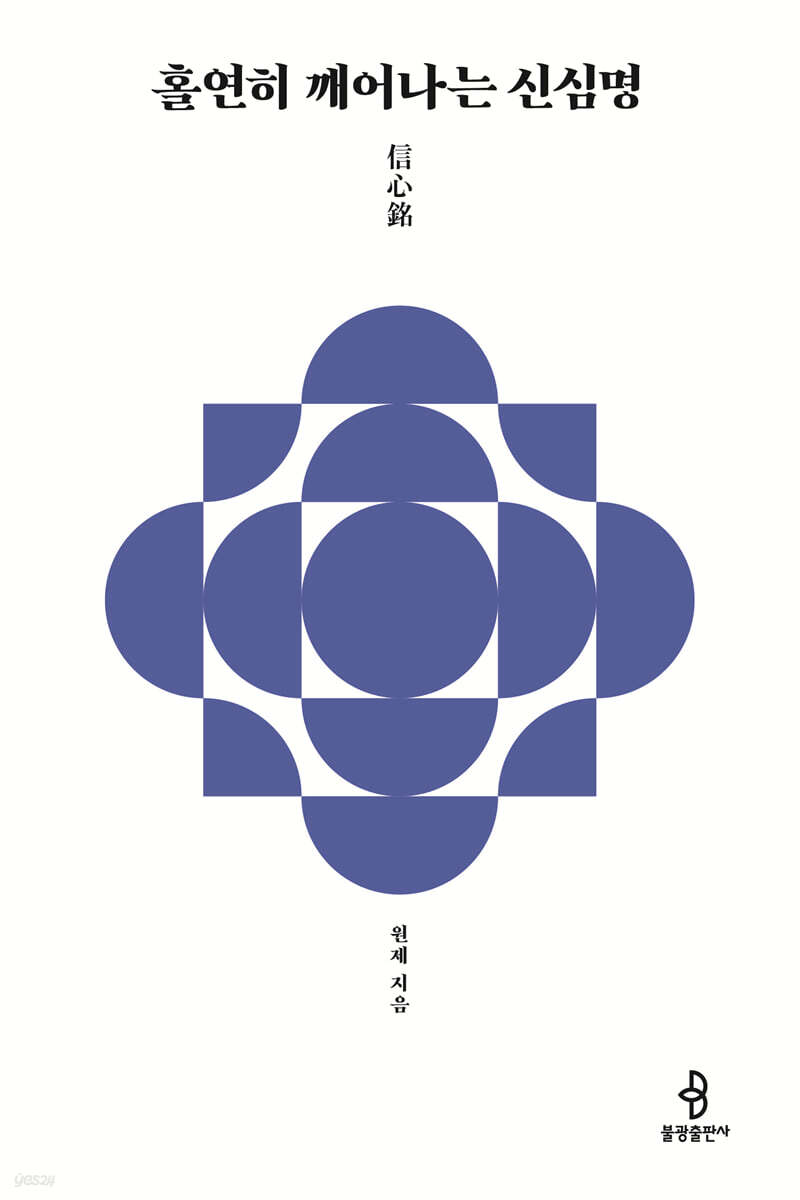
Shinsimmyeong suddenly awakens
 |
Description
Book Introduction
“Enlightenment is easier than touching your nose!”
Discovered in the immortal classic of Zen sayings, 『Shinsimmyeong』,
Moments of realization that will make you slap your knees while reading
The icon of 'Killing Law', Wonje Monk
With vibrant snowfall
Easy access to the path of awakening
Giving you a crucial hint!
“Ultimate enlightenment is not difficult.
“It is obvious that you hate and do not love.”
The 『Inscription of Faith』 left by the third master of Chinese Zen Buddhism, Master Seungchan, is groundbreaking from the very first sentence.
They say that enlightenment, which was elusive no matter how hard you tried to obtain it, is easy to obtain.
If you don't cling to the 'mind that judges right and wrong and likes and dislikes', enlightenment will be clearly revealed.
This sentence is the most famous and also the most troubling sentence for those who study the mind through Buddhism or Zen.
However, Monk Wonje boldly adds a metaphor.
“Enlightenment is easier than touching your nose while washing your face.”
Monk Wonje, who has been practicing intensely as a Zen master and constantly questioning the essence of himself and the world, finds answers in 『Shinsimmyeong』 this time.
『Shinsimmyeong』 is a collection of Zen sayings that sings of enlightenment in a short text of 146 verses and 584 characters.
This collection of Zen sayings, considered the best in language, is an immortal classic that immediately penetrates the root of the conflicts and suffering we experience.
The monk goes straight to the core of enlightenment contained in the 『Shinsimmyeong』 with the ‘Killing Dharma Talk.’
Intuitively understanding how the mind works through everyday emotions and situations.
In doing so, it brings the old sentences from 『Shinsimmyeong』 from 1,400 years ago into the center of our lives and emotions today.
The monk directly demonstrates through his practice and daily life that enlightenment is not far away, like accidentally touching his nose while washing his face.
It also points out, with specific episodes, how the choices we make and discard out of habit, or the 'mind of choosing', are the root of so much suffering.
While putting autumn leaves in a bookmark, he unhesitatingly reveals the duality of our hearts, such as avoiding the carcasses of insects rotting under maple trees, enjoying the sound of wind chimes, but frowning at the sound of car horns, and his own self, who suffered for days over a friend's prank.
"The sound of the mountain temple's scenery is a resonance that purifies my mind, while the honking of a car horn is a noise that shatters the silence? There is no discrimination in sound.
The only difference is our hearts in accepting it.
“All suffering begins with a clinging mind.” The monk’s perspective, which sees every day as an opportunity for practice, reminds us once again that “enlightenment is not far away, but right next to us.”
As you read 『Suddenly Awakening Shinsimmyeong』, moments of enlightenment that will make you slap your knees appear.
right.
This book does not stop at explaining the meaning of the classics.
This book shows how to apply the sentences of 『Shinsimmyeong』 to life.
The feeling that came to mind as soon as I opened my eyes this morning, a scene on the way to work, a conversation with a friend, looking back at myself wavering and noticing the 'mind of selection' tells me that this is the beginning of practice.
"The Suddenly Awakening Mind" is a solid text and the most direct and practical practice book for those who want to establish their center in an age where words have become light.
This book will be the clearest starting point for those seeking "everyday enlightenment," and a crucial hint for reaching the core of the mind.
Discovered in the immortal classic of Zen sayings, 『Shinsimmyeong』,
Moments of realization that will make you slap your knees while reading
The icon of 'Killing Law', Wonje Monk
With vibrant snowfall
Easy access to the path of awakening
Giving you a crucial hint!
“Ultimate enlightenment is not difficult.
“It is obvious that you hate and do not love.”
The 『Inscription of Faith』 left by the third master of Chinese Zen Buddhism, Master Seungchan, is groundbreaking from the very first sentence.
They say that enlightenment, which was elusive no matter how hard you tried to obtain it, is easy to obtain.
If you don't cling to the 'mind that judges right and wrong and likes and dislikes', enlightenment will be clearly revealed.
This sentence is the most famous and also the most troubling sentence for those who study the mind through Buddhism or Zen.
However, Monk Wonje boldly adds a metaphor.
“Enlightenment is easier than touching your nose while washing your face.”
Monk Wonje, who has been practicing intensely as a Zen master and constantly questioning the essence of himself and the world, finds answers in 『Shinsimmyeong』 this time.
『Shinsimmyeong』 is a collection of Zen sayings that sings of enlightenment in a short text of 146 verses and 584 characters.
This collection of Zen sayings, considered the best in language, is an immortal classic that immediately penetrates the root of the conflicts and suffering we experience.
The monk goes straight to the core of enlightenment contained in the 『Shinsimmyeong』 with the ‘Killing Dharma Talk.’
Intuitively understanding how the mind works through everyday emotions and situations.
In doing so, it brings the old sentences from 『Shinsimmyeong』 from 1,400 years ago into the center of our lives and emotions today.
The monk directly demonstrates through his practice and daily life that enlightenment is not far away, like accidentally touching his nose while washing his face.
It also points out, with specific episodes, how the choices we make and discard out of habit, or the 'mind of choosing', are the root of so much suffering.
While putting autumn leaves in a bookmark, he unhesitatingly reveals the duality of our hearts, such as avoiding the carcasses of insects rotting under maple trees, enjoying the sound of wind chimes, but frowning at the sound of car horns, and his own self, who suffered for days over a friend's prank.
"The sound of the mountain temple's scenery is a resonance that purifies my mind, while the honking of a car horn is a noise that shatters the silence? There is no discrimination in sound.
The only difference is our hearts in accepting it.
“All suffering begins with a clinging mind.” The monk’s perspective, which sees every day as an opportunity for practice, reminds us once again that “enlightenment is not far away, but right next to us.”
As you read 『Suddenly Awakening Shinsimmyeong』, moments of enlightenment that will make you slap your knees appear.
right.
This book does not stop at explaining the meaning of the classics.
This book shows how to apply the sentences of 『Shinsimmyeong』 to life.
The feeling that came to mind as soon as I opened my eyes this morning, a scene on the way to work, a conversation with a friend, looking back at myself wavering and noticing the 'mind of selection' tells me that this is the beginning of practice.
"The Suddenly Awakening Mind" is a solid text and the most direct and practical practice book for those who want to establish their center in an age where words have become light.
This book will be the clearest starting point for those seeking "everyday enlightenment," and a crucial hint for reaching the core of the mind.
- You can preview some of the book's contents.
Preview
index
ㆍForeword
ㆍBefore starting 『Suddenly Awakening Shinsimmyeong』
Shinsimmyeong Kangseol
1.
Enlightenment is easier than touching your nose.
2.
When I collapse, the void opens up.
3.
The greater the emptiness, the greater the enlightenment.
4.
Truth sends suffering as a guest
5.
The mind changes without integrity
6.
The subtle meaning is well hidden.
7.
The void embraces everyone
8.
Trial and error matures me and my life.
9.
When it is completely emptied, it is completely filled.
10.
If you leave discrimination aside, it's just the middle ground
11.
Punishment for giving sermons with one's whole body thrown into it
12.
Come straight to me
13.
You have to get out of the barrel before you can roll the barrel.
14.
Even truth, if left out, becomes a disease.
15·16.
A playground for experts, a living hell for beginners
17.
Get a thousand moons at once
18.
Returning to the source illuminates everything.
19.
Don't chase the dirt, chase the person.
20.
Life was perfect from the start
21.
A mind without discrimination is true love.
22.
Spring is already hanging on the plum branches
23.
If you can keep it, it's not the truth.
24.
Jump off the end of the 100-foot pole
25.
When sentient beings disappear, Buddha also disappears.
26·27.
The truth flows through me
28.
If there is no substance, everyone will be saved.
29.
When you are empty, you become full.
30.
The Great Secret of the Scriptures, Yeosiamun
31.
Pain begins with separation
32.
There is no useless tree
33·34.
If you let me go, fate will flow
35.
When you break free from me, even your troubles become wisdom.
36.
Even I am a story
37.
Not too far, not too close
38.
There is no sin in seeing, hearing, and tasting.
39.
The whole body is a temple
40.
No one fights with an empty stomach.
41.
The advocate of the temple and the spoon at the table
42.
It's painful because it's not what I want
43.
They get along well but don't get along
44.
Even if you paint in the air, the brush does not fade.
45.
Isn't that all fantasy?
46.
An eye that can see like a welcome
47.
The End of Enlightenment, 'The Play of Rebirth'
48.
I have never left the Pure Land or the Garden of Eden.
49.
If you empty yourself, the world will be your gift.
50.
When my work is done, the work of the truth begins.
51.
There's no reason to think soy sauce tastes salty.
52.
Seeing and writing about equality and discrimination at the same time
53.
Communicate freely and openly
54.
He who seeks to be reborn, destroy the world
55.
If there is no concern in the mind, it is a good time for a person.
56.
When the clouds clear, the sun shines naturally.
57.
Just stretch out your legs and take a nap.
58.
Turn off the lights and you'll get moonlight
59.
I just collect the ideas that surround me
60.
There is no discrimination in the law, but there are differences among people.
61.
When I'm sleepy, I yawn, and when I'm tired, I lie down and rest.
62.
If you open the window, you'll see the blue sky right away.
63.
I just say it's not two.
64.
Past, present, and future are all just a dream
65.
The law is right in front of you
66·67.
Putting Mount Sumeru into a mustard seed
68.
Allow and reveal as is
69.
The selflessness and smoke that flow without a dwelling place
70.
You need to have discernment to see the truth.
71.
Just waiting for the right time
72.
The beginning and end of faith is enlightenment.
73.
Return to Eternity
ㆍConclusion
supplement
ㆍFull text of 『Shinsimmyeong』
ㆍBefore starting 『Suddenly Awakening Shinsimmyeong』
Shinsimmyeong Kangseol
1.
Enlightenment is easier than touching your nose.
2.
When I collapse, the void opens up.
3.
The greater the emptiness, the greater the enlightenment.
4.
Truth sends suffering as a guest
5.
The mind changes without integrity
6.
The subtle meaning is well hidden.
7.
The void embraces everyone
8.
Trial and error matures me and my life.
9.
When it is completely emptied, it is completely filled.
10.
If you leave discrimination aside, it's just the middle ground
11.
Punishment for giving sermons with one's whole body thrown into it
12.
Come straight to me
13.
You have to get out of the barrel before you can roll the barrel.
14.
Even truth, if left out, becomes a disease.
15·16.
A playground for experts, a living hell for beginners
17.
Get a thousand moons at once
18.
Returning to the source illuminates everything.
19.
Don't chase the dirt, chase the person.
20.
Life was perfect from the start
21.
A mind without discrimination is true love.
22.
Spring is already hanging on the plum branches
23.
If you can keep it, it's not the truth.
24.
Jump off the end of the 100-foot pole
25.
When sentient beings disappear, Buddha also disappears.
26·27.
The truth flows through me
28.
If there is no substance, everyone will be saved.
29.
When you are empty, you become full.
30.
The Great Secret of the Scriptures, Yeosiamun
31.
Pain begins with separation
32.
There is no useless tree
33·34.
If you let me go, fate will flow
35.
When you break free from me, even your troubles become wisdom.
36.
Even I am a story
37.
Not too far, not too close
38.
There is no sin in seeing, hearing, and tasting.
39.
The whole body is a temple
40.
No one fights with an empty stomach.
41.
The advocate of the temple and the spoon at the table
42.
It's painful because it's not what I want
43.
They get along well but don't get along
44.
Even if you paint in the air, the brush does not fade.
45.
Isn't that all fantasy?
46.
An eye that can see like a welcome
47.
The End of Enlightenment, 'The Play of Rebirth'
48.
I have never left the Pure Land or the Garden of Eden.
49.
If you empty yourself, the world will be your gift.
50.
When my work is done, the work of the truth begins.
51.
There's no reason to think soy sauce tastes salty.
52.
Seeing and writing about equality and discrimination at the same time
53.
Communicate freely and openly
54.
He who seeks to be reborn, destroy the world
55.
If there is no concern in the mind, it is a good time for a person.
56.
When the clouds clear, the sun shines naturally.
57.
Just stretch out your legs and take a nap.
58.
Turn off the lights and you'll get moonlight
59.
I just collect the ideas that surround me
60.
There is no discrimination in the law, but there are differences among people.
61.
When I'm sleepy, I yawn, and when I'm tired, I lie down and rest.
62.
If you open the window, you'll see the blue sky right away.
63.
I just say it's not two.
64.
Past, present, and future are all just a dream
65.
The law is right in front of you
66·67.
Putting Mount Sumeru into a mustard seed
68.
Allow and reveal as is
69.
The selflessness and smoke that flow without a dwelling place
70.
You need to have discernment to see the truth.
71.
Just waiting for the right time
72.
The beginning and end of faith is enlightenment.
73.
Return to Eternity
ㆍConclusion
supplement
ㆍFull text of 『Shinsimmyeong』
Detailed image

Into the book
“When I’m hungry, I eat, and when I’m tired, I go to sleep right away.”
“Everyone does that too.
Then, we can say that everyone puts in effort like a monk.”
“No, that’s not true.
They are different from me.”
“Why do you say it is different?”
“When they are eating, they don’t eat and think about useless things, and when they are sleeping, they don’t sleep and dream about all sorts of things.
So it's not like me.”
--- p.23
“All suffering arises from attachment.” This one sentence was so simple and clear.
It was a realization that I already knew in my head, but couldn't accept with my heart.
Perhaps the three days of excruciating, confusing suffering were necessary preparation for fully accepting this one sentence.
Indeed, it was so.
The pain did not come from the city.
It came from that mind that was obsessed with right and wrong.
--- p.29~30
Acknowledging and accepting all the boundaries that come our way is also a great practice.
Even when we encounter the boundaries of positive emotions like joy or depression, all we can do is empty ourselves so that those emotions or objects can remain and function well according to their respective fates.
--- p.48
Trial and error is not in vain.
It is a process of adjustment to find the right direction for my studies, and a arduous experience to make my life more solid.
Trial and error are not hardships to be avoided, but rather experiences that help us mature and live our lives.
The desire to attain enlightenment but avoid trial and error is the mind of selfishness.
Enlightenment will not come unless we break free from this preoccupation.
You must go through everything that you must go through, and pay for everything that you must pay for.
Because such experiences of virtuous conduct are in fact precious opportunities that come to solidify enlightenment.
--- p.62~63
“Monk, there is a large temple below, so why do you practice in a cave like this?”
“I meditate in this quiet place to escape the hustle and bustle of the world.”
“Oh, really? But, monk, don’t you find the sound of water and birds noisy?”
The monk was surprised by the hiker's words.
The monk had always believed that the sounds of people talking, cars, and televisions were noisy.
But I never thought the sound of the waterfall or the birds was noisy.
But if you think about it, the sound of water or the sound of birds are all just sounds.
He came into the cave to seek silence, thinking that the noise would disturb him, but it was the monk's foolish judgment.
After gaining this insight from the hiker he had been trying so hard to avoid, the monk returned to the mountain temple.
--- p.72
“What the hell is this! How dare a monk urinate in the temple?”
The passenger responded naturally.
“No, Monk, haven’t you even seen the lotus in front of the Dharma hall? Didn’t you say, ‘The Buddha’s body fills the entire Dharma realm’? If that’s true, then there’s a Buddha here, a Buddha there, and they’re all Buddhas, so where on earth am I supposed to urinate?”
At this, Monk Nojeon was speechless and could not answer.
But if I were Monk Nojeon, or a Buddhist attending a service in the temple, how would I treat this monk suffering from emptiness? How could I bring him out of this emptiness? If I were Monk Nojeon, I would do something like this.
First, go to the place where the passenger urinated and, before the urine is absorbed into the floor, thoroughly wet your hands with urine.
You can touch their cheeks with your wet hands, rub their nose, and moisten their lips with urine.
Then the passengers will be startled by the salty taste of urine and will try to run away by stepping back.
In that case, you can just repeat what the passenger said.
“No, the Buddha’s body is full of the Dharma realm, there is a Buddha here and a Buddha there, so where on earth am I supposed to wipe this urine?”
--- p.89~90
I searched for spring all day long, but I couldn't see it / I walked on the clouds on the hill until my straw sandals wore out.
/ When I returned and smelled the scent of the smiling plum blossoms in the garden, / Spring was already ripening on the plum blossom branches.
We are already seeing the news of truth, like spring, before our eyes every day.
However, because of the illusion, materialization, and obsession with existence, the country is unable to properly and deeply encounter what is right in front of its eyes.
No special method is required to reach that point.
But the country only rests in delusional views.
--- p.117
The lotus flower lives not only in the mud, but also in the water of the pond, along with various grasses and fish.
If a lotus flower is just left alone, it cannot show its natural beauty.
The lotus becomes sublime because it is surrounded by countless creatures and colorful life phenomena in the pond.
Thus, enlightenment is not noble in itself.
It is because we are in harmony with the thousands, ten thousand different conditioned dharmas, yet remain untainted by them, that we can become so sublime.
--- p.198
I had this thought while hiking at night.
In a way, practice is the act of gradually turning off the light I have.
If you have a lamp, the area around the lamp will become brighter.
But there is a problem.
The point is that except for the narrow area illuminated by my lamp, the rest of the area becomes relatively dark.
In a way, the light I have is my framework and perspective for looking at people and the world.
If I have a specific framework, we can only illuminate a small area right in front of our noses.
But if we can just turn off our own lamp, we get a huge lamp called moonlight.
“Everyone does that too.
Then, we can say that everyone puts in effort like a monk.”
“No, that’s not true.
They are different from me.”
“Why do you say it is different?”
“When they are eating, they don’t eat and think about useless things, and when they are sleeping, they don’t sleep and dream about all sorts of things.
So it's not like me.”
--- p.23
“All suffering arises from attachment.” This one sentence was so simple and clear.
It was a realization that I already knew in my head, but couldn't accept with my heart.
Perhaps the three days of excruciating, confusing suffering were necessary preparation for fully accepting this one sentence.
Indeed, it was so.
The pain did not come from the city.
It came from that mind that was obsessed with right and wrong.
--- p.29~30
Acknowledging and accepting all the boundaries that come our way is also a great practice.
Even when we encounter the boundaries of positive emotions like joy or depression, all we can do is empty ourselves so that those emotions or objects can remain and function well according to their respective fates.
--- p.48
Trial and error is not in vain.
It is a process of adjustment to find the right direction for my studies, and a arduous experience to make my life more solid.
Trial and error are not hardships to be avoided, but rather experiences that help us mature and live our lives.
The desire to attain enlightenment but avoid trial and error is the mind of selfishness.
Enlightenment will not come unless we break free from this preoccupation.
You must go through everything that you must go through, and pay for everything that you must pay for.
Because such experiences of virtuous conduct are in fact precious opportunities that come to solidify enlightenment.
--- p.62~63
“Monk, there is a large temple below, so why do you practice in a cave like this?”
“I meditate in this quiet place to escape the hustle and bustle of the world.”
“Oh, really? But, monk, don’t you find the sound of water and birds noisy?”
The monk was surprised by the hiker's words.
The monk had always believed that the sounds of people talking, cars, and televisions were noisy.
But I never thought the sound of the waterfall or the birds was noisy.
But if you think about it, the sound of water or the sound of birds are all just sounds.
He came into the cave to seek silence, thinking that the noise would disturb him, but it was the monk's foolish judgment.
After gaining this insight from the hiker he had been trying so hard to avoid, the monk returned to the mountain temple.
--- p.72
“What the hell is this! How dare a monk urinate in the temple?”
The passenger responded naturally.
“No, Monk, haven’t you even seen the lotus in front of the Dharma hall? Didn’t you say, ‘The Buddha’s body fills the entire Dharma realm’? If that’s true, then there’s a Buddha here, a Buddha there, and they’re all Buddhas, so where on earth am I supposed to urinate?”
At this, Monk Nojeon was speechless and could not answer.
But if I were Monk Nojeon, or a Buddhist attending a service in the temple, how would I treat this monk suffering from emptiness? How could I bring him out of this emptiness? If I were Monk Nojeon, I would do something like this.
First, go to the place where the passenger urinated and, before the urine is absorbed into the floor, thoroughly wet your hands with urine.
You can touch their cheeks with your wet hands, rub their nose, and moisten their lips with urine.
Then the passengers will be startled by the salty taste of urine and will try to run away by stepping back.
In that case, you can just repeat what the passenger said.
“No, the Buddha’s body is full of the Dharma realm, there is a Buddha here and a Buddha there, so where on earth am I supposed to wipe this urine?”
--- p.89~90
I searched for spring all day long, but I couldn't see it / I walked on the clouds on the hill until my straw sandals wore out.
/ When I returned and smelled the scent of the smiling plum blossoms in the garden, / Spring was already ripening on the plum blossom branches.
We are already seeing the news of truth, like spring, before our eyes every day.
However, because of the illusion, materialization, and obsession with existence, the country is unable to properly and deeply encounter what is right in front of its eyes.
No special method is required to reach that point.
But the country only rests in delusional views.
--- p.117
The lotus flower lives not only in the mud, but also in the water of the pond, along with various grasses and fish.
If a lotus flower is just left alone, it cannot show its natural beauty.
The lotus becomes sublime because it is surrounded by countless creatures and colorful life phenomena in the pond.
Thus, enlightenment is not noble in itself.
It is because we are in harmony with the thousands, ten thousand different conditioned dharmas, yet remain untainted by them, that we can become so sublime.
--- p.198
I had this thought while hiking at night.
In a way, practice is the act of gradually turning off the light I have.
If you have a lamp, the area around the lamp will become brighter.
But there is a problem.
The point is that except for the narrow area illuminated by my lamp, the rest of the area becomes relatively dark.
In a way, the light I have is my framework and perspective for looking at people and the world.
If I have a specific framework, we can only illuminate a small area right in front of our noses.
But if we can just turn off our own lamp, we get a huge lamp called moonlight.
--- p.248
Publisher's Review
“The moment of enlightenment is closer than you think!”
A friend's prank, a knife-throwing monk, a monk who peed in the temple...
Found in the vivid experience of Venerable Wonje Sujwa
How to Become a Master at Turning the World into a Playground
Although 『Shinsimyeong』 is a short text of 146 verses and 584 characters, it is considered to be a document that condenses the Tripitaka Koreana and 1,700 koans.
In the Seon sect, it is considered a must-read collection of Seon sayings, a standard for songs of enlightenment, and a compass for Seon.
This immortal classic immediately shakes the reader with its opening sentence: “Enlightenment is easy if you just watch out for your attachments.”
In Buddhism, 'enlightenment' is a world that we have tried to reach countless times, but never felt close to.
But they say it's easy.
If only we could just put down the ‘mind that judges between likes and dislikes.’
Venerable Wonje Sujwa interprets this provocative teaching with vivid experience.
『Suddenly Awakening Shinsimyeong』 is a book that records the countless frustrations of practice, emotional ups and downs, and moments of anguish and enlightenment in life that the monk experienced in his Zen room, infused into each and every sentence of 『Shinsimyeong』.
In particular, by weaving together practical experience as a practitioner and the ‘mind function’ in daily life, he unfolds the moment of enlightenment as a ‘real-time sensation.’
A monk who was suffering from emptiness and urinated in the temple, the memory of being hurt by a friend's prank, the head monk who used a knife to divide the boundary between you and me...
Experiences that are sometimes heavy and sometimes humorous become friendly guides to retrace the path to enlightenment.
Baekmi is an experience of suddenly waking up during a night hike.
“I had this thought while hiking at night.
In a way, practice is the act of gradually turning off the light I have.
If you have a lamp, the area around the lamp will become brighter.
But there is a problem.
The point is that except for the narrow area illuminated by my lamp, the rest of the area becomes relatively dark.
In a way, the light I have is my framework and perspective for looking at people and the world.
If I have a specific framework, we can only illuminate a small area right in front of our noses.
But if we can just put out our own lantern, we will have the great light of the moonlight.”
『The Suddenly Awakening of the Faithful』 is not a doctrinal explanation.
This book vividly shows how moments of enlightenment can manifest in everyday life.
Rather than being a lowlife who turns the present into a living hell while being swayed by one's own mind, it suggests a way to become a master who calmly observes the mind and turns the world into a playground.
In this way, this book leads us all to ‘the me who is awake at this moment.’
A lecture that is easy to read even if the enlightenment is unfamiliar
A feast of solid sentences that center the mind
Above all, this book is accessible to those who do not know what ‘enlightenment’ is or are unfamiliar with the practice.
Regarding the teachings of 『Shinsimmyeong』, Monk Wonje likens it to “it being easier than touching your nose while washing your face.”
Without complicated explanations, simply by regaining our sense of everyday life, we can stop discerning and become calm.
As the saying goes, this book explains the workings of the mind in a simple, yet direct, way that is not difficult to understand.
As you read the book, you will realize how strong the inner discrimination between 'like/dislike' and 'right/wrong' is, and the moment you become aware of it, you will realize that it is 'awakening'.
These words gently shake our hearts, piercing through the deep-rooted habit of dichotomous discrimination: we like the sound of temple scenery but dislike car horns, and we like to hear compliments but dislike criticism.
And all these words have practical applications in our reality.
A one-sentence question to ask yourself as you start your day, a practice of the 'mind that does not choose' that comes to mind whenever discernment arises in daily life, a time to quietly observe that mind on days when you are fighting with yourself...
This book shows that Zen meditation and lectures on Zen sayings are no longer the only forms of practice.
Rather, it clearly shows that this moment, this entire life we live and breathe, is a measure of practice.
This book proves that Buddhist practice is not a distant story for us living today.
Anyone who wonders, "Why is my heart wavering?" or "How can I get my bearings?" can read this book and apply it to their lives.
You can use it as a routine to organize your mind for the day by reading a passage in the morning or to organize your mind by writing it down before going to bed.
Car side mirrors often have the phrase “Objects are closer than they appear.”
『Suddenly Awakening Shinsimmyeong』 also offers a single, solid sentence to help you maintain your center without wavering in a world where thoughts and emotions swirl around.
“The moment of enlightenment is closer than you think!”
A friend's prank, a knife-throwing monk, a monk who peed in the temple...
Found in the vivid experience of Venerable Wonje Sujwa
How to Become a Master at Turning the World into a Playground
Although 『Shinsimyeong』 is a short text of 146 verses and 584 characters, it is considered to be a document that condenses the Tripitaka Koreana and 1,700 koans.
In the Seon sect, it is considered a must-read collection of Seon sayings, a standard for songs of enlightenment, and a compass for Seon.
This immortal classic immediately shakes the reader with its opening sentence: “Enlightenment is easy if you just watch out for your attachments.”
In Buddhism, 'enlightenment' is a world that we have tried to reach countless times, but never felt close to.
But they say it's easy.
If only we could just put down the ‘mind that judges between likes and dislikes.’
Venerable Wonje Sujwa interprets this provocative teaching with vivid experience.
『Suddenly Awakening Shinsimyeong』 is a book that records the countless frustrations of practice, emotional ups and downs, and moments of anguish and enlightenment in life that the monk experienced in his Zen room, infused into each and every sentence of 『Shinsimyeong』.
In particular, by weaving together practical experience as a practitioner and the ‘mind function’ in daily life, he unfolds the moment of enlightenment as a ‘real-time sensation.’
A monk who was suffering from emptiness and urinated in the temple, the memory of being hurt by a friend's prank, the head monk who used a knife to divide the boundary between you and me...
Experiences that are sometimes heavy and sometimes humorous become friendly guides to retrace the path to enlightenment.
Baekmi is an experience of suddenly waking up during a night hike.
“I had this thought while hiking at night.
In a way, practice is the act of gradually turning off the light I have.
If you have a lamp, the area around the lamp will become brighter.
But there is a problem.
The point is that except for the narrow area illuminated by my lamp, the rest of the area becomes relatively dark.
In a way, the light I have is my framework and perspective for looking at people and the world.
If I have a specific framework, we can only illuminate a small area right in front of our noses.
But if we can just put out our own lantern, we will have the great light of the moonlight.”
『The Suddenly Awakening of the Faithful』 is not a doctrinal explanation.
This book vividly shows how moments of enlightenment can manifest in everyday life.
Rather than being a lowlife who turns the present into a living hell while being swayed by one's own mind, it suggests a way to become a master who calmly observes the mind and turns the world into a playground.
In this way, this book leads us all to ‘the me who is awake at this moment.’
A lecture that is easy to read even if the enlightenment is unfamiliar
A feast of solid sentences that center the mind
Above all, this book is accessible to those who do not know what ‘enlightenment’ is or are unfamiliar with the practice.
Regarding the teachings of 『Shinsimmyeong』, Monk Wonje likens it to “it being easier than touching your nose while washing your face.”
Without complicated explanations, simply by regaining our sense of everyday life, we can stop discerning and become calm.
As the saying goes, this book explains the workings of the mind in a simple, yet direct, way that is not difficult to understand.
As you read the book, you will realize how strong the inner discrimination between 'like/dislike' and 'right/wrong' is, and the moment you become aware of it, you will realize that it is 'awakening'.
These words gently shake our hearts, piercing through the deep-rooted habit of dichotomous discrimination: we like the sound of temple scenery but dislike car horns, and we like to hear compliments but dislike criticism.
And all these words have practical applications in our reality.
A one-sentence question to ask yourself as you start your day, a practice of the 'mind that does not choose' that comes to mind whenever discernment arises in daily life, a time to quietly observe that mind on days when you are fighting with yourself...
This book shows that Zen meditation and lectures on Zen sayings are no longer the only forms of practice.
Rather, it clearly shows that this moment, this entire life we live and breathe, is a measure of practice.
This book proves that Buddhist practice is not a distant story for us living today.
Anyone who wonders, "Why is my heart wavering?" or "How can I get my bearings?" can read this book and apply it to their lives.
You can use it as a routine to organize your mind for the day by reading a passage in the morning or to organize your mind by writing it down before going to bed.
Car side mirrors often have the phrase “Objects are closer than they appear.”
『Suddenly Awakening Shinsimmyeong』 also offers a single, solid sentence to help you maintain your center without wavering in a world where thoughts and emotions swirl around.
“The moment of enlightenment is closer than you think!”
GOODS SPECIFICS
- Date of issue: August 6, 2025
- Page count, weight, size: 312 pages | 484g | 140*210*18mm
- ISBN13: 9791172611880
- ISBN10: 1172611882
You may also like
카테고리
korean


korean

![ELLE 엘르 스페셜 에디션 A형 : 12월 [2025]](http://librairie.coreenne.fr/cdn/shop/files/b8e27a3de6c9538896439686c6b0e8fb.jpg?v=1766436872&width=3840)


