

That's why this idiom came into being.
 |
Description
Book Introduction
Studying four-character idioms is essential to improving your vocabulary and Chinese character skills!
Learn idioms in a fun and informative way with their origin stories.
Idioms are words made up of four Chinese characters, such as 'be prepared, don't worry' and 'ten spoons of rice, one bowl of rice', and they contain the lessons and wisdom of the ancients.
Idioms are mainly used when you want to convey complex situations, emotions, or psychology in a simple and clear way.
However, since many unfamiliar Chinese characters are used in four-character idioms, it is difficult and confusing to memorize them without thinking.
If used incorrectly, it can easily lead to misunderstandings.
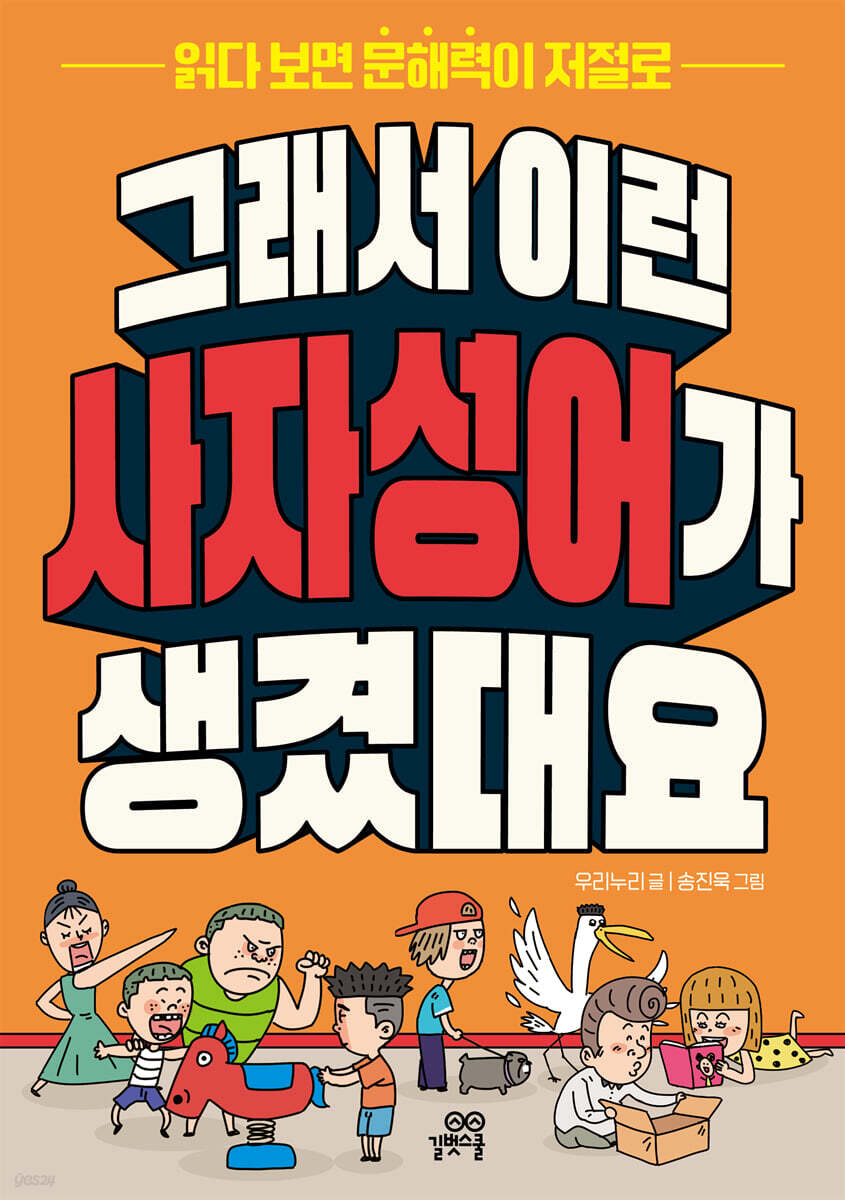
"That's how these four-character idioms came to be" teaches four-character idioms through humorous four-panel cartoons and exciting stories, so you can naturally learn the meaning and usage of four-character idioms.
Even if you read it just once, the idioms will stick in your head, so you can use them right away in real life.
I recommend this book to everyone: elementary school students who want to enjoy learning Chinese idioms, parents who want to improve their children's vocabulary and Chinese character skills, and teachers looking for useful vocabulary-related learning materials.
Learn idioms in a fun and informative way with their origin stories.
Idioms are words made up of four Chinese characters, such as 'be prepared, don't worry' and 'ten spoons of rice, one bowl of rice', and they contain the lessons and wisdom of the ancients.
Idioms are mainly used when you want to convey complex situations, emotions, or psychology in a simple and clear way.
However, since many unfamiliar Chinese characters are used in four-character idioms, it is difficult and confusing to memorize them without thinking.
If used incorrectly, it can easily lead to misunderstandings.
"That's how these four-character idioms came to be" teaches four-character idioms through humorous four-panel cartoons and exciting stories, so you can naturally learn the meaning and usage of four-character idioms.
Even if you read it just once, the idioms will stick in your head, so you can use them right away in real life.
I recommend this book to everyone: elementary school students who want to enjoy learning Chinese idioms, parents who want to improve their children's vocabulary and Chinese character skills, and teachers looking for useful vocabulary-related learning materials.
- You can preview some of the book's contents.
Preview
index
Chapter 1: Idioms Containing the World's Principles and Wisdom
Gojingamrae 8
Ubiquitous 10
Foresight 12
Jipijigi 14
One Punch, One Hundred Commandments 16
Phone Recovery 18
Sujudaeto 20
Nanggungjichu 22
Tasanji Seok 24
Termination of contract 26
Sapilguijeong 28
Too much is too little 30
Self-inflicted wound 32
Hosadama 34
10:10 36
Nomaji 38
Horseback riding 40
Chapter 2 Idioms Expressing Attitude and Behavior
Gigomanjang 44
Yangduguyuk 46
Ilchwiwoljang 48
Nosimchosa 50
Question and Answer 52
Chojiilgwan 54
Salsinseongin 56
Cho Byeon-seok-gae 58
Furious 60
Central heating 62
Hositamtam 64
Improvisation 66
Inmyeonsusim 68
Hogahowi 70
My Dongpung 72
Absurdity 74
Chapter 3: Idioms that reveal one's heart and personality
Cognitive Assumption 78
80 sense of entitlement
Haksugodae 82
Self-interest 84
Half-and-half 86
Ohmaebulmang 88
90 anxious
Makmuganae 92
The Lone Ranger 94
Confused 96
98 at a loss
Feng Shui Jitan 100
White Bone and Cloud 102
Chapter 4 Idioms that describe relationships between people
Sign Language 106
Dog-and-Wonjigan 108
Difficult Problem 110
Shared Joy and Joy 112
Blue Water 114
Childhood Friend 116
Birds of a feather flock together 118
Telepathy 120
Banpojihyo 122
124 of the pure hammer
Chapter 5: The more you know, the more interesting the four-character idioms become.
Rumor 128
Thousand-year paralysis 130
Useless and Useless 132
Point of View 134
Unprecedented 136
138 Scattered and Broken
Four sides of thatched roof 140
Return of the King 142
144
A Close Call 146
148 in all likelihood
Ragtag 150
Guwooilmo 152
Thunderbolt 154
All Things in Life 156
Gojingamrae 8
Ubiquitous 10
Foresight 12
Jipijigi 14
One Punch, One Hundred Commandments 16
Phone Recovery 18
Sujudaeto 20
Nanggungjichu 22
Tasanji Seok 24
Termination of contract 26
Sapilguijeong 28
Too much is too little 30
Self-inflicted wound 32
Hosadama 34
10:10 36
Nomaji 38
Horseback riding 40
Chapter 2 Idioms Expressing Attitude and Behavior
Gigomanjang 44
Yangduguyuk 46
Ilchwiwoljang 48
Nosimchosa 50
Question and Answer 52
Chojiilgwan 54
Salsinseongin 56
Cho Byeon-seok-gae 58
Furious 60
Central heating 62
Hositamtam 64
Improvisation 66
Inmyeonsusim 68
Hogahowi 70
My Dongpung 72
Absurdity 74
Chapter 3: Idioms that reveal one's heart and personality
Cognitive Assumption 78
80 sense of entitlement
Haksugodae 82
Self-interest 84
Half-and-half 86
Ohmaebulmang 88
90 anxious
Makmuganae 92
The Lone Ranger 94
Confused 96
98 at a loss
Feng Shui Jitan 100
White Bone and Cloud 102
Chapter 4 Idioms that describe relationships between people
Sign Language 106
Dog-and-Wonjigan 108
Difficult Problem 110
Shared Joy and Joy 112
Blue Water 114
Childhood Friend 116
Birds of a feather flock together 118
Telepathy 120
Banpojihyo 122
124 of the pure hammer
Chapter 5: The more you know, the more interesting the four-character idioms become.
Rumor 128
Thousand-year paralysis 130
Useless and Useless 132
Point of View 134
Unprecedented 136
138 Scattered and Broken
Four sides of thatched roof 140
Return of the King 142
144
A Close Call 146
148 in all likelihood
Ragtag 150
Guwooilmo 152
Thunderbolt 154
All Things in Life 156
Detailed image

Into the book
The tiger followed the fox, following him closely behind.
But what's going on? Every animal that encounters a fox runs away, screaming for help!
"Was the fox really this scary? It's true they call it the king of beasts!"
The tiger foolishly believed the fox's words.
Actually, the reason the animals ran away was because of the tiger following the fox.
From this story, the term 'Hogahorwi' was created, which uses the characters 'ho' (狐), 'ga' (假), 'ho' (虎), and 'wi' (威), meaning 'dignity'.
It means that the fox borrows the majesty of the tiger, and is used to criticize someone who uses other people's power to show off.
--- p.71
Liu Bei cherished the brilliant Zhuge Liang and always kept him close to him.
But Guan Yu and Zhang Fei did not like the sight.
“Zhuge Liang is just a young boy, but I think you think too highly of him.”
When the two people expressed their dissatisfaction, Liu Bei said:
“My acquisition of Zhuge Liang is like a fish acquiring water.
So please don't complain anymore."
It is said that Guan Yu and Zhang Fei never complained again after learning how much Liu Bei trusted Zhuge Liang.
'Seo-eo-ji-gyo' originated from this story.
The word 'water-fish-fish', which uses the characters for water (水), fish (魚), fish-like particle (之), and friendship (交), refers to the relationship between fish and water, which cannot survive without water.
It's a metaphor for a relationship that is so close that it can't be separated.
But what's going on? Every animal that encounters a fox runs away, screaming for help!
"Was the fox really this scary? It's true they call it the king of beasts!"
The tiger foolishly believed the fox's words.
Actually, the reason the animals ran away was because of the tiger following the fox.
From this story, the term 'Hogahorwi' was created, which uses the characters 'ho' (狐), 'ga' (假), 'ho' (虎), and 'wi' (威), meaning 'dignity'.
It means that the fox borrows the majesty of the tiger, and is used to criticize someone who uses other people's power to show off.
--- p.71
Liu Bei cherished the brilliant Zhuge Liang and always kept him close to him.
But Guan Yu and Zhang Fei did not like the sight.
“Zhuge Liang is just a young boy, but I think you think too highly of him.”
When the two people expressed their dissatisfaction, Liu Bei said:
“My acquisition of Zhuge Liang is like a fish acquiring water.
So please don't complain anymore."
It is said that Guan Yu and Zhang Fei never complained again after learning how much Liu Bei trusted Zhuge Liang.
'Seo-eo-ji-gyo' originated from this story.
The word 'water-fish-fish', which uses the characters for water (水), fish (魚), fish-like particle (之), and friendship (交), refers to the relationship between fish and water, which cannot survive without water.
It's a metaphor for a relationship that is so close that it can't be separated.
--- p.107
Publisher's Review
The elementary school Korean language bestseller series "So That's How This Word Came About"
Learning about words becomes more fun when you know their origins.
The "So That's How This Word Came About" series explains the origins of words in an easy and fun way through four-panel comics and short stories.
Knowing the origins of words allows you to naturally understand not only the exact meaning of each word, but also the context and nuance of when to use it.
Because it is not a mechanical memorization, it is easy to remember and allows for in-depth learning.
Vocabulary and literacy skills also grow significantly.
It consists of Volume 1 Korean, Volume 2 Idioms, Volume 3 Chinese Characters, Volume 4 Proverbs, Volume 5 Idioms, Volume 6 Spelling, and Volume 7 Idioms.
Learn wisdom that will guide you through life through four-character idioms.
Idioms are words that have been passed down from long ago and contain the wisdom of our ancestors.
The saying 'too much is as bad as too little' tells us that it is important to not have too much or too little, and not to be biased to one side.
The saying 'the one who ties the knot unties the knot' teaches us that we must solve the problems we have caused ourselves.
In this way, the wisdom and reason of the ancient people in idioms serve as a guide to help us wisely overcome difficulties when we face them.
Also, studying four-character idioms is essential for learning Chinese characters.
Let me teach you the essential idioms that elementary school students must know.
You've probably heard these phrases on the news often: 'The national team returned home with Olympic gold medals.', 'An unprecedented event occurred.'
If you don't know the idiom, it's difficult to understand this sentence.
Like this, four-character idioms are used everywhere in our daily lives, so we need to consistently learn them starting from elementary school.
This book focuses on four-character idioms frequently used in everyday life, such as elementary school textbooks, news, newspapers, and broadcasts, so you can learn all the essential four-character idioms that elementary school students need to know by reading just this one book.
There is a 'Search' section at the end of the book, so you can look up just the idioms you need.
Even children who only like educational comics can read it without any burden.
On each left-hand page where the story begins, a delightful four-panel comic appears.
Just by reading the comics, you can immediately understand how each idiom is used in real conversation.
The origin story is written in a short fairy tale format on the right page, making it easy to read.
This is a book that both parents and children can enjoy, as even children who are used to learning comics or have difficulty reading long texts can enjoy it.
Learning about words becomes more fun when you know their origins.
The "So That's How This Word Came About" series explains the origins of words in an easy and fun way through four-panel comics and short stories.
Knowing the origins of words allows you to naturally understand not only the exact meaning of each word, but also the context and nuance of when to use it.
Because it is not a mechanical memorization, it is easy to remember and allows for in-depth learning.
Vocabulary and literacy skills also grow significantly.
It consists of Volume 1 Korean, Volume 2 Idioms, Volume 3 Chinese Characters, Volume 4 Proverbs, Volume 5 Idioms, Volume 6 Spelling, and Volume 7 Idioms.
Learn wisdom that will guide you through life through four-character idioms.
Idioms are words that have been passed down from long ago and contain the wisdom of our ancestors.
The saying 'too much is as bad as too little' tells us that it is important to not have too much or too little, and not to be biased to one side.
The saying 'the one who ties the knot unties the knot' teaches us that we must solve the problems we have caused ourselves.
In this way, the wisdom and reason of the ancient people in idioms serve as a guide to help us wisely overcome difficulties when we face them.
Also, studying four-character idioms is essential for learning Chinese characters.
Let me teach you the essential idioms that elementary school students must know.
You've probably heard these phrases on the news often: 'The national team returned home with Olympic gold medals.', 'An unprecedented event occurred.'
If you don't know the idiom, it's difficult to understand this sentence.
Like this, four-character idioms are used everywhere in our daily lives, so we need to consistently learn them starting from elementary school.
This book focuses on four-character idioms frequently used in everyday life, such as elementary school textbooks, news, newspapers, and broadcasts, so you can learn all the essential four-character idioms that elementary school students need to know by reading just this one book.
There is a 'Search' section at the end of the book, so you can look up just the idioms you need.
Even children who only like educational comics can read it without any burden.
On each left-hand page where the story begins, a delightful four-panel comic appears.
Just by reading the comics, you can immediately understand how each idiom is used in real conversation.
The origin story is written in a short fairy tale format on the right page, making it easy to read.
This is a book that both parents and children can enjoy, as even children who are used to learning comics or have difficulty reading long texts can enjoy it.
GOODS SPECIFICS
- Date of issue: March 1, 2025
- Page count, weight, size: 160 pages | 352g | 148*210*12mm
- ISBN13: 9791164068623
- KC Certification: Certification Type: Conformity Confirmation
You may also like
카테고리
korean


korean

![GQ KOREA Mark (Monthly): December [2025]](http://librairie.coreenne.fr/cdn/shop/files/8ef265dbbfbf186523ed75ba7319009d.jpg?v=1765340328&width=3840)


