

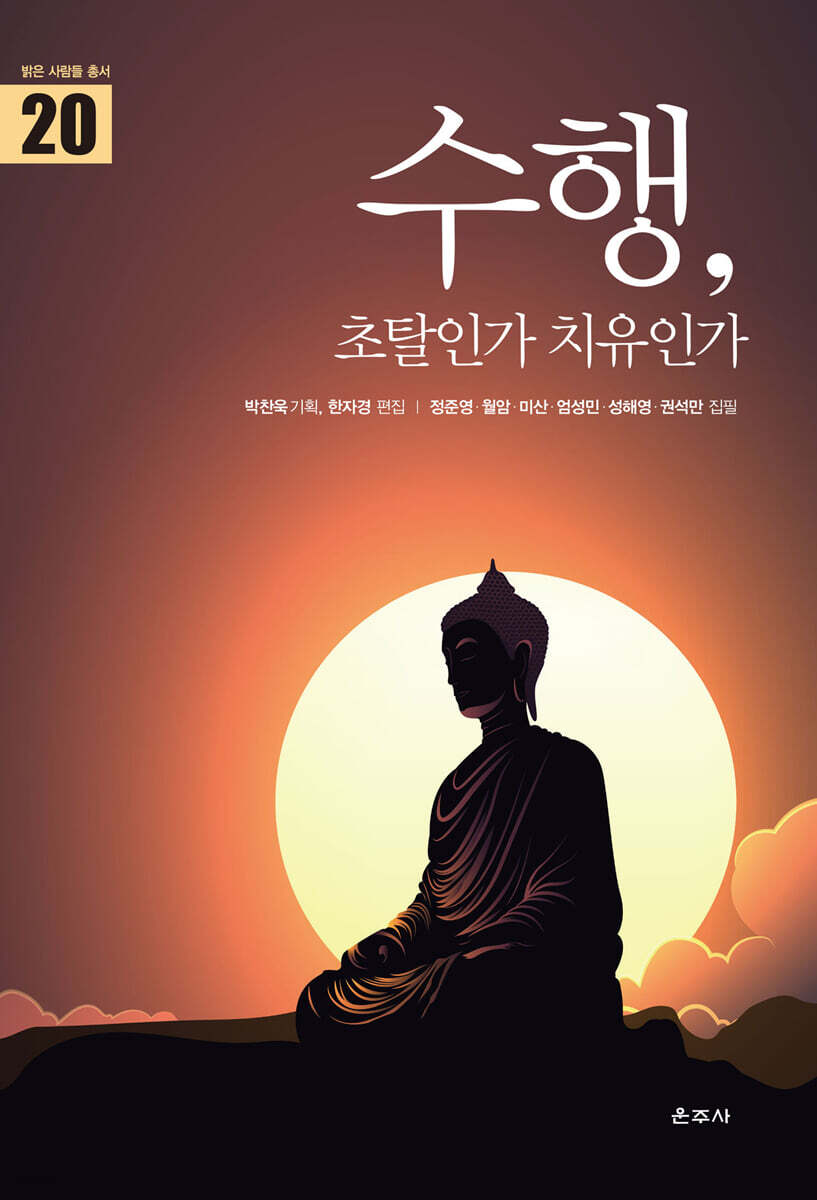
Practice, Transcendence or Healing?
 |
Description
Book Introduction
While practicing is a means to overcome the limitations of the world while living in the secular world, it is also considered a practical method to achieve not only liberation but also inner healing and peace.
To explore the true purpose of practice, encompassing healing and transcendence, experts in early Buddhism, Zen Buddhism, meditation science, Western philosophy, and psychology have compiled reflections from their respective fields.
To explore the true purpose of practice, encompassing healing and transcendence, experts in early Buddhism, Zen Buddhism, meditation science, Western philosophy, and psychology have compiled reflections from their respective fields.
- You can preview some of the book's contents.
Preview
index
Planner's Preface·5
I hope you grow and find peace through reflection and diligence.
Editor's Preface·9
Practice, Transcendence or Healing?
Early Buddhism: The Modern Meaning of Practice and Meditation - Jeong Jun-yeong, 39
1.
What do you want to achieve?·40
2.
Early Buddhist Practice and Meditation·41
1) Practice and Meditation·42
2) Selection and performance of extramarital affairs·67
3.
Modern Applications of Early Buddhist Practices·77
1) Samhak and Jeonghak·77
2) Meditation in Early Buddhist Practice and Modern Psychotherapy·87
4.
The Complementary Practices of Early Buddhist Practice and Modern Psychotherapy·99
1) Early Buddhism and the Limitations of Modern Psychotherapy·99
2) The complementarity of practice and meditation·109
5.
From Focus to Wisdom·116
References·119
{Zen Buddhism} Zen Practice and Enlightenment - Wolam·125
1.
The Path to Healing the Mind and Body and Liberation from Life and Death · 126
2.
The Conduct and Enlightenment of the Investigative Ship·129
1) Practice and Enlightenment·129
2) The order of numbers and five and the attainment of Buddhahood through seeing one's own nature·142
3.
The Practice and Enlightenment of the Ganhwa Line·155
1) Moving forward with the topic of meditation·155
2) The process of studying the topic·164
3) After breaking the topic·175
4.
The Realization of the Great Unity World · 182
References·185
{Buddhism & Meditation Science} Buddhist Practice and Meditation Science - Misan, Eom Seong-min, 187
Prologue 188
1.
What do you want to achieve?·190
1) Liberation, Nirvana, and Enlightenment vs. Physical and Mental Health·190
2) The intersection of modern life and practice·192
2.
Buddhist Tradition and the Purpose of Practice·193
1) Liberation and Nirvana in Early Buddhism·193
2) Mahayana Buddhism's Bodhisattva Path and the Salvation of Living Beings·195
3) The Enlightenment of Zen Buddhism and Everyday Enlightenment·197
4) The Special Characteristics of Korean Buddhism and the Emergence of Zen Buddhism·199
3.
The Encounter of Buddhist Practice and Healing·201
1) Theory and Practice of Mahayana Buddhism·201
2) Theories of practice and healing in the Madhyamaka, Vijñāna, and Tathagatagarbha schools of thought·203
3) The Dharma Realm Dependent Origination and the Non-Dual Way in the Avatamsaka Thought·204
4) Pre-performance and psychotherapy·206
5) Promotion of the Sunshine Image of the Jogye Order's Future Headquarters·207
6) Traditional Ganhwaseon and Modern Subulseon·210
4.
The Intersection of Buddhist Practice and Modern Psychotherapy·217
1) Conflict and Harmony Between Buddhism and Modern Psychotherapy·217
2) Integration of Transcendent Purpose and Realistic Healing·221
3) Buddhist Practice and Meditation Science·222
4) Modern psychotherapy program based on Buddhist practice·225
5) Current Status of Korean Psychotherapy Research and Academic Activities Based on Buddhist Practice·227
6) Cultivating positivity through compassion meditation·231
5.
Buddhism in the Age of Artificial Intelligence: Mathematical Definitions of Buddhist Terminology · 235
1) Research Background and Purpose·235
2) Methodology for Mathematical Definition of Buddhist Terms·239
3) Mathematical definition of correct attention·243
4) Mathematical Definition of Clear Awareness·247
5) Mathematical Definition of the Relationship Between Right Attention and Clear Awareness·251
6) Proper attention and clear awareness as an optimization agent·254
7) Practical Implementation through AI Systems · 258 | 8) Limitations and Future Research Directions · 262
6. A Meta-Convergent Perspective on Transcendence and Healing in the AI Digital Age·269
1) Creative encounter between wisdom tradition and modern science through the WisX AI genre·270
2) The Role of Buddhist Practice in Future Society·273
3) A Meta-Convergent Journey Toward Coevolution·276
Epilogue 281
Appendix: Mathematical Glossary·285
References·287
{Religious Studies} An Integrated Understanding of 'Lectio Divina' and the Practice Tradition - Seong Hae-young, 299
1.
Introduction: The Encounter of East and West Through the Concept of "Performance" (300)
2.
Catholic 'Sacred Reading' and 'Contemplation'·301
1) What is 'Sacred Reading'?·301
2) The Four Stages of 'Sacred Reading'·303
3) From Theoria to the contemplative·308
4) 'Sacred Reading' and Mysticism·314
3.
Loss and Misunderstanding of the Tradition of "Spiritual Practice"·318
1) 'Sacred Reading' and Elitism·318
2) The Spread of Eastern Meditation and the Beginning of Misunderstandings·319
4.
A Dynamic Encounter between East and West·321
1) Meeting Western and Eastern Gurus · 322
2) The Eastern Masters America Was Waiting For·324
3) Why were Eastern gurus so popular?·328
4) After the party·330
5.
Modern People and Meditation Practice·332
1) The Rediscovery of "Sacred Reading" and "Physiognomy"·332
2) Healing or Transcendence?: Spiritual Bypass and the Secularization of Meditation·335
3) Questions that still remain·339
6.
Concluding Remarks: "Sacred Reading" and "The Integration of Opposites"·343
References·346
Psychology: The Psychology of Seeking Practice - Kwon Seok-man, 351
1.
The Meaning of Seeking Practice·352
2.
The Psychological Journey of Seeking Practice·355
1) Motive for composition·355
2) Choosing the Path and Method of Practice·361
3) Diligence and Crisis in Practice·374
4) Results of performance·385
3.
Transpersonal Psychology and Seeking Practice·393
1) Transpersonal Psychology·393
2) Level of development of consciousness·394
3) Integrative Practice for Self-Transcendence and Spiritual Growth·399
4) Three Attitudes toward Death·408
4.
21st Century Modern Society and Constructive Practice·417
1) Structural practice in a super-aged society·418
2) Practice in Old Age: Transcending Old Age·420
3) Healing and Transcendence through Practice·425
References·428
I hope you grow and find peace through reflection and diligence.
Editor's Preface·9
Practice, Transcendence or Healing?
Early Buddhism: The Modern Meaning of Practice and Meditation - Jeong Jun-yeong, 39
1.
What do you want to achieve?·40
2.
Early Buddhist Practice and Meditation·41
1) Practice and Meditation·42
2) Selection and performance of extramarital affairs·67
3.
Modern Applications of Early Buddhist Practices·77
1) Samhak and Jeonghak·77
2) Meditation in Early Buddhist Practice and Modern Psychotherapy·87
4.
The Complementary Practices of Early Buddhist Practice and Modern Psychotherapy·99
1) Early Buddhism and the Limitations of Modern Psychotherapy·99
2) The complementarity of practice and meditation·109
5.
From Focus to Wisdom·116
References·119
{Zen Buddhism} Zen Practice and Enlightenment - Wolam·125
1.
The Path to Healing the Mind and Body and Liberation from Life and Death · 126
2.
The Conduct and Enlightenment of the Investigative Ship·129
1) Practice and Enlightenment·129
2) The order of numbers and five and the attainment of Buddhahood through seeing one's own nature·142
3.
The Practice and Enlightenment of the Ganhwa Line·155
1) Moving forward with the topic of meditation·155
2) The process of studying the topic·164
3) After breaking the topic·175
4.
The Realization of the Great Unity World · 182
References·185
{Buddhism & Meditation Science} Buddhist Practice and Meditation Science - Misan, Eom Seong-min, 187
Prologue 188
1.
What do you want to achieve?·190
1) Liberation, Nirvana, and Enlightenment vs. Physical and Mental Health·190
2) The intersection of modern life and practice·192
2.
Buddhist Tradition and the Purpose of Practice·193
1) Liberation and Nirvana in Early Buddhism·193
2) Mahayana Buddhism's Bodhisattva Path and the Salvation of Living Beings·195
3) The Enlightenment of Zen Buddhism and Everyday Enlightenment·197
4) The Special Characteristics of Korean Buddhism and the Emergence of Zen Buddhism·199
3.
The Encounter of Buddhist Practice and Healing·201
1) Theory and Practice of Mahayana Buddhism·201
2) Theories of practice and healing in the Madhyamaka, Vijñāna, and Tathagatagarbha schools of thought·203
3) The Dharma Realm Dependent Origination and the Non-Dual Way in the Avatamsaka Thought·204
4) Pre-performance and psychotherapy·206
5) Promotion of the Sunshine Image of the Jogye Order's Future Headquarters·207
6) Traditional Ganhwaseon and Modern Subulseon·210
4.
The Intersection of Buddhist Practice and Modern Psychotherapy·217
1) Conflict and Harmony Between Buddhism and Modern Psychotherapy·217
2) Integration of Transcendent Purpose and Realistic Healing·221
3) Buddhist Practice and Meditation Science·222
4) Modern psychotherapy program based on Buddhist practice·225
5) Current Status of Korean Psychotherapy Research and Academic Activities Based on Buddhist Practice·227
6) Cultivating positivity through compassion meditation·231
5.
Buddhism in the Age of Artificial Intelligence: Mathematical Definitions of Buddhist Terminology · 235
1) Research Background and Purpose·235
2) Methodology for Mathematical Definition of Buddhist Terms·239
3) Mathematical definition of correct attention·243
4) Mathematical Definition of Clear Awareness·247
5) Mathematical Definition of the Relationship Between Right Attention and Clear Awareness·251
6) Proper attention and clear awareness as an optimization agent·254
7) Practical Implementation through AI Systems · 258 | 8) Limitations and Future Research Directions · 262
6. A Meta-Convergent Perspective on Transcendence and Healing in the AI Digital Age·269
1) Creative encounter between wisdom tradition and modern science through the WisX AI genre·270
2) The Role of Buddhist Practice in Future Society·273
3) A Meta-Convergent Journey Toward Coevolution·276
Epilogue 281
Appendix: Mathematical Glossary·285
References·287
{Religious Studies} An Integrated Understanding of 'Lectio Divina' and the Practice Tradition - Seong Hae-young, 299
1.
Introduction: The Encounter of East and West Through the Concept of "Performance" (300)
2.
Catholic 'Sacred Reading' and 'Contemplation'·301
1) What is 'Sacred Reading'?·301
2) The Four Stages of 'Sacred Reading'·303
3) From Theoria to the contemplative·308
4) 'Sacred Reading' and Mysticism·314
3.
Loss and Misunderstanding of the Tradition of "Spiritual Practice"·318
1) 'Sacred Reading' and Elitism·318
2) The Spread of Eastern Meditation and the Beginning of Misunderstandings·319
4.
A Dynamic Encounter between East and West·321
1) Meeting Western and Eastern Gurus · 322
2) The Eastern Masters America Was Waiting For·324
3) Why were Eastern gurus so popular?·328
4) After the party·330
5.
Modern People and Meditation Practice·332
1) The Rediscovery of "Sacred Reading" and "Physiognomy"·332
2) Healing or Transcendence?: Spiritual Bypass and the Secularization of Meditation·335
3) Questions that still remain·339
6.
Concluding Remarks: "Sacred Reading" and "The Integration of Opposites"·343
References·346
Psychology: The Psychology of Seeking Practice - Kwon Seok-man, 351
1.
The Meaning of Seeking Practice·352
2.
The Psychological Journey of Seeking Practice·355
1) Motive for composition·355
2) Choosing the Path and Method of Practice·361
3) Diligence and Crisis in Practice·374
4) Results of performance·385
3.
Transpersonal Psychology and Seeking Practice·393
1) Transpersonal Psychology·393
2) Level of development of consciousness·394
3) Integrative Practice for Self-Transcendence and Spiritual Growth·399
4) Three Attitudes toward Death·408
4.
21st Century Modern Society and Constructive Practice·417
1) Structural practice in a super-aged society·418
2) Practice in Old Age: Transcending Old Age·420
3) Healing and Transcendence through Practice·425
References·428
Publisher's Review
1.
This book delves into the concepts of detachment and healing from the perspective of practice, suggesting that practice is not simply an act of inner growth or spiritual liberation, but can also be a practical way to address the psychological pain and anxiety experienced by modern people.
In general, practice is known as an act that goes beyond the limitations of worldly life.
However, this book explains how detachment and healing can be linked as a practical process, and explores how it can be used to address the problems we face in our everyday lives.
In this way, this book brings together experts from various fields, including early Buddhism, Zen Buddhism, meditation science, Western philosophy, and psychology, to explore ways to connect the concepts of 'transcendence' and 'healing.'
That is, it explains how the practice of detachment brings inner peace and what role detachment plays in the process of psychological healing.
Therefore, the central theme is that the two concepts of 'transcendence' and 'healing' are not simply activities with different goals, but are essentially complementary processes moving toward a single end.
2.
A full-scale discussion on the practices surrounding detachment and healing unfolds through experts in five fields, briefly introduced below.
In Early Buddhism, Professor Jeong Jun-yeong deals with practice and meditation under the title “The Modern Significance of Early Buddhist Practice and Psychotherapeutic Meditation.”
First, it identifies the interconnectedness between early Buddhist practice and modern psychotherapeutic meditation, yet it also highlights the fundamental differences that exist between the two.
In addition, it is argued that modern meditation needs to supplement Vipassana practice, which focuses on insight into the truth such as the three dharmas, and move towards the pursuit of wisdom, and that since the awareness in Vipassana practice is similar to modern psychotherapy meditation, there is room for them to complement each other.
In the field of Seon Buddhism, Monk Wol-am discusses the practice and enlightenment of Jo-sa-seon and Gan-hwa-seon under the title “Practice and Enlightenment of Seon.”
According to the monk, Zen emphasizes liberation from life and death by mastering the ultimate origin of the universe and humanity, while meditation emphasizes mental and physical stability achieved by healing psychological pain. So, although the two seem different on the surface, the goals pursued are ultimately the same, as they both lead to seeing one's true nature and attaining Buddhahood and liberation from life and death through mental and physical stability.
He also argues that the healing of the mind pursued by modern meditation will ultimately lead to the liberation from life and death pursued by Zen.
In the field of Buddhism in general and meditation science, Venerable Misan and CEO Eom Seong-min discuss how traditional Buddhist practice can be integrated with healing in modern meditation under the title “Buddhist Practice and Meditation Science: Meta-Fusion Integration of Transcendence and Healing.”
Buddhist detachment pursues transcendental goals such as nirvana, liberation, and enlightenment, while modern meditation healing pursues practical goals such as stress reduction, mental and physical health, and well-being. Therefore, although the two seem to have different goals at first glance, it is emphasized that there is a point where the two can be integrated.
Professor Seong Hae-young discusses practice in the field of Western philosophy in his article, “‘Sacred Reading’ and the Restoration of the Practice Tradition.”
'Sacred reading' is a mystical practice centered around Western Catholic monasteries that aims to achieve contemplation, an inner union with God. After explaining the flow of this meditation, the author raises questions such as what is the epistemological status of the experience of 'mystical union' that contemplation signifies, whether such an experience is truly universal, and what are the social and ethical implications of such an experience, and explores their meaning.
In the field of psychology, Professor Kwon Seok-man discusses transcendence and healing in his article “The Psychology of Seeking Practice.”
The author defines "seeking practice" as the effort to pursue personal maturity and spiritual growth, seeking to understand the meaning of existence and the purpose of life, rather than pursuing worldly values like wealth and honor. He explains "transpersonal psychology," which has been a special interest in and exploration of religious and spiritual experiences.
So, the path toward spiritual growth can ultimately be said to be one of transcending the limitations of the individual ego and expanding oneself to a transpersonal, self-transcending level.
In this sense, it is said that the ultimate goal of any practice is to transcend the self.
3.
'Transcendence' is not simply leaving the secular world, but a process of overcoming inner suffering and realizing the true meaning of existence.
‘Healing’ is the process of resolving the emotional pain we experience in our lives and finding stability and peace.
Understanding how these two go together has important implications in today's complex society.
This book shows you how to live a better life through detachment and healing.
Combining Buddhist practice and modern psychology, this book integrates the wisdom of two previously inaccessible fields, offering readers a path to resolving inner pain and conflict.
It will also serve as an important guide for the mental health of modern people, providing an opportunity to comprehensively understand the process of practice and psychological healing to achieve transcendence.
This book delves into the concepts of detachment and healing from the perspective of practice, suggesting that practice is not simply an act of inner growth or spiritual liberation, but can also be a practical way to address the psychological pain and anxiety experienced by modern people.
In general, practice is known as an act that goes beyond the limitations of worldly life.
However, this book explains how detachment and healing can be linked as a practical process, and explores how it can be used to address the problems we face in our everyday lives.
In this way, this book brings together experts from various fields, including early Buddhism, Zen Buddhism, meditation science, Western philosophy, and psychology, to explore ways to connect the concepts of 'transcendence' and 'healing.'
That is, it explains how the practice of detachment brings inner peace and what role detachment plays in the process of psychological healing.
Therefore, the central theme is that the two concepts of 'transcendence' and 'healing' are not simply activities with different goals, but are essentially complementary processes moving toward a single end.
2.
A full-scale discussion on the practices surrounding detachment and healing unfolds through experts in five fields, briefly introduced below.
In Early Buddhism, Professor Jeong Jun-yeong deals with practice and meditation under the title “The Modern Significance of Early Buddhist Practice and Psychotherapeutic Meditation.”
First, it identifies the interconnectedness between early Buddhist practice and modern psychotherapeutic meditation, yet it also highlights the fundamental differences that exist between the two.
In addition, it is argued that modern meditation needs to supplement Vipassana practice, which focuses on insight into the truth such as the three dharmas, and move towards the pursuit of wisdom, and that since the awareness in Vipassana practice is similar to modern psychotherapy meditation, there is room for them to complement each other.
In the field of Seon Buddhism, Monk Wol-am discusses the practice and enlightenment of Jo-sa-seon and Gan-hwa-seon under the title “Practice and Enlightenment of Seon.”
According to the monk, Zen emphasizes liberation from life and death by mastering the ultimate origin of the universe and humanity, while meditation emphasizes mental and physical stability achieved by healing psychological pain. So, although the two seem different on the surface, the goals pursued are ultimately the same, as they both lead to seeing one's true nature and attaining Buddhahood and liberation from life and death through mental and physical stability.
He also argues that the healing of the mind pursued by modern meditation will ultimately lead to the liberation from life and death pursued by Zen.
In the field of Buddhism in general and meditation science, Venerable Misan and CEO Eom Seong-min discuss how traditional Buddhist practice can be integrated with healing in modern meditation under the title “Buddhist Practice and Meditation Science: Meta-Fusion Integration of Transcendence and Healing.”
Buddhist detachment pursues transcendental goals such as nirvana, liberation, and enlightenment, while modern meditation healing pursues practical goals such as stress reduction, mental and physical health, and well-being. Therefore, although the two seem to have different goals at first glance, it is emphasized that there is a point where the two can be integrated.
Professor Seong Hae-young discusses practice in the field of Western philosophy in his article, “‘Sacred Reading’ and the Restoration of the Practice Tradition.”
'Sacred reading' is a mystical practice centered around Western Catholic monasteries that aims to achieve contemplation, an inner union with God. After explaining the flow of this meditation, the author raises questions such as what is the epistemological status of the experience of 'mystical union' that contemplation signifies, whether such an experience is truly universal, and what are the social and ethical implications of such an experience, and explores their meaning.
In the field of psychology, Professor Kwon Seok-man discusses transcendence and healing in his article “The Psychology of Seeking Practice.”
The author defines "seeking practice" as the effort to pursue personal maturity and spiritual growth, seeking to understand the meaning of existence and the purpose of life, rather than pursuing worldly values like wealth and honor. He explains "transpersonal psychology," which has been a special interest in and exploration of religious and spiritual experiences.
So, the path toward spiritual growth can ultimately be said to be one of transcending the limitations of the individual ego and expanding oneself to a transpersonal, self-transcending level.
In this sense, it is said that the ultimate goal of any practice is to transcend the self.
3.
'Transcendence' is not simply leaving the secular world, but a process of overcoming inner suffering and realizing the true meaning of existence.
‘Healing’ is the process of resolving the emotional pain we experience in our lives and finding stability and peace.
Understanding how these two go together has important implications in today's complex society.
This book shows you how to live a better life through detachment and healing.
Combining Buddhist practice and modern psychology, this book integrates the wisdom of two previously inaccessible fields, offering readers a path to resolving inner pain and conflict.
It will also serve as an important guide for the mental health of modern people, providing an opportunity to comprehensively understand the process of practice and psychological healing to achieve transcendence.
GOODS SPECIFICS
- Date of issue: November 10, 2025
- Format: Hardcover book binding method guide
- Page count, weight, size: 432 pages | 152*224*30mm
- ISBN13: 9788957469026
- ISBN10: 8957469028
You may also like
카테고리
korean


korean

![ELLE 엘르 스페셜 에디션 A형 : 12월 [2025]](http://librairie.coreenne.fr/cdn/shop/files/b8e27a3de6c9538896439686c6b0e8fb.jpg?v=1766436872&width=3840)


