

I'm fine
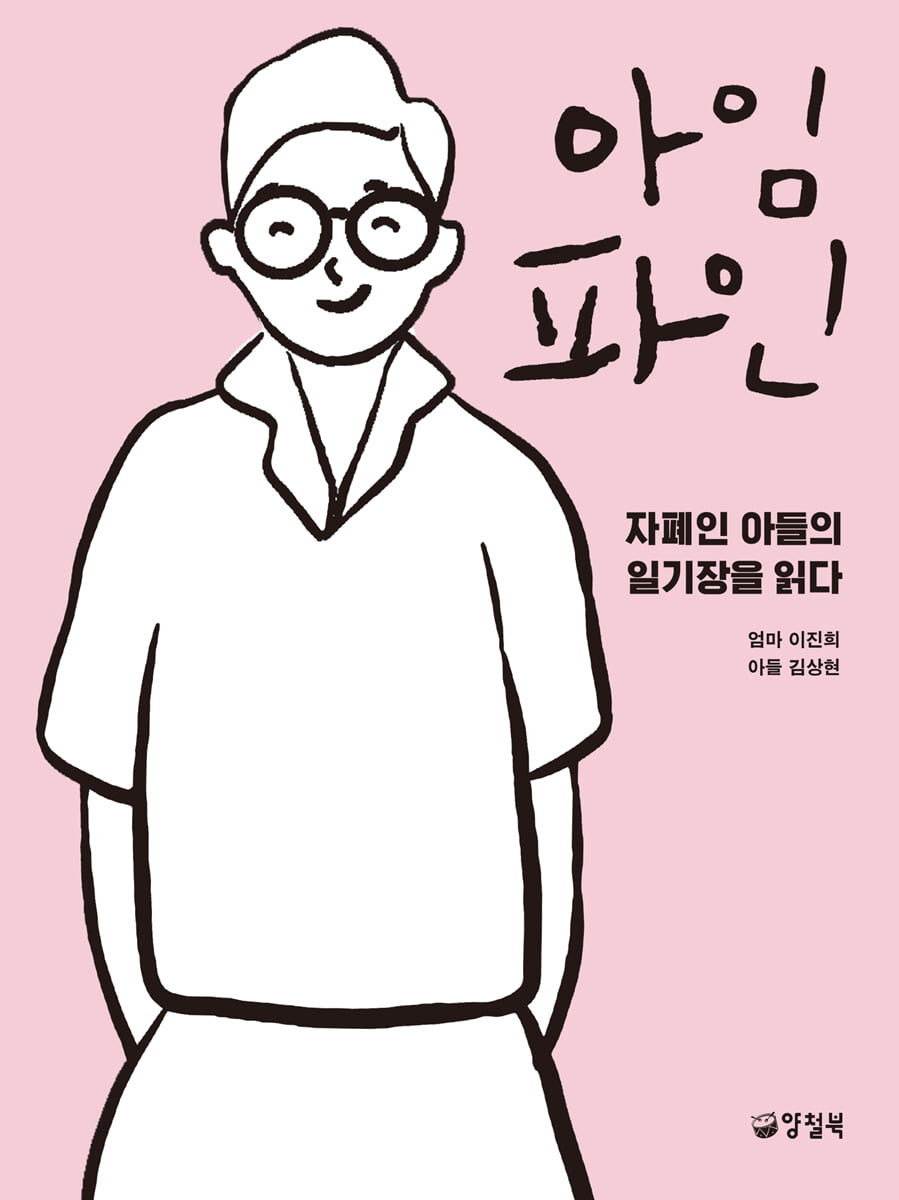 |
Description
Book Introduction
- A word from MD
- A child who came to the strange world of ordinary.
We, who live in different worlds, met and lived together today.
Even when we can't see ahead, we're still walking together.
As I walked day by day, today came as if it were a lie.
The author shares the days of her twenty-four-year-old son with autism and his mother through the son's diary, and offers warm encouragement to parents walking the same path.
- Kim Hyun-joo, MD of Home Living
We live in different worlds and meet
We live together like this today
The days of a mother and her 24-year-old son with autism
The daily life of Kim Sang-hyun, a 24-year-old autistic person.
The boy who used to stare blankly into space, muttering to himself with his ears covered has grown into a twenty-four-year-old young man.
These days, I work as if I'm traveling every day, but it's still not easy to adapt to this 'ordinary world'.
Kim Sang-hyun's mother, Lee Jin-hee, looks closely at the diary her son has kept for over a decade and reminisces about the past.
In the diary, written with a pencil pressed tightly, the mother discovers her child's feelings that she was not fully aware of at the time, and her own actions that she thought were right at the time but were clearly wrong in retrospect.
“I would be happy to share the mistakes and experiences I made while raising my child if they could be of any help to someone.”
We live together like this today
The days of a mother and her 24-year-old son with autism
The daily life of Kim Sang-hyun, a 24-year-old autistic person.
The boy who used to stare blankly into space, muttering to himself with his ears covered has grown into a twenty-four-year-old young man.
These days, I work as if I'm traveling every day, but it's still not easy to adapt to this 'ordinary world'.
Kim Sang-hyun's mother, Lee Jin-hee, looks closely at the diary her son has kept for over a decade and reminisces about the past.
In the diary, written with a pencil pressed tightly, the mother discovers her child's feelings that she was not fully aware of at the time, and her own actions that she thought were right at the time but were clearly wrong in retrospect.
“I would be happy to share the mistakes and experiences I made while raising my child if they could be of any help to someone.”
- You can preview some of the book's contents.
Preview
index
prolog
1.
A world without rough edges
2.
If you look closely, there's a reason for everything.
3.
Our mothers need healthy mental muscles.
4.
We looked at the sky in silence
5.
“Mom was sad, but I wasn’t sad.” But… …
6.
I now know that there is no such thing as a disability that can be cured.
7.
For 12 years, I lived diligently, but I still felt like I was standing alone with my child in a barren field.
Epilogue
To me, lost in the thick fog of early winter 2000
1.
A world without rough edges
2.
If you look closely, there's a reason for everything.
3.
Our mothers need healthy mental muscles.
4.
We looked at the sky in silence
5.
“Mom was sad, but I wasn’t sad.” But… …
6.
I now know that there is no such thing as a disability that can be cured.
7.
For 12 years, I lived diligently, but I still felt like I was standing alone with my child in a barren field.
Epilogue
To me, lost in the thick fog of early winter 2000
Into the book
Tuesday, September 19, 2006
<chop suey>
I cried in the cafeteria.
I cried because I didn't want to eat japchae.
I was a little embarrassed.
They say that to grow up to be a healthy child, you need to eat a balanced diet.
Sang-Hyeon, who had severe autistic tendencies and was a picky eater, suffered from malnutrition to the point where his fingernails shriveled.
I didn't even want to try new foods.
As he started attending daycare, things started to get better little by little, and the therapists said that it was a good sign that his picky eating habits were disappearing.
He said to keep challenging myself by opening the door of my heart little by little.
A child who didn't eat meat eats meat and pizza...
I was so excited that I ate it all.
Among them, he especially liked tteokbokki, so I often made it for him when he came home from daycare.
Then one day, it was so spicy that I ended up calling 119.
There's a fire in my mouth, so put it out...
The fire department called again and told me what had happened, and I was told to be careful.
I feel so sorry for the firefighters, but honestly, I scolded them a little because the situation was so cute.
--- p.33
Friday, July 19, 2013
Gray Flock of Clouds
I looked up at the sky and it was so beautiful that I went to the rooftop to watch it.
My mom taught me that it's called a flock of sheep.
But it wasn't white, it was gray.
It was really amazing.
Behind the clouds were scarlet and yellow, which looked like waves.
The sky had such beautiful colors.
We love watching the sunset, so when we have time, we go to the Han River to enjoy the sunset scenery, and if that doesn't work out, we watch it from the rooftop of our apartment.
This time is really happy for both me and the child.
A silent, quiet moment, where the child and I are looking at the same thing.
I wonder if Sang-hyeon feels the same way I do. Even though I can't have deep conversations with him, this time we share, looking up at the same sky, is truly precious.
--- pp.110~111
The portfolios of our children with developmental disabilities are different from others.
It's like a letter of request to someone who will take care of the child after me.
Sharing a funny episode, he said, “You may think our Sang-Hyeon is an old man now, but he was so cute when he was little.
I want to tell you, “He was such a naughty and mischievous kid.”
I also need to give them information like, “I have a sun allergy, so I have to apply sunscreen to my neck and arms and legs around June when the sunlight gets stronger.” They like books, movies, drawing, and they are particularly afraid of thunder and lightning… … .
After reading this, wouldn't that kind person look upon our Sang-hyeon with a little more kindness? Wouldn't it be easier to spend time with him? With a fervent heart, I searched through my memories and reread the boy's diary.
<chop suey>
I cried in the cafeteria.
I cried because I didn't want to eat japchae.
I was a little embarrassed.
They say that to grow up to be a healthy child, you need to eat a balanced diet.
Sang-Hyeon, who had severe autistic tendencies and was a picky eater, suffered from malnutrition to the point where his fingernails shriveled.
I didn't even want to try new foods.
As he started attending daycare, things started to get better little by little, and the therapists said that it was a good sign that his picky eating habits were disappearing.
He said to keep challenging myself by opening the door of my heart little by little.
A child who didn't eat meat eats meat and pizza...
I was so excited that I ate it all.
Among them, he especially liked tteokbokki, so I often made it for him when he came home from daycare.
Then one day, it was so spicy that I ended up calling 119.
There's a fire in my mouth, so put it out...
The fire department called again and told me what had happened, and I was told to be careful.
I feel so sorry for the firefighters, but honestly, I scolded them a little because the situation was so cute.
--- p.33
Friday, July 19, 2013
Gray Flock of Clouds
I looked up at the sky and it was so beautiful that I went to the rooftop to watch it.
My mom taught me that it's called a flock of sheep.
But it wasn't white, it was gray.
It was really amazing.
Behind the clouds were scarlet and yellow, which looked like waves.
The sky had such beautiful colors.
We love watching the sunset, so when we have time, we go to the Han River to enjoy the sunset scenery, and if that doesn't work out, we watch it from the rooftop of our apartment.
This time is really happy for both me and the child.
A silent, quiet moment, where the child and I are looking at the same thing.
I wonder if Sang-hyeon feels the same way I do. Even though I can't have deep conversations with him, this time we share, looking up at the same sky, is truly precious.
--- pp.110~111
The portfolios of our children with developmental disabilities are different from others.
It's like a letter of request to someone who will take care of the child after me.
Sharing a funny episode, he said, “You may think our Sang-Hyeon is an old man now, but he was so cute when he was little.
I want to tell you, “He was such a naughty and mischievous kid.”
I also need to give them information like, “I have a sun allergy, so I have to apply sunscreen to my neck and arms and legs around June when the sunlight gets stronger.” They like books, movies, drawing, and they are particularly afraid of thunder and lightning… … .
After reading this, wouldn't that kind person look upon our Sang-hyeon with a little more kindness? Wouldn't it be easier to spend time with him? With a fervent heart, I searched through my memories and reread the boy's diary.
--- From "Epilogue" pp.260~261
Publisher's Review
A child who came to the strange world of ordinary
The child liked to be in high places.
He would climb up to a high place, whether it was on top of an air conditioner or a shelf, and do a Superman pose or sit down.
When I went outside, if I let go of your hand even for a moment, it would bounce off like a water spring and run towards me, regardless of whether it was on the sidewalk or the road.
There were times when I left the house barefoot.
For a while, I had to keep the front door locked high up inside, out of reach of children.
When I entered school, I would yell during class or go to another class and sit there.
The child who was like that now goes to work.
With a business card from a research team developing a self-driving car program.
I take the subway alone to the office, turn on my computer, receive work instructions, and get to work.
He has great concentration and makes few errors, and these days he also reviews the work of other employees.
On weekends, I spend ordinary days watching my favorite movies or visiting exhibitions.
In those days when she couldn't see even an inch ahead, the mother never imagined that such simple and ordinary days would come for her child.
I was afraid because I couldn't picture my child as an adult, and I was distressed because I thought my child's disability was my fault.
However, the twenty-three years of daily life that I faced after shaking off my worries about an uncertain future were neither entirely anxious nor difficult.
The child liked looking at the sky and was happy to see the small flowers blooming on the roadside.
When watching a movie, I would line up my dolls next to me and watch it with them, and after reading a book, I would draw small, cute things with my big hands.
A child who finds happiness in small things has captured his mother's anxious heart.
This book contains Sang-Hyeon's diary from when he entered elementary school until now.
There are already many books published about autism.
There are parenting guides and essays written about raising autistic children.
However, it is not easy to find a diary written directly by an autistic person.
Mom selected 146 diaries from the 15 diaries that Sang-Hyeon had written and wrote down what she felt at that moment.
While trying to understand and fit together the puzzle pieces of a child's heart that I had not been able to solve.
Meanwhile, the mother realized that there was a reason for her child's behavior, and that the child had been struggling to survive in this world.
And I would like to express my gratitude to all the teachers, volunteers, friends, and coworkers who have been with me throughout the process.
Each child had his own reasons.
When a child was young, he could not express his own thoughts and could only repeat what the other person said.
When asked, “What did you eat for lunch?” the child would answer with the same question, “What did you eat for lunch?”
So the mother decided to tell the child the answer she wanted to hear.
“I ate rice, seaweed soup, and bean sprouts,” the child repeated.
When a child could not answer the question, “I ate rice, seaweed soup, and bean sprouts,” the mother would give the child several options and ask him to choose, and answer with a yes or an x.
When I didn't understand at all why I had to explain the reason, I wrote down the example in a notebook and read it out loud as a role.
As the notebook grew tattered, the child began to recite the answers written in the notebook as if they were mechanical, and gradually began to give other reasons not written in the notebook.
Mothers learn how to communicate with their children by establishing and practicing communication methods like this.
The child felt only a few emotions.
I liked reading books and watching movies, but maybe because I didn't understand the story well, I just liked the childish and stimulating scenes of running away, falling down, and falling down.
But when everyone was sad, he was indifferent.
“My mother was sad, but I wasn’t sad,” or “The main character was sad because his mother died, but I wasn’t,” he wrote in his diary.
But does practice broaden your emotional range? In my third year of middle school, I wrote in my diary for the first time after watching a movie, "It was so sad."
Then, as I watched the movie, I started to feel sad and sometimes even cried.
If Sang-Hyeon used to feel only three primary colors, now that he's an adult, he probably feels only twelve colors.
When the child learned to express himself, he told his mother the reasons for his past behavior.
When I was seven years old, I was startled when I put a few loaches I had picked up at the market in my mouth and took them out. I copied the Ugly Duckling from the fairy tale, who ate loaches.
He couldn't bring himself to swallow it, so he kept putting it in and taking it out.
When asked why he ran out of the playroom barefoot and disappeared for hours, he said, “Sang-Hyeon escaped.
He also replied, “I’m going to go to the supermarket.”
There was always a reason for yelling during class.
The girls in his class told him that his classmate, who knew that Sang-hyeon was afraid of balloons, whispered in his ear, “I’m going to pop the balloon.”
There was a reason for every behavior of the child that I didn't know the reason for.
Even though we may not understand everything in the world we live in.
Sang-Hyeon's Diary
“Behind the clouds the sky looked like crimson and yellow waves.”
Regardless of his mother's feelings, Sang-Hyeon's days are generally enjoyable and happy.
I spend a long time looking at the clouds, migratory birds, and small flowers on the roadside, reading my favorite books and watching movies, and visiting exhibitions.
Seeing beautiful things, feeling beautiful, looking at the world with clear eyes without any preconceived notions.
Sometimes people ask my mom:
“Does the child understand all of that?” Even if other people may see the things the child enjoys and feels as childish, the mother doesn’t care.
Because each person can feel as much as they know.
Sang-Hyeon's days are cute and funny.
When you go to the zoo, you watch a meerkat in its cage for an hour, and when you go to the aquarium, you wait for an electric eel to start squirting electricity like in a storybook.
The tteokbokki was so spicy that he called 119 and said, “My mouth is on fire right now, so put it out.” He also prayed for his older brother, who is trying to repeat the college entrance exam for the third time, while looking at the full moon, saying, “Please make my older brother smarter.”
His mother always waits for him when the sun sets, going out to the Han River with him, going up to the rooftop of the apartment to watch the sunset, in front of the meerkat cage, or in front of the small fish tank in the aquarium.
Thanks to her son, who frequently goes on field trips, she learned that pears should be picked in a circular motion, and that beautiful scenery can be found only when you look closely.
I used to think that all hardships would pass me by, but I'm learning that I'm no exception to all the hardships of life.
Mothers also add depth to their lives through their children.
Even if you can't see the future, you have no choice but to do your best now.
What a mother feared most while raising a child was not being able to envision the child's future.
No matter how much I searched for books, watched movies, or asked people, I couldn't get a clear answer.
I also visited a village where adults with developmental disabilities lived together and farmed, but... ...I couldn't find an answer there either.
But Sang-Hyeon was faithful to today even when the future was uncertain.
The special education teacher at the high school that Sang-Hyeon attended thought that it would be better for the children to get jobs, so she provided them with various job training.
Sang-Hyeon enjoyed most of the process and followed along well.
Even after graduating from high school, Sang-Hyeon continued to receive training by attending the welfare center academy and vocational training center.
Then, I came across an IT company developing a self-driving car program, and after a three-month internship, I became a full-time researcher just one year after graduating from high school.
Sang-Hyeon's job is to label data related to autonomous driving.
In order for a car to drive autonomously, the computer must recognize what objects are in road photos and drive only on designated roads. Sang-Hyeon is working on setting boxes and inputting information about what objects are so that the computer can recognize them.
Although he works hard every day and is recognized by the company, it cannot be said that Sang-Hyeon is completely comfortable.
In his mother's opinion, Sang-Hyeon still lacks social skills and the ability to deal with unexpected situations.
You also need to learn how to deal with unexpected events and how to ask for help from those around you.
Since I need to learn how to tell jokes, I write them down in a notebook and practice giving and receiving them with my mom, just like when I learned how to tell reasons before.
Even if one overcomes a hurdle, life is not perfect, so Sang-Hyeon's peaceful yet intense life will continue.
Becoming a support group for each other
The mother had been in a self-help group for a long time with other mothers she met at the treatment center and welfare center her child attended.
It is a group that calls each other a 'support group'.
This group, which started with seven people, has now grown to fifty.
This group of mothers of children with autism, ranging from middle school students to young adults in their twenties, has set a goal for this year.
The goal is to collect and share specific information about the treatment children have received, how they have been doing at school, and how they have formed relationships with their non-disabled siblings.
First, we discussed creating a children's life portfolio to organize the information, and that became the beginning of this book.
My mother wrote this book in the hope that what those who walked before her learned through trial and error would be helpful to those who come after her.
Not only Sang-Hyeon, but no one can live a perfect life.
So we must be a support force for Sang-Hyeon, for more Sang-Hyeons, and for each other.
The story of Sang-Hyeon and his mother, who have walked each day with many people, struggling at every step of life, will provide gentle comfort and simple hope to those who are seeking their path in the same situation, and even to those who wish to live together.
The child liked to be in high places.
He would climb up to a high place, whether it was on top of an air conditioner or a shelf, and do a Superman pose or sit down.
When I went outside, if I let go of your hand even for a moment, it would bounce off like a water spring and run towards me, regardless of whether it was on the sidewalk or the road.
There were times when I left the house barefoot.
For a while, I had to keep the front door locked high up inside, out of reach of children.
When I entered school, I would yell during class or go to another class and sit there.
The child who was like that now goes to work.
With a business card from a research team developing a self-driving car program.
I take the subway alone to the office, turn on my computer, receive work instructions, and get to work.
He has great concentration and makes few errors, and these days he also reviews the work of other employees.
On weekends, I spend ordinary days watching my favorite movies or visiting exhibitions.
In those days when she couldn't see even an inch ahead, the mother never imagined that such simple and ordinary days would come for her child.
I was afraid because I couldn't picture my child as an adult, and I was distressed because I thought my child's disability was my fault.
However, the twenty-three years of daily life that I faced after shaking off my worries about an uncertain future were neither entirely anxious nor difficult.
The child liked looking at the sky and was happy to see the small flowers blooming on the roadside.
When watching a movie, I would line up my dolls next to me and watch it with them, and after reading a book, I would draw small, cute things with my big hands.
A child who finds happiness in small things has captured his mother's anxious heart.
This book contains Sang-Hyeon's diary from when he entered elementary school until now.
There are already many books published about autism.
There are parenting guides and essays written about raising autistic children.
However, it is not easy to find a diary written directly by an autistic person.
Mom selected 146 diaries from the 15 diaries that Sang-Hyeon had written and wrote down what she felt at that moment.
While trying to understand and fit together the puzzle pieces of a child's heart that I had not been able to solve.
Meanwhile, the mother realized that there was a reason for her child's behavior, and that the child had been struggling to survive in this world.
And I would like to express my gratitude to all the teachers, volunteers, friends, and coworkers who have been with me throughout the process.
Each child had his own reasons.
When a child was young, he could not express his own thoughts and could only repeat what the other person said.
When asked, “What did you eat for lunch?” the child would answer with the same question, “What did you eat for lunch?”
So the mother decided to tell the child the answer she wanted to hear.
“I ate rice, seaweed soup, and bean sprouts,” the child repeated.
When a child could not answer the question, “I ate rice, seaweed soup, and bean sprouts,” the mother would give the child several options and ask him to choose, and answer with a yes or an x.
When I didn't understand at all why I had to explain the reason, I wrote down the example in a notebook and read it out loud as a role.
As the notebook grew tattered, the child began to recite the answers written in the notebook as if they were mechanical, and gradually began to give other reasons not written in the notebook.
Mothers learn how to communicate with their children by establishing and practicing communication methods like this.
The child felt only a few emotions.
I liked reading books and watching movies, but maybe because I didn't understand the story well, I just liked the childish and stimulating scenes of running away, falling down, and falling down.
But when everyone was sad, he was indifferent.
“My mother was sad, but I wasn’t sad,” or “The main character was sad because his mother died, but I wasn’t,” he wrote in his diary.
But does practice broaden your emotional range? In my third year of middle school, I wrote in my diary for the first time after watching a movie, "It was so sad."
Then, as I watched the movie, I started to feel sad and sometimes even cried.
If Sang-Hyeon used to feel only three primary colors, now that he's an adult, he probably feels only twelve colors.
When the child learned to express himself, he told his mother the reasons for his past behavior.
When I was seven years old, I was startled when I put a few loaches I had picked up at the market in my mouth and took them out. I copied the Ugly Duckling from the fairy tale, who ate loaches.
He couldn't bring himself to swallow it, so he kept putting it in and taking it out.
When asked why he ran out of the playroom barefoot and disappeared for hours, he said, “Sang-Hyeon escaped.
He also replied, “I’m going to go to the supermarket.”
There was always a reason for yelling during class.
The girls in his class told him that his classmate, who knew that Sang-hyeon was afraid of balloons, whispered in his ear, “I’m going to pop the balloon.”
There was a reason for every behavior of the child that I didn't know the reason for.
Even though we may not understand everything in the world we live in.
Sang-Hyeon's Diary
“Behind the clouds the sky looked like crimson and yellow waves.”
Regardless of his mother's feelings, Sang-Hyeon's days are generally enjoyable and happy.
I spend a long time looking at the clouds, migratory birds, and small flowers on the roadside, reading my favorite books and watching movies, and visiting exhibitions.
Seeing beautiful things, feeling beautiful, looking at the world with clear eyes without any preconceived notions.
Sometimes people ask my mom:
“Does the child understand all of that?” Even if other people may see the things the child enjoys and feels as childish, the mother doesn’t care.
Because each person can feel as much as they know.
Sang-Hyeon's days are cute and funny.
When you go to the zoo, you watch a meerkat in its cage for an hour, and when you go to the aquarium, you wait for an electric eel to start squirting electricity like in a storybook.
The tteokbokki was so spicy that he called 119 and said, “My mouth is on fire right now, so put it out.” He also prayed for his older brother, who is trying to repeat the college entrance exam for the third time, while looking at the full moon, saying, “Please make my older brother smarter.”
His mother always waits for him when the sun sets, going out to the Han River with him, going up to the rooftop of the apartment to watch the sunset, in front of the meerkat cage, or in front of the small fish tank in the aquarium.
Thanks to her son, who frequently goes on field trips, she learned that pears should be picked in a circular motion, and that beautiful scenery can be found only when you look closely.
I used to think that all hardships would pass me by, but I'm learning that I'm no exception to all the hardships of life.
Mothers also add depth to their lives through their children.
Even if you can't see the future, you have no choice but to do your best now.
What a mother feared most while raising a child was not being able to envision the child's future.
No matter how much I searched for books, watched movies, or asked people, I couldn't get a clear answer.
I also visited a village where adults with developmental disabilities lived together and farmed, but... ...I couldn't find an answer there either.
But Sang-Hyeon was faithful to today even when the future was uncertain.
The special education teacher at the high school that Sang-Hyeon attended thought that it would be better for the children to get jobs, so she provided them with various job training.
Sang-Hyeon enjoyed most of the process and followed along well.
Even after graduating from high school, Sang-Hyeon continued to receive training by attending the welfare center academy and vocational training center.
Then, I came across an IT company developing a self-driving car program, and after a three-month internship, I became a full-time researcher just one year after graduating from high school.
Sang-Hyeon's job is to label data related to autonomous driving.
In order for a car to drive autonomously, the computer must recognize what objects are in road photos and drive only on designated roads. Sang-Hyeon is working on setting boxes and inputting information about what objects are so that the computer can recognize them.
Although he works hard every day and is recognized by the company, it cannot be said that Sang-Hyeon is completely comfortable.
In his mother's opinion, Sang-Hyeon still lacks social skills and the ability to deal with unexpected situations.
You also need to learn how to deal with unexpected events and how to ask for help from those around you.
Since I need to learn how to tell jokes, I write them down in a notebook and practice giving and receiving them with my mom, just like when I learned how to tell reasons before.
Even if one overcomes a hurdle, life is not perfect, so Sang-Hyeon's peaceful yet intense life will continue.
Becoming a support group for each other
The mother had been in a self-help group for a long time with other mothers she met at the treatment center and welfare center her child attended.
It is a group that calls each other a 'support group'.
This group, which started with seven people, has now grown to fifty.
This group of mothers of children with autism, ranging from middle school students to young adults in their twenties, has set a goal for this year.
The goal is to collect and share specific information about the treatment children have received, how they have been doing at school, and how they have formed relationships with their non-disabled siblings.
First, we discussed creating a children's life portfolio to organize the information, and that became the beginning of this book.
My mother wrote this book in the hope that what those who walked before her learned through trial and error would be helpful to those who come after her.
Not only Sang-Hyeon, but no one can live a perfect life.
So we must be a support force for Sang-Hyeon, for more Sang-Hyeons, and for each other.
The story of Sang-Hyeon and his mother, who have walked each day with many people, struggling at every step of life, will provide gentle comfort and simple hope to those who are seeking their path in the same situation, and even to those who wish to live together.
GOODS SPECIFICS
- Date of issue: March 8, 2021
- Page count, weight, size: 272 pages | 420g | 150*200*20mm
- ISBN13: 9788963723471
- ISBN10: 896372347X
You may also like
카테고리
korean


korean

![GQ KOREA Mark (Monthly): December [2025]](http://librairie.coreenne.fr/cdn/shop/files/8ef265dbbfbf186523ed75ba7319009d.jpg?v=1765340328&width=3840)


