

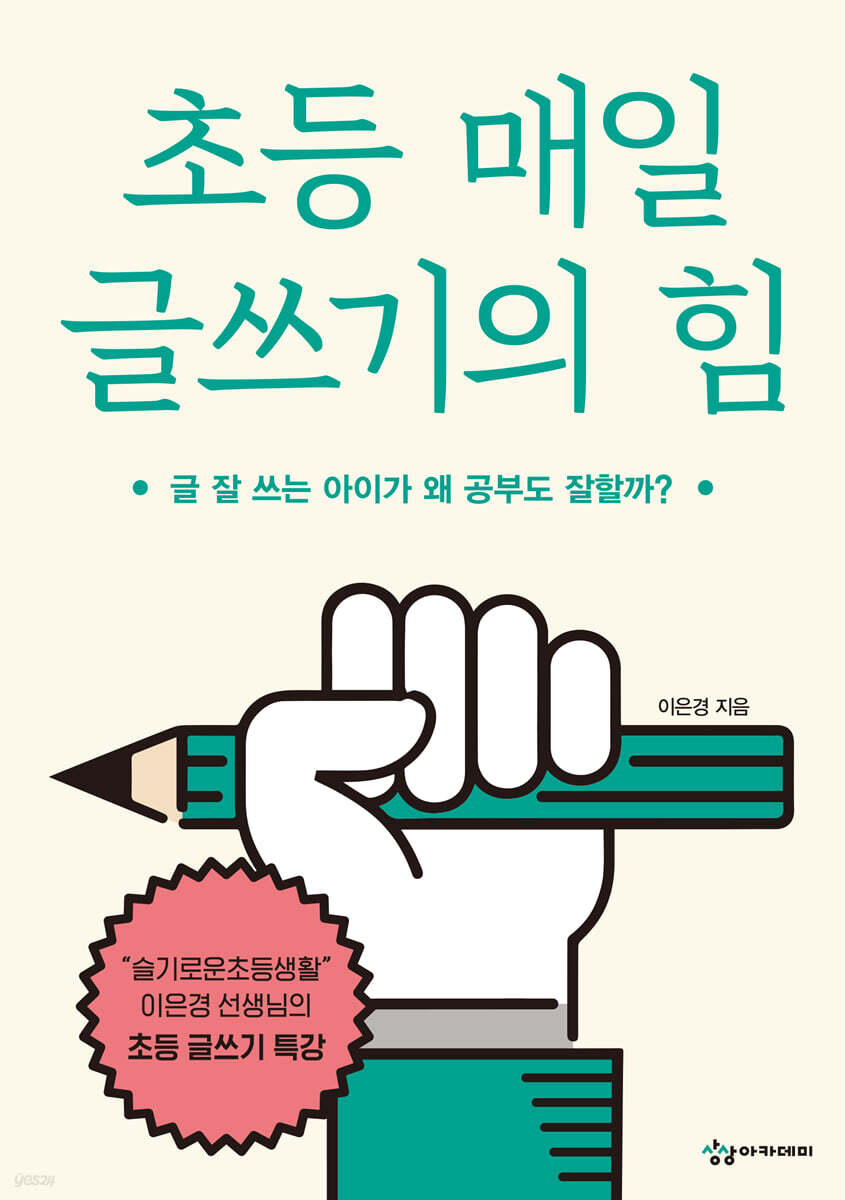
The Power of Daily Writing in Elementary School
 |
Description
Book Introduction
- A word from MD
- Eun-kyung Lee, a mentor to 100,000 parents, has stepped forward to help 'elementary school students these days' who have to write a tremendous amount of text.
The goal of elementary writing is not to write well, but to write, and if you write something every day, you are already successful.
Children who develop the habit of writing early on will be able to enjoy a more confident school life based on the thinking skills developed through writing.
- Home Living MD Ham Cho-rom
All About Elementary Writing
From how to write a 10-minute diary every day to writing strategies for each grade level.
Special lecture on elementary writing by teacher Eun-kyung Lee of "Wise Elementary School Life"
The amount of writing that elementary school students have to do these days is enormous.
The types of writing for each subject are diverse and the topics are endless, including diaries, reading logs, letters, and reports.
The proportion of elementary schools where test questions are only descriptive or essay-type is also increasing.
Moreover, full-scale essay evaluation begins in middle and high school.
The importance of writing is increasing, and my heart is burning, but my child at home cannot sit at the desk and hold a pencil for 5 minutes.
My child twists his body and sticks out his mouth when I tell him to write a diary. What should I do?
Eun-kyung Lee, a mentor to elementary school parents in Korea, advises starting with one line a day.
Just as a child takes his first steps, he encourages his children to take one step at a time when writing.
Sending a child to an essay academy who hasn't even developed the habit of writing one line a day is like asking a baby who has just started eating solid food to chew meat.
First, I advise you to develop the habit of writing every day at home, and then it is not too late to go to an academy.
He added that in order to develop the habit of writing every day, parents should not correct their children's spelling with a red pen, but rather highlight the parts that their children have written well and praise them for anything they write.
In doing so, we introduce 'writing-specific training strategies' that parents can easily follow at home.
He says that diary writing starts with one line a day once a week, free writing starts with writing freely without any rules like a child playing in a playground, reading logs start with picking three keywords from a book, and anyone can write an essay if they know a simple formula, so don't be afraid. He also says that writing in English is enough just by following an English book.
I am confident that if we can help children gradually increase their writing from one line a day to five lines and then ten lines a day, writing will not be a boring and burdensome homework assignment, but rather a wing that will help them grow intellectually.
From how to write a 10-minute diary every day to writing strategies for each grade level.
Special lecture on elementary writing by teacher Eun-kyung Lee of "Wise Elementary School Life"
The amount of writing that elementary school students have to do these days is enormous.
The types of writing for each subject are diverse and the topics are endless, including diaries, reading logs, letters, and reports.
The proportion of elementary schools where test questions are only descriptive or essay-type is also increasing.
Moreover, full-scale essay evaluation begins in middle and high school.
The importance of writing is increasing, and my heart is burning, but my child at home cannot sit at the desk and hold a pencil for 5 minutes.
My child twists his body and sticks out his mouth when I tell him to write a diary. What should I do?
Eun-kyung Lee, a mentor to elementary school parents in Korea, advises starting with one line a day.
Just as a child takes his first steps, he encourages his children to take one step at a time when writing.
Sending a child to an essay academy who hasn't even developed the habit of writing one line a day is like asking a baby who has just started eating solid food to chew meat.
First, I advise you to develop the habit of writing every day at home, and then it is not too late to go to an academy.
He added that in order to develop the habit of writing every day, parents should not correct their children's spelling with a red pen, but rather highlight the parts that their children have written well and praise them for anything they write.
In doing so, we introduce 'writing-specific training strategies' that parents can easily follow at home.
He says that diary writing starts with one line a day once a week, free writing starts with writing freely without any rules like a child playing in a playground, reading logs start with picking three keywords from a book, and anyone can write an essay if they know a simple formula, so don't be afraid. He also says that writing in English is enough just by following an English book.
I am confident that if we can help children gradually increase their writing from one line a day to five lines and then ten lines a day, writing will not be a boring and burdensome homework assignment, but rather a wing that will help them grow intellectually.
- You can preview some of the book's contents.
Preview
index
preface
Part 1: The Power of Daily Writing in Elementary School
Chapter 1: Why do children who write well also study well?
1.
Why Elementary Writing is the Core of All Learning
2.
Why Reading and Writing Are Best Friends
3.
Elementary school children who hate writing so much
4.
What Kids Who Write Well in Classrooms Have in Common
5.
Grade-by-grade writing in elementary classrooms
[Honey Tips for Moms] Elementary 6th Grade: A Roadmap for Your Child's Writing
Chapter 2: Preparing for a Daily Writing Habit
1.
When should I start writing in earnest?
2.
How to Choose Notebooks and Writing Tools for Elementary School Writing
3.
Correct and pretty handwriting correction method
4.
Spelling, spacing, and dictation practice
5.
Best writing practice, copywriting
[Honey Tips for Moms] Studying Everyday Vocabulary to Build Basic Writing Skills
Chapter 3: Developing Elementary Writing Habits: Here's How
1.
The best secret to writing well: the daily writing habit
2.
How to Make Everyday Life a Writing
3.
How to Use the Korean Dictionary to Give Your Writing a Boost
4.
My child hates writing so much. What should I do?
[Honey Tips for Moms] Check Your Child's Writing
Part 2: Elementary Writing Challenges by Subject
Chapter 4: Beginning Elementary Writing: Writing a 10-Minute Diary Every Day
1.
Adults' Misconceptions About Diaries, Children's Misconceptions
2.
Develop a beautiful habit of writing a diary in just 10 minutes every day.
3.
100 Fun Journal Topics You Can Write About Right Now
4.
Warm mom-style feedback that keeps me writing my diary
[Honey Tips for Moms] Organizing and Storing Your Child's Writing
Chapter 5: Free Writing That Makes Writing Fluent
1.
Amazing and Unique Elementary Free Writing
2.
The Magical First Sentence That Makes You a Writer
3.
How to Make Freewriting a Daily Routine
4.
Try this elementary free writing exercise
[Honey Tips for Moms] How to Help Your Slow-Writing Child
Chapter 6: Solving Reading Log Homework Alone
1.
Do I really need to write an elementary school reading log?
2.
Elementary reading records step by step
3.
How to expand into a full-fledged book report (reading review)
[Honey Tips for Moms] Teaching Computer Writing
Chapter 7: Elementary School Mom's Essay Starting with Conversation
1.
Elementary Essay, Who the Heck Are You?
2.
Commonalities of Well-Written Essays
3.
How to write an elementary essay
4.
How to Try Writing Essays by Field, Your Way
[Honey Tip for Moms] Utilizing Private Essay Writing Education Programs
Chapter 8: English Writing Starting in Elementary School
1.
What does English writing mean in elementary school?
2.
Three Conditions for Starting to Write in English
3.
How to Try Writing in English
4.
Writing in English: Creating a Daily Habit
[Honey Tips for Moms] How to Choose a Notebook for English Writing
Conclusion
Appendix: Spelling Cards That Elementary School Children Often Make Mistakes
References
Part 1: The Power of Daily Writing in Elementary School
Chapter 1: Why do children who write well also study well?
1.
Why Elementary Writing is the Core of All Learning
2.
Why Reading and Writing Are Best Friends
3.
Elementary school children who hate writing so much
4.
What Kids Who Write Well in Classrooms Have in Common
5.
Grade-by-grade writing in elementary classrooms
[Honey Tips for Moms] Elementary 6th Grade: A Roadmap for Your Child's Writing
Chapter 2: Preparing for a Daily Writing Habit
1.
When should I start writing in earnest?
2.
How to Choose Notebooks and Writing Tools for Elementary School Writing
3.
Correct and pretty handwriting correction method
4.
Spelling, spacing, and dictation practice
5.
Best writing practice, copywriting
[Honey Tips for Moms] Studying Everyday Vocabulary to Build Basic Writing Skills
Chapter 3: Developing Elementary Writing Habits: Here's How
1.
The best secret to writing well: the daily writing habit
2.
How to Make Everyday Life a Writing
3.
How to Use the Korean Dictionary to Give Your Writing a Boost
4.
My child hates writing so much. What should I do?
[Honey Tips for Moms] Check Your Child's Writing
Part 2: Elementary Writing Challenges by Subject
Chapter 4: Beginning Elementary Writing: Writing a 10-Minute Diary Every Day
1.
Adults' Misconceptions About Diaries, Children's Misconceptions
2.
Develop a beautiful habit of writing a diary in just 10 minutes every day.
3.
100 Fun Journal Topics You Can Write About Right Now
4.
Warm mom-style feedback that keeps me writing my diary
[Honey Tips for Moms] Organizing and Storing Your Child's Writing
Chapter 5: Free Writing That Makes Writing Fluent
1.
Amazing and Unique Elementary Free Writing
2.
The Magical First Sentence That Makes You a Writer
3.
How to Make Freewriting a Daily Routine
4.
Try this elementary free writing exercise
[Honey Tips for Moms] How to Help Your Slow-Writing Child
Chapter 6: Solving Reading Log Homework Alone
1.
Do I really need to write an elementary school reading log?
2.
Elementary reading records step by step
3.
How to expand into a full-fledged book report (reading review)
[Honey Tips for Moms] Teaching Computer Writing
Chapter 7: Elementary School Mom's Essay Starting with Conversation
1.
Elementary Essay, Who the Heck Are You?
2.
Commonalities of Well-Written Essays
3.
How to write an elementary essay
4.
How to Try Writing Essays by Field, Your Way
[Honey Tip for Moms] Utilizing Private Essay Writing Education Programs
Chapter 8: English Writing Starting in Elementary School
1.
What does English writing mean in elementary school?
2.
Three Conditions for Starting to Write in English
3.
How to Try Writing in English
4.
Writing in English: Creating a Daily Habit
[Honey Tips for Moms] How to Choose a Notebook for English Writing
Conclusion
Appendix: Spelling Cards That Elementary School Children Often Make Mistakes
References
Detailed image

Into the book
My child hates writing so much. What should I do?
Please give me about a week and allow me to write just one line.
Show a permissive attitude by saying, "Just write one line, and if you want to write more, it's okay."
There is no need to be anxious about a week-long vacation during your child's six years of elementary school.
Children who have spent time like that often find themselves feeling grateful to their parents for understanding their feelings.
--- p.141
Develop a beautiful habit of writing a diary in just 10 minutes every day.
To develop a journaling habit, start small without worrying about frequency, content, or length, and aim to eventually write one article on a set topic every day.
If your child is in the upper grades but has not developed the habit of writing a diary and is still at the lower grade level, start with a very small amount of writing that feels like a lower grade.
This way, your chances of success are higher.
--- p.158
Amazing and Unique Elementary Free Writing
Free writing is the best writing in elementary school.
There are no restrictions on free writing.
This is truly free writing, not about what happened, not about what I learned, not about a topic given to me by my parents, not about homework given to me by my teacher.
The subject matter, format, spelling, grammar, and length are all free.
I don't even care about spelling or spacing.
I write haphazardly, as if I'm doodling, talking, or playing.
So, I'm going to start thinking that even a child who is tired of writing diaries, reading logs, and essays can try this.
--- p.203
Do I really need to write a reading log?
You don't have to use it.
If your child wants to write, if they want to keep a record of what they've read, if they have time left after finishing other studies and want to write something, then saying, "Okay, then go ahead and write it," is fine.
However, this does not mean that you need to fight a war by forcing yourself to write something that is not even school homework throughout elementary school.
There are many fun writing topics that will help you practice writing, and there are more pressing writing topics that you should practice writing on.
--- p.243
How to write an elementary essay
In the early stages of elementary writing, the focus should be on writing essays with a basic format rather than focusing on both content and format.
That's how you succeed.
Once you've mastered the format of the essay, think of it as gradually moving on to practice filling it with richer and more creative content.
--- p.287
What does English writing mean in elementary school?
What children in elementary school need is not language classes for English writing, but the 'experience' of English writing.
Rather than rushing to achieve perfect results, the core and necessary reason for English writing in elementary school is to experience that you can write in English and to maintain your confidence in English through the experience of creating English sentences on your own, even if they are not perfect.
Please give me about a week and allow me to write just one line.
Show a permissive attitude by saying, "Just write one line, and if you want to write more, it's okay."
There is no need to be anxious about a week-long vacation during your child's six years of elementary school.
Children who have spent time like that often find themselves feeling grateful to their parents for understanding their feelings.
--- p.141
Develop a beautiful habit of writing a diary in just 10 minutes every day.
To develop a journaling habit, start small without worrying about frequency, content, or length, and aim to eventually write one article on a set topic every day.
If your child is in the upper grades but has not developed the habit of writing a diary and is still at the lower grade level, start with a very small amount of writing that feels like a lower grade.
This way, your chances of success are higher.
--- p.158
Amazing and Unique Elementary Free Writing
Free writing is the best writing in elementary school.
There are no restrictions on free writing.
This is truly free writing, not about what happened, not about what I learned, not about a topic given to me by my parents, not about homework given to me by my teacher.
The subject matter, format, spelling, grammar, and length are all free.
I don't even care about spelling or spacing.
I write haphazardly, as if I'm doodling, talking, or playing.
So, I'm going to start thinking that even a child who is tired of writing diaries, reading logs, and essays can try this.
--- p.203
Do I really need to write a reading log?
You don't have to use it.
If your child wants to write, if they want to keep a record of what they've read, if they have time left after finishing other studies and want to write something, then saying, "Okay, then go ahead and write it," is fine.
However, this does not mean that you need to fight a war by forcing yourself to write something that is not even school homework throughout elementary school.
There are many fun writing topics that will help you practice writing, and there are more pressing writing topics that you should practice writing on.
--- p.243
How to write an elementary essay
In the early stages of elementary writing, the focus should be on writing essays with a basic format rather than focusing on both content and format.
That's how you succeed.
Once you've mastered the format of the essay, think of it as gradually moving on to practice filling it with richer and more creative content.
--- p.287
What does English writing mean in elementary school?
What children in elementary school need is not language classes for English writing, but the 'experience' of English writing.
Rather than rushing to achieve perfect results, the core and necessary reason for English writing in elementary school is to experience that you can write in English and to maintain your confidence in English through the experience of creating English sentences on your own, even if they are not perfect.
--- p.313
GOODS SPECIFICS
- Publication date: February 15, 2021
- Page count, weight, size: 368 pages | 574g | 148*210*20mm
- ISBN13: 9791185402345
- ISBN10: 1185402349
You may also like
카테고리
korean


korean

![GQ KOREA Mark (Monthly): December [2025]](http://librairie.coreenne.fr/cdn/shop/files/8ef265dbbfbf186523ed75ba7319009d.jpg?v=1765340328&width=3840)


