

That's what I felt
 |
Description
Book Introduction
Books included in the 2nd semester Korean language textbook for 1st grade elementary school students
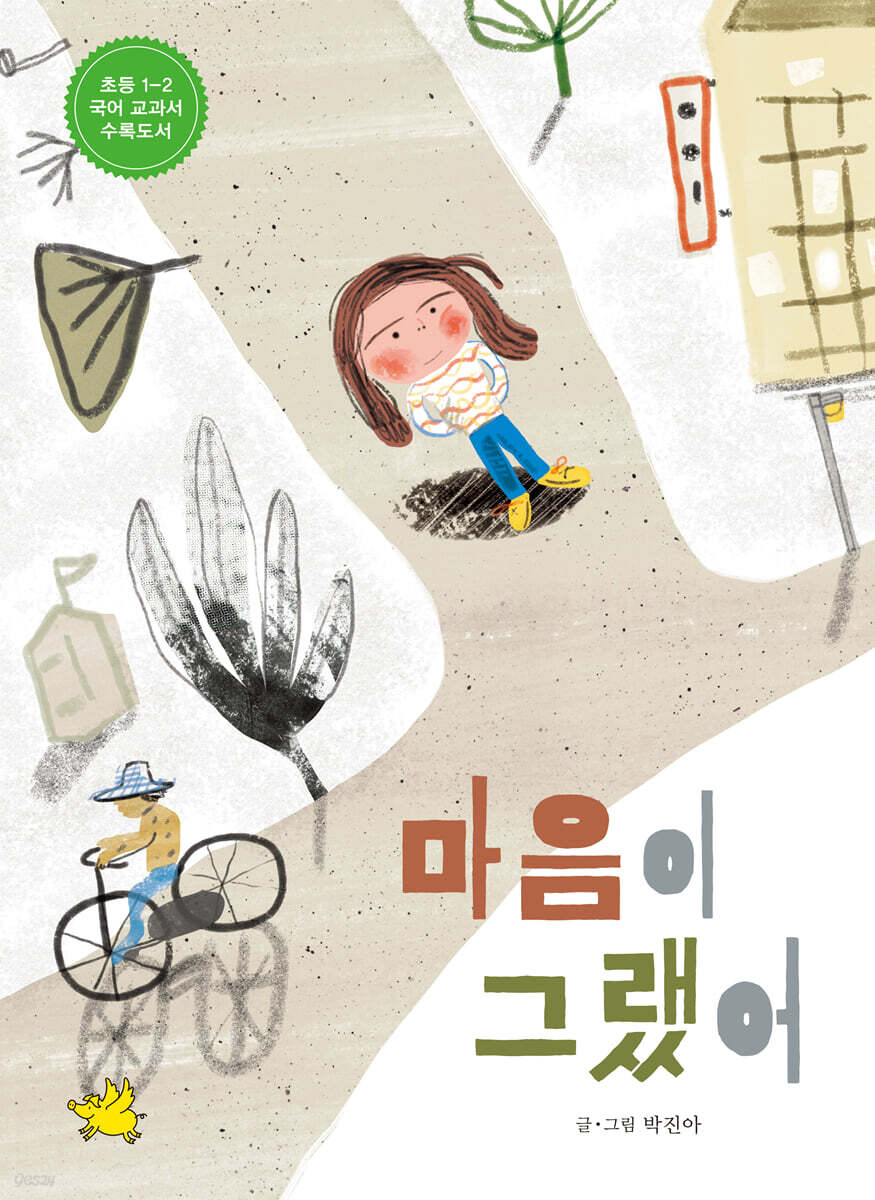
This is a picture book that expresses the feelings of eight-year-old Song-i after an argument with her best friend, Jun-i, in various colors and shapes.
“Huh! I guess I’ll never play with you again!” she said and turned around, but Songi couldn’t stop thinking about Juni.
Our minds are not one in one way for one thing.
I feel angry and upset, but at the same time I feel empty and regretful.
This book captures the heart of a child who wants to play with his friends again but is hesitant because he doesn't have the courage to apologize first, in a simple and straightforward manner.
By following Songi's changing mind from moment to moment throughout the day, children who read the book will also have time to look into their own minds.
This is a picture book that expresses the feelings of eight-year-old Song-i after an argument with her best friend, Jun-i, in various colors and shapes.
“Huh! I guess I’ll never play with you again!” she said and turned around, but Songi couldn’t stop thinking about Juni.
Our minds are not one in one way for one thing.
I feel angry and upset, but at the same time I feel empty and regretful.
This book captures the heart of a child who wants to play with his friends again but is hesitant because he doesn't have the courage to apologize first, in a simple and straightforward manner.
By following Songi's changing mind from moment to moment throughout the day, children who read the book will also have time to look into their own minds.
- You can preview some of the book's contents.
Preview
Detailed image

Publisher's Review
“Huh! I guess I’ll never play with you again.”
A story about a child who fights with his friends and is in a state of ups and downs all day.
Songi and Juni are best friends.
Songi is most excited when she plays with Jun.
Then we ended up fighting over something trivial.
I was so angry that I turned around and said, “Ugh! I guess I’ll never play with you again,” but Songi still felt uneasy.
At the playground, I ride the swings and seesaw with my friends, but I feel empty without Jun, who I was closest to.
The clouds floating in the sky look like Jun's face, and even the swaying leaves remind me of Jun.
I think, 'Should I apologize first?' but my mind is in turmoil all day, thinking, 'What if they don't accept it?'
Then, when I saw Jun-i at school and he didn't even pretend to know me, I felt sad again.
Jun-i is the first to send a note of reconciliation to Song-i.
“I’m sorry, Song.” At these words, Song’s heart melts like cotton candy.
This is a picture book that tells the story of an eight-year-old boy who fights with a friend in a simple and straightforward manner.
As you read the story, the situation is depicted and you find yourself nodding along.
Songi's conflicted mind all day long resonates deeply with not only children but also adults.
“I keep feeling uneasy.”
I need to be able to look into my natural mind and express it well.
Because physical pain is visible and real, it's easy to say, "Something hurts, something feels uncomfortable."
But when we are feeling hurt or uncomfortable, it is not easy to express 'how I feel'.
Even adults struggle with it, so what about children? Like very young babies, when they only experience one-dimensional emotions like joy and sadness, it's actually easier to express them through crying or laughter.
Even as early as kindergarten age, children experience a variety of emotions.
However, children often do not know their own feelings or are unable to express them appropriately.
Sometimes, because I am not good at expressing myself, I end up being scolded by adults for expressing myself harshly.
Then, I end up hiding my natural feelings, and eventually, I end up not knowing what I am thinking or what emotions I am feeling.
"That's What I Thought" focuses on the hearts of children.
A close look at how my heart moves when I fight with my best friend from the perspective of eight-year-old Songi.
When my mind is uncomfortable, I need to take a good look at my own mind.
If I can express how I feel and why I feel that way, I will gain the strength to calm down my boiling, upset heart.
Children who read this book will also be able to look into their own hearts by reflecting on Songi's heart.
What's going on in my mind right now? Why am I angry? Why am I upset? By carefully examining my own heart, I can gain a better understanding of myself and others.
Knowing my own heart is another way of saying that I want to have good relationships with others.
“What color is my heart? What shape is it?”
You can find the color and shape of the heart
The story of this book unfolds as it follows the mind of eight-year-old Songi.
The author tells the story by comparing a child's mind to various shapes and colors.
He said that he felt like he had 'thorns' growing out of his hatred for Jun-i, and that he felt like a 'dark cave' had formed inside him as he wondered why he was so angry.
He says that the feeling of emptiness he feels when he doesn't play with Jun is like an 'empty box', and that the road to school alone without his friend who was always with him is like a 'winding earthworm'.
After making up with a friend, he says his heart feels as fluffy as a 'cotton candy cloud'.
There are no useless emotions among human emotions.
However, it is important to recognize where the feeling originated.
Disappointment, discomfort, emptiness, regret, grumpiness, heartache, sorry… … .
One thing can have hundreds or thousands of feelings.
All of those feelings are natural.
The author did not miss the moment when people's hearts were moved, and captured it with colors, shapes, and words, allowing children to draw their own emotions in detail.
It will help children who are still having trouble expressing their feelings in words understand their own feelings.
A story about a child who fights with his friends and is in a state of ups and downs all day.
Songi and Juni are best friends.
Songi is most excited when she plays with Jun.
Then we ended up fighting over something trivial.
I was so angry that I turned around and said, “Ugh! I guess I’ll never play with you again,” but Songi still felt uneasy.
At the playground, I ride the swings and seesaw with my friends, but I feel empty without Jun, who I was closest to.
The clouds floating in the sky look like Jun's face, and even the swaying leaves remind me of Jun.
I think, 'Should I apologize first?' but my mind is in turmoil all day, thinking, 'What if they don't accept it?'
Then, when I saw Jun-i at school and he didn't even pretend to know me, I felt sad again.
Jun-i is the first to send a note of reconciliation to Song-i.
“I’m sorry, Song.” At these words, Song’s heart melts like cotton candy.
This is a picture book that tells the story of an eight-year-old boy who fights with a friend in a simple and straightforward manner.
As you read the story, the situation is depicted and you find yourself nodding along.
Songi's conflicted mind all day long resonates deeply with not only children but also adults.
“I keep feeling uneasy.”
I need to be able to look into my natural mind and express it well.
Because physical pain is visible and real, it's easy to say, "Something hurts, something feels uncomfortable."
But when we are feeling hurt or uncomfortable, it is not easy to express 'how I feel'.
Even adults struggle with it, so what about children? Like very young babies, when they only experience one-dimensional emotions like joy and sadness, it's actually easier to express them through crying or laughter.
Even as early as kindergarten age, children experience a variety of emotions.
However, children often do not know their own feelings or are unable to express them appropriately.
Sometimes, because I am not good at expressing myself, I end up being scolded by adults for expressing myself harshly.
Then, I end up hiding my natural feelings, and eventually, I end up not knowing what I am thinking or what emotions I am feeling.
"That's What I Thought" focuses on the hearts of children.
A close look at how my heart moves when I fight with my best friend from the perspective of eight-year-old Songi.
When my mind is uncomfortable, I need to take a good look at my own mind.
If I can express how I feel and why I feel that way, I will gain the strength to calm down my boiling, upset heart.
Children who read this book will also be able to look into their own hearts by reflecting on Songi's heart.
What's going on in my mind right now? Why am I angry? Why am I upset? By carefully examining my own heart, I can gain a better understanding of myself and others.
Knowing my own heart is another way of saying that I want to have good relationships with others.
“What color is my heart? What shape is it?”
You can find the color and shape of the heart
The story of this book unfolds as it follows the mind of eight-year-old Songi.
The author tells the story by comparing a child's mind to various shapes and colors.
He said that he felt like he had 'thorns' growing out of his hatred for Jun-i, and that he felt like a 'dark cave' had formed inside him as he wondered why he was so angry.
He says that the feeling of emptiness he feels when he doesn't play with Jun is like an 'empty box', and that the road to school alone without his friend who was always with him is like a 'winding earthworm'.
After making up with a friend, he says his heart feels as fluffy as a 'cotton candy cloud'.
There are no useless emotions among human emotions.
However, it is important to recognize where the feeling originated.
Disappointment, discomfort, emptiness, regret, grumpiness, heartache, sorry… … .
One thing can have hundreds or thousands of feelings.
All of those feelings are natural.
The author did not miss the moment when people's hearts were moved, and captured it with colors, shapes, and words, allowing children to draw their own emotions in detail.
It will help children who are still having trouble expressing their feelings in words understand their own feelings.
GOODS SPECIFICS
- Date of publication: October 26, 2018
- Format: Hardcover book binding method guide
- Page count, weight, size: 36 pages | 421g | 190*260*15mm
- ISBN13: 9791159950506
- ISBN10: 1159950504
- KC Certification: Certification Type: Conformity Confirmation
You may also like
카테고리
korean


korean

![GQ KOREA Mark (Monthly): December [2025]](http://librairie.coreenne.fr/cdn/shop/files/8ef265dbbfbf186523ed75ba7319009d.jpg?v=1765340328&width=3840)


