

coffee and wine
 |
Description
Book Introduction
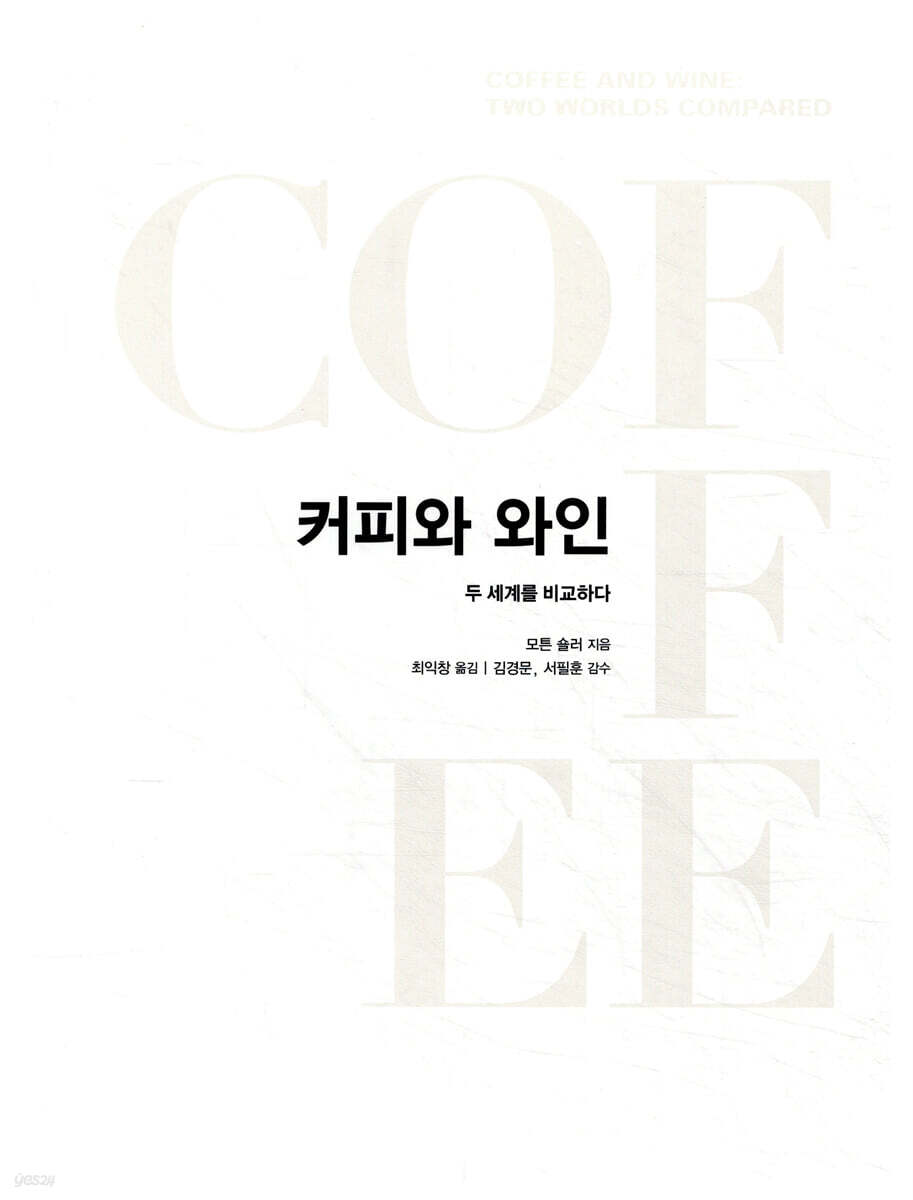
"Coffee and Wine" is a book that thematically compares the two products and fields, from the tree (coffee tree and grape vine) to the beverages coffee and wine, at every stage.
Author Morten Scholer has been a senior advisor to the United Nations coffee producers, exporters, and export organizations for many years, and has heard voices from the coffee industry, which "wants to be like the wine industry but can't."
As the specialty coffee industry continues to grow, it has borrowed heavily from the wine industry in many aspects of its manufacturing, distribution, and marketing. However, while there have been some successes, there have also been many failures.
This "Coffee and Wine" series explores the differences between two important products in the food and beverage industry, from production to distribution and sales, through themes, subtopics, and categories.
Drawing on the author's deep experience and remarkable insight, this book contains accessible narratives, detailed explanations, up-to-date and accurate data and diagrams, and engaging illustrations.
This book systematically tells the story of coffee and wine, two products that bring joy to life and connect us to one another.
Author Morten Scholer has been a senior advisor to the United Nations coffee producers, exporters, and export organizations for many years, and has heard voices from the coffee industry, which "wants to be like the wine industry but can't."
As the specialty coffee industry continues to grow, it has borrowed heavily from the wine industry in many aspects of its manufacturing, distribution, and marketing. However, while there have been some successes, there have also been many failures.
This "Coffee and Wine" series explores the differences between two important products in the food and beverage industry, from production to distribution and sales, through themes, subtopics, and categories.
Drawing on the author's deep experience and remarkable insight, this book contains accessible narratives, detailed explanations, up-to-date and accurate data and diagrams, and engaging illustrations.
This book systematically tells the story of coffee and wine, two products that bring joy to life and connect us to one another.
- You can preview some of the book's contents.
Preview
index
Preface 8
Acknowledgments 12
CHAPTER 1 History and Overview
1.1 Definition and History 17
1.2 Production in Numbers 22
1.3 25 sites for coffee and wine production
1.4 100 Differences Between Coffee and Wine 27
CHAPTER 2 Botany, Agronomy, and Harvesting
2.1 Species, varieties 39
2.2 Coffee Trees and Grape Vines 55
2.3 Cultivation, Physical Environment 66
2.4 Diseases, Pests, and Pest Control 74
2.5 Harvest 82
CHAPTER 3 PROCESSING: FROM BERRY TO BEVERAGE
3.1 From Coffee Beans to Coffee Drinks 91
3.2 From Grapes to Wine 101
3.3 Barrels and Barrel-Aging 112
3.4 Coffee Blending and Wine Blending 117
CHAPTER 4 QUALITY AND QUALITY MANAGEMENT
4.1 Quality: Definition and Varieties 129
4.2 Caffeine and alcohol 140
4.3 Sensory Evaluation: Aroma, Taste, Flavor 145
4.4 Scoring using the score sheet 154
CHAPTER 5 TRADE: PLAYERS AND ROLE
5.1 Product and Distribution Network Parties 169
5.2 Distribution Network Participants and Their Value Creation 180
5.3 Contracts and Prices 185
5.4 Geographical Indications of Wine (Appellation) 191
CHAPTER 6 LOGISTICS AND PACKAGING
6.1 Transport, Shipping, Containers, Bulk 203
6.2 Retail Packaging 206
6.3 Wine Bottle Stopper 210
CHAPTER 7 CONSUMPTION
7.1 Consumption per capita by country 217
7.2 Consumers' Diverse Choices 222
7.3 Coffee Packaging and Wine Labels - Information and Appearance 230
7.4 Health 241
7.5 Sparkling Wine 248
CHAPTER 8 SUSTAINABILITY
8.1 Criteria for Sustainability 257
8.2 Environment: First Category 268
8.3 Climate Change 276
8.4 Social Aspects: Second Category 281
8.5 Economic Aspects: Third Category 285
CHAPTER 9 Organizations and Competitions
9.1 Coffee and Wine Utensils 289
9.2 Coffee Competition: Beverage Quality, Championship 292
9.3 Wine Competitions and Other Contests 295
CHAPTER 10 Cultural Values
10.1 UNESCO World Heritage Sites: Coffee and Wine Regions 305
10.2 Music and Religion 311
CHAPTER 11 Coffee and Wine by Country
11.1 Data and History 317
Appendix 1 Comparison of Five Beverages: Coffee, Cocoa, Tea, Wine, and Beer 357
Appendix 2 Technical Units: Origins, Usage, and Conversions 361
Translator's Note 366
Acknowledgments 12
CHAPTER 1 History and Overview
1.1 Definition and History 17
1.2 Production in Numbers 22
1.3 25 sites for coffee and wine production
1.4 100 Differences Between Coffee and Wine 27
CHAPTER 2 Botany, Agronomy, and Harvesting
2.1 Species, varieties 39
2.2 Coffee Trees and Grape Vines 55
2.3 Cultivation, Physical Environment 66
2.4 Diseases, Pests, and Pest Control 74
2.5 Harvest 82
CHAPTER 3 PROCESSING: FROM BERRY TO BEVERAGE
3.1 From Coffee Beans to Coffee Drinks 91
3.2 From Grapes to Wine 101
3.3 Barrels and Barrel-Aging 112
3.4 Coffee Blending and Wine Blending 117
CHAPTER 4 QUALITY AND QUALITY MANAGEMENT
4.1 Quality: Definition and Varieties 129
4.2 Caffeine and alcohol 140
4.3 Sensory Evaluation: Aroma, Taste, Flavor 145
4.4 Scoring using the score sheet 154
CHAPTER 5 TRADE: PLAYERS AND ROLE
5.1 Product and Distribution Network Parties 169
5.2 Distribution Network Participants and Their Value Creation 180
5.3 Contracts and Prices 185
5.4 Geographical Indications of Wine (Appellation) 191
CHAPTER 6 LOGISTICS AND PACKAGING
6.1 Transport, Shipping, Containers, Bulk 203
6.2 Retail Packaging 206
6.3 Wine Bottle Stopper 210
CHAPTER 7 CONSUMPTION
7.1 Consumption per capita by country 217
7.2 Consumers' Diverse Choices 222
7.3 Coffee Packaging and Wine Labels - Information and Appearance 230
7.4 Health 241
7.5 Sparkling Wine 248
CHAPTER 8 SUSTAINABILITY
8.1 Criteria for Sustainability 257
8.2 Environment: First Category 268
8.3 Climate Change 276
8.4 Social Aspects: Second Category 281
8.5 Economic Aspects: Third Category 285
CHAPTER 9 Organizations and Competitions
9.1 Coffee and Wine Utensils 289
9.2 Coffee Competition: Beverage Quality, Championship 292
9.3 Wine Competitions and Other Contests 295
CHAPTER 10 Cultural Values
10.1 UNESCO World Heritage Sites: Coffee and Wine Regions 305
10.2 Music and Religion 311
CHAPTER 11 Coffee and Wine by Country
11.1 Data and History 317
Appendix 1 Comparison of Five Beverages: Coffee, Cocoa, Tea, Wine, and Beer 357
Appendix 2 Technical Units: Origins, Usage, and Conversions 361
Translator's Note 366
Publisher's Review
Comparing the two great worlds of food and beverage.
This book is about coffee, covering the entire distribution chain from manufacturing to distribution, and it is also about wine.
Why and how does this book address these two industries, which are building mutual expertise and rarely addressing their respective worlds together? Author Morton Scholer explains in the foreword:
“Why can’t we do it like the wine industry?” This is a question that coffee growers and exporters have constantly raised in the many coffee workshops and coffee conferences in which the author has participated over the years.
The goal of this project is clear.
The wine industry's sophisticated branding and the occasional, incomparably high transaction prices.
The coffee industry has long envied the wine industry for its long history, mysterious terroir, complex sensuality, and storytelling that lends class and elegance.
However, this perception of coffee growers and coffee exporters is incorrect.
With that kind of perception, even a proper comparison is impossible.
To properly answer the question they raised, I decided to compare the two fields in detail.
Since there had been no literature on this topic before, the author had to search through the few documents on the subject.
..."
Author Morton Scholer has been working in the coffee world for a long time.
As the UN's Lead Advisor on Coffee Trade, he has supported coffee producers, exporters, and coffee-related organizations in coffee-producing countries, developing national strategies for coffee production and export, establishing sustainability programs, and establishing coffee research institutes.
In addition, he contributed to compiling the materials of several coffee experts, including Hein Jan Van Hilten, into a single masterpiece called "The Coffee Exporter's Guide."
His stature and contributions to the coffee industry are beyond compare.
Additionally, the author has lived in the wine world of the Old World.
Born in Denmark, he spent his youth working in vineyards and wineries in France's Macon and Saint-Émilion regions, major wine regions.
He is currently experiencing the wine industry in his home country of Denmark and his current residence in Switzerland.
Furthermore, from the time he decided to write this book, he began receiving systematic training from a wine master.
Comparing coffee and wine across the entire distribution chain required broad and deep knowledge.
He learned, gained knowledge, and gained experience by visiting conferences, trade shows, research institutes, libraries, as well as businesses, stores, and individuals.
The knowledge I gained sparked a new curiosity, and that curiosity sparked a new desire to explore.
These accumulated to form a body of knowledge, which he organized and published in this book.
Therefore, this book does not simply explain manufacturing methods and characteristics, and introduces production areas and brands, but focuses on uncovering the activities and practical essence of each industry at every stage, from production to logistics.
For example, with regard to quality, it covers in detail the criteria and processing methods related to quality, starting with what evaluation methods are used and what the evaluation categories mean, and it covers not only the evaluation items and product-specific attributes, but also the existing scoring methods and formats used by various evaluation organizations.
In terms of trade, it reflects the trade situation of the two industries and the activities of companies up to the latest possible level. It also mentions how products are classified, what information is used in transactions, how value is created in distribution networks, how contracts, price indices, and futures markets are formed, and delves deeply into geographical indications.
As mentioned in the preface, the motivation for writing the book was to see what coffee could learn from wine, but the book's content goes beyond that.
This book, which weaves together the characteristics of coffee and wine, from production to consumption, like warp and weft, closely compares two giant food and beverage industries in modern society and provides a broader perspective on their vast trends.
This book is about coffee, covering the entire distribution chain from manufacturing to distribution, and it is also about wine.
Why and how does this book address these two industries, which are building mutual expertise and rarely addressing their respective worlds together? Author Morton Scholer explains in the foreword:
“Why can’t we do it like the wine industry?” This is a question that coffee growers and exporters have constantly raised in the many coffee workshops and coffee conferences in which the author has participated over the years.
The goal of this project is clear.
The wine industry's sophisticated branding and the occasional, incomparably high transaction prices.
The coffee industry has long envied the wine industry for its long history, mysterious terroir, complex sensuality, and storytelling that lends class and elegance.
However, this perception of coffee growers and coffee exporters is incorrect.
With that kind of perception, even a proper comparison is impossible.
To properly answer the question they raised, I decided to compare the two fields in detail.
Since there had been no literature on this topic before, the author had to search through the few documents on the subject.
..."
Author Morton Scholer has been working in the coffee world for a long time.
As the UN's Lead Advisor on Coffee Trade, he has supported coffee producers, exporters, and coffee-related organizations in coffee-producing countries, developing national strategies for coffee production and export, establishing sustainability programs, and establishing coffee research institutes.
In addition, he contributed to compiling the materials of several coffee experts, including Hein Jan Van Hilten, into a single masterpiece called "The Coffee Exporter's Guide."
His stature and contributions to the coffee industry are beyond compare.
Additionally, the author has lived in the wine world of the Old World.
Born in Denmark, he spent his youth working in vineyards and wineries in France's Macon and Saint-Émilion regions, major wine regions.
He is currently experiencing the wine industry in his home country of Denmark and his current residence in Switzerland.
Furthermore, from the time he decided to write this book, he began receiving systematic training from a wine master.
Comparing coffee and wine across the entire distribution chain required broad and deep knowledge.
He learned, gained knowledge, and gained experience by visiting conferences, trade shows, research institutes, libraries, as well as businesses, stores, and individuals.
The knowledge I gained sparked a new curiosity, and that curiosity sparked a new desire to explore.
These accumulated to form a body of knowledge, which he organized and published in this book.
Therefore, this book does not simply explain manufacturing methods and characteristics, and introduces production areas and brands, but focuses on uncovering the activities and practical essence of each industry at every stage, from production to logistics.
For example, with regard to quality, it covers in detail the criteria and processing methods related to quality, starting with what evaluation methods are used and what the evaluation categories mean, and it covers not only the evaluation items and product-specific attributes, but also the existing scoring methods and formats used by various evaluation organizations.
In terms of trade, it reflects the trade situation of the two industries and the activities of companies up to the latest possible level. It also mentions how products are classified, what information is used in transactions, how value is created in distribution networks, how contracts, price indices, and futures markets are formed, and delves deeply into geographical indications.
As mentioned in the preface, the motivation for writing the book was to see what coffee could learn from wine, but the book's content goes beyond that.
This book, which weaves together the characteristics of coffee and wine, from production to consumption, like warp and weft, closely compares two giant food and beverage industries in modern society and provides a broader perspective on their vast trends.
GOODS SPECIFICS
- Date of publication: November 7, 2019
- Page count, weight, size: 368 pages | 195*254*30mm
- ISBN13: 9791195484850
- ISBN10: 1195484852
You may also like
카테고리
korean


korean

![GQ KOREA Mark (Monthly): December [2025]](http://librairie.coreenne.fr/cdn/shop/files/8ef265dbbfbf186523ed75ba7319009d.jpg?v=1765340328&width=3840)


