

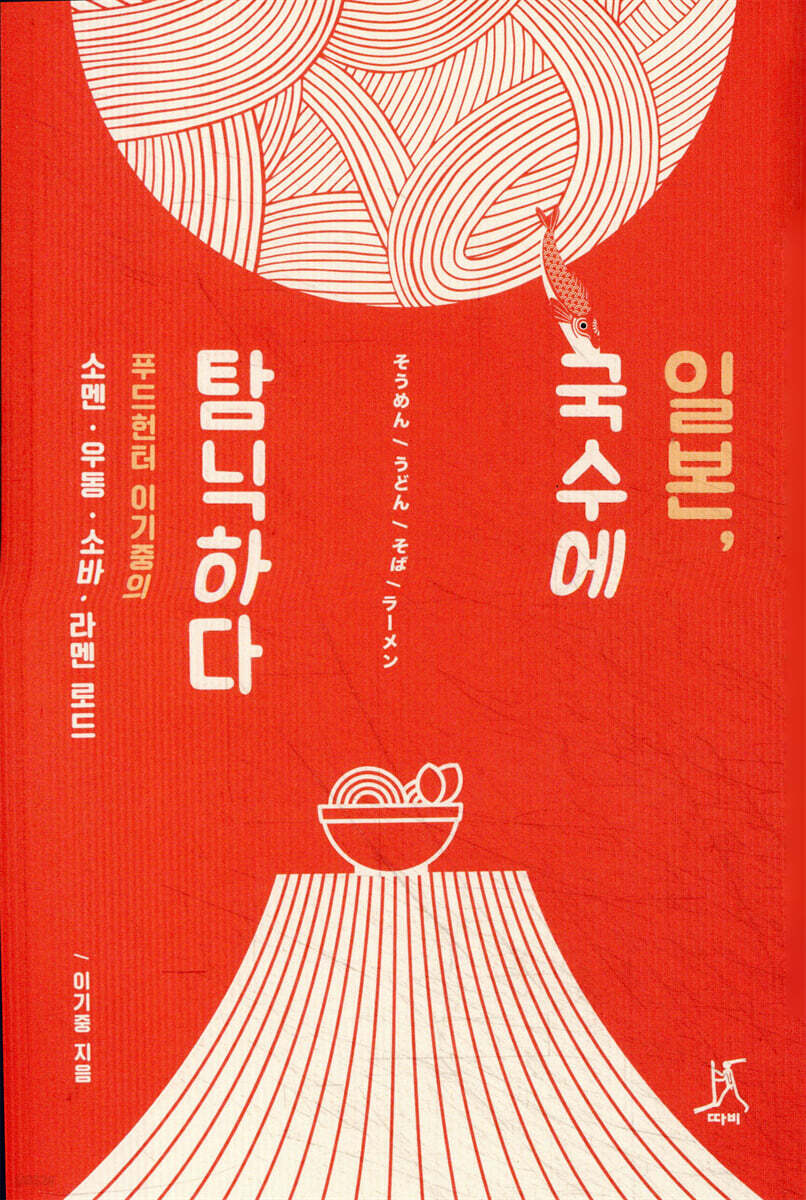
Japan, Indulge in Noodles
 |
Description
Book Introduction
110 restaurants guided by food hunter Lee Ki-jung
The world of Japanese noodles, each boasting its own unique character, personality, and flavor.
The closest foreign country, and therefore the country most visited by Koreans, is Japan.
There are many reasons to visit Japan, including hot springs and shopping, but one of the most important is the culinary delights.
One of the reasons people visit Japan is because of the variety of foods that use ingredients and cooking methods that Koreans find difficult to eat, yet have a different appeal from Korean cuisine.
Japan is a country where you can enjoy both international cuisine and traditional Japanese food, from the allure of ryokan kaiseki cuisine, to Michelin-starred high-end restaurants, to street food that makes you wonder if you can eat this, to convenience store food that makes you wonder if you can even eat this. But among them, the food that Japanese people themselves love the most is undoubtedly noodles.
Japanese noodles, a unique dish that pushes the milling and noodle-making techniques developed under the influence of China and the Korean Peninsula to their limits, have been a part of Japanese history, sometimes as a food for the tasteful and elegant, and sometimes as a meal to fill the hungry stomachs of the poor.
Noodles are also a good food for travelers.
Noodles are a great food to fill your stomach with during a busy schedule before your next travel destination, to relieve stress after a long day, or to soothe a hangover early in the morning.
Moreover, in Japan, there is no shortage of noodle shops, whether udon, soba, or ramen, even in the middle of the city or in the sparsely populated countryside.
This is probably why Professor Lee Ki-jung, who calls himself a food hunter, chose noodles among the many Japanese dishes and went on a 'noodle road'.
This book contains the tastes and stories of 110 somen, udon, soba, and ramen that the author tasted during his 100-day trip to Japan.
The world of Japanese noodles, each boasting its own unique character, personality, and flavor.
The closest foreign country, and therefore the country most visited by Koreans, is Japan.
There are many reasons to visit Japan, including hot springs and shopping, but one of the most important is the culinary delights.
One of the reasons people visit Japan is because of the variety of foods that use ingredients and cooking methods that Koreans find difficult to eat, yet have a different appeal from Korean cuisine.
Japan is a country where you can enjoy both international cuisine and traditional Japanese food, from the allure of ryokan kaiseki cuisine, to Michelin-starred high-end restaurants, to street food that makes you wonder if you can eat this, to convenience store food that makes you wonder if you can even eat this. But among them, the food that Japanese people themselves love the most is undoubtedly noodles.
Japanese noodles, a unique dish that pushes the milling and noodle-making techniques developed under the influence of China and the Korean Peninsula to their limits, have been a part of Japanese history, sometimes as a food for the tasteful and elegant, and sometimes as a meal to fill the hungry stomachs of the poor.
Noodles are also a good food for travelers.
Noodles are a great food to fill your stomach with during a busy schedule before your next travel destination, to relieve stress after a long day, or to soothe a hangover early in the morning.
Moreover, in Japan, there is no shortage of noodle shops, whether udon, soba, or ramen, even in the middle of the city or in the sparsely populated countryside.
This is probably why Professor Lee Ki-jung, who calls himself a food hunter, chose noodles among the many Japanese dishes and went on a 'noodle road'.
This book contains the tastes and stories of 110 somen, udon, soba, and ramen that the author tasted during his 100-day trip to Japan.
- You can preview some of the book's contents.
Preview
index
Entering
Somen and udon
History of Japanese Noodles 18
28 types of udon
Somen Road
Sakurai 33, Nara Prefecture, Minamishimabara 42, Nagasaki Prefecture
Udon Road
Inaniwa Udon 56 Mizusawa Udon 63
Ise Udon 68 Nagoya Udon 74
Kansai Udon 84 Sanuki Udon 98
Fukuoka Udon 128
Soba
History of Soba 136
148 Things to Know to Enjoy Soba
Shinagaki 155 of Soba Restaurant
Soba Road
Tokyo 162 Yamagata 188
Nagano 195 Izu City, Hyogo Prefecture 204
Shimane Prefecture Izumo 209 Morioka 213
Niigata 222 Kyoto 225
Ramen
The History of Ramen 230
238 Things You Need to Know to Enjoy Ramen
Ramen Road
Hokkaido
Sapporo Ramen 251 / Asahikawa Ramen 261 / Kushiro Ramen 266 / Hakodate Ramen 271
Tohoku
Aomori Ramen 278 / Yamagata Ramen 281 / Sendai Hiyashizuka 286 / Yonezawa Gyu Ramen 290 / Akayu Karamiso Ramen 293 / Kitakata Ramen 296
housewife
Niigata Ramen 299 / Toyama Ramen 309
Kanto
Tokyo Ramen 312 / Yokohama Ramen 318
Kansai
Kyoto Ramen 324 / Osaka Ramen 327 / Tenri Ramen 333 / Wakayama Ramen 336
Chugoku
Hiroshima Ramen 341
Kyushu
Kurume Ramen 347 / Fukuoka Ramen 353 / Kumamoto Ramen 367 / Kagoshima Ramen 373
Somen and udon
History of Japanese Noodles 18
28 types of udon
Somen Road
Sakurai 33, Nara Prefecture, Minamishimabara 42, Nagasaki Prefecture
Udon Road
Inaniwa Udon 56 Mizusawa Udon 63
Ise Udon 68 Nagoya Udon 74
Kansai Udon 84 Sanuki Udon 98
Fukuoka Udon 128
Soba
History of Soba 136
148 Things to Know to Enjoy Soba
Shinagaki 155 of Soba Restaurant
Soba Road
Tokyo 162 Yamagata 188
Nagano 195 Izu City, Hyogo Prefecture 204
Shimane Prefecture Izumo 209 Morioka 213
Niigata 222 Kyoto 225
Ramen
The History of Ramen 230
238 Things You Need to Know to Enjoy Ramen
Ramen Road
Hokkaido
Sapporo Ramen 251 / Asahikawa Ramen 261 / Kushiro Ramen 266 / Hakodate Ramen 271
Tohoku
Aomori Ramen 278 / Yamagata Ramen 281 / Sendai Hiyashizuka 286 / Yonezawa Gyu Ramen 290 / Akayu Karamiso Ramen 293 / Kitakata Ramen 296
housewife
Niigata Ramen 299 / Toyama Ramen 309
Kanto
Tokyo Ramen 312 / Yokohama Ramen 318
Kansai
Kyoto Ramen 324 / Osaka Ramen 327 / Tenri Ramen 333 / Wakayama Ramen 336
Chugoku
Hiroshima Ramen 341
Kyushu
Kurume Ramen 347 / Fukuoka Ramen 353 / Kumamoto Ramen 367 / Kagoshima Ramen 373
Detailed image
Publisher's Review
Every corner of Japan through noodles
Excluding Okinawa, each region of Japan, from Hokkaido in the north to Kyushu in the west, has its own unique nature, customs, and culture.
Food culture also has distinct characteristics in each region, and noodle dishes are no exception.
Just as 'Udon in Kansai, Soba in Kanto', different noodles developed in each region, but even the same noodle dish developed with different characteristics in each region.
So, the first virtue of enjoying Japanese noodles would be not to look for Sanuki udon in Fukuoka.
To do that, you must first know.
What kind of noodles should I eat in that area?
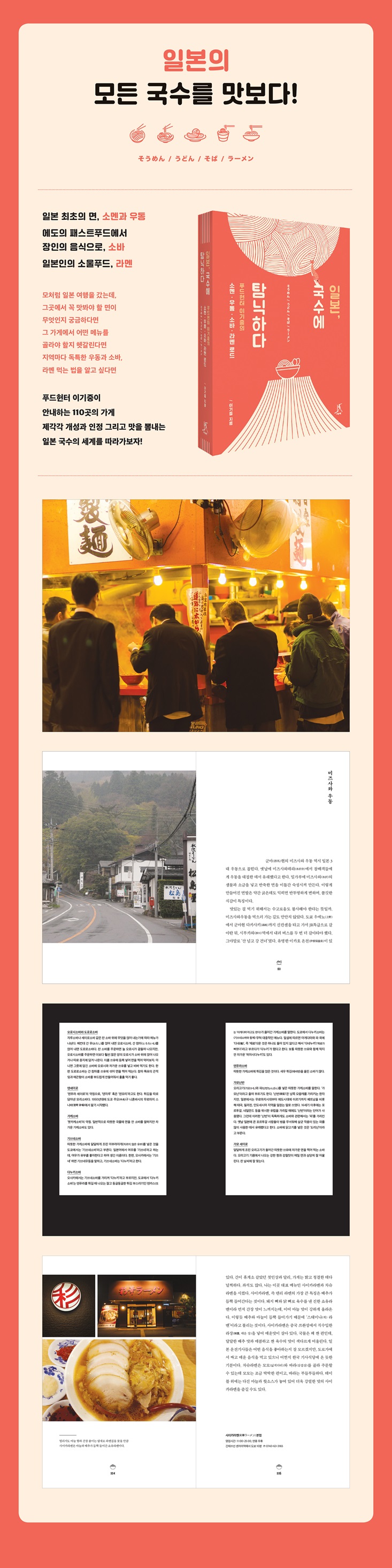
"Japan, Indulge in Noodles" introduces somen, udon, soba, and ramen, each with its own unique history and personality, by visiting regions famous for their noodles.
This includes famous places such as Sakurai City in Nara Prefecture, known as the birthplace of somen; Inaniwa Udon, Mizusawa Udon, and Sanuki Udon, which are considered the three major udon noodles in Japan; and Shinshu Soba in Nagano, the symbol of Japanese soba noodles.
We also introduce regions that serve unique noodle dishes, although they are not well known to Koreans.
For example, Ise udon, famous for its soft noodles served to visitors to Ise Shrine, Sarasoba, which can only be found in Izushi, Toyooka City, Hyogo Prefecture, and Wankosoba from Morioka.
Ramen, which has the shortest history among Japanese noodles but has developed differently in each region, covers almost all of Japan.
Through this book, readers will learn about must-try noodle dishes from all over Japan and why noodle dishes developed in certain regions.
Especially for travelers who want to see the real face of Japan, especially those traveling to small and medium-sized cities or rural areas rather than major cities, this book, which mainly introduces restaurants favored by locals, will be very useful.
How to Eat Soba Like Edokko
Because Japan has a unique noodle culture developed in each region, you can enjoy noodles as much as you know.
When eating zaru udon or zaru soba with tsuyu, it is not limited to the general methods such as how much the noodles should be dipped in the tsuyu, or whether wasabi or green onions should be mixed into the tsuyu or placed on the noodles.
What's the best snack to pair with soba at a long-established Tokyo restaurant dating back to the Edo period? Like the Edokko (Tokyo natives) of old, what kind of udon should you order to savor the unique flavor of Kansai udon broth? The author explains the characteristics of each noodle dish and guides you on how to enjoy them to the fullest.
While it's fun to enjoy regional noodle dishes with unique characteristics, it also comes with one drawback.
Each noodle dish has its own way of eating it.
For example, when eating wariko soba served in a three- or five-tiered bowl in Izumo, Shimane Prefecture, famous for Izumo Taisha Shrine, you must carefully control the amount of tsuyu.
Morioka Wanko Soba is an all-you-can-eat soba served in a small bowl the size of a piece of paper, but once you close the lid, you can't eat any more.
Also, if you want to eat the famous Kagawa Prefecture Sanuki Udon at a self-service restaurant, it is a good idea to familiarize yourself with the menu in advance and prepare change.
The author first researched the unique noodle dishes of each region, and then visited the restaurants that first introduced those dishes and those that have continued to serve them to this day to taste them firsthand.
Because I believe that in order to truly understand food, you must remember its original taste.
The author's delicious story of Japanese noodles, which includes various noodle dishes he tasted while traveling and various episodes related to the people he met along the way, reveals a cross-section of Japanese culture that accepts foreign cultures without much resistance and internalizes them.
Meanwhile, the author wanted to provide the locations and phone numbers of all the stores he visited to provide some help to readers planning a trip to Japan.
Excluding Okinawa, each region of Japan, from Hokkaido in the north to Kyushu in the west, has its own unique nature, customs, and culture.
Food culture also has distinct characteristics in each region, and noodle dishes are no exception.
Just as 'Udon in Kansai, Soba in Kanto', different noodles developed in each region, but even the same noodle dish developed with different characteristics in each region.
So, the first virtue of enjoying Japanese noodles would be not to look for Sanuki udon in Fukuoka.
To do that, you must first know.
What kind of noodles should I eat in that area?
"Japan, Indulge in Noodles" introduces somen, udon, soba, and ramen, each with its own unique history and personality, by visiting regions famous for their noodles.
This includes famous places such as Sakurai City in Nara Prefecture, known as the birthplace of somen; Inaniwa Udon, Mizusawa Udon, and Sanuki Udon, which are considered the three major udon noodles in Japan; and Shinshu Soba in Nagano, the symbol of Japanese soba noodles.
We also introduce regions that serve unique noodle dishes, although they are not well known to Koreans.
For example, Ise udon, famous for its soft noodles served to visitors to Ise Shrine, Sarasoba, which can only be found in Izushi, Toyooka City, Hyogo Prefecture, and Wankosoba from Morioka.
Ramen, which has the shortest history among Japanese noodles but has developed differently in each region, covers almost all of Japan.
Through this book, readers will learn about must-try noodle dishes from all over Japan and why noodle dishes developed in certain regions.
Especially for travelers who want to see the real face of Japan, especially those traveling to small and medium-sized cities or rural areas rather than major cities, this book, which mainly introduces restaurants favored by locals, will be very useful.
How to Eat Soba Like Edokko
Because Japan has a unique noodle culture developed in each region, you can enjoy noodles as much as you know.
When eating zaru udon or zaru soba with tsuyu, it is not limited to the general methods such as how much the noodles should be dipped in the tsuyu, or whether wasabi or green onions should be mixed into the tsuyu or placed on the noodles.
What's the best snack to pair with soba at a long-established Tokyo restaurant dating back to the Edo period? Like the Edokko (Tokyo natives) of old, what kind of udon should you order to savor the unique flavor of Kansai udon broth? The author explains the characteristics of each noodle dish and guides you on how to enjoy them to the fullest.
While it's fun to enjoy regional noodle dishes with unique characteristics, it also comes with one drawback.
Each noodle dish has its own way of eating it.
For example, when eating wariko soba served in a three- or five-tiered bowl in Izumo, Shimane Prefecture, famous for Izumo Taisha Shrine, you must carefully control the amount of tsuyu.
Morioka Wanko Soba is an all-you-can-eat soba served in a small bowl the size of a piece of paper, but once you close the lid, you can't eat any more.
Also, if you want to eat the famous Kagawa Prefecture Sanuki Udon at a self-service restaurant, it is a good idea to familiarize yourself with the menu in advance and prepare change.
The author first researched the unique noodle dishes of each region, and then visited the restaurants that first introduced those dishes and those that have continued to serve them to this day to taste them firsthand.
Because I believe that in order to truly understand food, you must remember its original taste.
The author's delicious story of Japanese noodles, which includes various noodle dishes he tasted while traveling and various episodes related to the people he met along the way, reveals a cross-section of Japanese culture that accepts foreign cultures without much resistance and internalizes them.
Meanwhile, the author wanted to provide the locations and phone numbers of all the stores he visited to provide some help to readers planning a trip to Japan.
GOODS SPECIFICS
- Date of publication: September 15, 2018
- Page count, weight, size: 392 pages | 545g | 135*205*22mm
- ISBN13: 9788998439538
- ISBN10: 8998439530
You may also like
카테고리
korean


korean

![GQ KOREA Mark (Monthly): December [2025]](http://librairie.coreenne.fr/cdn/shop/files/8ef265dbbfbf186523ed75ba7319009d.jpg?v=1765340328&width=3840)


