

This white paper
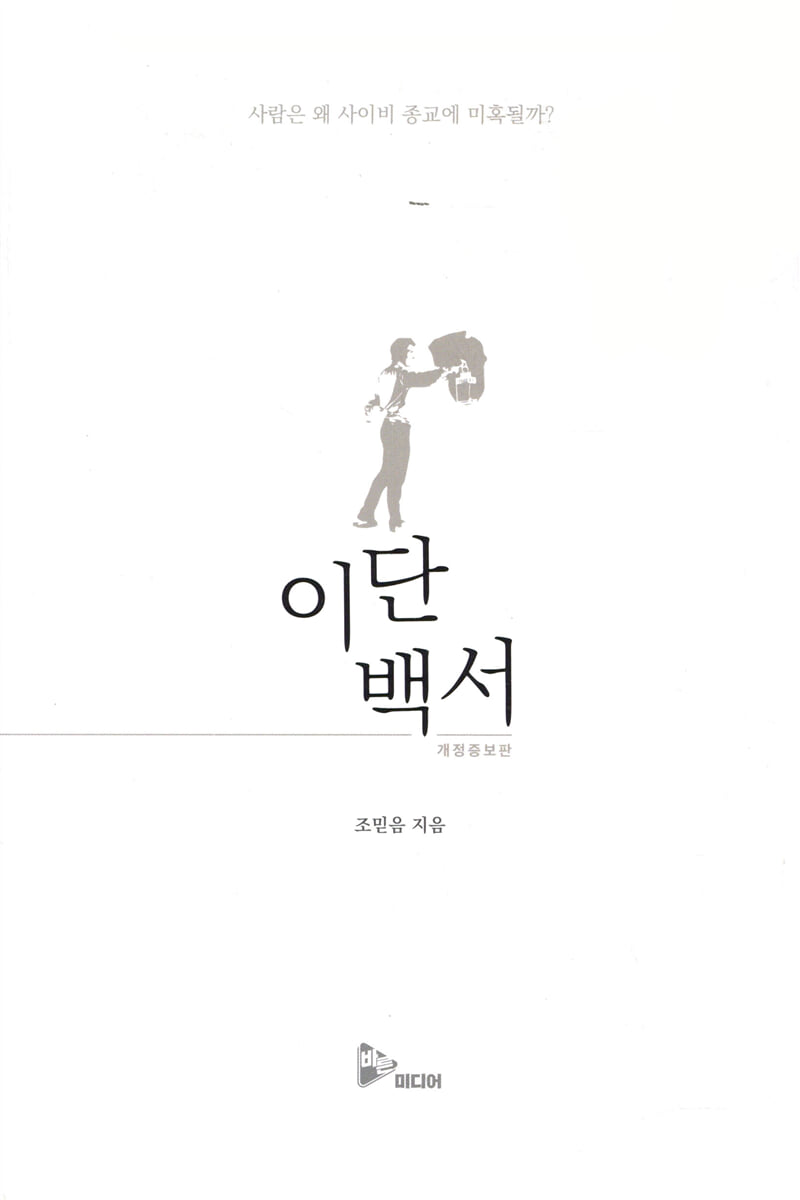 |
Description
index
4 Recommendations
8 Preface to the First Edition
Preface to the 10th Revised and Expanded Edition
Part 1: Heresy and Pseudo-religion
17 Correctly Understanding Heresy / 20 Who Determines Heresy? / 23 Why Does It Occur and Become Popular? / 25 Does It Have Nothing to Do with Me? / 31 A Paradigm Change Is Needed
/ 34 Easy and Effective Prevention Methods / 37 How to Prevent Church Members from Participating / 41 Why the Golden Time is Crucial When Family Members Are Bewildered
Part 2 Why was he deceived by a cult?
47 Lack of vigilance / 52 Psychological manipulation.
/ 56 Formation of Harmful Beliefs / 60 Grooming Sexual Crimes and Pseudo-Religions / 64 Brainwashing: How Is Ideological Reform Achieved? / 71 Mechanisms for Controlling Followers / 76 Why People Can't Leave a Cult Even After the Leader's Death
Part 3: Korean Heresy and Pseudo-religion
85 Genealogy of Korean Heresy / 89 Shincheonji Church of Jesus, the Temple of the Tabernacle of the Testimony / 104 World Mission Society Church of God / 111 Salvation Sect / 117 Family Federation for World Peace and Unification / 123 Christian Gospel Mission / 128 Hanong Restoration Association / 132 Manmin Central Church, Grace Church, and Sarang Church
Part 4: Foreign heretical cults active in Korea
137 Seventh-day Adventist Church / 142 Jehovah's Witnesses / 147 The Church of Jesus Christ of Latter-day Saints / 151 The Church of Almighty God / 155 Raelian Movement
Part 5 Problematic Claims
161 The New Apostolic Movement / 169 King James Bible Onlyism: The Word Preservation Society and Sarang Baptist Church
Part 6: Dealing with Heresy and Pseudo-Religion through Law
183 How to Deal with Heresy and Pseudo-religions as Seen Through Rulings / 203 Is Fraud Punishable? / 212 Is a Special Law on Pseudo-religions Possible? / 216 Revisiting the Shincheonji Theological Seminary Issue
Part 7: Heresy in Church History
223 Gnosticism / 229 Marcion / 232 Dynamic Monarchianism / 235 Modalistic Monarchianism / 238 Montanus / 243 Arius / 250 Pelagius
8 Preface to the First Edition
Preface to the 10th Revised and Expanded Edition
Part 1: Heresy and Pseudo-religion
17 Correctly Understanding Heresy / 20 Who Determines Heresy? / 23 Why Does It Occur and Become Popular? / 25 Does It Have Nothing to Do with Me? / 31 A Paradigm Change Is Needed
/ 34 Easy and Effective Prevention Methods / 37 How to Prevent Church Members from Participating / 41 Why the Golden Time is Crucial When Family Members Are Bewildered
Part 2 Why was he deceived by a cult?
47 Lack of vigilance / 52 Psychological manipulation.
/ 56 Formation of Harmful Beliefs / 60 Grooming Sexual Crimes and Pseudo-Religions / 64 Brainwashing: How Is Ideological Reform Achieved? / 71 Mechanisms for Controlling Followers / 76 Why People Can't Leave a Cult Even After the Leader's Death
Part 3: Korean Heresy and Pseudo-religion
85 Genealogy of Korean Heresy / 89 Shincheonji Church of Jesus, the Temple of the Tabernacle of the Testimony / 104 World Mission Society Church of God / 111 Salvation Sect / 117 Family Federation for World Peace and Unification / 123 Christian Gospel Mission / 128 Hanong Restoration Association / 132 Manmin Central Church, Grace Church, and Sarang Church
Part 4: Foreign heretical cults active in Korea
137 Seventh-day Adventist Church / 142 Jehovah's Witnesses / 147 The Church of Jesus Christ of Latter-day Saints / 151 The Church of Almighty God / 155 Raelian Movement
Part 5 Problematic Claims
161 The New Apostolic Movement / 169 King James Bible Onlyism: The Word Preservation Society and Sarang Baptist Church
Part 6: Dealing with Heresy and Pseudo-Religion through Law
183 How to Deal with Heresy and Pseudo-religions as Seen Through Rulings / 203 Is Fraud Punishable? / 212 Is a Special Law on Pseudo-religions Possible? / 216 Revisiting the Shincheonji Theological Seminary Issue
Part 7: Heresy in Church History
223 Gnosticism / 229 Marcion / 232 Dynamic Monarchianism / 235 Modalistic Monarchianism / 238 Montanus / 243 Arius / 250 Pelagius
Into the book
The first step to properly understanding heresy and cult is to define the two words.
Although the two terms are often used interchangeably, they each have their own distinct meanings.
--- p.17
Instead of just saying, “Your choice was wrong,” why not ask, “Why did you make that choice?”
--- p.49
Through constant self-criticism, we come to recognize that we are sinful beings, and at the same time, we naturally conform to the system that is defined as the ultimate good.
Pseudo-religions also excessively use the tool of self-criticism to brainwash people into believing that only the leader can solve the problem by putting the shackles of 'guilt' on them.
--- p.67
When a cult leader once claimed to be immortal dies, or when the immorality of a leader once believed to be flawless is revealed, why doesn't the cult collapse? Why do followers decide to remain in the cult? We need to understand the distorted mindset of its followers.
How could their thinking have been distorted?
--- p.76
Fearful believers are under pressure to remain within the group.
As a result, they are unable to make rational decisions and tend to rationalize the situation, even resorting to immoral and unethical methods of inclusion.
The question, “Does Shincheonji use this method of recruitment?” is meaningless because the deviant behavior of believers is added to the group’s method of recruitment.
--- p.101
The claim that the King James Bible is the only authentic one is not supported by textual scholarship.
King James Onlyism is a dogmatic and exclusive claim that ignores the value of the numerous extant manuscripts.
--- p.178
Even if religious freedom is guaranteed to the fullest extent, not all religious practices are permitted.
People are free to believe what they want, but if the actions that result from those beliefs are illegal, the state can impose sanctions.
--- p.104
The era of the apostles was coming to an end, and the church was entering a period of transition.
As many of the saints who believed that Christ would return in their time died, those who remained began to gradually relax their guard.
Some believers believed that God had postponed the second coming of Christ to give them a chance to repent, but this idea naturally weakened over time.
The values of the saints have changed.
They no longer lived with the thought that today might be their last day.
Although the two terms are often used interchangeably, they each have their own distinct meanings.
--- p.17
Instead of just saying, “Your choice was wrong,” why not ask, “Why did you make that choice?”
--- p.49
Through constant self-criticism, we come to recognize that we are sinful beings, and at the same time, we naturally conform to the system that is defined as the ultimate good.
Pseudo-religions also excessively use the tool of self-criticism to brainwash people into believing that only the leader can solve the problem by putting the shackles of 'guilt' on them.
--- p.67
When a cult leader once claimed to be immortal dies, or when the immorality of a leader once believed to be flawless is revealed, why doesn't the cult collapse? Why do followers decide to remain in the cult? We need to understand the distorted mindset of its followers.
How could their thinking have been distorted?
--- p.76
Fearful believers are under pressure to remain within the group.
As a result, they are unable to make rational decisions and tend to rationalize the situation, even resorting to immoral and unethical methods of inclusion.
The question, “Does Shincheonji use this method of recruitment?” is meaningless because the deviant behavior of believers is added to the group’s method of recruitment.
--- p.101
The claim that the King James Bible is the only authentic one is not supported by textual scholarship.
King James Onlyism is a dogmatic and exclusive claim that ignores the value of the numerous extant manuscripts.
--- p.178
Even if religious freedom is guaranteed to the fullest extent, not all religious practices are permitted.
People are free to believe what they want, but if the actions that result from those beliefs are illegal, the state can impose sanctions.
--- p.104
The era of the apostles was coming to an end, and the church was entering a period of transition.
As many of the saints who believed that Christ would return in their time died, those who remained began to gradually relax their guard.
Some believers believed that God had postponed the second coming of Christ to give them a chance to repent, but this idea naturally weakened over time.
The values of the saints have changed.
They no longer lived with the thought that today might be their last day.
--- p.238
Publisher's Review
Why are people deceived by cults?
- Analyzes why people are deceived by heretical cults and explains the various unhealthy religious groups and ideologies that exist in Korean society.
If I could give this book to my 21-year-old self 18 years ago.
Jeong Ji-hye _Office worker
- Analyzes why people are deceived by heretical cults and explains the various unhealthy religious groups and ideologies that exist in Korean society.
If I could give this book to my 21-year-old self 18 years ago.
Jeong Ji-hye _Office worker
GOODS SPECIFICS
- Date of issue: January 6, 2023
- Page count, weight, size: 256 pages | 388g | 148*210*15mm
- ISBN13: 9791196645250
- ISBN10: 1196645256
You may also like
카테고리
korean


korean

![ELLE 엘르 스페셜 에디션 A형 : 12월 [2025]](http://librairie.coreenne.fr/cdn/shop/files/b8e27a3de6c9538896439686c6b0e8fb.jpg?v=1766436872&width=3840)


