

AI and Employee Experience
 |
Description
Book Introduction
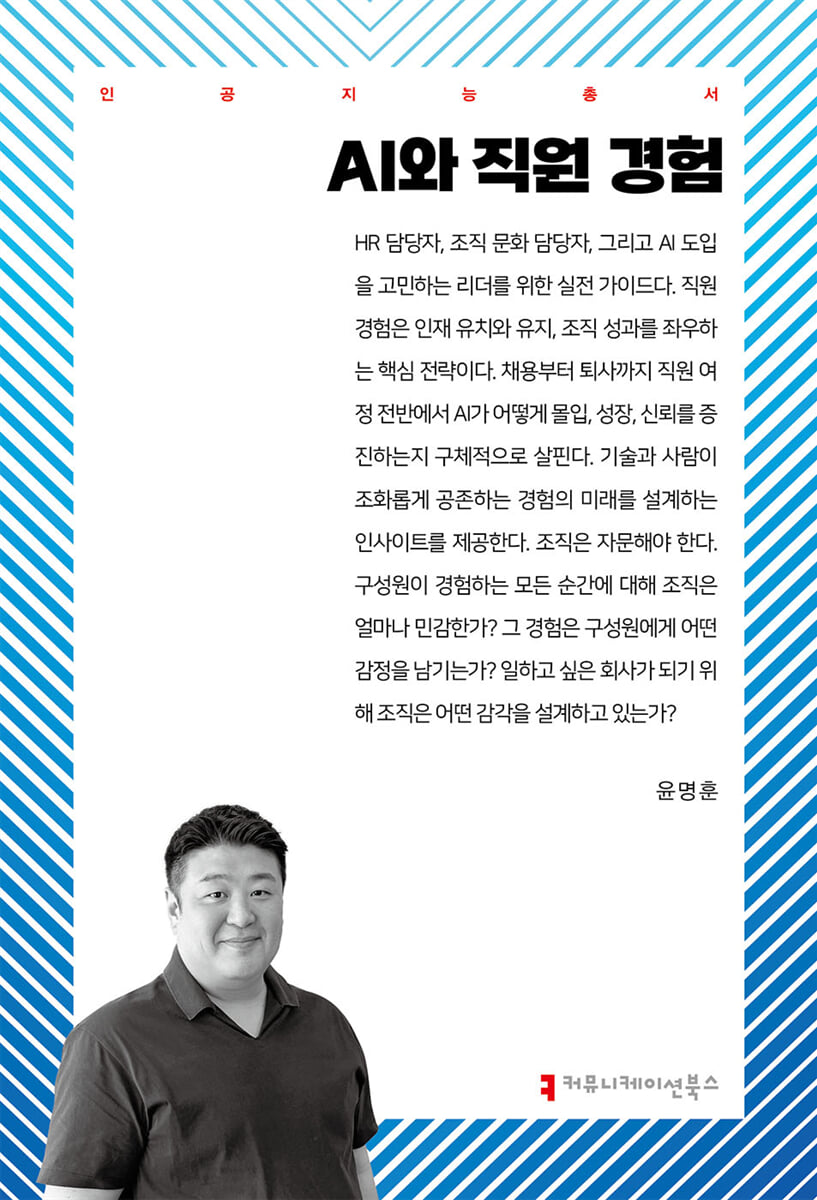
A practical guide for HR professionals, organizational culture leaders, and leaders considering AI adoption.
Employee experience is a key strategy for attracting and retaining talent and driving organizational performance.
We explore how AI can enhance engagement, growth, and trust across the employee journey, from hiring to leaving.
It provides insights into designing a future of experience where technology and people coexist harmoniously.
The organization must consult.
How sensitive is the organization to every moment its members experience? What emotions do those experiences leave in their minds? What kind of sensibilities does the organization cultivate to become a company people want to work for?
Employee experience is a key strategy for attracting and retaining talent and driving organizational performance.
We explore how AI can enhance engagement, growth, and trust across the employee journey, from hiring to leaving.
It provides insights into designing a future of experience where technology and people coexist harmoniously.
The organization must consult.
How sensitive is the organization to every moment its members experience? What emotions do those experiences leave in their minds? What kind of sensibilities does the organization cultivate to become a company people want to work for?
- You can preview some of the book's contents.
Preview
index
The Beginning of a New Sense: Employee Experience and AI
01 First Meeting, Recruitment, and Onboarding
02 Flow of Work, Support and Growth
03 Working Together, Leadership and Relationships
04 Fair recognition, performance and compensation
05 Desire to contribute, participation and immersion
06 Care Technology, Health and Well-being
07 Signals of Shaking, Deviation and Retention
08 Good Farewell, Designing Offboarding
09 Conditions of Trust, AI Ethics, and Acceptance
10 The Future of Organization, the Future of Experience
01 First Meeting, Recruitment, and Onboarding
02 Flow of Work, Support and Growth
03 Working Together, Leadership and Relationships
04 Fair recognition, performance and compensation
05 Desire to contribute, participation and immersion
06 Care Technology, Health and Well-being
07 Signals of Shaking, Deviation and Retention
08 Good Farewell, Designing Offboarding
09 Conditions of Trust, AI Ethics, and Acceptance
10 The Future of Organization, the Future of Experience
Into the book
AI-powered onboarding assistants provide new hires with personalized schedules, organizational information, and real-time Q&A services, alleviating the information-seeking challenges employees face during their initial onboarding process.
Digital mentoring algorithms can help build emotional bonds by automatically matching senior employees with similar roles and backgrounds.
Through an AI-based survey-based feedback system, new employees' engagement, grievances, and expectations can be regularly assessed at 30, 60, and 90 days after joining the company. A system can also be established to automatically notify managers when warning signs are detected.
This method provides a powerful tool for predicting and responding to early departures.
--- From 「01_“First Meeting, Recruitment and Onboarding”」
Even in AI-based work environments, ‘psychological safety,’ ‘trust,’ and ‘emotional sharing’ remain key factors in team engagement (Fecho, 2025).
Automation offers predictability and efficiency, but it also creates a void in relationships.
If that space isn't filled, members will suffer from burnout and emotional isolation.
In particular, feedback, recognition, and everyday respect are key touchpoints that help members feel a sense of belonging to the organization and perceive themselves as “meaningful beings.”
Members do not become exhausted through work, but rather lose energy through meaningless, repetitive tasks and emotional isolation within unrelated organizations.
--- From “03_“Working Together, Leadership and Relationships””
Employee turnover is not simply a loss of human resources.
It is a structural risk that directly impacts the organization's identity, performance, and future sustainability.
Organizations are now entering an era where they must create "reasons for employees to stay." Combining HR data with AI can help identify the "signs" of job changes, rather than just the "results."
Data predicts behavior, and predictions enable intervention.
--- From "07_“Signals of Shaking, Detachment and Retention”"
Many companies are experiencing a leakage of tacit knowledge by former employees.
Offboarding allows employees to document their work expertise and pass it on to their successors, ensuring business continuity and maintaining organizational knowledge.
Organization on a psychological level is also important.
Members leaving an organization need a kind of 'career transition ritual'.
Rituals such as thank-you letters, farewell interviews, and farewell dinners are in themselves devices that preserve the identity and pride of members.
From an organizational perspective, former employees can become future customers, partners, and even returning employees.
The final attitude of an organization soon becomes the starting point of the next relationship.
Digital mentoring algorithms can help build emotional bonds by automatically matching senior employees with similar roles and backgrounds.
Through an AI-based survey-based feedback system, new employees' engagement, grievances, and expectations can be regularly assessed at 30, 60, and 90 days after joining the company. A system can also be established to automatically notify managers when warning signs are detected.
This method provides a powerful tool for predicting and responding to early departures.
--- From 「01_“First Meeting, Recruitment and Onboarding”」
Even in AI-based work environments, ‘psychological safety,’ ‘trust,’ and ‘emotional sharing’ remain key factors in team engagement (Fecho, 2025).
Automation offers predictability and efficiency, but it also creates a void in relationships.
If that space isn't filled, members will suffer from burnout and emotional isolation.
In particular, feedback, recognition, and everyday respect are key touchpoints that help members feel a sense of belonging to the organization and perceive themselves as “meaningful beings.”
Members do not become exhausted through work, but rather lose energy through meaningless, repetitive tasks and emotional isolation within unrelated organizations.
--- From “03_“Working Together, Leadership and Relationships””
Employee turnover is not simply a loss of human resources.
It is a structural risk that directly impacts the organization's identity, performance, and future sustainability.
Organizations are now entering an era where they must create "reasons for employees to stay." Combining HR data with AI can help identify the "signs" of job changes, rather than just the "results."
Data predicts behavior, and predictions enable intervention.
--- From "07_“Signals of Shaking, Detachment and Retention”"
Many companies are experiencing a leakage of tacit knowledge by former employees.
Offboarding allows employees to document their work expertise and pass it on to their successors, ensuring business continuity and maintaining organizational knowledge.
Organization on a psychological level is also important.
Members leaving an organization need a kind of 'career transition ritual'.
Rituals such as thank-you letters, farewell interviews, and farewell dinners are in themselves devices that preserve the identity and pride of members.
From an organizational perspective, former employees can become future customers, partners, and even returning employees.
The final attitude of an organization soon becomes the starting point of the next relationship.
--- From "08_“A Good Farewell, Designing Offboarding”"
Publisher's Review
In the AI era, organizations that design experiences will survive.
Today's employees are evolving from mere 'labor providers' to 'consumers within the workplace.'
Employees evaluate a company based on the experiences and value it provides, that is, whether they are respected and can grow, rather than on salary or systems.
As external experiential senses and standards of comparison, rather than internal standards, flow into the organization, "how it feels" becomes more important than the system.
In particular, the MZ generation does not remain silent in the face of irrationality, and when empathy and communication are lacking, they quietly choose to change jobs.
Accordingly, organizations must convince employees, "Why should they be here?", and the answer is employee experience.
This is not simply satisfaction, but an emotional and cognitive sum that helps members feel autonomous, meaningful, and engaged.
The essence of an experience is not the event itself, but the emotion and interpretation of that moment—the meaning felt by the individual.
Like Daniel Kahneman's 'peak-end rule', employees evaluate a company not by the entire day, but by its most intense moments and last memory.
Therefore, HR must design 'Moments of Impact' rather than accumulation of time.
The first greeting during onboarding, feedback during evaluations, and a few words during exit interviews become the stage where the organization's sincerity is revealed.
The elements that make up the employee experience are the physical, technological, and cultural environments, and cultural sensitivity in particular determines the quality of the experience.
Meaningful work, growth opportunities, and trustworthy leadership form the foundation of positive experiences, and positive experiences lead to engagement, performance, and innovation. HR, as "experience designers" rather than mere system designers, must interpret employees' emotional curves and meticulously design key psychological factors (KEFs) such as autonomy, fairness, and belonging.
AI is now intervening in every aspect of the employee experience.
In recruitment, we analyze fit and eliminate bias, provide personalized information in onboarding, minimize friction in collaboration, offer personalized growth paths in learning, ensure data-driven fairness in evaluation, and monitor real-time sentiment in welfare.
AI also predicts signs of turnover, suggests intervention strategies to leaders, and manages the organization's brand experience even after employees leave.
However, the introduction of technology does not immediately mean a good experience.
The key question is whether AI can help humans understand each other more deeply. AI lacks emotions, but it is a technology that can manipulate human emotions, requiring a design that prioritizes humanity over efficiency.
Employee experience is not the sum of tasks, but a collection of memorable moments.
That moment begins with someone's empathy.
Today's employees are evolving from mere 'labor providers' to 'consumers within the workplace.'
Employees evaluate a company based on the experiences and value it provides, that is, whether they are respected and can grow, rather than on salary or systems.
As external experiential senses and standards of comparison, rather than internal standards, flow into the organization, "how it feels" becomes more important than the system.
In particular, the MZ generation does not remain silent in the face of irrationality, and when empathy and communication are lacking, they quietly choose to change jobs.
Accordingly, organizations must convince employees, "Why should they be here?", and the answer is employee experience.
This is not simply satisfaction, but an emotional and cognitive sum that helps members feel autonomous, meaningful, and engaged.
The essence of an experience is not the event itself, but the emotion and interpretation of that moment—the meaning felt by the individual.
Like Daniel Kahneman's 'peak-end rule', employees evaluate a company not by the entire day, but by its most intense moments and last memory.
Therefore, HR must design 'Moments of Impact' rather than accumulation of time.
The first greeting during onboarding, feedback during evaluations, and a few words during exit interviews become the stage where the organization's sincerity is revealed.
The elements that make up the employee experience are the physical, technological, and cultural environments, and cultural sensitivity in particular determines the quality of the experience.
Meaningful work, growth opportunities, and trustworthy leadership form the foundation of positive experiences, and positive experiences lead to engagement, performance, and innovation. HR, as "experience designers" rather than mere system designers, must interpret employees' emotional curves and meticulously design key psychological factors (KEFs) such as autonomy, fairness, and belonging.
AI is now intervening in every aspect of the employee experience.
In recruitment, we analyze fit and eliminate bias, provide personalized information in onboarding, minimize friction in collaboration, offer personalized growth paths in learning, ensure data-driven fairness in evaluation, and monitor real-time sentiment in welfare.
AI also predicts signs of turnover, suggests intervention strategies to leaders, and manages the organization's brand experience even after employees leave.
However, the introduction of technology does not immediately mean a good experience.
The key question is whether AI can help humans understand each other more deeply. AI lacks emotions, but it is a technology that can manipulate human emotions, requiring a design that prioritizes humanity over efficiency.
Employee experience is not the sum of tasks, but a collection of memorable moments.
That moment begins with someone's empathy.
GOODS SPECIFICS
- Date of issue: November 7, 2025
- Page count, weight, size: 151 pages | 128*188*9mm
- ISBN13: 9791143011787
You may also like
카테고리
korean


korean

![GQ KOREA Mark (Monthly): December [2025]](http://librairie.coreenne.fr/cdn/shop/files/8ef265dbbfbf186523ed75ba7319009d.jpg?v=1765340328&width=3840)


