

My body is mine
 |
Description
Book Introduction
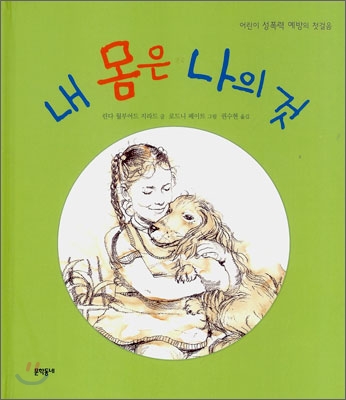
The fourth volume of the 'Children's Sexual Violence Prevention Series', 'My Body is Mine', is a picture book that fosters the 'power to protect oneself' by establishing the correct concept of one's own body and physical contact.
Following 『Say No in These Situations』, which deals with how to deal with different situations, 『Sad Randolin』, which depicts the difficulty of breaking the secret of sexual violence, and 『It's Okay to Talk』, which focuses on the healing process after sexual violence, the new book 『My Body is Mine』 follows the daily life of the main character Julie and learns that her body and emotions are precious and should be respected. Through the various physical contact situations Julie experiences in her relationships with her family and those around her, she learns the difference between pleasant physical contact and unwanted physical contact and how to deal with unwanted situations.
Following 『Say No in These Situations』, which deals with how to deal with different situations, 『Sad Randolin』, which depicts the difficulty of breaking the secret of sexual violence, and 『It's Okay to Talk』, which focuses on the healing process after sexual violence, the new book 『My Body is Mine』 follows the daily life of the main character Julie and learns that her body and emotions are precious and should be respected. Through the various physical contact situations Julie experiences in her relationships with her family and those around her, she learns the difference between pleasant physical contact and unwanted physical contact and how to deal with unwanted situations.
- You can preview some of the book's contents.
Preview
Publisher's Review
Use specific words like 'gochu', 'jamji', and 'sex' - not 'there', 'below', or 'bottom'.
The key to sexual violence prevention education is open dialogue.
It is very important to have an environment where the word 'genitals' can be mentioned naturally, like Julie's family.
To do that, let's first establish the correct vocabulary.
Instead of using abstract words like 'there,' 'down,' or 'below,' let's use concrete words like 'shoulder,' 'arm,' or 'leg.'
The use of specific words like pepper, dung, and penis gives one a sense of control over one's own body along with awareness of the genitals.
As long as the genitals remain an ambiguous, nameless place, children have difficulty recognizing or expressing what is happening to them, and as long as the genitals remain a place that causes shame and guilt, they have difficulty asking for help when sexual violence occurs.
My Body Is Mine - Understanding and Respecting Children's Bodies and Emotions
Julie learns from her mother that her genitals and buttocks are her own and should not be touched by others.
This is not about teaching children the concept of ownership, but about training them to respect their own bodies and emotions, as well as the bodies and emotions of others.
There are times when you need to show your genitals or buttocks, such as when you need to see a doctor.
In such cases, Julie's mother asks the doctor to tell Julie in advance.
It is a consideration that respects the child's emotions and personality even in areas that are easily overlooked.
“It was nice at first, but what if I don’t like it?” - Distinguishing between pleasant and unwanted physical contact
Hug mom, dance with dad, hold a puppy, sit close to your teacher and listen to their stories.
It's all about physical contact that feels good and makes us happy.
So what should we do when we start to dislike the physical contact we once enjoyed? Is it okay to say no? In many cases of child sexual abuse, this is where children struggle and even feel guilty.
This book provides criteria for judging such confusing situations through the tickling game.
Julie and her brother have fun playing tickle games, but at some point, the game becomes painful.
I tell him to stop, but he doesn't stop playing this 'game' we 'started together'.
Julie's father appears upon hearing Julie's cries and firmly teaches her that even if they started a game together, if one person does not want to play, the other person must respect that.
Through examples like these, the book helps children make sound judgments by making it clear that unwanted physical contact should be said "no" regardless of how it began, and that if the other person doesn't listen, it's their fault.
“I don’t want to sit on my uncle’s lap.
“What should I say?” - Difficulties in Close Relationships
For children in particular, it is very difficult to say “no” to someone close to them.
Julie's uncle sits her on his lap and pats her back or rubs her arms, but Julie doesn't like the feeling.
But I'm worried that my uncle will be upset if I say I don't want to sit on his lap.
To Julie, her mother encourages her to say “no” once, saying that she needs to be honest about her feelings so that the other person can understand.
Julie, having gathered her courage, says, “I don’t want to sit on your lap anymore,” and is surprised that her uncle immediately understands her.
The uncle didn't know that Julie hated it.
Looking at the reality that over 70% of child sexual abuse in our country is committed by people they know (neighbors - 37.4%, relatives - 18.57%, kindergarten or academy staff - 17.4%), we are reminded of how much “safety education” our children need to learn to say “no” even to those close to them, like Julie.
Talk, talk, talk - an environment where children are respected is the prevention
If you don't speak up, no one can help you.
As this book emphasizes, child sexual abuse can be prevented when children are provided with an environment where they can freely express their emotions and where that is respected.
The key to sexual violence prevention education is open dialogue.
It is very important to have an environment where the word 'genitals' can be mentioned naturally, like Julie's family.
To do that, let's first establish the correct vocabulary.
Instead of using abstract words like 'there,' 'down,' or 'below,' let's use concrete words like 'shoulder,' 'arm,' or 'leg.'
The use of specific words like pepper, dung, and penis gives one a sense of control over one's own body along with awareness of the genitals.
As long as the genitals remain an ambiguous, nameless place, children have difficulty recognizing or expressing what is happening to them, and as long as the genitals remain a place that causes shame and guilt, they have difficulty asking for help when sexual violence occurs.
My Body Is Mine - Understanding and Respecting Children's Bodies and Emotions
Julie learns from her mother that her genitals and buttocks are her own and should not be touched by others.
This is not about teaching children the concept of ownership, but about training them to respect their own bodies and emotions, as well as the bodies and emotions of others.
There are times when you need to show your genitals or buttocks, such as when you need to see a doctor.
In such cases, Julie's mother asks the doctor to tell Julie in advance.
It is a consideration that respects the child's emotions and personality even in areas that are easily overlooked.
“It was nice at first, but what if I don’t like it?” - Distinguishing between pleasant and unwanted physical contact
Hug mom, dance with dad, hold a puppy, sit close to your teacher and listen to their stories.
It's all about physical contact that feels good and makes us happy.
So what should we do when we start to dislike the physical contact we once enjoyed? Is it okay to say no? In many cases of child sexual abuse, this is where children struggle and even feel guilty.
This book provides criteria for judging such confusing situations through the tickling game.
Julie and her brother have fun playing tickle games, but at some point, the game becomes painful.
I tell him to stop, but he doesn't stop playing this 'game' we 'started together'.
Julie's father appears upon hearing Julie's cries and firmly teaches her that even if they started a game together, if one person does not want to play, the other person must respect that.
Through examples like these, the book helps children make sound judgments by making it clear that unwanted physical contact should be said "no" regardless of how it began, and that if the other person doesn't listen, it's their fault.
“I don’t want to sit on my uncle’s lap.
“What should I say?” - Difficulties in Close Relationships
For children in particular, it is very difficult to say “no” to someone close to them.
Julie's uncle sits her on his lap and pats her back or rubs her arms, but Julie doesn't like the feeling.
But I'm worried that my uncle will be upset if I say I don't want to sit on his lap.
To Julie, her mother encourages her to say “no” once, saying that she needs to be honest about her feelings so that the other person can understand.
Julie, having gathered her courage, says, “I don’t want to sit on your lap anymore,” and is surprised that her uncle immediately understands her.
The uncle didn't know that Julie hated it.
Looking at the reality that over 70% of child sexual abuse in our country is committed by people they know (neighbors - 37.4%, relatives - 18.57%, kindergarten or academy staff - 17.4%), we are reminded of how much “safety education” our children need to learn to say “no” even to those close to them, like Julie.
Talk, talk, talk - an environment where children are respected is the prevention
If you don't speak up, no one can help you.
As this book emphasizes, child sexual abuse can be prevented when children are provided with an environment where they can freely express their emotions and where that is respected.
GOODS SPECIFICS
- Date of issue: December 10, 2007
- Format: Hardcover book binding method guide
- Page count, weight, size: 32 pages | 313g | 216*234*15mm
- ISBN13: 9788954604390
- ISBN10: 8954604390
You may also like
카테고리
korean


korean

![ELLE 엘르 스페셜 에디션 A형 : 12월 [2025]](http://librairie.coreenne.fr/cdn/shop/files/b8e27a3de6c9538896439686c6b0e8fb.jpg?v=1766436872&width=3840)


