

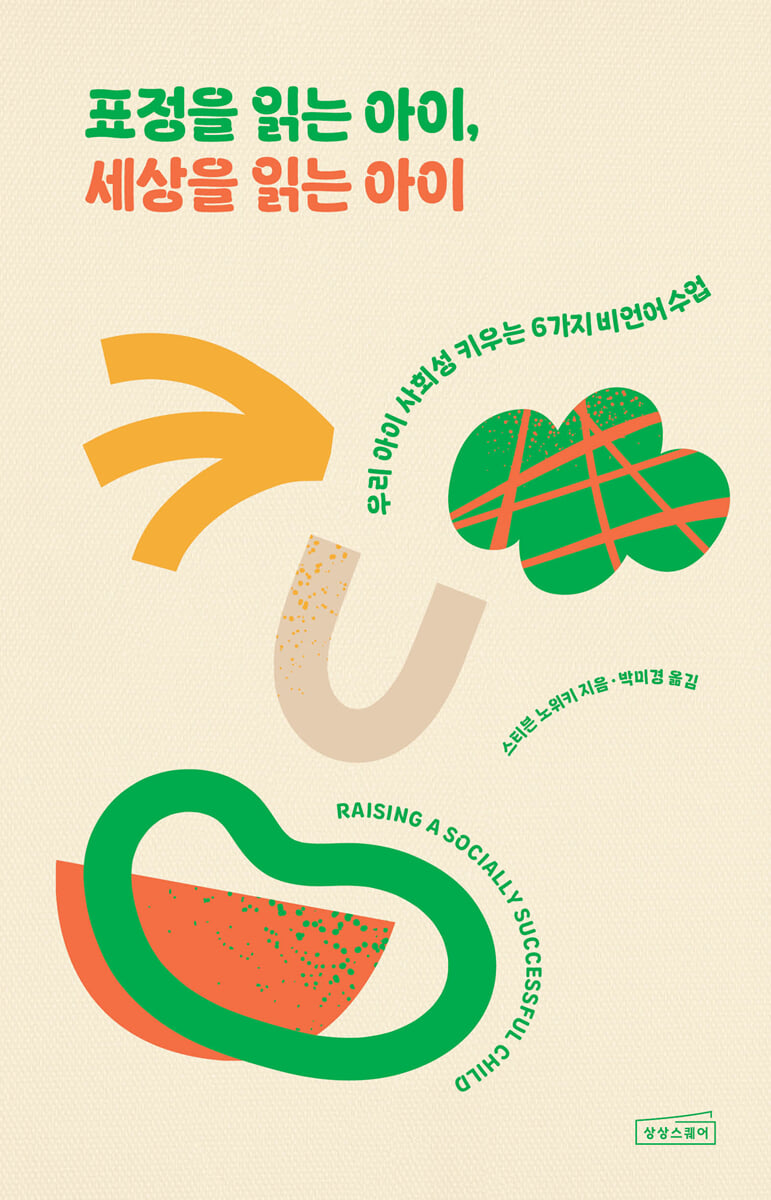
A child who reads expressions, a child who reads the world
 |
Description
Book Introduction
My child is good at speaking, but can't make friends?
What you need in such cases is nonverbal communication skills!
Nonverbal communication classes to help your child develop social skills!
I thought my child would have no social problems because he was good at speaking.
But strangely, there are times when I have trouble making friends and have a hard time getting along with people my age.
What's the problem? The author diagnoses that it's because our children haven't developed the nonverbal communication skills that form the foundation of sociality.
Especially, our children, who have been spending long periods of time alone in front of a screen due to COVID-19, have been deprived of the opportunity to develop nonverbal communication skills.
Dr. Stephen Nowicki, a psychologist who has studied nonverbal communication skills for a long time, explains in this book how to develop children's nonverbal skills.
The author explains the six nonverbal communication elements that help develop children's social skills: rhythm, facial expressions, personal space, physical contact, vocalization, and body language, and suggests ways to practice them with children at school or at home.
Although we focus a lot on language education to improve children's social skills, the importance of nonverbal abilities has been overlooked.
What our children, who may appear ordinary on the outside but struggle to get along with friends or peers, really need is the ability to communicate nonverbally, to read the true feelings of others.
This book, which demonstrates the power of nonverbal communication, is a must-read for parents and teachers who want to help our children lead happy lives, as well as education leaders who must present a national vision for education.
What you need in such cases is nonverbal communication skills!
Nonverbal communication classes to help your child develop social skills!
I thought my child would have no social problems because he was good at speaking.
But strangely, there are times when I have trouble making friends and have a hard time getting along with people my age.
What's the problem? The author diagnoses that it's because our children haven't developed the nonverbal communication skills that form the foundation of sociality.
Especially, our children, who have been spending long periods of time alone in front of a screen due to COVID-19, have been deprived of the opportunity to develop nonverbal communication skills.
Dr. Stephen Nowicki, a psychologist who has studied nonverbal communication skills for a long time, explains in this book how to develop children's nonverbal skills.
The author explains the six nonverbal communication elements that help develop children's social skills: rhythm, facial expressions, personal space, physical contact, vocalization, and body language, and suggests ways to practice them with children at school or at home.
Although we focus a lot on language education to improve children's social skills, the importance of nonverbal abilities has been overlooked.
What our children, who may appear ordinary on the outside but struggle to get along with friends or peers, really need is the ability to communicate nonverbally, to read the true feelings of others.
This book, which demonstrates the power of nonverbal communication, is a must-read for parents and teachers who want to help our children lead happy lives, as well as education leaders who must present a national vision for education.
- You can preview some of the book's contents.
Preview
index
Introduction: A new type of problem
PART 1 Nonverbal Communication
1.
The Language of Relationships
Life and Death Matters · How to Develop Nonverbal Communication · The Structure of Relationships: The Four-Stage Model
2.
Six Types of Nonverbal Communication
Basics · Similarities and Differences Between Verbal and Nonverbal Language
PART 2 Quiet Orchestra
3.
Rhythm: A Secret Nonverbal Path
Why Rhythm Matters · Rhythm in Infancy and Early Childhood · Tips for Introducing Rhythm to Young Children · Rhythm in Later Childhood · Tips for Introducing Rhythm to Young Children · When to Seek Professional Help
4.
Expression: Smile, and the world will smile with you.
Why facial expressions are important · Facial expressions in infancy and early childhood · Tips for teaching facial expressions to young children · Facial expressions in later childhood · Tips for teaching facial expressions to children in later childhood · When to seek professional help
5.
Personal Space: Okay, stop coming!
Why personal space is important · Personal space in infancy and early childhood · Tips for teaching young children personal space · Personal space in later childhood · Tips for helping children navigate personal space in later childhood · When to seek professional help
6.
Physical contact: Be careful, be careful
Why touch is important · Touch in infancy and early childhood · Tips for teaching young children the nuances of touch · Touch in later childhood · Tips for encouraging positive touch in later childhood · When to seek professional help
7.
Pronunciation: Can you understand what I mean?
Why Vocalization Is Important · Vocalization in Infancy and Early Childhood · Tips for Helping Young Children Develop Vocalization · Vocalization in Later Childhood · Tips for Helping Children Use Vocalization Well in Later Childhood · When to Seek Professional Help
8.
Body Language: Traffic Police at an Intersection
Why Body Language Matters · Gestures, Gait, and Posture · Accessories · Body Language in Infancy and Early Childhood · Tips to Help You Learn Body Language in Early Childhood · Body Language in Later Childhood · Tips to Help You Learn Body Language in Later Childhood · When to Seek Professional Help
conclusion
Acknowledgements
annotation
PART 1 Nonverbal Communication
1.
The Language of Relationships
Life and Death Matters · How to Develop Nonverbal Communication · The Structure of Relationships: The Four-Stage Model
2.
Six Types of Nonverbal Communication
Basics · Similarities and Differences Between Verbal and Nonverbal Language
PART 2 Quiet Orchestra
3.
Rhythm: A Secret Nonverbal Path
Why Rhythm Matters · Rhythm in Infancy and Early Childhood · Tips for Introducing Rhythm to Young Children · Rhythm in Later Childhood · Tips for Introducing Rhythm to Young Children · When to Seek Professional Help
4.
Expression: Smile, and the world will smile with you.
Why facial expressions are important · Facial expressions in infancy and early childhood · Tips for teaching facial expressions to young children · Facial expressions in later childhood · Tips for teaching facial expressions to children in later childhood · When to seek professional help
5.
Personal Space: Okay, stop coming!
Why personal space is important · Personal space in infancy and early childhood · Tips for teaching young children personal space · Personal space in later childhood · Tips for helping children navigate personal space in later childhood · When to seek professional help
6.
Physical contact: Be careful, be careful
Why touch is important · Touch in infancy and early childhood · Tips for teaching young children the nuances of touch · Touch in later childhood · Tips for encouraging positive touch in later childhood · When to seek professional help
7.
Pronunciation: Can you understand what I mean?
Why Vocalization Is Important · Vocalization in Infancy and Early Childhood · Tips for Helping Young Children Develop Vocalization · Vocalization in Later Childhood · Tips for Helping Children Use Vocalization Well in Later Childhood · When to Seek Professional Help
8.
Body Language: Traffic Police at an Intersection
Why Body Language Matters · Gestures, Gait, and Posture · Accessories · Body Language in Infancy and Early Childhood · Tips to Help You Learn Body Language in Early Childhood · Body Language in Later Childhood · Tips to Help You Learn Body Language in Later Childhood · When to Seek Professional Help
conclusion
Acknowledgements
annotation
Into the book
When communicating with others, those who unconsciously show a discrepancy between their facial expressions and actions and their words, that is, those who express one emotion verbally but another nonverbally, have difficulty forming close relationships.
I wondered if this discrepancy might be a factor in the social difficulties my patients experience.
Moreover, children were unaware of how their nonverbal language conflicted with their speech and the negative impact this could have on others.
As all the information I gathered from observing different children began to fit together like puzzle pieces, a clear picture began to emerge of why children like Greg and Lucy were struggling.
--- p.12, from “Introduction”
We measured children's ability to read emotions from facial expressions and tone of voice, and found that children with lower scores had more difficulty making friends and lower self-esteem.
In other words, if you can accurately detect and interpret nonverbal cues from faces and voices, you are much more likely to make friends and be socially successful.
--- p.13, from “Introduction”
One third-grade teacher I spoke with said she loses sleep at night because she can't give her students the social and emotional tools they need more than ever during these challenging times.
But the children he worries about all night were actually struggling even before the pandemic, he said.
“Those children are the real victims of the bizarre ways in which things have been done over the past two years.
“They used to have trouble finding their way, but now they seem completely lost.”
--- p.21, from “Introduction”
The purpose of this book is to support parents, caregivers, and educators in fulfilling their roles.
With this book as a guide, you can help your child regain the social skills they've lost over the past two years of the pandemic.
It will also help us develop more advanced technologies needed to address the many challenges we face in the future.
Building on this foundation, children will be more likely to achieve social and emotional success in childhood and adolescence, and to form meaningful, long-lasting relationships and thrive in society as adults.
--- p.30, from “Introduction”
There are surprisingly many children who, like Jack, are unable to cope 'properly' with certain situations.
They really want others to like them, but the harder they try, the worse the situation becomes.
Their social problems are usually not due to any obvious disability, such as a learning disability or autism.
A lack of opportunity to learn nonverbal communication skills is what makes them less socially adept, and this is easily overlooked.
It's often assumed that the smartest, funniest, or most attractive kids in class will be popular, but in reality, it's the kids who have learned to communicate comfortably and enjoyably with their peers who are more popular.
--- p.34, from “The Language of Relationships”
Everyone uses nonverbal language in their daily lives, but few people spend much time thinking about how and why they use it.
As with any language, being fluent in nonverbal communication requires being able to express yourself clearly, understand what others are trying to say, and decide how best to express yourself in a given situation.
However, unlike verbal communication, nonverbal communication is mostly done unconsciously, so it is often ignored or considered insignificant.
--- p.56, from “Six Types of Nonverbal Communication”
While children can benefit from good schools and some carefully chosen extracurricular activities, it's often overlooked that they can gain even more from the comfort of their family, friends, and neighbors in the broader community.
The truth is very simple.
Every parent has the capacity and skills to teach their children how to communicate nonverbally.
So, you don't need to have them participate in a bunch of classes and activities every week to teach them the skills they need to be socially successful.
I wondered if this discrepancy might be a factor in the social difficulties my patients experience.
Moreover, children were unaware of how their nonverbal language conflicted with their speech and the negative impact this could have on others.
As all the information I gathered from observing different children began to fit together like puzzle pieces, a clear picture began to emerge of why children like Greg and Lucy were struggling.
--- p.12, from “Introduction”
We measured children's ability to read emotions from facial expressions and tone of voice, and found that children with lower scores had more difficulty making friends and lower self-esteem.
In other words, if you can accurately detect and interpret nonverbal cues from faces and voices, you are much more likely to make friends and be socially successful.
--- p.13, from “Introduction”
One third-grade teacher I spoke with said she loses sleep at night because she can't give her students the social and emotional tools they need more than ever during these challenging times.
But the children he worries about all night were actually struggling even before the pandemic, he said.
“Those children are the real victims of the bizarre ways in which things have been done over the past two years.
“They used to have trouble finding their way, but now they seem completely lost.”
--- p.21, from “Introduction”
The purpose of this book is to support parents, caregivers, and educators in fulfilling their roles.
With this book as a guide, you can help your child regain the social skills they've lost over the past two years of the pandemic.
It will also help us develop more advanced technologies needed to address the many challenges we face in the future.
Building on this foundation, children will be more likely to achieve social and emotional success in childhood and adolescence, and to form meaningful, long-lasting relationships and thrive in society as adults.
--- p.30, from “Introduction”
There are surprisingly many children who, like Jack, are unable to cope 'properly' with certain situations.
They really want others to like them, but the harder they try, the worse the situation becomes.
Their social problems are usually not due to any obvious disability, such as a learning disability or autism.
A lack of opportunity to learn nonverbal communication skills is what makes them less socially adept, and this is easily overlooked.
It's often assumed that the smartest, funniest, or most attractive kids in class will be popular, but in reality, it's the kids who have learned to communicate comfortably and enjoyably with their peers who are more popular.
--- p.34, from “The Language of Relationships”
Everyone uses nonverbal language in their daily lives, but few people spend much time thinking about how and why they use it.
As with any language, being fluent in nonverbal communication requires being able to express yourself clearly, understand what others are trying to say, and decide how best to express yourself in a given situation.
However, unlike verbal communication, nonverbal communication is mostly done unconsciously, so it is often ignored or considered insignificant.
--- p.56, from “Six Types of Nonverbal Communication”
While children can benefit from good schools and some carefully chosen extracurricular activities, it's often overlooked that they can gain even more from the comfort of their family, friends, and neighbors in the broader community.
The truth is very simple.
Every parent has the capacity and skills to teach their children how to communicate nonverbally.
So, you don't need to have them participate in a bunch of classes and activities every week to teach them the skills they need to be socially successful.
--- p.254, from “Conclusion”
Publisher's Review
Introduction: A new type of problem
PART 1 Nonverbal Communication
1.
The Language of Relationships
Life and Death Matters · How to Develop Nonverbal Communication · The Structure of Relationships: The Four-Stage Model
2.
Six Types of Nonverbal Communication
Basics · Similarities and Differences Between Verbal and Nonverbal Language
PART 2 Quiet Orchestra
3.
Rhythm: A Secret Nonverbal Path
Why Rhythm Matters · Rhythm in Infancy and Early Childhood · Tips for Introducing Rhythm to Young Children · Rhythm in Later Childhood · Tips for Introducing Rhythm to Young Children · When to Seek Professional Help
4.
Expression: Smile, and the world will smile with you.
Why facial expressions are important · Facial expressions in infancy and early childhood · Tips for teaching facial expressions to young children · Facial expressions in later childhood · Tips for teaching facial expressions to children in later childhood · When to seek professional help
5.
Personal Space: Okay, stop coming!
Why personal space is important · Personal space in infancy and early childhood · Tips for teaching young children personal space · Personal space in later childhood · Tips for helping children navigate personal space in later childhood · When to seek professional help
6.
Physical contact: Be careful, be careful
Why touch is important · Touch in infancy and early childhood · Tips for teaching young children the nuances of touch · Touch in later childhood · Tips for encouraging positive touch in later childhood · When to seek professional help
7.
Pronunciation: Can you understand what I mean?
Why Vocalization Is Important · Vocalization in Infancy and Early Childhood · Tips for Helping Young Children Develop Vocalization · Vocalization in Later Childhood · Tips for Helping Children Use Vocalization Well in Later Childhood · When to Seek Professional Help
8.
Body Language: Traffic Police at an Intersection
Why Body Language Matters · Gestures, Gait, and Posture · Accessories · Body Language in Infancy and Early Childhood · Tips to Help You Learn Body Language in Early Childhood · Body Language in Later Childhood · Tips to Help You Learn Body Language in Later Childhood · When to Seek Professional Help
conclusion
Acknowledgements
annotation
PART 1 Nonverbal Communication
1.
The Language of Relationships
Life and Death Matters · How to Develop Nonverbal Communication · The Structure of Relationships: The Four-Stage Model
2.
Six Types of Nonverbal Communication
Basics · Similarities and Differences Between Verbal and Nonverbal Language
PART 2 Quiet Orchestra
3.
Rhythm: A Secret Nonverbal Path
Why Rhythm Matters · Rhythm in Infancy and Early Childhood · Tips for Introducing Rhythm to Young Children · Rhythm in Later Childhood · Tips for Introducing Rhythm to Young Children · When to Seek Professional Help
4.
Expression: Smile, and the world will smile with you.
Why facial expressions are important · Facial expressions in infancy and early childhood · Tips for teaching facial expressions to young children · Facial expressions in later childhood · Tips for teaching facial expressions to children in later childhood · When to seek professional help
5.
Personal Space: Okay, stop coming!
Why personal space is important · Personal space in infancy and early childhood · Tips for teaching young children personal space · Personal space in later childhood · Tips for helping children navigate personal space in later childhood · When to seek professional help
6.
Physical contact: Be careful, be careful
Why touch is important · Touch in infancy and early childhood · Tips for teaching young children the nuances of touch · Touch in later childhood · Tips for encouraging positive touch in later childhood · When to seek professional help
7.
Pronunciation: Can you understand what I mean?
Why Vocalization Is Important · Vocalization in Infancy and Early Childhood · Tips for Helping Young Children Develop Vocalization · Vocalization in Later Childhood · Tips for Helping Children Use Vocalization Well in Later Childhood · When to Seek Professional Help
8.
Body Language: Traffic Police at an Intersection
Why Body Language Matters · Gestures, Gait, and Posture · Accessories · Body Language in Infancy and Early Childhood · Tips to Help You Learn Body Language in Early Childhood · Body Language in Later Childhood · Tips to Help You Learn Body Language in Later Childhood · When to Seek Professional Help
conclusion
Acknowledgements
annotation
A must-read to help develop your child's social skills!
“I often hear that my child lacks social skills.” Many parents seek counseling because of this problem.
Often, parents focus on language education because they think their child's language skills are poor and that their child lacks social skills. However, more often than not, this does not resolve the child's social skills issues.
So what is the real problem?
This book, “A Child Who Reads Expressions, A Child Who Reads the World,” starts from this awareness of the problem.
Author Dr. Stephen Nowicki, after persistent research, strongly suggests that what children truly need is 'nonverbal communication skills.'
Nonverbal communication is the ability to recognize and correctly interpret signals that are not verbal but rather expressed through our body and facial expressions, such as eye contact, facial expressions, voice, gestures, distance, and rhythm, and to respond appropriately.
Humans do not express all of their feelings and intentions through words.
It conveys messages using various nonverbal abilities such as facial expressions, voice, and gestures as signals.
However, if these signals are not properly read, even highly intelligent and verbally expressive children will experience persistent misunderstandings and isolation in their relationships.
You may lose the flow of the conversation or misinterpret your friend's facial expressions, leading to an inappropriate response.
The author, who has studied human nonverbal abilities for a long time, suggests that these nonverbal abilities are not innate but can be developed through learning and training.
In this book, the author explains step by step what nonverbal abilities are and presents specific methods for developing them.
The author presents six nonverbal communication elements that children must master.
Rhythm that allows for a smooth conversation, facial expressions that recognize and understand the other person's emotions, personal space that reduces discomfort by controlling distance, physical contact that conveys intentions by touching the other person, vocalization that conveys emotions through voice, tone, and intonation, and body language that conveys emotions and intentions using gestures.
The author emphasizes that these six elements are a very important foundation for our children to communicate with others.
The author explains typical characteristics and problem behaviors by considering the developmental stages by age, and presents detailed activity plans to help children learn nonverbal skills.
For example, is it simply a habit for a child to smile at a crying friend? The author suggests that we should pay attention to how the child interprets the friend's facial expression, and if the child misreads it, we should implement practical measures to raise the child well.
This book offers insight that we should not blame, misjudge, or ignore a child's social difficulties due to their personality, and emphasizes that our children's 'sociality' is a skill that can be taught.
And we strongly insist that the starting point for developing our children's social skills is to develop nonverbal communication skills.
Sociality is not a choice, it's a survival skill.
It is the most important asset for our children to create a happy life and social success on their own.
This book, which contains methods for teaching nonverbal skills that are essential for developing social skills in children's lives, will provide deep insight and practical help to all parents, teachers, and educators interested in developing children's social skills.
A must-read to help develop your child's social skills!
“I often hear that my child lacks social skills.” Many parents seek counseling because of this problem.
Often, parents focus on language education because they think their child's language skills are poor and that their child lacks social skills. However, more often than not, this does not resolve the child's social skills issues.
So what is the real problem?
This book, "A Child Who Reads Expressions, A Child Who Reads the World," starts from this awareness of the problem.
Author Dr. Stephen Nowicki, after persistent research, strongly suggests that what children truly need is 'nonverbal communication skills.'
Nonverbal communication is the ability to recognize and correctly interpret signals that are not verbal but rather expressed through our body and facial expressions, such as eye contact, facial expressions, voice, gestures, distance, and rhythm, and to respond appropriately.
Humans do not express all of their feelings and intentions through words.
It conveys messages using various nonverbal abilities such as facial expressions, voice, and gestures as signals.
However, if these signals are not properly read, even highly intelligent and verbally expressive children will experience persistent misunderstandings and isolation in their relationships.
You may lose the flow of the conversation or misinterpret your friend's facial expressions, leading to an inappropriate response.
The author, who has studied human nonverbal abilities for a long time, suggests that these nonverbal abilities are not innate but can be developed through learning and training.
In this book, the author explains step by step what nonverbal abilities are and presents specific methods for developing them.
The author presents six nonverbal communication elements that children must master.
Rhythm that allows for a smooth conversation, facial expressions that recognize and understand the other person's emotions, personal space that reduces discomfort by controlling distance, physical contact that conveys intentions by touching the other person, vocalization that conveys emotions through voice, tone, and intonation, and body language that conveys emotions and intentions using gestures.
The author emphasizes that these six elements are a very important foundation for our children to communicate with others.
The author explains typical characteristics and problem behaviors by considering the developmental stages by age, and presents detailed activity plans to help children learn nonverbal skills.
For example, is it simply a habit for a child to smile at a crying friend? The author suggests that we should pay attention to how the child interprets the friend's facial expression, and if the child misreads it, we should implement practical measures to raise the child well.
This book offers insight that we should not blame, misjudge, or ignore a child's social difficulties due to their personality, and emphasizes that our children's 'sociality' is a skill that can be taught.
And we strongly insist that the starting point for developing our children's social skills is to develop nonverbal communication skills.
Sociality is not a choice, it's a survival skill.
It is the most important asset for our children to create a happy life and social success on their own.
This book, which contains methods for teaching nonverbal skills that are essential for developing social skills in children's lives, will provide deep insight and practical help to all parents, teachers, and educators interested in developing children's social skills.
“I often hear that my child lacks social skills.” Many parents seek counseling because of this problem.
Often, parents focus on language education because they think their child's language skills are poor and that their child lacks social skills. However, more often than not, this does not resolve the child's social skills issues.
So what is the real problem?
This book, “A Child Who Reads Expressions, A Child Who Reads the World,” starts from this awareness of the problem.
Author Dr. Stephen Nowicki, after persistent research, strongly suggests that what children truly need is 'nonverbal communication skills.'
Nonverbal communication is the ability to recognize and correctly interpret signals that are not verbal but rather expressed through our body and facial expressions, such as eye contact, facial expressions, voice, gestures, distance, and rhythm, and to respond appropriately.
Humans do not express all of their feelings and intentions through words.
It conveys messages using various nonverbal abilities such as facial expressions, voice, and gestures as signals.
However, if these signals are not properly read, even highly intelligent and verbally expressive children will experience persistent misunderstandings and isolation in their relationships.
You may lose the flow of the conversation or misinterpret your friend's facial expressions, leading to an inappropriate response.
The author, who has studied human nonverbal abilities for a long time, suggests that these nonverbal abilities are not innate but can be developed through learning and training.
In this book, the author explains step by step what nonverbal abilities are and presents specific methods for developing them.
The author presents six nonverbal communication elements that children must master.
Rhythm that allows for a smooth conversation, facial expressions that recognize and understand the other person's emotions, personal space that reduces discomfort by controlling distance, physical contact that conveys intentions by touching the other person, vocalization that conveys emotions through voice, tone, and intonation, and body language that conveys emotions and intentions using gestures.
The author emphasizes that these six elements are a very important foundation for our children to communicate with others.
The author explains typical characteristics and problem behaviors by considering the developmental stages by age, and presents detailed activity plans to help children learn nonverbal skills.
For example, is it simply a habit for a child to smile at a crying friend? The author suggests that we should pay attention to how the child interprets the friend's facial expression, and if the child misreads it, we should implement practical measures to raise the child well.
This book offers insight that we should not blame, misjudge, or ignore a child's social difficulties due to their personality, and emphasizes that our children's 'sociality' is a skill that can be taught.
And we strongly insist that the starting point for developing our children's social skills is to develop nonverbal communication skills.
Sociality is not a choice, it's a survival skill.
It is the most important asset for our children to create a happy life and social success on their own.
This book, which contains methods for teaching nonverbal skills that are essential for developing social skills in children's lives, will provide deep insight and practical help to all parents, teachers, and educators interested in developing children's social skills.
A must-read to help develop your child's social skills!
“I often hear that my child lacks social skills.” Many parents seek counseling because of this problem.
Often, parents focus on language education because they think their child's language skills are poor and that their child lacks social skills. However, more often than not, this does not resolve the child's social skills issues.
So what is the real problem?
This book, "A Child Who Reads Expressions, A Child Who Reads the World," starts from this awareness of the problem.
Author Dr. Stephen Nowicki, after persistent research, strongly suggests that what children truly need is 'nonverbal communication skills.'
Nonverbal communication is the ability to recognize and correctly interpret signals that are not verbal but rather expressed through our body and facial expressions, such as eye contact, facial expressions, voice, gestures, distance, and rhythm, and to respond appropriately.
Humans do not express all of their feelings and intentions through words.
It conveys messages using various nonverbal abilities such as facial expressions, voice, and gestures as signals.
However, if these signals are not properly read, even highly intelligent and verbally expressive children will experience persistent misunderstandings and isolation in their relationships.
You may lose the flow of the conversation or misinterpret your friend's facial expressions, leading to an inappropriate response.
The author, who has studied human nonverbal abilities for a long time, suggests that these nonverbal abilities are not innate but can be developed through learning and training.
In this book, the author explains step by step what nonverbal abilities are and presents specific methods for developing them.
The author presents six nonverbal communication elements that children must master.
Rhythm that allows for a smooth conversation, facial expressions that recognize and understand the other person's emotions, personal space that reduces discomfort by controlling distance, physical contact that conveys intentions by touching the other person, vocalization that conveys emotions through voice, tone, and intonation, and body language that conveys emotions and intentions using gestures.
The author emphasizes that these six elements are a very important foundation for our children to communicate with others.
The author explains typical characteristics and problem behaviors by considering the developmental stages by age, and presents detailed activity plans to help children learn nonverbal skills.
For example, is it simply a habit for a child to smile at a crying friend? The author suggests that we should pay attention to how the child interprets the friend's facial expression, and if the child misreads it, we should implement practical measures to raise the child well.
This book offers insight that we should not blame, misjudge, or ignore a child's social difficulties due to their personality, and emphasizes that our children's 'sociality' is a skill that can be taught.
And we strongly insist that the starting point for developing our children's social skills is to develop nonverbal communication skills.
Sociality is not a choice, it's a survival skill.
It is the most important asset for our children to create a happy life and social success on their own.
This book, which contains methods for teaching nonverbal skills that are essential for developing social skills in children's lives, will provide deep insight and practical help to all parents, teachers, and educators interested in developing children's social skills.
GOODS SPECIFICS
- Date of issue: July 2, 2025
- Page count, weight, size: 296 pages | 366g | 135*210*17mm
- ISBN13: 9791194368403
- ISBN10: 1194368409
You may also like
카테고리
korean


korean

![GQ KOREA Mark (Monthly): December [2025]](http://librairie.coreenne.fr/cdn/shop/files/8ef265dbbfbf186523ed75ba7319009d.jpg?v=1765340328&width=3840)


