

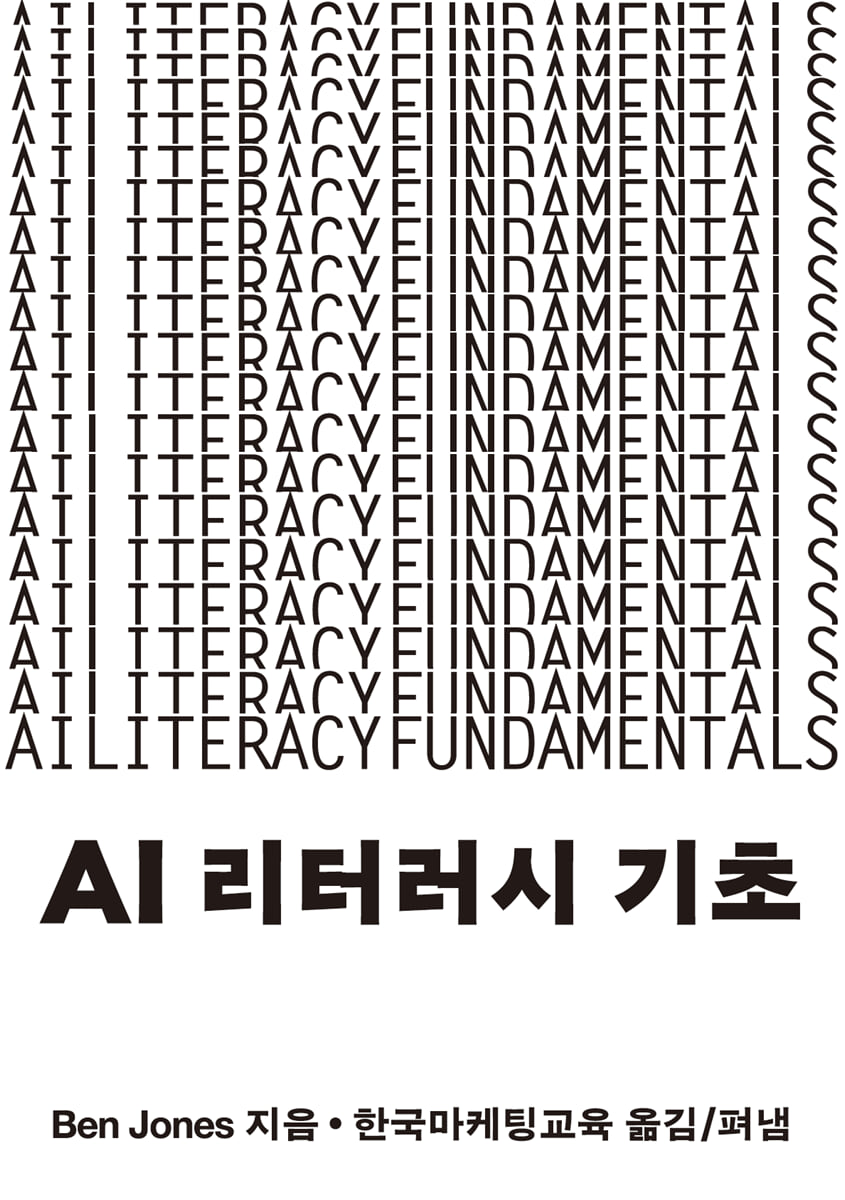
AI Literacy Foundations
 |
Description
Book Introduction
* “I wrote this book for beginners who want to understand AI” - Author Ben Jones
* A book that clearly explains only the basic concepts of AI, eliminating complex formulas and difficult explanations.
* A book that considers social problems that may arise from AI, such as inequality, copyright issues, security issues, deepfake issues, and existential threats.
* A book with over 40 creative illustrations by data visualization expert Ali Torban to help you easily understand AI concepts.
* A book that addresses 10 extreme views on AI and presents a balanced conclusion.
* A book that clearly explains only the basic concepts of AI, eliminating complex formulas and difficult explanations.
* A book that considers social problems that may arise from AI, such as inequality, copyright issues, security issues, deepfake issues, and existential threats.
* A book with over 40 creative illustrations by data visualization expert Ali Torban to help you easily understand AI concepts.
* A book that addresses 10 extreme views on AI and presents a balanced conclusion.
- You can preview some of the book's contents.
Preview
index
introduction
Introduction to this book
PART 1. Introduction to AI
Chapter 1. What is AI?
1. Definition of AI
2. The effects of AI
3.
Strong AI and Weak AI
4.
General Purpose AI (GPAI)
5.
AI Examples in Everyday Life
1) Streaming movie recommendations
2) Virtual assistant
3) Facial recognition
4) Email spam filtering
5) Machine translation
6) Generative AI
6.
summation
Chapter 2. A Brief History of AI
1.
Turing Test
2. The Birth of AI
3. The Golden Age of AI, 1956–1974
■ Logic Theorist
■ Symbolic AI and Subsymbolic AI
■ General Troubleshooter
■ ELIZA's "Chatbot"
4.
The First AI Winter, 1974-1980
5.
The Rise and Decline of Expert Systems, 1980s–Early 1990s
6.
The rise of neural networks
■ 1979: Fukushima's Neocognitron
■ 1989: LeCun's Lynette
■ 2009: Feifei Li's ImageNet
■ 2012: Krizhevsky's Alexnet
■ 2016: DeepMind's AlphaGo
■ 2022: OpenAI's ChatGPT
7.
summation
PART 2. AI TECHNOLOGY
Chapter 3.
Machine Learning Basics
1.
Basic Terms and Concepts
2.
Historical Context of Machine Learning
■ Factor #1: Increased AI Computing Power
■ Factor #2: Availability of training data
3.
Three Main Forms of Machine Learning
■ Map learning
■ Unsupervised learning
■ Reinforcement learning
4.
Other types of machine learning
5.
Overfitting and underfitting
6.
summation
Chapter 4.
Introduction to Deep Learning
1.
biological neurons
2.
artificial neurons
3.
neural network
4.
deep neural networks
5.
Deep neural network training
■ Backpropagation
■ Gradient descent
6.
Types of deep neural networks
■ Convolutional Neural Network (CNN)
■ Generative Adversarial Network (GAN)
■ Transformers and Large-Scale Language Models (LLMs)
7.
summation
PART 3. IMPORTANT CONSIDERATIONS IN AI
Chapter 5. Benefits and Concerns of AI
1.
Automation and Decision Making
■ Benefits within the workspace
■ Benefits within the home
■ The Burden of Ease
■ The so-called ontological threat
2.
Economic and financial impact
■ Economic and monetary benefits
■ Job Substitution and Economic Inequality
3.
Environmental and social impacts
■ Environmental and Social Sustainable Development Goals
■ Bias and Fairness
4.
Other benefits and concerns
■ Information and political propaganda
■ Safety, Security, and Privacy
■ Potential copyright infringement
5.
summation
Chapter 6. Myths and Truths about AI
1.
Myth #1: Savior or Destroyer?
2.
Myth #2: Superintelligence, Now or Never?
3.
Myth #3: Is it similar to the human brain or different?
4.
Myth #4: Objective or Biased?
5.
Myth #5: Economic Prosperity or Ruin?
6.
Myth #6: Trustworthy or Untrustworthy?
7.
Myth #7: Are security and privacy a threat or a defense?
8.
Myth #8: Is Perception Real? Is It Eternally Impossible?
9.
Myth #9: Process Efficiency or Defects?
10.
Myth #10: Utopia or Dystopia?
11.
summation
conclusion
Words of gratitude
supplement
■ Appendix 1: Detailed diagram of Frank Rosenblatt's perceptron
■ Appendix 2: Detailed diagram of artificial neurons
■ Appendix 3: Detailed diagram for a simple neural network example
■ Appendix 4: Diagram for a case of deep neural network
Glossary
Collection of footnotes
Introduction to this book
PART 1. Introduction to AI
Chapter 1. What is AI?
1. Definition of AI
2. The effects of AI
3.
Strong AI and Weak AI
4.
General Purpose AI (GPAI)
5.
AI Examples in Everyday Life
1) Streaming movie recommendations
2) Virtual assistant
3) Facial recognition
4) Email spam filtering
5) Machine translation
6) Generative AI
6.
summation
Chapter 2. A Brief History of AI
1.
Turing Test
2. The Birth of AI
3. The Golden Age of AI, 1956–1974
■ Logic Theorist
■ Symbolic AI and Subsymbolic AI
■ General Troubleshooter
■ ELIZA's "Chatbot"
4.
The First AI Winter, 1974-1980
5.
The Rise and Decline of Expert Systems, 1980s–Early 1990s
6.
The rise of neural networks
■ 1979: Fukushima's Neocognitron
■ 1989: LeCun's Lynette
■ 2009: Feifei Li's ImageNet
■ 2012: Krizhevsky's Alexnet
■ 2016: DeepMind's AlphaGo
■ 2022: OpenAI's ChatGPT
7.
summation
PART 2. AI TECHNOLOGY
Chapter 3.
Machine Learning Basics
1.
Basic Terms and Concepts
2.
Historical Context of Machine Learning
■ Factor #1: Increased AI Computing Power
■ Factor #2: Availability of training data
3.
Three Main Forms of Machine Learning
■ Map learning
■ Unsupervised learning
■ Reinforcement learning
4.
Other types of machine learning
5.
Overfitting and underfitting
6.
summation
Chapter 4.
Introduction to Deep Learning
1.
biological neurons
2.
artificial neurons
3.
neural network
4.
deep neural networks
5.
Deep neural network training
■ Backpropagation
■ Gradient descent
6.
Types of deep neural networks
■ Convolutional Neural Network (CNN)
■ Generative Adversarial Network (GAN)
■ Transformers and Large-Scale Language Models (LLMs)
7.
summation
PART 3. IMPORTANT CONSIDERATIONS IN AI
Chapter 5. Benefits and Concerns of AI
1.
Automation and Decision Making
■ Benefits within the workspace
■ Benefits within the home
■ The Burden of Ease
■ The so-called ontological threat
2.
Economic and financial impact
■ Economic and monetary benefits
■ Job Substitution and Economic Inequality
3.
Environmental and social impacts
■ Environmental and Social Sustainable Development Goals
■ Bias and Fairness
4.
Other benefits and concerns
■ Information and political propaganda
■ Safety, Security, and Privacy
■ Potential copyright infringement
5.
summation
Chapter 6. Myths and Truths about AI
1.
Myth #1: Savior or Destroyer?
2.
Myth #2: Superintelligence, Now or Never?
3.
Myth #3: Is it similar to the human brain or different?
4.
Myth #4: Objective or Biased?
5.
Myth #5: Economic Prosperity or Ruin?
6.
Myth #6: Trustworthy or Untrustworthy?
7.
Myth #7: Are security and privacy a threat or a defense?
8.
Myth #8: Is Perception Real? Is It Eternally Impossible?
9.
Myth #9: Process Efficiency or Defects?
10.
Myth #10: Utopia or Dystopia?
11.
summation
conclusion
Words of gratitude
supplement
■ Appendix 1: Detailed diagram of Frank Rosenblatt's perceptron
■ Appendix 2: Detailed diagram of artificial neurons
■ Appendix 3: Detailed diagram for a simple neural network example
■ Appendix 4: Diagram for a case of deep neural network
Glossary
Collection of footnotes
Detailed image

Into the book
* "Artificial intelligence, deep learning, machine learning? Whatever you're doing, if you don't understand them, you need to learn them."
Otherwise, we will become dinosaurs in three years.”
* “Understanding AI depends on understanding machine learning, and a special subset of machine learning called deep learning.”
* “Think about learning to ride a bicycle.
Even if someone were to give you a set of correct answers (like supervised learning) about riding a bike, and even if you got a perfect score on such a written test, you wouldn't actually be able to ride a bike.
And even if you sat all day watching other neighborhood kids ride their bikes (like unsupervised learning), carefully identifying patterns in their movements, you still wouldn't be able to ride a bike.
To learn how to ride a bike, you have to actually get on the bike and move it.
At first you will pedal once or twice and fall over.
If you fall, you'll get hurt, you might scrape your knee or bruise your shoulder."
* “The learning rate can be likened to how fast a skier can descend.
Faster doesn't necessarily mean better.
If a skier skis too slowly, it will take a long time to reach the mountain hut.
But if you go down too quickly, you might end up passing the mountain hut and having to climb back up the other side.”
* “It is a mistake to think that any technological innovation has only one side.
All technology is a burden and a blessing; it is not either this or that, but both this and that at the same time."
* "Although it may take a lot of effort and expense, data can be cleaned, and errors can be removed or corrected.
But there's a more persistent and pernicious problem with real-world data: it's collected in a real world where inequality and injustice are deeply intertwined."
* "Data is a double-edged sword.
Data can help AI achieve breakthroughs, but it can also perpetuate, exacerbate, and effectively ‘entrench’ inequities in a variety of situations.
Otherwise, we will become dinosaurs in three years.”
* “Understanding AI depends on understanding machine learning, and a special subset of machine learning called deep learning.”
* “Think about learning to ride a bicycle.
Even if someone were to give you a set of correct answers (like supervised learning) about riding a bike, and even if you got a perfect score on such a written test, you wouldn't actually be able to ride a bike.
And even if you sat all day watching other neighborhood kids ride their bikes (like unsupervised learning), carefully identifying patterns in their movements, you still wouldn't be able to ride a bike.
To learn how to ride a bike, you have to actually get on the bike and move it.
At first you will pedal once or twice and fall over.
If you fall, you'll get hurt, you might scrape your knee or bruise your shoulder."
* “The learning rate can be likened to how fast a skier can descend.
Faster doesn't necessarily mean better.
If a skier skis too slowly, it will take a long time to reach the mountain hut.
But if you go down too quickly, you might end up passing the mountain hut and having to climb back up the other side.”
* “It is a mistake to think that any technological innovation has only one side.
All technology is a burden and a blessing; it is not either this or that, but both this and that at the same time."
* "Although it may take a lot of effort and expense, data can be cleaned, and errors can be removed or corrected.
But there's a more persistent and pernicious problem with real-world data: it's collected in a real world where inequality and injustice are deeply intertwined."
* "Data is a double-edged sword.
Data can help AI achieve breakthroughs, but it can also perpetuate, exacerbate, and effectively ‘entrench’ inequities in a variety of situations.
--- From the text
GOODS SPECIFICS
- Date of issue: August 1, 2025
- Page count, weight, size: 296 pages | 148*210*20mm
- ISBN13: 9791193091036
- ISBN10: 1193091039
You may also like
카테고리
korean


korean

![GQ KOREA Mark (Monthly): December [2025]](http://librairie.coreenne.fr/cdn/shop/files/8ef265dbbfbf186523ed75ba7319009d.jpg?v=1765340328&width=3840)


