

That's how these Chinese characters came to be
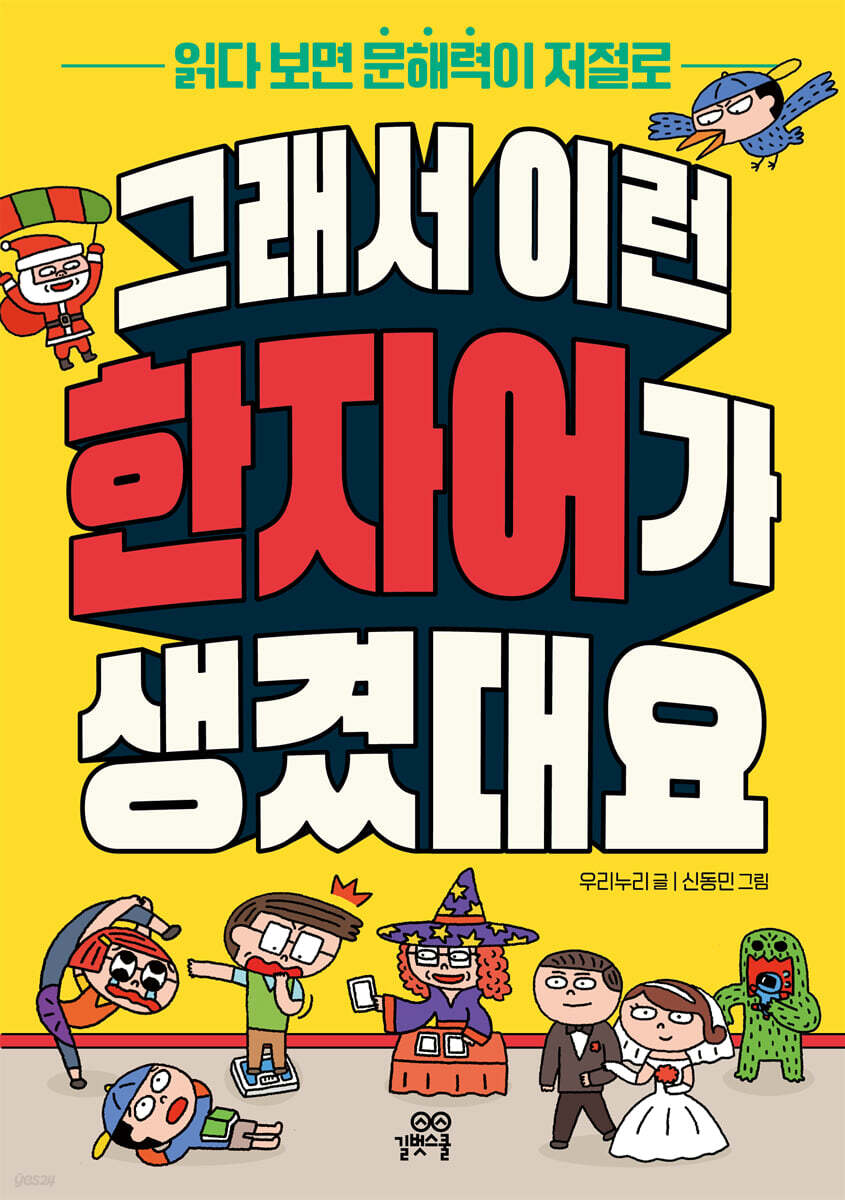 |
Description
Book Introduction
Is it really okay to just memorize Chinese characters that feel difficult and unfamiliar?
Now, let's learn Chinese characters in a fun way through their origins!
Chinese characters are so important and significant that they account for 60% of the Korean language.
Therefore, if you understand Chinese characters well, you can communicate smoothly and do well in school.
Studying Chinese characters is essential to building a solid vocabulary and literacy.
But when you actually try to study Chinese characters, it just feels difficult.
Memorizing complex and unfamiliar Chinese characters one by one is tedious and difficult to remember.
In that case, try opening 『So this is how these Chinese characters came to be』.
As you read the stories of how Chinese characters came into existence, such as 'Toeja (rejection),' which was originally a character used to mark low-quality items, 'Geumjatap,' which meant pyramid, and 'Gyokal,' which is the name of an imaginary animal, Chinese characters that were unfamiliar to you will become easier to understand and you will also find it fun to study them.
You can also naturally learn in which situations these Chinese characters are used through humorous four-panel cartoons and various examples.
Now, let's learn Chinese characters in a fun way through their origins!
Chinese characters are so important and significant that they account for 60% of the Korean language.
Therefore, if you understand Chinese characters well, you can communicate smoothly and do well in school.
Studying Chinese characters is essential to building a solid vocabulary and literacy.
But when you actually try to study Chinese characters, it just feels difficult.
Memorizing complex and unfamiliar Chinese characters one by one is tedious and difficult to remember.
In that case, try opening 『So this is how these Chinese characters came to be』.
As you read the stories of how Chinese characters came into existence, such as 'Toeja (rejection),' which was originally a character used to mark low-quality items, 'Geumjatap,' which meant pyramid, and 'Gyokal,' which is the name of an imaginary animal, Chinese characters that were unfamiliar to you will become easier to understand and you will also find it fun to study them.
You can also naturally learn in which situations these Chinese characters are used through humorous four-panel cartoons and various examples.
- You can preview some of the book's contents.
Preview
index
Chapter 1: Chinese Characters Encountered in Daily Life
10 Useless Frills
Kiwoo - Worrying Worries 12
Vanity - outward show of force without substance 14
Rejection - refusing something or offering something 16
Dumplings - Food shaped like a human head 18
Socks - Western-imported socks 20
Business Cards - A Symbol of Status in the Joseon Dynasty 22
Cunning - Cunning and scheming 24
Baekiljang - Daytime Writing Contest 26
Yongsucheol - A steel rope as elastic as the dragon's beard in the story 28
Shameless - A person who is overly shameless 30
Lunch - 32 Foods Eaten During the Day
Merchant - a person whose profession is business 34
Guessing - making a rough estimate of circumstances or conditions 36
Celsius - A temperature scale created by humans called 'Celsius' 38
General Dong - The Bitter Winter Cold 40
The Best of the Best - 42
Shame - Knowing how to save face 44
A mess - a place of confusion, tangled chaos, and confusion 46
Chapter 2: Chinese Characters Encountered in the News
Sweeping over territory or expanding one's power with rapid momentum 50
Disappointment - Plans turn out to be a failure 52
A close, very small difference 54
Compromise - adjusting to different opinions or viewpoints 56
Postponement - Postpone the date or time for performing a task 58
Countermeasure - a plan or method for dealing with something 60
Scapegoat - A person sacrificed for another's purpose or benefit 62
Golden Pagoda - 64 Outstanding Achievements Worthy of Preservation
Heartstrings - The Subtly Moving Heart 66
Blaming or hating others 68
Spur - the force added to make something better 70
A declaration of intent to undertake an important task 72
A place that is as bright as day, even at night. 74
Preconceptions - fixed ideas you already have about something 76
Traces of a previous person's wrongdoings or actions 78
Playing with or using others for one's own pleasure 80
Alarm bell - caution or advice about dangerous activities 82
Chomi - A term for something very urgent 84
Indulgence - the act of removing responsibility or guilt 86
Limelight - social interest or attention 88
Yojigyeong - 90 - Complex and incomprehensible
Chapter 3: Chinese Characters Encountered in the News
Discovery - finding out something or something that was not previously known 94
Sukmaek - A person who is ignorant of the ways of the world 96
Encouraging - meaning hopeful and positive 98
Old Man's Heart - Excessive Concern for Other People's Business 100
Clairvoyance - The power of observation that allows one to see through things 102
104 Exemplars and Models to Follow
106 - A term used to belittle someone's words, actions, or plans
Kaleidoscope - Things that pass by as quickly as a galloping horse 108
Avoidance - Avoiding responsibility by using tricks 110
The Dragon Gate: 112 Gates to Success
Foreign words - 114 words that came from foreign countries and are used as if they were Korean
Conformity - things or phenomena fit together perfectly 116
A desperate measure: a desperate plan 118
Layman - a person without specialized knowledge of something 120
Globalization - Understanding and Accepting the World 122
Communication - the exchange of ideas or intentions 124
Wedding Candles - 126
Motto - 128 Words to Always Keep by Your Side and Inscribe in Your Heart
Chapter 4: Chinese Characters That Don't Look Like Chinese Characters
This is a dead end - Chapter 132
Perfect fit - perfect for any condition or situation 134
Pseudo-Similar on the outside, but completely different on the inside 136
Noisy and tumultuous - a large crowd of people gathered together and making a lot of noise 138
Gossiping - Spreading someone else's faults or secrets 140
142 children find hidden children in a game of tag
Shame - feeling embarrassed and losing face 144
Julhaengrang - A vulgar term for 'running away' 146
Asura Field - A Place of Great Chaos 148
Junk - a jumble of miscellaneous items 150
Domuji - 152 Words from Joseon Dynasty Punishments
Ten Years of Sensitivity - Experiencing a Dangerous Crisis or Being Terribly Surprised 154
156 - Acting recklessly and without thinking
10 Useless Frills
Kiwoo - Worrying Worries 12
Vanity - outward show of force without substance 14
Rejection - refusing something or offering something 16
Dumplings - Food shaped like a human head 18
Socks - Western-imported socks 20
Business Cards - A Symbol of Status in the Joseon Dynasty 22
Cunning - Cunning and scheming 24
Baekiljang - Daytime Writing Contest 26
Yongsucheol - A steel rope as elastic as the dragon's beard in the story 28
Shameless - A person who is overly shameless 30
Lunch - 32 Foods Eaten During the Day
Merchant - a person whose profession is business 34
Guessing - making a rough estimate of circumstances or conditions 36
Celsius - A temperature scale created by humans called 'Celsius' 38
General Dong - The Bitter Winter Cold 40
The Best of the Best - 42
Shame - Knowing how to save face 44
A mess - a place of confusion, tangled chaos, and confusion 46
Chapter 2: Chinese Characters Encountered in the News
Sweeping over territory or expanding one's power with rapid momentum 50
Disappointment - Plans turn out to be a failure 52
A close, very small difference 54
Compromise - adjusting to different opinions or viewpoints 56
Postponement - Postpone the date or time for performing a task 58
Countermeasure - a plan or method for dealing with something 60
Scapegoat - A person sacrificed for another's purpose or benefit 62
Golden Pagoda - 64 Outstanding Achievements Worthy of Preservation
Heartstrings - The Subtly Moving Heart 66
Blaming or hating others 68
Spur - the force added to make something better 70
A declaration of intent to undertake an important task 72
A place that is as bright as day, even at night. 74
Preconceptions - fixed ideas you already have about something 76
Traces of a previous person's wrongdoings or actions 78
Playing with or using others for one's own pleasure 80
Alarm bell - caution or advice about dangerous activities 82
Chomi - A term for something very urgent 84
Indulgence - the act of removing responsibility or guilt 86
Limelight - social interest or attention 88
Yojigyeong - 90 - Complex and incomprehensible
Chapter 3: Chinese Characters Encountered in the News
Discovery - finding out something or something that was not previously known 94
Sukmaek - A person who is ignorant of the ways of the world 96
Encouraging - meaning hopeful and positive 98
Old Man's Heart - Excessive Concern for Other People's Business 100
Clairvoyance - The power of observation that allows one to see through things 102
104 Exemplars and Models to Follow
106 - A term used to belittle someone's words, actions, or plans
Kaleidoscope - Things that pass by as quickly as a galloping horse 108
Avoidance - Avoiding responsibility by using tricks 110
The Dragon Gate: 112 Gates to Success
Foreign words - 114 words that came from foreign countries and are used as if they were Korean
Conformity - things or phenomena fit together perfectly 116
A desperate measure: a desperate plan 118
Layman - a person without specialized knowledge of something 120
Globalization - Understanding and Accepting the World 122
Communication - the exchange of ideas or intentions 124
Wedding Candles - 126
Motto - 128 Words to Always Keep by Your Side and Inscribe in Your Heart
Chapter 4: Chinese Characters That Don't Look Like Chinese Characters
This is a dead end - Chapter 132
Perfect fit - perfect for any condition or situation 134
Pseudo-Similar on the outside, but completely different on the inside 136
Noisy and tumultuous - a large crowd of people gathered together and making a lot of noise 138
Gossiping - Spreading someone else's faults or secrets 140
142 children find hidden children in a game of tag
Shame - feeling embarrassed and losing face 144
Julhaengrang - A vulgar term for 'running away' 146
Asura Field - A Place of Great Chaos 148
Junk - a jumble of miscellaneous items 150
Domuji - 152 Words from Joseon Dynasty Punishments
Ten Years of Sensitivity - Experiencing a Dangerous Crisis or Being Terribly Surprised 154
156 - Acting recklessly and without thinking
Detailed image
.jpg)
Into the book
The word 'Sajok' is used to refer to useless additions or extras, using the characters for snake (蛇) and leg (足).
If you interpret it literally, it means 'snake's foot', and these days it is used to mean doing something useless and making things worse.
It is usually used with the word ‘sweet’ or ‘attach’, as in ‘attach a foot’ or ‘attach a foot’.
--- p.11
The attitude of trying to look good on the outside when you don't have the skills is called 'heose', using the characters '虛' and '勢', meaning 'force'.
If we interpret the word bluff literally, it means empty air, that is, ‘air that is only shown on the outside without any actual ability.’
--- p.15
During the Enlightenment Period, when naming items imported from the West, the character ‘big ocean’ (洋) was often added to the beginning, meaning ‘items that crossed the sea.’
In other words, it is called Yangsak (洋襪) because it means socks imported from the West.
--- p.21
'Seok-gwon' is a Chinese character made up of the characters for seat (席) and horse (捲), and it means 'to roll up a mat'.
The term "sweeping power" is used when one sweeps a territory or expands one's sphere of influence with rapid momentum, like a mat that can be easily rolled up once one starts to roll it up.
Nowadays, the expression "sweep" is also used when a trend sweeps or becomes the best in a certain position.
--- p.51
Grandmothers often worry about even the most trivial things.
When my grandchildren are about to go out, I say things like, “Be careful with cars, don’t fight with your friends, etc.”
In this way, the character for old (老), grandmother (波), and heart (心) was used to create the word ‘old woman’s worry’, meaning ‘like the mind of an overly worried grandmother.’
If you interpret it literally, it means 'snake's foot', and these days it is used to mean doing something useless and making things worse.
It is usually used with the word ‘sweet’ or ‘attach’, as in ‘attach a foot’ or ‘attach a foot’.
--- p.11
The attitude of trying to look good on the outside when you don't have the skills is called 'heose', using the characters '虛' and '勢', meaning 'force'.
If we interpret the word bluff literally, it means empty air, that is, ‘air that is only shown on the outside without any actual ability.’
--- p.15
During the Enlightenment Period, when naming items imported from the West, the character ‘big ocean’ (洋) was often added to the beginning, meaning ‘items that crossed the sea.’
In other words, it is called Yangsak (洋襪) because it means socks imported from the West.
--- p.21
'Seok-gwon' is a Chinese character made up of the characters for seat (席) and horse (捲), and it means 'to roll up a mat'.
The term "sweeping power" is used when one sweeps a territory or expands one's sphere of influence with rapid momentum, like a mat that can be easily rolled up once one starts to roll it up.
Nowadays, the expression "sweep" is also used when a trend sweeps or becomes the best in a certain position.
--- p.51
Grandmothers often worry about even the most trivial things.
When my grandchildren are about to go out, I say things like, “Be careful with cars, don’t fight with your friends, etc.”
In this way, the character for old (老), grandmother (波), and heart (心) was used to create the word ‘old woman’s worry’, meaning ‘like the mind of an overly worried grandmother.’
--- p.101
Publisher's Review
Chinese characters, which are the core of our language,
Knowing Chinese characters will help you develop literacy skills.
"That book's final chapter is the best part!" "Idol group dominates Billboard Hot 100 chart." "The vote margin between Candidate A and Candidate B is very close." Would you be able to fully understand these sentences without knowing Chinese characters like "abkwon," "seokwon," and "bakbing" (a close victory)? As such, not only everyday communication but also many sections of elementary school textbooks, news articles, and newspaper headlines are comprised of Chinese characters.
So, if you don't know Chinese characters, you won't be able to understand half of our language.
However, since Chinese characters are based on unfamiliar Chinese characters to children, if they just memorize them by writing them or study them in order of Chinese characters, they will lose interest and easily give up.
Chinese characters seem so difficult, so how should we study them?
Knowing the origins of Chinese characters makes learning them more fun!
Build your vocabulary and literacy skills with this book.
This book is a fun way to learn about the origins of Chinese characters and their meanings and uses through four-panel comics and short stories.
Knowing the origins will help you understand not only the exact meaning of each Chinese character, but also the context and nuance of when to use it.
Since it is not something you memorize mechanically, it is easy to remember, and it is natural that your vocabulary and literacy skills will greatly improve.
I recommend this book to parents who are concerned about their children's vocabulary being significantly lower than that of their peers, friends who want to read fun comics and origin stories without feeling pressured, and teachers who are looking for a rich learning resource related to Chinese characters.
Learn the meaning and usage of Chinese characters by reading interesting origin stories.
'Sajok (蛇足)' originally meant 'snake's foot', but these days it is used to mean doing something useless and making things worse.
The 'mandu (饅頭)' that we eat a lot is a food named after Zhuge Liang, who appears in the 'Romance of the Three Kingdoms'.
Also, the word 'Sullae', which looks like a pure Korean word, is derived from the word 'Sunragun', which was used for patrols during the Joseon Dynasty.
Like this, there are interesting origin stories hidden in the Chinese characters we commonly use.
Chinese characters can arise from historical events or cultural characteristics, or can originate from classical works or old tales.
Also, as time passes, the original meaning may change into something completely different.
Once you know the origins of Chinese characters, words that seemed difficult become more familiar.
In addition, you can develop knowledge of the history and culture of not only our country but also other countries such as China.
Did you know these were also Chinese characters? Discover the fun of discovering Chinese characters in everyday life.
Did you know that words like "lunch," "pseudo," "pretense," "fake," "fake news," "shame," and "ttokjajil" are all derived from Chinese characters? There are actually more Chinese characters around us than you might think.
I just passed it by because I didn't know about it.
After reading this book, you will start to notice Chinese characters one by one.
You can also feel the fun and satisfaction of understanding the exact meaning of vocabulary or sentences that you had only vaguely understood until now.
If you want to experience a richer and more colorful language life, be sure to read this book.
It is composed mainly of core Chinese characters that elementary school students must know.
I selected Chinese characters that are frequently used in daily life, elementary school textbooks, news, and newspapers.
The meaning of each Chinese character was mainly referenced from the 『Standard Korean Dictionary』 published by the National Institute of the Korean Language, and the accuracy of the content was increased by reflecting the latest language grammar rules.
Also, at the bottom of the four-panel cartoon, the exact meaning and pronunciation of the Chinese characters, the apparent and implied meanings, similar vocabulary, and examples are organized separately, so it is also great as a learning material.
There is a 'Search' section at the end of the book, so you can search for just the Chinese characters you need.
Even children who only like educational comics can read it without any burden.
On each left page where the story begins, there is a fun four-panel comic.
Just by reading the comics, you can immediately understand how the Chinese characters are used in everyday life.
The origin story is written in a short fairy tale format on the right page, making it easy to read.
This book is fun to read for children who are only familiar with educational comics or have difficulty reading long texts, so it is a book that both parents and children can enjoy.
Knowing Chinese characters will help you develop literacy skills.
"That book's final chapter is the best part!" "Idol group dominates Billboard Hot 100 chart." "The vote margin between Candidate A and Candidate B is very close." Would you be able to fully understand these sentences without knowing Chinese characters like "abkwon," "seokwon," and "bakbing" (a close victory)? As such, not only everyday communication but also many sections of elementary school textbooks, news articles, and newspaper headlines are comprised of Chinese characters.
So, if you don't know Chinese characters, you won't be able to understand half of our language.
However, since Chinese characters are based on unfamiliar Chinese characters to children, if they just memorize them by writing them or study them in order of Chinese characters, they will lose interest and easily give up.
Chinese characters seem so difficult, so how should we study them?
Knowing the origins of Chinese characters makes learning them more fun!
Build your vocabulary and literacy skills with this book.
This book is a fun way to learn about the origins of Chinese characters and their meanings and uses through four-panel comics and short stories.
Knowing the origins will help you understand not only the exact meaning of each Chinese character, but also the context and nuance of when to use it.
Since it is not something you memorize mechanically, it is easy to remember, and it is natural that your vocabulary and literacy skills will greatly improve.
I recommend this book to parents who are concerned about their children's vocabulary being significantly lower than that of their peers, friends who want to read fun comics and origin stories without feeling pressured, and teachers who are looking for a rich learning resource related to Chinese characters.
Learn the meaning and usage of Chinese characters by reading interesting origin stories.
'Sajok (蛇足)' originally meant 'snake's foot', but these days it is used to mean doing something useless and making things worse.
The 'mandu (饅頭)' that we eat a lot is a food named after Zhuge Liang, who appears in the 'Romance of the Three Kingdoms'.
Also, the word 'Sullae', which looks like a pure Korean word, is derived from the word 'Sunragun', which was used for patrols during the Joseon Dynasty.
Like this, there are interesting origin stories hidden in the Chinese characters we commonly use.
Chinese characters can arise from historical events or cultural characteristics, or can originate from classical works or old tales.
Also, as time passes, the original meaning may change into something completely different.
Once you know the origins of Chinese characters, words that seemed difficult become more familiar.
In addition, you can develop knowledge of the history and culture of not only our country but also other countries such as China.
Did you know these were also Chinese characters? Discover the fun of discovering Chinese characters in everyday life.
Did you know that words like "lunch," "pseudo," "pretense," "fake," "fake news," "shame," and "ttokjajil" are all derived from Chinese characters? There are actually more Chinese characters around us than you might think.
I just passed it by because I didn't know about it.
After reading this book, you will start to notice Chinese characters one by one.
You can also feel the fun and satisfaction of understanding the exact meaning of vocabulary or sentences that you had only vaguely understood until now.
If you want to experience a richer and more colorful language life, be sure to read this book.
It is composed mainly of core Chinese characters that elementary school students must know.
I selected Chinese characters that are frequently used in daily life, elementary school textbooks, news, and newspapers.
The meaning of each Chinese character was mainly referenced from the 『Standard Korean Dictionary』 published by the National Institute of the Korean Language, and the accuracy of the content was increased by reflecting the latest language grammar rules.
Also, at the bottom of the four-panel cartoon, the exact meaning and pronunciation of the Chinese characters, the apparent and implied meanings, similar vocabulary, and examples are organized separately, so it is also great as a learning material.
There is a 'Search' section at the end of the book, so you can search for just the Chinese characters you need.
Even children who only like educational comics can read it without any burden.
On each left page where the story begins, there is a fun four-panel comic.
Just by reading the comics, you can immediately understand how the Chinese characters are used in everyday life.
The origin story is written in a short fairy tale format on the right page, making it easy to read.
This book is fun to read for children who are only familiar with educational comics or have difficulty reading long texts, so it is a book that both parents and children can enjoy.
GOODS SPECIFICS
- Date of issue: December 22, 2023
- Page count, weight, size: 160 pages | 352g | 148*210*14mm
- ISBN13: 9791164066278
You may also like
카테고리
korean


korean

![GQ KOREA Mark (Monthly): December [2025]](http://librairie.coreenne.fr/cdn/shop/files/8ef265dbbfbf186523ed75ba7319009d.jpg?v=1765340328&width=3840)


