

Human Competitiveness in the AI Era
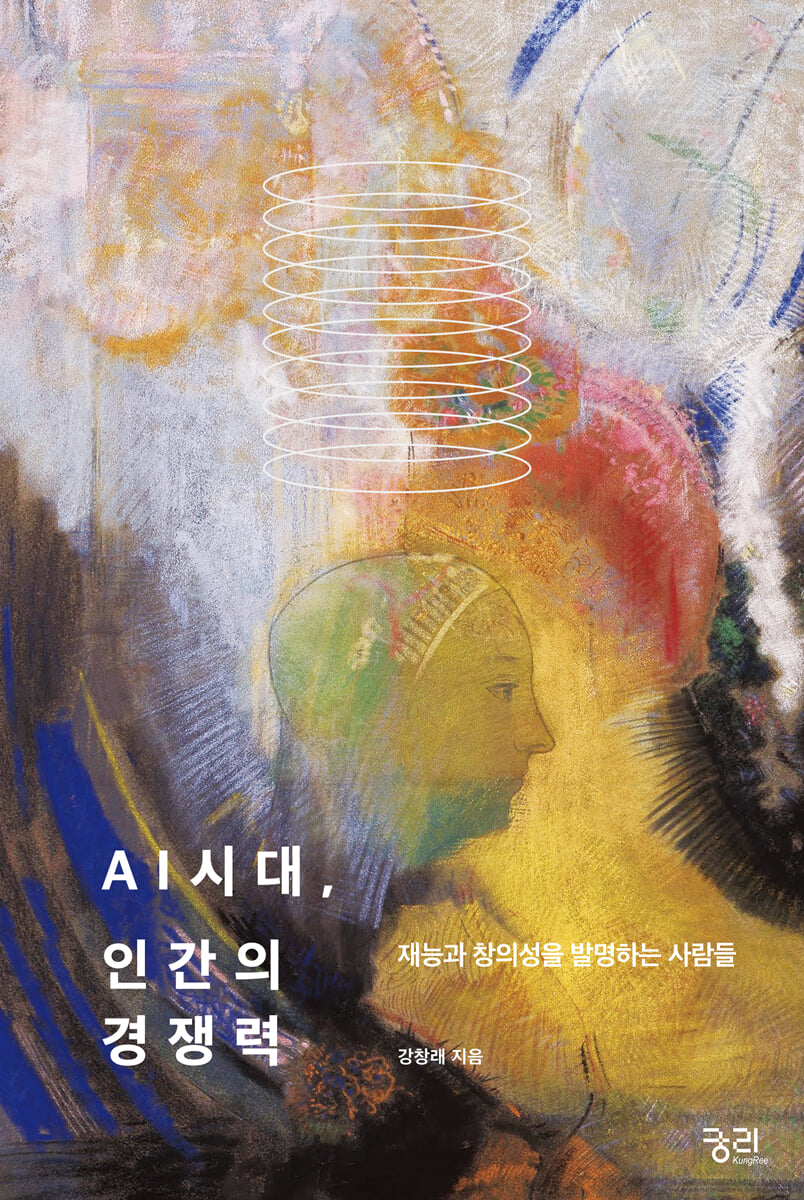 |
Description
Book Introduction
Surviving in the AI era, dancing on the shoulders of giants!
What's possible only when you know the pros and cons of AI
What exactly is AI, and how can we best use it? This book covers not only how to use this innovative tool, but also the fundamental principles of its mechanisms.
This is because all of this is deeply connected to the discovery of talent, the source of human competitiveness, and the cultivation of creativity. In the AI era, survival is increasingly dependent on creating a unique signature through unique talent.
This is why we cannot avoid delving into the topic of talent and creativity.
New technologies have always been both opportunities and threats.
Today, the revolutionary technology called AI will bring about more drastic changes than ever before.
Any job that falls into the cliche category will be replaced by machines.
The changes in social structure will be both enormous and drastic.
If you adapt, you survive; if you don't, you fall behind.
First, we must identify the nature of the change.
First of all, we need to understand what AI is.
So, Part 1, Chapter 1 begins with 'AI: A Tool for the Well-Prepared.'
We delve into the human competitive edge of ‘talent and creativity.’
AI will be covered in more detail in Part 4.
Once you understand the core, it's not difficult to anticipate just how massive the changes the AI era will bring will be.
Everyone can find a method that suits them. It provides easy-to-understand examples of specific, core usage methods, such as prompt engineering, along with the fundamental principles of AI.
In particular, Chapter 15, 'AI's Work, Human Work', allows us to anticipate what kind of 'human competitiveness' anyone can have in the AI era, and by reading Chapter 16, 'The Curse of Dimensions and the Return of the Salon', we can also guess at the development of AI technology, its limitations, and the resulting changes in lifestyle.
What's most striking is the detailed and critical discussion of what AI is good at and what it's bad at.
No matter what tool you use, you need to know its pros and cons, but detailed explanations of the cons are hard to find anywhere.
The content could be an excellent example of 'how to think' or 'how to think creatively'.
What's possible only when you know the pros and cons of AI
What exactly is AI, and how can we best use it? This book covers not only how to use this innovative tool, but also the fundamental principles of its mechanisms.
This is because all of this is deeply connected to the discovery of talent, the source of human competitiveness, and the cultivation of creativity. In the AI era, survival is increasingly dependent on creating a unique signature through unique talent.
This is why we cannot avoid delving into the topic of talent and creativity.
New technologies have always been both opportunities and threats.
Today, the revolutionary technology called AI will bring about more drastic changes than ever before.
Any job that falls into the cliche category will be replaced by machines.
The changes in social structure will be both enormous and drastic.
If you adapt, you survive; if you don't, you fall behind.
First, we must identify the nature of the change.
First of all, we need to understand what AI is.
So, Part 1, Chapter 1 begins with 'AI: A Tool for the Well-Prepared.'
We delve into the human competitive edge of ‘talent and creativity.’
AI will be covered in more detail in Part 4.
Once you understand the core, it's not difficult to anticipate just how massive the changes the AI era will bring will be.
Everyone can find a method that suits them. It provides easy-to-understand examples of specific, core usage methods, such as prompt engineering, along with the fundamental principles of AI.
In particular, Chapter 15, 'AI's Work, Human Work', allows us to anticipate what kind of 'human competitiveness' anyone can have in the AI era, and by reading Chapter 16, 'The Curse of Dimensions and the Return of the Salon', we can also guess at the development of AI technology, its limitations, and the resulting changes in lifestyle.
What's most striking is the detailed and critical discussion of what AI is good at and what it's bad at.
No matter what tool you use, you need to know its pros and cons, but detailed explanations of the cons are hard to find anywhere.
The content could be an excellent example of 'how to think' or 'how to think creatively'.
- You can preview some of the book's contents.
Preview
index
Prologue: Competitiveness in the AI Era: Your Talent and Creativity
Part 1: What Humans Need to Live Longer
1. AI, a tool for the very well-prepared.
2.
Why do we invent fake talents?
3.
Creativity that challenges grand clichés
Part 2: A Journey on the Shoulders of Giants
4.
Creativity, competitiveness engraved in our genes
5.
The best work is born four times.
6.
Dancing on the Shoulders of Giants
7.
Creativity that transcends me
Part 3: My Secret Creativity Note
8.
We are all geniuses
9.
The role of system education
10.
Genius, the result of chance and circumstance
11.
The tremendous power of graffiti and noise
12.
How are masterpieces created?
Part 4: Three Life Questions and Finding the Answers
13.
Why humanities again?
14. Human creativity that AI cannot reach
15. AI's work, human's work
16.
The Curse of Dimensions and the Return of the Salon
Epilogue: The Last Supper, Heralding the Resurrection of Creativity
Part 1: What Humans Need to Live Longer
1. AI, a tool for the very well-prepared.
2.
Why do we invent fake talents?
3.
Creativity that challenges grand clichés
Part 2: A Journey on the Shoulders of Giants
4.
Creativity, competitiveness engraved in our genes
5.
The best work is born four times.
6.
Dancing on the Shoulders of Giants
7.
Creativity that transcends me
Part 3: My Secret Creativity Note
8.
We are all geniuses
9.
The role of system education
10.
Genius, the result of chance and circumstance
11.
The tremendous power of graffiti and noise
12.
How are masterpieces created?
Part 4: Three Life Questions and Finding the Answers
13.
Why humanities again?
14. Human creativity that AI cannot reach
15. AI's work, human's work
16.
The Curse of Dimensions and the Return of the Salon
Epilogue: The Last Supper, Heralding the Resurrection of Creativity
Into the book
So we have to ask ourselves this question:
Despite today's technological advancements and the abundance of convenient tools, why do kitchens still use simple, ancient tools like knives and cutting boards so often? People don't want to eat the same food over and over again.
Endlessly looking for something different and new.
That is the condition of human existence.
Because to solve that problem, only a knife and a cutting board that can solve an infinite number of cases, along with human talent and passionate creativity, are possible.
So will knives and cutting boards disappear?
---From "Pages 7-8, Prologue"
"you're right.
So, any content ultimately has to go through the user's judgment to become a practical and useful 'answer'.
Even if you collect data, it is unclear from whose perspective the facts are being seen, and whether the facts that are revealed on the surface are what they say.
You need to be trained to distinguish between what is real and what is false, presented as fact.
And most importantly, we need to ‘discover key questions’ based on that vast amount of data.
That question is the path to the solution to the problem I am trying to solve now.
AI programs don't know what "necessary questions" to ask to find solutions to new problems.
I just have the relevant information.
You can suggest solutions, but ultimately, the users will have to judge their effectiveness.
---From "Pages 19-20, 1. AI, a Tool for the Well-Prepared"
“So, teacher, being talented at something means being able to naturally immerse yourself in it.”
“Talent is also called ‘gift’ in English, which is an appropriate expression.
It's a gift everyone receives when they are born.
But it seems like everyone gets something different.”
“But I don’t know what the gift I received is or where I can find it.
I'm not even sure if I have that.
“I want to know that.”
“That’s also natural.
Everyone is born with some talent, but it's not easy to know what it is.
There are many cases where it is yours but you don't know it.
That's why it's a concern.
“Why is it so hard for me to know what talents I have?”
“Because it is invented, not discovered.”
---「Pages 35-36, 2.
From "Why do we invent fake talents?"
“Now, let us think about ourselves here.
Our civilization has not disappeared.
As the case of Easter Island shows, civilizations that have survived for a long time may have gone through dangerous periods of struggling in the midst of grand banality, but they survived because they eventually questioned the grand banality of tradition and their creative imagination for a new future proved persuasive.
“Ah, now I understand.
I know that if any civilization is to survive, it must have a creative imagination that knows how to reject tradition.
So, we can say that the first case where creative thinking and practice helped us escape such a crisis is the origin of creativity.”
---From "Page 53, 3. Creativity that Challenges the Great Cliche"
In this way, human creativity tends to be very conservative while also being novel.
In fact, being conservative is very important in our lives.
Take a good look at your life.
Most of them are structured in a conservative way.
Our food, clothing, and shelter are structured in a very conservative and traditional way.
We pursue newness on top of that stability.
Think about it.
How many of the things you own aren't "factory items"? Factory items are made for mass production, after all.
So most products are created from a conservative perspective, and we live our lives in a huge cliché created that way.
Perhaps it is that grand banality that constantly motivates us to be interested in something new and creative.
We seek stability, yet we often indulge in adventures that give us a sense of "being alive."
---「Pages 96-97, 7.
From "Creativity that Transcends Me"
“I guess that’s why I said that reading is very important for creativity.
Because reading is like a treasure chest of creativity.
If you just know what goes on in your head while you read, you'll quickly empathize.
When you read a book that you enjoy, roughly seven brain processes occur, whether you are conscious of it or not.
It starts with connection and empathy.
When I read a book for fun, I find connections between my knowledge and the content of the book, and I empathize with it based on that connection.
And then we make inferences.
I guess the author's intention by synthesizing the knowledge I have and the clues the text provides.
And then you automatically start to predict what's going to happen next.
If the book was interesting, it was because the inferences and predictions were quite accurate.
In the process, imagination is unleashed.
In fact, the most important power you gain while reading a book comes from here.
When people read a book, they turn the text into images.
“I’m making my own film using the text I’m reading now as a screenplay.”
---「Page 170, 11.
From "The Tremendous Power of Graffiti and Noise"
“According to what you said, I think that humanities knowledge is something that lets me know what is worth writing if I’m a writer, and what is worth drawing if I’m a painter.
And I feel like where I can find that value is far beyond my current level of awareness.
So, you have to start on the path of standing on the shoulders of giants.”
"you're right.
Humanistic literacy is the foundation of thought that allows us to unleash creativity when we turn on the tap.
“The creativity required to think about what to express and how to express it is the source of the right solution.”
---「Page 194, 13.
From "Why Humanities Again?"
“However, as I explained earlier, if users want to create their own ‘signature,’ they need to be creative in modifying and reconstructing what the AI suggests.
At least so far, AI isn't terribly creative on any topic.
Rather, it shows an average level of awareness.
Sometimes, you can find hints for new ideas among them.
If the subject is completely new to the student, it will be helpful to start learning.”
“The creativity contained in the results is ultimately the responsibility of users with a rich humanities background.”
Despite today's technological advancements and the abundance of convenient tools, why do kitchens still use simple, ancient tools like knives and cutting boards so often? People don't want to eat the same food over and over again.
Endlessly looking for something different and new.
That is the condition of human existence.
Because to solve that problem, only a knife and a cutting board that can solve an infinite number of cases, along with human talent and passionate creativity, are possible.
So will knives and cutting boards disappear?
---From "Pages 7-8, Prologue"
"you're right.
So, any content ultimately has to go through the user's judgment to become a practical and useful 'answer'.
Even if you collect data, it is unclear from whose perspective the facts are being seen, and whether the facts that are revealed on the surface are what they say.
You need to be trained to distinguish between what is real and what is false, presented as fact.
And most importantly, we need to ‘discover key questions’ based on that vast amount of data.
That question is the path to the solution to the problem I am trying to solve now.
AI programs don't know what "necessary questions" to ask to find solutions to new problems.
I just have the relevant information.
You can suggest solutions, but ultimately, the users will have to judge their effectiveness.
---From "Pages 19-20, 1. AI, a Tool for the Well-Prepared"
“So, teacher, being talented at something means being able to naturally immerse yourself in it.”
“Talent is also called ‘gift’ in English, which is an appropriate expression.
It's a gift everyone receives when they are born.
But it seems like everyone gets something different.”
“But I don’t know what the gift I received is or where I can find it.
I'm not even sure if I have that.
“I want to know that.”
“That’s also natural.
Everyone is born with some talent, but it's not easy to know what it is.
There are many cases where it is yours but you don't know it.
That's why it's a concern.
“Why is it so hard for me to know what talents I have?”
“Because it is invented, not discovered.”
---「Pages 35-36, 2.
From "Why do we invent fake talents?"
“Now, let us think about ourselves here.
Our civilization has not disappeared.
As the case of Easter Island shows, civilizations that have survived for a long time may have gone through dangerous periods of struggling in the midst of grand banality, but they survived because they eventually questioned the grand banality of tradition and their creative imagination for a new future proved persuasive.
“Ah, now I understand.
I know that if any civilization is to survive, it must have a creative imagination that knows how to reject tradition.
So, we can say that the first case where creative thinking and practice helped us escape such a crisis is the origin of creativity.”
---From "Page 53, 3. Creativity that Challenges the Great Cliche"
In this way, human creativity tends to be very conservative while also being novel.
In fact, being conservative is very important in our lives.
Take a good look at your life.
Most of them are structured in a conservative way.
Our food, clothing, and shelter are structured in a very conservative and traditional way.
We pursue newness on top of that stability.
Think about it.
How many of the things you own aren't "factory items"? Factory items are made for mass production, after all.
So most products are created from a conservative perspective, and we live our lives in a huge cliché created that way.
Perhaps it is that grand banality that constantly motivates us to be interested in something new and creative.
We seek stability, yet we often indulge in adventures that give us a sense of "being alive."
---「Pages 96-97, 7.
From "Creativity that Transcends Me"
“I guess that’s why I said that reading is very important for creativity.
Because reading is like a treasure chest of creativity.
If you just know what goes on in your head while you read, you'll quickly empathize.
When you read a book that you enjoy, roughly seven brain processes occur, whether you are conscious of it or not.
It starts with connection and empathy.
When I read a book for fun, I find connections between my knowledge and the content of the book, and I empathize with it based on that connection.
And then we make inferences.
I guess the author's intention by synthesizing the knowledge I have and the clues the text provides.
And then you automatically start to predict what's going to happen next.
If the book was interesting, it was because the inferences and predictions were quite accurate.
In the process, imagination is unleashed.
In fact, the most important power you gain while reading a book comes from here.
When people read a book, they turn the text into images.
“I’m making my own film using the text I’m reading now as a screenplay.”
---「Page 170, 11.
From "The Tremendous Power of Graffiti and Noise"
“According to what you said, I think that humanities knowledge is something that lets me know what is worth writing if I’m a writer, and what is worth drawing if I’m a painter.
And I feel like where I can find that value is far beyond my current level of awareness.
So, you have to start on the path of standing on the shoulders of giants.”
"you're right.
Humanistic literacy is the foundation of thought that allows us to unleash creativity when we turn on the tap.
“The creativity required to think about what to express and how to express it is the source of the right solution.”
---「Page 194, 13.
From "Why Humanities Again?"
“However, as I explained earlier, if users want to create their own ‘signature,’ they need to be creative in modifying and reconstructing what the AI suggests.
At least so far, AI isn't terribly creative on any topic.
Rather, it shows an average level of awareness.
Sometimes, you can find hints for new ideas among them.
If the subject is completely new to the student, it will be helpful to start learning.”
“The creativity contained in the results is ultimately the responsibility of users with a rich humanities background.”
---From "Page 234, 15. AI's Work, Human's Work"
Publisher's Review
Human Competitiveness in the AI Era: Misconceptions and Truths About "Talent and Creativity"
We tend to think of talent and creativity as abilities that are only innate to special people.
However, the author emphasizes that everyone has their own talents, and the challenge is to discover them, immerse themselves in them, and create an environment where they can enjoy them.
Creativity is not something that “just flashes” into your mind, but something that anyone can develop through various experiences and reading.
The author also notes that both talent and creativity tend not to be individually 'discovered' but rather invented through each person's 'environment' and 'experience'.
Society must create an environment where such individuals can fearlessly take risks to realize their potential, he says, and only then can true creative change occur.
Like the many artists featured in this book, including female trombonist Abby Conant, Van Gogh, Munch, Picasso, and Basquiat, it highlights the importance of human talent and creativity that cannot be replaced by AI.
To do so, we must not forget the value of humanities power even in the AI era.
In 『Human Competitiveness in the AI Age』, ‘human competitiveness’ is not fragmented knowledge or technology, but imagination cultivated through true humanistic power.
Experiences and questions through broad and deep reading are fundamental tools for developing such power.
In that sense, this book will not only serve as a useful guide for readers who use AI on a daily basis, but will also serve as an educational guide for our children who will live in the AI era.
A topographical map of life in the AI era, seen from the shoulders of giants!
Author Kang Chang-rae is an early adopter who has used computers with the language called 'Port Run' since the punching days.
In the 1990s, he became known as a computer columnist and was selected as one of Korea's top 10 computer experts (Hankyoreh 21).
After starting the library movement in the 2000s, he entered the path of a comprehensive humanist.
He won the Grand Prize at the Korean Publication Critics Award for “The Spirit of the Book” and the Dosang Legal Culture Award from the Korean Legal Society.
His published works include “Advertising with Humanities,” “Rumors and Truth about the Death of Literature” (World Literature), and “There Was a Sword Between Us” (introducing modern classics). He is also active in giving lectures on a wide range of topics, including art history, modern philosophy, and modern science.
His writings and lectures are renowned for their exceptional skill in connecting humanities to our lives.
The momentum for this book was 『In Search of the Ghosts of Talent and Creativity』, published in 2015.
Realizing that its content is even more crucial in the AI era, I rewrote it for the AI era. It addresses essential and crucial issues necessary to reshape the landscape of our lives in the AI era.
About two-thirds of it is completely new content.
We tend to think of talent and creativity as abilities that are only innate to special people.
However, the author emphasizes that everyone has their own talents, and the challenge is to discover them, immerse themselves in them, and create an environment where they can enjoy them.
Creativity is not something that “just flashes” into your mind, but something that anyone can develop through various experiences and reading.
The author also notes that both talent and creativity tend not to be individually 'discovered' but rather invented through each person's 'environment' and 'experience'.
Society must create an environment where such individuals can fearlessly take risks to realize their potential, he says, and only then can true creative change occur.
Like the many artists featured in this book, including female trombonist Abby Conant, Van Gogh, Munch, Picasso, and Basquiat, it highlights the importance of human talent and creativity that cannot be replaced by AI.
To do so, we must not forget the value of humanities power even in the AI era.
In 『Human Competitiveness in the AI Age』, ‘human competitiveness’ is not fragmented knowledge or technology, but imagination cultivated through true humanistic power.
Experiences and questions through broad and deep reading are fundamental tools for developing such power.
In that sense, this book will not only serve as a useful guide for readers who use AI on a daily basis, but will also serve as an educational guide for our children who will live in the AI era.
A topographical map of life in the AI era, seen from the shoulders of giants!
Author Kang Chang-rae is an early adopter who has used computers with the language called 'Port Run' since the punching days.
In the 1990s, he became known as a computer columnist and was selected as one of Korea's top 10 computer experts (Hankyoreh 21).
After starting the library movement in the 2000s, he entered the path of a comprehensive humanist.
He won the Grand Prize at the Korean Publication Critics Award for “The Spirit of the Book” and the Dosang Legal Culture Award from the Korean Legal Society.
His published works include “Advertising with Humanities,” “Rumors and Truth about the Death of Literature” (World Literature), and “There Was a Sword Between Us” (introducing modern classics). He is also active in giving lectures on a wide range of topics, including art history, modern philosophy, and modern science.
His writings and lectures are renowned for their exceptional skill in connecting humanities to our lives.
The momentum for this book was 『In Search of the Ghosts of Talent and Creativity』, published in 2015.
Realizing that its content is even more crucial in the AI era, I rewrote it for the AI era. It addresses essential and crucial issues necessary to reshape the landscape of our lives in the AI era.
About two-thirds of it is completely new content.
GOODS SPECIFICS
- Date of issue: August 8, 2025
- Page count, weight, size: 268 pages | 428g | 147*210*20mm
- ISBN13: 9788958209119
- ISBN10: 8958209119
You may also like
카테고리
korean


korean

![GQ KOREA Mark (Monthly): December [2025]](http://librairie.coreenne.fr/cdn/shop/files/8ef265dbbfbf186523ed75ba7319009d.jpg?v=1765340328&width=3840)


