

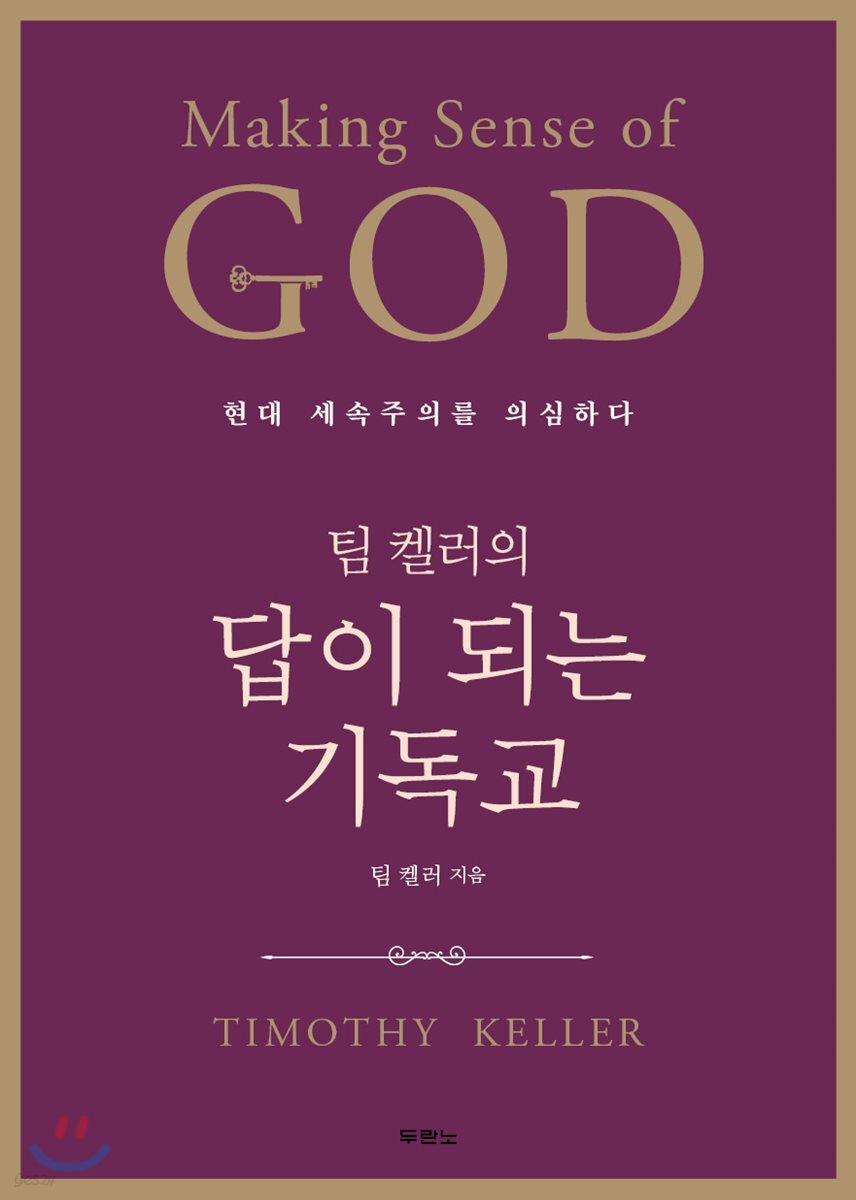
Tim Keller's Christianity as an Answer
 |
Description
Book Introduction
Overcoming the walls of blind faith and distrust
Finally, we reach the “Creator in the midst of creation”!
Rational and Solid Christian Answers
For undecided seekers and skeptics, this book illuminates the profound value and importance of Christianity, making it more timely than ever.
Through this book, you will come to understand that the Christian God is deeply involved in the present and that He will make whole those in this lost world.
Here is a Christianity that transcends time and space, a truth more real than any other thought in human history, a truth more real than reality.
Shake the flimsy foundation of life you've been standing on, and build your life on an unshakable rock!
Finally, we reach the “Creator in the midst of creation”!
Rational and Solid Christian Answers
For undecided seekers and skeptics, this book illuminates the profound value and importance of Christianity, making it more timely than ever.
Through this book, you will come to understand that the Christian God is deeply involved in the present and that He will make whole those in this lost world.
Here is a Christianity that transcends time and space, a truth more real than any other thought in human history, a truth more real than reality.
Shake the flimsy foundation of life you've been standing on, and build your life on an unshakable rock!
- You can preview some of the book's contents.
Preview
index
Speaking of 'Life Without God'
prolog.
What does this age believe and what does it not believe?
Part 1 - To those who assert that 'the gospel has lost its timeliness'
Is religion still necessary in this age?
1.
The prediction that religion would soon disappear was a premature conclusion.
Why does religion continue to survive and grow?
2.
The foundation of secularism is 'reason' and 'evidence'?
Secularism is not an "absence of faith," but a "new faith."
Part 2 - Essences that cannot be explained if there is no God
Religion is more than you think
Secularism: Ignoring the "Meaning of Life"
3.
The meaning is not 'to create' but 'to discover'.
Secularism, the Longing for 'Satisfaction'
4.
When the order of love is restored, the 'pleasure of enjoying' increases.
Secularism, Misunderstanding 'Freedom'
5.
Choosing the right constraints is 'true freedom.'
Secularism, instilling a 'false identity'
6.
Is it enough if only I love myself?
Secularism: A Glimpse into Christian Identity
7.
On the cross, I received an identity that grew together with 'humility' and 'confidence'.
Secularism, the End of 'Hope'
8.
What we need is not optimism, but a deeper hope.
Secularism, caught in the 'moral' dilemma
9.
If you pursue good, you already believe in God.
Secularism: The Foundation of Justice Shakes
10.
Breaking the vicious cycle of "oppressed people" becoming "oppressors."
Part 3 - Rethink 'Everything' You Take for Granted
Finding a Way Out of the Labyrinth of Modern Secularism
11.
Believing in God is the most sensible choice.
― If life makes more sense when you believe than when you don’t believe
12.
Christian faith can provide answers
―It is not philosophical reasoning, but Jesus himself who is the argument.
The only way to be free from human selfishness
Epilogue.
The final battle between 'human pride' and 'God's grace' unfolds.
Acknowledgements
main
More books to read
prolog.
What does this age believe and what does it not believe?
Part 1 - To those who assert that 'the gospel has lost its timeliness'
Is religion still necessary in this age?
1.
The prediction that religion would soon disappear was a premature conclusion.
Why does religion continue to survive and grow?
2.
The foundation of secularism is 'reason' and 'evidence'?
Secularism is not an "absence of faith," but a "new faith."
Part 2 - Essences that cannot be explained if there is no God
Religion is more than you think
Secularism: Ignoring the "Meaning of Life"
3.
The meaning is not 'to create' but 'to discover'.
Secularism, the Longing for 'Satisfaction'
4.
When the order of love is restored, the 'pleasure of enjoying' increases.
Secularism, Misunderstanding 'Freedom'
5.
Choosing the right constraints is 'true freedom.'
Secularism, instilling a 'false identity'
6.
Is it enough if only I love myself?
Secularism: A Glimpse into Christian Identity
7.
On the cross, I received an identity that grew together with 'humility' and 'confidence'.
Secularism, the End of 'Hope'
8.
What we need is not optimism, but a deeper hope.
Secularism, caught in the 'moral' dilemma
9.
If you pursue good, you already believe in God.
Secularism: The Foundation of Justice Shakes
10.
Breaking the vicious cycle of "oppressed people" becoming "oppressors."
Part 3 - Rethink 'Everything' You Take for Granted
Finding a Way Out of the Labyrinth of Modern Secularism
11.
Believing in God is the most sensible choice.
― If life makes more sense when you believe than when you don’t believe
12.
Christian faith can provide answers
―It is not philosophical reasoning, but Jesus himself who is the argument.
The only way to be free from human selfishness
Epilogue.
The final battle between 'human pride' and 'God's grace' unfolds.
Acknowledgements
main
More books to read
Into the book
Belief in God is a serious reality for four out of five people in the world, and will remain so for the foreseeable future.
At this point, the following question will immediately arise:
"Why is this? Why does religion continue to grow despite such fierce opposition from secularism?" Some might say it's because most people are uneducated, while others, more bluntly, might say it's because most people are stupid.
But a more thoughtful, non-misanthropic answer is needed.
There are two clear answers to the question of why religion continues to survive and grow.
One explanation is that, for many, secular reason lacks something essential to living well.
Another explanation is that many people intuitively perceive a transcendent world beyond the natural world.
--- p.
23
This is Nietzsche's point.
If you do not believe in God, but believe in the rights of all people and that we should care for all the weak and the poor, then you are still holding Christian beliefs, whether you admit it or not.
For example, why should we consider love and violence, which are part of life and deeply rooted in human nature, as good and reject the other as evil? Both are simply a part of life.
Where do such criteria for selection come from? If there is no God or supernatural world, such criteria would not exist.
No one has properly refuted Nietzsche, who criticized secular humanism.
Commenting on the work of George Eliot, Nietzsche foresaw that the English-speaking world would eventually abandon belief in God, yet retain values such as compassion, universal mercy, and conscience.
Nietzsche predicted that in a society that rejects God, morality itself would eventually become a “problem.”
It will become increasingly difficult to justify or motivate morality, people will become more selfish, and there will be no means of controlling them other than coercion.
--- pp.
72-73
Learn to love God more, not to love anything less.
Then the satisfaction that comes from loving everyone else is much greater.
There's no need to be overprotective, no need to have unreasonable expectations, and no need to constantly get angry when someone doesn't meet your expectations.
Instead of suppressing your passionate love for anything, turn your highest love toward God.
Love Him with all your heart, not for what you get in return, but simply for His sake.
Only then can satisfaction be found.
This is satisfaction from a Christian perspective.
This perspective avoids both the ancient strategy of achieving equanimity through detachment and the modern strategy of achieving happiness through acquisition.
Our deep-seated problem of dissatisfaction, which seems incurable, is explained and solved by this.
--- pp.
135-136
True freedom comes from strategically losing some freedoms and gaining others.
True freedom is not the absence of constraints, but choosing the right constraints and freedoms to lose.
Some people might disagree with this view.
We can admit that freedom chooses constraints.
But then you can say this:
“But even this limitation was my choice.
So, by today's definition, I am still free.
Because I am free to do as I please.”
This is overly simplistic logic.
Most of life's inevitable limitations are not ones you freely choose, but rather are simply limitations that the world imposes on you.
Such limitations exist regardless of your desires or choices.
For example, the human body is born with certain things it can and cannot do.
To enjoy freedom of the body, when the body reaches its limit, you must not try to overcome it in vain, but rather simply submit your will.
If you eat right and exercise properly, you will gain freedom in life, but if you reject these methods, you will lose energy, health, and eventually even freedom.
This is far from the postmodern concept of ‘creating the self.’
As with many things, the “appropriate” constraints that bring liberation are not something you can create to your own taste.
This is the harsh reality of humanity and the world.
And you don't choose it, you submit to it.
--- pp.
147-148
If I base my identity on what Jesus Christ has done for me and the fact that I have received an eternal name through grace in Him, then I can neither feel superior to anyone nor fear anyone.
There is no need to compare yourself to them at all.
The foundation of my identity is in the One who was excluded for me, the One who was cast out because of me, the One who loved my enemies.
So I too am becoming a person who embraces others.
Of course, there are many times when Christians do not recognize the resources given to them or are unable to live with them.
But the world needs countless people who have the ability to live like that.
The gospel pushes us and gives us that power.
--- p.
216
The primary way to know God concretely is not through our philosophical reasoning, but through His self-revelation, not through our thinking first, but through what He says.
Of course, Christians believe that God did that through Jesus.
If Jesus' claims about himself are true and he rose from the dead, this is powerful evidence that not only does God exist, but that Jesus is the God of the Old and New Testaments.
Therefore, the main argument for believing in Christianity is Jesus himself.
At this point, the following question will immediately arise:
"Why is this? Why does religion continue to grow despite such fierce opposition from secularism?" Some might say it's because most people are uneducated, while others, more bluntly, might say it's because most people are stupid.
But a more thoughtful, non-misanthropic answer is needed.
There are two clear answers to the question of why religion continues to survive and grow.
One explanation is that, for many, secular reason lacks something essential to living well.
Another explanation is that many people intuitively perceive a transcendent world beyond the natural world.
--- p.
23
This is Nietzsche's point.
If you do not believe in God, but believe in the rights of all people and that we should care for all the weak and the poor, then you are still holding Christian beliefs, whether you admit it or not.
For example, why should we consider love and violence, which are part of life and deeply rooted in human nature, as good and reject the other as evil? Both are simply a part of life.
Where do such criteria for selection come from? If there is no God or supernatural world, such criteria would not exist.
No one has properly refuted Nietzsche, who criticized secular humanism.
Commenting on the work of George Eliot, Nietzsche foresaw that the English-speaking world would eventually abandon belief in God, yet retain values such as compassion, universal mercy, and conscience.
Nietzsche predicted that in a society that rejects God, morality itself would eventually become a “problem.”
It will become increasingly difficult to justify or motivate morality, people will become more selfish, and there will be no means of controlling them other than coercion.
--- pp.
72-73
Learn to love God more, not to love anything less.
Then the satisfaction that comes from loving everyone else is much greater.
There's no need to be overprotective, no need to have unreasonable expectations, and no need to constantly get angry when someone doesn't meet your expectations.
Instead of suppressing your passionate love for anything, turn your highest love toward God.
Love Him with all your heart, not for what you get in return, but simply for His sake.
Only then can satisfaction be found.
This is satisfaction from a Christian perspective.
This perspective avoids both the ancient strategy of achieving equanimity through detachment and the modern strategy of achieving happiness through acquisition.
Our deep-seated problem of dissatisfaction, which seems incurable, is explained and solved by this.
--- pp.
135-136
True freedom comes from strategically losing some freedoms and gaining others.
True freedom is not the absence of constraints, but choosing the right constraints and freedoms to lose.
Some people might disagree with this view.
We can admit that freedom chooses constraints.
But then you can say this:
“But even this limitation was my choice.
So, by today's definition, I am still free.
Because I am free to do as I please.”
This is overly simplistic logic.
Most of life's inevitable limitations are not ones you freely choose, but rather are simply limitations that the world imposes on you.
Such limitations exist regardless of your desires or choices.
For example, the human body is born with certain things it can and cannot do.
To enjoy freedom of the body, when the body reaches its limit, you must not try to overcome it in vain, but rather simply submit your will.
If you eat right and exercise properly, you will gain freedom in life, but if you reject these methods, you will lose energy, health, and eventually even freedom.
This is far from the postmodern concept of ‘creating the self.’
As with many things, the “appropriate” constraints that bring liberation are not something you can create to your own taste.
This is the harsh reality of humanity and the world.
And you don't choose it, you submit to it.
--- pp.
147-148
If I base my identity on what Jesus Christ has done for me and the fact that I have received an eternal name through grace in Him, then I can neither feel superior to anyone nor fear anyone.
There is no need to compare yourself to them at all.
The foundation of my identity is in the One who was excluded for me, the One who was cast out because of me, the One who loved my enemies.
So I too am becoming a person who embraces others.
Of course, there are many times when Christians do not recognize the resources given to them or are unable to live with them.
But the world needs countless people who have the ability to live like that.
The gospel pushes us and gives us that power.
--- p.
216
The primary way to know God concretely is not through our philosophical reasoning, but through His self-revelation, not through our thinking first, but through what He says.
Of course, Christians believe that God did that through Jesus.
If Jesus' claims about himself are true and he rose from the dead, this is powerful evidence that not only does God exist, but that Jesus is the God of the Old and New Testaments.
Therefore, the main argument for believing in Christianity is Jesus himself.
--- p.
323
323
Publisher's Review
Has Christianity lost its relevance?
“In this cutting-edge age, is this still a religion?” “Christianity makes no sense to the ignorant, the believers in Jesus, or those who think rationally.” “Christianity is nothing but blind faith, a combination of inadequate intelligence and excessive sentimentality.” Today, we value empirical reason, the evolution of human progress, and everyone’s right to choose how to best express the meaning, purpose, and joy of life.
Does the concept of God or an absolute being make sense in this day and age? Do faith and religion have any value at all in this age?
In Manhattan, New York, a mecca for skeptics and cynics
Listening to modern secularism, let's find our way together!
A world and life without God
How much can I explain?
Tim Keller, a pastor who keenly reads the present generation and spreads the gospel of Jesus with a thorough biblical perspective, invited those who are skeptical of religion and Christian faith, as well as those who support a secular perspective.
Secularism focuses only on the 'here and now' as if life on this earth is everything, and denies the existence of a transcendent world or God.
Many people, both believers and non-believers, are already living in a world steeped in secularism.
This book speaks to the secularism that this age takes for granted and blindly follows.
Furthermore, I found answers to essential elements of life (meaning of life, satisfaction, freedom, identity, hope, justice) that cannot be explained by secular reason in the Christian faith.
“In this cutting-edge age, is this still a religion?” “Christianity makes no sense to the ignorant, the believers in Jesus, or those who think rationally.” “Christianity is nothing but blind faith, a combination of inadequate intelligence and excessive sentimentality.” Today, we value empirical reason, the evolution of human progress, and everyone’s right to choose how to best express the meaning, purpose, and joy of life.
Does the concept of God or an absolute being make sense in this day and age? Do faith and religion have any value at all in this age?
In Manhattan, New York, a mecca for skeptics and cynics
Listening to modern secularism, let's find our way together!
A world and life without God
How much can I explain?
Tim Keller, a pastor who keenly reads the present generation and spreads the gospel of Jesus with a thorough biblical perspective, invited those who are skeptical of religion and Christian faith, as well as those who support a secular perspective.
Secularism focuses only on the 'here and now' as if life on this earth is everything, and denies the existence of a transcendent world or God.
Many people, both believers and non-believers, are already living in a world steeped in secularism.
This book speaks to the secularism that this age takes for granted and blindly follows.
Furthermore, I found answers to essential elements of life (meaning of life, satisfaction, freedom, identity, hope, justice) that cannot be explained by secular reason in the Christian faith.
GOODS SPECIFICS
- Date of publication: January 22, 2018
- Page count, weight, size: 424 pages | 601g | 150*210*27mm
- ISBN13: 9788953130296
- ISBN10: 8953130298
You may also like
카테고리
korean


korean

![ELLE 엘르 스페셜 에디션 A형 : 12월 [2025]](http://librairie.coreenne.fr/cdn/shop/files/b8e27a3de6c9538896439686c6b0e8fb.jpg?v=1766436872&width=3840)


