

Food Geography
 |
Description
Book Introduction
The history of flavors you've been curious about unfolds on a map.
Food reinterpreted within the broader framework of geography and history
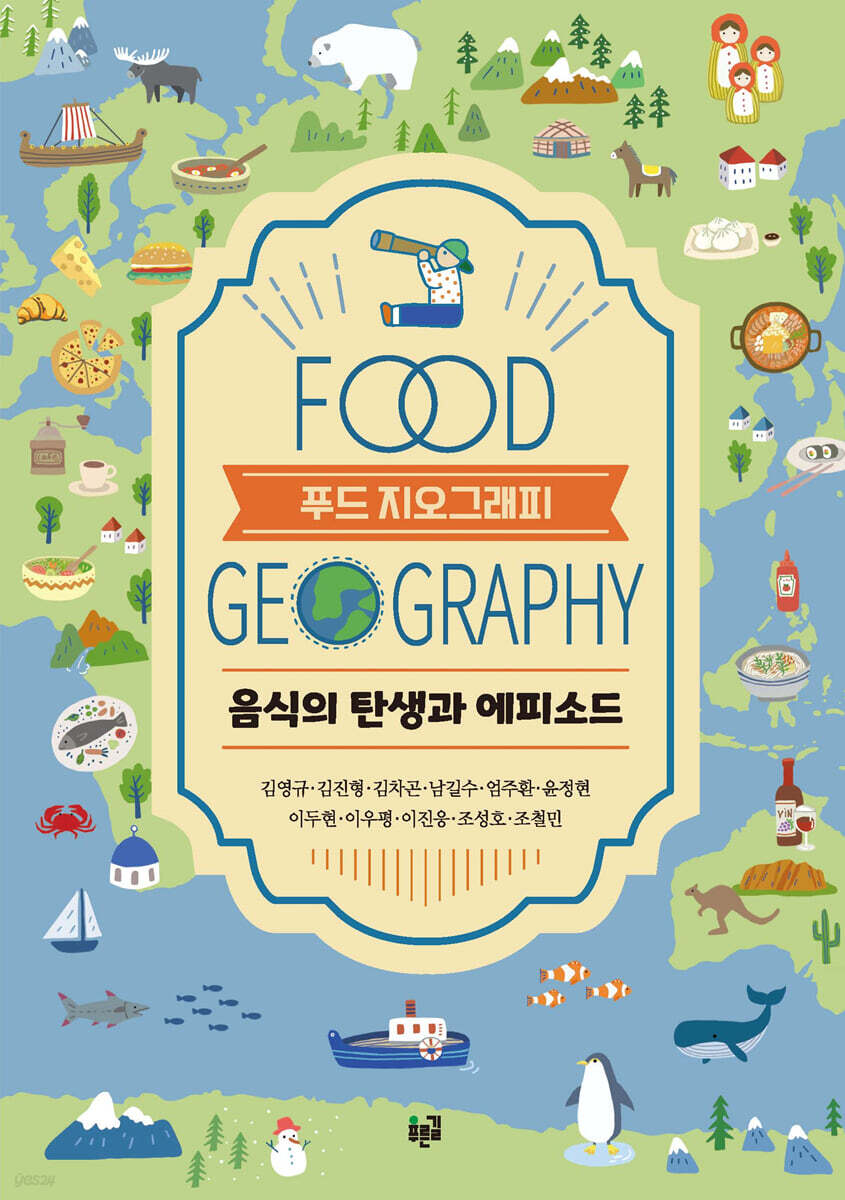
"Food Geography," which examines food culture, which has evolved and changed alongside humanity, from a geographical perspective, has been published by Pureungil.
Teachers from the National Association of Geography Teachers gathered together to delve into the history of taste and shed new light on the foods we commonly encounter in our daily lives.
Human curiosity and exploration of taste have sometimes served to expand our world.
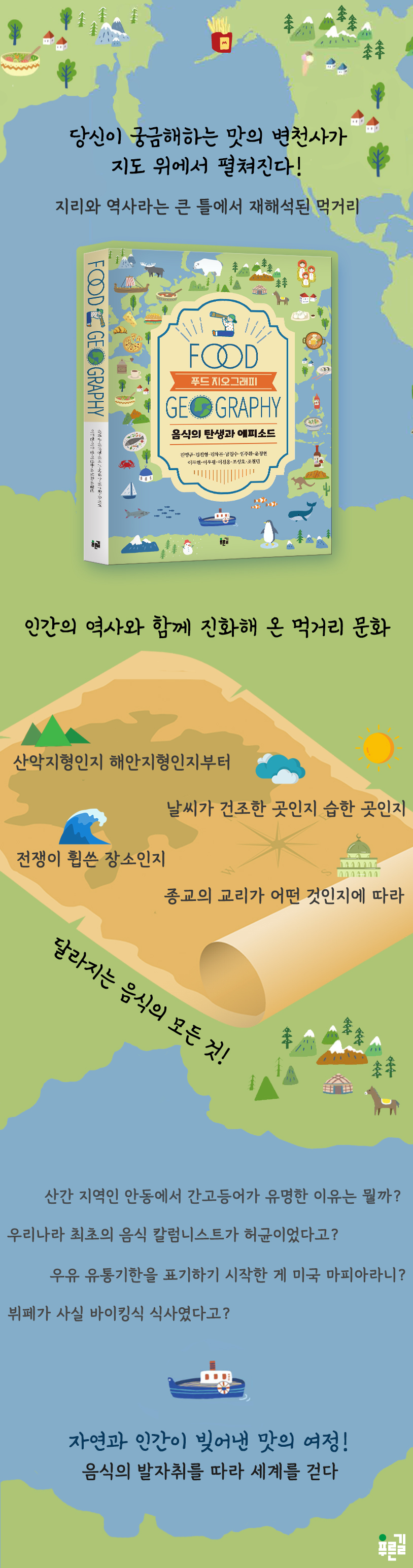
Just as people who discovered that salted mackerel that had been aged while being transported to the Taebaek Mountains was tastier than mackerel freshly caught from the sea, headed to Andong.
Or, the fondue that the Alpine people ate to survive the cold winter became a representative dish of Switzerland, and the dish that the Mongolians loved as battle rations transformed into the hamburger that people all over the world enjoy.
The dishes that appear on our tables today have reached us through countless people's struggles and discoveries.
Every dish is a journey of exploring new ingredients and recipes to create more delicious dishes.
When we trace the history of various foods from around the world, from dried mackerel to jelly, hamburgers, milk, jajangmyeon, sausages, and French fries, we realize that food is not just food, but a product of a culture with a long history.
The act of exploring food leads to understanding the world.
Food reinterpreted within the broader framework of geography and history
"Food Geography," which examines food culture, which has evolved and changed alongside humanity, from a geographical perspective, has been published by Pureungil.
Teachers from the National Association of Geography Teachers gathered together to delve into the history of taste and shed new light on the foods we commonly encounter in our daily lives.
Human curiosity and exploration of taste have sometimes served to expand our world.
Just as people who discovered that salted mackerel that had been aged while being transported to the Taebaek Mountains was tastier than mackerel freshly caught from the sea, headed to Andong.
Or, the fondue that the Alpine people ate to survive the cold winter became a representative dish of Switzerland, and the dish that the Mongolians loved as battle rations transformed into the hamburger that people all over the world enjoy.
The dishes that appear on our tables today have reached us through countless people's struggles and discoveries.
Every dish is a journey of exploring new ingredients and recipes to create more delicious dishes.
When we trace the history of various foods from around the world, from dried mackerel to jelly, hamburgers, milk, jajangmyeon, sausages, and French fries, we realize that food is not just food, but a product of a culture with a long history.
The act of exploring food leads to understanding the world.
- You can preview some of the book's contents.
Preview
index
preface
Chapter 1 Natural Environment
Why Dried Mackerel Became Famous in Andong, an Inland Mountainous Region
Why Hwangtae Deokjang developed in Daegwallyeong and Inje-gun
The synonym for semi-dried fish, squid and oyster
Our food, Muk, which we ate differently depending on the season
Lee Han-chi-han's winter seasonal food, naengmyeon
Noodles, a symbol of East-West cultural exchange
Why is China's Sichuan cuisine spicy?
Chinese duck dishes, Beijing Kaoya and Yanxueya
A wine that combines the energy of heaven and earth, and the spirit of craftsmanship.
Fondue, a food for surviving the cold winters of the Alps
Desert tree, date palm
Chapter 2 Characters
Heo Gyun, Korea's first local food columnist
Dorumuk and King Seonjo
Tofu made with seawater
Dongpo Pork and Su Dongpo
Dumplings and Zhuge Liang
Spam, the Korean rice thief who came from the US
The epitome of Neapolitan pizza, Margherita Pizza
The Secret Hidden in the Sandwich Name
Milk King Al Capone
Chapter 3 History
The Ming Dynasty's love of Joseon tofu
Food for refugees during the Korean War
Why is Busan famous for fish cakes?
There is no Korean Jjajangmyeon in China.
The Meiji Restoration and Sukiyaki
The World of Rice and Wheat
The Wine Wars: A Prelude to the Hundred Years' War between England and France
The History of Butter and Margarine
Is England's national dish curry?
The car that changed the history of the country
Chapter 4 War and Conquest
Goryeo soju spread to the Korean Peninsula by Mongolia
The hamburger, a product of Mongolia's history of western conquest
Budae Jjigae, filled with the joys and sorrows of the Korean War
Vietnamese Pho, the soul food spread by boat people
The birth of weak coffee, Americano
A buffet is a Viking meal?
Canning, a military invention of the Napoleonic Wars
A sausage enjoyed by the Greeks and Romans
The croissant, a bread born from the war between the Ottoman Empire and Austria
Chapter 5: Religion and Origins
Korea's representative temple food, pickled vegetables and yakshik
The irony of the origins of Korean, Chinese, and Japanese ramen
Why didn't the Mongols eat fish?
Ketchup born from fish sauce
India, a Cow-Worshiping Nation vs. Beef-Exporting Nation
Muslims and Jews who do not eat pork
French fries, America's representative French fried food
Tonkatsu from Europe
References
Chapter 1 Natural Environment
Why Dried Mackerel Became Famous in Andong, an Inland Mountainous Region
Why Hwangtae Deokjang developed in Daegwallyeong and Inje-gun
The synonym for semi-dried fish, squid and oyster
Our food, Muk, which we ate differently depending on the season
Lee Han-chi-han's winter seasonal food, naengmyeon
Noodles, a symbol of East-West cultural exchange
Why is China's Sichuan cuisine spicy?
Chinese duck dishes, Beijing Kaoya and Yanxueya
A wine that combines the energy of heaven and earth, and the spirit of craftsmanship.
Fondue, a food for surviving the cold winters of the Alps
Desert tree, date palm
Chapter 2 Characters
Heo Gyun, Korea's first local food columnist
Dorumuk and King Seonjo
Tofu made with seawater
Dongpo Pork and Su Dongpo
Dumplings and Zhuge Liang
Spam, the Korean rice thief who came from the US
The epitome of Neapolitan pizza, Margherita Pizza
The Secret Hidden in the Sandwich Name
Milk King Al Capone
Chapter 3 History
The Ming Dynasty's love of Joseon tofu
Food for refugees during the Korean War
Why is Busan famous for fish cakes?
There is no Korean Jjajangmyeon in China.
The Meiji Restoration and Sukiyaki
The World of Rice and Wheat
The Wine Wars: A Prelude to the Hundred Years' War between England and France
The History of Butter and Margarine
Is England's national dish curry?
The car that changed the history of the country
Chapter 4 War and Conquest
Goryeo soju spread to the Korean Peninsula by Mongolia
The hamburger, a product of Mongolia's history of western conquest
Budae Jjigae, filled with the joys and sorrows of the Korean War
Vietnamese Pho, the soul food spread by boat people
The birth of weak coffee, Americano
A buffet is a Viking meal?
Canning, a military invention of the Napoleonic Wars
A sausage enjoyed by the Greeks and Romans
The croissant, a bread born from the war between the Ottoman Empire and Austria
Chapter 5: Religion and Origins
Korea's representative temple food, pickled vegetables and yakshik
The irony of the origins of Korean, Chinese, and Japanese ramen
Why didn't the Mongols eat fish?
Ketchup born from fish sauce
India, a Cow-Worshiping Nation vs. Beef-Exporting Nation
Muslims and Jews who do not eat pork
French fries, America's representative French fried food
Tonkatsu from Europe
References
Detailed image
Publisher's Review
A journey of flavor created by nature and humans
Food ingredients and cooking methods are influenced by the country's natural environment, including its climate, topography, and soil.
Depending on whether the terrain is mountainous or coastal, whether the weather is dry or humid, whether it is a place swept by war, and what the religious doctrines are, the taste and appearance of the same food can differ.
In Korea, since ancient times, rice cakes have been made from crops that are abundant in each season or are easy to store.
In the spring, they made mung bean jelly, in the summer, corn jelly, in the fall, acorn jelly, and in the winter, they made buckwheat jelly and safely got through the barley harvest season of that time.
The reason why Sichuan cuisine in China is spicy is also related to the hot and humid climate.
This was because the spicy taste stimulated the appetite and helped regulate body temperature even in hot and humid weather.
Sometimes, some foods were developed for human convenience.
It turns out that legendary American mafia Al Capone was the first person to put an expiration date on milk while searching for a way to consume it safely, and that Heo Gyun, the author of the first Korean novel, The Story of Hong Gildong, was also Korea's first local food columnist.
During Napoleon's time in power in France, canned food was invented as a wartime munition.
At first, food was made by canning with glass bottles, and then with tin containers. However, it is said that the can lids were difficult to open, so they were not used properly until someone invented the can opener.
It is also worth mentioning that the croissant, France's representative bread, originated from the war between the Ottoman Empire and Austria.
The croissant we know today was created by the French royal chef to comfort the Austrian royal Marie Antoinette, who had a political marriage with France.
Walking the World in the Footsteps of Food
Tracing the footsteps of food is a journey around the world and a process of understanding the world.
"Food Geography" reinterprets food within the broader framework of geography and history, providing a fascinating glimpse into culture and history from around the world.
As we turn the pages, we realize that food is not just food, but an important part of the culture that embodies each country and era.
Let's listen to the stories of various foods from around the world as if we were on a culinary journey.
As we wander across the world map, experiencing the unique flavors of each culture, we will eventually encounter the story of humanity, connected by the common language of food.
Food ingredients and cooking methods are influenced by the country's natural environment, including its climate, topography, and soil.
Depending on whether the terrain is mountainous or coastal, whether the weather is dry or humid, whether it is a place swept by war, and what the religious doctrines are, the taste and appearance of the same food can differ.
In Korea, since ancient times, rice cakes have been made from crops that are abundant in each season or are easy to store.
In the spring, they made mung bean jelly, in the summer, corn jelly, in the fall, acorn jelly, and in the winter, they made buckwheat jelly and safely got through the barley harvest season of that time.
The reason why Sichuan cuisine in China is spicy is also related to the hot and humid climate.
This was because the spicy taste stimulated the appetite and helped regulate body temperature even in hot and humid weather.
Sometimes, some foods were developed for human convenience.
It turns out that legendary American mafia Al Capone was the first person to put an expiration date on milk while searching for a way to consume it safely, and that Heo Gyun, the author of the first Korean novel, The Story of Hong Gildong, was also Korea's first local food columnist.
During Napoleon's time in power in France, canned food was invented as a wartime munition.
At first, food was made by canning with glass bottles, and then with tin containers. However, it is said that the can lids were difficult to open, so they were not used properly until someone invented the can opener.
It is also worth mentioning that the croissant, France's representative bread, originated from the war between the Ottoman Empire and Austria.
The croissant we know today was created by the French royal chef to comfort the Austrian royal Marie Antoinette, who had a political marriage with France.
Walking the World in the Footsteps of Food
Tracing the footsteps of food is a journey around the world and a process of understanding the world.
"Food Geography" reinterprets food within the broader framework of geography and history, providing a fascinating glimpse into culture and history from around the world.
As we turn the pages, we realize that food is not just food, but an important part of the culture that embodies each country and era.
Let's listen to the stories of various foods from around the world as if we were on a culinary journey.
As we wander across the world map, experiencing the unique flavors of each culture, we will eventually encounter the story of humanity, connected by the common language of food.
GOODS SPECIFICS
- Date of issue: June 17, 2024
- Page count, weight, size: 284 pages | 148*210*20mm
- ISBN13: 9788962910971
- ISBN10: 8962910977
You may also like
카테고리
korean


korean

![GQ KOREA Mark (Monthly): December [2025]](http://librairie.coreenne.fr/cdn/shop/files/8ef265dbbfbf186523ed75ba7319009d.jpg?v=1765340328&width=3840)


