

Jogye Order Standard Diamond Sutra (Diamond Sutra)
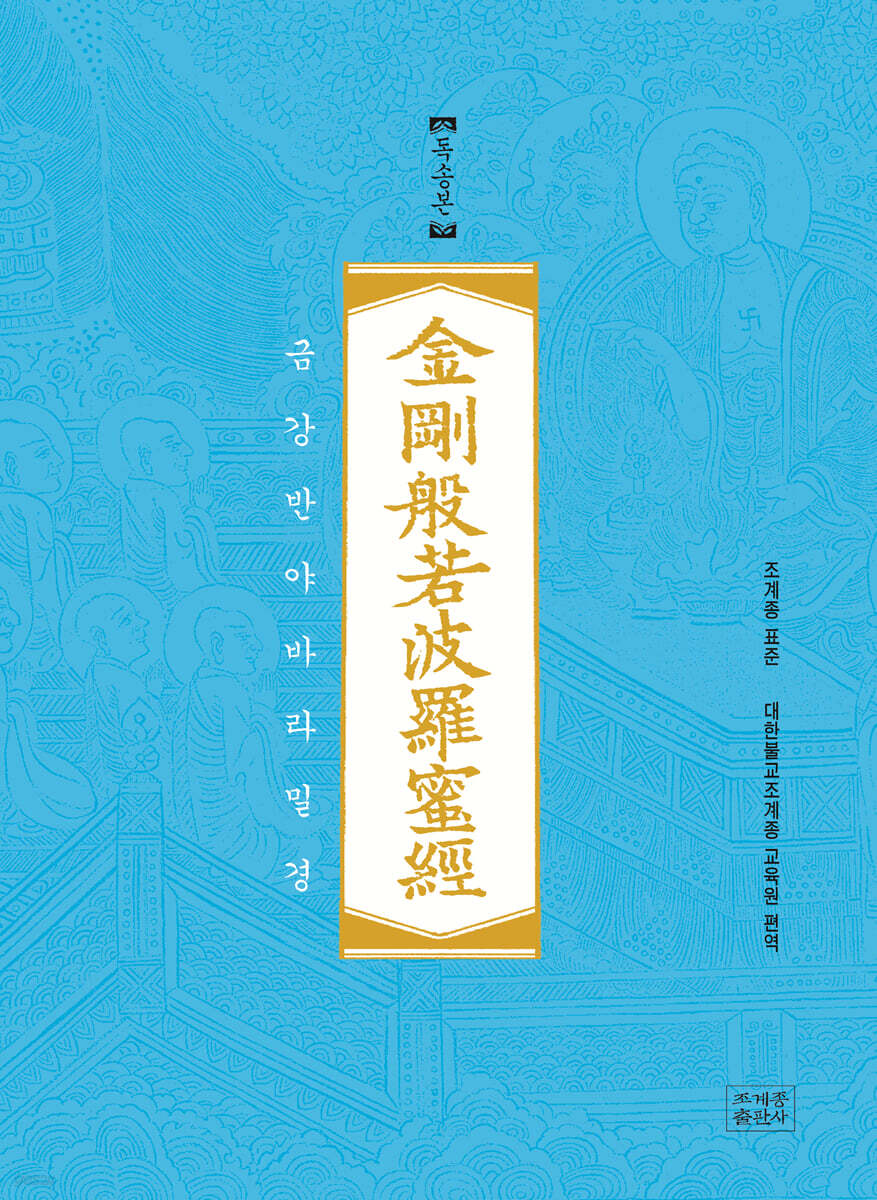 |
Description
Book Introduction
Among the numerous Chinese translations in circulation, we selected an edition with proven historical accuracy and reliability, and through academic verification, we finally completed a correct Korean translation that matches the spirit of the scriptures.
It is highly reliable as it was compiled at the religious order level by appointing six experts from various fields, including Sanskrit experts, religious studies experts, and Chinese classics experts, as members of the compilation committee.
It is highly reliable as it was compiled at the religious order level by appointing six experts from various fields, including Sanskrit experts, religious studies experts, and Chinese classics experts, as members of the compilation committee.
- You can preview some of the book's contents.
Preview
index
1.
The connection between the Dharma assembly and the Dharma assembly
2.
Seonhyeongi Cheongbun / Subori asks the law
3.
Mahayana Jeongjongbun / The fundamental meaning of Mahayana
4.
The Wonderful Practice of No Ownership / Giving without attachment
5.
The true form of the Tathagata
6.
spiritual treasure / deep faith
7.
No attainment or teaching / No enlightenment or teaching
8.
Birth of the Dharma / Mother of Buddha and Enlightenment, Diamond Sutra
9.
Everyday Impermanence / Ideas and Their Denial
10.
Magnificent Pure Land Tomb / Magnificence of the Pure Land
11.
The outstanding virtue of the law of non-action
12.
Respect for the Right Teachings / Respect for the Right Teachings
13.
The method of holding this sutra
14.
Ideal Nirvana / Nirvana beyond ideas
15.
The merit of maintaining the sutra / the merit of maintaining the sutra
16.
The merit of clearing karma / the merit of clearing karma
17.
The Ultimate Teaching, Anatta
18.
Observe without discrimination / Observe without discrimination
19.
The Dharma Realm's Currency / Not the Blessings but the Blessings
20.
Transcendence of appearance and characteristics
21.
Non-fiction novel / Non-sermon sermon
22.
Full of lawlessness / law with nothing to gain
23.
Jeongsimhaengseonbun / Good deeds that go beyond ideas
24.
Welfare Movie / The best blessing of Suji Suji
25.
Indiscriminate teaching
26.
The Buddha's body is not a separate entity / The Buddha who has left behind physical characteristics
27.
Transcendence of Disconnection and Extinction
28.
Non-attachment / Non-attachment virtue
29.
The above proper amount / Tathagata without coming or going
30.
The true nature of the whole and the part
31.
A notion that should not be given / A notion that should not be given
32.
Eunghwabijinbun / Teaching beyond ideas
The connection between the Dharma assembly and the Dharma assembly
2.
Seonhyeongi Cheongbun / Subori asks the law
3.
Mahayana Jeongjongbun / The fundamental meaning of Mahayana
4.
The Wonderful Practice of No Ownership / Giving without attachment
5.
The true form of the Tathagata
6.
spiritual treasure / deep faith
7.
No attainment or teaching / No enlightenment or teaching
8.
Birth of the Dharma / Mother of Buddha and Enlightenment, Diamond Sutra
9.
Everyday Impermanence / Ideas and Their Denial
10.
Magnificent Pure Land Tomb / Magnificence of the Pure Land
11.
The outstanding virtue of the law of non-action
12.
Respect for the Right Teachings / Respect for the Right Teachings
13.
The method of holding this sutra
14.
Ideal Nirvana / Nirvana beyond ideas
15.
The merit of maintaining the sutra / the merit of maintaining the sutra
16.
The merit of clearing karma / the merit of clearing karma
17.
The Ultimate Teaching, Anatta
18.
Observe without discrimination / Observe without discrimination
19.
The Dharma Realm's Currency / Not the Blessings but the Blessings
20.
Transcendence of appearance and characteristics
21.
Non-fiction novel / Non-sermon sermon
22.
Full of lawlessness / law with nothing to gain
23.
Jeongsimhaengseonbun / Good deeds that go beyond ideas
24.
Welfare Movie / The best blessing of Suji Suji
25.
Indiscriminate teaching
26.
The Buddha's body is not a separate entity / The Buddha who has left behind physical characteristics
27.
Transcendence of Disconnection and Extinction
28.
Non-attachment / Non-attachment virtue
29.
The above proper amount / Tathagata without coming or going
30.
The true nature of the whole and the part
31.
A notion that should not be given / A notion that should not be given
32.
Eunghwabijinbun / Teaching beyond ideas
Publisher's Review
◎ The Jogye Order of Korean Buddhism's primary sutra, the Diamond Sutra, has published a standard recitation version!
The official name of the Diamond Sutra is the Mahayana Diamond Sutra, and it is abbreviated as the Diamond Sutra or the Diamond Sutra.
The Diamond Sutra is praised as the mother of Mahayana sutras and is also the primary sutra of the Jogye Order of Korean Buddhism.
However, since there was no Diamond Sutra published at the religious order level, which contained the fundamental ideology of the Jogye Order, the followers had to suffer from confusion amidst the circulation of over a hundred different Korean versions of the Diamond Sutra.
To enable its followers to easily recite the Diamond Sutra and accurately understand its contents, the Jogye Order of Korean Buddhism formed a Diamond Sutra Compilation Committee and, after two years of academic research, finally published the Jogye Order Standard Diamond Sutra.
◎ Characteristics of the Jogye Order Standard Diamond Sutra
First, compilation at the longitudinal level through the compilation working committee.
The recently published Jogye Order Standard Vajrapani Sutra was compiled at the religious order level by appointing six experts from various fields, including Sanskrit experts, religious studies experts, and Chinese classics experts, as members of the compilation committee.
As the Diamond Sutra is the primary sutra of the Jogye Order, it is essential that it be compiled through sectarian verification rather than individual translation.
Accordingly, the Institute of Buddhist Studies at the Educational Institute held the 21st Compilation Working Group and compiled the standard version of the Jogye Order through academic seminars attended by various experts from the academic world as well as eminent monks of the Jebang.
Second, compilation of a Chinese text through a cross-editing process
As the basis for the Jogye Order Standard Diamond Sutra, the Kumarajiva translation of the Diamond Sutra, which is currently the most widely circulated, was chosen, and as the edition, the Goryeo Tripitaka Koreana edition was chosen.
However, as a result of comparing the editions, inconsistencies were found between the Goryeo Tripitaka Koreana edition and other Tripitaka Koreana editions. Accordingly, a meticulous cross-referencing process was carried out on several Tripitaka Koreana editions, eight character phrases were revised, and the Jogye Order standard Chinese version was completed.
Third, Korean translation through collaboration
Although there are already many Korean translations of the Diamond Sutra in circulation, these translations were all done on a personal level, and thus had various problems in using them as a standard version for the Buddhist order.
The newly compiled “Jogye Order Standard Vajrapani Sutra” was jointly completed through 21 compilation meetings by experts in Sanskrit, Chinese characters, and teachings.
Traditionally, the translation of scriptures was not an individual task, but rather a collaborative effort involving numerous experts who then went through a verification process.
The Jogye Order's standard edition of the Diamond Sutra, compiled this time, inherits the tradition and spirit of this adversity.
Fourth, Korean translations referencing the original and translated versions.
Most of the Diamond Sutras currently in circulation are based on the Kurama Collection's Chinese translation.
However, when comparing the translated version of the Kumarajiva with the original version, many parts appear to be abbreviated or paraphrased.
It was precisely because of this problem that it was impossible to accurately understand the meaning of the Diamond Sutra using only the Chinese text.
The Korean translation of the Jogye Order Standard Diamond Sutra is based on the original Chinese translation by Kumarajiva, but for parts where the meaning is ambiguous, it is based on the original and five other translations [Vajrapani Sutra (509), Vajrapani Sutra (562), Vajrapani Sutra (590), Vajrapani Sutra (660-663 ... I translated it with reference to [Neng-Chang-Da-Gang-Pan-Yak-Pa-Ra-Mida-Gyeong (Yi-Jeong, 703)] so that the meaning is clear.
And, in the process of translation, parts that were continuously discussed or translated differently from existing Korean versions were annotated and published as a separate annotated version to help Buddhists understand.
This was possible because the academic capacity of Korean Buddhism had matured to such an extent that it was possible to break away from the culture of relying solely on Chinese texts and compile a new Buddhist text by comparing the original text with the Chinese text.
Fifth, multiple rounds of proofreading
The manuscript translated by the compilation committee was edited by a wide range of experts, including Korean linguists and sijo poets.
Furthermore, during the 21 rounds of compilation meetings, we deliberated and deliberated until the very end to find the logical structure of the Diamond Sutra, including the logic of immediate non-existence, and an appropriate translation.
Sixth, multiple academic verifications
《Jogye Order Standard Diamond Sutra》 has done its best to incorporate as many academic research results as possible from the academic community.
To achieve this, we held one workshop, two academic seminars, held a public hearing on the Korean translation, collected opinions from Buddhist monks and clergy across the Gangwon region, and reviewed the translation twice by the Translation Committee.
Through these procedures and processes, we gathered diverse opinions from the academic community and reflected the opinions of the monks on the embankment as much as possible.
Seventh, publishing the solo and annotated versions together.
The recently published Jogye Order Standard Vajrapani-Ramilgyeong is a combined edition of the Chinese text and the Korean translation.
However, depending on the purpose, a separate version was published that could be used for Buddhist practice, including a recitation version and an annotated version with commentary.
Buddhists who focus on reciting the Diamond Sutra can use the recitation version, while those interested in understanding the content can use the annotated version.
The official name of the Diamond Sutra is the Mahayana Diamond Sutra, and it is abbreviated as the Diamond Sutra or the Diamond Sutra.
The Diamond Sutra is praised as the mother of Mahayana sutras and is also the primary sutra of the Jogye Order of Korean Buddhism.
However, since there was no Diamond Sutra published at the religious order level, which contained the fundamental ideology of the Jogye Order, the followers had to suffer from confusion amidst the circulation of over a hundred different Korean versions of the Diamond Sutra.
To enable its followers to easily recite the Diamond Sutra and accurately understand its contents, the Jogye Order of Korean Buddhism formed a Diamond Sutra Compilation Committee and, after two years of academic research, finally published the Jogye Order Standard Diamond Sutra.
◎ Characteristics of the Jogye Order Standard Diamond Sutra
First, compilation at the longitudinal level through the compilation working committee.
The recently published Jogye Order Standard Vajrapani Sutra was compiled at the religious order level by appointing six experts from various fields, including Sanskrit experts, religious studies experts, and Chinese classics experts, as members of the compilation committee.
As the Diamond Sutra is the primary sutra of the Jogye Order, it is essential that it be compiled through sectarian verification rather than individual translation.
Accordingly, the Institute of Buddhist Studies at the Educational Institute held the 21st Compilation Working Group and compiled the standard version of the Jogye Order through academic seminars attended by various experts from the academic world as well as eminent monks of the Jebang.
Second, compilation of a Chinese text through a cross-editing process
As the basis for the Jogye Order Standard Diamond Sutra, the Kumarajiva translation of the Diamond Sutra, which is currently the most widely circulated, was chosen, and as the edition, the Goryeo Tripitaka Koreana edition was chosen.
However, as a result of comparing the editions, inconsistencies were found between the Goryeo Tripitaka Koreana edition and other Tripitaka Koreana editions. Accordingly, a meticulous cross-referencing process was carried out on several Tripitaka Koreana editions, eight character phrases were revised, and the Jogye Order standard Chinese version was completed.
Third, Korean translation through collaboration
Although there are already many Korean translations of the Diamond Sutra in circulation, these translations were all done on a personal level, and thus had various problems in using them as a standard version for the Buddhist order.
The newly compiled “Jogye Order Standard Vajrapani Sutra” was jointly completed through 21 compilation meetings by experts in Sanskrit, Chinese characters, and teachings.
Traditionally, the translation of scriptures was not an individual task, but rather a collaborative effort involving numerous experts who then went through a verification process.
The Jogye Order's standard edition of the Diamond Sutra, compiled this time, inherits the tradition and spirit of this adversity.
Fourth, Korean translations referencing the original and translated versions.
Most of the Diamond Sutras currently in circulation are based on the Kurama Collection's Chinese translation.
However, when comparing the translated version of the Kumarajiva with the original version, many parts appear to be abbreviated or paraphrased.
It was precisely because of this problem that it was impossible to accurately understand the meaning of the Diamond Sutra using only the Chinese text.
The Korean translation of the Jogye Order Standard Diamond Sutra is based on the original Chinese translation by Kumarajiva, but for parts where the meaning is ambiguous, it is based on the original and five other translations [Vajrapani Sutra (509), Vajrapani Sutra (562), Vajrapani Sutra (590), Vajrapani Sutra (660-663 ... I translated it with reference to [Neng-Chang-Da-Gang-Pan-Yak-Pa-Ra-Mida-Gyeong (Yi-Jeong, 703)] so that the meaning is clear.
And, in the process of translation, parts that were continuously discussed or translated differently from existing Korean versions were annotated and published as a separate annotated version to help Buddhists understand.
This was possible because the academic capacity of Korean Buddhism had matured to such an extent that it was possible to break away from the culture of relying solely on Chinese texts and compile a new Buddhist text by comparing the original text with the Chinese text.
Fifth, multiple rounds of proofreading
The manuscript translated by the compilation committee was edited by a wide range of experts, including Korean linguists and sijo poets.
Furthermore, during the 21 rounds of compilation meetings, we deliberated and deliberated until the very end to find the logical structure of the Diamond Sutra, including the logic of immediate non-existence, and an appropriate translation.
Sixth, multiple academic verifications
《Jogye Order Standard Diamond Sutra》 has done its best to incorporate as many academic research results as possible from the academic community.
To achieve this, we held one workshop, two academic seminars, held a public hearing on the Korean translation, collected opinions from Buddhist monks and clergy across the Gangwon region, and reviewed the translation twice by the Translation Committee.
Through these procedures and processes, we gathered diverse opinions from the academic community and reflected the opinions of the monks on the embankment as much as possible.
Seventh, publishing the solo and annotated versions together.
The recently published Jogye Order Standard Vajrapani-Ramilgyeong is a combined edition of the Chinese text and the Korean translation.
However, depending on the purpose, a separate version was published that could be used for Buddhist practice, including a recitation version and an annotated version with commentary.
Buddhists who focus on reciting the Diamond Sutra can use the recitation version, while those interested in understanding the content can use the annotated version.
GOODS SPECIFICS
- Date of issue: January 30, 2009
- Page count, weight, size: 96 pages | 244g | 188*254*15mm
- ISBN13: 9788993629040
- ISBN10: 8993629048
You may also like
카테고리
korean


korean

![ELLE 엘르 스페셜 에디션 A형 : 12월 [2025]](http://librairie.coreenne.fr/cdn/shop/files/b8e27a3de6c9538896439686c6b0e8fb.jpg?v=1766436872&width=3840)


