

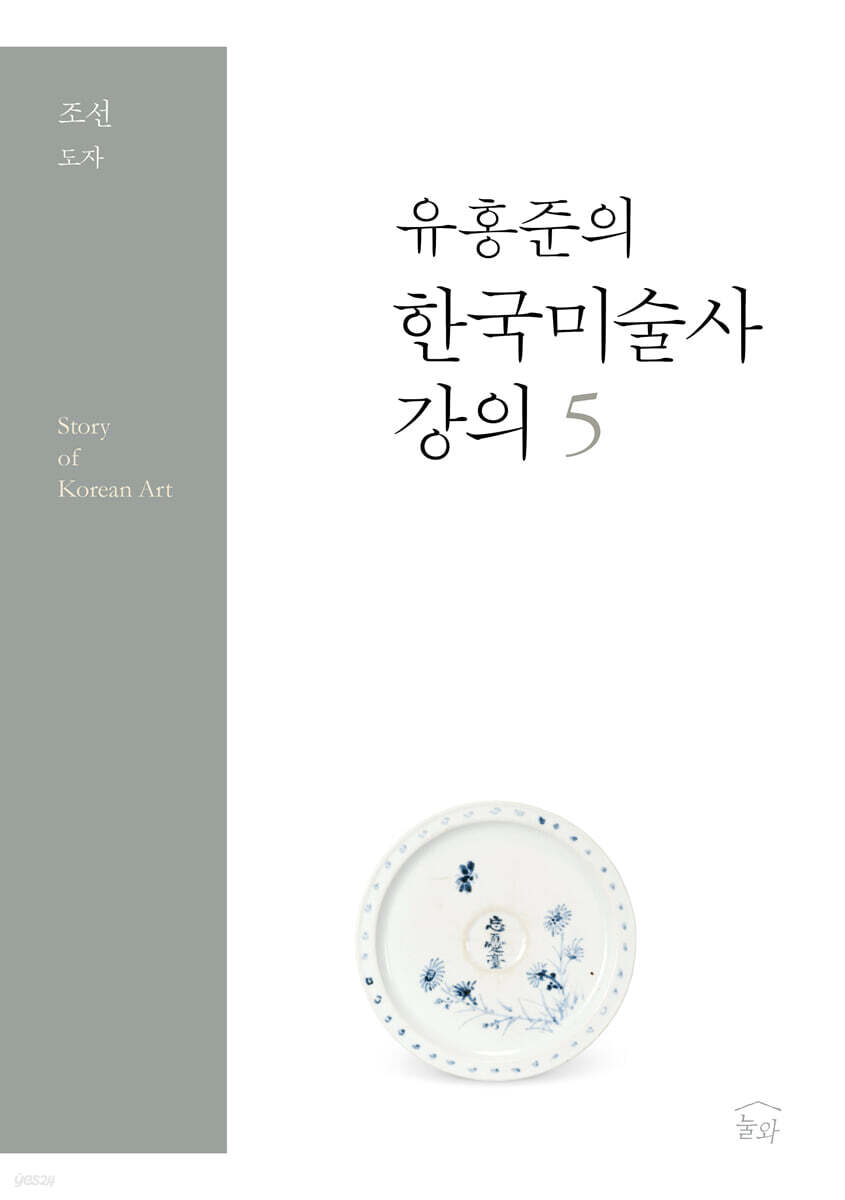
Yoo Hong-jun's Korean Art History Lecture 5
 |
Description
Book Introduction
Yoo Hong-jun's Korean Art History Lectures, now in full print after 13 years!
"Korean Art Evangelist" Yoo Hong-jun Sets New Standards for Korean Art History
『Yoo Hong-jun's Lectures on Korean Art History』, which has been loved by many readers since the publication of the first volume in 2010, has been completed after 13 years with the simultaneous publication of Volumes 5 and 6.
This series, written by Professor Yoo Hong-jun, who calls himself a 'Korean art evangelist', consists of six volumes, totaling over 2,500 pages and containing approximately 2,650 illustrations.
Starting with Volume 1, "Prehistory, the Three Kingdoms, and Balhae," and continuing through Volume 6, "Joseon: Crafts, Lifestyle, and Decorative Arts," it not only clearly organizes the flow of Korean art history, but also includes masterpieces representing each era without exception.
While there have been several books focusing on specific periods or fields in Korean art history, this complete edition is all the more significant in that it is extremely rare for a single author to write a comprehensive history of Korean art from a consistent perspective.
This series, which is a compilation of research achievements accumulated by the academic world, will become the standard for future Korean art history.
Volume 5 of 『Yoo Hong-jun's Lectures on Korean Art History』 focuses on Joseon porcelain, which has long been praised as the essence of Korean beauty and loved by many art enthusiasts.
It covers all types of ceramics from the Joseon Dynasty, including Buncheong sagi, white porcelain, and pottery. In particular, white porcelain was organized so that the unique aesthetic and style of each era could be understood.
You can experience the essence of Joseon porcelain in its entirety, from the simple beauty of Buncheong sagi, the pure white, round, and elegant white porcelain moon jar, to the blue-and-white porcelain with its compositional beauty reminiscent of a painting.
"Korean Art Evangelist" Yoo Hong-jun Sets New Standards for Korean Art History
『Yoo Hong-jun's Lectures on Korean Art History』, which has been loved by many readers since the publication of the first volume in 2010, has been completed after 13 years with the simultaneous publication of Volumes 5 and 6.
This series, written by Professor Yoo Hong-jun, who calls himself a 'Korean art evangelist', consists of six volumes, totaling over 2,500 pages and containing approximately 2,650 illustrations.
Starting with Volume 1, "Prehistory, the Three Kingdoms, and Balhae," and continuing through Volume 6, "Joseon: Crafts, Lifestyle, and Decorative Arts," it not only clearly organizes the flow of Korean art history, but also includes masterpieces representing each era without exception.
While there have been several books focusing on specific periods or fields in Korean art history, this complete edition is all the more significant in that it is extremely rare for a single author to write a comprehensive history of Korean art from a consistent perspective.
This series, which is a compilation of research achievements accumulated by the academic world, will become the standard for future Korean art history.
Volume 5 of 『Yoo Hong-jun's Lectures on Korean Art History』 focuses on Joseon porcelain, which has long been praised as the essence of Korean beauty and loved by many art enthusiasts.
It covers all types of ceramics from the Joseon Dynasty, including Buncheong sagi, white porcelain, and pottery. In particular, white porcelain was organized so that the unique aesthetic and style of each era could be understood.
You can experience the essence of Joseon porcelain in its entirety, from the simple beauty of Buncheong sagi, the pure white, round, and elegant white porcelain moon jar, to the blue-and-white porcelain with its compositional beauty reminiscent of a painting.
- You can preview some of the book's contents.
Preview
index
The Glory and Development of Joseon Dynasty Ceramics
Chapter 51 Buncheong Ware
The liberation of art brought about by the autonomy of the people
Chapter 52: Electric White Porcelain, 15th-16th Century
Completion of high-quality, high-quality white porcelain
Chapter 53: Mid-Period White Porcelain, 17th Century
The golden age of iron-painted white porcelain
Chapter 54: Later White Porcelain (Top): Gold-plated Kiln, First Half of the 18th Century
The Birth of the White Porcelain Moon Jar
Chapter 55: Later White Porcelain (Part 2): Bunwon-ri Kiln, Late 18th Century - Early 19th Century
The glory and pride of Bunwon-ri white porcelain
Chapter 56: Late White Porcelain, Late 19th Century - Early 20th Century
The lingering influence of new and traditional styles at the end of the dynasty
Chapter 57: Local Kilns and Pottery
The simple beauty of life in folk kilns
supplement
The flow of Chinese ceramic history
The flow of Japanese ceramics history
References
List of plates
Chapter 51 Buncheong Ware
The liberation of art brought about by the autonomy of the people
Chapter 52: Electric White Porcelain, 15th-16th Century
Completion of high-quality, high-quality white porcelain
Chapter 53: Mid-Period White Porcelain, 17th Century
The golden age of iron-painted white porcelain
Chapter 54: Later White Porcelain (Top): Gold-plated Kiln, First Half of the 18th Century
The Birth of the White Porcelain Moon Jar
Chapter 55: Later White Porcelain (Part 2): Bunwon-ri Kiln, Late 18th Century - Early 19th Century
The glory and pride of Bunwon-ri white porcelain
Chapter 56: Late White Porcelain, Late 19th Century - Early 20th Century
The lingering influence of new and traditional styles at the end of the dynasty
Chapter 57: Local Kilns and Pottery
The simple beauty of life in folk kilns
supplement
The flow of Chinese ceramic history
The flow of Japanese ceramics history
References
List of plates
Detailed image

Publisher's Review
Volume 5 of 『Yoo Hong-jun's Lectures on Korean Art History』 focuses on Joseon porcelain, which has long been praised as the essence of Korean beauty and loved by many art enthusiasts.
It covers all types of ceramics from the Joseon Dynasty, including Buncheong sagi, white porcelain, and pottery. In particular, white porcelain was organized so that the unique aesthetic and style of each era could be understood.
You can experience the essence of Joseon porcelain in its entirety, from the simple beauty of Buncheong sagi, the pure white, round, and elegant white porcelain moon jar, to the blue-and-white porcelain with its compositional beauty reminiscent of a painting.
Buncheong ware, free and unique sculptural beauty
In the early Joseon Dynasty, Buncheong sagi, which inherited the tradition of Goryeo celadon, appeared and enjoyed its heyday.
While Goryeo celadon has an aristocratic atmosphere, Buncheong sagi is characterized by its simple beauty.
Because Buncheong ware was produced and presented as tribute throughout the country, it has a very different atmosphere from later white ware produced under strict central control.
The vases with fish paintings are full of life, and the various jars and bottles decorated with vivid brushstrokes and patterns reminiscent of ignition are reminiscent of modern art.
This book classifies Buncheong sagi by technique, allowing one to fully appreciate its unique aesthetic, which is difficult to find similar examples in the history of world ceramics.
Joseon white porcelain, the essence of Korean beauty
Joseon began producing white porcelain during the reign of King Sejong, and in the late 15th century, a branch of Saongwon was established as a government-run ceramics factory to begin full-scale white porcelain production.
Unlike other countries that decorated white porcelain with all kinds of ornate patterns, Joseon loved pure white porcelain.
Joseon was the second porcelain powerhouse in the world, after China, to succeed in producing blue-and-white porcelain (white porcelain decorated with blue cobalt pigment). However, even then, instead of simply adopting the Ming Dynasty's blue-and-white porcelain, which was characterized by its splendid and meticulously detailed patterns, it created its own unique beauty, represented by a pattern composition that made the most of the white space.
Joseon's white porcelain shows different aesthetics depending on the era.
This appeared as the social conditions of the time changed.
Professor Yoo Hong-jun focused on the styles of white porcelain from each era and selected and explained masterpieces representing each era.
You will naturally be drawn into the world of Joseon white porcelain by seeing carefully selected plates of jars and white porcelain bottles with blue and plum blossom patterns from the early Joseon Dynasty, jars with iron-painted cloud and dragon patterns from the mid-Joseon Dynasty, moon jars from the Geumsari kiln in the late Joseon Dynasty, and various blue and white stationery from the Bunwon-ri kiln.
A broader perspective on the history of Joseon Dynasty ceramics
The history of Joseon Dynasty ceramics is described mainly with reference to white porcelain from Bunwon official kilns, excluding Buncheong ware.
However, this book also focuses on the local kilns of the late Joseon Dynasty, and devotes an entire chapter to not only white porcelain but also black porcelain, oja (oji), pottery widely used as household utensils, and earthenware jars.
Additionally, at the end of the book, an appendix briefly explains the history of Chinese and Japanese ceramics, allowing readers to understand the history of Korean ceramics within the context of world history.
It covers all types of ceramics from the Joseon Dynasty, including Buncheong sagi, white porcelain, and pottery. In particular, white porcelain was organized so that the unique aesthetic and style of each era could be understood.
You can experience the essence of Joseon porcelain in its entirety, from the simple beauty of Buncheong sagi, the pure white, round, and elegant white porcelain moon jar, to the blue-and-white porcelain with its compositional beauty reminiscent of a painting.
Buncheong ware, free and unique sculptural beauty
In the early Joseon Dynasty, Buncheong sagi, which inherited the tradition of Goryeo celadon, appeared and enjoyed its heyday.
While Goryeo celadon has an aristocratic atmosphere, Buncheong sagi is characterized by its simple beauty.
Because Buncheong ware was produced and presented as tribute throughout the country, it has a very different atmosphere from later white ware produced under strict central control.
The vases with fish paintings are full of life, and the various jars and bottles decorated with vivid brushstrokes and patterns reminiscent of ignition are reminiscent of modern art.
This book classifies Buncheong sagi by technique, allowing one to fully appreciate its unique aesthetic, which is difficult to find similar examples in the history of world ceramics.
Joseon white porcelain, the essence of Korean beauty
Joseon began producing white porcelain during the reign of King Sejong, and in the late 15th century, a branch of Saongwon was established as a government-run ceramics factory to begin full-scale white porcelain production.
Unlike other countries that decorated white porcelain with all kinds of ornate patterns, Joseon loved pure white porcelain.
Joseon was the second porcelain powerhouse in the world, after China, to succeed in producing blue-and-white porcelain (white porcelain decorated with blue cobalt pigment). However, even then, instead of simply adopting the Ming Dynasty's blue-and-white porcelain, which was characterized by its splendid and meticulously detailed patterns, it created its own unique beauty, represented by a pattern composition that made the most of the white space.
Joseon's white porcelain shows different aesthetics depending on the era.
This appeared as the social conditions of the time changed.
Professor Yoo Hong-jun focused on the styles of white porcelain from each era and selected and explained masterpieces representing each era.
You will naturally be drawn into the world of Joseon white porcelain by seeing carefully selected plates of jars and white porcelain bottles with blue and plum blossom patterns from the early Joseon Dynasty, jars with iron-painted cloud and dragon patterns from the mid-Joseon Dynasty, moon jars from the Geumsari kiln in the late Joseon Dynasty, and various blue and white stationery from the Bunwon-ri kiln.
A broader perspective on the history of Joseon Dynasty ceramics
The history of Joseon Dynasty ceramics is described mainly with reference to white porcelain from Bunwon official kilns, excluding Buncheong ware.
However, this book also focuses on the local kilns of the late Joseon Dynasty, and devotes an entire chapter to not only white porcelain but also black porcelain, oja (oji), pottery widely used as household utensils, and earthenware jars.
Additionally, at the end of the book, an appendix briefly explains the history of Chinese and Japanese ceramics, allowing readers to understand the history of Korean ceramics within the context of world history.
GOODS SPECIFICS
- Date of issue: October 20, 2023
- Page count, weight, size: 280 pages | 674g | 174*247*15mm
- ISBN13: 9791189074616
- ISBN10: 1189074613
You may also like
카테고리
korean


korean

![GQ KOREA Mark (Monthly): December [2025]](http://librairie.coreenne.fr/cdn/shop/files/8ef265dbbfbf186523ed75ba7319009d.jpg?v=1765340328&width=3840)


