

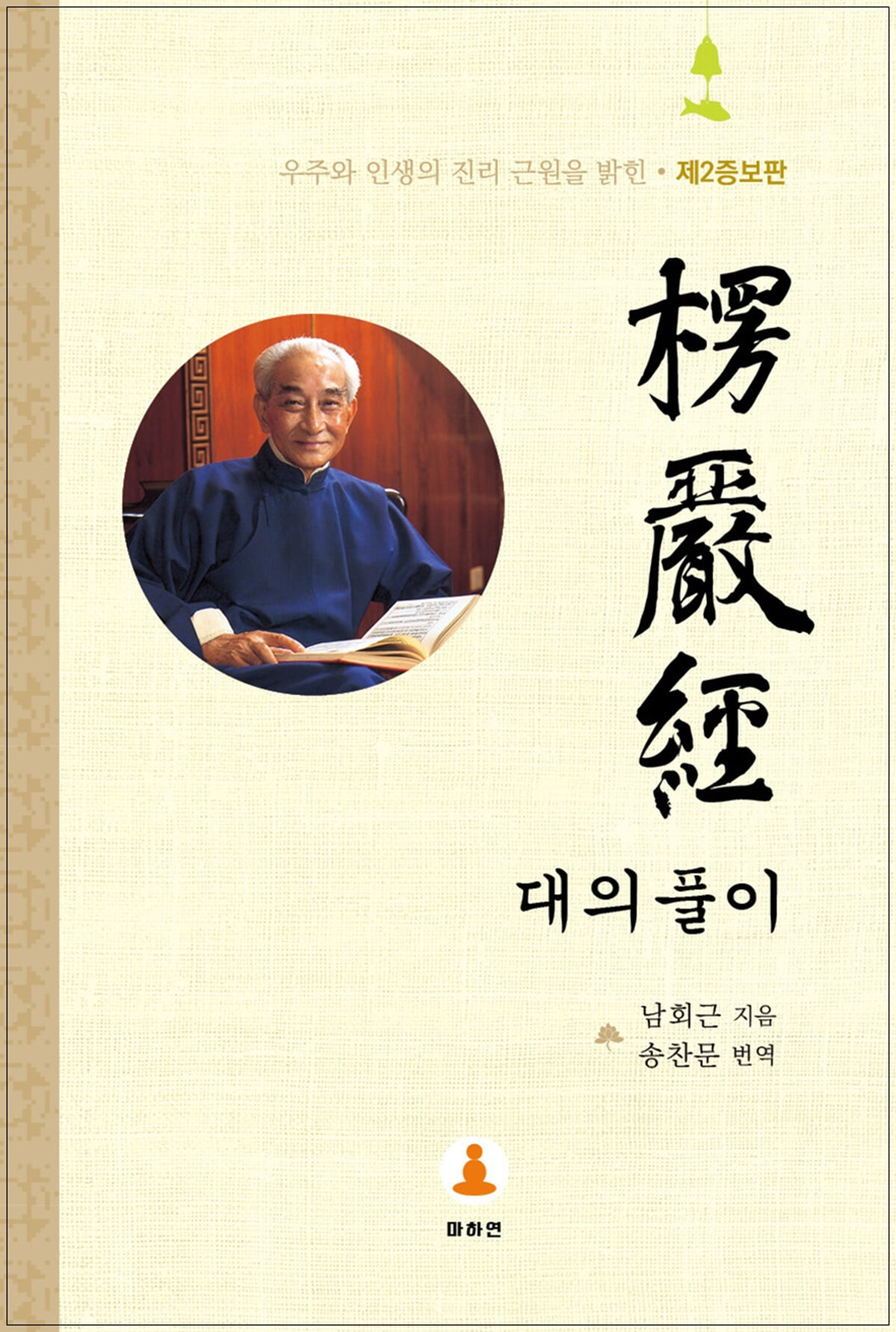
Interpretation of the Great Sutra of the Nengyomgyeong
 |
Description
index
Translator's Note
Author's Preface
The essence of the Sutra of the Nengyomgyeong
Interpretation of the Great Sutra of the Nengyomgyeong
(Volume 1 of the Surangama Sutra)
Chapter 1: Theory of the Nature of Mind
The beginning of the problem
Discerning the Seven Awarenesses of Where the Mind Is
Distinguishing between sincerity and delusion
Confirm by pointing to the nature itself
(Volume 2 of the Surangama Sutra)
Chapter 2: Epistemology of the Universe, Mind, and Matter
Awareness of the universal magnetic body
Eight Analyses of Magnetism and the Material World
The objective physical world and the subjective world of self-knowledge are not two different things.
The magnetic body transcends nature and karma.
The causes of individual and collective karma
Chapter 3: Psychological and physiological phenomena are mutual changes brought about by the self-function.
Analysis of the psychological and physiological effects of the five sounds
(Volume 3 of the Surangama Sutra)
Analysis of the experience of the six psychological and physiological functions (the five senses and consciousness)
Analysis of the experience of mind-body and external boundary operations (12 places)
Analysis of the experience between the mind and body and the external boundary (18 realms)
Chapter 4: The Physical World and the Mental World Are Both Manifestations of the Self-Function
Analysis of the five major consonants of the Jisuhwapunggong
Clairvoyance in the mental realm of the mind
(Volume 4 of the Surangama Sutra)
Formation of physical matter
The cause of the formation of life in the world of sentient beings
Chapter 5: Experimental Principles for Mastering the Dharma
The relationship between individual liberation and Buddhahood and the group
The Law and Principle of Hating Self-Reliance
The laws and principles of liberation from the bonds of space-time and the physical world
The laws and principles of magnetism
(Volume 5 of the Surangama Sutra)
The general principles of self-liberation and attainment of enlightenment
A self-description of the twenty-five-minute practical experimental method
(Volume 6 of the Surangama Sutra)
(Volume 7 of the Surangama Sutra)
Chapter 6: Steps and Methods for Purifying and Mastering the Dharma
Basic precepts for learning the Dharma and entering into practice
Indicates the progress of learning and practicing the Dharma
(Volume 8 of the Surangama Sutra)
The implications of the 55th stage of practice and its boundaries
The causal relationship between the existence of heaven and hell and human psychology
The Psychological Relationship Between the Ten Kinds of Freshness and the Heavenly Man
(Volume 9 of the Surangama Sutra)
Chapter 7: Mistakes and Crossroads in the Process of Cultivating and Mastering Wisdom through Dharma Selection
Basic awareness of the emptiness of self-nature [性空]
Color yin zone
The boundaries of the categories of physiological and psychological interactions
Receiving area
The boundary of the basket of sensory transformation categories
Sang-eum (想陰) area
The boundary of the category of mental hallucination in thoughts
(Volume 10 of the Surangama Sutra)
Haeng-eum (行陰) area
Psychological, physiological and instinctive activities
Deviations in perception of the universe, mind, and matter
Food and drink zone
Deviations that appear within the realm of consciousness-only
The conclusion directly points to the five sounds of liberation and mind-seeing.
Commentary on the Dharma of the Nengyeomgyeong
Augmented Sutra of the Vimalakirti Sutra, Praise and Worship
Preface to the Great Sutra of Neung-eom
Author's Note
(supplement)
Explanation of the names of the absolute highest truth
Brahma Net Sutra
About the Author
Author's Preface
The essence of the Sutra of the Nengyomgyeong
Interpretation of the Great Sutra of the Nengyomgyeong
(Volume 1 of the Surangama Sutra)
Chapter 1: Theory of the Nature of Mind
The beginning of the problem
Discerning the Seven Awarenesses of Where the Mind Is
Distinguishing between sincerity and delusion
Confirm by pointing to the nature itself
(Volume 2 of the Surangama Sutra)
Chapter 2: Epistemology of the Universe, Mind, and Matter
Awareness of the universal magnetic body
Eight Analyses of Magnetism and the Material World
The objective physical world and the subjective world of self-knowledge are not two different things.
The magnetic body transcends nature and karma.
The causes of individual and collective karma
Chapter 3: Psychological and physiological phenomena are mutual changes brought about by the self-function.
Analysis of the psychological and physiological effects of the five sounds
(Volume 3 of the Surangama Sutra)
Analysis of the experience of the six psychological and physiological functions (the five senses and consciousness)
Analysis of the experience of mind-body and external boundary operations (12 places)
Analysis of the experience between the mind and body and the external boundary (18 realms)
Chapter 4: The Physical World and the Mental World Are Both Manifestations of the Self-Function
Analysis of the five major consonants of the Jisuhwapunggong
Clairvoyance in the mental realm of the mind
(Volume 4 of the Surangama Sutra)
Formation of physical matter
The cause of the formation of life in the world of sentient beings
Chapter 5: Experimental Principles for Mastering the Dharma
The relationship between individual liberation and Buddhahood and the group
The Law and Principle of Hating Self-Reliance
The laws and principles of liberation from the bonds of space-time and the physical world
The laws and principles of magnetism
(Volume 5 of the Surangama Sutra)
The general principles of self-liberation and attainment of enlightenment
A self-description of the twenty-five-minute practical experimental method
(Volume 6 of the Surangama Sutra)
(Volume 7 of the Surangama Sutra)
Chapter 6: Steps and Methods for Purifying and Mastering the Dharma
Basic precepts for learning the Dharma and entering into practice
Indicates the progress of learning and practicing the Dharma
(Volume 8 of the Surangama Sutra)
The implications of the 55th stage of practice and its boundaries
The causal relationship between the existence of heaven and hell and human psychology
The Psychological Relationship Between the Ten Kinds of Freshness and the Heavenly Man
(Volume 9 of the Surangama Sutra)
Chapter 7: Mistakes and Crossroads in the Process of Cultivating and Mastering Wisdom through Dharma Selection
Basic awareness of the emptiness of self-nature [性空]
Color yin zone
The boundaries of the categories of physiological and psychological interactions
Receiving area
The boundary of the basket of sensory transformation categories
Sang-eum (想陰) area
The boundary of the category of mental hallucination in thoughts
(Volume 10 of the Surangama Sutra)
Haeng-eum (行陰) area
Psychological, physiological and instinctive activities
Deviations in perception of the universe, mind, and matter
Food and drink zone
Deviations that appear within the realm of consciousness-only
The conclusion directly points to the five sounds of liberation and mind-seeing.
Commentary on the Dharma of the Nengyeomgyeong
Augmented Sutra of the Vimalakirti Sutra, Praise and Worship
Preface to the Great Sutra of Neung-eom
Author's Note
(supplement)
Explanation of the names of the absolute highest truth
Brahma Net Sutra
About the Author
GOODS SPECIFICS
- Date of issue: September 20, 2025
- Page count, weight, size: 716 pages | 148*210*40mm
- ISBN13: 9791185844213
- ISBN10: 118584421X
You may also like
카테고리
korean


korean

![ELLE 엘르 스페셜 에디션 A형 : 12월 [2025]](http://librairie.coreenne.fr/cdn/shop/files/b8e27a3de6c9538896439686c6b0e8fb.jpg?v=1766436872&width=3840)


