

What is the Commons?
 |
Description
Book Introduction
Cracking Everyman's-For-Hisself Capitalism
A discourse map encompassing commons theory and movement
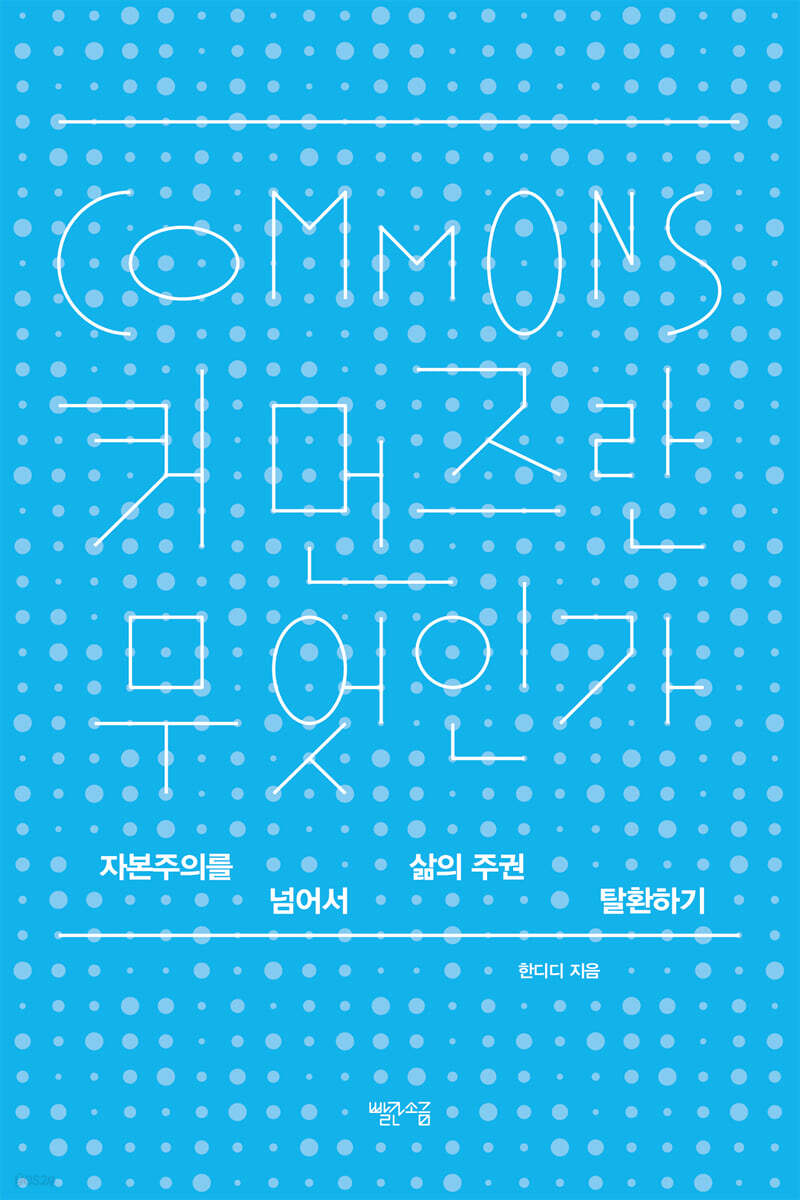
One of the concepts that has been frequently heard here and there recently is 'commons'.
It's not a completely unfamiliar concept, but it's not unfamiliar.
Commons has been translated as commons, common goods, and common resources, and historian Peter Linebaugh replaces it with the verb 'commoning', meaning to make common, and Antonio Negri replaces it with the abstract noun 'the common'.
"What is the Commons?" criticizes the definition of "shared resources" as a product of modern epistemology, and argues that the commons is not simply a physical space, but a paradigm of transition that leads to a new way of life beyond capitalist production relations.
The author meticulously reconstructs the way of life that has been lived as part of the commons for thousands of years, from the historical commons gleaned from research in anthropological and historical literature to the East Asian commons movement that he personally observed.
This book can be considered a discourse map encompassing the commons movement and theory.
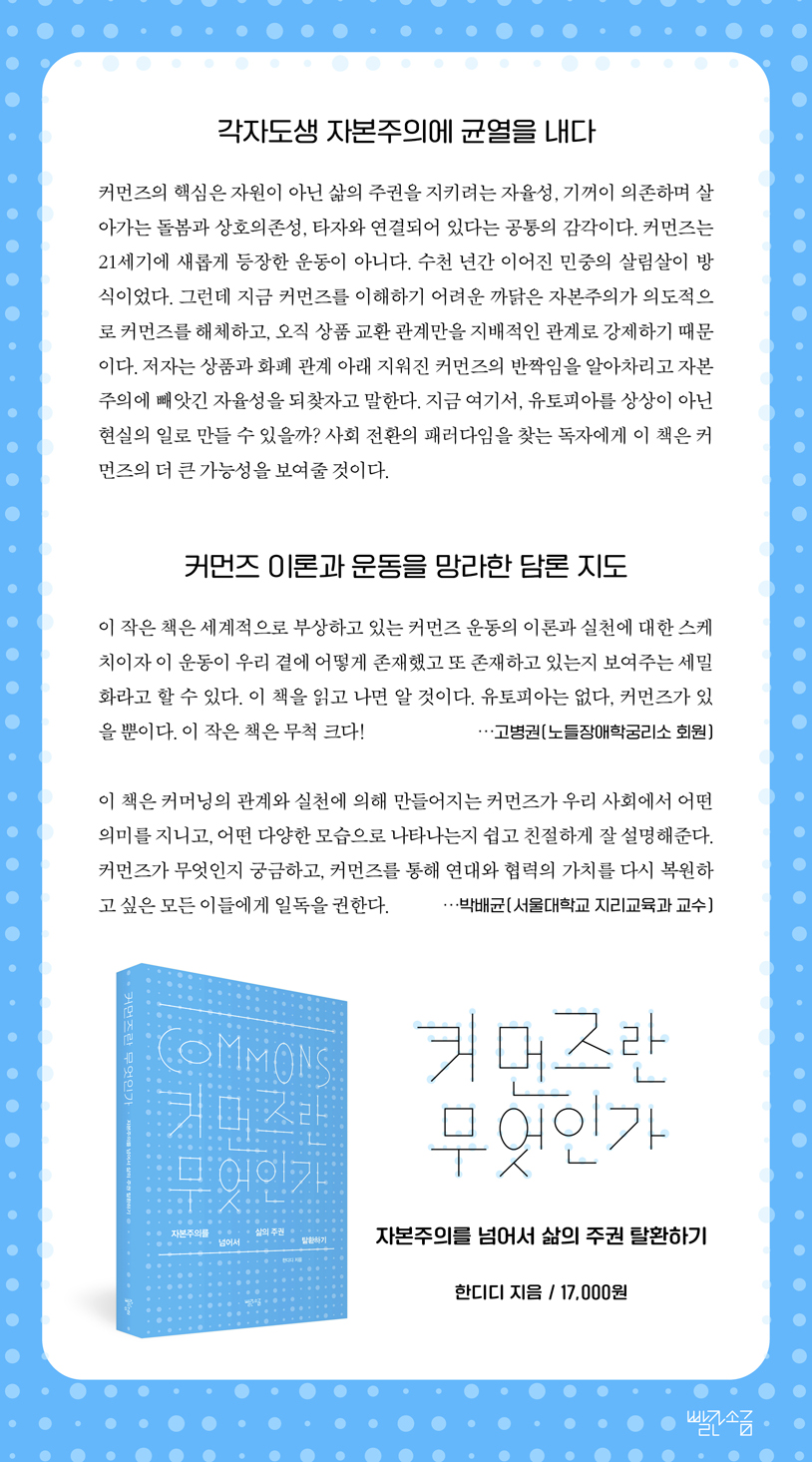
At the heart of the commons are autonomy to protect sovereignty over life rather than resources, care and interdependence to live willingly in dependence, and a shared sense of connection with others.
The commons is not a new movement that emerged in the 21st century.
It was the way of life of the people that had continued for thousands of years.
But the reason why the commons is difficult to understand today is because capitalism intentionally dismantles the commons and forces only the exchange of goods as the dominant relationship.
The author recognizes the sparkle of the commons erased under the relationship between goods and money, and calls for the reclamation of the autonomy taken away by capitalism.
Here and now, can we make utopia a reality, not a fantasy? For readers seeking a paradigm for social transformation, this book will reveal the greater potential of the commons.
A discourse map encompassing commons theory and movement
One of the concepts that has been frequently heard here and there recently is 'commons'.
It's not a completely unfamiliar concept, but it's not unfamiliar.
Commons has been translated as commons, common goods, and common resources, and historian Peter Linebaugh replaces it with the verb 'commoning', meaning to make common, and Antonio Negri replaces it with the abstract noun 'the common'.
"What is the Commons?" criticizes the definition of "shared resources" as a product of modern epistemology, and argues that the commons is not simply a physical space, but a paradigm of transition that leads to a new way of life beyond capitalist production relations.
The author meticulously reconstructs the way of life that has been lived as part of the commons for thousands of years, from the historical commons gleaned from research in anthropological and historical literature to the East Asian commons movement that he personally observed.
This book can be considered a discourse map encompassing the commons movement and theory.
At the heart of the commons are autonomy to protect sovereignty over life rather than resources, care and interdependence to live willingly in dependence, and a shared sense of connection with others.
The commons is not a new movement that emerged in the 21st century.
It was the way of life of the people that had continued for thousands of years.
But the reason why the commons is difficult to understand today is because capitalism intentionally dismantles the commons and forces only the exchange of goods as the dominant relationship.
The author recognizes the sparkle of the commons erased under the relationship between goods and money, and calls for the reclamation of the autonomy taken away by capitalism.
Here and now, can we make utopia a reality, not a fantasy? For readers seeking a paradigm for social transformation, this book will reveal the greater potential of the commons.
- You can preview some of the book's contents.
Preview
index
In publishing the book
Prologue: Reviving the Sense of the Commons
Part 1: The World Perceived through Commons
1.
The Commons Through Modern Epistemology
2.
The commons, the activity that produces the world and us
Part 2: A society of each for himself, created by dismantling the commons
3.
How Commoners Become Wage Workers
4.
A dollhouse built on the site of the burned Commons
5.
Why did desire turn toward money?
Part 3: Here and Now, Commons
6.
A New Methodology for World-Building: The Commons Movement
7.
Nangok Hope Medical Cooperative: A Joyful Commoning for Poor Women
8.
Commoning of home/family through living together, empty houses
9.
The dual value struggle surrounding the city: the Gyeongui Line Commons
10.
Bingo: A financial experiment that shares surplus beyond capital, the state, and the community.
Epilogue As if dancing together in a world without purpose
Notes + References
Search
Prologue: Reviving the Sense of the Commons
Part 1: The World Perceived through Commons
1.
The Commons Through Modern Epistemology
2.
The commons, the activity that produces the world and us
Part 2: A society of each for himself, created by dismantling the commons
3.
How Commoners Become Wage Workers
4.
A dollhouse built on the site of the burned Commons
5.
Why did desire turn toward money?
Part 3: Here and Now, Commons
6.
A New Methodology for World-Building: The Commons Movement
7.
Nangok Hope Medical Cooperative: A Joyful Commoning for Poor Women
8.
Commoning of home/family through living together, empty houses
9.
The dual value struggle surrounding the city: the Gyeongui Line Commons
10.
Bingo: A financial experiment that shares surplus beyond capital, the state, and the community.
Epilogue As if dancing together in a world without purpose
Notes + References
Search
Detailed image
Into the book
Is the commons a resource, or not? If water is a commons, why do we have to pay for it? If tidal flats are a commons, why and by whose will was the Saemangeum tidal flats, once home to countless microorganisms, plants and animals, and fishermen, built a seawall and blocked the waterway? Above all, can't we express the commons in our own language?
--- p.14
To borrow the expression of Marx and Engels (p. Friedrich Engels), the commons appears not only as a common principle of life, but also as “a real movement that transcends the state of reality.”
At the same time, the commons is not an attempt to 'progress' the world in one direction.
The commons recognizes that the world is always a contingent, multiple project, and actively embracing the world's mutability, begins to build a different world, here and now.
--- p.73
The urban poor women who created the Nanhyup shared their practice of care beyond the small unit of their family with others.
If capitalism confined and fenced in women's reproductive labor within the modern institution of the nuclear family, the women of Nanhyup sought to expand their ability to care for one another and live together by opening up care as a voluntary activity rather than forced labor beyond the threshold of the family (p. reverse-enclosure) and reorganizing society itself into a broad network of care.
--- p.161
If treating our homes as private property and locking them up makes us miserable and even destroys family relationships, I suggest that we open our doors wide and become family with everyone.
In this practice of building a house, where “even the person you met yesterday becomes family,” the house is imagined and practiced not as private property or a means of speculation, but as a commons that is woven together with others.
As with the Nangok Hope Medical Cooperative, the commons created in an empty house is also a way for participants to connect with others, and the people who actively engage in these relationships become commoners themselves.
--- p.194
Commoning is essentially a collective experience of direct democracy and a process of developing the capacity for coexistence.
Above all, people must learn to work with others in the most concrete sense.
It is a process of creating a common rhythm, a common sense, and a process in which participants are inevitably entangled in a relationship of interdependence.
Commoners, the subjects of the movement, emerge through this process of change, or collective ‘becoming.’
Those involved in the process of becoming have worked to invite more people into the commons experiment and to activate collective becoming through the power of joy and spontaneity rather than obligation.
--- p.14
To borrow the expression of Marx and Engels (p. Friedrich Engels), the commons appears not only as a common principle of life, but also as “a real movement that transcends the state of reality.”
At the same time, the commons is not an attempt to 'progress' the world in one direction.
The commons recognizes that the world is always a contingent, multiple project, and actively embracing the world's mutability, begins to build a different world, here and now.
--- p.73
The urban poor women who created the Nanhyup shared their practice of care beyond the small unit of their family with others.
If capitalism confined and fenced in women's reproductive labor within the modern institution of the nuclear family, the women of Nanhyup sought to expand their ability to care for one another and live together by opening up care as a voluntary activity rather than forced labor beyond the threshold of the family (p. reverse-enclosure) and reorganizing society itself into a broad network of care.
--- p.161
If treating our homes as private property and locking them up makes us miserable and even destroys family relationships, I suggest that we open our doors wide and become family with everyone.
In this practice of building a house, where “even the person you met yesterday becomes family,” the house is imagined and practiced not as private property or a means of speculation, but as a commons that is woven together with others.
As with the Nangok Hope Medical Cooperative, the commons created in an empty house is also a way for participants to connect with others, and the people who actively engage in these relationships become commoners themselves.
--- p.194
Commoning is essentially a collective experience of direct democracy and a process of developing the capacity for coexistence.
Above all, people must learn to work with others in the most concrete sense.
It is a process of creating a common rhythm, a common sense, and a process in which participants are inevitably entangled in a relationship of interdependence.
Commoners, the subjects of the movement, emerge through this process of change, or collective ‘becoming.’
Those involved in the process of becoming have worked to invite more people into the commons experiment and to activate collective becoming through the power of joy and spontaneity rather than obligation.
--- p.241
Publisher's Review
A discourse map encompassing commons theory and movement
Commons are commonly known as 'shared resources owned and managed jointly by members of a community.'
The author presents the commons not as a simple physical space, but as a paradigm for transition that leads to a new way of life beyond capitalist production relations.
This book can be seen as a discourse map encompassing commons theory and movement.
The author has meticulously documented in this book the way of life that has been lived as part of the commons for thousands of years, from the historical commons gleaned from researching anthropological and historical documents to the diverse East Asian commons movement sites observed through direct participation.
It also captures the voices of the contemporary commons movement in the Korean context.
The commons movement in Korea emerged in response to rapid economic growth and urbanization.
Behind the scenes of Seoul, a city filled with buildings and apartments, we focus on the connections and solidarity of the dispossessed and marginalized.
From the Nangok Hope Medical Cooperative, which was voluntarily formed by urban poor women to care for and save one another; to the Gyeongui Line Commons, where citizens driven out by gentrification gathered to declare "Seoul's 26th autonomous district"; to empty houses that willingly welcomed one another in the heart of Seoul, where homes have become real estate capital; to Bingo, a community bank that discovered a new commons called finance.
Korean commoners are organizing the lives and relationships they want, here and now.
The practice of interdependence that connects with others
Commons is closer to 'social relationships' than to material things like land or natural objects.
Think of love, friendship, intimacy, and conversation.
When we have conversations, we generate new ideas, reach common conclusions, and enjoy the conversation in our own way.
We cannot 'own' a conversation.
But clearly, people who engage in conversations feel different thoughts and connections than before the conversation.
The same goes for the commons.
You can only enjoy the commons in a relationship where you engage in common activities together.
Commons creates common relationships.
“Activities of mixing and sharing together” are key.
In Part 1, the author criticizes existing theories based on modern epistemology for reducing the commons to ‘objects used by humans (communities)’.
He also points out that if the commons is limited to “a third realm that somehow manages to survive within the modern capitalist system, which has the state and the market as its two pillars,” then the history of the state and the market destroying the commons cannot be told.
Part 2 traces the history of the dissolution of the commons.
It reveals that the growth of capitalism was a process of fencing off and privatizing the commons, and closely follows the process by which enclosures and witch hunts in Britain, the birthplace of capitalism, dismantled the village foundations built by the people.
In particular, it is worth noting the intersection of the dismantling of the commons and the history of women's oppression, where women, who were the core players of the commons, were driven out and reproductive and care work was reduced to the private sphere.
We need a commons movement to regain sovereignty over our lives.
Part 3 introduces the commons movement through eight keywords.
Reclaiming sovereignty over our lives, discovering new forms of ownership, inventing new ways of producing and sharing, restoring a livelihood that revitalizes life, constructing a singularity rooted in the region, reinventing "us" by circulating life, transcending the dichotomy between radicalism and revisionism, and escaping from ideology and identity.
This keyword is not simply declarative.
It is a methodology of the 1970s women's movement, the free software movement, cooperatives in South America and Spain, and indigenous seed commons in India.
Capitalism, which was born by breaking the web of life that humans have maintained for a long time, is depleting the world.
With our fragmented lives, extreme inequality, and an ecological crisis threatening human survival, it is impossible to ignore the unsustainability of modern life.
This book does not despair in the face of the reality that “in a life so anxious, we are losing the leisure to savor the present, the vitality of life, the ability to live together, the autonomy to govern our own lives, and the imagination to construct new lives.”
Can we crack the capitalist system, sustained by the commodification of human and non-human life? "The current situation, with its visible social and ecological collapse," demands a new way of life.
Even in the process of fencing off the commons and constructing capitalist desires, many people have defended the commons against the ruling power.
Korean Commoners Fighting Urban Inequality
During the Japanese colonial period and the Korean War, the common foundation of life shared by the people in Korea collapsed.
Speculative urbanization was rapidly progressing.
Korea's indigenous commons movement touches the lives of the most vulnerable segment of our society: the urban poor.
This book covers commons experiments that seek to address the instability of capitalist society and various attempts to regain sovereignty over life.
What can we, who have neither land nor money, share as a commons? In the 1970s, urban housewives from the impoverished Nangok region came together to form the Nangok Hope Medical Cooperative.
Recognizing the health care system as the most urgent resource, they toured villages, persuaded members to join, and operated the cooperative through volunteer activities.
For urban poor women, “there were no resources to manage or share in the first place.”
These are the new care relationships, and they have made themselves, the commoners, into commons.
‘Empty House’ “declared a house as an ownerless house, a shared space where everyone can live together after renting a house,” making it a commons where everyone can live together.
'Community Bank Bingo' collects capital and uses it to expand the commons.
As we follow the trajectory of Korea's commons movement, we will discover that we ourselves and our relationships can become commons.
As the words of recommendation by Byeong-Gwon Ko of the Noddle Disability Research Institute say, “There is no utopia, there is only commons,” the significance of the commons movement can be seen in its presentness.
The community does not own the commons; the commons create the community.
What differentiates the commons movement from the community movement? Doesn't the commons idealize the traditional village community? The author emphasizes the importance of community, but also steadfastly criticizes communities bound by hierarchy and homogeneity.
For example, the nuclear family, the only group that capitalism allows to share instability, can be seen as “an exclusive group whose primary goal is to protect its property and the safety of its members.”
The author points out that not only the nuclear family but also alternative communities created to solve social problems failed to recognize the internal hierarchy and inequality.
“Commoning is not only an activity that creates community, but also a performative practice that opens the community to the outside world and reconstructs commonalities in relationships with others.”
The author's explanation that "traditional commons have historically been networks of interconnected and overlapping groups rather than communities with distinct boundaries" suggests that commons is a practice that transcends communities.
The commons examples presented in this book are far from perfect, ideal, peaceful communities.
They sometimes engage in heated arguments due to differences in opinion, and sometimes show discomfort when new people join.
Care and housework are not shared equally by everyone, and efforts are needed to persuade members who are indifferent to the maintenance of the commons.
But we don't stop trying to create an equal relationship.
For example, the Gyeongui Line Commons sought to keep the space open so as not to be isolated from private relationships, and invited residents displaced by redevelopment projects in Seoul and urban refugees.
Activists at the Gyeongui Line Commons saw the everyday politics of constructing the commons as an activity of commoning.
“The struggle within the commons is the constant effort to discover that people with different economic bases, sensibilities, generations, and genders, and perhaps even no common understanding or common sensibility, must find each other as fellow citizens who must live together.”
But without these efforts, nothing changes.
Ultimately, the process of becoming a commoner through constant 'encounters' and 'contamination' can be seen as the core of the commons.
The commons movement is about inviting more people into the world of the commons rather than isolated and safe communities.
The commons is closer than you think
The purpose of this book is to suggest that we become aware of the commons within ourselves.
At the heart of the commons are autonomy to protect sovereignty over life rather than resources, care and interdependence to live willingly in dependence, and a shared sense of connection with others.
The commons is not a new movement that emerged in the 21st century.
It was the way of life of the people that had continued for thousands of years.
What makes the commons difficult to understand is that capitalism has intentionally dismantled it, forcing only the exchange of commodities as the dominant relationship.
The author recognizes the sparkle of the commons erased under the relationship between goods and money, and calls for the reclamation of the autonomy taken away by capitalism.
Here and now, through the commons movement, where people willingly give to one another and connect, we can make the utopia of abundant production and sharing a reality, not a fantasy.
For readers who have imagined the commons as simply shared land or small autonomous zones, this book will show the commons' greater potential.
Commons are commonly known as 'shared resources owned and managed jointly by members of a community.'
The author presents the commons not as a simple physical space, but as a paradigm for transition that leads to a new way of life beyond capitalist production relations.
This book can be seen as a discourse map encompassing commons theory and movement.
The author has meticulously documented in this book the way of life that has been lived as part of the commons for thousands of years, from the historical commons gleaned from researching anthropological and historical documents to the diverse East Asian commons movement sites observed through direct participation.
It also captures the voices of the contemporary commons movement in the Korean context.
The commons movement in Korea emerged in response to rapid economic growth and urbanization.
Behind the scenes of Seoul, a city filled with buildings and apartments, we focus on the connections and solidarity of the dispossessed and marginalized.
From the Nangok Hope Medical Cooperative, which was voluntarily formed by urban poor women to care for and save one another; to the Gyeongui Line Commons, where citizens driven out by gentrification gathered to declare "Seoul's 26th autonomous district"; to empty houses that willingly welcomed one another in the heart of Seoul, where homes have become real estate capital; to Bingo, a community bank that discovered a new commons called finance.
Korean commoners are organizing the lives and relationships they want, here and now.
The practice of interdependence that connects with others
Commons is closer to 'social relationships' than to material things like land or natural objects.
Think of love, friendship, intimacy, and conversation.
When we have conversations, we generate new ideas, reach common conclusions, and enjoy the conversation in our own way.
We cannot 'own' a conversation.
But clearly, people who engage in conversations feel different thoughts and connections than before the conversation.
The same goes for the commons.
You can only enjoy the commons in a relationship where you engage in common activities together.
Commons creates common relationships.
“Activities of mixing and sharing together” are key.
In Part 1, the author criticizes existing theories based on modern epistemology for reducing the commons to ‘objects used by humans (communities)’.
He also points out that if the commons is limited to “a third realm that somehow manages to survive within the modern capitalist system, which has the state and the market as its two pillars,” then the history of the state and the market destroying the commons cannot be told.
Part 2 traces the history of the dissolution of the commons.
It reveals that the growth of capitalism was a process of fencing off and privatizing the commons, and closely follows the process by which enclosures and witch hunts in Britain, the birthplace of capitalism, dismantled the village foundations built by the people.
In particular, it is worth noting the intersection of the dismantling of the commons and the history of women's oppression, where women, who were the core players of the commons, were driven out and reproductive and care work was reduced to the private sphere.
We need a commons movement to regain sovereignty over our lives.
Part 3 introduces the commons movement through eight keywords.
Reclaiming sovereignty over our lives, discovering new forms of ownership, inventing new ways of producing and sharing, restoring a livelihood that revitalizes life, constructing a singularity rooted in the region, reinventing "us" by circulating life, transcending the dichotomy between radicalism and revisionism, and escaping from ideology and identity.
This keyword is not simply declarative.
It is a methodology of the 1970s women's movement, the free software movement, cooperatives in South America and Spain, and indigenous seed commons in India.
Capitalism, which was born by breaking the web of life that humans have maintained for a long time, is depleting the world.
With our fragmented lives, extreme inequality, and an ecological crisis threatening human survival, it is impossible to ignore the unsustainability of modern life.
This book does not despair in the face of the reality that “in a life so anxious, we are losing the leisure to savor the present, the vitality of life, the ability to live together, the autonomy to govern our own lives, and the imagination to construct new lives.”
Can we crack the capitalist system, sustained by the commodification of human and non-human life? "The current situation, with its visible social and ecological collapse," demands a new way of life.
Even in the process of fencing off the commons and constructing capitalist desires, many people have defended the commons against the ruling power.
Korean Commoners Fighting Urban Inequality
During the Japanese colonial period and the Korean War, the common foundation of life shared by the people in Korea collapsed.
Speculative urbanization was rapidly progressing.
Korea's indigenous commons movement touches the lives of the most vulnerable segment of our society: the urban poor.
This book covers commons experiments that seek to address the instability of capitalist society and various attempts to regain sovereignty over life.
What can we, who have neither land nor money, share as a commons? In the 1970s, urban housewives from the impoverished Nangok region came together to form the Nangok Hope Medical Cooperative.
Recognizing the health care system as the most urgent resource, they toured villages, persuaded members to join, and operated the cooperative through volunteer activities.
For urban poor women, “there were no resources to manage or share in the first place.”
These are the new care relationships, and they have made themselves, the commoners, into commons.
‘Empty House’ “declared a house as an ownerless house, a shared space where everyone can live together after renting a house,” making it a commons where everyone can live together.
'Community Bank Bingo' collects capital and uses it to expand the commons.
As we follow the trajectory of Korea's commons movement, we will discover that we ourselves and our relationships can become commons.
As the words of recommendation by Byeong-Gwon Ko of the Noddle Disability Research Institute say, “There is no utopia, there is only commons,” the significance of the commons movement can be seen in its presentness.
The community does not own the commons; the commons create the community.
What differentiates the commons movement from the community movement? Doesn't the commons idealize the traditional village community? The author emphasizes the importance of community, but also steadfastly criticizes communities bound by hierarchy and homogeneity.
For example, the nuclear family, the only group that capitalism allows to share instability, can be seen as “an exclusive group whose primary goal is to protect its property and the safety of its members.”
The author points out that not only the nuclear family but also alternative communities created to solve social problems failed to recognize the internal hierarchy and inequality.
“Commoning is not only an activity that creates community, but also a performative practice that opens the community to the outside world and reconstructs commonalities in relationships with others.”
The author's explanation that "traditional commons have historically been networks of interconnected and overlapping groups rather than communities with distinct boundaries" suggests that commons is a practice that transcends communities.
The commons examples presented in this book are far from perfect, ideal, peaceful communities.
They sometimes engage in heated arguments due to differences in opinion, and sometimes show discomfort when new people join.
Care and housework are not shared equally by everyone, and efforts are needed to persuade members who are indifferent to the maintenance of the commons.
But we don't stop trying to create an equal relationship.
For example, the Gyeongui Line Commons sought to keep the space open so as not to be isolated from private relationships, and invited residents displaced by redevelopment projects in Seoul and urban refugees.
Activists at the Gyeongui Line Commons saw the everyday politics of constructing the commons as an activity of commoning.
“The struggle within the commons is the constant effort to discover that people with different economic bases, sensibilities, generations, and genders, and perhaps even no common understanding or common sensibility, must find each other as fellow citizens who must live together.”
But without these efforts, nothing changes.
Ultimately, the process of becoming a commoner through constant 'encounters' and 'contamination' can be seen as the core of the commons.
The commons movement is about inviting more people into the world of the commons rather than isolated and safe communities.
The commons is closer than you think
The purpose of this book is to suggest that we become aware of the commons within ourselves.
At the heart of the commons are autonomy to protect sovereignty over life rather than resources, care and interdependence to live willingly in dependence, and a shared sense of connection with others.
The commons is not a new movement that emerged in the 21st century.
It was the way of life of the people that had continued for thousands of years.
What makes the commons difficult to understand is that capitalism has intentionally dismantled it, forcing only the exchange of commodities as the dominant relationship.
The author recognizes the sparkle of the commons erased under the relationship between goods and money, and calls for the reclamation of the autonomy taken away by capitalism.
Here and now, through the commons movement, where people willingly give to one another and connect, we can make the utopia of abundant production and sharing a reality, not a fantasy.
For readers who have imagined the commons as simply shared land or small autonomous zones, this book will show the commons' greater potential.
GOODS SPECIFICS
- Date of issue: February 2, 2024
- Page count, weight, size: 272 pages | 356g | 140*210*16mm
- ISBN13: 9791191383416
You may also like
카테고리
korean


korean

![GQ KOREA Mark (Monthly): December [2025]](http://librairie.coreenne.fr/cdn/shop/files/8ef265dbbfbf186523ed75ba7319009d.jpg?v=1765340328&width=3840)


