

The world of prudence
 |
Description
Book Introduction
The unique world of Korean Buddhist art, finally seen in the painting of the Divine Assembly!
The only book that delves into the birth, development, and secrets of Shinjungdo in detail!
The first comprehensive study of Korean Buddhism's unique sacred treasure, the "Shinjungdo" (Shinjungdo), has been published. The book, "The World of Shinjungdo," is the result of extensive academic research and is the first work of Venerable Hyeonju, a Buddhist monk familiar to Buddhists through his broadcasts on BBS and BTN.
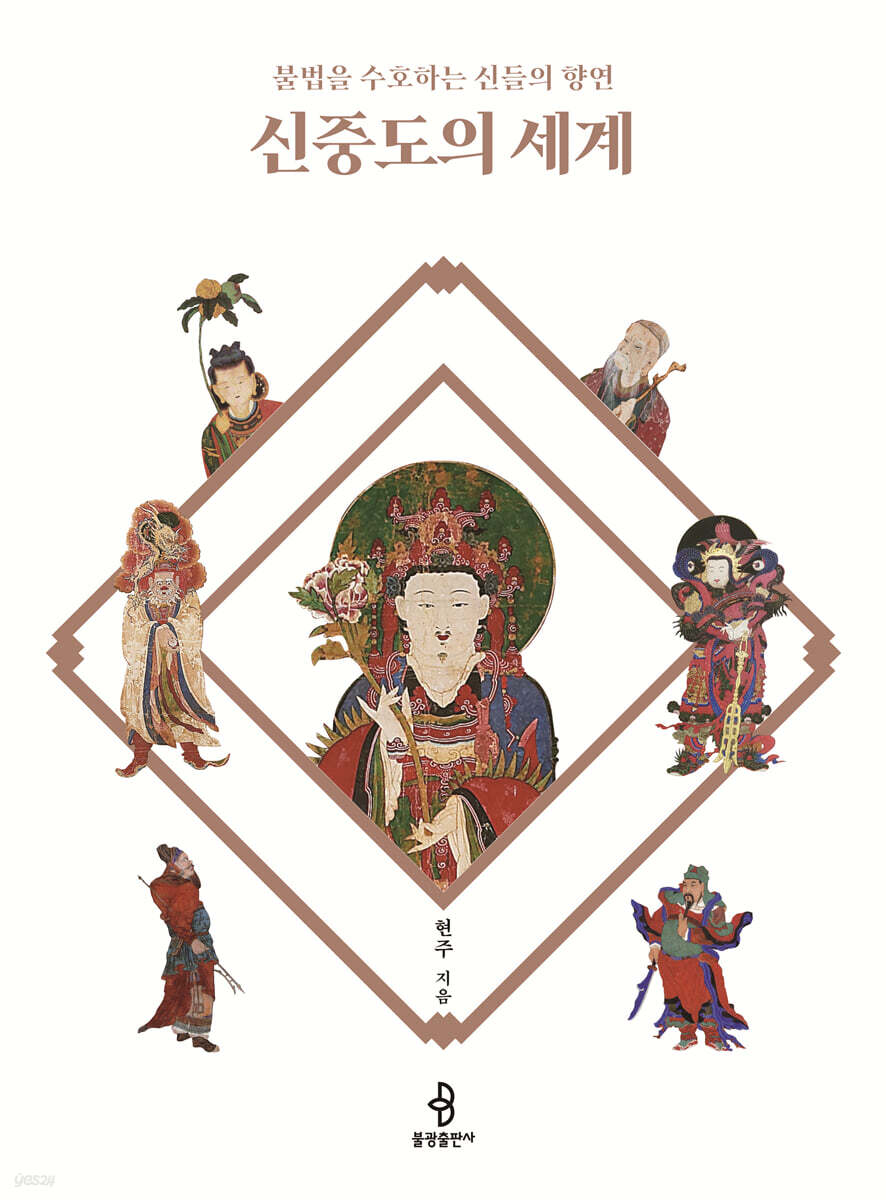
Sinjungdo is a Buddhist painting depicting good deities who protect the Buddhist law, and is a unique cultural heritage that combines not only Korean Buddhist rituals and beliefs, but also folk beliefs and Taoist elements.
However, when the public encounters Shinjungdo in a temple, they often think of shamanistic paintings.
However, this book dissects the historical origins, development, and iconographic secrets of Shinjungdo, revealing the once unfamiliar and strange Buddhist painting as a representative cultural heritage of Korean Buddhism.
The author is considered a rare researcher who has persistently explored the topic of prudence, and has published 13 academic papers on the subject to date.
This book can be said to be the fruit of such long research.
『The World of Shinjungdo』 is not a book that simply explains a single point of discord.
This is a comprehensive academic achievement that explores the formation and evolution of Shinto beliefs, the complex symbolism of their iconography, and the openness and convergence of Shinto beliefs rooted in our country's traditions. At the same time, it is a commentary that can be enjoyed by general readers as well.
Through this, readers will understand the importance of prudence within the context of the imagination and tradition of Korean culture, which is attracting global attention, and will realize that it is another cultural asset that can be presented to the world.
The only book that delves into the birth, development, and secrets of Shinjungdo in detail!
The first comprehensive study of Korean Buddhism's unique sacred treasure, the "Shinjungdo" (Shinjungdo), has been published. The book, "The World of Shinjungdo," is the result of extensive academic research and is the first work of Venerable Hyeonju, a Buddhist monk familiar to Buddhists through his broadcasts on BBS and BTN.
Sinjungdo is a Buddhist painting depicting good deities who protect the Buddhist law, and is a unique cultural heritage that combines not only Korean Buddhist rituals and beliefs, but also folk beliefs and Taoist elements.
However, when the public encounters Shinjungdo in a temple, they often think of shamanistic paintings.
However, this book dissects the historical origins, development, and iconographic secrets of Shinjungdo, revealing the once unfamiliar and strange Buddhist painting as a representative cultural heritage of Korean Buddhism.
The author is considered a rare researcher who has persistently explored the topic of prudence, and has published 13 academic papers on the subject to date.
This book can be said to be the fruit of such long research.
『The World of Shinjungdo』 is not a book that simply explains a single point of discord.
This is a comprehensive academic achievement that explores the formation and evolution of Shinto beliefs, the complex symbolism of their iconography, and the openness and convergence of Shinto beliefs rooted in our country's traditions. At the same time, it is a commentary that can be enjoyed by general readers as well.
Through this, readers will understand the importance of prudence within the context of the imagination and tradition of Korean culture, which is attracting global attention, and will realize that it is another cultural asset that can be presented to the world.
- You can preview some of the book's contents.
Preview
index
Letter of Recommendation (Dongguk University Professor Emeritus Jeong Woo-taek)
In publishing the book
Ⅰ.
preface
1.
Research Purpose
2.
Review of research trends and achievements
3.
Research contents and methods
Ⅱ.
The establishment and development of Shinto faith
1.
What are the divine beings of Buddhism, the gods?
2.
The flow of Buddhist faith
(1) The godly faith of the patriotic idea expressed in the 『Geumgwangmyeonggyeong』
(2) Systematization of the Shinto faith in the Cheontae Buddhist tradition
(3) Development of Korean Hwaeomsinjung faith
Ⅲ.
Background of the establishment of the degree of prudence
1.
Byeokammundo and Sinjung Shingyung
(1) The holding of the Avatamsaka Sutra competition by the Byeogam school and the belief in the Avatamsaka Sutra
(2) The Pure Land ideology and the Shinto faith of the Byeogam school
2.
The maintenance of common rites and the enshrinement of the sacred tablets
3.
Establishment of the New Corps
(1) The three-stage structure of the water and land ritual and the central Buddhist scriptures
(2) Changes in the function and meaning of the interruption within the central Buddhist scriptures
4.
Gods representing heaven, earth, and the underworld
(1) Indra, the king of gods
(2) Wi Tae-cheon, the god who protects the three continents with pure practice
(3) King Yeommara, the judge of karma
Ⅳ.
The joining of new gods
1.
Humans who have become gods appearing in Shinjungdo
(1) Yeo Dong-bin
(2) Separate rights
(3) Iron ore
2.
From Tattoos to Dharma Guardians: The Acceptance of Chinese Tattoos in the Shinto Ritual
(1) Wolji Gyeongdeok and Jin Sukbo, generals who became the guardians of the gate
(2) Wei Zheng, the prime minister guarding the gate with a sword
(3) Jonggyu, the guardian deity who kills ghosts
3.
Acceptance of the faith of the Incantation
V.
Image of the god from the version
1.
Images of gods borrowed from the Okchugyeong
(1) The faith of the Joseon Dynasty’s 『Okchugyeong』
(2) The painting of the Goddess of Mercy at the Cheongryuam Temple in Jeongtosa Temple, which illustrates the Okchugyeong.
(3) Borrowing the kidney iconography from Shinjungdo’s 『Okchugyeong』
① Juroedeungcheongun
② Tae Se-eun
③ Panbusincheon County
2.
The acceptance and transformation of Chinese novel illustrations and pictorial iconography
(1) Generals from Romance of the Three Kingdoms enter Sinjungdo
① Sun Jian? Ma Chao
② Kang Yu
③ Strict eye
④ Equipment
⑤ Yellow worm
⑥ Gan Ning
(2) The generals in "Manso Danghwa Jeon" become gods.
(3) Use of icons and motifs from Journey to the West
3.
Reproduction of the Chinese Jinling Gakjeongcheo Yejeok Geumgang painting
Ⅵ.
The production aspect of the degree of care
1.
The trend of producing Shinjungdo by Bihyeon and his successor painters in the late 18th century
(1) Examination of the “Shinjungdo” at Biroam Hermitage in Seonamsa Temple
① Screen composition and expression techniques
② Estimation of firepower through form analysis
③ Acceptance and transformation of the preceding image
(2) Development of the level of devotion of the Biroambon series
① Biroambon type
② Type of the Nahanjeon of Seonamsa Temple
③ Type of Mahayana Buddhist scriptures
2.
The emergence and development of the Yejeok Geumgang iconography in the early 19th century
(1) The nature and interpretation of the Vajrapani as it appears in Buddhist scriptures
(2) The appearance of the image of the Geumgang Buddha in the late Joseon Dynasty
(3) Changes in the appearance of the Deposit Diamond Sutra
① Transformation of traditional iconography
② Visualization of the ritual house
3.
Production trends of Shinjungdo in the Gyeonggi region in the mid-to-late 19th century
(1) Type of Bomunsa copy in Bomun-dong, Seoul
(2) Namyangju Heungguksa Temple copy type
(3) Type of receipt copy
Ⅶ.
Conclusion
References
List of illustrations
supplement
1.
Current status of Shinjungdo in the Joseon Dynasty
2.
The main dharma lineage of the Byeogammun
3.
The composition of the 104 gods of the Joseon Dynasty and a comparison of their major historical records.
4.
A painting of the guardian deity borrowing from the 『Okchugyeong』
5.
The guardian deity and water god iconography borrowed from the illustrations in Romance of the Three Kingdoms
6.
Sinjungdo, which adopted the iconography of 『Manso Danghwajeon』
In publishing the book
Ⅰ.
preface
1.
Research Purpose
2.
Review of research trends and achievements
3.
Research contents and methods
Ⅱ.
The establishment and development of Shinto faith
1.
What are the divine beings of Buddhism, the gods?
2.
The flow of Buddhist faith
(1) The godly faith of the patriotic idea expressed in the 『Geumgwangmyeonggyeong』
(2) Systematization of the Shinto faith in the Cheontae Buddhist tradition
(3) Development of Korean Hwaeomsinjung faith
Ⅲ.
Background of the establishment of the degree of prudence
1.
Byeokammundo and Sinjung Shingyung
(1) The holding of the Avatamsaka Sutra competition by the Byeogam school and the belief in the Avatamsaka Sutra
(2) The Pure Land ideology and the Shinto faith of the Byeogam school
2.
The maintenance of common rites and the enshrinement of the sacred tablets
3.
Establishment of the New Corps
(1) The three-stage structure of the water and land ritual and the central Buddhist scriptures
(2) Changes in the function and meaning of the interruption within the central Buddhist scriptures
4.
Gods representing heaven, earth, and the underworld
(1) Indra, the king of gods
(2) Wi Tae-cheon, the god who protects the three continents with pure practice
(3) King Yeommara, the judge of karma
Ⅳ.
The joining of new gods
1.
Humans who have become gods appearing in Shinjungdo
(1) Yeo Dong-bin
(2) Separate rights
(3) Iron ore
2.
From Tattoos to Dharma Guardians: The Acceptance of Chinese Tattoos in the Shinto Ritual
(1) Wolji Gyeongdeok and Jin Sukbo, generals who became the guardians of the gate
(2) Wei Zheng, the prime minister guarding the gate with a sword
(3) Jonggyu, the guardian deity who kills ghosts
3.
Acceptance of the faith of the Incantation
V.
Image of the god from the version
1.
Images of gods borrowed from the Okchugyeong
(1) The faith of the Joseon Dynasty’s 『Okchugyeong』
(2) The painting of the Goddess of Mercy at the Cheongryuam Temple in Jeongtosa Temple, which illustrates the Okchugyeong.
(3) Borrowing the kidney iconography from Shinjungdo’s 『Okchugyeong』
① Juroedeungcheongun
② Tae Se-eun
③ Panbusincheon County
2.
The acceptance and transformation of Chinese novel illustrations and pictorial iconography
(1) Generals from Romance of the Three Kingdoms enter Sinjungdo
① Sun Jian? Ma Chao
② Kang Yu
③ Strict eye
④ Equipment
⑤ Yellow worm
⑥ Gan Ning
(2) The generals in "Manso Danghwa Jeon" become gods.
(3) Use of icons and motifs from Journey to the West
3.
Reproduction of the Chinese Jinling Gakjeongcheo Yejeok Geumgang painting
Ⅵ.
The production aspect of the degree of care
1.
The trend of producing Shinjungdo by Bihyeon and his successor painters in the late 18th century
(1) Examination of the “Shinjungdo” at Biroam Hermitage in Seonamsa Temple
① Screen composition and expression techniques
② Estimation of firepower through form analysis
③ Acceptance and transformation of the preceding image
(2) Development of the level of devotion of the Biroambon series
① Biroambon type
② Type of the Nahanjeon of Seonamsa Temple
③ Type of Mahayana Buddhist scriptures
2.
The emergence and development of the Yejeok Geumgang iconography in the early 19th century
(1) The nature and interpretation of the Vajrapani as it appears in Buddhist scriptures
(2) The appearance of the image of the Geumgang Buddha in the late Joseon Dynasty
(3) Changes in the appearance of the Deposit Diamond Sutra
① Transformation of traditional iconography
② Visualization of the ritual house
3.
Production trends of Shinjungdo in the Gyeonggi region in the mid-to-late 19th century
(1) Type of Bomunsa copy in Bomun-dong, Seoul
(2) Namyangju Heungguksa Temple copy type
(3) Type of receipt copy
Ⅶ.
Conclusion
References
List of illustrations
supplement
1.
Current status of Shinjungdo in the Joseon Dynasty
2.
The main dharma lineage of the Byeogammun
3.
The composition of the 104 gods of the Joseon Dynasty and a comparison of their major historical records.
4.
A painting of the guardian deity borrowing from the 『Okchugyeong』
5.
The guardian deity and water god iconography borrowed from the illustrations in Romance of the Three Kingdoms
6.
Sinjungdo, which adopted the iconography of 『Manso Danghwajeon』
Detailed image

Into the book
The Shinjungdo of the Joseon Dynasty is a new arrangement and expression of the guardian deities of India, China, and Korea, who were given a hierarchy within the Buddhist system.
Therefore, the study of prudence is not only very broad in scope but also difficult and challenging in content.
--- p.23
There are Dharma-protecting good spirits, sentient beings who have not achieved true enlightenment or nirvana, but who possess supernatural powers and have the status of gods.
Buddhist gods are hierarchically included among the living beings who undergo reincarnation in the six realms, and their nature also appears as comprehensive beings that include heavenly gods, asuras, and animals.
However, because they possess abilities that surpass those of humans and have made a vow to protect the Buddhist law, Buddhism reveres them as special deities and calls them 'Dharma-protecting gods' in the sense that they defend the Buddhist law.
--- p.35
Unlike other gods, the Four Heavenly Kings have the additional role of observing the world and encouraging wealth.
For this reason, the Four Heavenly Kings were given a unique status among the many guardian deities, and were called the ‘Four Heavenly Kings of the World.’
The Four Heavenly Kings frequently appear in Gandhara reliefs produced in the 1st to 2nd centuries AD.
It is mostly depicted in Buddhist scriptures in the scene where a bowl is offered to the Buddha, and the Four Heavenly Kings are depicted in the form of noblemen wearing turbans.
--- p.44
After Buddhism was introduced to China, many Buddhist monks from India and Central Asia worked hard to spread the Buddhist teachings.
However, due to cultural and language barriers, I could not help but feel many limitations during the teaching process.
Accordingly, simple religious activities such as chanting or praying became more preferred.
The Buddhist monks who came from the West used mystical techniques such as ‘prayer for rain’, ‘spiritual experience’, and ‘auspicious omen’ to attract the public to Buddhism.
--- p.54
The Korean belief in the Hwaeomsinjung faith began as a personal faith that supported Hwaeom practitioners, but in the story of Bocheon, it changed into a patriotic faith.
And in the latter part of the Unified Silla period, it gradually began to reveal a militaristic nature, as in the story of Hong Jin and the Chigun (緇軍) of Haeinsa Temple.
--- p.65
In general, 'Cheonryong' is an abbreviation of 'Cheonryong Palbu (天龍八部)', meaning one of the Eight Departments.
The Eightfold Path can be divided into the Eightfold Path of the Tathagata and the Eightfold Path of the Four Heavenly Kings.
The eightfold division of Tathagata that appears in many Mahayana sutras such as the Avatamsaka Sutra and the Lotus Sutra is composed of the heavenly beings (Kubanda), dragons, yakshas, gandharvas, asuras, garudas, kinnara, and mahoraga, and the eightfold division of the Four Heavenly Kings is composed of the gandharvas, viśāsakas, Kubandhas, saridas, dragons, buddhanās, yakshas, and raksals.
--- p.98
The painting of the gods and goddesses was compiled under various backgrounds, starting with the painting of the gods and goddesses by Dogapsa Temple around 1740, including the guardian deity of the water and land ritual, the belief in the gods and goddesses of the Avatamsaka Sutra, and the belief in the gods and goddesses of the Buddhist chanting.
It also appears that it began to be produced as the need to visualize it within Buddhist scriptures arose in accordance with common rites such as “Do-ryang-eom-jeong Seol-ro,” “Garam Gongyang,” and “Bo-bong-won.”
And in the late 18th century, with the emergence of independent Shinjung rituals, Shinjungdo began to establish itself as an essential component within Buddhist scriptures, and from the early 19th century, when the 『Jakbeop Gwigam』 was distributed nationwide, the production of Shinjungdo also increased rapidly.
As can be confirmed in Appendix 3, this late Joseon Dynasty god belief was formed as an integrated character that included ① gods appearing in the ritual text of the Water and Land Festival, ② gods of the Avatamsaka Sutra, ③ gods based on the Surangama Sutra, and ④ even the indigenous gods of the Joseon Dynasty.
--- p.113
Both Prince Natasha and Wei Taichen are subordinates of the Four Heavenly Kings and share the commonality of being battle gods in the form of children.
However, in the story of the Buddhist monk Doseon, the role of protecting the Buddha's sarira changes from Prince Nata to Wi Taecheon, which is noteworthy.
--- p.172
It is said that King Yeomma became the ruler of the afterlife because he was the first human to discover the path to the afterlife after death.
This appearance can also be found in early Buddhist scriptures.
In the Anguttara Nikaya, King Yammara already appears as the judge of the afterlife, which shows that his role was accepted as such in Buddhism.
--- p.185
Among the 104 gods organized in the late Joseon Dynasty, there are quite a few gods that were outside the category of Buddhism.
These were mainly gods belonging to the guardian deity department that protects the earthly world, and included not only Taoist gods such as Seonghwangshin (城隍神), Samyeongshin (司命神), and Sarokshin (司祿神), but also household gods worshipped by the people, such as gods who guard the gate and windows (門戶神), gods of the courtyard (主庭神), gods of the well (主井神), gods of the kitchen (主?神), and gods of the back room (?厠神).
--- p.201
Taoism in the late Joseon Dynasty was centered around hermits who lived in seclusion, and they focused on training Taoism that focused on internal elixir cultivation rather than ritual-centered, ceremonial Taoism.
In addition, the intellectual class of the late Joseon Dynasty recognized the Taoist practice of Naedanbeop (內丹法) as a method of health promotion, and hoped to become immortal through health promotion, and pursued the ideal world of Seon-gye (仙界).
--- p.204
The most representative iconographic characteristic of Yeo Dong-bin is that he is a Confucian scholar wearing a white robe and a belt, and has a large mole under his right eye.
He also reveals that his sword, which is rumored to be a real weapon, is not a real weapon, but a sword of the mind that cuts through afflictions, greed, anger, and lust.
However, the fact that various documents repeatedly mention that Yeo Dong-bin was carrying a sword shows that the sword became an important symbol of Yeo Dong-bin.
Therefore, the study of prudence is not only very broad in scope but also difficult and challenging in content.
--- p.23
There are Dharma-protecting good spirits, sentient beings who have not achieved true enlightenment or nirvana, but who possess supernatural powers and have the status of gods.
Buddhist gods are hierarchically included among the living beings who undergo reincarnation in the six realms, and their nature also appears as comprehensive beings that include heavenly gods, asuras, and animals.
However, because they possess abilities that surpass those of humans and have made a vow to protect the Buddhist law, Buddhism reveres them as special deities and calls them 'Dharma-protecting gods' in the sense that they defend the Buddhist law.
--- p.35
Unlike other gods, the Four Heavenly Kings have the additional role of observing the world and encouraging wealth.
For this reason, the Four Heavenly Kings were given a unique status among the many guardian deities, and were called the ‘Four Heavenly Kings of the World.’
The Four Heavenly Kings frequently appear in Gandhara reliefs produced in the 1st to 2nd centuries AD.
It is mostly depicted in Buddhist scriptures in the scene where a bowl is offered to the Buddha, and the Four Heavenly Kings are depicted in the form of noblemen wearing turbans.
--- p.44
After Buddhism was introduced to China, many Buddhist monks from India and Central Asia worked hard to spread the Buddhist teachings.
However, due to cultural and language barriers, I could not help but feel many limitations during the teaching process.
Accordingly, simple religious activities such as chanting or praying became more preferred.
The Buddhist monks who came from the West used mystical techniques such as ‘prayer for rain’, ‘spiritual experience’, and ‘auspicious omen’ to attract the public to Buddhism.
--- p.54
The Korean belief in the Hwaeomsinjung faith began as a personal faith that supported Hwaeom practitioners, but in the story of Bocheon, it changed into a patriotic faith.
And in the latter part of the Unified Silla period, it gradually began to reveal a militaristic nature, as in the story of Hong Jin and the Chigun (緇軍) of Haeinsa Temple.
--- p.65
In general, 'Cheonryong' is an abbreviation of 'Cheonryong Palbu (天龍八部)', meaning one of the Eight Departments.
The Eightfold Path can be divided into the Eightfold Path of the Tathagata and the Eightfold Path of the Four Heavenly Kings.
The eightfold division of Tathagata that appears in many Mahayana sutras such as the Avatamsaka Sutra and the Lotus Sutra is composed of the heavenly beings (Kubanda), dragons, yakshas, gandharvas, asuras, garudas, kinnara, and mahoraga, and the eightfold division of the Four Heavenly Kings is composed of the gandharvas, viśāsakas, Kubandhas, saridas, dragons, buddhanās, yakshas, and raksals.
--- p.98
The painting of the gods and goddesses was compiled under various backgrounds, starting with the painting of the gods and goddesses by Dogapsa Temple around 1740, including the guardian deity of the water and land ritual, the belief in the gods and goddesses of the Avatamsaka Sutra, and the belief in the gods and goddesses of the Buddhist chanting.
It also appears that it began to be produced as the need to visualize it within Buddhist scriptures arose in accordance with common rites such as “Do-ryang-eom-jeong Seol-ro,” “Garam Gongyang,” and “Bo-bong-won.”
And in the late 18th century, with the emergence of independent Shinjung rituals, Shinjungdo began to establish itself as an essential component within Buddhist scriptures, and from the early 19th century, when the 『Jakbeop Gwigam』 was distributed nationwide, the production of Shinjungdo also increased rapidly.
As can be confirmed in Appendix 3, this late Joseon Dynasty god belief was formed as an integrated character that included ① gods appearing in the ritual text of the Water and Land Festival, ② gods of the Avatamsaka Sutra, ③ gods based on the Surangama Sutra, and ④ even the indigenous gods of the Joseon Dynasty.
--- p.113
Both Prince Natasha and Wei Taichen are subordinates of the Four Heavenly Kings and share the commonality of being battle gods in the form of children.
However, in the story of the Buddhist monk Doseon, the role of protecting the Buddha's sarira changes from Prince Nata to Wi Taecheon, which is noteworthy.
--- p.172
It is said that King Yeomma became the ruler of the afterlife because he was the first human to discover the path to the afterlife after death.
This appearance can also be found in early Buddhist scriptures.
In the Anguttara Nikaya, King Yammara already appears as the judge of the afterlife, which shows that his role was accepted as such in Buddhism.
--- p.185
Among the 104 gods organized in the late Joseon Dynasty, there are quite a few gods that were outside the category of Buddhism.
These were mainly gods belonging to the guardian deity department that protects the earthly world, and included not only Taoist gods such as Seonghwangshin (城隍神), Samyeongshin (司命神), and Sarokshin (司祿神), but also household gods worshipped by the people, such as gods who guard the gate and windows (門戶神), gods of the courtyard (主庭神), gods of the well (主井神), gods of the kitchen (主?神), and gods of the back room (?厠神).
--- p.201
Taoism in the late Joseon Dynasty was centered around hermits who lived in seclusion, and they focused on training Taoism that focused on internal elixir cultivation rather than ritual-centered, ceremonial Taoism.
In addition, the intellectual class of the late Joseon Dynasty recognized the Taoist practice of Naedanbeop (內丹法) as a method of health promotion, and hoped to become immortal through health promotion, and pursued the ideal world of Seon-gye (仙界).
--- p.204
The most representative iconographic characteristic of Yeo Dong-bin is that he is a Confucian scholar wearing a white robe and a belt, and has a large mole under his right eye.
He also reveals that his sword, which is rumored to be a real weapon, is not a real weapon, but a sword of the mind that cuts through afflictions, greed, anger, and lust.
However, the fact that various documents repeatedly mention that Yeo Dong-bin was carrying a sword shows that the sword became an important symbol of Yeo Dong-bin.
--- p.209
Publisher's Review
The world of good gods who protect the Buddhist law,
The first research paper to fully explore the Shinjungdo (divine group map) of our country!
'Shinjungdo', a unique faith that blossomed in Korean Buddhism and cannot be found in China or Japan!
The one and only book that unravels the secrets of that magnificent world!
Venerable Hyeonju, who has interacted with the public through various media outlets such as BBS Buddhist Broadcasting and BTN Buddhist TV, and is currently working as a co-host on a radio program, is already a familiar figure both inside and outside the religious community.
But the monk's history cannot be explained by popular familiarity alone.
The monk graduated from Haeinsa Buddhist College and received his master's and doctoral degrees from Dongguk University's Department of Art History. He served as the director of the missionary research office of the missionary center of the Jogye Order of Korean Buddhism and as a cultural heritage expert at the National Heritage Administration. He is currently a research professor at the East Asian Research Institute of Chonnam National University.
In particular, having published 13 academic papers related to the ‘Shinjungdo’ (Painting of the Divine Assembly), the monk is regarded in academic circles as a rare researcher who has consistently explored the specific topic of ‘Shinjungdo’.
This book is the monk's first work and the result of long research.
The unique world of Korean Buddhism
The public often misunderstands temple guardian deities paintings as shamanistic paintings or paintings of shaman gods, perhaps because of their unique colors or the ominous impressions of the gods that appear.
However, the image of the gods is a group of good gods who protect the Buddhist law, and can be said to be a collective portrait of the gods who protect the Buddhist order and help sentient beings.
Above all, the Shingyeong are “beings lower than Buddha, Bodhisattva, or Arhat, but possess desires like humans,” and thus have a psychologically close relationship with the believers.
Because of its intimacy, the belief in Shintoism has continued steadily since the early days of Buddhism, and as it spread to China, Korea, and other places, it was accepted and spread to the folk beliefs of each region.
Accordingly, the author describes Shinjungdo, a product of Shinjung faith, as “the most common and open discord.”
What we should particularly note is the originality of Korean Buddhist Shinto beliefs.
In the late Joseon Dynasty, the intersection of Buddhism and indigenous religions was reorganized into a system of 104 gods, a tradition unique to Korea that is difficult to find in China or Japan.
In addition, the painting of various deities on a single canvas is a unique tradition of Korean Buddhism and can be considered a special cultural heritage that demonstrates the integration and openness of our Buddhism.
Dissecting the World of the Mysterious Gods
This book begins by examining the establishment and development of Shinjung Shingyo and the background of the establishment of Shinjungdo from various perspectives.
Thus, we trace the process by which the art of ceremonial painting was developed through the interaction of ritual, iconography, and individual painter (or regional) styles, and how it became established as an essential Buddhist painting in Buddhist altars.
Furthermore, starting with examining how the various gods depicted in the painting of the gods, such as Indra, representing the heavenly world; Witaecheon, the central god of the earth; and King Yeomma, the god of the underworld, became established as components of the painting of the gods, the identity of the various gods in the painting of the gods is revealed, and the process through which they were accepted and established in the painting of the gods is analyzed in detail.
What is striking in this research is that a deity (dosang) that does not appear in India or China is incorporated into our deity painting.
This is the result of the Joseon Dynasty's belief in the gods accepting not only Buddhist scriptures but also a wide range of other elements. It presents specific examples of how Taoist immortals such as Yeo Dong-bin, Jong-ri-gwon, and Cheol-goe-ri, the scholar-official Mun-bae, and the kitchen god of Korean folk beliefs were borrowed into the belief in the gods.
The details of the research on the map also stand out.
There are cases where the iconography of Guan Yu, one of the heroes of the Romance of the Three Kingdoms, was borrowed to express the kitchen god, and extensive references to the iconography of the printed editions (illustrations from the Jade Emperor Jing, Romance of the Three Kingdoms, and The Chronicles of Mansao Danghua, etc.) are closely examined.
In addition, it presents specific examples of intentional use of motifs from 『Journey to the West』, and compares the types of elements that were innovatively depicted in the paintings of the gods of the late Joseon Dynasty by referencing various elements such as the multi-faceted and multi-armed Yejeok Geumgang iconography of the Thousand-Armed Avalokitesvara and illustrations from 『Seoksiwonryu Eunghwasajeok』.
Ultimately, Shinjungdo is a good example of Korean uniqueness among Buddhist paintings from the Joseon Dynasty, and reveals that it is a creative product created through the fusion of our country's faith and Buddhism.
Shinjungdo, a cultural icon that encapsulates Korean imagination and spirituality
Recently, Netflix animations and K-contents have been gaining global popularity by using Korean folktales, shamanism, and traditional worldviews as motifs.
This trend clearly demonstrates the power of the symbolic system of Korean traditional culture.
The caution that this book deals with is also in line with that trend.
Sinjungdo is a unique cultural heritage that flourished only in Korea, based on Buddhist belief in protecting the law, but also integrating indigenous beliefs, Taoism, and folk tales.
The Buddhist deities who have protected Buddhism in the temple's altars for many years possess the power to stand alongside the "Korean imagination" that is attracting global attention today.
This book interprets the historical context, narrative, and symbolism of Shinjungdo in contemporary language, demonstrating that it represents the essence of a unique culture that Korean Buddhism can offer the world.
Shinjungdo is no longer an unfamiliar religious painting, but is ready to establish itself as a cultural icon that encapsulates Korean imagination and spiritual world.
The first research paper to fully explore the Shinjungdo (divine group map) of our country!
'Shinjungdo', a unique faith that blossomed in Korean Buddhism and cannot be found in China or Japan!
The one and only book that unravels the secrets of that magnificent world!
Venerable Hyeonju, who has interacted with the public through various media outlets such as BBS Buddhist Broadcasting and BTN Buddhist TV, and is currently working as a co-host on a radio program, is already a familiar figure both inside and outside the religious community.
But the monk's history cannot be explained by popular familiarity alone.
The monk graduated from Haeinsa Buddhist College and received his master's and doctoral degrees from Dongguk University's Department of Art History. He served as the director of the missionary research office of the missionary center of the Jogye Order of Korean Buddhism and as a cultural heritage expert at the National Heritage Administration. He is currently a research professor at the East Asian Research Institute of Chonnam National University.
In particular, having published 13 academic papers related to the ‘Shinjungdo’ (Painting of the Divine Assembly), the monk is regarded in academic circles as a rare researcher who has consistently explored the specific topic of ‘Shinjungdo’.
This book is the monk's first work and the result of long research.
The unique world of Korean Buddhism
The public often misunderstands temple guardian deities paintings as shamanistic paintings or paintings of shaman gods, perhaps because of their unique colors or the ominous impressions of the gods that appear.
However, the image of the gods is a group of good gods who protect the Buddhist law, and can be said to be a collective portrait of the gods who protect the Buddhist order and help sentient beings.
Above all, the Shingyeong are “beings lower than Buddha, Bodhisattva, or Arhat, but possess desires like humans,” and thus have a psychologically close relationship with the believers.
Because of its intimacy, the belief in Shintoism has continued steadily since the early days of Buddhism, and as it spread to China, Korea, and other places, it was accepted and spread to the folk beliefs of each region.
Accordingly, the author describes Shinjungdo, a product of Shinjung faith, as “the most common and open discord.”
What we should particularly note is the originality of Korean Buddhist Shinto beliefs.
In the late Joseon Dynasty, the intersection of Buddhism and indigenous religions was reorganized into a system of 104 gods, a tradition unique to Korea that is difficult to find in China or Japan.
In addition, the painting of various deities on a single canvas is a unique tradition of Korean Buddhism and can be considered a special cultural heritage that demonstrates the integration and openness of our Buddhism.
Dissecting the World of the Mysterious Gods
This book begins by examining the establishment and development of Shinjung Shingyo and the background of the establishment of Shinjungdo from various perspectives.
Thus, we trace the process by which the art of ceremonial painting was developed through the interaction of ritual, iconography, and individual painter (or regional) styles, and how it became established as an essential Buddhist painting in Buddhist altars.
Furthermore, starting with examining how the various gods depicted in the painting of the gods, such as Indra, representing the heavenly world; Witaecheon, the central god of the earth; and King Yeomma, the god of the underworld, became established as components of the painting of the gods, the identity of the various gods in the painting of the gods is revealed, and the process through which they were accepted and established in the painting of the gods is analyzed in detail.
What is striking in this research is that a deity (dosang) that does not appear in India or China is incorporated into our deity painting.
This is the result of the Joseon Dynasty's belief in the gods accepting not only Buddhist scriptures but also a wide range of other elements. It presents specific examples of how Taoist immortals such as Yeo Dong-bin, Jong-ri-gwon, and Cheol-goe-ri, the scholar-official Mun-bae, and the kitchen god of Korean folk beliefs were borrowed into the belief in the gods.
The details of the research on the map also stand out.
There are cases where the iconography of Guan Yu, one of the heroes of the Romance of the Three Kingdoms, was borrowed to express the kitchen god, and extensive references to the iconography of the printed editions (illustrations from the Jade Emperor Jing, Romance of the Three Kingdoms, and The Chronicles of Mansao Danghua, etc.) are closely examined.
In addition, it presents specific examples of intentional use of motifs from 『Journey to the West』, and compares the types of elements that were innovatively depicted in the paintings of the gods of the late Joseon Dynasty by referencing various elements such as the multi-faceted and multi-armed Yejeok Geumgang iconography of the Thousand-Armed Avalokitesvara and illustrations from 『Seoksiwonryu Eunghwasajeok』.
Ultimately, Shinjungdo is a good example of Korean uniqueness among Buddhist paintings from the Joseon Dynasty, and reveals that it is a creative product created through the fusion of our country's faith and Buddhism.
Shinjungdo, a cultural icon that encapsulates Korean imagination and spirituality
Recently, Netflix animations and K-contents have been gaining global popularity by using Korean folktales, shamanism, and traditional worldviews as motifs.
This trend clearly demonstrates the power of the symbolic system of Korean traditional culture.
The caution that this book deals with is also in line with that trend.
Sinjungdo is a unique cultural heritage that flourished only in Korea, based on Buddhist belief in protecting the law, but also integrating indigenous beliefs, Taoism, and folk tales.
The Buddhist deities who have protected Buddhism in the temple's altars for many years possess the power to stand alongside the "Korean imagination" that is attracting global attention today.
This book interprets the historical context, narrative, and symbolism of Shinjungdo in contemporary language, demonstrating that it represents the essence of a unique culture that Korean Buddhism can offer the world.
Shinjungdo is no longer an unfamiliar religious painting, but is ready to establish itself as a cultural icon that encapsulates Korean imagination and spiritual world.
GOODS SPECIFICS
- Date of issue: September 12, 2025
- Page count, weight, size: 504 pages | 170*230*35mm
- ISBN13: 9791172611965
- ISBN10: 1172611963
You may also like
카테고리
korean


korean

![GQ KOREA Mark (Monthly): December [2025]](http://librairie.coreenne.fr/cdn/shop/files/8ef265dbbfbf186523ed75ba7319009d.jpg?v=1765340328&width=3840)


