

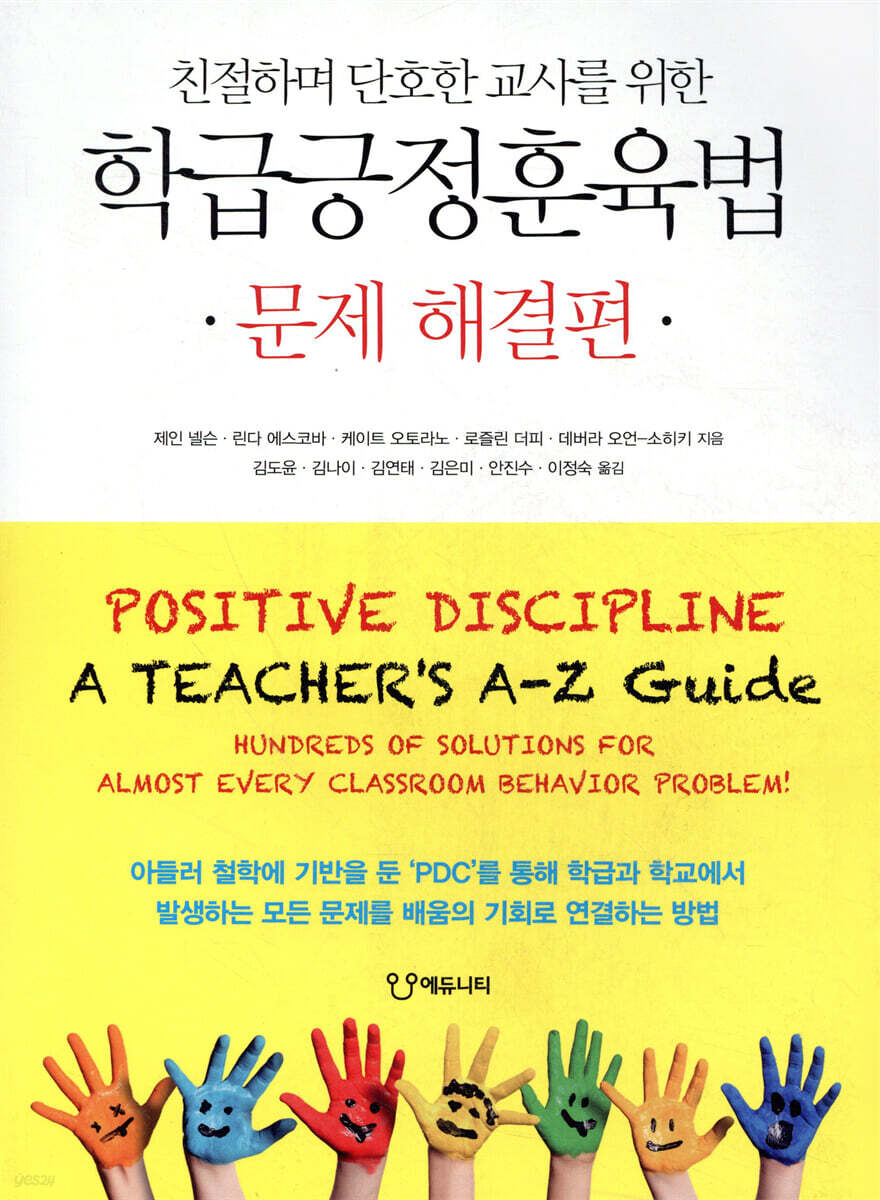
Problem Solving with Positive Discipline in the Classroom
 |
Description
Book Introduction
“An excellent book that every teacher should read!”
Through 'PDC' based on Adlerian philosophy, in classrooms and schools
How to turn every problem you encounter into a learning opportunity
A Guide to Solving Problems Using Positive Discipline in the Classroom
Introduced to Korean teachers in 2014, 『Positive Discipline in the Classroom (PDC)』 has remained a bestseller in the education field since its publication, receiving interest and love from many teachers, from kindergarten teachers to elementary, middle, and high school teachers.
Afterwards, with the addition of the 'Adler fever', 'PDC' based on Adler's philosophy received more attention.
The book 『Classroom Positive Discipline Activity』 published later is a book that introduces specific activities that can be practiced with students in actual classrooms and schools, and this book also maintains its position as a bestseller in the education field.
Through 'PDC' based on Adlerian philosophy, in classrooms and schools
How to turn every problem you encounter into a learning opportunity
A Guide to Solving Problems Using Positive Discipline in the Classroom
Introduced to Korean teachers in 2014, 『Positive Discipline in the Classroom (PDC)』 has remained a bestseller in the education field since its publication, receiving interest and love from many teachers, from kindergarten teachers to elementary, middle, and high school teachers.
Afterwards, with the addition of the 'Adler fever', 'PDC' based on Adler's philosophy received more attention.
The book 『Classroom Positive Discipline Activity』 published later is a book that introduces specific activities that can be practiced with students in actual classrooms and schools, and this book also maintains its position as a bestseller in the education field.
- You can preview some of the book's contents.
Preview
index
Praise for this book
Recommended Preface
Entering
Part 1 - The Essentials of Positive Discipline
Encouragement / Misaligned Goals / Self-Esteem / Self-Control / Rewards and Punishments / Kindness and Firmness / Limitations
Getting it done / Sense of community / Meaningful roles / Making time to practice / Making mistakes / Problem solving
Positive timeout / special time / class meeting / conference
Part 2 - Positive Discipline Solutions
Family / Lying / Forgetfulness / Snitching / Fairness / Homework / Bullying / Relationships / Annoying
Graffiti / Temporary teacher / Chewing gum / Teasing / Latecomer / Doing things roughly / Plagiarism / Gossiping
Listening / Sticking / Hitting / Arguing / Model Student Complex / Voice / Rudeness / Disorder
Rebellion / Disruptive behavior / Bus behavior / Parental divorce / Cheating / Blaming
Demeaning 1 / Demeaning 2 / Pouting / Distracting / Annoying / Annoying / Timid
Noise / Chatter / Skipping class / Homework 1 / Homework 2 / Ordering / Sportsmanship / Failure
Fighting / Being sick and pretending to be sick / Showing affection / Facial expressions / Swearing / Toilet accidents / Depression
Playground / Crying / Threats / Lack of motivation / Moving / Cunning / Cruelty - Disregard for life
Lunchtime / Attention Deficit Disorder and Attention Deficit Hyperactivity Disorder / Death / Queuing / Lateness / Jealousy
Irritation / Notes / Discrimination / Cleaning / Spitting / Grumbling / Special Needs, Sense of Belonging
Favoritism / gang violence / victim mentality / class meetings - forming a circle / class meetings - refusal to participate / abuse
Parents - Communication / Parents - Participation / Field Trip / Restroom / Disruption / Holidays / Scapegoat
Translator's Note
References
Recommended Preface
Entering
Part 1 - The Essentials of Positive Discipline
Encouragement / Misaligned Goals / Self-Esteem / Self-Control / Rewards and Punishments / Kindness and Firmness / Limitations
Getting it done / Sense of community / Meaningful roles / Making time to practice / Making mistakes / Problem solving
Positive timeout / special time / class meeting / conference
Part 2 - Positive Discipline Solutions
Family / Lying / Forgetfulness / Snitching / Fairness / Homework / Bullying / Relationships / Annoying
Graffiti / Temporary teacher / Chewing gum / Teasing / Latecomer / Doing things roughly / Plagiarism / Gossiping
Listening / Sticking / Hitting / Arguing / Model Student Complex / Voice / Rudeness / Disorder
Rebellion / Disruptive behavior / Bus behavior / Parental divorce / Cheating / Blaming
Demeaning 1 / Demeaning 2 / Pouting / Distracting / Annoying / Annoying / Timid
Noise / Chatter / Skipping class / Homework 1 / Homework 2 / Ordering / Sportsmanship / Failure
Fighting / Being sick and pretending to be sick / Showing affection / Facial expressions / Swearing / Toilet accidents / Depression
Playground / Crying / Threats / Lack of motivation / Moving / Cunning / Cruelty - Disregard for life
Lunchtime / Attention Deficit Disorder and Attention Deficit Hyperactivity Disorder / Death / Queuing / Lateness / Jealousy
Irritation / Notes / Discrimination / Cleaning / Spitting / Grumbling / Special Needs, Sense of Belonging
Favoritism / gang violence / victim mentality / class meetings - forming a circle / class meetings - refusal to participate / abuse
Parents - Communication / Parents - Participation / Field Trip / Restroom / Disruption / Holidays / Scapegoat
Translator's Note
References
Publisher's Review
Any problem that arises in school can become a catalyst for learning.
A student is chewing gum during class.
Another student tells on his friend's mistake.
Two other students are fighting each other.
In addition, countless problems occur in classrooms every day, too numerous to list.
Problems arise one by one, or even several at once.
Added to this are more serious problems such as bullying, long-term absences, rebellion, and violence.
These many problems make it difficult for teachers to discipline students.
This book addresses most of the issues that teachers struggle with.
It contains the difficulties teachers face, their stories, and their success stories.
We introduce the problem-solving method of 'PDC' that restores order and creates a relationship of mutual respect between teachers and students.
This book goes beyond problem solving; each topic focuses on understanding students and recognizing the hidden messages behind their problem behavior.
We guide you through creating an environment where both students and teachers feel valued, encouraged to believe in their abilities, and able to learn skills that are important for all areas of life, including careers, friendships, and family relationships.
Any problem that arises in school can become a catalyst for learning.
This will give you the perspective to view problems as learning opportunities.
The Essential Elements and Solutions of Positive Discipline
Part 1 introduces the ‘essential elements of positive discipline.’
It covers important topics such as understanding the basic philosophy, tools, and concepts that make up positive discipline, such as encouragement, misaligned goals, self-esteem, self-regulation, kindness and assertiveness, a sense of community, meaningful roles (Jobs for Everyone in the Classroom), positive time-out, and class meetings.
Part 2, "Positive Discipline Solutions," addresses real-world problems and their solutions.
It contains suggestions, plans, and examples for dealing with most situations that occur in classrooms and schools, including lying, tattling, homework, bullying, gum chewing, teasing, stealing, hitting, arguing, rudeness, and disorder.
Teachers can choose the suggestion that best suits them and their class.
Use the ideas in this book to conduct class meetings with your students and encourage them to offer helpful suggestions.
Based on the philosophy and concepts presented in this book, you will be able to creatively find solutions that fit the situations and problems of each class.
What is Positive Discipline?
Positive Discipline, introduced by Jane Nelsen, a marriage, family, and child counselor and author of numerous books on discipline, has become a new standard for many who work with children and related disciplines over the past several decades.
When people hear the word 'discipline', many think of punishment, but 'positive discipline' has nothing to do with that.
Rather, it is closer to teaching important social and daily life skills.
Disciplining means deciding what behavior you will do and kindly but firmly enforcing it, rather than expecting your child to do a certain 'behavior'.
As your child grows and becomes more adept at various things, you can then suggest that they work together to solve problems or set limits on their behavior.
This way, children can use their own thinking skills, feel that they can do things, and learn how to use their strengths and autonomy in more useful ways.
It goes without saying that children will be more willing to follow the limits of problem solutions and behaviors that they have created together.
These basic principles of positive discipline will help you and your child build a loving and respectful relationship, allowing you to continue to work through problems together.
The Secret of a Kind and Firm Teacher: Positive Discipline in the Classroom
Simply put, positive discipline in the classroom refers to ‘positive discipline’ in the classroom.
Almost all teachers have experienced being hurt by being kind to children, and feeling distant by being firm.
But excellent and respected teachers are kind but firm.
When dealing with students, be kind to their personalities and emotions as human beings, but be firm about the promises and responsibilities that a human being must fulfill as a member of a community.
So, students can develop self-esteem, a sense of belonging and responsibility for themselves and their community, based on a sense of connection with their teachers rather than self-indulgence, rejection, or fear.
The 'Classroom Positive Discipline Method' makes this possible.
At PDC, we value social and emotional development along with academic growth.
Additionally, students are viewed as proactive problem solvers, not as objects of reward and punishment.
So, student participation is also very important in PDC.
Students create their own class rules, set their own class schedules, and participate directly in class and school events.
When a problem arises, solutions are found through class meetings, etc.
[ Recommendation ]
If you want to run your classroom based on cooperation and mutual respect, rather than control and power, this book will provide you with a wealth of wisdom and know-how.
If you want to leave behind the teacher-centered mindset of being a good teacher and an excellent teacher and become a teacher who helps students in need, you will find various ways to help students.” - Kim Seonghwan, teacher, PD-KOREA CEO
“It is a book that warms the heart.
I have never read a book that has brought me laughter and tears in equal measure.
“Don’t lose your positive attitude even when your children are challenging.”
- Robert Hawk, pediatrician
“A wonderful book every educator needs.” - Susan Smitha, guidance counselor
“An essential book that will inspire both first-time and experienced teachers.” - Karen Schuet, teacher
A student is chewing gum during class.
Another student tells on his friend's mistake.
Two other students are fighting each other.
In addition, countless problems occur in classrooms every day, too numerous to list.
Problems arise one by one, or even several at once.
Added to this are more serious problems such as bullying, long-term absences, rebellion, and violence.
These many problems make it difficult for teachers to discipline students.
This book addresses most of the issues that teachers struggle with.
It contains the difficulties teachers face, their stories, and their success stories.
We introduce the problem-solving method of 'PDC' that restores order and creates a relationship of mutual respect between teachers and students.
This book goes beyond problem solving; each topic focuses on understanding students and recognizing the hidden messages behind their problem behavior.
We guide you through creating an environment where both students and teachers feel valued, encouraged to believe in their abilities, and able to learn skills that are important for all areas of life, including careers, friendships, and family relationships.
Any problem that arises in school can become a catalyst for learning.
This will give you the perspective to view problems as learning opportunities.
The Essential Elements and Solutions of Positive Discipline
Part 1 introduces the ‘essential elements of positive discipline.’
It covers important topics such as understanding the basic philosophy, tools, and concepts that make up positive discipline, such as encouragement, misaligned goals, self-esteem, self-regulation, kindness and assertiveness, a sense of community, meaningful roles (Jobs for Everyone in the Classroom), positive time-out, and class meetings.
Part 2, "Positive Discipline Solutions," addresses real-world problems and their solutions.
It contains suggestions, plans, and examples for dealing with most situations that occur in classrooms and schools, including lying, tattling, homework, bullying, gum chewing, teasing, stealing, hitting, arguing, rudeness, and disorder.
Teachers can choose the suggestion that best suits them and their class.
Use the ideas in this book to conduct class meetings with your students and encourage them to offer helpful suggestions.
Based on the philosophy and concepts presented in this book, you will be able to creatively find solutions that fit the situations and problems of each class.
What is Positive Discipline?
Positive Discipline, introduced by Jane Nelsen, a marriage, family, and child counselor and author of numerous books on discipline, has become a new standard for many who work with children and related disciplines over the past several decades.
When people hear the word 'discipline', many think of punishment, but 'positive discipline' has nothing to do with that.
Rather, it is closer to teaching important social and daily life skills.
Disciplining means deciding what behavior you will do and kindly but firmly enforcing it, rather than expecting your child to do a certain 'behavior'.
As your child grows and becomes more adept at various things, you can then suggest that they work together to solve problems or set limits on their behavior.
This way, children can use their own thinking skills, feel that they can do things, and learn how to use their strengths and autonomy in more useful ways.
It goes without saying that children will be more willing to follow the limits of problem solutions and behaviors that they have created together.
These basic principles of positive discipline will help you and your child build a loving and respectful relationship, allowing you to continue to work through problems together.
The Secret of a Kind and Firm Teacher: Positive Discipline in the Classroom
Simply put, positive discipline in the classroom refers to ‘positive discipline’ in the classroom.
Almost all teachers have experienced being hurt by being kind to children, and feeling distant by being firm.
But excellent and respected teachers are kind but firm.
When dealing with students, be kind to their personalities and emotions as human beings, but be firm about the promises and responsibilities that a human being must fulfill as a member of a community.
So, students can develop self-esteem, a sense of belonging and responsibility for themselves and their community, based on a sense of connection with their teachers rather than self-indulgence, rejection, or fear.
The 'Classroom Positive Discipline Method' makes this possible.
At PDC, we value social and emotional development along with academic growth.
Additionally, students are viewed as proactive problem solvers, not as objects of reward and punishment.
So, student participation is also very important in PDC.
Students create their own class rules, set their own class schedules, and participate directly in class and school events.
When a problem arises, solutions are found through class meetings, etc.
[ Recommendation ]
If you want to run your classroom based on cooperation and mutual respect, rather than control and power, this book will provide you with a wealth of wisdom and know-how.
If you want to leave behind the teacher-centered mindset of being a good teacher and an excellent teacher and become a teacher who helps students in need, you will find various ways to help students.” - Kim Seonghwan, teacher, PD-KOREA CEO
“It is a book that warms the heart.
I have never read a book that has brought me laughter and tears in equal measure.
“Don’t lose your positive attitude even when your children are challenging.”
- Robert Hawk, pediatrician
“A wonderful book every educator needs.” - Susan Smitha, guidance counselor
“An essential book that will inspire both first-time and experienced teachers.” - Karen Schuet, teacher
GOODS SPECIFICS
- Date of publication: December 23, 2016
- Page count, weight, size: 480 pages | 972g | 172*235*30mm
- ISBN13: 9791185992310
- ISBN10: 1185992316
You may also like
카테고리
korean


korean

![GQ KOREA Mark (Monthly): December [2025]](http://librairie.coreenne.fr/cdn/shop/files/8ef265dbbfbf186523ed75ba7319009d.jpg?v=1765340328&width=3840)


