

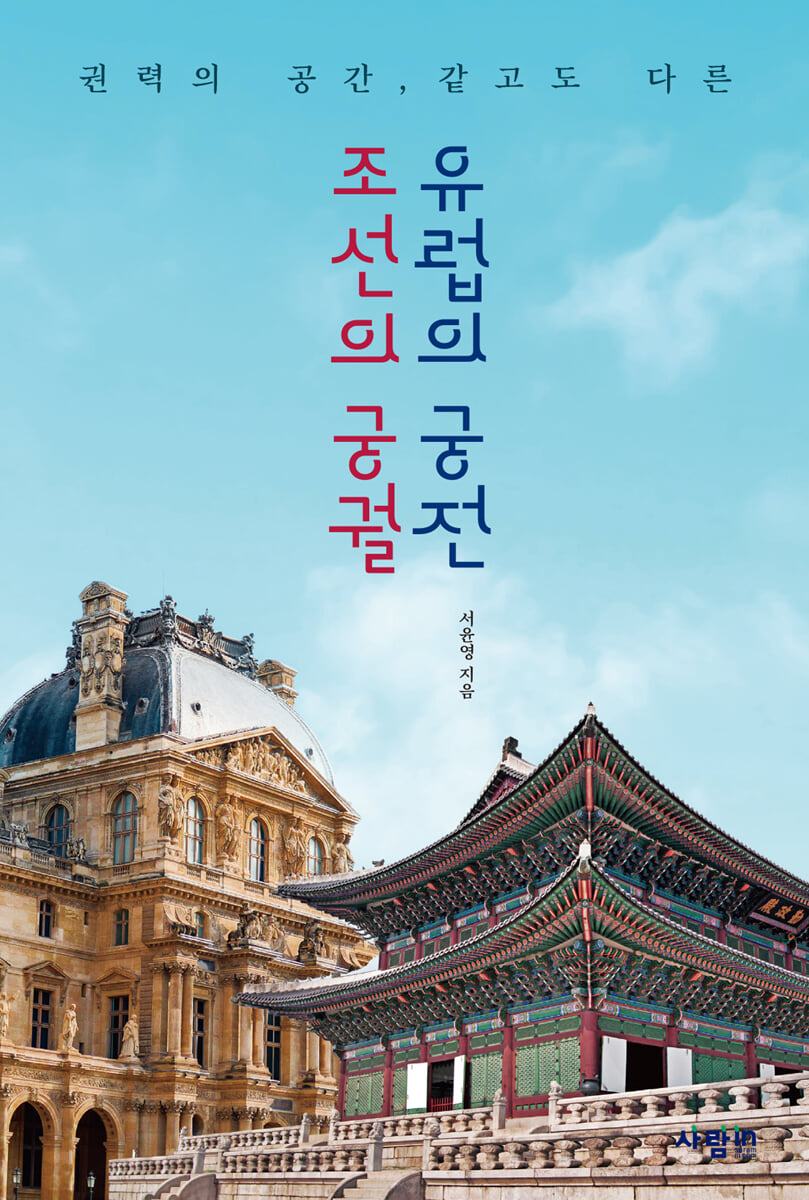
Joseon Palace, European Palace
 |
Description
Book Introduction
Stories of Joseon and European Palaces
Walk through the King's space, a symbol of absolute power!
This book compares and explains three palaces in Korea and three palaces in Europe, focusing on the fact that palace architecture in Joseon and Europe was built to strengthen the legitimacy of the royal authority at the time.
Rather than just admiring the splendid exterior of the palace, you can see the true nature of the palace through the stories of the king and power contained within its architecture.
We can see how the palace, which was both the king's living space and political space, was implemented in Joseon and Europe according to royal authority.
It allows us to glimpse the architectural characteristics of both the East and the West.
Walk through the King's space, a symbol of absolute power!
This book compares and explains three palaces in Korea and three palaces in Europe, focusing on the fact that palace architecture in Joseon and Europe was built to strengthen the legitimacy of the royal authority at the time.
Rather than just admiring the splendid exterior of the palace, you can see the true nature of the palace through the stories of the king and power contained within its architecture.
We can see how the palace, which was both the king's living space and political space, was implemented in Joseon and Europe according to royal authority.
It allows us to glimpse the architectural characteristics of both the East and the West.
- You can preview some of the book's contents.
Preview
index
preface
Chapter 1.
Palaces in Korea and Europe
medieval castle
The appearance of the palace
Korean castles and palaces
The Story of the Six Palaces of Korea and Europe
Chapter 2.
Joseon, which established its capital in Hanyang
The founding of Joseon
Architectural plans included in 『Zhouli』-「Gonggi」
Five palaces of Hanyang
Chapter 3.
Gyeongbokgung Palace, the main palace of Hanyang
A city surrounded by four mountains
Name of the pavilion
Reconstruction of Gyeongbokgung Palace
Chapter 4.
Changdeokgung Palace and Changgyeonggung Palace
Yi Bang-won, who started the Prince's Rebellion
The composition of Changdeokgung Palace
The rear garden of Changdeokgung Palace
Changgyeonggung Palace
Chapter 5.
Louvre Palace
Ile de la Cité on the Seine River
The beginning of the Bourbon dynasty
Louvre Palace
Chapter 6.
Palace of Versailles
Louis XIV, the Sun King
King's Apartment
Grand Trianon, Petit Trianon
Chapter 7.
The Russian Winter Palace and the Hermitage Museum
The birth of Peter the Great
Construction of St. Petersburg
Expansion of the Winter Palace and construction of the Hermitage
Two summer palaces
The palace returned to the citizens' embrace
Chapter 1.
Palaces in Korea and Europe
medieval castle
The appearance of the palace
Korean castles and palaces
The Story of the Six Palaces of Korea and Europe
Chapter 2.
Joseon, which established its capital in Hanyang
The founding of Joseon
Architectural plans included in 『Zhouli』-「Gonggi」
Five palaces of Hanyang
Chapter 3.
Gyeongbokgung Palace, the main palace of Hanyang
A city surrounded by four mountains
Name of the pavilion
Reconstruction of Gyeongbokgung Palace
Chapter 4.
Changdeokgung Palace and Changgyeonggung Palace
Yi Bang-won, who started the Prince's Rebellion
The composition of Changdeokgung Palace
The rear garden of Changdeokgung Palace
Changgyeonggung Palace
Chapter 5.
Louvre Palace
Ile de la Cité on the Seine River
The beginning of the Bourbon dynasty
Louvre Palace
Chapter 6.
Palace of Versailles
Louis XIV, the Sun King
King's Apartment
Grand Trianon, Petit Trianon
Chapter 7.
The Russian Winter Palace and the Hermitage Museum
The birth of Peter the Great
Construction of St. Petersburg
Expansion of the Winter Palace and construction of the Hermitage
Two summer palaces
The palace returned to the citizens' embrace
Detailed image

Into the book
To compare the palaces of Joseon and Europe, we selected approximately six palaces.
The palaces of Joseon are Gyeongbokgung Palace, Changdeokgung Palace, and Changgyeonggung Palace, and the palaces of Europe are the Louvre Palace in France, the Palace of Versailles, and the Winter Palace in Russia.
Gyeongbokgung Palace, Changdeokgung Palace, and Changgyeonggung Palace were all built immediately after the founding of the Joseon Dynasty, allowing us to glimpse the early days of the Joseon Dynasty.
Meanwhile, the Louvre and the Palace of Versailles in France are palaces from the Bourbon Dynasty.
What kind of living conditions did the Bourbon dynasty of France, the most powerful monarchy in Western Europe during the 17th and 18th centuries, live in? We'll explore this through the Louvre and the Palace of Versailles.
--- pp.26-27
It is said that in the Goryeo Dynasty, in addition to the capital city of Gaeseong, there were also three capitals, Seogyeong, Donggyeong, and Namgyeong, where the king stayed for several months each year.
France is in a similar situation, with the king ruling in the Loire and Fontainebleau regions rather than Paris.
Stayed at the blower etc.
This was because invasions by foreign tribes were frequent and the royal authority was weak.
Then, in the 14th century, as the invasions of foreign tribes disappeared and the royal power became stable, they returned to the capital, Paris, and settled there.
The Louvre Palace, which was built a long time ago and resembled a medieval castle, felt cramped and uncomfortable, so it underwent extensive expansion and renovation over the course of 30 years.
It is similar to how, after Yi Seong-gye founded the Joseon Dynasty, he chose only one capital, Hanyang, and immediately built the new Gyeongbokgung Palace.
--- p.117
Looking back, the Louvre in France, the Palace of Versailles and the Winter Palace in Russia have similar corners.
First of all, the Louvre and Versailles were built by Louis XIV of the Bourbon dynasty in the 17th century when he established an absolute monarchy.
Following this, in the 18th century, Peter the Great of the Romanov Dynasty of Russia moved the capital and laid the foundation for the construction of the Winter Palace as he achieved the modernization of Russia.
What Louis XIV and Peter the Great had in common was that they ascended to the throne at a young age, but because royal power was weak at the time, they lived in the countryside for a while.
Perhaps because of that experience, when time passed and I became a royal family, I built Versailles and St. Petersburg.
All the nobility had to leave Paris and Moscow and live here, and the Palace of Versailles and the Winter Palace were built at the heart of the new capital.
The palaces of Joseon are Gyeongbokgung Palace, Changdeokgung Palace, and Changgyeonggung Palace, and the palaces of Europe are the Louvre Palace in France, the Palace of Versailles, and the Winter Palace in Russia.
Gyeongbokgung Palace, Changdeokgung Palace, and Changgyeonggung Palace were all built immediately after the founding of the Joseon Dynasty, allowing us to glimpse the early days of the Joseon Dynasty.
Meanwhile, the Louvre and the Palace of Versailles in France are palaces from the Bourbon Dynasty.
What kind of living conditions did the Bourbon dynasty of France, the most powerful monarchy in Western Europe during the 17th and 18th centuries, live in? We'll explore this through the Louvre and the Palace of Versailles.
--- pp.26-27
It is said that in the Goryeo Dynasty, in addition to the capital city of Gaeseong, there were also three capitals, Seogyeong, Donggyeong, and Namgyeong, where the king stayed for several months each year.
France is in a similar situation, with the king ruling in the Loire and Fontainebleau regions rather than Paris.
Stayed at the blower etc.
This was because invasions by foreign tribes were frequent and the royal authority was weak.
Then, in the 14th century, as the invasions of foreign tribes disappeared and the royal power became stable, they returned to the capital, Paris, and settled there.
The Louvre Palace, which was built a long time ago and resembled a medieval castle, felt cramped and uncomfortable, so it underwent extensive expansion and renovation over the course of 30 years.
It is similar to how, after Yi Seong-gye founded the Joseon Dynasty, he chose only one capital, Hanyang, and immediately built the new Gyeongbokgung Palace.
--- p.117
Looking back, the Louvre in France, the Palace of Versailles and the Winter Palace in Russia have similar corners.
First of all, the Louvre and Versailles were built by Louis XIV of the Bourbon dynasty in the 17th century when he established an absolute monarchy.
Following this, in the 18th century, Peter the Great of the Romanov Dynasty of Russia moved the capital and laid the foundation for the construction of the Winter Palace as he achieved the modernization of Russia.
What Louis XIV and Peter the Great had in common was that they ascended to the throne at a young age, but because royal power was weak at the time, they lived in the countryside for a while.
Perhaps because of that experience, when time passed and I became a royal family, I built Versailles and St. Petersburg.
All the nobility had to leave Paris and Moscow and live here, and the Palace of Versailles and the Winter Palace were built at the heart of the new capital.
--- pp.188-189
Publisher's Review
The story of the palace, a symbol of power and an absolute space of the times
Architecture is not simply about building a building; it reflects the political, social, and cultural values of the time.
Eastern architecture places importance on harmony with nature and often features harmonious arrangements of multiple buildings, while Western architecture often emphasizes symmetry and grandeur.
This characteristic is also evident in palace architecture.
In Korea, the word 'gung', which means the house where the king lives, is called 'gunggwol', and in the West, it is called 'palace'.
The Joseon Dynasty's palaces are characterized by the fact that they consist of the king's living space (gung) and the space for politics and administration (gwol).
European palaces are characterized by grand and ornate buildings, and have a strong meaning as royal living spaces.
Of course, European palaces also had a political function, but the culture of kings and nobles was even more prominent.
Explore the palace architecture of Joseon and Europe and discover the stories of royal power contained within them.
Architecture is not simply about building a building; it reflects the political, social, and cultural values of the time.
Eastern architecture places importance on harmony with nature and often features harmonious arrangements of multiple buildings, while Western architecture often emphasizes symmetry and grandeur.
This characteristic is also evident in palace architecture.
In Korea, the word 'gung', which means the house where the king lives, is called 'gunggwol', and in the West, it is called 'palace'.
The Joseon Dynasty's palaces are characterized by the fact that they consist of the king's living space (gung) and the space for politics and administration (gwol).
European palaces are characterized by grand and ornate buildings, and have a strong meaning as royal living spaces.
Of course, European palaces also had a political function, but the culture of kings and nobles was even more prominent.
Explore the palace architecture of Joseon and Europe and discover the stories of royal power contained within them.
GOODS SPECIFICS
- Date of issue: March 28, 2025
- Page count, weight, size: 200 pages | 360g | 152*225*11mm
- ISBN13: 9791171011476
- ISBN10: 1171011474
You may also like
카테고리
korean


korean

![GQ KOREA Mark (Monthly): December [2025]](http://librairie.coreenne.fr/cdn/shop/files/8ef265dbbfbf186523ed75ba7319009d.jpg?v=1765340328&width=3840)


