

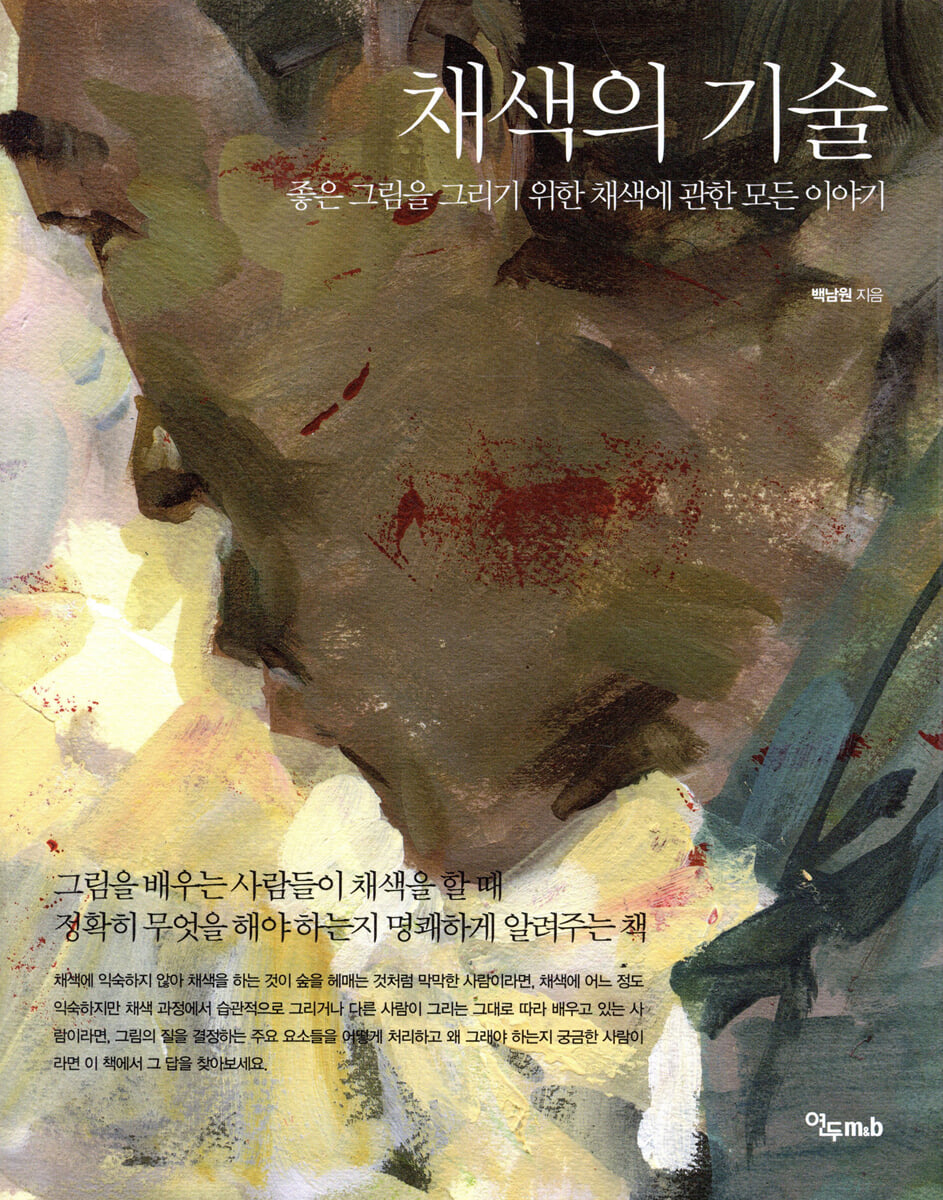
The art of coloring
 |
Description
Book Introduction
Although coloring means applying color, it is not enough to simply accept it as the process or act of applying color.
Coloring is a process of planning, judging, and selecting, like sketching, and it is an active creative process of creating the elements that are essential for drawing a good picture.
The question of how to color well is directly related to the question of how to draw well. "The Art of Coloring" essentially covers the entire topic of how to draw.
People who are not familiar with coloring often find it difficult to handle the materials or the coloring process itself.
Moreover, there are many people who think of coloring as simply the process of adding color to a sketch.
To be good at coloring, you must be able to properly handle the elements related to the quality of the drawing, regardless of the coloring material.
Many people are so eager to draw that they neglect the key elements of creating a good picture: judgment and selection for a point of reference, and the expressive intent of the picture. This book helps readers develop the ability to grasp the pulse of coloring so that they can properly navigate the journey of coloring.
Through coloring, we can examine the essence of drawing a good picture from various perspectives.
Coloring is a process of planning, judging, and selecting, like sketching, and it is an active creative process of creating the elements that are essential for drawing a good picture.
The question of how to color well is directly related to the question of how to draw well. "The Art of Coloring" essentially covers the entire topic of how to draw.
People who are not familiar with coloring often find it difficult to handle the materials or the coloring process itself.
Moreover, there are many people who think of coloring as simply the process of adding color to a sketch.
To be good at coloring, you must be able to properly handle the elements related to the quality of the drawing, regardless of the coloring material.
Many people are so eager to draw that they neglect the key elements of creating a good picture: judgment and selection for a point of reference, and the expressive intent of the picture. This book helps readers develop the ability to grasp the pulse of coloring so that they can properly navigate the journey of coloring.
Through coloring, we can examine the essence of drawing a good picture from various perspectives.
- You can preview some of the book's contents.
Preview
index
PAINTING 01.
coloring
Paint in colors 01 What it means to color
Paint in colors 02 What do you want to express?
* Try it yourself Think about what you want to express
Paint in colors 03 Sketch is a blueprint
Paint in colors 04 Two principles of coloring and general order
Paint in colors 05 Two ways to color
* Try it yourself. Draw gradually darker and lighter.
PAINTING 02.
Watercolor, oil, acrylic
Paint in colors 06 Types and characteristics of brushes
Paint in Colors 07 Watercolor Tools and Key Points
* Try it yourself: Paint objects around you with watercolors.
Paint in Colors 08 8 Representative Watercolor Techniques
* Try it yourself The main techniques of watercolor painting * Try it yourself
Paint in colors 09 Things to watch out for when painting with watercolors
Paint in Colors 10 Oil Painting Materials and Key Points
* Try it yourself: Paint the objects around you with oil paints.
Paint in Colors 11 Seven Representative Oil Painting Techniques
Paint in Colors 12 Things to Watch Out for When Painting with Oil
* Try it yourself: Key techniques of oil painting * Try it yourself
Paint in Colors 13 Materials and Key Points of Acrylic Painting
* Try it yourself: Paint objects around you with acrylics.
Paint in Colors 14 Four Representative Acrylic Painting Techniques
Paint in Colors 15 Things to Watch Out for When Painting with Acrylics
* Try it yourself: Key techniques for acrylic painting * Try it yourself
Paint in colors 16 Painting with mixed media
PAINTING 03.
Techniques for effectively expressing light and shade
Paint in Colors 17 The Meaning of Light and Shadow in Painting
Paint in colors 18 Simple light and shade, rich color changes
Paint in Colors 19 Keep the Highlights in Check
* Try it yourself: Find only the important highlights in the objects around you.
Paint in Colors 20 Techniques for Distributing Light and Shadow
* Try it yourself: Practice light and shade distribution
PAINTING 04.
How to handle color in painting
Paint in Colors 21 A Framework for Understanding Color Relationships
* Try it yourself: Memorize the color wheel and predict the results of color mixing.
Paint in Colors 22 Unity is more important than change
Paint in Colors 23 Color Contrast and Variation
Paint in Colors 24: How to Easily Create Unity
* Try it yourself. Feel the neutralization and transformation of colors through base and top coat methods.
PAINTING 05.
How to express light
Paint in Colors 25 Two Ways to Express Light
Paint in colors 26 Effects of light expression
PAINTING 06.
Outlines and textures that create sophisticated drawings
Paint in colors 27 The outlines are revealed naturally
Paint in colors 28 There should be variation in the outlines
* Try it yourself. Capture the changes in the outline and draw it.
Paint in Colors 29 How to Express Texture
PAINTING 07.
Know-how for natural and beautiful brushstrokes
Paint in Colors 30 Different Brushstrokes
* Try it yourself Six brush stroke techniques * Try it yourself
Paint in colors 31 Direction of brush strokes
* Try it yourself Practice different brush stroke directions
Paint in Colors 32 Individuality and Rhythm of Brushstrokes
* Try it yourself Practice free brush strokes
PAINTING 08.
Color density that enhances the completeness of the picture
Paint in Colors 33 The Meaning of Density in Coloring
Paint in Colors 34 5 Tips for Increasing Color Density
Paint in Colors 35 Why Color Density Variations Matter
PAINTING 09.
On the Use of Chance in Painting
Paint in Colors 36 Using Chance Effects in Painting
* Try it yourself: The random effect * Try it yourself
Paint in colors 37 Alla prima: creating accidental effects
PAINTING 10.
Criteria for judging the completion of a painting
Paint in Colors 38 What are the criteria for completing a painting?
coloring
Paint in colors 01 What it means to color
Paint in colors 02 What do you want to express?
* Try it yourself Think about what you want to express
Paint in colors 03 Sketch is a blueprint
Paint in colors 04 Two principles of coloring and general order
Paint in colors 05 Two ways to color
* Try it yourself. Draw gradually darker and lighter.
PAINTING 02.
Watercolor, oil, acrylic
Paint in colors 06 Types and characteristics of brushes
Paint in Colors 07 Watercolor Tools and Key Points
* Try it yourself: Paint objects around you with watercolors.
Paint in Colors 08 8 Representative Watercolor Techniques
* Try it yourself The main techniques of watercolor painting * Try it yourself
Paint in colors 09 Things to watch out for when painting with watercolors
Paint in Colors 10 Oil Painting Materials and Key Points
* Try it yourself: Paint the objects around you with oil paints.
Paint in Colors 11 Seven Representative Oil Painting Techniques
Paint in Colors 12 Things to Watch Out for When Painting with Oil
* Try it yourself: Key techniques of oil painting * Try it yourself
Paint in Colors 13 Materials and Key Points of Acrylic Painting
* Try it yourself: Paint objects around you with acrylics.
Paint in Colors 14 Four Representative Acrylic Painting Techniques
Paint in Colors 15 Things to Watch Out for When Painting with Acrylics
* Try it yourself: Key techniques for acrylic painting * Try it yourself
Paint in colors 16 Painting with mixed media
PAINTING 03.
Techniques for effectively expressing light and shade
Paint in Colors 17 The Meaning of Light and Shadow in Painting
Paint in colors 18 Simple light and shade, rich color changes
Paint in Colors 19 Keep the Highlights in Check
* Try it yourself: Find only the important highlights in the objects around you.
Paint in Colors 20 Techniques for Distributing Light and Shadow
* Try it yourself: Practice light and shade distribution
PAINTING 04.
How to handle color in painting
Paint in Colors 21 A Framework for Understanding Color Relationships
* Try it yourself: Memorize the color wheel and predict the results of color mixing.
Paint in Colors 22 Unity is more important than change
Paint in Colors 23 Color Contrast and Variation
Paint in Colors 24: How to Easily Create Unity
* Try it yourself. Feel the neutralization and transformation of colors through base and top coat methods.
PAINTING 05.
How to express light
Paint in Colors 25 Two Ways to Express Light
Paint in colors 26 Effects of light expression
PAINTING 06.
Outlines and textures that create sophisticated drawings
Paint in colors 27 The outlines are revealed naturally
Paint in colors 28 There should be variation in the outlines
* Try it yourself. Capture the changes in the outline and draw it.
Paint in Colors 29 How to Express Texture
PAINTING 07.
Know-how for natural and beautiful brushstrokes
Paint in Colors 30 Different Brushstrokes
* Try it yourself Six brush stroke techniques * Try it yourself
Paint in colors 31 Direction of brush strokes
* Try it yourself Practice different brush stroke directions
Paint in Colors 32 Individuality and Rhythm of Brushstrokes
* Try it yourself Practice free brush strokes
PAINTING 08.
Color density that enhances the completeness of the picture
Paint in Colors 33 The Meaning of Density in Coloring
Paint in Colors 34 5 Tips for Increasing Color Density
Paint in Colors 35 Why Color Density Variations Matter
PAINTING 09.
On the Use of Chance in Painting
Paint in Colors 36 Using Chance Effects in Painting
* Try it yourself: The random effect * Try it yourself
Paint in colors 37 Alla prima: creating accidental effects
PAINTING 10.
Criteria for judging the completion of a painting
Paint in Colors 38 What are the criteria for completing a painting?
Detailed image
Publisher's Review
How can I get better at coloring?
Many people think of coloring as simply adding color to a sketch.
There is also a perception that learning watercolor or oil painting is the same as learning to color.
Of course, coloring means applying color, but it should not be understood as simply the process or act of applying color.
Coloring is a process of planning, judging, and selecting, much like sketching, and it is an active creative process of creating the elements necessary to create a good picture.
The question of how to become good at coloring is not much different from the question of how to become good at drawing.
So, this book actually covers the overall topic of how to draw.
If you are unfamiliar with coloring and find coloring like wandering through a forest, or if you are somewhat familiar with coloring but habitually draw or learn from others during the coloring process, this book will help you find the answers to how to handle the key elements that determine the quality of a painting and why you should do so.
10 Thematic Coloring Principles for Creating Great Paintings
People who are not familiar with coloring find it difficult to handle the materials or the coloring process itself.
But that is not the essence of coloring.
To be good at coloring, you need to be able to properly handle the elements related to the quality of the drawing, regardless of the coloring material.
Many people are so eager to draw that they neglect the key elements of creating a good picture: judgment and selection of a direction, and the expressive intent of the picture. This book helps readers develop the ability to grasp the pulse of coloring so that they can properly navigate the journey of coloring.
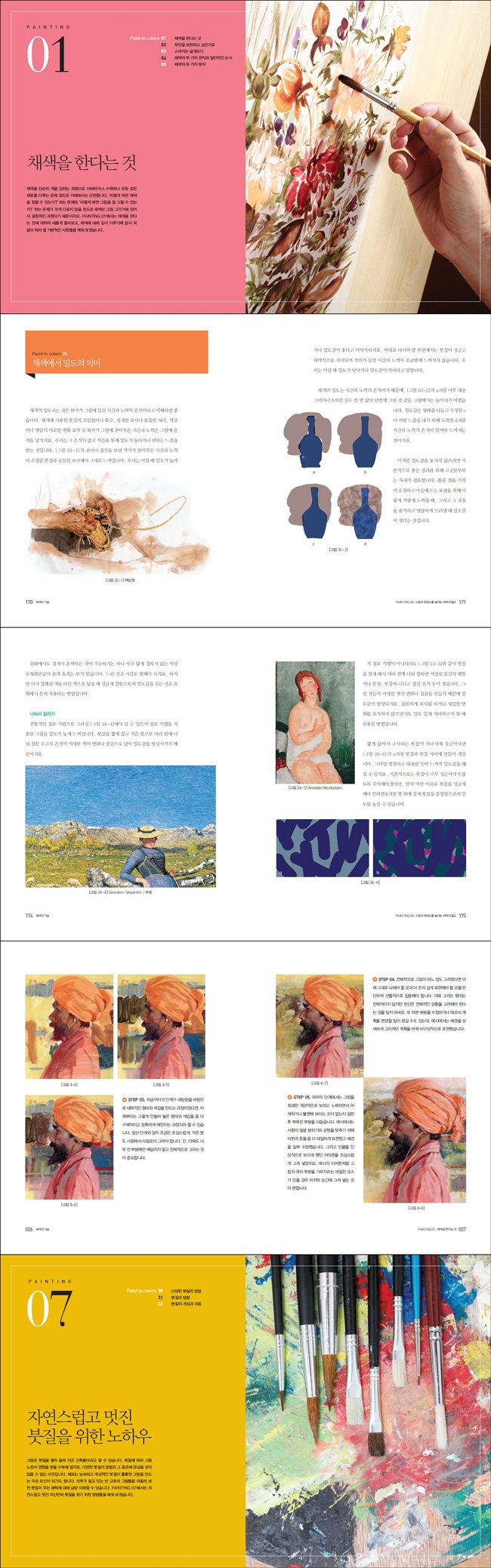
In this book, you will learn everything about the essence of drawing a good picture through coloring, such as how to distribute light and shade to create texture in a picture, how to use color to create a harmonious color tone, how to create and utilize the effects of light, how to refine a picture with a sensual outline, and how to effectively express and utilize texture.
PAINTING 01.
coloring
It is difficult to understand coloring as simply a process of applying color or as a matter of handling materials such as watercolor or oil painting.
Coloring is such a crucial part of drawing that the questions "How can I become good at coloring?" and "How can I become good at drawing?" aren't all that different. In PAINTING 01, we'll take a fresh look at coloring and learn the essential fundamentals before delving deeper into the art of coloring.
PAINTING 02.
Watercolor, oil, acrylic
Just as you can't properly convey a great idea without knowing the language, you can't properly color a painting if you don't handle the materials well.
Learning the properties and uses of coloring materials is essential for creating good paintings. In PAINTING 02, you'll learn about watercolor, oil, and acrylic painting.
Once you understand the unique visual expressions and effects of each coloring material, you can create sophisticated paintings that fully capture the flavors and characteristics of each ingredient.
PAINTING 03.
Techniques for effectively expressing light and shade
Coloring is literally applying color.
However, because light and shade have a greater influence on coloring than color, it is problematic to think of coloring as simply applying color.
In fact, many of the problems that arise when coloring are related to the expression of light and shade.
In other words, if you don't master light and shade, you won't be able to color properly. In PAINTING 03, you'll learn in detail the techniques for effectively expressing light and shade.
PAINTING 04.
How to handle color in painting
The issue of handling color is the most important part of the coloring process.
Even a painting with many flaws can become a good painting if the colors are well coordinated.
Also, because color is a common element regardless of the material, anyone who understands color can draw pictures to a certain level regardless of the material used.
Therefore, for anyone seeking to create a refined painting, an understanding of color is as essential as drawing ability. In PAINTING 04, you'll learn about color.
PAINTING 05.
How to express light
It can be said that all paintings express light.
Because color and brightness are phenomena caused by light.
However, when you actually look at a painting, there are not many cases where you can feel the light specifically.
Color, contrast, three-dimensionality, and spatiality alone do not give the feeling of light shining.
So, if you want to convey the feeling of light shining through, you need to express it specifically. In PAINTING 05, we'll explore how to specifically express light in painting and its effects.
PAINTING 06.
Outlines and textures that create sophisticated drawings
The more beginners are, the more they tend to treat the outline of the subject in a rigid manner.
Because I lack awareness of texture, I am unable to properly capture the texture of the subject or painting material.
Unfortunately, stiff outlines and inadequate or insufficient texture rendering can make a painting look tacky and cheap.
Therefore, to create sophisticated paintings, it's essential to learn how to handle natural outlines and appropriately utilize texture. In PAINTING 06, you'll learn in detail about outlines and texture expression.
PAINTING 07.
Know-how for natural and beautiful brushstrokes
A painting can be said to be a structure built by piling up brushstrokes.
The feeling of the painting is bound to be influenced by the brush strokes.
This is why you can't help but be interested in the various brush stroke methods and their effects.
Sometimes, skillful and individual brushstrokes are the key to creating a great painting.
Thinking back to the famous paintings of Van Gogh, you can quickly understand the power of brushstrokes. In PAINTING 07, you'll learn how to find your own natural, beautiful brushstrokes.
PAINTING 08.
Color density that enhances the completeness of the picture
The density of color is a major factor in determining the quality of a painting.
This is because it is closely related to the completeness and weight of the painting, and is also related to the richness of feeling and the distribution of strength and weakness on the screen.
While color density is a natural part of the painting process, it can be detrimental to your painting if not effectively controlled, so it's crucial to understand it. In PAINTING 08, you'll learn in detail how density is created and what role it plays.
PAINTING 09.
On the Use of Chance in Painting
Overly precise and planned drawings can be overwhelming to the viewer.
The charm of a painting comes alive when there are slightly crooked shapes, glimpses of clumsiness, and traces of unfinished materials.
That's because it's natural, and the surest way to create naturalness in a painting is through the use of chance. In PAINTING 09, we'll learn about chance.
PAINTING 10.
Criteria for judging the completion of a painting
When it comes to drawing, the process of drawing is important, but the point at which it ends is also very important.
If you finish at the wrong time, you will end up with a sloppy picture with little density and expression, or you will end up with a picture that feels burdensome and artificial because you draw too much unnecessarily.
Therefore, you must develop the judgment to determine the appropriate point of completion. In PAINTING 10, you'll learn helpful tips on how to determine the completion of a painting.
Many people think of coloring as simply adding color to a sketch.
There is also a perception that learning watercolor or oil painting is the same as learning to color.
Of course, coloring means applying color, but it should not be understood as simply the process or act of applying color.
Coloring is a process of planning, judging, and selecting, much like sketching, and it is an active creative process of creating the elements necessary to create a good picture.
The question of how to become good at coloring is not much different from the question of how to become good at drawing.
So, this book actually covers the overall topic of how to draw.
If you are unfamiliar with coloring and find coloring like wandering through a forest, or if you are somewhat familiar with coloring but habitually draw or learn from others during the coloring process, this book will help you find the answers to how to handle the key elements that determine the quality of a painting and why you should do so.
10 Thematic Coloring Principles for Creating Great Paintings
People who are not familiar with coloring find it difficult to handle the materials or the coloring process itself.
But that is not the essence of coloring.
To be good at coloring, you need to be able to properly handle the elements related to the quality of the drawing, regardless of the coloring material.
Many people are so eager to draw that they neglect the key elements of creating a good picture: judgment and selection of a direction, and the expressive intent of the picture. This book helps readers develop the ability to grasp the pulse of coloring so that they can properly navigate the journey of coloring.
In this book, you will learn everything about the essence of drawing a good picture through coloring, such as how to distribute light and shade to create texture in a picture, how to use color to create a harmonious color tone, how to create and utilize the effects of light, how to refine a picture with a sensual outline, and how to effectively express and utilize texture.
PAINTING 01.
coloring
It is difficult to understand coloring as simply a process of applying color or as a matter of handling materials such as watercolor or oil painting.
Coloring is such a crucial part of drawing that the questions "How can I become good at coloring?" and "How can I become good at drawing?" aren't all that different. In PAINTING 01, we'll take a fresh look at coloring and learn the essential fundamentals before delving deeper into the art of coloring.
PAINTING 02.
Watercolor, oil, acrylic
Just as you can't properly convey a great idea without knowing the language, you can't properly color a painting if you don't handle the materials well.
Learning the properties and uses of coloring materials is essential for creating good paintings. In PAINTING 02, you'll learn about watercolor, oil, and acrylic painting.
Once you understand the unique visual expressions and effects of each coloring material, you can create sophisticated paintings that fully capture the flavors and characteristics of each ingredient.
PAINTING 03.
Techniques for effectively expressing light and shade
Coloring is literally applying color.
However, because light and shade have a greater influence on coloring than color, it is problematic to think of coloring as simply applying color.
In fact, many of the problems that arise when coloring are related to the expression of light and shade.
In other words, if you don't master light and shade, you won't be able to color properly. In PAINTING 03, you'll learn in detail the techniques for effectively expressing light and shade.
PAINTING 04.
How to handle color in painting
The issue of handling color is the most important part of the coloring process.
Even a painting with many flaws can become a good painting if the colors are well coordinated.
Also, because color is a common element regardless of the material, anyone who understands color can draw pictures to a certain level regardless of the material used.
Therefore, for anyone seeking to create a refined painting, an understanding of color is as essential as drawing ability. In PAINTING 04, you'll learn about color.
PAINTING 05.
How to express light
It can be said that all paintings express light.
Because color and brightness are phenomena caused by light.
However, when you actually look at a painting, there are not many cases where you can feel the light specifically.
Color, contrast, three-dimensionality, and spatiality alone do not give the feeling of light shining.
So, if you want to convey the feeling of light shining through, you need to express it specifically. In PAINTING 05, we'll explore how to specifically express light in painting and its effects.
PAINTING 06.
Outlines and textures that create sophisticated drawings
The more beginners are, the more they tend to treat the outline of the subject in a rigid manner.
Because I lack awareness of texture, I am unable to properly capture the texture of the subject or painting material.
Unfortunately, stiff outlines and inadequate or insufficient texture rendering can make a painting look tacky and cheap.
Therefore, to create sophisticated paintings, it's essential to learn how to handle natural outlines and appropriately utilize texture. In PAINTING 06, you'll learn in detail about outlines and texture expression.
PAINTING 07.
Know-how for natural and beautiful brushstrokes
A painting can be said to be a structure built by piling up brushstrokes.
The feeling of the painting is bound to be influenced by the brush strokes.
This is why you can't help but be interested in the various brush stroke methods and their effects.
Sometimes, skillful and individual brushstrokes are the key to creating a great painting.
Thinking back to the famous paintings of Van Gogh, you can quickly understand the power of brushstrokes. In PAINTING 07, you'll learn how to find your own natural, beautiful brushstrokes.
PAINTING 08.
Color density that enhances the completeness of the picture
The density of color is a major factor in determining the quality of a painting.
This is because it is closely related to the completeness and weight of the painting, and is also related to the richness of feeling and the distribution of strength and weakness on the screen.
While color density is a natural part of the painting process, it can be detrimental to your painting if not effectively controlled, so it's crucial to understand it. In PAINTING 08, you'll learn in detail how density is created and what role it plays.
PAINTING 09.
On the Use of Chance in Painting
Overly precise and planned drawings can be overwhelming to the viewer.
The charm of a painting comes alive when there are slightly crooked shapes, glimpses of clumsiness, and traces of unfinished materials.
That's because it's natural, and the surest way to create naturalness in a painting is through the use of chance. In PAINTING 09, we'll learn about chance.
PAINTING 10.
Criteria for judging the completion of a painting
When it comes to drawing, the process of drawing is important, but the point at which it ends is also very important.
If you finish at the wrong time, you will end up with a sloppy picture with little density and expression, or you will end up with a picture that feels burdensome and artificial because you draw too much unnecessarily.
Therefore, you must develop the judgment to determine the appropriate point of completion. In PAINTING 10, you'll learn helpful tips on how to determine the completion of a painting.
GOODS SPECIFICS
- Date of issue: June 6, 2013
- Page count, weight, size: 204 pages | 614g | 188*240*20mm
- ISBN13: 9788996882039
- ISBN10: 8996882038
You may also like
카테고리
korean


korean

![GQ KOREA Mark (Monthly): December [2025]](http://librairie.coreenne.fr/cdn/shop/files/8ef265dbbfbf186523ed75ba7319009d.jpg?v=1765340328&width=3840)


