

The Buddha's Life in Poetry, Bulsohaengchan
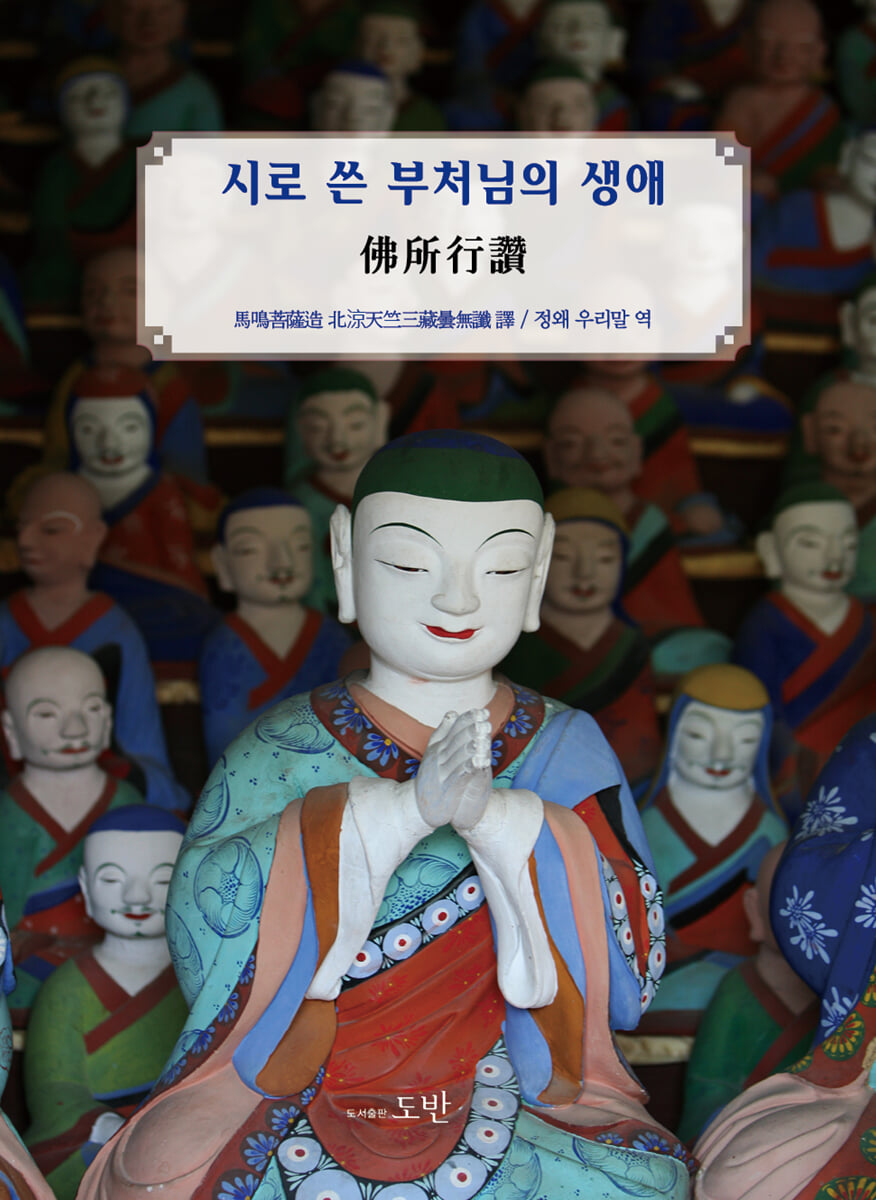 |
Description
Book Introduction
If you could own one book for the rest of your life...
A gift from Bodhisattva Ma-myeong, the gift of liberation
A translated version of 'Buddha's Life Written in Poetry, Bulsohaengchan (佛所行讚)' by Jeongwae, the current head priest of Geumtapsa Temple, has been published.
If you could own one book for the rest of your life, which one would you choose? That was the first question asked by Monk Jeongwae after the book was published.
I remember someone choosing the complete Shakespeare works in a similar question.
The Bulsohaengchan is the essence of Buddhist literature, a long epic poem that recounts the life of the Buddha.
As you read each line, you will naturally become filled with faith.
In the process of translating the Buddhist scriptures, Monk Jeongwae took great care to record the entire sentence several times.
The reason is that it is partly to ensure accurate correction, partly to preserve poetic expression, and partly to match the linguistic expressions of modern people, but it is said that the life of Buddha, recited in poetry, touched his heart so beautifully that he could not help but read it over and over again, shedding tears.
The publisher also received the file and was so impressed that they listened to it over and over again.
Monk Jeongwae had already written “The Path to Escape from Suffering,” created “108 Great Repentance Practice Aspirations” based on Buddhist doctrine, translated “The Diamond Sutra,” and worked on finding and translating the original copy of “The Thousand-Hand Sutra.”
The direction of Monk Jeongwae's translation of the sutras is to make them easily readable by modern people.
However, Monk Jeongwae's writings are not light, and have the characteristic of increasing one's faith as one reads them.
This may be because the monk uses simple sentences while also containing his own deep faith.
In the Bulsohaengchan, we can feel the heart of Monk Jeongwae more deeply.
The sentence is so beautiful, and the content is so deep and wide, that one wonders if Shakespeare might have written so many epic poems with reference to the poem.
The publisher is preparing to release the files recorded by Monk Jeongwae himself on the Internet so that people can listen to them together.
The voice of a devout monk has a different kind of deep resonance than that of a voice actor with a great voice.
Monk Jeongwae dreams that everyone will own and read the Buddha's life story written in poetry, Bulsohaengchan.
I just want to share that deep emotion with many people.
I could feel the monk's true heart even more clearly in his deep and clear eyes.
A book you should keep and read for a lifetime.
It is certainly a wonderful thing to recommend that one book as 'The Life of Buddha Written in Poetry'.
A gift from Bodhisattva Ma-myeong, the gift of liberation
A translated version of 'Buddha's Life Written in Poetry, Bulsohaengchan (佛所行讚)' by Jeongwae, the current head priest of Geumtapsa Temple, has been published.
If you could own one book for the rest of your life, which one would you choose? That was the first question asked by Monk Jeongwae after the book was published.
I remember someone choosing the complete Shakespeare works in a similar question.
The Bulsohaengchan is the essence of Buddhist literature, a long epic poem that recounts the life of the Buddha.
As you read each line, you will naturally become filled with faith.
In the process of translating the Buddhist scriptures, Monk Jeongwae took great care to record the entire sentence several times.
The reason is that it is partly to ensure accurate correction, partly to preserve poetic expression, and partly to match the linguistic expressions of modern people, but it is said that the life of Buddha, recited in poetry, touched his heart so beautifully that he could not help but read it over and over again, shedding tears.
The publisher also received the file and was so impressed that they listened to it over and over again.
Monk Jeongwae had already written “The Path to Escape from Suffering,” created “108 Great Repentance Practice Aspirations” based on Buddhist doctrine, translated “The Diamond Sutra,” and worked on finding and translating the original copy of “The Thousand-Hand Sutra.”
The direction of Monk Jeongwae's translation of the sutras is to make them easily readable by modern people.
However, Monk Jeongwae's writings are not light, and have the characteristic of increasing one's faith as one reads them.
This may be because the monk uses simple sentences while also containing his own deep faith.
In the Bulsohaengchan, we can feel the heart of Monk Jeongwae more deeply.
The sentence is so beautiful, and the content is so deep and wide, that one wonders if Shakespeare might have written so many epic poems with reference to the poem.
The publisher is preparing to release the files recorded by Monk Jeongwae himself on the Internet so that people can listen to them together.
The voice of a devout monk has a different kind of deep resonance than that of a voice actor with a great voice.
Monk Jeongwae dreams that everyone will own and read the Buddha's life story written in poetry, Bulsohaengchan.
I just want to share that deep emotion with many people.
I could feel the monk's true heart even more clearly in his deep and clear eyes.
A book you should keep and read for a lifetime.
It is certainly a wonderful thing to recommend that one book as 'The Life of Buddha Written in Poetry'.
- You can preview some of the book's contents.
Preview
index
Volume 1
Chapter 1.
Birth of the Buddha in Lumbini.
Chapter 2.
Cheogungpum (處宮品) - Living in the Kapilavastu palace.
Chapter 3.
Yeomhwanpum (厭患品) - Disliking and worrying about worldly life.
Chapter 4.
Escape from the five desires - to escape from the five pleasures.
Chapter 5.
Departure from the castle - Leaving the castle of Kapila.
Volume 2
Chapter 6.
Returning with a coachman's money - Returning with a coachman's money.
Chapter 7.
Entering the Forest of Suffering (入苦行林經) - Entering the forest of suffering to practice asceticism.
Chapter 8.
Hapgung Ubi-pum (合宮憂悲品) - The palace people are sad and grieving.
Chapter 9.
The Prince's Seeking Chapter - The subjects follow the prince and seek him out.
Volume 3
Chapter 10.
Prince Byeongsawangye Chapter - Bimbisara came to see him.
Chapter 11.
Answering the Bottle of Sand King Chapter - Bimbisara answers the questions.
Chapter 12.
Araram Uldurampum (阿羅藍鬱頭藍品) - Meet Araram and Ulduram.
Chapter 13.
Breaking the Demon - Breaking and destroying the demons.
Chapter 14.
Ayusambodhi Product - Achieving the enlightenment of nirvana.
Chapter 15.
Chapter on Turning the Dharma Wheel - Turning the Great Dharma Wheel throughout the world.
Volume 4
Chapter 16.
The Chapter of the Bottle Sha King and the Buddha's Chief Disciples
Chapter 17.
Chapter on the Great Disciples Entering the Home Life - The great disciples enter the home life life of the Buddha.
Chapter 18.
The Book of Solitude - To educate a rich man who is suddenly lonely.
Chapter 19.
The Father and Son Meet - King Suddhodhi and the Buddha meet.
Chapter 20.
Chapter on Receiving the Jetavana Temple - Receiving the Grand Monastery of Jetavana Temple.
Chapter 21.
Sujaechwisangjobokpum (守財醉象調伏品) - Taming a drunken elephant.
Chapter 22.
Ammara-nyeo Sees Buddha - Ammara-nyeo Sees Buddha.
Volume 5
Chapter 23.
The Divine Power of Staying Long - Staying in life with divine power.
Chapter 24.
The Chapter on Leaving the Licchavi - The Buddha leaves Licchavi.
Chapter 25.
Nirvana Chapter - The Buddha reaches the great nirvana.
Chapter 26.
The Great Nirvana Chapter - Entering the Great Nirvana, Prajna Nirvana.
Chapter 27.
Lamenting the Buddha's Nirvana - Lamenting the Buddha's Nirvana.
Chapter 28.
Sharing the Buddha's sarira - sharing the Buddha's sarira.
Chapter 1.
Birth of the Buddha in Lumbini.
Chapter 2.
Cheogungpum (處宮品) - Living in the Kapilavastu palace.
Chapter 3.
Yeomhwanpum (厭患品) - Disliking and worrying about worldly life.
Chapter 4.
Escape from the five desires - to escape from the five pleasures.
Chapter 5.
Departure from the castle - Leaving the castle of Kapila.
Volume 2
Chapter 6.
Returning with a coachman's money - Returning with a coachman's money.
Chapter 7.
Entering the Forest of Suffering (入苦行林經) - Entering the forest of suffering to practice asceticism.
Chapter 8.
Hapgung Ubi-pum (合宮憂悲品) - The palace people are sad and grieving.
Chapter 9.
The Prince's Seeking Chapter - The subjects follow the prince and seek him out.
Volume 3
Chapter 10.
Prince Byeongsawangye Chapter - Bimbisara came to see him.
Chapter 11.
Answering the Bottle of Sand King Chapter - Bimbisara answers the questions.
Chapter 12.
Araram Uldurampum (阿羅藍鬱頭藍品) - Meet Araram and Ulduram.
Chapter 13.
Breaking the Demon - Breaking and destroying the demons.
Chapter 14.
Ayusambodhi Product - Achieving the enlightenment of nirvana.
Chapter 15.
Chapter on Turning the Dharma Wheel - Turning the Great Dharma Wheel throughout the world.
Volume 4
Chapter 16.
The Chapter of the Bottle Sha King and the Buddha's Chief Disciples
Chapter 17.
Chapter on the Great Disciples Entering the Home Life - The great disciples enter the home life life of the Buddha.
Chapter 18.
The Book of Solitude - To educate a rich man who is suddenly lonely.
Chapter 19.
The Father and Son Meet - King Suddhodhi and the Buddha meet.
Chapter 20.
Chapter on Receiving the Jetavana Temple - Receiving the Grand Monastery of Jetavana Temple.
Chapter 21.
Sujaechwisangjobokpum (守財醉象調伏品) - Taming a drunken elephant.
Chapter 22.
Ammara-nyeo Sees Buddha - Ammara-nyeo Sees Buddha.
Volume 5
Chapter 23.
The Divine Power of Staying Long - Staying in life with divine power.
Chapter 24.
The Chapter on Leaving the Licchavi - The Buddha leaves Licchavi.
Chapter 25.
Nirvana Chapter - The Buddha reaches the great nirvana.
Chapter 26.
The Great Nirvana Chapter - Entering the Great Nirvana, Prajna Nirvana.
Chapter 27.
Lamenting the Buddha's Nirvana - Lamenting the Buddha's Nirvana.
Chapter 28.
Sharing the Buddha's sarira - sharing the Buddha's sarira.
Publisher's Review
Translator's Note
This time, thanks to the great support of Venerable Jeokgyeong of Bong-in Temple, Venerable Sangun of Doban, Venerable Junsu, Venerable Gwang-ho Kim of Doban Publishing, Bodhisattva Sangmi Lee, and their two sons, Pyeong-geon Kim, and Buddhist pianist Ri-san Kim, we are very pleased to have published a complete translation of the existing "Buddhacarita" meaning "the life of the Buddha", Bulsohaengchan (佛所行讚), a Korean version that is easy for anyone to read and use in their daily lives.
As the title suggests, this book is a collection of literature that praises the Buddha's life in poetry. Through profound teachings, it enables sentient beings to first realize it in their lives, and then realize freedom from suffering by recalling it at the stages of birth, aging, illness, and death that they face, and also to see through the reality of the karma of reincarnation caused by ignorance and defilement, and then enter the light of liberation from suffering and achieve enlightenment. It is also the essence of Buddhist literature that explains in detail the laws of liberation that allow one to escape reincarnation without falling into the six realms amidst the confusion of the five desires and the confusion of the mind.
Looking back, it is true that no one alive can escape birth, aging, illness, and death.
This is the suffering of reincarnation that all living beings who depend on the five desires and pleasures and the three realms and six realms inevitably experience according to the law of karma.
The Buddha said,
“Who wouldn’t cherish the parents who gave birth to them?
But in the end we ended up breaking up
No matter how much we live and protect each other,
When death comes, you cannot hold on to it.
It's just like we met briefly in a dream
Suddenly, all of a sudden, there is no more work to be done and they scatter.
As if a person were walking along a road
We met briefly on the way
As if they would all separate after a while
The reason for parting is originally the same.
Even if we get together and become close for a short time
How to break up naturally according to the laws of fate
Deeply realizing the false encounter of intimacy
It is as if he said, “You should not worry or be sad.”
But there is one thing we must not overlook here.
Although birth, aging, illness, and death are equal for everyone and without exception, the circumstances and outcomes of birth, aging, illness, and death are never the same.
In other words, just as a patient who goes to the hospital because he is sick and a doctor who cures his illness are completely different even though they are in the same hospital, the consequences of dying without knowing the Buddha's teachings are completely different.
Death is not literally the end of life, but is merely a gateway to suffering that causes one to be reborn in the six realms according to one's afflictions and good or evil karma, and to experience the endless suffering of birth, aging, illness, and death. This does not include the immortal happiness of Buddha's Nirvana, where one is liberated from the cycle of reincarnation and enjoys comfort forever. They only have the temporary comfort of preemptive pursuit, and there is no true liberation.
However, for the Buddha and Bodhisattvas, who are the saints of Arahats, even though they die the same death as ordinary people, their death is the door to liberation from the three realms and the cycle of birth and death, and the door to joy that leads to the world of Nirvana.
Yes, that's right.
This Buddhist scripture called "Buddhacarita", which means "the life of the Buddha," is a truly precious teaching that reveals in detail the essence of life that living beings simply accept and miss, and presents us with profound practices that can turn it into the path to liberation.
Therefore, if we believe in the Buddha's teachings of truth as firmly as a diamond and practice them, our lives, which seem like a cart of suffering, will become a time of joy that will lead us to liberation from birth and death and the happiness of nirvana.
“It felt like I was with a poisonous snake.
Now I'm in a great silence
All painful relationships have already ended.
Because I will never receive another body again
“I have rested from the sufferings of the future forever.”
Therefore, life is a homecoming to the Buddha's hometown, a reunion, excitement, happiness, joy, samadhi, another hope, a blessing, a great transformation, and also life is a transparent light, a fluttering of wings of joy, a feast of brilliant light, and life is no longer a place of suffering where sorrow and separation intersect.
It is a place of blessing where we shed tears of joy and delight as we reunite with our own true nature, the Mother of Dharma, whom we had forgotten and longed for in the cycle of reincarnation since time immemorial.
Therefore, this song of praise for the Buddha's actions is the final song of enlightenment that is heard in the ears of our pure souls.
Finally, the protection of this Bodhisattva Ma-Myeong, who left us the gift of liberation, will not end until the end of our world of living beings.
Although Bodhisattva Ma-Myeong has left the human world, he continues to watch over the Saha world for eternity to welcome future beings with whom he has a deep connection.
I sincerely pray that all who encounter this book will be blessed with the protection of the Three Jewels and the compassion and protection of the precious Master, and that they will all experience the supreme good fortune of enlightenment and liberation.
This time, thanks to the great support of Venerable Jeokgyeong of Bong-in Temple, Venerable Sangun of Doban, Venerable Junsu, Venerable Gwang-ho Kim of Doban Publishing, Bodhisattva Sangmi Lee, and their two sons, Pyeong-geon Kim, and Buddhist pianist Ri-san Kim, we are very pleased to have published a complete translation of the existing "Buddhacarita" meaning "the life of the Buddha", Bulsohaengchan (佛所行讚), a Korean version that is easy for anyone to read and use in their daily lives.
As the title suggests, this book is a collection of literature that praises the Buddha's life in poetry. Through profound teachings, it enables sentient beings to first realize it in their lives, and then realize freedom from suffering by recalling it at the stages of birth, aging, illness, and death that they face, and also to see through the reality of the karma of reincarnation caused by ignorance and defilement, and then enter the light of liberation from suffering and achieve enlightenment. It is also the essence of Buddhist literature that explains in detail the laws of liberation that allow one to escape reincarnation without falling into the six realms amidst the confusion of the five desires and the confusion of the mind.
Looking back, it is true that no one alive can escape birth, aging, illness, and death.
This is the suffering of reincarnation that all living beings who depend on the five desires and pleasures and the three realms and six realms inevitably experience according to the law of karma.
The Buddha said,
“Who wouldn’t cherish the parents who gave birth to them?
But in the end we ended up breaking up
No matter how much we live and protect each other,
When death comes, you cannot hold on to it.
It's just like we met briefly in a dream
Suddenly, all of a sudden, there is no more work to be done and they scatter.
As if a person were walking along a road
We met briefly on the way
As if they would all separate after a while
The reason for parting is originally the same.
Even if we get together and become close for a short time
How to break up naturally according to the laws of fate
Deeply realizing the false encounter of intimacy
It is as if he said, “You should not worry or be sad.”
But there is one thing we must not overlook here.
Although birth, aging, illness, and death are equal for everyone and without exception, the circumstances and outcomes of birth, aging, illness, and death are never the same.
In other words, just as a patient who goes to the hospital because he is sick and a doctor who cures his illness are completely different even though they are in the same hospital, the consequences of dying without knowing the Buddha's teachings are completely different.
Death is not literally the end of life, but is merely a gateway to suffering that causes one to be reborn in the six realms according to one's afflictions and good or evil karma, and to experience the endless suffering of birth, aging, illness, and death. This does not include the immortal happiness of Buddha's Nirvana, where one is liberated from the cycle of reincarnation and enjoys comfort forever. They only have the temporary comfort of preemptive pursuit, and there is no true liberation.
However, for the Buddha and Bodhisattvas, who are the saints of Arahats, even though they die the same death as ordinary people, their death is the door to liberation from the three realms and the cycle of birth and death, and the door to joy that leads to the world of Nirvana.
Yes, that's right.
This Buddhist scripture called "Buddhacarita", which means "the life of the Buddha," is a truly precious teaching that reveals in detail the essence of life that living beings simply accept and miss, and presents us with profound practices that can turn it into the path to liberation.
Therefore, if we believe in the Buddha's teachings of truth as firmly as a diamond and practice them, our lives, which seem like a cart of suffering, will become a time of joy that will lead us to liberation from birth and death and the happiness of nirvana.
“It felt like I was with a poisonous snake.
Now I'm in a great silence
All painful relationships have already ended.
Because I will never receive another body again
“I have rested from the sufferings of the future forever.”
Therefore, life is a homecoming to the Buddha's hometown, a reunion, excitement, happiness, joy, samadhi, another hope, a blessing, a great transformation, and also life is a transparent light, a fluttering of wings of joy, a feast of brilliant light, and life is no longer a place of suffering where sorrow and separation intersect.
It is a place of blessing where we shed tears of joy and delight as we reunite with our own true nature, the Mother of Dharma, whom we had forgotten and longed for in the cycle of reincarnation since time immemorial.
Therefore, this song of praise for the Buddha's actions is the final song of enlightenment that is heard in the ears of our pure souls.
Finally, the protection of this Bodhisattva Ma-Myeong, who left us the gift of liberation, will not end until the end of our world of living beings.
Although Bodhisattva Ma-Myeong has left the human world, he continues to watch over the Saha world for eternity to welcome future beings with whom he has a deep connection.
I sincerely pray that all who encounter this book will be blessed with the protection of the Three Jewels and the compassion and protection of the precious Master, and that they will all experience the supreme good fortune of enlightenment and liberation.
GOODS SPECIFICS
- Date of issue: January 28, 2024
- Page count, weight, size: 490 pages | 165*227*28mm
- ISBN13: 9791168060913
You may also like
카테고리
korean


korean

![ELLE 엘르 스페셜 에디션 A형 : 12월 [2025]](http://librairie.coreenne.fr/cdn/shop/files/b8e27a3de6c9538896439686c6b0e8fb.jpg?v=1766436872&width=3840)


