

The Last Children After the Nuclear Blast
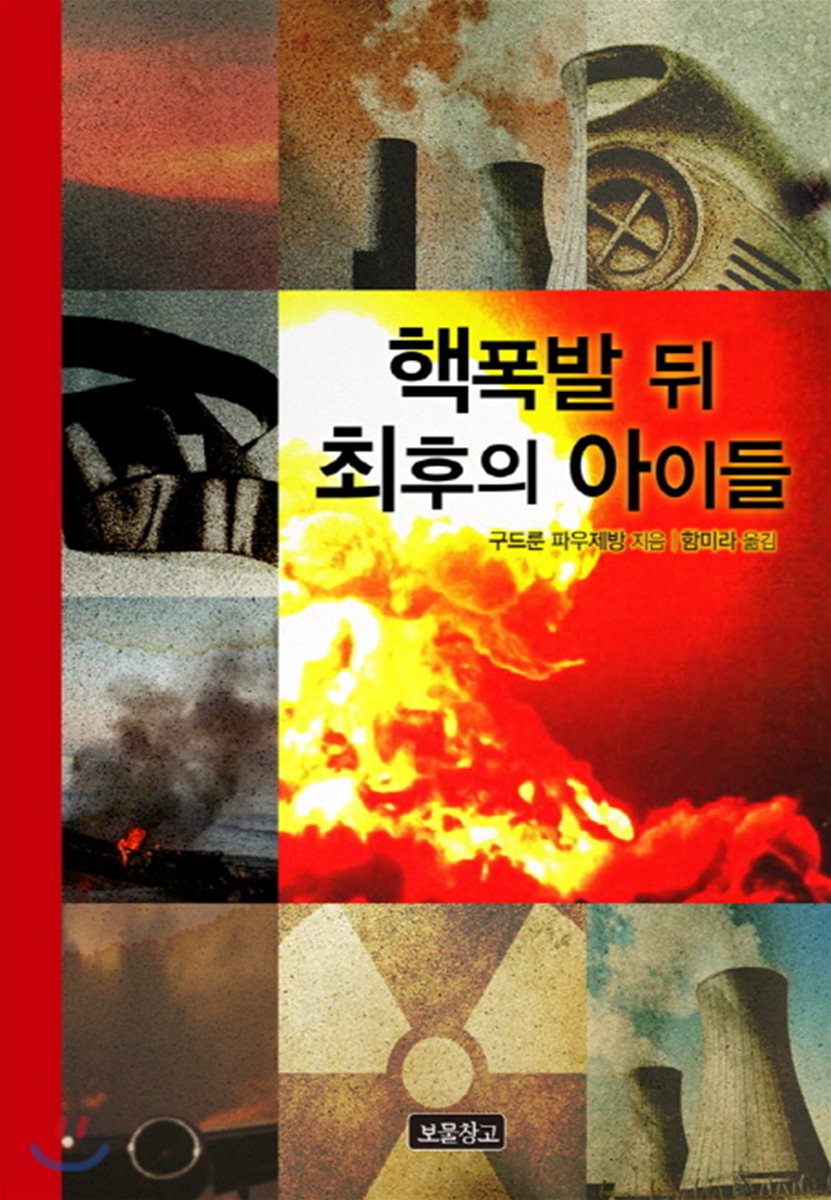 |
Description
Book Introduction
Nuclear weapons are always a pressing topic.
It is not because we live on the Korean Peninsula, where nuclear issues frequently arise, but because nuclear weapons will inevitably be a pressing issue anywhere on this planet as long as they remain undisturbed.
This is especially true for children, the ‘masters of the future.’
How terrifying is the fact that we are the ones who live forgetting all of that.
Gudrun Pausewang's The Last Children begins with a flash of lightning and a mushroom cloud rising from a German city without warning or declaration of war.
In that fleeting moment, many people die and disappear.
But they are rather fortunate.
The true 'end' comes slowly and more gruesomely to those who barely survive.
Gudrun Pausewang coldly and without a shred of sympathy portrays humanity as it succumbs to a self-inflicted disaster.
But when one looks at Andreas, the orphan who lost both legs in a nuclear explosion and took his own life while being carried around in a stroller, leaving behind the words, "Parents, you will be punished!", no one can deny the author's ruthlessness.
This is because the author represents those ‘parents who deserve to be punished by heaven.’
Furthermore, through the cries of war orphans, they earnestly tell the youth, "When you grow up, you must never become 'parents who deserve to be punished by heaven'," and they pour out harsh reprimands on adults who have already become 'parents who deserve to be punished by heaven.'
Through this novel, which is so cold and cruel that you want to close your eyes, but ironically, you cannot take your eyes off it for even a moment, the author, rather than talking about 'hope', clearly states that what remains after a nuclear explosion is nothing but the end.
It also reminds us that preparing measures to ‘protect ourselves’ is the most important priority.
It is not because we live on the Korean Peninsula, where nuclear issues frequently arise, but because nuclear weapons will inevitably be a pressing issue anywhere on this planet as long as they remain undisturbed.
This is especially true for children, the ‘masters of the future.’
How terrifying is the fact that we are the ones who live forgetting all of that.
Gudrun Pausewang's The Last Children begins with a flash of lightning and a mushroom cloud rising from a German city without warning or declaration of war.
In that fleeting moment, many people die and disappear.
But they are rather fortunate.
The true 'end' comes slowly and more gruesomely to those who barely survive.
Gudrun Pausewang coldly and without a shred of sympathy portrays humanity as it succumbs to a self-inflicted disaster.
But when one looks at Andreas, the orphan who lost both legs in a nuclear explosion and took his own life while being carried around in a stroller, leaving behind the words, "Parents, you will be punished!", no one can deny the author's ruthlessness.
This is because the author represents those ‘parents who deserve to be punished by heaven.’
Furthermore, through the cries of war orphans, they earnestly tell the youth, "When you grow up, you must never become 'parents who deserve to be punished by heaven'," and they pour out harsh reprimands on adults who have already become 'parents who deserve to be punished by heaven.'
Through this novel, which is so cold and cruel that you want to close your eyes, but ironically, you cannot take your eyes off it for even a moment, the author, rather than talking about 'hope', clearly states that what remains after a nuclear explosion is nothing but the end.
It also reminds us that preparing measures to ‘protect ourselves’ is the most important priority.
- You can preview some of the book's contents.
Preview
index
prolog
1.
The moment of nuclear explosion
2.
Burning Schevenborn
3.
The day after the nuclear explosion
4.
orphaned children
5.
Shadow of Misfortune
6.
Typhus spreads
7.
The Survivors
8.
First winter
9.
Let's leave Schevenborn
10.
On the way to Bonamès
11.
ruthless people
12.
Between life and death
13.
Four years after the nuclear explosion
Author's Note
Translator's Note
1.
The moment of nuclear explosion
2.
Burning Schevenborn
3.
The day after the nuclear explosion
4.
orphaned children
5.
Shadow of Misfortune
6.
Typhus spreads
7.
The Survivors
8.
First winter
9.
Let's leave Schevenborn
10.
On the way to Bonamès
11.
ruthless people
12.
Between life and death
13.
Four years after the nuclear explosion
Author's Note
Translator's Note
Into the book
“It’s not a gunpowder warehouse.”
Dad shook his head and said.
“You think so? So, you think….”
Mom asked Dad.
"huh.
I think so, definitely.
“I can’t think of anything else.”
Dad answered.
“But that can’t be happening.
“It’s something that shouldn’t happen… … .”
Mom spoke in a voice that sounded like she was about to burst into tears.
“I have to go home quickly.
I have to leave here.
“Before something big happens… … .”
Dad said.
“It seems like it will be difficult, Dad.
“Look at that fallen tree!”
--- p.20
I turned my gaze and looked around at the people lying in a row.
Men, women and children were mixed together.
People were lying side by side, wounded here and there, people with parts of their bodies cut off, people with burns.
Most of the people were flayed and tattered.
Some people were lying on their own vomit, while others were soaking in their own blood.
The smell of poop and urine was strong.
The cries of people begging for water because they were thirsty, the groans and sighs of those people, like waves, at first loud, then soft, then swelling again into wild cries, washed over the streets.
--- p.67
“It won’t just be the solution.
With so many atomic bombs dropped, the air in Germany would have been contaminated with radiation.
“It would be foolish to think that only the air in Schevenborn would be clean.”
Dad said.
“Then all the plants would have been contaminated as well.
And you can't touch anything that grows here, right?"
I was startled and whispered to my dad.
“Then we will starve to death.
No matter how you die, you will still die in the end.
When you're hungry, your hands are bound to reach for food.
Even if it's contaminated."
I didn't eat anything that day.
The next day too… … .
But on the third day, I was so hungry I couldn't stand it any longer.
So I devoured the potatoes.
Those potatoes were ones my dad brought from the field a few days ago.
--- p.125
My dad always had some ridiculous excuse like, “What on earth can we do about it?”
He also tirelessly argued that the fear of nuclear weapons ensured peace.
Dad, like most other adults, prioritized convenience and comfort above all else, and even though he and they both saw the danger growing, he refused to see it.
What good is blaming?
Dad shook his head and said.
“You think so? So, you think….”
Mom asked Dad.
"huh.
I think so, definitely.
“I can’t think of anything else.”
Dad answered.
“But that can’t be happening.
“It’s something that shouldn’t happen… … .”
Mom spoke in a voice that sounded like she was about to burst into tears.
“I have to go home quickly.
I have to leave here.
“Before something big happens… … .”
Dad said.
“It seems like it will be difficult, Dad.
“Look at that fallen tree!”
--- p.20
I turned my gaze and looked around at the people lying in a row.
Men, women and children were mixed together.
People were lying side by side, wounded here and there, people with parts of their bodies cut off, people with burns.
Most of the people were flayed and tattered.
Some people were lying on their own vomit, while others were soaking in their own blood.
The smell of poop and urine was strong.
The cries of people begging for water because they were thirsty, the groans and sighs of those people, like waves, at first loud, then soft, then swelling again into wild cries, washed over the streets.
--- p.67
“It won’t just be the solution.
With so many atomic bombs dropped, the air in Germany would have been contaminated with radiation.
“It would be foolish to think that only the air in Schevenborn would be clean.”
Dad said.
“Then all the plants would have been contaminated as well.
And you can't touch anything that grows here, right?"
I was startled and whispered to my dad.
“Then we will starve to death.
No matter how you die, you will still die in the end.
When you're hungry, your hands are bound to reach for food.
Even if it's contaminated."
I didn't eat anything that day.
The next day too… … .
But on the third day, I was so hungry I couldn't stand it any longer.
So I devoured the potatoes.
Those potatoes were ones my dad brought from the field a few days ago.
--- p.125
My dad always had some ridiculous excuse like, “What on earth can we do about it?”
He also tirelessly argued that the fear of nuclear weapons ensured peace.
Dad, like most other adults, prioritized convenience and comfort above all else, and even though he and they both saw the danger growing, he refused to see it.
What good is blaming?
--- p.224
Publisher's Review
▶'Parents Who Will Be Punished by Heaven': The Story You Need to Read
Nuclear weapons are always a pressing topic.
It is not because we live on the Korean Peninsula where nuclear issues frequently arise, but because nuclear weapons will inevitably be a pressing issue anywhere on this planet as long as they remain undisturbed.
This is especially true for children, the ‘masters of the future.’
How terrifying is the fact that we are the ones who live forgetting all of that.
Gudrun Pausewang's The Last Children begins with a flash of lightning and a mushroom cloud rising over a German city without warning or declaration of war.
In that fleeting moment, many people die and disappear.
But they are rather fortunate.
The true 'end' comes slowly and more gruesomely to those who barely survive.
Gudrun Pausewang coldly and without a shred of sympathy portrays humanity's miserable demise due to a disaster of its own making.
But no one can blame the author for his cold-heartedness when they see Andreas, the orphan who lost both legs in a nuclear explosion and took his own life while being carried around in a stroller, leaving behind the words, "Parents, you will be punished!"
The author, representing the “parents who deserve to be punished by heaven,” earnestly tells the youth through the cries of war orphans, “When you grow up and become adults, you must never become ‘parents who deserve to be punished by heaven,’” and pours out harsh reprimands on adults who have already become “parents who deserve to be punished by heaven.”
But instead of my hopes, or rather, instead of the moment of relief that anyone who reads this might have been waiting for, the author offers a thoroughly 'realistic' conclusion.
Rather than providing comfort to the reader, it poses the challenge of how to deal with reality.
-From the 'Translator's Note'
Through this novel, which is so cold and cruel that you want to close your eyes, but ironically, you cannot take your eyes off it for even a moment, the author, rather than talking about 'hope', clearly states that what remains after a nuclear explosion is nothing but the end.
It also reminds us that preparing measures to 'protect ourselves' is the most important priority.
▶A story that shakes and awakens the conscience of humanity!
"The Last Children After a Nuclear Explosion," which has been praised by leading critics around the world as "a story that shakes and awakens the conscience of humanity," is the first book translated and published by the publishing company Treasure Chest under an official contract with the original author, Germany's Ravenburger. It has been read by many children and teenagers as a book warning of the dangers of nuclear weapons and has become a steady seller.
This work, the second book in the “Treasure Trove of Youth Literature” series, returns to readers with a new design that adds a modern sensibility.
"The Last Children After the Nuclear Blast" was first published in 1983, before the end of the Cold War, in Germany, a region of sharp conflict, but it still resonates with us today, more than 30 years later.
The war atmosphere felt in society in the 1980s is not much different from the atmosphere felt today in the face of various terrorist attacks and nuclear threats occurring around the world.
With events threatening our safety more than ever before, why not read this book together, regardless of age, and discuss our present and future?
I hope that through this book, our future can be made a little safer and more peaceful.
Nuclear weapons are always a pressing topic.
It is not because we live on the Korean Peninsula where nuclear issues frequently arise, but because nuclear weapons will inevitably be a pressing issue anywhere on this planet as long as they remain undisturbed.
This is especially true for children, the ‘masters of the future.’
How terrifying is the fact that we are the ones who live forgetting all of that.
Gudrun Pausewang's The Last Children begins with a flash of lightning and a mushroom cloud rising over a German city without warning or declaration of war.
In that fleeting moment, many people die and disappear.
But they are rather fortunate.
The true 'end' comes slowly and more gruesomely to those who barely survive.
Gudrun Pausewang coldly and without a shred of sympathy portrays humanity's miserable demise due to a disaster of its own making.
But no one can blame the author for his cold-heartedness when they see Andreas, the orphan who lost both legs in a nuclear explosion and took his own life while being carried around in a stroller, leaving behind the words, "Parents, you will be punished!"
The author, representing the “parents who deserve to be punished by heaven,” earnestly tells the youth through the cries of war orphans, “When you grow up and become adults, you must never become ‘parents who deserve to be punished by heaven,’” and pours out harsh reprimands on adults who have already become “parents who deserve to be punished by heaven.”
But instead of my hopes, or rather, instead of the moment of relief that anyone who reads this might have been waiting for, the author offers a thoroughly 'realistic' conclusion.
Rather than providing comfort to the reader, it poses the challenge of how to deal with reality.
-From the 'Translator's Note'
Through this novel, which is so cold and cruel that you want to close your eyes, but ironically, you cannot take your eyes off it for even a moment, the author, rather than talking about 'hope', clearly states that what remains after a nuclear explosion is nothing but the end.
It also reminds us that preparing measures to 'protect ourselves' is the most important priority.
▶A story that shakes and awakens the conscience of humanity!
"The Last Children After a Nuclear Explosion," which has been praised by leading critics around the world as "a story that shakes and awakens the conscience of humanity," is the first book translated and published by the publishing company Treasure Chest under an official contract with the original author, Germany's Ravenburger. It has been read by many children and teenagers as a book warning of the dangers of nuclear weapons and has become a steady seller.
This work, the second book in the “Treasure Trove of Youth Literature” series, returns to readers with a new design that adds a modern sensibility.
"The Last Children After the Nuclear Blast" was first published in 1983, before the end of the Cold War, in Germany, a region of sharp conflict, but it still resonates with us today, more than 30 years later.
The war atmosphere felt in society in the 1980s is not much different from the atmosphere felt today in the face of various terrorist attacks and nuclear threats occurring around the world.
With events threatening our safety more than ever before, why not read this book together, regardless of age, and discuss our present and future?
I hope that through this book, our future can be made a little safer and more peaceful.
GOODS SPECIFICS
- Date of issue: July 15, 2016
- Format: Hardcover book binding method guide
- Page count, weight, size: 240 pages | 372g | 134*196*17mm
- ISBN13: 9788961705486
- ISBN10: 8961705482
You may also like
카테고리
korean


korean

![GQ KOREA Mark (Monthly): December [2025]](http://librairie.coreenne.fr/cdn/shop/files/8ef265dbbfbf186523ed75ba7319009d.jpg?v=1765340328&width=3840)


