

Organizing poses
 |
Description
Book Introduction
A must-read bible that even experienced people keep and reread
- Improve your drawing skills through theory as well as sketches and croquis.
- A complete guide with advice from anatomists and martial arts experts.
- A popular book filled with vivid experiences and tips that make drawing more enjoyable.
“It contains the things I always tell the staff until they are worn out
“The first thing that came to mind was, ‘I definitely recommend this.’”
-Eiji Inomoto (Orange CEO/CG animator)
The secret to vivid expression
As the number of people enjoying webtoons and web novels increases, interest in and demand for illustrations continues to grow.
As images become more sophisticated by the day, the level of quality expected from them also increases.
There is a detailed division of labor for better results, and efforts are made to properly draw the human body structure, muscles, and bones based on medical knowledge.
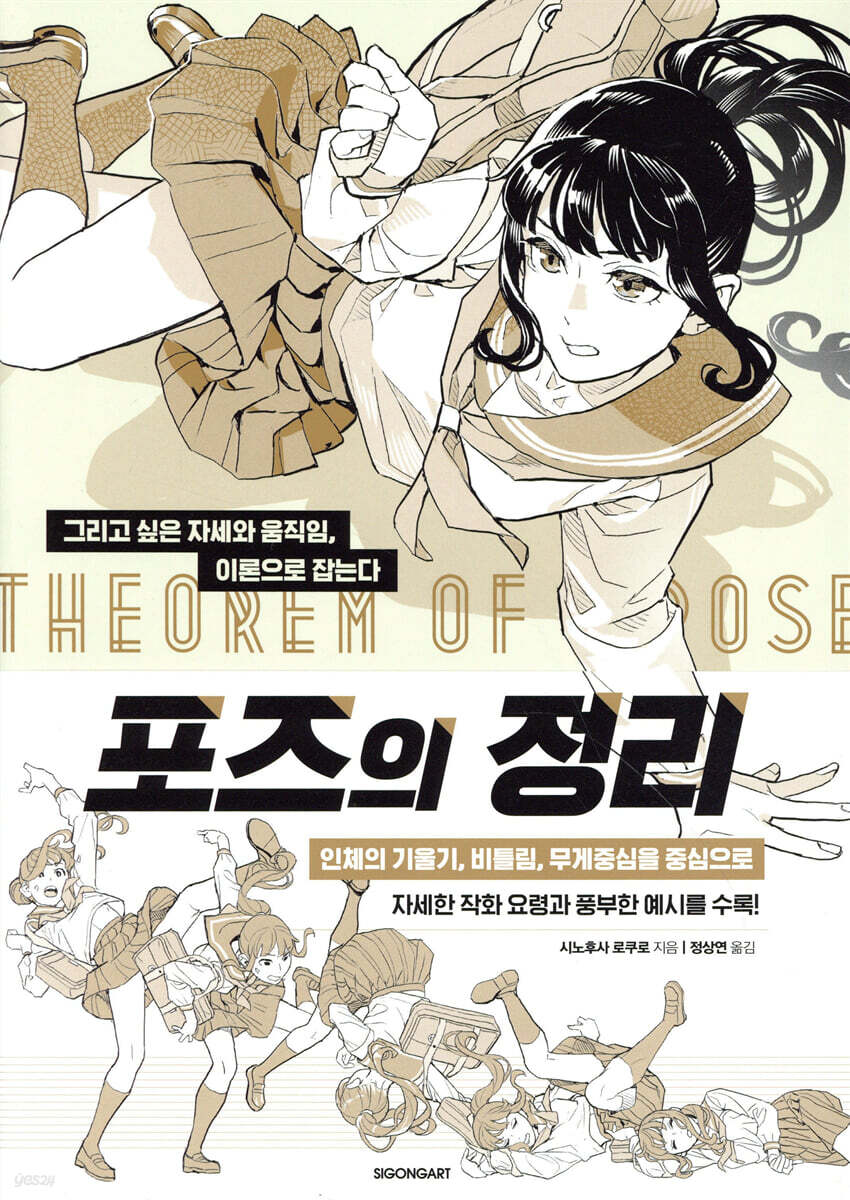
To meet this need, 『The Organization of Pose』 provides a detailed theoretical overview of previously unexplored areas.
Starting from a meticulous perspective based on the characteristics of the human body, such as the natural fact that 'the wrist when relaxed is bent toward the little finger', it includes detailed drawing techniques and abundant examples centered on the body's inclination, twist, and center of gravity.
We'll share the know-how and secrets that make a real difference by comparing illustrations that have improved awkward expressions at a glance.
With each chapter, readers build confidence in expressing themselves with greater dynamics.
- Improve your drawing skills through theory as well as sketches and croquis.
- A complete guide with advice from anatomists and martial arts experts.
- A popular book filled with vivid experiences and tips that make drawing more enjoyable.
“It contains the things I always tell the staff until they are worn out
“The first thing that came to mind was, ‘I definitely recommend this.’”
-Eiji Inomoto (Orange CEO/CG animator)
The secret to vivid expression
As the number of people enjoying webtoons and web novels increases, interest in and demand for illustrations continues to grow.
As images become more sophisticated by the day, the level of quality expected from them also increases.
There is a detailed division of labor for better results, and efforts are made to properly draw the human body structure, muscles, and bones based on medical knowledge.
To meet this need, 『The Organization of Pose』 provides a detailed theoretical overview of previously unexplored areas.
Starting from a meticulous perspective based on the characteristics of the human body, such as the natural fact that 'the wrist when relaxed is bent toward the little finger', it includes detailed drawing techniques and abundant examples centered on the body's inclination, twist, and center of gravity.
We'll share the know-how and secrets that make a real difference by comparing illustrations that have improved awkward expressions at a glance.
With each chapter, readers build confidence in expressing themselves with greater dynamics.
- You can preview some of the book's contents.
Preview
index
Entering
Features of this book
PROLOGUE Body Control Response
The 'body control response' that determines poses
Summary of Body Control Reactions 1
Summary of the Body Control Reaction 2
Organizing the head
Hip joint alignment
Lumbar alignment A, B
Lumbar alignment C
Arm Position and Spine Alignment 1, 2
CHAPTER 1 Summary of poses
SECTION 01 Basic symbols indicating poses
SECTION 02 Explanation of Pattern A
Summary of A pattern
SECTION 03 Explanation of the B Pattern
Summary of B pattern
SECTION 04 Explanation of the C Pattern
Summary of C patterns
SECTION 05 Explanation of the D Pattern
Summary of D patterns
SECTION 06 Explanation of N Pattern (No Shape)
Summary of N patterns
SECTION 07 Actions appearing in the N pattern
SECTION 08 Poses in the Air
Jump Theorem 1
Jump Theorem 2
Jump Theorem 3
Jump Theorem 4, 5
Jump Theorem 6
SECTION 09 Points and advantages of adding symbols to poses
COLUMN simulation and prediction
CHAPTER 2 Summary of Parts
SECTION 01 Slope of the tofu
Tofu Theory 1, 2
Tofu Theory 3
SECTION 02 Rotation and other movements of the head
Tofu Theorem 4, 5
SECTION 03 Wrist Inclination
Wrist alignment 1
Wrist alignment 2
Wrist alignment 3
COLUMN Beautiful Finger Poses
SECTION 04 Arm Positioning and Spine Movement
Arm Position and Spine Alignment 1
Arm Position and Spine Alignment 2
Arm position and spine alignment 3, 4
Arm position and spine alignment 5, 6
COLUMN Arm Movement as a Safety Device
SECTION 05 Arm Twist and Spine Movement
Arm Twist and Spine Alignment 1
Arm Twist and Spine Alignment 2
Arm Twist and Spine Alignment 3
COLUMN Arm twisting when lifting objects
SECTION 06 Reading Arm Movements and Context
COLUMN Highly Illustrious Paintings
SECTION 07 Ankle Inclination
Ankle alignment
CHAPTER 3 Attractive poses
SECTION 01 What is an attractive pose?
SECTION 02 Striking the Female Model's Poses
SECTION 03 Examples of Attractive Poses
SECTION 04 Techniques for 'growing' movement
CHAPTER 4 Points to remember when drawing
SECTION 01 Learning Human Proportions
COLUMN Thumbnails: The Importance of a Brief Sketch
SECTION 02 Drawing the human body using proportions and mass
SECTION 03 The optical illusion of twist
Theorem of Illusions 1
Illusion theorems 2 and 3
SECTION 04 Precautions for Twisted Drawings
Torsion Theorem 1, 2
SECTION 05 Sample sketch of a twisted fuselage
SECTION 06 Effects of Omission
SECTION 07 Omitted Pose Sketch
COLUMN Twist and tilt in a layout that emphasizes the chest
CHAPTER 5 Everyday Poses
SECTION 01 Walking
Walking Theory 1, 2
COLUMN Types of Arm-Waving Habits
Walking Theory 3, 4
The 5th Theory of Walking
Theorem 6 of Walking
Walking Theory 7, 8
Theory of Walking 9
COLUMN The tilt of the body axis and the movement of the arms change depending on the scene
The 10th Theory of Walking
COLUMN How to Walk in Special Situations
SECTION 02 Running
Running Summary 1
Running Summary 2, 3
Running Summary 4
COLUMN The continuous trajectory of the head when walking and running
COLUMN Psychological Description of Walking and Running Postures
SECTION 03 Sit
Central theorem
Center of COLUMN A and B patterns
SECTION 04 Wake up
SECTION 05 Lying Down
SECTION 06 Opening and closing the door
SECTION 07 Lifting heavy objects
SECTION 08 Sitting and looking back
CHAPTER 6 Action Poses
SECTION 01 Components of an Action Pose ① Horizontal Rotation
Horizontal rotation theorem 1
Horizontal rotation theorem 2
Horizontal Rotation Theorem 3
SECTION 02 Components of Action Pose② Steps
Step 1, 2
COLUMN Cut out the action scene
SECTION 03 Components of Action Pose ③
Impact and Break Effect
Impact Summary 1, 2
Break Summary 1
Break Theory 2
Impact Summary 3
Impact Summary 4, 5
Impact Summary 6
Impact Summary 7
SECTION 04 Various Punch Poses
COLUMN The Eight-Headed Sword
SECTION 05 Various Kick Poses
Impact Summary 8
SECTION 06 Weapons
Summary of Weaponry 1
COLUMN Names of each part of the Japanese sword
Summary of Weaponry 2
Summary of Weaponry 3, 4
SECTION 07 Gun Action
Summary of gun actions
Get closer to your ideal pose with self-editing
Bonus Special Interview: "The Pose Summary"
Features of this book
PROLOGUE Body Control Response
The 'body control response' that determines poses
Summary of Body Control Reactions 1
Summary of the Body Control Reaction 2
Organizing the head
Hip joint alignment
Lumbar alignment A, B
Lumbar alignment C
Arm Position and Spine Alignment 1, 2
CHAPTER 1 Summary of poses
SECTION 01 Basic symbols indicating poses
SECTION 02 Explanation of Pattern A
Summary of A pattern
SECTION 03 Explanation of the B Pattern
Summary of B pattern
SECTION 04 Explanation of the C Pattern
Summary of C patterns
SECTION 05 Explanation of the D Pattern
Summary of D patterns
SECTION 06 Explanation of N Pattern (No Shape)
Summary of N patterns
SECTION 07 Actions appearing in the N pattern
SECTION 08 Poses in the Air
Jump Theorem 1
Jump Theorem 2
Jump Theorem 3
Jump Theorem 4, 5
Jump Theorem 6
SECTION 09 Points and advantages of adding symbols to poses
COLUMN simulation and prediction
CHAPTER 2 Summary of Parts
SECTION 01 Slope of the tofu
Tofu Theory 1, 2
Tofu Theory 3
SECTION 02 Rotation and other movements of the head
Tofu Theorem 4, 5
SECTION 03 Wrist Inclination
Wrist alignment 1
Wrist alignment 2
Wrist alignment 3
COLUMN Beautiful Finger Poses
SECTION 04 Arm Positioning and Spine Movement
Arm Position and Spine Alignment 1
Arm Position and Spine Alignment 2
Arm position and spine alignment 3, 4
Arm position and spine alignment 5, 6
COLUMN Arm Movement as a Safety Device
SECTION 05 Arm Twist and Spine Movement
Arm Twist and Spine Alignment 1
Arm Twist and Spine Alignment 2
Arm Twist and Spine Alignment 3
COLUMN Arm twisting when lifting objects
SECTION 06 Reading Arm Movements and Context
COLUMN Highly Illustrious Paintings
SECTION 07 Ankle Inclination
Ankle alignment
CHAPTER 3 Attractive poses
SECTION 01 What is an attractive pose?
SECTION 02 Striking the Female Model's Poses
SECTION 03 Examples of Attractive Poses
SECTION 04 Techniques for 'growing' movement
CHAPTER 4 Points to remember when drawing
SECTION 01 Learning Human Proportions
COLUMN Thumbnails: The Importance of a Brief Sketch
SECTION 02 Drawing the human body using proportions and mass
SECTION 03 The optical illusion of twist
Theorem of Illusions 1
Illusion theorems 2 and 3
SECTION 04 Precautions for Twisted Drawings
Torsion Theorem 1, 2
SECTION 05 Sample sketch of a twisted fuselage
SECTION 06 Effects of Omission
SECTION 07 Omitted Pose Sketch
COLUMN Twist and tilt in a layout that emphasizes the chest
CHAPTER 5 Everyday Poses
SECTION 01 Walking
Walking Theory 1, 2
COLUMN Types of Arm-Waving Habits
Walking Theory 3, 4
The 5th Theory of Walking
Theorem 6 of Walking
Walking Theory 7, 8
Theory of Walking 9
COLUMN The tilt of the body axis and the movement of the arms change depending on the scene
The 10th Theory of Walking
COLUMN How to Walk in Special Situations
SECTION 02 Running
Running Summary 1
Running Summary 2, 3
Running Summary 4
COLUMN The continuous trajectory of the head when walking and running
COLUMN Psychological Description of Walking and Running Postures
SECTION 03 Sit
Central theorem
Center of COLUMN A and B patterns
SECTION 04 Wake up
SECTION 05 Lying Down
SECTION 06 Opening and closing the door
SECTION 07 Lifting heavy objects
SECTION 08 Sitting and looking back
CHAPTER 6 Action Poses
SECTION 01 Components of an Action Pose ① Horizontal Rotation
Horizontal rotation theorem 1
Horizontal rotation theorem 2
Horizontal Rotation Theorem 3
SECTION 02 Components of Action Pose② Steps
Step 1, 2
COLUMN Cut out the action scene
SECTION 03 Components of Action Pose ③
Impact and Break Effect
Impact Summary 1, 2
Break Summary 1
Break Theory 2
Impact Summary 3
Impact Summary 4, 5
Impact Summary 6
Impact Summary 7
SECTION 04 Various Punch Poses
COLUMN The Eight-Headed Sword
SECTION 05 Various Kick Poses
Impact Summary 8
SECTION 06 Weapons
Summary of Weaponry 1
COLUMN Names of each part of the Japanese sword
Summary of Weaponry 2
Summary of Weaponry 3, 4
SECTION 07 Gun Action
Summary of gun actions
Get closer to your ideal pose with self-editing
Bonus Special Interview: "The Pose Summary"
Detailed image

Into the book
However, it is exceptionally common for the wrist to be straight, and often it is bent towards the little finger.
In the world of drawing, there is a common misconception that the wrist is always drawn with a straight line, and few people point this out.
What's even more shocking is that no one taught me this problem, but I suddenly realized it myself one day.
When I realized this, the feeling I had was not satisfaction and joy, but a sigh and despair: 'Why didn't anyone teach me this important point?!'
If only someone had taught me properly, I wouldn't have made the same mistakes for decades.
---From "'Starting'"
If you tilt a doll with no joints, like in Figure 1, it will fall over.
However, even if the balance is slightly lost, the human body corrects its posture to avoid falling over, as shown in Figure 2.
Medically, this is called the 'postural reflex' or 'body control response'.
The body control response is not an unconscious movement like a spinal reflex, but rather a semi-conscious movement performed using parts of the brain.
You probably already know that when a person loses consciousness, he loses his balance and falls.
---From "0 'Body Control Reaction'"
Twisting your body while arching your spine creates a difference between your shoulders and lower back, which helps keep your body in an elevated position.
This A pattern is also called 'contrapposto' in art terms.
It is considered a good posture and can actually be held for long periods of time because it puts less strain on the body.
This posture is often seen when the arms are extended upwards and there is asymmetry between the left and right sides, or in techniques where the right hand is extended forward, such as when throwing a straight right punch in boxing, pitching in baseball, or thrusting in kendo.
There is also a drawback in that it is easy to fall backwards because the head position is at the back and the center of gravity is also at the back.
---From "1 'Summary of Pose'"
When trying to draw a neck and head on a neckless body with different shoulder heights (the right shoulder is raised), as shown in the picture on the right, I always have trouble figuring out what angle to draw them at.
While the NG example below isn't incorrect, it doesn't appear to have a stable neck and head. An angle like the OK example, with the back of the head close to the raised right shoulder, looks most natural and maintains a stable balance.
---From "2 'Organization of Parts'"
Below, I drew a surprised person and a very surprised person side by side.
By understanding how the human body moves unconsciously through the body control response, you can 'enhance' movements like this, or transform a pose from ordinary to 'disciplined' and 'dynamic'.
Here are five points to help you develop your movement.
---From "3 'Attractive Poses'"
The length of the torso (from chin to navel) of an 8-head-tall figure is 2 heads-tall, no matter how long it appears when viewed from the front or side.
As anyone who draws knows, it's 'surprisingly short'.
The angle added here makes you look shorter than 2 heads tall when looking up or down.
When drawing, it is better not to include angles in body parts that are unfamiliar or difficult to draw.
Be careful, as there is a tendency for the height to increase unintentionally.
If you drew it with that intention from the beginning, it doesn't matter.
---From "4 'Points for Drawing'"
When you walk or run, your body weight shifts forward, providing propulsion.
If you tilt your upper body at an angle, when the angle reaches a certain point, one foot will naturally move forward to support your body as if you were falling over.
Then, this time, the upper body is tilted to the opposite side of the supporting foot, so the foot in that direction moves forward and supports the body.
The actions of 'walking' and 'running' are repetitions of this.
---From "5 'Everyday Poses'"
If we look at the movements of various sports or kendo as a series of movements, the spine makes horizontal rotational movements to a greater or lesser extent in most of the movements.
But there are exceptions.
The head strike in kendo is structured so that the horizontal rotation of the spine stops the moment the right foot steps forward, the brake is applied, and the upper body, arm, and bamboo sword accelerate in the vertical direction in that order and strike down.
The jab in boxing and the front kick in karate are also techniques that stop the rotation immediately.
What these technologies have in common is the possibility of moving quickly without delay.
In the world of drawing, there is a common misconception that the wrist is always drawn with a straight line, and few people point this out.
What's even more shocking is that no one taught me this problem, but I suddenly realized it myself one day.
When I realized this, the feeling I had was not satisfaction and joy, but a sigh and despair: 'Why didn't anyone teach me this important point?!'
If only someone had taught me properly, I wouldn't have made the same mistakes for decades.
---From "'Starting'"
If you tilt a doll with no joints, like in Figure 1, it will fall over.
However, even if the balance is slightly lost, the human body corrects its posture to avoid falling over, as shown in Figure 2.
Medically, this is called the 'postural reflex' or 'body control response'.
The body control response is not an unconscious movement like a spinal reflex, but rather a semi-conscious movement performed using parts of the brain.
You probably already know that when a person loses consciousness, he loses his balance and falls.
---From "0 'Body Control Reaction'"
Twisting your body while arching your spine creates a difference between your shoulders and lower back, which helps keep your body in an elevated position.
This A pattern is also called 'contrapposto' in art terms.
It is considered a good posture and can actually be held for long periods of time because it puts less strain on the body.
This posture is often seen when the arms are extended upwards and there is asymmetry between the left and right sides, or in techniques where the right hand is extended forward, such as when throwing a straight right punch in boxing, pitching in baseball, or thrusting in kendo.
There is also a drawback in that it is easy to fall backwards because the head position is at the back and the center of gravity is also at the back.
---From "1 'Summary of Pose'"
When trying to draw a neck and head on a neckless body with different shoulder heights (the right shoulder is raised), as shown in the picture on the right, I always have trouble figuring out what angle to draw them at.
While the NG example below isn't incorrect, it doesn't appear to have a stable neck and head. An angle like the OK example, with the back of the head close to the raised right shoulder, looks most natural and maintains a stable balance.
---From "2 'Organization of Parts'"
Below, I drew a surprised person and a very surprised person side by side.
By understanding how the human body moves unconsciously through the body control response, you can 'enhance' movements like this, or transform a pose from ordinary to 'disciplined' and 'dynamic'.
Here are five points to help you develop your movement.
---From "3 'Attractive Poses'"
The length of the torso (from chin to navel) of an 8-head-tall figure is 2 heads-tall, no matter how long it appears when viewed from the front or side.
As anyone who draws knows, it's 'surprisingly short'.
The angle added here makes you look shorter than 2 heads tall when looking up or down.
When drawing, it is better not to include angles in body parts that are unfamiliar or difficult to draw.
Be careful, as there is a tendency for the height to increase unintentionally.
If you drew it with that intention from the beginning, it doesn't matter.
---From "4 'Points for Drawing'"
When you walk or run, your body weight shifts forward, providing propulsion.
If you tilt your upper body at an angle, when the angle reaches a certain point, one foot will naturally move forward to support your body as if you were falling over.
Then, this time, the upper body is tilted to the opposite side of the supporting foot, so the foot in that direction moves forward and supports the body.
The actions of 'walking' and 'running' are repetitions of this.
---From "5 'Everyday Poses'"
If we look at the movements of various sports or kendo as a series of movements, the spine makes horizontal rotational movements to a greater or lesser extent in most of the movements.
But there are exceptions.
The head strike in kendo is structured so that the horizontal rotation of the spine stops the moment the right foot steps forward, the brake is applied, and the upper body, arm, and bamboo sword accelerate in the vertical direction in that order and strike down.
The jab in boxing and the front kick in karate are also techniques that stop the rotation immediately.
What these technologies have in common is the possibility of moving quickly without delay.
---From "6 'Action Poses'"
Publisher's Review
The best writing book from development to advancement
If you're ever pushed to your limits, what are some helpful tips for taking your expression to the next level? Renowned manga artist Rokuro Shinofusa, through his long career and many contemplations, has found his own answers.
I thought about publishing it with a sense of mission to share the knowledge I had acquired with more people.
A thick version containing very detailed information was first published as a type of amateur publication called "doujinshi" and gained explosive interest in Japan.
The official publication of 『The Summary of Pose』, which condensed the essence and went through the review of martial arts and anatomy experts, became a hot topic and attracted attention.
For domestic readers who have been waiting for a writing guide that will give wings to their creative activities, the Korean edition has finally arrived.
Point 1 Improve your drawing skills with theory as well as sketching and croquis.
While "drawing by sight" exercises like sketching and croquis are essential for improving your drawing skills, there are many situations where you have to draw without looking at anything when actually drawing on a blank piece of paper.
People with good visual memory can draw anything with that talent alone, but those without it have to acquire something else.
In that sense, I hope that anyone can widely use the theories in this book.
Point 2 Besides drawing, it can also help with sports and martial arts.
I've been studying and researching little by little to improve my drawing skills, but after reading various sports theory books, martial arts books, and asking for opinions from martial arts experts and anatomists, I've come to write this book, delving into even the most detailed aspects of drawing.
However, I hope that this book will provide hints and help to more readers.
Point 3 You don't need to read it once and understand everything.
Since it contains quite a bit of technical information, I don't think there will be many readers who will be able to read it once and understand it all.
First, you can use it as a reference and apply the content that you have understood or found helpful.
It also introduces checkpoints for drawing more natural poses, so just learning them will be enough.
Prologue_Body Control Reaction
This book explains what the most important keyword in this book is, 'body control response', and how it unconsciously influences poses.
Chapter 1: Summary of poses
Let's delve deeper into each of the poses in patterns A, B, and C that occurred as a body control response.
Let's learn organization by looking at real examples and imitating the movements ourselves.
Chapter 2: Organizing Parts
Here, we'll discuss the characteristics of body parts, such as the angles of the head, wrists, and ankles, which people don't usually pay much attention to, and how arm movement affects lumbar movement.
If you find it difficult to understand even after reading, it is also a good idea to try following the movements yourself.
Chapter 3: Attractive Pose
Definitions of an "attractive pose" vary, but there are some commonalities among postures that attract people's attention.
What do they have in common?
Chapter 4: Drawing Points
This is basic knowledge and precautions that people who draw should know.
We need to learn more about the unique optical illusions created by the human body, especially when it is twisted.
Chapter 5_Daily Poses
We focused on movements in daily life, such as walking, running, sitting, and standing, and organized points for recreating them in creative spaces.
Chapter 6_Action Poses
We'll explore the true meaning and effectiveness of the steps that form the foundation of many techniques, and provide various examples of how techniques are used to enhance their power in sports and martial arts.
If you're ever pushed to your limits, what are some helpful tips for taking your expression to the next level? Renowned manga artist Rokuro Shinofusa, through his long career and many contemplations, has found his own answers.
I thought about publishing it with a sense of mission to share the knowledge I had acquired with more people.
A thick version containing very detailed information was first published as a type of amateur publication called "doujinshi" and gained explosive interest in Japan.
The official publication of 『The Summary of Pose』, which condensed the essence and went through the review of martial arts and anatomy experts, became a hot topic and attracted attention.
For domestic readers who have been waiting for a writing guide that will give wings to their creative activities, the Korean edition has finally arrived.
Point 1 Improve your drawing skills with theory as well as sketching and croquis.
While "drawing by sight" exercises like sketching and croquis are essential for improving your drawing skills, there are many situations where you have to draw without looking at anything when actually drawing on a blank piece of paper.
People with good visual memory can draw anything with that talent alone, but those without it have to acquire something else.
In that sense, I hope that anyone can widely use the theories in this book.
Point 2 Besides drawing, it can also help with sports and martial arts.
I've been studying and researching little by little to improve my drawing skills, but after reading various sports theory books, martial arts books, and asking for opinions from martial arts experts and anatomists, I've come to write this book, delving into even the most detailed aspects of drawing.
However, I hope that this book will provide hints and help to more readers.
Point 3 You don't need to read it once and understand everything.
Since it contains quite a bit of technical information, I don't think there will be many readers who will be able to read it once and understand it all.
First, you can use it as a reference and apply the content that you have understood or found helpful.
It also introduces checkpoints for drawing more natural poses, so just learning them will be enough.
Prologue_Body Control Reaction
This book explains what the most important keyword in this book is, 'body control response', and how it unconsciously influences poses.
Chapter 1: Summary of poses
Let's delve deeper into each of the poses in patterns A, B, and C that occurred as a body control response.
Let's learn organization by looking at real examples and imitating the movements ourselves.
Chapter 2: Organizing Parts
Here, we'll discuss the characteristics of body parts, such as the angles of the head, wrists, and ankles, which people don't usually pay much attention to, and how arm movement affects lumbar movement.
If you find it difficult to understand even after reading, it is also a good idea to try following the movements yourself.
Chapter 3: Attractive Pose
Definitions of an "attractive pose" vary, but there are some commonalities among postures that attract people's attention.
What do they have in common?
Chapter 4: Drawing Points
This is basic knowledge and precautions that people who draw should know.
We need to learn more about the unique optical illusions created by the human body, especially when it is twisted.
Chapter 5_Daily Poses
We focused on movements in daily life, such as walking, running, sitting, and standing, and organized points for recreating them in creative spaces.
Chapter 6_Action Poses
We'll explore the true meaning and effectiveness of the steps that form the foundation of many techniques, and provide various examples of how techniques are used to enhance their power in sports and martial arts.
GOODS SPECIFICS
- Date of issue: April 10, 2023
- Page count, weight, size: 272 pages | 702g | 182*257*17mm
- ISBN13: 9791169256704
- ISBN10: 1169256708
You may also like
카테고리
korean


korean

![GQ KOREA Mark (Monthly): December [2025]](http://librairie.coreenne.fr/cdn/shop/files/8ef265dbbfbf186523ed75ba7319009d.jpg?v=1765340328&width=3840)


