

Mark Rothko
 |
Description
Book Introduction
From the Renaissance to the present day,
A basic art series where you can meet the masters of art history!
Returning with larger format and illustrations
The Basic Art Series began in 1985 with a collection of Picasso works and has since grown into a best-selling art book collection.
Since then, over 200 concise and thin books by each author have been produced and published in over 20 languages.
The series has excellent production values, excellent artwork, and intelligent content.
The thematic awareness of each book is vibrant yet accessible, making it easy to approach.
It has been republished 15 years after the first Korean edition was published in 2005.
This [Basic Art 2.0] series delivers more vivid images of the artwork to readers with larger formats and illustrations than before.
A basic art series where you can meet the masters of art history!
Returning with larger format and illustrations
The Basic Art Series began in 1985 with a collection of Picasso works and has since grown into a best-selling art book collection.
Since then, over 200 concise and thin books by each author have been produced and published in over 20 languages.
The series has excellent production values, excellent artwork, and intelligent content.
The thematic awareness of each book is vibrant yet accessible, making it easy to approach.
It has been republished 15 years after the first Korean edition was published in 2005.
This [Basic Art 2.0] series delivers more vivid images of the artwork to readers with larger formats and illustrations than before.
index
Page 6
Conversation as Drama
Page 18
From Russia to Portland, Oregon to New York
Page 30
Markus Rotkovich becomes Mark Rothko:
Myth and Surrealism
Page 44
Multiform - The Path to Classical Painting
Page 60
Rothko's murals and the rise of pop art
Page 72
Roscoe Chapel and Tate Gallery
Page 82
Roscoe's Death and Legacy
Page 92
Mark Rothko (1903-1970)
Life and Works
Conversation as Drama
Page 18
From Russia to Portland, Oregon to New York
Page 30
Markus Rotkovich becomes Mark Rothko:
Myth and Surrealism
Page 44
Multiform - The Path to Classical Painting
Page 60
Rothko's murals and the rise of pop art
Page 72
Roscoe Chapel and Tate Gallery
Page 82
Roscoe's Death and Legacy
Page 92
Mark Rothko (1903-1970)
Life and Works
Detailed image

Into the book
Roscoe was an intellectual, a thinker, and a very educated man.
He loved music and literature and was fascinated by philosophy, especially that of Friedrich Nietzsche, and the philosophy and mythology of ancient Greece.
Roscoe was seen by his friends as difficult, anxious, and short-tempered.
However, although he had a quick temper, he was a kind and warm-hearted person.
Roscoe was a leading figure in the American art movement that later became known as the Abstract Expressionists.
Formed in New York between the two World Wars and known as the New York School, this group was the first group of American artists to achieve international recognition in the history of art.
Many of those in this group, including Roscoe, have become legends today.
---From "Conversation as Drama"
The subway drawings were meant to tell his own story as an outsider immigrant.
Through this painting, Roscoe tried to tell the story of the melancholy, depression, and how he dealt with fate.
In this painting, which seems to be haunted, the subway becomes a place of alienation and wandering, as defined by Baudelaire.
The underground space, as a kind of metaphor for the 'underworld', became a theme underlying Roscoe's surrealistic and mystical visual expression until the mid-1940s.
---From "From Russia to Portland, Oregon to New York"
Although the exact timing is unknown, during the height of the war, Roscoe underwent a drastic change in style.
The new trend of works emerged during the period when he was working with his friend Adolf Gottlieb.
Roscoe constantly debated with Gottlieb about what the subject of his work should be.
These two painters were convinced that American painting had reached a dead end.
They also questioned whether Roscoe would be able to stick to pittura metafisica after the subway paintings.
Barnett Newman, a frequent participant in the discussions, later commented on the dilemma they faced:
“We sensed a moral crisis in a world that had become a battlefield, a world devastated by the mass destruction of a mad world war....
So, it was impossible to draw things like flowers, lying nudes, or cello players like before.”
---From "Markus Rothkovich Becomes Mark Rothko: Myth and Surrealism"
Roscoe said that the ideal distance for viewing his work is 45 centimeters, and that viewing the work from that distance will give the impression of being sucked into the color fields, experiencing the movement within the color fields and the disappearance of boundaries, and leaving one with a sense of awe at the incomprehensible.
He also said that you will feel freedom that transcends the limits of human existence.
---From "Multiform - The Road to Classical Painting"
The dark paintings hanging on the wall seem to reflect the melancholy and loneliness Roscoe experienced in his later years.
It seems he ended his life of his own free will.
Art historian Barbara Rose compares the Rothko Chapel to the Sistine Chapel in Rome and the Matisse Chapel in Vence, saying that in these chapels, “the paintings seem mysteriously illuminated from within.”
He loved music and literature and was fascinated by philosophy, especially that of Friedrich Nietzsche, and the philosophy and mythology of ancient Greece.
Roscoe was seen by his friends as difficult, anxious, and short-tempered.
However, although he had a quick temper, he was a kind and warm-hearted person.
Roscoe was a leading figure in the American art movement that later became known as the Abstract Expressionists.
Formed in New York between the two World Wars and known as the New York School, this group was the first group of American artists to achieve international recognition in the history of art.
Many of those in this group, including Roscoe, have become legends today.
---From "Conversation as Drama"
The subway drawings were meant to tell his own story as an outsider immigrant.
Through this painting, Roscoe tried to tell the story of the melancholy, depression, and how he dealt with fate.
In this painting, which seems to be haunted, the subway becomes a place of alienation and wandering, as defined by Baudelaire.
The underground space, as a kind of metaphor for the 'underworld', became a theme underlying Roscoe's surrealistic and mystical visual expression until the mid-1940s.
---From "From Russia to Portland, Oregon to New York"
Although the exact timing is unknown, during the height of the war, Roscoe underwent a drastic change in style.
The new trend of works emerged during the period when he was working with his friend Adolf Gottlieb.
Roscoe constantly debated with Gottlieb about what the subject of his work should be.
These two painters were convinced that American painting had reached a dead end.
They also questioned whether Roscoe would be able to stick to pittura metafisica after the subway paintings.
Barnett Newman, a frequent participant in the discussions, later commented on the dilemma they faced:
“We sensed a moral crisis in a world that had become a battlefield, a world devastated by the mass destruction of a mad world war....
So, it was impossible to draw things like flowers, lying nudes, or cello players like before.”
---From "Markus Rothkovich Becomes Mark Rothko: Myth and Surrealism"
Roscoe said that the ideal distance for viewing his work is 45 centimeters, and that viewing the work from that distance will give the impression of being sucked into the color fields, experiencing the movement within the color fields and the disappearance of boundaries, and leaving one with a sense of awe at the incomprehensible.
He also said that you will feel freedom that transcends the limits of human existence.
---From "Multiform - The Road to Classical Painting"
The dark paintings hanging on the wall seem to reflect the melancholy and loneliness Roscoe experienced in his later years.
It seems he ended his life of his own free will.
Art historian Barbara Rose compares the Rothko Chapel to the Sistine Chapel in Rome and the Matisse Chapel in Vence, saying that in these chapels, “the paintings seem mysteriously illuminated from within.”
---From "Roscoe Chapel and Tate Gallery"
Publisher's Review
dramatic painting
Tragedy, ecstasy, and ruin
Mark Rothko (1903-1970), who opposed the interpretation or categorization of his work, was a prominent advocate for the artist's complete freedom of expression.
Although a key figure in the Abstract Expressionist movement that first emerged in New York, Rothko rejected labels and insisted on a "complete experience between painting and viewer."
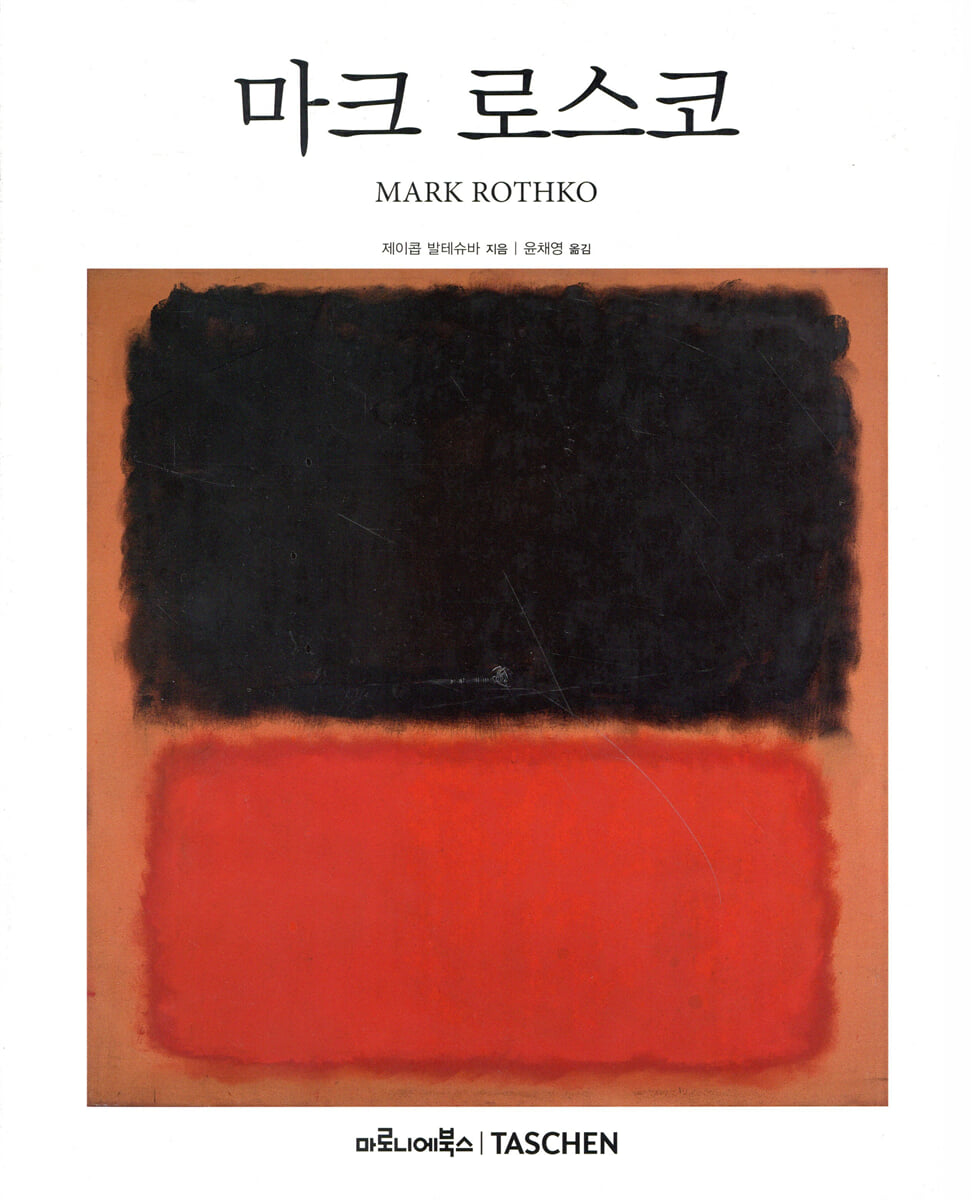
Following his figurative works, Roscoe created his now iconic works in bold colors of red, yellow, ochre, rust, black, and green.
It is emphasized that this shiny, vibrant mass of color does not remove the human form, but rather symbolically expresses or shapes it in its place.
This intense color form contains all the tragedy of humanity.
At the same time, Roscoe explicitly empowered the audience to judge the expressive potential of the work.
He believed that “paintings expand and accelerate in the eyes of a sensitive observer.”
This book explores Roscoe's intellectual thinking and the impact of his dramatic, intimate, and revolutionary work, from his earliest days to his most famous use of color.
Tragedy, ecstasy, and ruin
Mark Rothko (1903-1970), who opposed the interpretation or categorization of his work, was a prominent advocate for the artist's complete freedom of expression.
Although a key figure in the Abstract Expressionist movement that first emerged in New York, Rothko rejected labels and insisted on a "complete experience between painting and viewer."
Following his figurative works, Roscoe created his now iconic works in bold colors of red, yellow, ochre, rust, black, and green.
It is emphasized that this shiny, vibrant mass of color does not remove the human form, but rather symbolically expresses or shapes it in its place.
This intense color form contains all the tragedy of humanity.
At the same time, Roscoe explicitly empowered the audience to judge the expressive potential of the work.
He believed that “paintings expand and accelerate in the eyes of a sensitive observer.”
This book explores Roscoe's intellectual thinking and the impact of his dramatic, intimate, and revolutionary work, from his earliest days to his most famous use of color.
GOODS SPECIFICS
- Date of issue: January 9, 2023
- Format: Hardcover book binding method guide
- Page count, weight, size: 96 pages | 614g | 210*260*13mm
- ISBN13: 9788960536319
- ISBN10: 8960536318
You may also like
카테고리
korean


korean

![GQ KOREA Mark (Monthly): December [2025]](http://librairie.coreenne.fr/cdn/shop/files/8ef265dbbfbf186523ed75ba7319009d.jpg?v=1765340328&width=3840)


