

Environmental Stories on the World Map
 |
Description
Book Introduction
A Geography and Environment Tour of 80 Countries for Global Citizens
“A special world tour for young people who dream of a solidarity, inclusiveness, and sustainable future in this global village era!”
★ Recommended by Shinwon Yoon, Vice President of the Korean Society for Geography and Environmental Education and former President of the National Geography Teachers Association
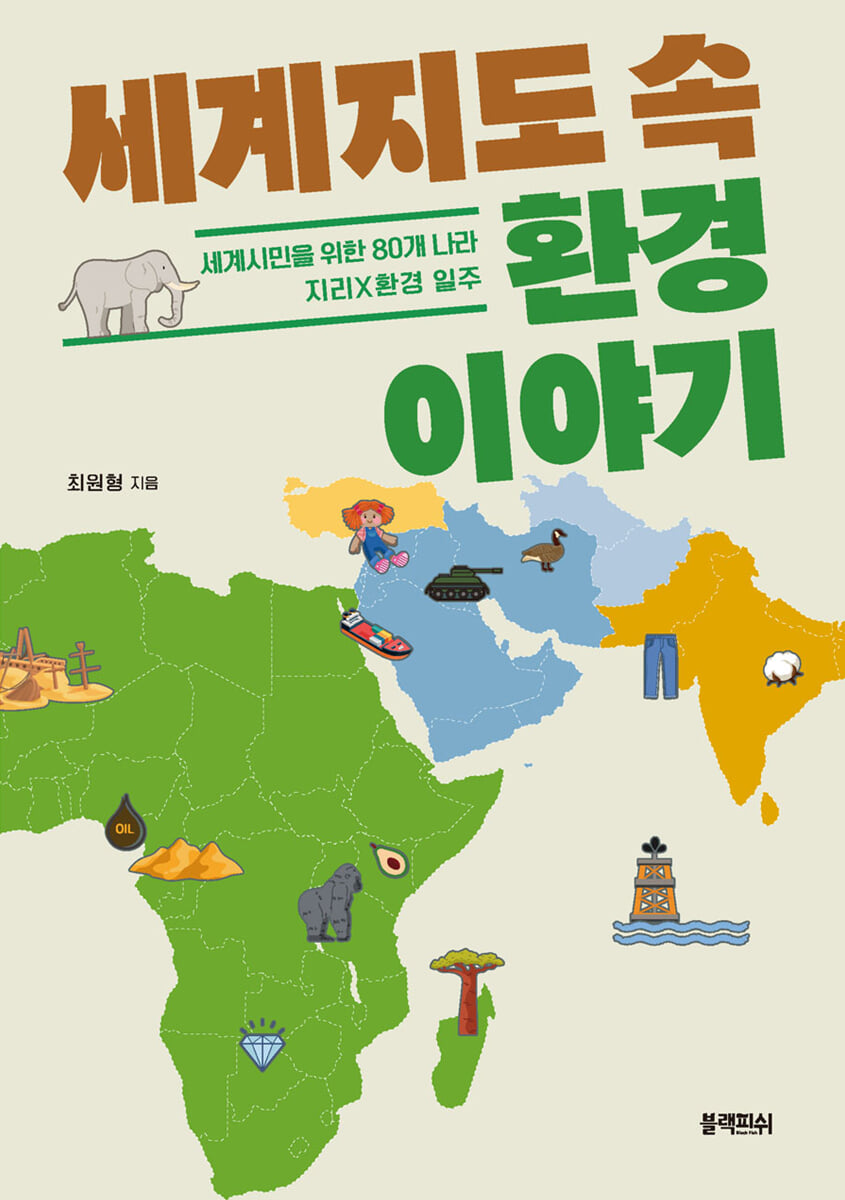
In this era of global villages becoming one thanks to the advancement of transportation, a geography x environment textbook has been created for young people who need to develop diverse and deep perspectives on the world! 『Environmental Stories in the World Map』 is the new work of Wonhyung Choi, an ecology, environment, and energy expert and author of the youth bestseller 『Learning the Earth Environment through the Calendar』. It is a unique geography and environment book that unfolds diverse environmental stories from 80 countries along with a world map.
"What does Thailand's ultrafine dust have to do with the tanghulu craze?", "A glacier funeral is being held in Switzerland?", "Why is Pakistan, which accounts for less than 1% of global greenhouse gas emissions, so terribly affected by the climate crisis?" The moment you unfold the map, a dynamic and majestic narrative of the global environment begins!
In this book, the author examines how a single environmental event connects to every corner of the world from a geographical perspective, and then interprets it from a humanistic perspective, crossing fields such as history, science, politics, religion, and culture.
What is the connection between the blockage of Egypt's Suez Canal and international oil prices? What impact did the Russo-Ukrainian War have on grain supplies? How did Vietnam's Mekong Delta become a breadbasket for Africa on the other side of the globe? Taiwan's severe drought nearly led to Chipagedon (the end of the semiconductor industry)?
In this complex global era, let's explore environmental issues that transcend national borders through various examples.
“A special world tour for young people who dream of a solidarity, inclusiveness, and sustainable future in this global village era!”
★ Recommended by Shinwon Yoon, Vice President of the Korean Society for Geography and Environmental Education and former President of the National Geography Teachers Association
In this era of global villages becoming one thanks to the advancement of transportation, a geography x environment textbook has been created for young people who need to develop diverse and deep perspectives on the world! 『Environmental Stories in the World Map』 is the new work of Wonhyung Choi, an ecology, environment, and energy expert and author of the youth bestseller 『Learning the Earth Environment through the Calendar』. It is a unique geography and environment book that unfolds diverse environmental stories from 80 countries along with a world map.
"What does Thailand's ultrafine dust have to do with the tanghulu craze?", "A glacier funeral is being held in Switzerland?", "Why is Pakistan, which accounts for less than 1% of global greenhouse gas emissions, so terribly affected by the climate crisis?" The moment you unfold the map, a dynamic and majestic narrative of the global environment begins!
In this book, the author examines how a single environmental event connects to every corner of the world from a geographical perspective, and then interprets it from a humanistic perspective, crossing fields such as history, science, politics, religion, and culture.
What is the connection between the blockage of Egypt's Suez Canal and international oil prices? What impact did the Russo-Ukrainian War have on grain supplies? How did Vietnam's Mekong Delta become a breadbasket for Africa on the other side of the globe? Taiwan's severe drought nearly led to Chipagedon (the end of the semiconductor industry)?
In this complex global era, let's explore environmental issues that transcend national borders through various examples.
- You can preview some of the book's contents.
Preview
index
Starting off_ Remembering Ken Saro and the above
PART 1_ Europe and Russia
Norway | Seafood Map Changing with Rising Temperatures
Britain | Nature struck back with 'mad cow disease' as we crossed the line.
France | They're covering electronics and clothing repairs?
Germany | Boosting Recycling Rates with Pants
Czech Republic | The Hunger Stones, the Stones that Record Famine
Finland | Country with the most second-hand stores, ranked first in the world happiness index
Kiruna, Sweden | The city where the entire city is moving
Spain | European vegetable gardens suffering from the White Revolution
Netherlands | A country with more bicycles than people
Switzerland | A Glacier's Funeral
Serbia | Instead of green tea, clean apples and green grass!
Turkey | What is the slime covering the Sea of Marmara?
Belarus | The country most affected by the Chernobyl nuclear accident
Ukraine | Did Chernozem Make It the World's Breadbasket?
Russia | Vavilov, a true globalist
PART 2_ Africa
Botswana | Good politics shines like a diamond.
Madagascar | Save the Baobabs!
Mozambique | Solidarity between farmers and citizens who won the land grab battle
Rwanda | A plastic bag-free country, home to mountain gorillas
Tanzania | Wildlife Paradise? The Serengeti and the Paradox of "Conservation Refugees"
Kenya | Elephants Driven Out of Avocado Farms
Uganda | Lake Victoria: Learning about Sustainability
Somalia | Conflict goes hand in hand with hunger
Democratic Republic of the Congo | Is Hydropower the Best Alternative?
Nigeria | Ken Sarowi and his resistance to the injustice of oil companies
Ghana | Accra, the Earth's Trash Can
Côte d'Ivoire | Chocolate Takes Over Elephant Forests
Gabon | The Ebola outbreak and development are closely linked.
Gambia | Fishmeal factories pollute lakes and empty seas
Mauritania | Ship Graveyards Left Behind by Overfishing
Tunisia | The Arab Spring started with 'bread'
Burkina Faso | Building a Green Wall with Vegetable Gardens
Ethiopia | Africa is now in a water war
Egypt | The Suez Canal, a logistics corridor connecting Asia and Europe
PART 3_ Southwest Asia and Central Asia
United Arab Emirates | Is Ramadan the Muslim Black Friday?
Saudi Arabia | Could NEOM City be the solution to the climate crisis?
Iraq | Graveyard of Weapons
Iran | Ramsar, the site of the world's first wetlands convention
Syria | Can you hear Little Amal's voice?
Kazakhstan, Uzbekistan | The Aral Sea is disappearing due to a disaster caused by excessive greed.
PART 4_ South Asia and Southeast Asia
Pakistan | Floods Drive Up Jeans Prices
India | Is the Hindu nation the world's largest beef exporter?
India | The Sorrow of a Factory Making Wi-Fi Routers
India | The cotton fields, the beginning of all injustice
Bangladesh | Rana Plaza Collapse and My Hip, Cheap T-Shirt
Bangladesh | From Climate Disaster to Climate Adaptation
Thailand | Is there a connection between tanghulu and fine dust?
Vietnam | The Mekong Delta and Africa's Rice Bowl
Singapore | Semakau, an island made from landfill
The Philippines | The World's Worst Producer of Marine Plastic Waste
Indonesia | Jakarta is sinking
Malaysia | Where My Sneakers Begin: Malaysian Forests
PART 5_ Oceania
Australia | Coral Reefs Send Distress Signals
New Zealand | World's First Biosecurity Law
Marshall Islands | Nuclear Test Conducted at Bikini Atoll
Nauru | Becoming a colony in an instant
Vanuatu | The Right to Protection from the Climate Crisis
Midway Atoll | Albatross Wants to Soar
PART 6_ South America and Central America
Chile | Warning from the Atacama Desert
Ecuador | The first country in the world to recognize "coastal rights"
Venezuela's Bolívar | Illegalities in the Orinoco Mines
Argentina | The Magic of Fish Processing Plants, Pink Lake
Colombia | Cable Cars: The Savior of Traffic Hell
Bolivia | Drought Declares State of Emergency
Brazil | Serrado, an ecological sacrifice zone
Suriname | Gold mining development ignores the Minamata Convention
Panama | Extreme weather triggers global logistics disruption
Costa Rica | Granting Citizenship to Bees, Bats, Hummingbirds, and Butterflies
Belize | Coral Reefs Removed from 'World Heritage in Danger' List
Haiti | How did only 1% of the forests remain?
Guatemala | Maya Biosphere Reserve Comes to Life
Mexico | Sheinbaum, a scientist-turned-president with a keen understanding of environmental issues
Cuba | Alternative Agriculture to Overcome the Climate Crisis
PART 7_ North America and the Polar Regions
United States | The Katrina disaster began with a canal
United States | California's Green Law Package
Canada | Civil Disobedience to Protect Ancient Forests
Canada | What Will Happen to the Keystone XL Project?
Greenland | Why Does Trump Want to Buy Greenland?
Arctic | The Svalbard Seed Vault is humanity's insurance
Antarctica | Peace Crushed by Glaciers
PART 8_ East Asia
China | The Tragedy Hidden Behind Sophisticated Digital Devices
Mongolia | Neighboring countries must also join in preventing desertification.
Taiwan | Drought Nearly Leads to Chipagedon
Japan | The ocean is not a radioactive dump.
Republic of Korea | What did we gain by kicking away the birds' food tables with Saemangeum?
In closing: “Think globally, act locally.”
References
PART 1_ Europe and Russia
Norway | Seafood Map Changing with Rising Temperatures
Britain | Nature struck back with 'mad cow disease' as we crossed the line.
France | They're covering electronics and clothing repairs?
Germany | Boosting Recycling Rates with Pants
Czech Republic | The Hunger Stones, the Stones that Record Famine
Finland | Country with the most second-hand stores, ranked first in the world happiness index
Kiruna, Sweden | The city where the entire city is moving
Spain | European vegetable gardens suffering from the White Revolution
Netherlands | A country with more bicycles than people
Switzerland | A Glacier's Funeral
Serbia | Instead of green tea, clean apples and green grass!
Turkey | What is the slime covering the Sea of Marmara?
Belarus | The country most affected by the Chernobyl nuclear accident
Ukraine | Did Chernozem Make It the World's Breadbasket?
Russia | Vavilov, a true globalist
PART 2_ Africa
Botswana | Good politics shines like a diamond.
Madagascar | Save the Baobabs!
Mozambique | Solidarity between farmers and citizens who won the land grab battle
Rwanda | A plastic bag-free country, home to mountain gorillas
Tanzania | Wildlife Paradise? The Serengeti and the Paradox of "Conservation Refugees"
Kenya | Elephants Driven Out of Avocado Farms
Uganda | Lake Victoria: Learning about Sustainability
Somalia | Conflict goes hand in hand with hunger
Democratic Republic of the Congo | Is Hydropower the Best Alternative?
Nigeria | Ken Sarowi and his resistance to the injustice of oil companies
Ghana | Accra, the Earth's Trash Can
Côte d'Ivoire | Chocolate Takes Over Elephant Forests
Gabon | The Ebola outbreak and development are closely linked.
Gambia | Fishmeal factories pollute lakes and empty seas
Mauritania | Ship Graveyards Left Behind by Overfishing
Tunisia | The Arab Spring started with 'bread'
Burkina Faso | Building a Green Wall with Vegetable Gardens
Ethiopia | Africa is now in a water war
Egypt | The Suez Canal, a logistics corridor connecting Asia and Europe
PART 3_ Southwest Asia and Central Asia
United Arab Emirates | Is Ramadan the Muslim Black Friday?
Saudi Arabia | Could NEOM City be the solution to the climate crisis?
Iraq | Graveyard of Weapons
Iran | Ramsar, the site of the world's first wetlands convention
Syria | Can you hear Little Amal's voice?
Kazakhstan, Uzbekistan | The Aral Sea is disappearing due to a disaster caused by excessive greed.
PART 4_ South Asia and Southeast Asia
Pakistan | Floods Drive Up Jeans Prices
India | Is the Hindu nation the world's largest beef exporter?
India | The Sorrow of a Factory Making Wi-Fi Routers
India | The cotton fields, the beginning of all injustice
Bangladesh | Rana Plaza Collapse and My Hip, Cheap T-Shirt
Bangladesh | From Climate Disaster to Climate Adaptation
Thailand | Is there a connection between tanghulu and fine dust?
Vietnam | The Mekong Delta and Africa's Rice Bowl
Singapore | Semakau, an island made from landfill
The Philippines | The World's Worst Producer of Marine Plastic Waste
Indonesia | Jakarta is sinking
Malaysia | Where My Sneakers Begin: Malaysian Forests
PART 5_ Oceania
Australia | Coral Reefs Send Distress Signals
New Zealand | World's First Biosecurity Law
Marshall Islands | Nuclear Test Conducted at Bikini Atoll
Nauru | Becoming a colony in an instant
Vanuatu | The Right to Protection from the Climate Crisis
Midway Atoll | Albatross Wants to Soar
PART 6_ South America and Central America
Chile | Warning from the Atacama Desert
Ecuador | The first country in the world to recognize "coastal rights"
Venezuela's Bolívar | Illegalities in the Orinoco Mines
Argentina | The Magic of Fish Processing Plants, Pink Lake
Colombia | Cable Cars: The Savior of Traffic Hell
Bolivia | Drought Declares State of Emergency
Brazil | Serrado, an ecological sacrifice zone
Suriname | Gold mining development ignores the Minamata Convention
Panama | Extreme weather triggers global logistics disruption
Costa Rica | Granting Citizenship to Bees, Bats, Hummingbirds, and Butterflies
Belize | Coral Reefs Removed from 'World Heritage in Danger' List
Haiti | How did only 1% of the forests remain?
Guatemala | Maya Biosphere Reserve Comes to Life
Mexico | Sheinbaum, a scientist-turned-president with a keen understanding of environmental issues
Cuba | Alternative Agriculture to Overcome the Climate Crisis
PART 7_ North America and the Polar Regions
United States | The Katrina disaster began with a canal
United States | California's Green Law Package
Canada | Civil Disobedience to Protect Ancient Forests
Canada | What Will Happen to the Keystone XL Project?
Greenland | Why Does Trump Want to Buy Greenland?
Arctic | The Svalbard Seed Vault is humanity's insurance
Antarctica | Peace Crushed by Glaciers
PART 8_ East Asia
China | The Tragedy Hidden Behind Sophisticated Digital Devices
Mongolia | Neighboring countries must also join in preventing desertification.
Taiwan | Drought Nearly Leads to Chipagedon
Japan | The ocean is not a radioactive dump.
Republic of Korea | What did we gain by kicking away the birds' food tables with Saemangeum?
In closing: “Think globally, act locally.”
References
Detailed image
.jpg)
Publisher's Review
What does Thailand's fine dust have to do with the tanghulu craze?
A 'glacier funeral' is being held in Switzerland?
A geography and environment tour of 80 countries around the world
Can we survive today without relying on the world? From now-common foreign ingredients like avocados and bananas to manufactured goods like jeans, smartphones, and automobiles, which blend resources from various countries, advancements in transportation have broken down regional boundaries, allowing us to fully enjoy the bounty of the global natural environment.
But the connection between continents and oceans has also accelerated the climate crisis, led to food crises, the spread of disease, and deepened inequality.
In this global village era, this is why we need to listen to stories from all over the world.
《Environmental Stories in the World Map》 is a new work by Wonhyung Choi, an ecology, environment, and energy expert and author of the youth bestseller 《Learning the Earth Environment with a Calendar》. It is a unique geography x environment textbook that unfolds diverse environmental stories from 80 countries along with a world map.
Let's dive right into the surprising and interesting environmental stories happening all over the world, such as 'What is the connection between the tanghulu craze and Thailand's ultrafine dust problem?', 'Why is Pakistan, which emits less than 1% of the world's greenhouse gases, directly hit by the climate crisis?', and 'Why was a glacier funeral held in Switzerland?'
This book's defining feature is its world map, designed to provide a comprehensive overview of environmental issues from around the globe! From shifting food maps to logistics and resource movements, crises in wetlands and marine ecosystems, the movement of waste, and the spread of infectious diseases, unfold the map and a dynamic and majestic narrative of the Earth's environment unfolds!
Resources and logistics, religion and culture, climate and food…
The one and only liberal arts book that cuts through the tangled global era!
Why does US President Trump want to buy Greenland? It's because it's located between Eurasia and North America, making it a global hub for maritime trade. He also believes that rising temperatures will melt the glaciers covering the land, opening up opportunities for oil drilling and the extraction of rare earths and other minerals.
However, if the Greenland ice sheet melts, it is clear that low-lying coastal areas around the world, including Pacific island nations, will be flooded (Greenland side).
A situation where the beneficiaries and victims of rising temperatures are divided! But what if this situation is already unfolding somewhere on Earth?
In this book, the author examines how a single environmental event connects to every corner of the world from a geographical perspective, and then interprets it from a humanistic perspective, crossing fields such as history, science, politics, religion, and culture.
What is the connection between the blockage of Egypt's Suez Canal and international oil prices? What impact did the Russo-Ukrainian War have on grain supplies? How did Vietnam's Mekong Delta become a breadbasket for Africa on the other side of the globe? Taiwan's severe drought nearly led to Chipagedon (the end of the semiconductor industry)?
In this complex global era, let's explore environmental issues that transcend national borders through various examples.
“In this global village era, solidarity and inclusion
“A special world tour for young people dreaming of a sustainable future!”
Geography and Environmental Humanities: Cultivating Global Citizens
How many of us have ever considered what our consumption does to other parts of the world? The mountains of garbage in Ghana, piled high with used clothes and electronics; elephants in Kenya being driven out to grow avocados; the residents of the Zadar mines in Serbia bearing the brunt of the environmental pollution caused by lithium mining; and the countless animals and plants rapidly facing extinction…
The fact that the peaceful and abundant daily lives enjoyed by people in wealthy countries can be damaging to other life forms on Earth right now is an uncomfortable but undeniable truth.
This book helps to establish a strong connection between ‘me’ and ‘the various beings of the world’ through a world map.
The map also serves to inform us of the location of 'beings' both large and small.
The unique experience of seeing stories that I had only thought of as happening in a faraway land jump off the map and connect to me broadens my perspective on the world.
For example, from Nigerian activist Ken Saro, who fought to the end against the injustice of oil companies, to Burkina Faso, which is building a green wall to stop desertification, to Costa Rica, which has granted citizenship to bees, bats, hummingbirds, and butterflies, to Rwanda, which not only banned plastic bags but became the first country in Africa to completely ban all single-use plastics, to scientists at the Vavilov Institute, who risked their lives to protect seeds for humanity.
The stories of those who strived to exert positive influence and create a sustainable future will serve as sound guidance for young people who will become global citizens in this global village.
A 'glacier funeral' is being held in Switzerland?
A geography and environment tour of 80 countries around the world
Can we survive today without relying on the world? From now-common foreign ingredients like avocados and bananas to manufactured goods like jeans, smartphones, and automobiles, which blend resources from various countries, advancements in transportation have broken down regional boundaries, allowing us to fully enjoy the bounty of the global natural environment.
But the connection between continents and oceans has also accelerated the climate crisis, led to food crises, the spread of disease, and deepened inequality.
In this global village era, this is why we need to listen to stories from all over the world.
《Environmental Stories in the World Map》 is a new work by Wonhyung Choi, an ecology, environment, and energy expert and author of the youth bestseller 《Learning the Earth Environment with a Calendar》. It is a unique geography x environment textbook that unfolds diverse environmental stories from 80 countries along with a world map.
Let's dive right into the surprising and interesting environmental stories happening all over the world, such as 'What is the connection between the tanghulu craze and Thailand's ultrafine dust problem?', 'Why is Pakistan, which emits less than 1% of the world's greenhouse gases, directly hit by the climate crisis?', and 'Why was a glacier funeral held in Switzerland?'
This book's defining feature is its world map, designed to provide a comprehensive overview of environmental issues from around the globe! From shifting food maps to logistics and resource movements, crises in wetlands and marine ecosystems, the movement of waste, and the spread of infectious diseases, unfold the map and a dynamic and majestic narrative of the Earth's environment unfolds!
Resources and logistics, religion and culture, climate and food…
The one and only liberal arts book that cuts through the tangled global era!
Why does US President Trump want to buy Greenland? It's because it's located between Eurasia and North America, making it a global hub for maritime trade. He also believes that rising temperatures will melt the glaciers covering the land, opening up opportunities for oil drilling and the extraction of rare earths and other minerals.
However, if the Greenland ice sheet melts, it is clear that low-lying coastal areas around the world, including Pacific island nations, will be flooded (Greenland side).
A situation where the beneficiaries and victims of rising temperatures are divided! But what if this situation is already unfolding somewhere on Earth?
In this book, the author examines how a single environmental event connects to every corner of the world from a geographical perspective, and then interprets it from a humanistic perspective, crossing fields such as history, science, politics, religion, and culture.
What is the connection between the blockage of Egypt's Suez Canal and international oil prices? What impact did the Russo-Ukrainian War have on grain supplies? How did Vietnam's Mekong Delta become a breadbasket for Africa on the other side of the globe? Taiwan's severe drought nearly led to Chipagedon (the end of the semiconductor industry)?
In this complex global era, let's explore environmental issues that transcend national borders through various examples.
“In this global village era, solidarity and inclusion
“A special world tour for young people dreaming of a sustainable future!”
Geography and Environmental Humanities: Cultivating Global Citizens
How many of us have ever considered what our consumption does to other parts of the world? The mountains of garbage in Ghana, piled high with used clothes and electronics; elephants in Kenya being driven out to grow avocados; the residents of the Zadar mines in Serbia bearing the brunt of the environmental pollution caused by lithium mining; and the countless animals and plants rapidly facing extinction…
The fact that the peaceful and abundant daily lives enjoyed by people in wealthy countries can be damaging to other life forms on Earth right now is an uncomfortable but undeniable truth.
This book helps to establish a strong connection between ‘me’ and ‘the various beings of the world’ through a world map.
The map also serves to inform us of the location of 'beings' both large and small.
The unique experience of seeing stories that I had only thought of as happening in a faraway land jump off the map and connect to me broadens my perspective on the world.
For example, from Nigerian activist Ken Saro, who fought to the end against the injustice of oil companies, to Burkina Faso, which is building a green wall to stop desertification, to Costa Rica, which has granted citizenship to bees, bats, hummingbirds, and butterflies, to Rwanda, which not only banned plastic bags but became the first country in Africa to completely ban all single-use plastics, to scientists at the Vavilov Institute, who risked their lives to protect seeds for humanity.
The stories of those who strived to exert positive influence and create a sustainable future will serve as sound guidance for young people who will become global citizens in this global village.
GOODS SPECIFICS
- Date of issue: June 26, 2025
- Page count, weight, size: 384 pages | 618g | 148*210*24mm
- ISBN13: 9788968335013
- ISBN10: 896833501X
You may also like
카테고리
korean


korean

![GQ KOREA Mark (Monthly): December [2025]](http://librairie.coreenne.fr/cdn/shop/files/8ef265dbbfbf186523ed75ba7319009d.jpg?v=1765340328&width=3840)


