

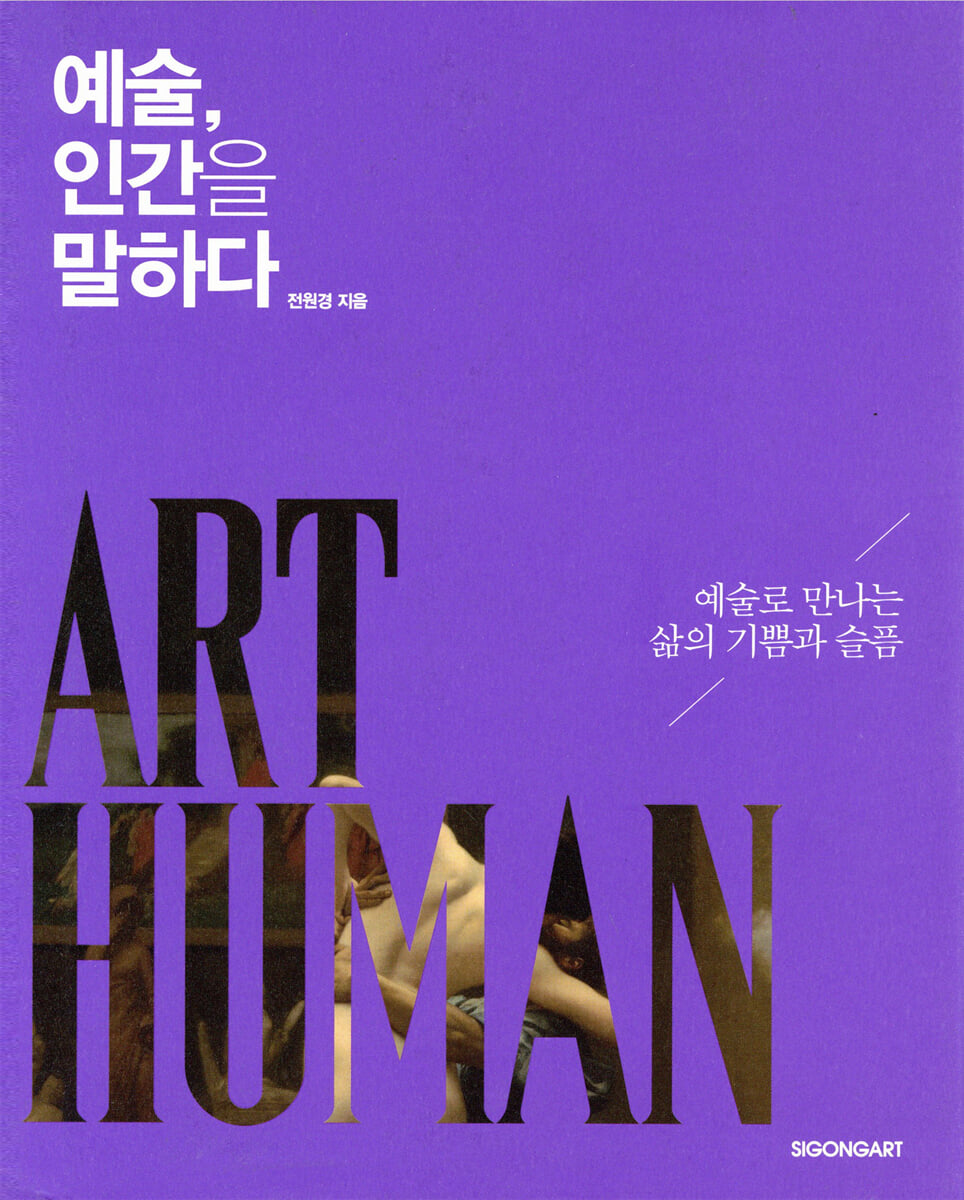
Art speaks of humanity
 |
Description
Book Introduction
How does art comfort humans?
This is a new book by Jeon Won-kyung, the author of 『Art, Making History』, which was praised for its profound perspective encompassing art and history, and 『Art Meets the City』, which explores the relationship between art and space.
As a series of art that elevates life, it provides a new answer to the question of whether art is something noble and distant in our complex reality where joy and pain, hope and helplessness intersect.
Through the vivid life stories of renowned artists such as Rubens, da Vinci, Botticelli, Klimt, and Picasso, it reminds us that art and reality are intimately intertwined and have taken root within us.
Each chapter in this book concludes with a list of classical music recommended by the author, allowing the message conveyed through famous paintings and stories to be preserved with a deeper and more profound resonance through a variety of music.
Sigong Art's trilogy of works of art, which explores the hidden depths of works of art through a broad humanistic perspective, has concluded its journey with the theme of art and humanity, following art and history and art and the city.
This is a new book by Jeon Won-kyung, the author of 『Art, Making History』, which was praised for its profound perspective encompassing art and history, and 『Art Meets the City』, which explores the relationship between art and space.
As a series of art that elevates life, it provides a new answer to the question of whether art is something noble and distant in our complex reality where joy and pain, hope and helplessness intersect.
Through the vivid life stories of renowned artists such as Rubens, da Vinci, Botticelli, Klimt, and Picasso, it reminds us that art and reality are intimately intertwined and have taken root within us.
Each chapter in this book concludes with a list of classical music recommended by the author, allowing the message conveyed through famous paintings and stories to be preserved with a deeper and more profound resonance through a variety of music.
Sigong Art's trilogy of works of art, which explores the hidden depths of works of art through a broad humanistic perspective, has concluded its journey with the theme of art and humanity, following art and history and art and the city.
- You can preview some of the book's contents.
Preview
index
Entering
01 Youth: A Blessing or a Pain?
02 Love and Marriage: The Truth Behind Blind Passion
03 Heartbreak and Separation: Eternal Themes in Art
04 Disease and Death: The World Beyond the Terminal
05 The Artist's Solitude: Geniuses at odds with their time
06 Night: A World of Dreams and Fantasy
07 The Witch and the Femme Fatale: Who is the Real Bad Woman?
08 Myth in Art: An Inexhaustible Well of Inspiration
09 Labor and Vacation: Landscapes of Life in Art
10 Home and Table: Home, Sweet Home
11 Friends: Masterpieces Born of Friendship and Rivalry
12 Nature and Seasons: Mountains, Forests, Seas, and Flowers
13 Beauty and the Nude: Why Do Artists Paint Nudes?
14 Travel and Oil Painting: Masterpieces Born from an Artist's Journey
15 Art and Economics: Which Art Sells for a High Price?
16 Portraits of Monarchs: The Face of the King
17 Art and Politics: Are Artists Innovators or Conservatives?
References
01 Youth: A Blessing or a Pain?
02 Love and Marriage: The Truth Behind Blind Passion
03 Heartbreak and Separation: Eternal Themes in Art
04 Disease and Death: The World Beyond the Terminal
05 The Artist's Solitude: Geniuses at odds with their time
06 Night: A World of Dreams and Fantasy
07 The Witch and the Femme Fatale: Who is the Real Bad Woman?
08 Myth in Art: An Inexhaustible Well of Inspiration
09 Labor and Vacation: Landscapes of Life in Art
10 Home and Table: Home, Sweet Home
11 Friends: Masterpieces Born of Friendship and Rivalry
12 Nature and Seasons: Mountains, Forests, Seas, and Flowers
13 Beauty and the Nude: Why Do Artists Paint Nudes?
14 Travel and Oil Painting: Masterpieces Born from an Artist's Journey
15 Art and Economics: Which Art Sells for a High Price?
16 Portraits of Monarchs: The Face of the King
17 Art and Politics: Are Artists Innovators or Conservatives?
References
Detailed image

Into the book
Art may seem to express a grand realm that ordinary people like us can never reach, but that is not the case.
If you look closely at operas hanging in magnificent art galleries or performed in splendid theaters, most of them deal with people's lives interpreted through the artist's eyes.
We can recall the fiery moment of first love through the gazes of the man and woman clashing in Titian's "Bacchus and Ariadne," and we can see ourselves silently enduring our daily toil by looking at the usher in Hopper's "New York Cinema."
While listening to Orpheus singing “I have lost my Eurydice,” you may shed tears as if the bitter pain of heartbreak were happening right now, or you may recall the days of your childhood, as clear as glass, through the young girls in Sargent’s “Carnation, Lily, Lily, Rose.”
Through this process, we experience the special and intimate feeling that great works created long ago are connected to our lives, transcending the flow of time.
"Art, Speaks of Humanity" is a book written to remember the shining moments in our lives and to gain strength to live in reality from those moments, before commenting on or appreciating works of art.
---From "Entering"
Montmartre, where Toulouse-Lautrec stayed, was beautiful, but Picasso could not speak a word of French.
After months of frantic pilgrimages to art museums, Picasso returned home and immediately packed his bags and headed back to Paris.
Unable to overcome the pain of a heartbreak in the winter, his friend Casagemas accidentally committed suicide by shooting himself with a pistol.
Picasso's Blue Period, symbolizing the young artist's frustrated dreams, anxiety, worries, poverty, and innocence, began with his friend's suicide.
Young Picasso was devastated by the loss of his only friend in a foreign land and did not know what to do.
The works painted during this period often feature poor musicians, old people, blind people, and street women.
---From "Youth: A Blessing or a Pain?"
In fact, since the Middle Ages, values toward women have had a contradictory aspect.
From a Christian perspective, Eve, the first woman, was the 'gate leading to hell' for men.
However, the Virgin Mary, who is also a woman, is the symbol of salvation and the woman of heaven.
The church has been floundering, unable to find its center in its Janus-shaped view of women.
Between Eve, Adam's wife, and Mary, the mother of Jesus, who represents women? Depending on one's perspective, women could easily be transformed into both saints and witches.
---From "The Witch and the Femme Fatale: Who is the Really Bad Woman?"
In Johannes Vermeer's masterpiece, "The Milkmaid," the girl in the painting is wearing a blue apron and a yellow outer garment.
The apron is vividly painted in a deep blue color from lapis lazuli, the most expensive pigment.
This blue is a color that signifies nobility and purity, and was often used to paint the Virgin Mary's cloak.
Through the maid's blue apron, Vermeer subtly shows his belief that everyday labor is a sacred act.
The sight of the maid pouring milk while holding the milk jug with both hands and looking down is imbued with a pious air, as if she were praying.
---From "Labor and Vacation: Landscapes of Life in Art"
Culture tends to follow the movement of wealth.
In the late 1800s, the United States, as an emerging industrial nation, began actively importing European culture.
After steel magnate Andrew Carnegie opened Carnegie Hall in New York, he invited Russia's greatest composer, Tchaikovsky (1840-1893), to give a commemorative concert.
Tchaikovsky, who came to New York in April 1891, stayed in New York, Baltimore, and Philadelphia for two months, conducting four performances at Carnegie Hall and receiving a performance fee of $2,500, equivalent to 80 million won in today's money.
Tchaikovsky said in America, his first visit, that “the people are kind, generous, and honest.
New Yorkers in particular are friendlier than people in Paris or any other European city.
“If I had come here a little younger, I would have seriously considered staying here,” he wrote.
If you look closely at operas hanging in magnificent art galleries or performed in splendid theaters, most of them deal with people's lives interpreted through the artist's eyes.
We can recall the fiery moment of first love through the gazes of the man and woman clashing in Titian's "Bacchus and Ariadne," and we can see ourselves silently enduring our daily toil by looking at the usher in Hopper's "New York Cinema."
While listening to Orpheus singing “I have lost my Eurydice,” you may shed tears as if the bitter pain of heartbreak were happening right now, or you may recall the days of your childhood, as clear as glass, through the young girls in Sargent’s “Carnation, Lily, Lily, Rose.”
Through this process, we experience the special and intimate feeling that great works created long ago are connected to our lives, transcending the flow of time.
"Art, Speaks of Humanity" is a book written to remember the shining moments in our lives and to gain strength to live in reality from those moments, before commenting on or appreciating works of art.
---From "Entering"
Montmartre, where Toulouse-Lautrec stayed, was beautiful, but Picasso could not speak a word of French.
After months of frantic pilgrimages to art museums, Picasso returned home and immediately packed his bags and headed back to Paris.
Unable to overcome the pain of a heartbreak in the winter, his friend Casagemas accidentally committed suicide by shooting himself with a pistol.
Picasso's Blue Period, symbolizing the young artist's frustrated dreams, anxiety, worries, poverty, and innocence, began with his friend's suicide.
Young Picasso was devastated by the loss of his only friend in a foreign land and did not know what to do.
The works painted during this period often feature poor musicians, old people, blind people, and street women.
---From "Youth: A Blessing or a Pain?"
In fact, since the Middle Ages, values toward women have had a contradictory aspect.
From a Christian perspective, Eve, the first woman, was the 'gate leading to hell' for men.
However, the Virgin Mary, who is also a woman, is the symbol of salvation and the woman of heaven.
The church has been floundering, unable to find its center in its Janus-shaped view of women.
Between Eve, Adam's wife, and Mary, the mother of Jesus, who represents women? Depending on one's perspective, women could easily be transformed into both saints and witches.
---From "The Witch and the Femme Fatale: Who is the Really Bad Woman?"
In Johannes Vermeer's masterpiece, "The Milkmaid," the girl in the painting is wearing a blue apron and a yellow outer garment.
The apron is vividly painted in a deep blue color from lapis lazuli, the most expensive pigment.
This blue is a color that signifies nobility and purity, and was often used to paint the Virgin Mary's cloak.
Through the maid's blue apron, Vermeer subtly shows his belief that everyday labor is a sacred act.
The sight of the maid pouring milk while holding the milk jug with both hands and looking down is imbued with a pious air, as if she were praying.
---From "Labor and Vacation: Landscapes of Life in Art"
Culture tends to follow the movement of wealth.
In the late 1800s, the United States, as an emerging industrial nation, began actively importing European culture.
After steel magnate Andrew Carnegie opened Carnegie Hall in New York, he invited Russia's greatest composer, Tchaikovsky (1840-1893), to give a commemorative concert.
Tchaikovsky, who came to New York in April 1891, stayed in New York, Baltimore, and Philadelphia for two months, conducting four performances at Carnegie Hall and receiving a performance fee of $2,500, equivalent to 80 million won in today's money.
Tchaikovsky said in America, his first visit, that “the people are kind, generous, and honest.
New Yorkers in particular are friendlier than people in Paris or any other European city.
“If I had come here a little younger, I would have seriously considered staying here,” he wrote.
---From "Art and Economics: Which Works Sell for High Prices?"
Publisher's Review
Meet the popular lectures from the Seoul Arts Center in book form!
The art trilogy, which was completed after several years, began with lectures given every Saturday at the Arts Center Humanities Academy.
It can be said to be the essence of a collection of key topics selected from a vast amount of material and hundreds of illustrations.
Based on popular lectures that draw numerous students every week, it is full of fascinating and engaging stories about art.
A comprehensive art book that is both educational and entertaining.
Consisting of 17 chapters, 『Art, Speaks of Humanity』 covers topics such as ‘Love, Parting, and Life’ and ‘The Power of Time and Fate’, as well as ‘Daily Life and Happiness Depicted through Art’ and ‘The World as Seen by Artists’.
Each page is filled with the joy of discovering the fascinating intersections where acclaimed artists across time interacted and influenced one another.
It is so diverse that it cannot be simply called 'the life of an artist'.
Like Van Gogh, who turned a gun on himself, or Gauguin, who became a martyr to art, there are those whose lives were twisted and turned with unfulfilled longings, and like Rubens, who traveled around the world and received recognition, there are those who started from special backgrounds and enjoyed a long and brilliant life.
The lives of Goya, who once enjoyed the beauty of the field but spent his later years in deep darkness, and Schumann, who had to experience both the happiness of love and betrayal, each leave a different aftertaste.
The author's broad perspective, encompassing art, music, and literature, provides both rich intellectual satisfaction and the pleasure of reading.
Following 『Art, Making History』, which contained the communication between art and the times, and 『Art Meets the City』, which dealt with the communication between art and space, this is a masterpiece that deals with the communication between art and humans.
Art is the joys and sorrows of life reflected through the prism
Love, which makes us laugh and cry all day long, is a representative theme that inspires creative work.
The emotions that boil over in the face of an unavoidable fate, whether it be overwhelming humility or anger at the injustice of existence, become a tremendous creative force.
The trivialities and boring comforts of everyday life that we consider insignificant are also major subjects that fill the world of art.
A series of paintings, all tinged with blue, capture the sadness and confusion Picasso faced at the sudden loss of his friend, while Judith's blade, which cuts off Holofernes' head, reflects Gentileschi's anger at the reality of being unable to pursue his creative dreams due to gender and the pain of having his soul crushed.
Klimt's landscape paintings, which become more peaceful the more you look at them, contain the emotions he felt while going through the ups and downs of being a painter, and have a different charm from his previous, flashy and decorative portraits.
In his later years, when he was battling illness and facing death, Schubert reflected on another ending to life through music about romantic love and separation.
In this way, art transcends the traces of its time.
Because it contains the creator's intense struggles and new aspirations for overcoming them, it gives new life to those who appreciate it.
To all of us who have grappled with the daily frustrations of a pandemic that brought the world to a standstill, "Art, Speaks of Humanity" presents the unexpected solace of art.
The art trilogy, which was completed after several years, began with lectures given every Saturday at the Arts Center Humanities Academy.
It can be said to be the essence of a collection of key topics selected from a vast amount of material and hundreds of illustrations.
Based on popular lectures that draw numerous students every week, it is full of fascinating and engaging stories about art.
A comprehensive art book that is both educational and entertaining.
Consisting of 17 chapters, 『Art, Speaks of Humanity』 covers topics such as ‘Love, Parting, and Life’ and ‘The Power of Time and Fate’, as well as ‘Daily Life and Happiness Depicted through Art’ and ‘The World as Seen by Artists’.
Each page is filled with the joy of discovering the fascinating intersections where acclaimed artists across time interacted and influenced one another.
It is so diverse that it cannot be simply called 'the life of an artist'.
Like Van Gogh, who turned a gun on himself, or Gauguin, who became a martyr to art, there are those whose lives were twisted and turned with unfulfilled longings, and like Rubens, who traveled around the world and received recognition, there are those who started from special backgrounds and enjoyed a long and brilliant life.
The lives of Goya, who once enjoyed the beauty of the field but spent his later years in deep darkness, and Schumann, who had to experience both the happiness of love and betrayal, each leave a different aftertaste.
The author's broad perspective, encompassing art, music, and literature, provides both rich intellectual satisfaction and the pleasure of reading.
Following 『Art, Making History』, which contained the communication between art and the times, and 『Art Meets the City』, which dealt with the communication between art and space, this is a masterpiece that deals with the communication between art and humans.
Art is the joys and sorrows of life reflected through the prism
Love, which makes us laugh and cry all day long, is a representative theme that inspires creative work.
The emotions that boil over in the face of an unavoidable fate, whether it be overwhelming humility or anger at the injustice of existence, become a tremendous creative force.
The trivialities and boring comforts of everyday life that we consider insignificant are also major subjects that fill the world of art.
A series of paintings, all tinged with blue, capture the sadness and confusion Picasso faced at the sudden loss of his friend, while Judith's blade, which cuts off Holofernes' head, reflects Gentileschi's anger at the reality of being unable to pursue his creative dreams due to gender and the pain of having his soul crushed.
Klimt's landscape paintings, which become more peaceful the more you look at them, contain the emotions he felt while going through the ups and downs of being a painter, and have a different charm from his previous, flashy and decorative portraits.
In his later years, when he was battling illness and facing death, Schubert reflected on another ending to life through music about romantic love and separation.
In this way, art transcends the traces of its time.
Because it contains the creator's intense struggles and new aspirations for overcoming them, it gives new life to those who appreciate it.
To all of us who have grappled with the daily frustrations of a pandemic that brought the world to a standstill, "Art, Speaks of Humanity" presents the unexpected solace of art.
GOODS SPECIFICS
- Publication date: October 25, 2022
- Format: Hardcover book binding method guide
- Page count, weight, size: 608 pages | 1,268g | 165*210*38mm
- ISBN13: 9791169252980
- ISBN10: 1169252982
You may also like
카테고리
korean


korean

![GQ KOREA Mark (Monthly): December [2025]](http://librairie.coreenne.fr/cdn/shop/files/8ef265dbbfbf186523ed75ba7319009d.jpg?v=1765340328&width=3840)


