

Forest of Philosophy
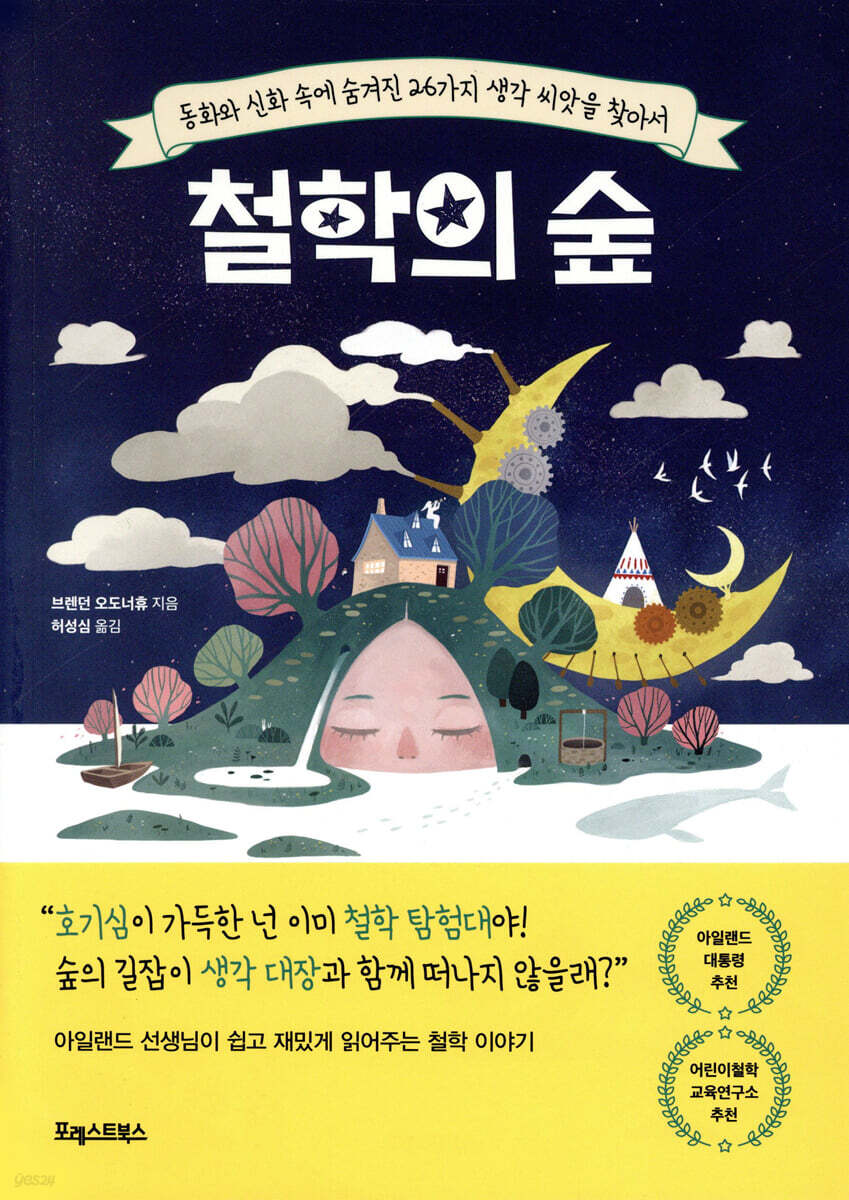 |
Description
Book Introduction
“Why does the number one student start studying philosophy? The Secret of 'Philosophy' That Rapidly Boosts Your Child's Academic Ability -Recommended by the Children's Philosophy Education Research Institute -Recommended by the President of Ireland “I only know the names of famous philosophers like Aristotle,” “It’s difficult and I don’t know why I should study it,” etc. When it comes to philosophy, most teenagers say it’s ‘difficult.’ While they are obsessed with improving their English and math grades, they don't even know the 'reason' for studying philosophy. The author, a philosophy educator who has taught numerous students in elementary, middle, and university for over a decade, repeatedly emphasizes that 'philosophy' comes before studying English and math. In fact, several European countries designate philosophy as a core subject. Philosophy is a compulsory subject in French high school graduation exams. The reason why they consider philosophy their top priority is simple. This is because it is the only subject that broadens the scope of thought by asking questions such as, "Is the majority opinion always more important than the minority opinion?" and "Can all truths be considered facts?" Through this, the thinking and logical skills that are at the core of studying are also expanded. However, our education system is still focused on solving many problems, memorizing past exam questions, and simply increasing the amount of knowledge. But what really matters is not 'how much you know'. Rather, more comes when you stop focusing on technical study and learn to think for yourself. Above all, learning philosophy will enhance your understanding and problem-solving skills, which are essential for studying. Your thinking skills will improve as you understand the content of long Korean texts at a glance, grasp the intent of the question, and connect it to the correct answer. As your thoughts become more logically organized, writing becomes easier. It also becomes stronger with 'numbers'. By understanding the principles of mathematical formulas and applying them to the problem-solving process, your reasoning and logical skills will improve. The most important thing is that you will naturally learn the process of asking and answering the question, “Why should I study?” It is possible to move beyond studying by mere tricks and study on your own. This is where the real power of philosophy lies. If you're still anxious about studying and obsessed with your grades, try changing your thinking. Rather than thinking, "I absolutely have to do well in my studies," or "I have to be number one," you should first think about, "What do I need to make studying fun and be good at it?" If so, there is only one answer, and 『The Forest of Philosophy』 will perfectly guide you along that path. |
- You can preview some of the book's contents.
Preview
index
Recommendation 1
Recommendation 2
Entering
CHAPTER 1 The First Forest: A First Encounter with the World of Philosophy
The day the frog in the well left the well
Why did the blind men fight over the elephant?
The Unpredictable Adventures of a Strange Two-Legged Rat
Am I a butterfly, or is the butterfly me?
The story of a young man who went to fetch water and never returned.
Prisoners in a cave who have never seen the outside world
My brain is split!
Did the fox wife and human husband live happily ever after?
The decisive moment that changed the fate of the Seal Woman
CHAPTER 2 The Second Forest: Starting to Question Everything
Theseus, the hero who chose a different weapon than the sword
A god who decided to hide something very precious from humans
The man who got everything in a narrow jar
A king born with a secret of birth
A wise old man who is unshaken by anything
The terrible price paid for abandoning God and helping humans
A dish that can give you all the knowledge in the world
The day the animals I ate judge me in the afterlife
What kind of music do you most want to listen to?
CHAPTER 3 The Third Forest: My World Has Finally Expanded
The daily life of a monk who does not neglect even the smallest things
I want you to find the best sound in the world
The painter who disappeared into the painting
Why can't the young man leave his familiar place?
Give me your neck in one year
The most beautiful place in the world
The story of the buffalo herd that didn't know that humans cry too
Who did the first turtle meet when it came to Earth?
Introduction to the philosopher
Coming out
Recommendation 2
Entering
CHAPTER 1 The First Forest: A First Encounter with the World of Philosophy
The day the frog in the well left the well
Why did the blind men fight over the elephant?
The Unpredictable Adventures of a Strange Two-Legged Rat
Am I a butterfly, or is the butterfly me?
The story of a young man who went to fetch water and never returned.
Prisoners in a cave who have never seen the outside world
My brain is split!
Did the fox wife and human husband live happily ever after?
The decisive moment that changed the fate of the Seal Woman
CHAPTER 2 The Second Forest: Starting to Question Everything
Theseus, the hero who chose a different weapon than the sword
A god who decided to hide something very precious from humans
The man who got everything in a narrow jar
A king born with a secret of birth
A wise old man who is unshaken by anything
The terrible price paid for abandoning God and helping humans
A dish that can give you all the knowledge in the world
The day the animals I ate judge me in the afterlife
What kind of music do you most want to listen to?
CHAPTER 3 The Third Forest: My World Has Finally Expanded
The daily life of a monk who does not neglect even the smallest things
I want you to find the best sound in the world
The painter who disappeared into the painting
Why can't the young man leave his familiar place?
Give me your neck in one year
The most beautiful place in the world
The story of the buffalo herd that didn't know that humans cry too
Who did the first turtle meet when it came to Earth?
Introduction to the philosopher
Coming out
Detailed image

Into the book
Ultimately, the power of thinking begins with curiosity.
You probably feel curious when you see something for the first time or when you start to doubt something you always believed to be true.
Of course, curiosity can sometimes be difficult, like a riddle.
A world that was comfortable, safe, and secure can suddenly disappear because of curiosity.
This is what happened when Frida left the well.
You can feel curious even when you're confused.
Then you'll start asking new questions about things you thought you already understood.
For example, questions like these:
“What is time?”, “What is it like to think?”, “What is language?”, “What are numbers?”, “Where did the universe begin?”, “Why is there something rather than nothing?”
Maybe these questions are confusing you.
But wherever we go, we see and hear things that pique our curiosity.
And no matter where you are in your philosophical exploration, curiosity will always follow you.
--- pp.21~22
Philosophy of mind is one of the interests of many philosophers.
The relationship between mind and body has long been discussed in philosophy.
Philosophers have asked the question, “How is what we experience mentally different from what we experience physically?”
Philosophers who deal with the mind also wondered:
Do physical experiences influence thoughts, or do thoughts influence physical experiences? What most powerfully influences experiences, thoughts, or physical sensations?
Some philosophers argue that what we experience mentally is actually material.
We call such philosophers 'materialists'.
Some philosophers also argue that material experiences are actually states of the mind.
Such philosophers are called 'idealists'.
And philosophers who are called 'dualists' argue that both mental and physical experiences are real, and that one cannot be reduced to the other.
--- p.80
In the modern world of civilization, many people live with little contact with animals.
People treat animals as mere pets, farm animals, scientific experiments, or they are kept in zoos for entertainment.
Some people may only encounter animals as commodities displayed on supermarket shelves or in glass display cases at the butcher shop.
Why did this happen? How did modern civilization become so distant from animals and so oblivious to their suffering? Why did a gulf develop between humans and animals? When did humans and animals begin to walk separate paths?
--- p.89
Theseus realized that being a hero doesn't always mean using violence.
There is a path of nonviolence in the world as well as a path of violence.
Theseus and his family chose the path of nonviolence when approaching the Minotaur.
This was something King Minos and the others could not have imagined.
The Cretans were afraid of the monster Minotaur.
But since he was half human, they couldn't kill him, so they locked him in a maze.
Believing that he would stay there for the rest of his life.
Unlike most Cretans, Theseus and his family saw something else behind the Minotaur's monstrous appearance.
Moreover, he decided not to use weapons and was willing to get lost in the maze to meet the Minotaur himself.
In the process, I was able to gain something completely unexpected.
The Minotaur knew that Theseus' family had come to meet him with good intentions rather than weapons.
In return, he willingly guided them out of the maze.
Imagine the Minotaur taking Theseus' daughter by the hand and walking her out of the labyrinth.
Wouldn't such a scene inspire different thoughts in the human mind?
--- p.111
Besides human-made music and sounds created by nature, there is also the music of silence.
American composer John Cage said, “Everything we do is music.”
Cage created a piece of 'silent music' called '4 minutes 33 seconds'.
This piece is notable for its 4 minutes and 33 seconds of silence.
In 1952 in New York, pianist David Tudor performed this most unusual of Cage's works.
Tudor didn't play anything either.
I just sat at the piano, looked at the blank sheet music, pressed the stopwatch, and put my hands on my knees.
Some people, confused, left the concert hall after about two minutes.
Exactly four minutes and 33 seconds later, Tudor stood up and said hello.
Where did this strange music come from? Perhaps Cage felt that the composer shouldn't be everything in music.
I would have tried to break away from the conventional method by not drawing a single note on the score.
By completely excluding himself from the act of composing, he allowed the music of silence to receive full attention.
--- pp.187~188
Belgian painter René Magritte tests the viewer's sense of reality with his painting 'The Treachery of Images'.
There is a pipe drawn in the picture.
But at the bottom of the picture, it says, 'This is not a pipe.'
What this means is that it is not a pipe, but an image of a pipe.
So if Magritte said that his painting was of a pipe, he would be lying.
This painting ingeniously uses very everyday objects to completely confuse the viewer.
It would be a truly strange feeling if ordinary objects we knew lost their original meaning and familiarity.
You probably feel curious when you see something for the first time or when you start to doubt something you always believed to be true.
Of course, curiosity can sometimes be difficult, like a riddle.
A world that was comfortable, safe, and secure can suddenly disappear because of curiosity.
This is what happened when Frida left the well.
You can feel curious even when you're confused.
Then you'll start asking new questions about things you thought you already understood.
For example, questions like these:
“What is time?”, “What is it like to think?”, “What is language?”, “What are numbers?”, “Where did the universe begin?”, “Why is there something rather than nothing?”
Maybe these questions are confusing you.
But wherever we go, we see and hear things that pique our curiosity.
And no matter where you are in your philosophical exploration, curiosity will always follow you.
--- pp.21~22
Philosophy of mind is one of the interests of many philosophers.
The relationship between mind and body has long been discussed in philosophy.
Philosophers have asked the question, “How is what we experience mentally different from what we experience physically?”
Philosophers who deal with the mind also wondered:
Do physical experiences influence thoughts, or do thoughts influence physical experiences? What most powerfully influences experiences, thoughts, or physical sensations?
Some philosophers argue that what we experience mentally is actually material.
We call such philosophers 'materialists'.
Some philosophers also argue that material experiences are actually states of the mind.
Such philosophers are called 'idealists'.
And philosophers who are called 'dualists' argue that both mental and physical experiences are real, and that one cannot be reduced to the other.
--- p.80
In the modern world of civilization, many people live with little contact with animals.
People treat animals as mere pets, farm animals, scientific experiments, or they are kept in zoos for entertainment.
Some people may only encounter animals as commodities displayed on supermarket shelves or in glass display cases at the butcher shop.
Why did this happen? How did modern civilization become so distant from animals and so oblivious to their suffering? Why did a gulf develop between humans and animals? When did humans and animals begin to walk separate paths?
--- p.89
Theseus realized that being a hero doesn't always mean using violence.
There is a path of nonviolence in the world as well as a path of violence.
Theseus and his family chose the path of nonviolence when approaching the Minotaur.
This was something King Minos and the others could not have imagined.
The Cretans were afraid of the monster Minotaur.
But since he was half human, they couldn't kill him, so they locked him in a maze.
Believing that he would stay there for the rest of his life.
Unlike most Cretans, Theseus and his family saw something else behind the Minotaur's monstrous appearance.
Moreover, he decided not to use weapons and was willing to get lost in the maze to meet the Minotaur himself.
In the process, I was able to gain something completely unexpected.
The Minotaur knew that Theseus' family had come to meet him with good intentions rather than weapons.
In return, he willingly guided them out of the maze.
Imagine the Minotaur taking Theseus' daughter by the hand and walking her out of the labyrinth.
Wouldn't such a scene inspire different thoughts in the human mind?
--- p.111
Besides human-made music and sounds created by nature, there is also the music of silence.
American composer John Cage said, “Everything we do is music.”
Cage created a piece of 'silent music' called '4 minutes 33 seconds'.
This piece is notable for its 4 minutes and 33 seconds of silence.
In 1952 in New York, pianist David Tudor performed this most unusual of Cage's works.
Tudor didn't play anything either.
I just sat at the piano, looked at the blank sheet music, pressed the stopwatch, and put my hands on my knees.
Some people, confused, left the concert hall after about two minutes.
Exactly four minutes and 33 seconds later, Tudor stood up and said hello.
Where did this strange music come from? Perhaps Cage felt that the composer shouldn't be everything in music.
I would have tried to break away from the conventional method by not drawing a single note on the score.
By completely excluding himself from the act of composing, he allowed the music of silence to receive full attention.
--- pp.187~188
Belgian painter René Magritte tests the viewer's sense of reality with his painting 'The Treachery of Images'.
There is a pipe drawn in the picture.
But at the bottom of the picture, it says, 'This is not a pipe.'
What this means is that it is not a pipe, but an image of a pipe.
So if Magritte said that his painting was of a pipe, he would be lying.
This painting ingeniously uses very everyday objects to completely confuse the viewer.
It would be a truly strange feeling if ordinary objects we knew lost their original meaning and familiarity.
--- p.218
Publisher's Review
"European children learn philosophy before math."
Why Teenagers Should Learn Philosophy
For a long time, Europe designated philosophy as a compulsory subject in education.
They believed that philosophy could foster independent thinking skills that could not be learned through other subjects.
In fact, French secondary education institutions, lycées, teach philosophy equally to both liberal arts and science students, and many schools also allow students to freely exchange opinions through discussions during class.
Amidst this prevailing atmosphere, in 2013, Irish President Michael Higgins also spoke of the importance of philosophy education.
The president stressed that philosophy is the "most powerful tool" in an uncertain world.
If you think deeply about philosophy, your critical and logical skills will grow, and it will have a positive effect on your self-identity, which can lead to emotional stability.
Adolescence, in particular, is a very important period in which rapid physical and mental changes occur and self-formation takes place.
For teenagers who are at the first turning point in their lives, philosophy will help them break down the walls of stereotypes and step out into the world on their own.
“Is philosophy this fun?”
A storytelling philosophy that captures both fun and imagination
Ultimately, the easiest way for children to access philosophy is through books.
But unfortunately, there are too many teenagers who cannot finish reading a single book.
In fact, the reason they have trouble reading books is not because of a lack of concentration or perseverance, but because of a lack of ‘fun.’
If it's not fun for kids, it's meaningless.
Moreover, forcing today's generation, accustomed to digital devices like smartphones, to read a boring book to the end will only cause suffering.
The author, who recognized the characteristics of these children in actual educational settings, completely excluded rigid theories from 『The Forest of Philosophy』.
For children who hate boring stories, we have selected only short and exciting stories.
It contains a wide variety of fairy tales and myths, including a man whose brain was separated from his body, a man in the underworld who was judged by the animals he ate, Prometheus who abandoned the gods to help humans, and even a knight who suddenly appears and offers to behead him.
Additionally, the ideas of philosophers such as Plato and Kant, intended to support the content, are simply summarized to include only the core.
Adding to this fantastic Nordic-style illustrations, this book will dispel any previous aversion to philosophy.
“There is no single right answer in life.”
Philosophy gives you the courage to break out of the egg.
The book contains the adventures of a 'strange mouse' in the world.
Unlike other rats who adapt to the life given to them, this curious rat is busy walking around on two feet every day.
One day, a rat hears a mysterious sound and runs away from the village where he lives, going on an adventure that takes him over mountains and across rivers to find the source of the sound.
In the process, the other rats experience a world unknown to them and 'wake up'.
The strange mouse, always curious, was curious about other worlds, and because he boldly put his thoughts into action, he was able to see things that others could not.
This strange rat shows the courage to live differently from ordinary rats.
He never gave up his curiosity and boldly gave up a stable life for adventure.
This is the exact opposite of our youth today.
These days, teenagers are overly pressured to learn the study skills of just guessing the answer like everyone else.
But if you only pursue one correct answer, you will miss the most important thing.
Philosopher Paul Valéry said, “If one does not live as one thinks, one will end up thinking as one lives.”
A life where we think as we live is passive and we are dragged along by life.
On the other hand, if you live with your own thoughts, you will be able to draw your life independently like the mouse in the story.
If you want your precious child to grow up to be someone who is not swayed by others, who finds his or her own path, and who makes sound decisions at crossroads, let's embark on a journey into the forest of stories within philosophy.
Why Teenagers Should Learn Philosophy
For a long time, Europe designated philosophy as a compulsory subject in education.
They believed that philosophy could foster independent thinking skills that could not be learned through other subjects.
In fact, French secondary education institutions, lycées, teach philosophy equally to both liberal arts and science students, and many schools also allow students to freely exchange opinions through discussions during class.
Amidst this prevailing atmosphere, in 2013, Irish President Michael Higgins also spoke of the importance of philosophy education.
The president stressed that philosophy is the "most powerful tool" in an uncertain world.
If you think deeply about philosophy, your critical and logical skills will grow, and it will have a positive effect on your self-identity, which can lead to emotional stability.
Adolescence, in particular, is a very important period in which rapid physical and mental changes occur and self-formation takes place.
For teenagers who are at the first turning point in their lives, philosophy will help them break down the walls of stereotypes and step out into the world on their own.
“Is philosophy this fun?”
A storytelling philosophy that captures both fun and imagination
Ultimately, the easiest way for children to access philosophy is through books.
But unfortunately, there are too many teenagers who cannot finish reading a single book.
In fact, the reason they have trouble reading books is not because of a lack of concentration or perseverance, but because of a lack of ‘fun.’
If it's not fun for kids, it's meaningless.
Moreover, forcing today's generation, accustomed to digital devices like smartphones, to read a boring book to the end will only cause suffering.
The author, who recognized the characteristics of these children in actual educational settings, completely excluded rigid theories from 『The Forest of Philosophy』.
For children who hate boring stories, we have selected only short and exciting stories.
It contains a wide variety of fairy tales and myths, including a man whose brain was separated from his body, a man in the underworld who was judged by the animals he ate, Prometheus who abandoned the gods to help humans, and even a knight who suddenly appears and offers to behead him.
Additionally, the ideas of philosophers such as Plato and Kant, intended to support the content, are simply summarized to include only the core.
Adding to this fantastic Nordic-style illustrations, this book will dispel any previous aversion to philosophy.
“There is no single right answer in life.”
Philosophy gives you the courage to break out of the egg.
The book contains the adventures of a 'strange mouse' in the world.
Unlike other rats who adapt to the life given to them, this curious rat is busy walking around on two feet every day.
One day, a rat hears a mysterious sound and runs away from the village where he lives, going on an adventure that takes him over mountains and across rivers to find the source of the sound.
In the process, the other rats experience a world unknown to them and 'wake up'.
The strange mouse, always curious, was curious about other worlds, and because he boldly put his thoughts into action, he was able to see things that others could not.
This strange rat shows the courage to live differently from ordinary rats.
He never gave up his curiosity and boldly gave up a stable life for adventure.
This is the exact opposite of our youth today.
These days, teenagers are overly pressured to learn the study skills of just guessing the answer like everyone else.
But if you only pursue one correct answer, you will miss the most important thing.
Philosopher Paul Valéry said, “If one does not live as one thinks, one will end up thinking as one lives.”
A life where we think as we live is passive and we are dragged along by life.
On the other hand, if you live with your own thoughts, you will be able to draw your life independently like the mouse in the story.
If you want your precious child to grow up to be someone who is not swayed by others, who finds his or her own path, and who makes sound decisions at crossroads, let's embark on a journey into the forest of stories within philosophy.
GOODS SPECIFICS
- Date of publication: August 26, 2020
- Page count, weight, size: 311 pages | 528g | 152*218*30mm
- ISBN13: 9791189584795
- ISBN10: 1189584794
You may also like
카테고리
korean


korean

![GQ KOREA Mark (Monthly): December [2025]](http://librairie.coreenne.fr/cdn/shop/files/8ef265dbbfbf186523ed75ba7319009d.jpg?v=1765340328&width=3840)


