

Park Ji-won's Chinese novels
 |
Description
Book Introduction
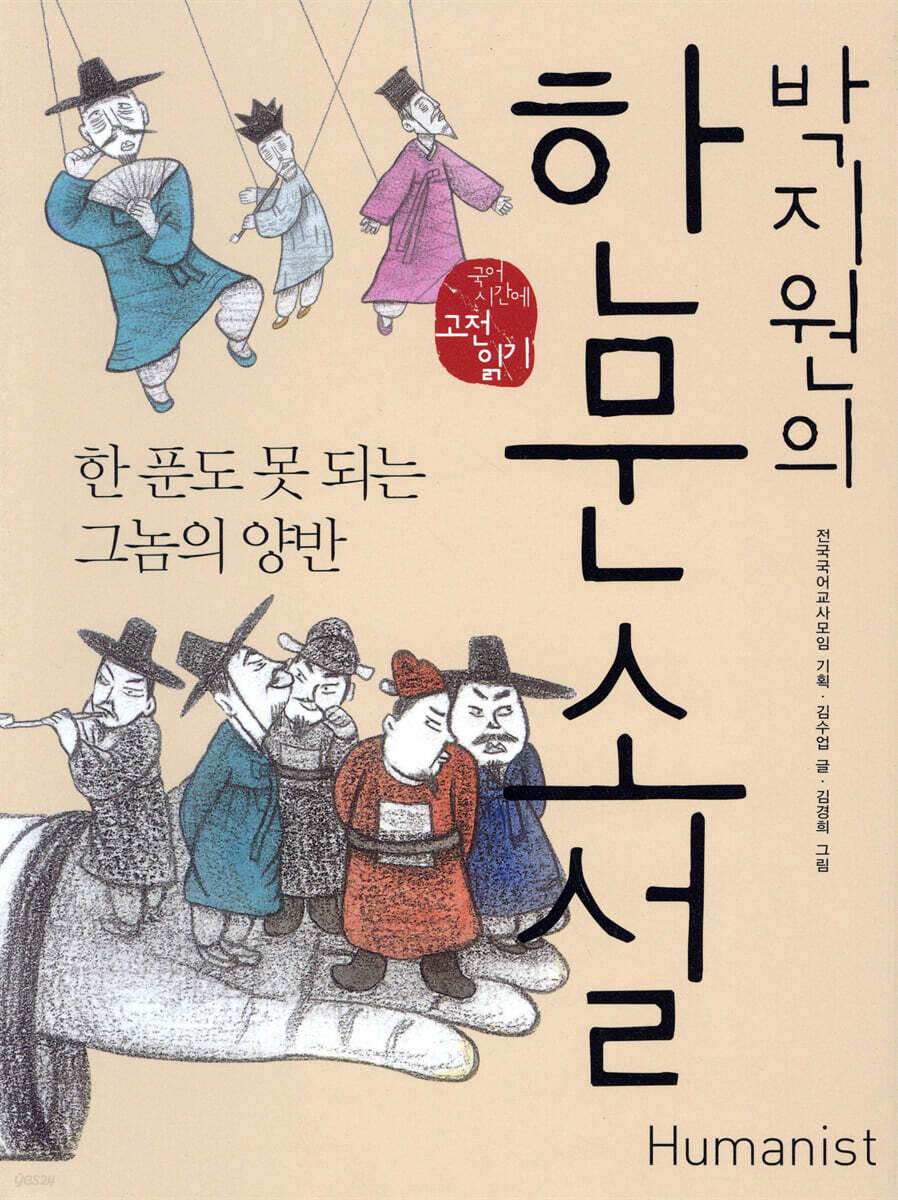
Eight stories by Park Ji-won that refreshingly criticize the world's falsehoods and hypocrisy.
Park Ji-won left his official position and lived a life of poverty, but he was a man of great spiritual wealth who interacted with the greatest scholars of his time and displayed sharp criticism and a spirit of reform.
In the eight Chinese novels he left behind, human selfishness and the falsehood of Confucian scholars are clearly revealed.
Let's open up new horizons of thought by savoring the "Gwangmunjajeon", "Yedeokseonsaengjeon", "Minongjeon", "Yangbanjeon", "Kim Sinseonjeon", "Hojil", "Okgapyahwa", and "Yeolnyeo Hamyang Park Clan Jeon", which satirize the yangban's old-fashionedness with sharp wit and point out the direction in which society should move forward.
Park Ji-won left his official position and lived a life of poverty, but he was a man of great spiritual wealth who interacted with the greatest scholars of his time and displayed sharp criticism and a spirit of reform.
In the eight Chinese novels he left behind, human selfishness and the falsehood of Confucian scholars are clearly revealed.
Let's open up new horizons of thought by savoring the "Gwangmunjajeon", "Yedeokseonsaengjeon", "Minongjeon", "Yangbanjeon", "Kim Sinseonjeon", "Hojil", "Okgapyahwa", and "Yeolnyeo Hamyang Park Clan Jeon", which satirize the yangban's old-fashionedness with sharp wit and point out the direction in which society should move forward.
- You can preview some of the book's contents.
Preview
index
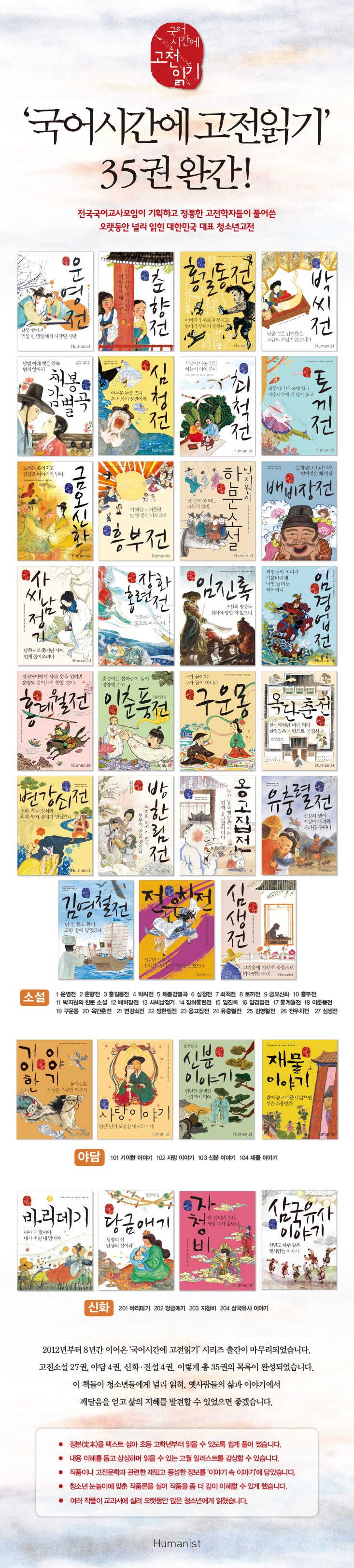
Publishing the 'Reading Classics in Korean Class' series
Before reading “Park Ji-won’s Chinese Novels”
The Dictionary of Light _ What is that black thing?
The Tale of Master Yedeok _ Hiding one's own holiness with filth
Min-ong-jeon - There is nothing I fear more than myself.
Yangbanjeon - Are you telling me to become a thief in the future?
Kim Shin-seon Jeon _ I didn't see you eating
Hojil _ Teacher, what prayer are you praying in the field early in the morning?
Ok Gap Ya Hwa - When the sea dries up, there will be someone to pick it up.
The Story of the Chaste Woman, Hamyang Park Clan - I will keep it as I first wrote it.
Story within a story
Asking about Yeonam _ Park Ji-won, a rich man of heart and mind
The Life of a Yangban in the Late Joseon Dynasty _ Are you a Yangban? I'm a Yangban too!
Interpreters of the Joseon Dynasty - People who connect the world
The Truth About the Northern Expedition _ Diverging Dreams About the Northern Expedition
Dog Prohibition Law - Why was widows prohibited from remarrying?
Reading Deeply _ Gentlemen and noblemen, please come to your senses.
Reading Together _ What if we recall the tiger's scolding?
References
Before reading “Park Ji-won’s Chinese Novels”
The Dictionary of Light _ What is that black thing?
The Tale of Master Yedeok _ Hiding one's own holiness with filth
Min-ong-jeon - There is nothing I fear more than myself.
Yangbanjeon - Are you telling me to become a thief in the future?
Kim Shin-seon Jeon _ I didn't see you eating
Hojil _ Teacher, what prayer are you praying in the field early in the morning?
Ok Gap Ya Hwa - When the sea dries up, there will be someone to pick it up.
The Story of the Chaste Woman, Hamyang Park Clan - I will keep it as I first wrote it.
Story within a story
Asking about Yeonam _ Park Ji-won, a rich man of heart and mind
The Life of a Yangban in the Late Joseon Dynasty _ Are you a Yangban? I'm a Yangban too!
Interpreters of the Joseon Dynasty - People who connect the world
The Truth About the Northern Expedition _ Diverging Dreams About the Northern Expedition
Dog Prohibition Law - Why was widows prohibited from remarrying?
Reading Deeply _ Gentlemen and noblemen, please come to your senses.
Reading Together _ What if we recall the tiger's scolding?
References
Detailed image
Publisher's Review
A world of contradictions, a stinging rebuke to incompetent nobles.
Park Ji-won was a Silhak scholar of the late Joseon Dynasty. He criticized the flaws of Neo-Confucianism, which dominated society at the time, and advocated for the adoption of Northern Learning, which was of practical help to the lives of the common people.
The Chinese novels he left behind contain the arguments Park Ji-won made toward the world.
Park Ji-won left behind ten Chinese novels, including seven in “Banggyeonggak Oejeon,” two in “Yeolha Diary,” and one written while serving as a county magistrate in An, Gyeongsang Province.
This book contains eight of these stories in the order in which Park Ji-won wrote them.
Excluding “Majangjeon,” which contains a discussion between three merchants about friendship, and “Woosangjeon,” a biography of Yi Eon-jin’s poems, the eight novels are “Gwangmunjajeon,” “Yedeokseonsaengjeon,” “Minongjeon,” “Yangbanjeon,” “Kim Sinseonjeon,” “Hojil,” “Okgapyahwa,” and “Yeolnyeo Hamyang Parkssijeon Byeongseo.”
Park Ji-won shows the proper roles and responsibilities that noble scholars should fulfill through stories that depict the lives of lowly and insignificant people such as farmers, beggars, vagabonds, and interpreters.
At the same time, it properly criticizes the incompetence of the aristocrats who are unable to see through the flow of the times and the fundamental problems of society and are just swayed by power and vanity.
The "Gwangmunjeon" criticizes scholars who try to gain false fame by stealing empty names through the life of Gwangmun, who enjoys fame as a poor beggar.
〈The Story of Mr. Yedeok〉 criticizes the wrong lives of the nobles who cannot live with a pure heart by using the life of a farmer who only cleans up excrement as a mirror.
In “Minongjeon,” the story depicts a nobleman who spends his entire life reading books but never accomplishes anything, through the old man Min, who reads every book but cannot properly apply what he has learned in real life.
In “Yangbanjeon,” it is emphasized that a world is coming where nobles will end up with a big nose if they only read books, and in “Kim Shinseonjeon,” the life of Kim Hong-gi, who was famous as a hermit, reveals the futility of Taoism, which claims to have become a hermit.
In "Hojil," the hypocrisy of a scholar and a chaste woman is shown, and the lies of a Confucian scholar whose words and life are different, and the cruel and selfish lives of people are fiercely rebuked through the mouth of a tiger.
The story of Heo Saeng, included in the Ok Gap Ya Hwa, shows practical methods for dealing with the Northern Expedition, which was a social issue at the time.
Through the book “The Story of Chaste Woman Hamyang Park Clan,” the author emphasizes the excessive oppression of widows and the neglect of women’s human rights.
A new perspective on the world, translated by a classicist.
Park Ji-won also presented a free and original writing style through his novels that surprised the late Joseon society.
Although King Jeongjo criticized Park Ji-won's writing style as 'impure,' the young intellectuals of the time were greatly influenced by Park Ji-won's unconventional writing.
Reading Park Ji-won's works, which are full of bold satire and exquisite paradoxes not only in expression but also in content, will empower readers living today to contemplate and reflect on reality with new logic and perspectives.
This book is a revised edition of "This Gentleman Who Doesn't Have a Penny" published in 2007.
This is the 11th work of the 'Reading Classics in Korean Class' project planned by Korean language teachers of the National Korean Language Teachers' Association. It is the same translation by Professor Kim Su-eop, who has been loved by teachers and students for many years, but with newly revised illustrations.
Professor Kim Soo-eop is a Korean literature scholar who founded the Korean Language Education Society and the Korean Language Education Society, served as the director of the Korean Language Education Research Institute, and chaired the Korean Language Deliberation Committee of the Ministry of Culture, Sports and Tourism. He presents Park Ji-won's sharp writing in proper Korean.
In particular, this book allows readers to encounter Park Ji-won's Chinese Novels, which have been introduced by cutting out only the main parts to fit Western standards, just as our ancestors wrote them.
Unlike Western novels, this translation preserves the original form of the work, with several stories added before and after the main story.
Through this, we can also guess how our ancestors viewed and wrote novels.
The National Association of Korean Language Teachers' Association's "Reading Classics in Korean" project celebrates its 10th anniversary!
Classics are the archetypes of culture, loved by people all over the world, transcending time and space, and are also the roots of new stories emerging today.
The 'Reading Classics in Korean Language Class' series, which has been planned and published since 2002, is a regrettable reality in which our classics, which are as valuable as Western classics, are being neglected by our youth because they are difficult and inconvenient to read.
Korean language teachers from the National Association of Korean Language Teachers and well-versed classic scholars have joined forces to rewrite our classics in an easy-to-read, flavorful, and entertaining way for everyone to enjoy and read. As a result, they have become a new direction and role model for our classics, changing our preconceptions about them and even our culture of reading them.
To celebrate the 10th anniversary of the publication of 'Reading Classics in Korean Class,' we are presenting our classics in a new and fresh way with additional text and illustrations.
Park Ji-won was a Silhak scholar of the late Joseon Dynasty. He criticized the flaws of Neo-Confucianism, which dominated society at the time, and advocated for the adoption of Northern Learning, which was of practical help to the lives of the common people.
The Chinese novels he left behind contain the arguments Park Ji-won made toward the world.
Park Ji-won left behind ten Chinese novels, including seven in “Banggyeonggak Oejeon,” two in “Yeolha Diary,” and one written while serving as a county magistrate in An, Gyeongsang Province.
This book contains eight of these stories in the order in which Park Ji-won wrote them.
Excluding “Majangjeon,” which contains a discussion between three merchants about friendship, and “Woosangjeon,” a biography of Yi Eon-jin’s poems, the eight novels are “Gwangmunjajeon,” “Yedeokseonsaengjeon,” “Minongjeon,” “Yangbanjeon,” “Kim Sinseonjeon,” “Hojil,” “Okgapyahwa,” and “Yeolnyeo Hamyang Parkssijeon Byeongseo.”
Park Ji-won shows the proper roles and responsibilities that noble scholars should fulfill through stories that depict the lives of lowly and insignificant people such as farmers, beggars, vagabonds, and interpreters.
At the same time, it properly criticizes the incompetence of the aristocrats who are unable to see through the flow of the times and the fundamental problems of society and are just swayed by power and vanity.
The "Gwangmunjeon" criticizes scholars who try to gain false fame by stealing empty names through the life of Gwangmun, who enjoys fame as a poor beggar.
〈The Story of Mr. Yedeok〉 criticizes the wrong lives of the nobles who cannot live with a pure heart by using the life of a farmer who only cleans up excrement as a mirror.
In “Minongjeon,” the story depicts a nobleman who spends his entire life reading books but never accomplishes anything, through the old man Min, who reads every book but cannot properly apply what he has learned in real life.
In “Yangbanjeon,” it is emphasized that a world is coming where nobles will end up with a big nose if they only read books, and in “Kim Shinseonjeon,” the life of Kim Hong-gi, who was famous as a hermit, reveals the futility of Taoism, which claims to have become a hermit.
In "Hojil," the hypocrisy of a scholar and a chaste woman is shown, and the lies of a Confucian scholar whose words and life are different, and the cruel and selfish lives of people are fiercely rebuked through the mouth of a tiger.
The story of Heo Saeng, included in the Ok Gap Ya Hwa, shows practical methods for dealing with the Northern Expedition, which was a social issue at the time.
Through the book “The Story of Chaste Woman Hamyang Park Clan,” the author emphasizes the excessive oppression of widows and the neglect of women’s human rights.
A new perspective on the world, translated by a classicist.
Park Ji-won also presented a free and original writing style through his novels that surprised the late Joseon society.
Although King Jeongjo criticized Park Ji-won's writing style as 'impure,' the young intellectuals of the time were greatly influenced by Park Ji-won's unconventional writing.
Reading Park Ji-won's works, which are full of bold satire and exquisite paradoxes not only in expression but also in content, will empower readers living today to contemplate and reflect on reality with new logic and perspectives.
This book is a revised edition of "This Gentleman Who Doesn't Have a Penny" published in 2007.
This is the 11th work of the 'Reading Classics in Korean Class' project planned by Korean language teachers of the National Korean Language Teachers' Association. It is the same translation by Professor Kim Su-eop, who has been loved by teachers and students for many years, but with newly revised illustrations.
Professor Kim Soo-eop is a Korean literature scholar who founded the Korean Language Education Society and the Korean Language Education Society, served as the director of the Korean Language Education Research Institute, and chaired the Korean Language Deliberation Committee of the Ministry of Culture, Sports and Tourism. He presents Park Ji-won's sharp writing in proper Korean.
In particular, this book allows readers to encounter Park Ji-won's Chinese Novels, which have been introduced by cutting out only the main parts to fit Western standards, just as our ancestors wrote them.
Unlike Western novels, this translation preserves the original form of the work, with several stories added before and after the main story.
Through this, we can also guess how our ancestors viewed and wrote novels.
The National Association of Korean Language Teachers' Association's "Reading Classics in Korean" project celebrates its 10th anniversary!
Classics are the archetypes of culture, loved by people all over the world, transcending time and space, and are also the roots of new stories emerging today.
The 'Reading Classics in Korean Language Class' series, which has been planned and published since 2002, is a regrettable reality in which our classics, which are as valuable as Western classics, are being neglected by our youth because they are difficult and inconvenient to read.
Korean language teachers from the National Association of Korean Language Teachers and well-versed classic scholars have joined forces to rewrite our classics in an easy-to-read, flavorful, and entertaining way for everyone to enjoy and read. As a result, they have become a new direction and role model for our classics, changing our preconceptions about them and even our culture of reading them.
To celebrate the 10th anniversary of the publication of 'Reading Classics in Korean Class,' we are presenting our classics in a new and fresh way with additional text and illustrations.
GOODS SPECIFICS
- Date of issue: November 1, 2013
- Page count, weight, size: 162 pages | 370g | 170*225*20mm
- ISBN13: 9788958626589
- ISBN10: 8958626585
You may also like
카테고리
korean


korean

![GQ KOREA Mark (Monthly): December [2025]](http://librairie.coreenne.fr/cdn/shop/files/8ef265dbbfbf186523ed75ba7319009d.jpg?v=1765340328&width=3840)


