

Biblical storytelling
 |
Description
Book Introduction
“A masterpiece that fundamentally expands the horizons of biblical study.”
“It will satisfy anyone interested in storytelling.”
A famous work that became a turning point in the history of Hebrew Bible interpretation.
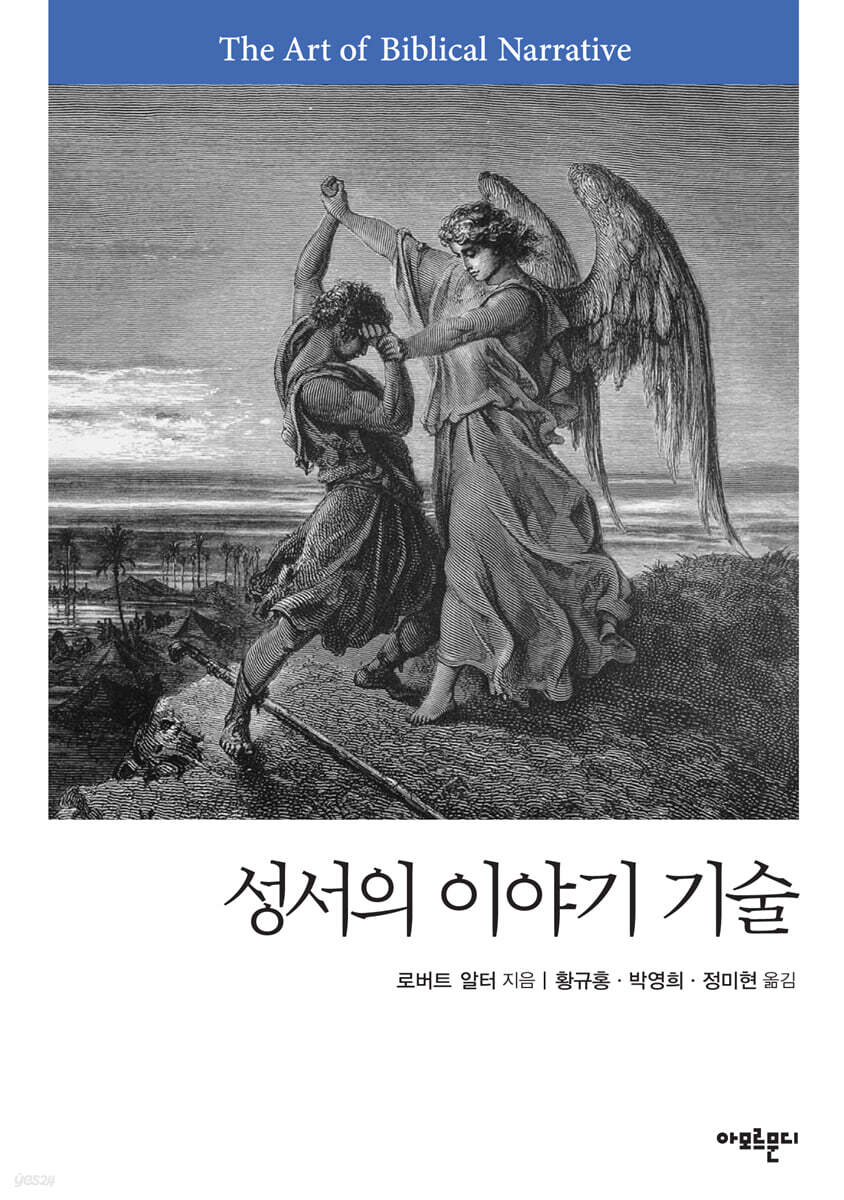
『The Storytelling of the Bible』 is a famous work that marked a turning point in the history of Hebrew Bible interpretation.
Historical-critical study of the Bible began with Spinoza, a philosopher and biblical scholar active in the 17th century.
In his 『Introduction to the History of Israel』 (1878), German biblical scholar Wellhausen distinguished the four documents (J, E, D, P) that make up the Torah and traced the developmental stages of Israel's religious history based on these.
This research became established as a tradition in 20th-century biblical hermeneutics and gave birth to numerous critical methodologies, from textual criticism to source criticism, form criticism, historical criticism, and redaction criticism.
The task they pursued was to find an answer to the 'historical' question about the biblical text, namely, "How did the biblical text come to have its present form?"
Historical research on the Bible has contributed to restoring the historical context of the text, reviving its original meaning, and avoiding anachronistic interpretations.
Unfortunately, however, this has resulted in a loss of interest in the ultimate message the Bible was trying to convey and a dismantling of the text into pieces.
Accordingly, a new approach emerged that focused on the literary characteristics of the Bible.
The literary critical approach, which aims to explain what the Bible ultimately conveys by analyzing the literary form, structure, style, and means of conveying the message of the Bible text, is broadly divided into structuralism and formalist biblical interpretation.
Structuralism proposed a method of reading the Bible by understanding the deep structure of the text, while formalism sought to find meaning in the narrative framework or development method contained within the text itself.
“It will satisfy anyone interested in storytelling.”
A famous work that became a turning point in the history of Hebrew Bible interpretation.
『The Storytelling of the Bible』 is a famous work that marked a turning point in the history of Hebrew Bible interpretation.
Historical-critical study of the Bible began with Spinoza, a philosopher and biblical scholar active in the 17th century.
In his 『Introduction to the History of Israel』 (1878), German biblical scholar Wellhausen distinguished the four documents (J, E, D, P) that make up the Torah and traced the developmental stages of Israel's religious history based on these.
This research became established as a tradition in 20th-century biblical hermeneutics and gave birth to numerous critical methodologies, from textual criticism to source criticism, form criticism, historical criticism, and redaction criticism.
The task they pursued was to find an answer to the 'historical' question about the biblical text, namely, "How did the biblical text come to have its present form?"
Historical research on the Bible has contributed to restoring the historical context of the text, reviving its original meaning, and avoiding anachronistic interpretations.
Unfortunately, however, this has resulted in a loss of interest in the ultimate message the Bible was trying to convey and a dismantling of the text into pieces.
Accordingly, a new approach emerged that focused on the literary characteristics of the Bible.
The literary critical approach, which aims to explain what the Bible ultimately conveys by analyzing the literary form, structure, style, and means of conveying the message of the Bible text, is broadly divided into structuralism and formalist biblical interpretation.
Structuralism proposed a method of reading the Bible by understanding the deep structure of the text, while formalism sought to find meaning in the narrative framework or development method contained within the text itself.
index
Preface to the Revised Edition
Preface to the first edition
Chapter 1: A Literary Approach to the Bible
Chapter 2: The Origins of Sacred History and Prose Fiction
Chapter 3: The Use of Biblical Typical Scenes and Customs
Chapter 4: Narrative and Dialogue
Chapter 5: The Technique of Repetition
Chapter 6: Character Setting and the Art of Silence
Chapter 7: The Art of Composite
Chapter 8: Narrative and Knowledge
Chapter 9 Conclusion
Translator's Note
Search
Preface to the first edition
Chapter 1: A Literary Approach to the Bible
Chapter 2: The Origins of Sacred History and Prose Fiction
Chapter 3: The Use of Biblical Typical Scenes and Customs
Chapter 4: Narrative and Dialogue
Chapter 5: The Technique of Repetition
Chapter 6: Character Setting and the Art of Silence
Chapter 7: The Art of Composite
Chapter 8: Narrative and Knowledge
Chapter 9 Conclusion
Translator's Note
Search
Into the book
The best way to understand the literary techniques of the Bible is to avoid trying to fit the Bible into an external framework, but instead to patiently observe the subtle workings of the Bible and, based on what we discover there, to infer a picture of its unique conventions and techniques.
― From the “Preface to the Revised Edition”
The writers of the Hebrew Bible clearly took delight in skillfully portraying lifelike characters and actions, and as a result, they created material that has provided enduring enjoyment to readers for hundreds of generations.
But the joy of this imaginative play is also imbued with a profound spiritual urgency.
The biblical writers created complex, sometimes fascinating, and often fiercely individualistic characters.
This is because it is a chronic human characteristic for each man and woman to have a dual nature of either accepting God or ignoring Him, responding to Him or resisting Him.
Subsequent religious traditions have generally led us to treat the Bible more seriously than to enjoy it.
But the paradoxical truth is that as we learn to enjoy the Bible's stories more fully as stories, we begin to see more clearly what they are trying to tell us about God, humanity, and the crucially important realm of history.
― From the “Preface to the Revised Edition”
The writers of the Hebrew Bible clearly took delight in skillfully portraying lifelike characters and actions, and as a result, they created material that has provided enduring enjoyment to readers for hundreds of generations.
But the joy of this imaginative play is also imbued with a profound spiritual urgency.
The biblical writers created complex, sometimes fascinating, and often fiercely individualistic characters.
This is because it is a chronic human characteristic for each man and woman to have a dual nature of either accepting God or ignoring Him, responding to Him or resisting Him.
Subsequent religious traditions have generally led us to treat the Bible more seriously than to enjoy it.
But the paradoxical truth is that as we learn to enjoy the Bible's stories more fully as stories, we begin to see more clearly what they are trying to tell us about God, humanity, and the crucially important realm of history.
--- From the text
Publisher's Review
“A masterpiece that fundamentally expands the horizons of biblical study.”
“It will satisfy anyone interested in storytelling.”
Prose narrative and the human image presented in the Bible
This book is evaluated as having provided a decisive opportunity to shift the focus of literary critical research from structuralism to formalism.
Structuralism was difficult for the general public to approach without prior understanding, but Alter's work presented a method by which more people could easily grasp the artistry, lessons, and emotions of the Bible by understanding the words, stories, characters, typical scenes, and key words that appear in the Bible text.
The author believes that ancient Hebrew writers, unlike writers of neighboring countries, adopted a prose narrative form rather than an epic, which gave them tremendous flexibility in their style of expression.
According to the Bible, humans are paradoxical beings, created in the image of God but left to immeasurable freedom, embracing the best and worst of the created world.
Understanding and expressing this required a special literary skill, and the prose form was ideally suited to portraying the ever-changing human nature of these theological assumptions.
Meanwhile, the author believes that in order to properly interpret the Bible, it is necessary to carefully examine the literary conventions of the time.
A typical example is 'typical scene'.
These include a woman suffering from infertility, the Annunciation concerning the birth of the protagonist, meeting her future spouse at a well, experiencing God's appearance in the fields, and the trials she faces in her early life.
The author explains that the replicated stories that historical-critical researchers have identified as overlapping sources actually form a series of typical scenes, and that the subtle differences between each story provide clues to reveal the characteristics of the others.
That is, the literary intention of the biblical author is revealed at points where the same motif subtly changes.
Why do similar stories repeat themselves so often?
Many scholars have attempted to explain the numerous repetitions that are a hallmark of the biblical narrative by invoking oral tradition, folklore, or complex documentary characteristics.
However, Alter believes that the frequent use of repetition, whether of entire episodes or short phrases, was not a result of the development of oral tradition or the preservation of various written sources, but rather a deliberate technique devised by the Bible's editors.
The biblical narrators use various repetitive techniques such as key words, motifs, themes, sequential actions, and typical scenes, and add subtle variations to suggest the character of a character or the development of a plot.
For example, in Judges 13, when Samson's mother receives the annunciation, she arbitrarily inserts the words "until the day of his death" into the last verse of the annunciation while conveying the promise God gave her husband. According to Alter, this is a hint that has a profound impact on Samson's future.
It is also common to see different versions of the same story coexist.
Alter sees this not as a discontinuity, duplication, or contradiction, but as the biblical author simply having a different concept of unity than modern readers.
The Hebrew authors intentionally integrated their material, and this montage technique served to tell the story from different perspectives and emphasize key points, thereby making the story more complete and richer in its thematic content.
Genesis chapters 42 and 43 tell the story of Joseph's brothers' trip to Egypt and their return, where they twice find the silver Joseph had put in his sack.
The first incident occurred at the lodging on the way back from Egypt to Canaan, and the second incident occurred in front of his father Jacob after returning to Canaan.
On the surface, these scenes seem contradictory.
According to historical-critical research, the first is the J document and the second is the E document, and the two versions are the result of duplication.
However, Alter convincingly shows what these two seemingly contradictory scenes suggest about the path Joseph's brothers will take.
According to Alter, the author of the Bible was aware of the contradictions between the two stories, yet he used both sources to effectively express the theme he wanted to convey.
Why is Saul's inner thoughts relayed in detail, but David's are kept to a minimum?
It also deals with the way the main characters are portrayed in Bible stories and the role of the narrator.
The level at which a speaker describes a character can be broadly divided into three levels: the lowest level is simply describing actions and appearance, the middle level is conveyed through direct speech by the character or those around them, and the highest level is when the speaker gives a definite statement from an omniscient point of view.
The narrator, who is usually unseen and unnamed, is assumed to have 'omniscience' about his characters, their actions, and their ultimate fate.
However, rather than revealing all the information he knew, the narrator adjusted the level of exposure according to the character and situation.
The narrator's attitudes toward Saul and David are very contrasting.
While Saul reveals almost everything, from his intentions to his feelings, at the highest level, David is expressed only through dialogue and description of actions, creating a deliberate ambiguity.
It leaves the complex inner self of the character David in the realm of inference rather than directly revealing it.
When describing not only characters but also the progression of events, narration is limited as much as possible and the proportion of dialogue between characters is increased so that the dialogue drives the events.
This amplifies the sense of realism and dramatic tension of the event and leaves room for the reader to judge the truth of the event and the character for themselves through the character's dialogue.
Sometimes, as in the story of Joseph, the narrator provides the reader with information that the characters do not know, but even then, rather than revealing everything from the beginning, he reveals only the necessary information at the appropriate time and place.
How to read the Bible?
Throughout the book, Alter emphasizes that biblical interpretation cannot be confined to source analysis or form criticism, but must also fully illuminate the literary form of the Bible.
The interpreter's interest should be focused on understanding what is expressed in the text itself rather than on the history behind the text.
To this end, it is emphasized that a ‘careful reading’ of the text is necessary.
Readers must be keenly aware of the order and changes in the words in a text, pay attention to the various rhetorical devices included in the text, and determine how these devices relate to one another in the text.
He believes that through this 'literary' reading, we can get one step closer to the moral perspective and spiritual values that the Bible is trying to convey.
Because the Bible has literary characteristics, it is necessary to utilize a literary approach.
As readers of the Bible, we must recognize that the biblical text was not written with the purpose of providing an objective and neutral account of events.
The Bible's editors were more interested in eliciting readers' reactions to events than in conveying facts, and they devised their own creative ways to achieve this.
By employing a variety of unique literary styles and devices, they reshaped not only human history but also the art of storytelling itself.
Therefore, analyzing the structure of the narrative, studying the characters, and closely analyzing the narrative style will be essential and beneficial tools for understanding the Bible.
"The Story of the Bible" fundamentally broadens the horizons of biblical studies by reexamining the Bible not only as a story of the birth of humanity but also as a literary work requiring meticulous critique.
It will also encourage us to continually reread the Bible and gain new insights by giving us a fresh perspective on it as both a religious text and a carefully crafted literary work.
A groundbreaking study that peers beneath the religious surface of the biblical text, providing a glimpse into its vibrant heart.
- [Los Angeles Times]
It's a great book.
It's truly remarkable how such familiar stories as those of Joseph and David are so richly nuanced and thoughtfully crafted.
It looks as if it has been perfectly restored.
- [The New York Times]
This clearly written book will satisfy anyone interested in the fundamentals of storytelling.
- [Washington Post]
Alter's work gives the Bible a fresh voice for a new generation of readers.
- [Christian Science Monitor]
“It will satisfy anyone interested in storytelling.”
Prose narrative and the human image presented in the Bible
This book is evaluated as having provided a decisive opportunity to shift the focus of literary critical research from structuralism to formalism.
Structuralism was difficult for the general public to approach without prior understanding, but Alter's work presented a method by which more people could easily grasp the artistry, lessons, and emotions of the Bible by understanding the words, stories, characters, typical scenes, and key words that appear in the Bible text.
The author believes that ancient Hebrew writers, unlike writers of neighboring countries, adopted a prose narrative form rather than an epic, which gave them tremendous flexibility in their style of expression.
According to the Bible, humans are paradoxical beings, created in the image of God but left to immeasurable freedom, embracing the best and worst of the created world.
Understanding and expressing this required a special literary skill, and the prose form was ideally suited to portraying the ever-changing human nature of these theological assumptions.
Meanwhile, the author believes that in order to properly interpret the Bible, it is necessary to carefully examine the literary conventions of the time.
A typical example is 'typical scene'.
These include a woman suffering from infertility, the Annunciation concerning the birth of the protagonist, meeting her future spouse at a well, experiencing God's appearance in the fields, and the trials she faces in her early life.
The author explains that the replicated stories that historical-critical researchers have identified as overlapping sources actually form a series of typical scenes, and that the subtle differences between each story provide clues to reveal the characteristics of the others.
That is, the literary intention of the biblical author is revealed at points where the same motif subtly changes.
Why do similar stories repeat themselves so often?
Many scholars have attempted to explain the numerous repetitions that are a hallmark of the biblical narrative by invoking oral tradition, folklore, or complex documentary characteristics.
However, Alter believes that the frequent use of repetition, whether of entire episodes or short phrases, was not a result of the development of oral tradition or the preservation of various written sources, but rather a deliberate technique devised by the Bible's editors.
The biblical narrators use various repetitive techniques such as key words, motifs, themes, sequential actions, and typical scenes, and add subtle variations to suggest the character of a character or the development of a plot.
For example, in Judges 13, when Samson's mother receives the annunciation, she arbitrarily inserts the words "until the day of his death" into the last verse of the annunciation while conveying the promise God gave her husband. According to Alter, this is a hint that has a profound impact on Samson's future.
It is also common to see different versions of the same story coexist.
Alter sees this not as a discontinuity, duplication, or contradiction, but as the biblical author simply having a different concept of unity than modern readers.
The Hebrew authors intentionally integrated their material, and this montage technique served to tell the story from different perspectives and emphasize key points, thereby making the story more complete and richer in its thematic content.
Genesis chapters 42 and 43 tell the story of Joseph's brothers' trip to Egypt and their return, where they twice find the silver Joseph had put in his sack.
The first incident occurred at the lodging on the way back from Egypt to Canaan, and the second incident occurred in front of his father Jacob after returning to Canaan.
On the surface, these scenes seem contradictory.
According to historical-critical research, the first is the J document and the second is the E document, and the two versions are the result of duplication.
However, Alter convincingly shows what these two seemingly contradictory scenes suggest about the path Joseph's brothers will take.
According to Alter, the author of the Bible was aware of the contradictions between the two stories, yet he used both sources to effectively express the theme he wanted to convey.
Why is Saul's inner thoughts relayed in detail, but David's are kept to a minimum?
It also deals with the way the main characters are portrayed in Bible stories and the role of the narrator.
The level at which a speaker describes a character can be broadly divided into three levels: the lowest level is simply describing actions and appearance, the middle level is conveyed through direct speech by the character or those around them, and the highest level is when the speaker gives a definite statement from an omniscient point of view.
The narrator, who is usually unseen and unnamed, is assumed to have 'omniscience' about his characters, their actions, and their ultimate fate.
However, rather than revealing all the information he knew, the narrator adjusted the level of exposure according to the character and situation.
The narrator's attitudes toward Saul and David are very contrasting.
While Saul reveals almost everything, from his intentions to his feelings, at the highest level, David is expressed only through dialogue and description of actions, creating a deliberate ambiguity.
It leaves the complex inner self of the character David in the realm of inference rather than directly revealing it.
When describing not only characters but also the progression of events, narration is limited as much as possible and the proportion of dialogue between characters is increased so that the dialogue drives the events.
This amplifies the sense of realism and dramatic tension of the event and leaves room for the reader to judge the truth of the event and the character for themselves through the character's dialogue.
Sometimes, as in the story of Joseph, the narrator provides the reader with information that the characters do not know, but even then, rather than revealing everything from the beginning, he reveals only the necessary information at the appropriate time and place.
How to read the Bible?
Throughout the book, Alter emphasizes that biblical interpretation cannot be confined to source analysis or form criticism, but must also fully illuminate the literary form of the Bible.
The interpreter's interest should be focused on understanding what is expressed in the text itself rather than on the history behind the text.
To this end, it is emphasized that a ‘careful reading’ of the text is necessary.
Readers must be keenly aware of the order and changes in the words in a text, pay attention to the various rhetorical devices included in the text, and determine how these devices relate to one another in the text.
He believes that through this 'literary' reading, we can get one step closer to the moral perspective and spiritual values that the Bible is trying to convey.
Because the Bible has literary characteristics, it is necessary to utilize a literary approach.
As readers of the Bible, we must recognize that the biblical text was not written with the purpose of providing an objective and neutral account of events.
The Bible's editors were more interested in eliciting readers' reactions to events than in conveying facts, and they devised their own creative ways to achieve this.
By employing a variety of unique literary styles and devices, they reshaped not only human history but also the art of storytelling itself.
Therefore, analyzing the structure of the narrative, studying the characters, and closely analyzing the narrative style will be essential and beneficial tools for understanding the Bible.
"The Story of the Bible" fundamentally broadens the horizons of biblical studies by reexamining the Bible not only as a story of the birth of humanity but also as a literary work requiring meticulous critique.
It will also encourage us to continually reread the Bible and gain new insights by giving us a fresh perspective on it as both a religious text and a carefully crafted literary work.
A groundbreaking study that peers beneath the religious surface of the biblical text, providing a glimpse into its vibrant heart.
- [Los Angeles Times]
It's a great book.
It's truly remarkable how such familiar stories as those of Joseph and David are so richly nuanced and thoughtfully crafted.
It looks as if it has been perfectly restored.
- [The New York Times]
This clearly written book will satisfy anyone interested in the fundamentals of storytelling.
- [Washington Post]
Alter's work gives the Bible a fresh voice for a new generation of readers.
- [Christian Science Monitor]
GOODS SPECIFICS
- Date of issue: August 2, 2023
- Page count, weight, size: 328 pages | 148*210*30mm
- ISBN13: 9791191040302
- ISBN10: 1191040305
You may also like
카테고리
korean


korean

![ELLE 엘르 스페셜 에디션 A형 : 12월 [2025]](http://librairie.coreenne.fr/cdn/shop/files/b8e27a3de6c9538896439686c6b0e8fb.jpg?v=1766436872&width=3840)


