

Carl Larsson: Why I Draw Happiness Today (Special Edition)
 |
Description
Book Introduction
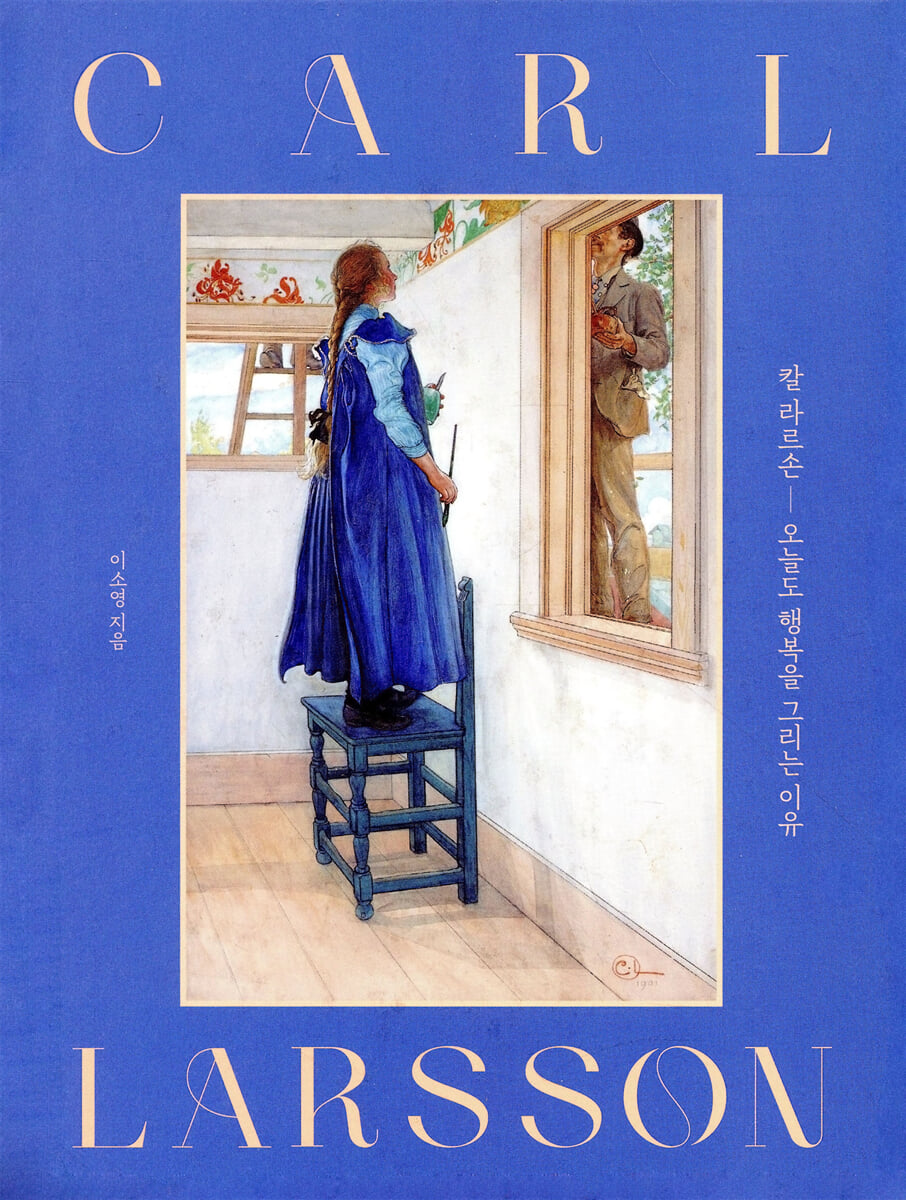
“The house I decorated with Karin, memories of my family, “The paintings that contain all of these are the greatest works of my life.” Someone's 'life artist' and IKEA's 'spiritual motto' The Secret of Happiness by Carl Larsson The book, "Carl Larsson, Why I Draw Happiness Today," which contains the life and paintings of Swedish national painter Carl Larsson, known as the painter who draws happiness, has been published as a 'special hardcover edition.' In this special edition, you can see over 230 works, including several more by Carl Larsson, to coincide with the [National Gallery of Sweden Collection] exhibition. It also includes stories and drawings by Nordic painters who lived during his time: Eugène Jansson, Richard Berg, Laurits Andersen Ring, Anna Boberg, and Hanna Pauli. Through this, you can get a glimpse into the lives and interiors of Northern European painters, and also discover new information about the activities of Northern European female painters. The book also includes author Lee So-young's journey to Falun, a mining town in Sweden where Carl Larsson's house, Lilla Hitnas, is located, in search of the secret of happiness depicted by Carl Larsson. This book, which covers the entire life of Carl Larsson from his birth to his death, will be a meaningful book for those who want to know more about Carl Larsson, those who already know him but want to own a special edition of his hardcover works, and those who want to learn about Carl Larsson before visiting the National Gallery of Sweden collection. |
- You can preview some of the book's contents.
Preview
index
In the revised edition
PROLOGUE I'm curious about happiness, drawn by Carl Larsson
PART 1: A Child from the Slums Becomes a Painter
Stockholm, the beginning of a journey to meet Carl Larsson
The Ghetto Boy by Carl Larsson
Carl Larsson goes to France
Meet Karin, your lifelong companion
Participate in the Paris World's Fair
PART 2 Introducing Carl and Karin's Children
First child, Susan
Mischievous Wolf
A child named after his patron, Pontus
Lovely Lisbeth
Cute Britta
Mats, who was happy for a moment
The charming Kirsty
Esbjörn, the youngest of Lila Hitnas
Another family, Capo
PART 3: The Painter's House, More Beautiful Than a Painting, Lila Hitnas
House in the Sun by Lila Hitnas
Carl Larsson's Studio
A place where the whole family's joy gathers
What's special about Lila Hitnas
Lila Hitnas's Hidden Space
Lila Hitnas's Paradise Garden
Carl Larsson's Farm Spadarvet
Lila Hitnas Festival
Lila Hitnas, a book that made her world famous
PART 4 Carl Larsson and the Nordic Painters
Swedish Blue Painter, Eugène Jansson
Richard Berg, capturing deep emotions in the unique landscapes of Northern Europe
The Aesthetics of Waiting, Lauritz Andersen Ring
Anna Boberg, the painter of the Northern Lights
Hanna Pauli captures the nature and life of Sweden with warm colors and light.
Appendix About the artist Karin Larsson
People drawn by Carl Larsson
Carl Larsson passes away
EPILOGUE | CHRONOLOGY | REFERENCES
PROLOGUE I'm curious about happiness, drawn by Carl Larsson
PART 1: A Child from the Slums Becomes a Painter
Stockholm, the beginning of a journey to meet Carl Larsson
The Ghetto Boy by Carl Larsson
Carl Larsson goes to France
Meet Karin, your lifelong companion
Participate in the Paris World's Fair
PART 2 Introducing Carl and Karin's Children
First child, Susan
Mischievous Wolf
A child named after his patron, Pontus
Lovely Lisbeth
Cute Britta
Mats, who was happy for a moment
The charming Kirsty
Esbjörn, the youngest of Lila Hitnas
Another family, Capo
PART 3: The Painter's House, More Beautiful Than a Painting, Lila Hitnas
House in the Sun by Lila Hitnas
Carl Larsson's Studio
A place where the whole family's joy gathers
What's special about Lila Hitnas
Lila Hitnas's Hidden Space
Lila Hitnas's Paradise Garden
Carl Larsson's Farm Spadarvet
Lila Hitnas Festival
Lila Hitnas, a book that made her world famous
PART 4 Carl Larsson and the Nordic Painters
Swedish Blue Painter, Eugène Jansson
Richard Berg, capturing deep emotions in the unique landscapes of Northern Europe
The Aesthetics of Waiting, Lauritz Andersen Ring
Anna Boberg, the painter of the Northern Lights
Hanna Pauli captures the nature and life of Sweden with warm colors and light.
Appendix About the artist Karin Larsson
People drawn by Carl Larsson
Carl Larsson passes away
EPILOGUE | CHRONOLOGY | REFERENCES
Detailed image

Into the book
“Love one another, children.
“Because love is everything.”
---p.13
“The house I decorated with Karin, the memories of my family, the paintings that contain all of this are the greatest works of my life.”
---p.20
“Love is telling each other that you are important to each other.”
---p.109
In 1884, a year after Karl and Karin married, the Larsson family had their first child.
They returned to their homeland, Sweden, in 1885, but various circumstances forced them to travel back and forth between Paris and Italy.
Carl leaves this record of the birth of his precious daughter, Susan, who was born at this time.
“On August 11th, Karin gave birth to a daughter.
I am the happiest man in the world.
“I was so happy I did a somersault.”
---p.118
Born as the second child of Karl and Karin, Wolf was a mischievous child.
But Wolf's life was too short.
This strong and sturdy child died of appendicitis in April 1905.
In life, time is not guaranteed to anyone.
Carl writes a diary as he mourns the loss of his son, Wolf, who took his own life at the age of 18.
“My strong, sturdy son, Wolf, died a young hero on the operating table because the surgery was done too late.
My heart stopped beating as I felt my son's noble heart.
Karin and I held the body of our eldest son, Wolf, and cried for a long time.”
---p.131
“You were a flower.
I will always remember you as strong and courageous as you were throughout your life.”
---p.132
Children's hearts are full of treasures.
---p.146
Carl Larsson painted many scenes of children reading books.
This is because both of his parents, Karl and Karin, loved reading.
Karl always had many books by his bedside and dreamed of becoming a bibliophile, and Karin also learned the habit of reading from her mother, Hilda, from a young age.
When I look at the children he drew reading, I find myself looking for books around me.
---p.149
Of all the children drawn by Karl, I like the one with Britta as the main character the most.
Britta is often seen with cats in Carl's paintings.
In [Brita and the Cat Eating a Sandwich], Britta is eating a sandwich while looking at a knife in the garden.
In front of Britta is a black tabby cat, and thanks to Britta's gentle expression, the cat's appearance also exudes peace.
The pure laughter of a child touches the hearts of those who watch it.
---p.136
“What plants and children have in common is that they are always fresh.”
---p.164
“Everyone has a peaceful space somewhere inside them.”
---p.194
This piece, where Capo is lying down, is called [A Cozy Corner] or [A Corner for the Lazy].
Every home has a favorite spot to go when they're tired or feeling lazy.
Northern European interiors, in particular, emphasize spaces like nooks where you can laze around or "reading nooks" where you can read.
---p.219
“If you have light in your heart, you will always find your way home.”
---p.256
“A truly old person is forever young.”
---p.284
Carl Larsson's paintings show us that an ordinary day and an extraordinary day can be the same.
The reason their daily lives feel special is probably because they make the ordinary special.
When the whole family comes together to accomplish something, even something small, it feels huge.
Imagine catching crayfish all day, playing in the water, then coming home, washing up in warm water, and having an evening with the whole family, all gathered around, eating crayfish and chatting happily.
As the old sage said, "There is no quarrel before water," the water, which always flows to the lowest point and heads towards the vast sea, seems to have silently provided this family with constant happiness and peace.
---p.298
“Ah, love! Love! This is the mystery of life.”
“Because love is everything.”
---p.13
“The house I decorated with Karin, the memories of my family, the paintings that contain all of this are the greatest works of my life.”
---p.20
“Love is telling each other that you are important to each other.”
---p.109
In 1884, a year after Karl and Karin married, the Larsson family had their first child.
They returned to their homeland, Sweden, in 1885, but various circumstances forced them to travel back and forth between Paris and Italy.
Carl leaves this record of the birth of his precious daughter, Susan, who was born at this time.
“On August 11th, Karin gave birth to a daughter.
I am the happiest man in the world.
“I was so happy I did a somersault.”
---p.118
Born as the second child of Karl and Karin, Wolf was a mischievous child.
But Wolf's life was too short.
This strong and sturdy child died of appendicitis in April 1905.
In life, time is not guaranteed to anyone.
Carl writes a diary as he mourns the loss of his son, Wolf, who took his own life at the age of 18.
“My strong, sturdy son, Wolf, died a young hero on the operating table because the surgery was done too late.
My heart stopped beating as I felt my son's noble heart.
Karin and I held the body of our eldest son, Wolf, and cried for a long time.”
---p.131
“You were a flower.
I will always remember you as strong and courageous as you were throughout your life.”
---p.132
Children's hearts are full of treasures.
---p.146
Carl Larsson painted many scenes of children reading books.
This is because both of his parents, Karl and Karin, loved reading.
Karl always had many books by his bedside and dreamed of becoming a bibliophile, and Karin also learned the habit of reading from her mother, Hilda, from a young age.
When I look at the children he drew reading, I find myself looking for books around me.
---p.149
Of all the children drawn by Karl, I like the one with Britta as the main character the most.
Britta is often seen with cats in Carl's paintings.
In [Brita and the Cat Eating a Sandwich], Britta is eating a sandwich while looking at a knife in the garden.
In front of Britta is a black tabby cat, and thanks to Britta's gentle expression, the cat's appearance also exudes peace.
The pure laughter of a child touches the hearts of those who watch it.
---p.136
“What plants and children have in common is that they are always fresh.”
---p.164
“Everyone has a peaceful space somewhere inside them.”
---p.194
This piece, where Capo is lying down, is called [A Cozy Corner] or [A Corner for the Lazy].
Every home has a favorite spot to go when they're tired or feeling lazy.
Northern European interiors, in particular, emphasize spaces like nooks where you can laze around or "reading nooks" where you can read.
---p.219
“If you have light in your heart, you will always find your way home.”
---p.256
“A truly old person is forever young.”
---p.284
Carl Larsson's paintings show us that an ordinary day and an extraordinary day can be the same.
The reason their daily lives feel special is probably because they make the ordinary special.
When the whole family comes together to accomplish something, even something small, it feels huge.
Imagine catching crayfish all day, playing in the water, then coming home, washing up in warm water, and having an evening with the whole family, all gathered around, eating crayfish and chatting happily.
As the old sage said, "There is no quarrel before water," the water, which always flows to the lowest point and heads towards the vast sea, seems to have silently provided this family with constant happiness and peace.
---p.298
“Ah, love! Love! This is the mystery of life.”
---p.449
Publisher's Review
One Picture a Day, A Picture of Life, This is the Story of Raoul Dufy
Art Messenger Lee So-young discovers the small joys of Carl Larsson's everyday life.
Carl Larsson, the Swedish national artist and the inspiration behind IKEA design.
He is known as a painter who paints happiness, and the happiness he paints has become a source of life for many people.
His paintings of harmonious Swedish families were published as books, and were the second most popular book carried by soldiers during World War I, next to the Bible.
Many of Carl Larsson's works depict the everyday life of his wife, Karin Larsson, the home they decorated with their own hands, Lila Hitnas, and their eight children.
Just looking at the idyllic Swedish landscape depicted in the painting, you can feel their warm way of life.
IKEA, a company representing the Nordic lifestyle, says, "The lifestyle of Karl and Karin and their home, Lila Hitnas, are the spiritual roots of IKEA."
The warm family scenes and sun-filled gardens depicted in Carl Larsson's paintings convey the true meaning of happiness to those who seek happiness in everyday life.
Stockholm, Sweden: The journey begins with meeting Carl Larsson.
From a slum child to Sweden's national artist
The beginning of 『Carl Larsson, the reason why I draw happiness today』 began when writer Lee So-young happened to find a postcard containing Carl Larsson's work in a small art shop in Sweden.
Author Lee So-young wondered, "Who is the artist who created such warm and pretty paintings?" and went on a trip to Sweden, where he lived.
And in the house of Carl and Karin Larsson, 'Lila Hitnas', he discovered the secret of happiness he had drawn.
“There was no special secret to happiness.
He was just drawing pictures of an uneventful day.
But I don’t know why that uneventful day is so beautiful.” - From the text
Carl Larsson, the Swedish national painter who depicted happiness, did not live a happy life from the beginning.
His childhood was so poor that he lived in a slum, and his father always said in a grumpy voice, “The day you were born was the most beggarly day.”
However, Carl Larsson forgave his father and lived with him until his father passed away.
Perhaps that was why, knowing how much the suffering he had endured in his childhood had worn down his soul, he tried never to pass on poverty and unhappiness to his wife and children.
Carl Larsson recorded and re-recorded the small happiness hidden in everyday life, such as the process of renovating the house 'Lilla Hitnas' that he received as a gift from his father-in-law, his wife Karin reading a book, his children playing in the garden, and enjoying a party with people at a Christmas home party.
The reason his daily life feels special is probably because he makes the ordinary special.
Art Messenger Lee So-young discovers the small joys of Carl Larsson's everyday life.
Carl Larsson, the Swedish national artist and the inspiration behind IKEA design.
He is known as a painter who paints happiness, and the happiness he paints has become a source of life for many people.
His paintings of harmonious Swedish families were published as books, and were the second most popular book carried by soldiers during World War I, next to the Bible.
Many of Carl Larsson's works depict the everyday life of his wife, Karin Larsson, the home they decorated with their own hands, Lila Hitnas, and their eight children.
Just looking at the idyllic Swedish landscape depicted in the painting, you can feel their warm way of life.
IKEA, a company representing the Nordic lifestyle, says, "The lifestyle of Karl and Karin and their home, Lila Hitnas, are the spiritual roots of IKEA."
The warm family scenes and sun-filled gardens depicted in Carl Larsson's paintings convey the true meaning of happiness to those who seek happiness in everyday life.
Stockholm, Sweden: The journey begins with meeting Carl Larsson.
From a slum child to Sweden's national artist
The beginning of 『Carl Larsson, the reason why I draw happiness today』 began when writer Lee So-young happened to find a postcard containing Carl Larsson's work in a small art shop in Sweden.
Author Lee So-young wondered, "Who is the artist who created such warm and pretty paintings?" and went on a trip to Sweden, where he lived.
And in the house of Carl and Karin Larsson, 'Lila Hitnas', he discovered the secret of happiness he had drawn.
“There was no special secret to happiness.
He was just drawing pictures of an uneventful day.
But I don’t know why that uneventful day is so beautiful.” - From the text
Carl Larsson, the Swedish national painter who depicted happiness, did not live a happy life from the beginning.
His childhood was so poor that he lived in a slum, and his father always said in a grumpy voice, “The day you were born was the most beggarly day.”
However, Carl Larsson forgave his father and lived with him until his father passed away.
Perhaps that was why, knowing how much the suffering he had endured in his childhood had worn down his soul, he tried never to pass on poverty and unhappiness to his wife and children.
Carl Larsson recorded and re-recorded the small happiness hidden in everyday life, such as the process of renovating the house 'Lilla Hitnas' that he received as a gift from his father-in-law, his wife Karin reading a book, his children playing in the garden, and enjoying a party with people at a Christmas home party.
The reason his daily life feels special is probably because he makes the ordinary special.
GOODS SPECIFICS
- Date of issue: March 13, 2024
- Format: Hardcover book binding method guide
- Page count, weight, size: 456 pages | 974g | 160*215*28mm
- ISBN13: 9788925575278
- ISBN10: 8925575272
You may also like
카테고리
korean


korean

![GQ KOREA Mark (Monthly): December [2025]](http://librairie.coreenne.fr/cdn/shop/files/8ef265dbbfbf186523ed75ba7319009d.jpg?v=1765340328&width=3840)


