

Start jazz
 |
Description
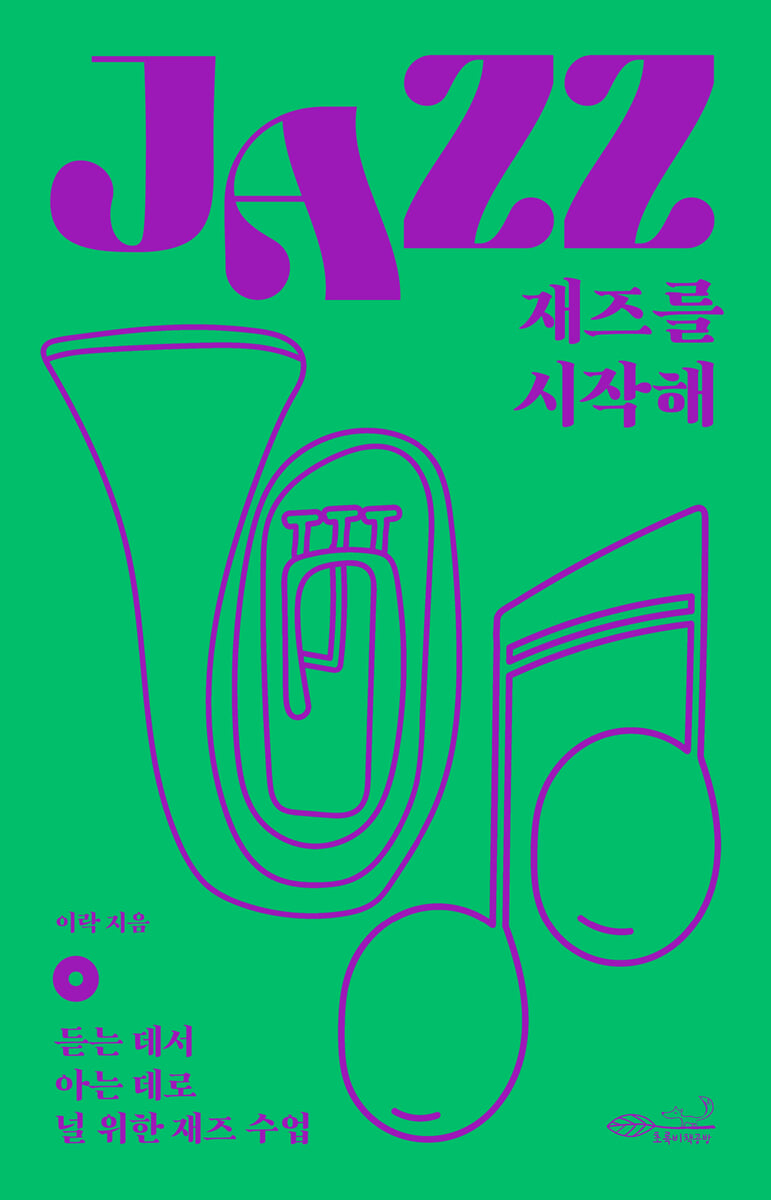
Book Introduction
I know it's jazz, but I can't explain why it's jazz.
But 'Jazz Class for You' that knows the jazzy feeling
What kind of music would you expect to hear in a café with a pleasant coffee aroma, a pleasant bookstore, a dimly lit bar, or a sophisticated shopping mall? Yes.
Jazz! I can't imagine what other music would suit it better than jazz.
Moreover, if you search for things like 'music for when you need to focus' or 'year-end mood music' on the Internet, a significant number of them are jazz music, so we are unknowingly devoting a lot of space in our daily lives to jazz music.
But how did we know that the music flowing out was jazz? If you ever thought, 'It just felt like jazz...', welcome.
This book is for those of you who enjoy listening to jazz music, even though you know it's jazz but can't quite explain why it's jazz.
"Starting Jazz" examines the musical aspects of why jazz is jazz, the instruments used, the history of jazz, and the various genres of jazz that have emerged as jazz struggles between popularity and artistry to remain relevant to the public.
After reading the book, you will naturally learn the names of famous jazz musicians and song titles.
Let's not forget to 'learn jazz on our own' so that we can enjoy jazz in a meaningful way from time to time, so let's pick up a pencil and write in detail.
The jazz tracks introduced in Part 4 of the book are a rich musical gift to the readers from the author, who has lived his life incorporating jazz.
This book's true utility is realized when we recommend jazz to each other, offering comfort and encouragement in our tough daily lives, and when the gift of music continues like a relay.
※ 『Start Jazz』 is the fifth book in the 'Culture and Arts Humanities Books for the New Normal' series by Green Book Workshop, and you can find humanities books in various fields of culture and arts.
But 'Jazz Class for You' that knows the jazzy feeling
What kind of music would you expect to hear in a café with a pleasant coffee aroma, a pleasant bookstore, a dimly lit bar, or a sophisticated shopping mall? Yes.
Jazz! I can't imagine what other music would suit it better than jazz.
Moreover, if you search for things like 'music for when you need to focus' or 'year-end mood music' on the Internet, a significant number of them are jazz music, so we are unknowingly devoting a lot of space in our daily lives to jazz music.
But how did we know that the music flowing out was jazz? If you ever thought, 'It just felt like jazz...', welcome.
This book is for those of you who enjoy listening to jazz music, even though you know it's jazz but can't quite explain why it's jazz.
"Starting Jazz" examines the musical aspects of why jazz is jazz, the instruments used, the history of jazz, and the various genres of jazz that have emerged as jazz struggles between popularity and artistry to remain relevant to the public.
After reading the book, you will naturally learn the names of famous jazz musicians and song titles.
Let's not forget to 'learn jazz on our own' so that we can enjoy jazz in a meaningful way from time to time, so let's pick up a pencil and write in detail.
The jazz tracks introduced in Part 4 of the book are a rich musical gift to the readers from the author, who has lived his life incorporating jazz.
This book's true utility is realized when we recommend jazz to each other, offering comfort and encouragement in our tough daily lives, and when the gift of music continues like a relay.
※ 『Start Jazz』 is the fifth book in the 'Culture and Arts Humanities Books for the New Normal' series by Green Book Workshop, and you can find humanities books in various fields of culture and arts.
- You can preview some of the book's contents.
Preview
index
Entering the prologue class
Part 1.
Jazz, you are the one
I just said jazz because it felt jazzy
The composition of jazz
Jazz Listening Assessment ①
Jazz instruments
The composition of a jazz combo
Get familiar with the instrument
Jazz Listening Assessment?
Part 2.
History of Jazz
New Orleans, the home of jazz
Self-study jazz ①
Chicago, and Kansas City
The Great Depression and Swing Jazz
Learning Jazz on Your Own ②
Into the era of modern jazz, bebop
Self-study jazz ③
West is cool, East is hard bop
Self-study jazz ④
Art is close, the public is far away, free jazz
Bossa Nova Jazz, a meeting of samba and jazz
Full body fusion! Fusion jazz
Self-study jazz ⑤
Part 3.
Because jazz is always now
Fusion Jazz and Beyond
One flow.
Neoclassicism
Flow two.
Contemporary Jazz
Flow set.
European Jazz & ECM Sound
Flow net.
smooth jazz
Flow five.
Neo-soul, a fusion of jazz and hip-hop
Flow six.
acid jazz
Jazz through the Voice: The History of Jazz Vocals
jazz label
Part 4.
jazz track
A heart that recommends jazz
Track 1.
When washing dishes
Track 2.
When you suddenly want to play the piano
Track 3.
Walking along the mountain path
Track 4.
When autumn eel is caught
Track 5.
On the way home from work as the sunset sets
Track 6.
In the empty subway
Track 7.
Waiting for the snowy winter
Track 8.
When enjoying slow running
Track 9.
Pouring beer alone late at night
Track 10.
In the sleepless dawn
Jazz Activity Sheet
Part 1.
Jazz, you are the one
I just said jazz because it felt jazzy
The composition of jazz
Jazz Listening Assessment ①
Jazz instruments
The composition of a jazz combo
Get familiar with the instrument
Jazz Listening Assessment?
Part 2.
History of Jazz
New Orleans, the home of jazz
Self-study jazz ①
Chicago, and Kansas City
The Great Depression and Swing Jazz
Learning Jazz on Your Own ②
Into the era of modern jazz, bebop
Self-study jazz ③
West is cool, East is hard bop
Self-study jazz ④
Art is close, the public is far away, free jazz
Bossa Nova Jazz, a meeting of samba and jazz
Full body fusion! Fusion jazz
Self-study jazz ⑤
Part 3.
Because jazz is always now
Fusion Jazz and Beyond
One flow.
Neoclassicism
Flow two.
Contemporary Jazz
Flow set.
European Jazz & ECM Sound
Flow net.
smooth jazz
Flow five.
Neo-soul, a fusion of jazz and hip-hop
Flow six.
acid jazz
Jazz through the Voice: The History of Jazz Vocals
jazz label
Part 4.
jazz track
A heart that recommends jazz
Track 1.
When washing dishes
Track 2.
When you suddenly want to play the piano
Track 3.
Walking along the mountain path
Track 4.
When autumn eel is caught
Track 5.
On the way home from work as the sunset sets
Track 6.
In the empty subway
Track 7.
Waiting for the snowy winter
Track 8.
When enjoying slow running
Track 9.
Pouring beer alone late at night
Track 10.
In the sleepless dawn
Jazz Activity Sheet
Detailed image

Into the book
Whether we will or not, we give jazz a lot of space in our daily lives.
Jazz stays with us when we drink coffee, shop, or work.
Even as I write this, I can hear jazz in my ears (this is Starbucks).
This is probably why most people answer yes to the question, “Do you like jazz?”
But this is the limit that jazz allows us to go.
This jazz music is so masterful at pushing and pulling that line that if you get even a little closer, it draws a line by saying this.
“You seem to think we’ve met often, but I’m not that easy on the music side.”
As everyone knows, jazz is definitely a difficult music.
The opinions of many music experts, as well as us non-experts, are largely the same.
It's not only difficult to play, but it's also difficult to hear properly.
As a result, there are fewer enthusiasts who enjoy it deeply compared to the number of listeners.
If we roughly define jazz, it would be 'music that many people enjoy listening to, but few people know about.'
--- From the prologue
When jazz is playing, we intuitively know that the music is 'jazz'.
Usually, this judgment happens in a split second in the realm of the unconscious, so we don't necessarily ask questions like, "Why do I think this music is jazz?"
But let's think about it this time.
Why did you think it was jazz?
I'm curious to know what you guys think when you listen to this music.
Is this what you would expect?
“The rhythm seems to be slightly stepping back, just like jazz.”
“It’s cool that the performer seems to be doing whatever he wants.
“This is jazz!”
“It feels like the piano and saxophone are having a conversation, taking turns, isn’t that jazz?”
“Free playing following a short melody.
“This is jazz.”
There are many other impressions besides this, but a slightly clearer answer to why you thought it was jazz is this.
“Because this music follows the rules of jazz!”
--- From "I just said jazz because it felt like jazz"
In jazz, the saxophone often leads the melody or is at the center of improvisation.
In solo parts, it expresses emotions, and in ensemble parts, it smoothly connects the overall flow.
The tenor saxophone, in particular, is strong in conveying the calmness and lingering feeling of the dawn air.
The saxophone is the instrument that most strongly reveals the player's personality.
Even when playing the same song, the tone, breathing, and phrasing are all different.
So, you can often tell who is playing just by hearing one verse.
In jazz, it may be said that it is the instrument that best fits the metaphor of 'voice'.
--- From "Instruments of Jazz"
If you can clearly distinguish the sounds of the instruments, you can truly enjoy jazz.
But it is never easy to do so.
Because we live in an age when we are not familiar with the instruments primarily used in jazz.
It is true that it is difficult to distinguish between wind instruments, such as the saxophone, trumpet, and trombone, which are actively used in jazz but are rarely used in popular music these days.
If you listen to live performances at a jazz club or watch performances on YouTube, you will be able to tell the difference naturally without even trying.
Because you can visually see which instrument the player is playing.
However, since music appreciation is an act that mostly relies solely on hearing, it requires some artificial effort to distinguish the sounds of instruments by 'listening' rather than 'seeing'.
(…)
By listening to how individual instruments are played, you can hear the distinct personality of each musician as well as their freedom.
You can get a glimpse of how harmony is created in the feast.
While it is certainly necessary to listen to music as if it were flowing, I believe that sometimes it can also be a fun experience to listen with your ears perked up and completely immerse yourself in the music.
--- From "Getting Familiar with the Instrument"
Even in Louisiana, non-Creole blacks were treated no better than slaves.
Many of the Africans who were brought to the United States in the so-called "triangular trade," kidnapped or sold to European merchants from areas of West Africa, including present-day Senegal, Gambia, Nigeria, and Congo, were forced to work on sugarcane and cotton plantations in Louisiana.
On the vast plantations, black slaves survived the day by singing songs of their homeland.
The music, which seemed like a simple hum, was full of African emotions.
'Pentatonic melody' centered on the 5-note scale, 'call and response', 'groove', and 'blue note' that subtly twists the notes.
Vivid music that was not written on sheet music was being passed down from mouth to mouth.
Unable to bring their home instruments, they turned everything around them into instruments to make sounds.
Not only the sounds of clapping hands and foot movements, but even drums, tin cans, and even shovels and pickaxes became instruments that created rhythm.
The music created in this way was called 'work song' and was passed down within the community.
The music of this black community would later become the roots of American popular music, including blues, gospel, R&B, funk, and hip-hop.
Among them, there are two genres that have become the core framework of jazz: ‘blues’ and ‘gospel.’
--- From "New Orleans, the Home of Jazz"
From the 1930s, he began to work in New York and LA, gaining popularity among the public.
He appeared in films and performed on stage for white audiences.
Even though racial discrimination was severe at the time, his music overcame that barrier.
"Hello, Dolly!" topped the Billboard charts in 1964, during the Beatles' heyday, beating out the Beatles' previous hits.
A 62-year-old jazz trumpeter beat a 20-something rock band.
"West End Blues," a monumental jazz piece that changed the direction of jazz with a single trumpet intro, can also be said to be a song that represents Armstrong.
Above all, Louis Armstrong's real charm is his voice.
It looks rough and old, but inside there is a warmth that smells like people.
Decades after its release, What a Wonderful World continues to bring comfort and solace to countless people.
When asked what jazz is, Louis Armstrong said:
“If you have to ask what jazz is, you will never understand jazz.”
If you want to know about jazz, it might be better to see and enjoy an actual jazz performance rather than listening to hundreds of words about it.
From the streets of New Orleans to the stages of Chicago, to Carnegie Hall in New York, and into the hearts of the world, he was jazz itself.
--- From "New Orleans, the Home of Jazz"
Scott Fitzgerald called this period, when big band jazz dazzled the nights of Chicago, Kansas City, and New York, the "Jazz Age."
After World War I, the world's wealth, which had lost its place, began to flow to the United States, and the United States emerged as a new hegemonic power.
With this splendid prosperity, the nights of American cities were filled with the sound of jazz.
Scott Fitzgerald's masterpiece, The Great Gatsby, is a work that faithfully captures the atmosphere of this era.
The characters in the novel simultaneously enjoy the transience and glamour of life in a luxurious party filled with jazz music.
In fact, Fitzgerald and his wife Zelda often enjoyed listening to Paul Whiteman's orchestra at Broadway theaters in New York, an experience vividly reflected in scenes from The Great Gatsby.
However, the first act of the splendid Jazz Age came to an end with the Great Depression of 1929.
A series of corporate bankruptcies led to sudden, massive unemployment, but the U.S. government failed to respond properly.
The dream of a new superpower that would continue on a path of endless growth was dashed with cold water.
In this harsh economic environment, jazz was also unable to avoid a hit.
The once-thriving big bands disbanded one by one, and countless jazz musicians, especially black musicians, who lost their jobs had to take up rags instead of playing their instruments to make a living.
--- From "The Great Depression and Swing Jazz"
Miles Davis, a true legend who wrote the history of jazz.
Miles, who dropped out of Juilliard School and played the trumpet alongside Charlie Parker, the 'father of bebop', soon found his own color and began to walk his own path.
It's small.
Unlike Parker, who exploded with emotion, Miles dreamed of cool jazz with calm and restrained melodies.
His first bold step was cool jazz.
The album that marked its beginning, Birth of the Cool, not only marked the beginning of a new sound, but also showed that jazz could expand into broader possibilities.
The 'cold music' created by a man with more 'hot blood' than anyone else, Miles opened up another era by controlling the temperature of jazz.
Since then, Miles has continued to change the landscape of jazz, opening the door to new eras every time, from hard bop to modal jazz and fusion jazz.
Let's get to know each other in advance, since we'll be meeting this master often in the future.
--- From "The West is Cool, the East is Hard Bop"
Jazz today, having endured the weight of these times, has become so diverse that it is now difficult to categorize it by a single standard.
It is an era in which it is difficult to clearly say, 'This is cool jazz, that is hard bop, that is bebop,' as it has evolved over a long period of time through countless trials and tribulations.
Even today, jazz continues to challenge itself to find new things or to refine the old.
Beyond the instruments they primarily use, such as the trumpet, saxophone, and piano, there are musicians who even incorporate silence into their performances.
He is rewriting jazz in his own way that was previously unimaginable.
Therefore, the history of jazz will continue.
Although we may not be able to relive the Jazz Age of the 1920s, when jazz flowed everywhere, some will still polish and shine the light of the past, while others will transform jazz by throwing new notes toward the future.
Although the appearance and form may be different, it is clear that all these movements will coexist under the name of jazz.
Jazz is always now.
--- From "Fusion Jazz and Beyond"
Tuomas Turunen's piano tones fall like shattering light.
Soon, the rhythmic, rumbling bass of Max Thornberg will pleasantly surround your ears.
I start walking again to the beat of the music I hear.
The lyrical theme ends and the piano solo begins.
It's leisurely, like riding the wind and listening to the sound of a flowing stream.
Walk in time with his playing.
As the song progresses and the beat quickens, my steps also quicken.
A brisk walk in the breeze is also refreshing.
The piano, which was playing at a brisk pace, suddenly slows down.
A moment later, the bass, which had been slowly but steadily following the piano, arrives.
The bass's delicate improvisations paint a tranquil and dreamy picture of nature.
It's so similar to the scenery I'm seeing now that I have the illusion that I'm with them.
After catching my breath while listening to the bass improvisation, I finally hear the drums playing silently behind me.
The scraping sound of drum brushes can sometimes sound like running water or like leaves blowing in the wind.
Thanks to Emil Branquist's drums, the promenade becomes more real and concrete.
The light that falls between the shades, the leaves that sparkle in the light, the branches that give themselves over to the refreshing breeze, the blue colors that fill the forest.
Thanks to this song, which fully captures the transparent nature, you can experience the ecstasy that you would only feel in the forest even on the walking path created in front of the temple.
The feeling that spring will be in full bloom at the end of the path leads me to continue walking along the long trail.
Jazz stays with us when we drink coffee, shop, or work.
Even as I write this, I can hear jazz in my ears (this is Starbucks).
This is probably why most people answer yes to the question, “Do you like jazz?”
But this is the limit that jazz allows us to go.
This jazz music is so masterful at pushing and pulling that line that if you get even a little closer, it draws a line by saying this.
“You seem to think we’ve met often, but I’m not that easy on the music side.”
As everyone knows, jazz is definitely a difficult music.
The opinions of many music experts, as well as us non-experts, are largely the same.
It's not only difficult to play, but it's also difficult to hear properly.
As a result, there are fewer enthusiasts who enjoy it deeply compared to the number of listeners.
If we roughly define jazz, it would be 'music that many people enjoy listening to, but few people know about.'
--- From the prologue
When jazz is playing, we intuitively know that the music is 'jazz'.
Usually, this judgment happens in a split second in the realm of the unconscious, so we don't necessarily ask questions like, "Why do I think this music is jazz?"
But let's think about it this time.
Why did you think it was jazz?
I'm curious to know what you guys think when you listen to this music.
Is this what you would expect?
“The rhythm seems to be slightly stepping back, just like jazz.”
“It’s cool that the performer seems to be doing whatever he wants.
“This is jazz!”
“It feels like the piano and saxophone are having a conversation, taking turns, isn’t that jazz?”
“Free playing following a short melody.
“This is jazz.”
There are many other impressions besides this, but a slightly clearer answer to why you thought it was jazz is this.
“Because this music follows the rules of jazz!”
--- From "I just said jazz because it felt like jazz"
In jazz, the saxophone often leads the melody or is at the center of improvisation.
In solo parts, it expresses emotions, and in ensemble parts, it smoothly connects the overall flow.
The tenor saxophone, in particular, is strong in conveying the calmness and lingering feeling of the dawn air.
The saxophone is the instrument that most strongly reveals the player's personality.
Even when playing the same song, the tone, breathing, and phrasing are all different.
So, you can often tell who is playing just by hearing one verse.
In jazz, it may be said that it is the instrument that best fits the metaphor of 'voice'.
--- From "Instruments of Jazz"
If you can clearly distinguish the sounds of the instruments, you can truly enjoy jazz.
But it is never easy to do so.
Because we live in an age when we are not familiar with the instruments primarily used in jazz.
It is true that it is difficult to distinguish between wind instruments, such as the saxophone, trumpet, and trombone, which are actively used in jazz but are rarely used in popular music these days.
If you listen to live performances at a jazz club or watch performances on YouTube, you will be able to tell the difference naturally without even trying.
Because you can visually see which instrument the player is playing.
However, since music appreciation is an act that mostly relies solely on hearing, it requires some artificial effort to distinguish the sounds of instruments by 'listening' rather than 'seeing'.
(…)
By listening to how individual instruments are played, you can hear the distinct personality of each musician as well as their freedom.
You can get a glimpse of how harmony is created in the feast.
While it is certainly necessary to listen to music as if it were flowing, I believe that sometimes it can also be a fun experience to listen with your ears perked up and completely immerse yourself in the music.
--- From "Getting Familiar with the Instrument"
Even in Louisiana, non-Creole blacks were treated no better than slaves.
Many of the Africans who were brought to the United States in the so-called "triangular trade," kidnapped or sold to European merchants from areas of West Africa, including present-day Senegal, Gambia, Nigeria, and Congo, were forced to work on sugarcane and cotton plantations in Louisiana.
On the vast plantations, black slaves survived the day by singing songs of their homeland.
The music, which seemed like a simple hum, was full of African emotions.
'Pentatonic melody' centered on the 5-note scale, 'call and response', 'groove', and 'blue note' that subtly twists the notes.
Vivid music that was not written on sheet music was being passed down from mouth to mouth.
Unable to bring their home instruments, they turned everything around them into instruments to make sounds.
Not only the sounds of clapping hands and foot movements, but even drums, tin cans, and even shovels and pickaxes became instruments that created rhythm.
The music created in this way was called 'work song' and was passed down within the community.
The music of this black community would later become the roots of American popular music, including blues, gospel, R&B, funk, and hip-hop.
Among them, there are two genres that have become the core framework of jazz: ‘blues’ and ‘gospel.’
--- From "New Orleans, the Home of Jazz"
From the 1930s, he began to work in New York and LA, gaining popularity among the public.
He appeared in films and performed on stage for white audiences.
Even though racial discrimination was severe at the time, his music overcame that barrier.
"Hello, Dolly!" topped the Billboard charts in 1964, during the Beatles' heyday, beating out the Beatles' previous hits.
A 62-year-old jazz trumpeter beat a 20-something rock band.
"West End Blues," a monumental jazz piece that changed the direction of jazz with a single trumpet intro, can also be said to be a song that represents Armstrong.
Above all, Louis Armstrong's real charm is his voice.
It looks rough and old, but inside there is a warmth that smells like people.
Decades after its release, What a Wonderful World continues to bring comfort and solace to countless people.
When asked what jazz is, Louis Armstrong said:
“If you have to ask what jazz is, you will never understand jazz.”
If you want to know about jazz, it might be better to see and enjoy an actual jazz performance rather than listening to hundreds of words about it.
From the streets of New Orleans to the stages of Chicago, to Carnegie Hall in New York, and into the hearts of the world, he was jazz itself.
--- From "New Orleans, the Home of Jazz"
Scott Fitzgerald called this period, when big band jazz dazzled the nights of Chicago, Kansas City, and New York, the "Jazz Age."
After World War I, the world's wealth, which had lost its place, began to flow to the United States, and the United States emerged as a new hegemonic power.
With this splendid prosperity, the nights of American cities were filled with the sound of jazz.
Scott Fitzgerald's masterpiece, The Great Gatsby, is a work that faithfully captures the atmosphere of this era.
The characters in the novel simultaneously enjoy the transience and glamour of life in a luxurious party filled with jazz music.
In fact, Fitzgerald and his wife Zelda often enjoyed listening to Paul Whiteman's orchestra at Broadway theaters in New York, an experience vividly reflected in scenes from The Great Gatsby.
However, the first act of the splendid Jazz Age came to an end with the Great Depression of 1929.
A series of corporate bankruptcies led to sudden, massive unemployment, but the U.S. government failed to respond properly.
The dream of a new superpower that would continue on a path of endless growth was dashed with cold water.
In this harsh economic environment, jazz was also unable to avoid a hit.
The once-thriving big bands disbanded one by one, and countless jazz musicians, especially black musicians, who lost their jobs had to take up rags instead of playing their instruments to make a living.
--- From "The Great Depression and Swing Jazz"
Miles Davis, a true legend who wrote the history of jazz.
Miles, who dropped out of Juilliard School and played the trumpet alongside Charlie Parker, the 'father of bebop', soon found his own color and began to walk his own path.
It's small.
Unlike Parker, who exploded with emotion, Miles dreamed of cool jazz with calm and restrained melodies.
His first bold step was cool jazz.
The album that marked its beginning, Birth of the Cool, not only marked the beginning of a new sound, but also showed that jazz could expand into broader possibilities.
The 'cold music' created by a man with more 'hot blood' than anyone else, Miles opened up another era by controlling the temperature of jazz.
Since then, Miles has continued to change the landscape of jazz, opening the door to new eras every time, from hard bop to modal jazz and fusion jazz.
Let's get to know each other in advance, since we'll be meeting this master often in the future.
--- From "The West is Cool, the East is Hard Bop"
Jazz today, having endured the weight of these times, has become so diverse that it is now difficult to categorize it by a single standard.
It is an era in which it is difficult to clearly say, 'This is cool jazz, that is hard bop, that is bebop,' as it has evolved over a long period of time through countless trials and tribulations.
Even today, jazz continues to challenge itself to find new things or to refine the old.
Beyond the instruments they primarily use, such as the trumpet, saxophone, and piano, there are musicians who even incorporate silence into their performances.
He is rewriting jazz in his own way that was previously unimaginable.
Therefore, the history of jazz will continue.
Although we may not be able to relive the Jazz Age of the 1920s, when jazz flowed everywhere, some will still polish and shine the light of the past, while others will transform jazz by throwing new notes toward the future.
Although the appearance and form may be different, it is clear that all these movements will coexist under the name of jazz.
Jazz is always now.
--- From "Fusion Jazz and Beyond"
Tuomas Turunen's piano tones fall like shattering light.
Soon, the rhythmic, rumbling bass of Max Thornberg will pleasantly surround your ears.
I start walking again to the beat of the music I hear.
The lyrical theme ends and the piano solo begins.
It's leisurely, like riding the wind and listening to the sound of a flowing stream.
Walk in time with his playing.
As the song progresses and the beat quickens, my steps also quicken.
A brisk walk in the breeze is also refreshing.
The piano, which was playing at a brisk pace, suddenly slows down.
A moment later, the bass, which had been slowly but steadily following the piano, arrives.
The bass's delicate improvisations paint a tranquil and dreamy picture of nature.
It's so similar to the scenery I'm seeing now that I have the illusion that I'm with them.
After catching my breath while listening to the bass improvisation, I finally hear the drums playing silently behind me.
The scraping sound of drum brushes can sometimes sound like running water or like leaves blowing in the wind.
Thanks to Emil Branquist's drums, the promenade becomes more real and concrete.
The light that falls between the shades, the leaves that sparkle in the light, the branches that give themselves over to the refreshing breeze, the blue colors that fill the forest.
Thanks to this song, which fully captures the transparent nature, you can experience the ecstasy that you would only feel in the forest even on the walking path created in front of the temple.
The feeling that spring will be in full bloom at the end of the path leads me to continue walking along the long trail.
--- 「Track 3.
From "Walking on a Mountain Path"
From "Walking on a Mountain Path"
Publisher's Review
What do you think jazz is?
Jjabba duriduba doobi doobi doobababa~ This is the utility of jazz!
How to get closer to the majestic jazz that you want to know more about the more you listen to it
A guide for jazz lovers, including the composition of jazz songs, instruments, the history of jazz, and recommended songs.
Whether it's in a cafe to escape the heat, on the radio in the car on the way home, or listening to music in a drama or movie, we intuitively know it's 'jazz.'
But I thought it was jazz because it sounded like jazz, but ironically, I couldn't clearly explain why it was jazz.
Why did I think the music I was listening to was jazz?
Although it is called free music, jazz has unspoken rules that make it jazz.
This book begins by discussing the composition of jazz, which can be defined as the music that flows out from everyday life, whether we know it or not.
He also did not forget to introduce wind instruments such as the trumpet, saxophone, and trombone, which are not often used in today's popular music, and how they came to be common instruments in jazz.
How did jazz come into being? We trace the history of jazz, born in the city of New Orleans, intertwined with the history of African-American immigration to America.
From major American cities like Chicago, Kansas City, and New York to Europe and around the world, you will learn about the poignant history of jazz, which has evolved and grown in various ways to stay with us, moving back and forth between artistry and popularity.
For those of us who have enjoyed jazz as work songs and mood music and have just become curious about the music of jazz, the author of this book guides us into the world of jazz in an easy way so that we can become close friends with the majestic and complex jazz.
When I hear music used in movies or dramas, I think, “Hmm.
You can expect to get some benefit by bragging about Stan Getz's album, saying "This is a masterpiece," or by asking someone in a cafe, "I guess you like Bill Evans?" and becoming a regular customer.
Maybe it's your first time studying jazz
You are invited to a jazz appreciation session in a corner of the room to get started with jazz.
There was once a popular meme where, when asked what jazz was, he would reply, “Jazz is, sabba doori doo doo bi doo bi doo baba baba.”
This hilarious meme is an homage to Ella Fitzgerald's answer at the 1976 Grammy Awards, and it's hard to think of anything that captures jazz so wittily and naturally.
Even those of you who are just beginning to become interested in jazz can learn to appreciate the familiar genre of jazz through listening to this book.
Don't worry.
As you follow the QR codes in the book and listen to various jazz songs, your hands and feet will naturally find themselves grooving.
You might find yourself sitting on a comfy sofa with a cup of tea in hand, in the car on your way home from work as the sun sets, or on a sparsely populated subway car, searching for "Chet Baker" or "Keith Jarrett" on a music streaming service.
Additionally, to ensure that you can thoroughly appreciate jazz musicians and music, we have included 'Jazz Listening Assessment' and 'Self-Study Jazz' throughout the book.
Finally, create your own jazz playlist by listening to four jazz tracks selected by the author of this book.
I look forward to your invitation to the jazz appreciation party in your living room.
The "Culture, Arts, and Humanities Books for the New Normal" series
Let's listen to some jazz together. Incorporating jazz into your daily life.
Culture and art can bring small joys and sometimes even offer solace, but it's not easy to approach them because we think we need special knowledge to truly appreciate them.
Can't we make art, often perceived as difficult and distant, accessible, fun, and enjoyable? Green Book Workshop's "Culture and Arts Humanities Books for the New Normal" series is designed to provide a diverse guide to culture and the arts, lowering the barrier to entry and encouraging people to approach and enjoy it.
Readers who are looking forward to books on culture and arts that will soften their dry daily lives will be very happy to read 『Start Jazz』, following 『Affectionate Classic』, 『Hip-Hop Joseon Pansori』, 『Musical Express Superstar』, and 『To You Who Will Love Art Museums』.
Jjabba duriduba doobi doobi doobababa~ This is the utility of jazz!
How to get closer to the majestic jazz that you want to know more about the more you listen to it
A guide for jazz lovers, including the composition of jazz songs, instruments, the history of jazz, and recommended songs.
Whether it's in a cafe to escape the heat, on the radio in the car on the way home, or listening to music in a drama or movie, we intuitively know it's 'jazz.'
But I thought it was jazz because it sounded like jazz, but ironically, I couldn't clearly explain why it was jazz.
Why did I think the music I was listening to was jazz?
Although it is called free music, jazz has unspoken rules that make it jazz.
This book begins by discussing the composition of jazz, which can be defined as the music that flows out from everyday life, whether we know it or not.
He also did not forget to introduce wind instruments such as the trumpet, saxophone, and trombone, which are not often used in today's popular music, and how they came to be common instruments in jazz.
How did jazz come into being? We trace the history of jazz, born in the city of New Orleans, intertwined with the history of African-American immigration to America.
From major American cities like Chicago, Kansas City, and New York to Europe and around the world, you will learn about the poignant history of jazz, which has evolved and grown in various ways to stay with us, moving back and forth between artistry and popularity.
For those of us who have enjoyed jazz as work songs and mood music and have just become curious about the music of jazz, the author of this book guides us into the world of jazz in an easy way so that we can become close friends with the majestic and complex jazz.
When I hear music used in movies or dramas, I think, “Hmm.
You can expect to get some benefit by bragging about Stan Getz's album, saying "This is a masterpiece," or by asking someone in a cafe, "I guess you like Bill Evans?" and becoming a regular customer.
Maybe it's your first time studying jazz
You are invited to a jazz appreciation session in a corner of the room to get started with jazz.
There was once a popular meme where, when asked what jazz was, he would reply, “Jazz is, sabba doori doo doo bi doo bi doo baba baba.”
This hilarious meme is an homage to Ella Fitzgerald's answer at the 1976 Grammy Awards, and it's hard to think of anything that captures jazz so wittily and naturally.
Even those of you who are just beginning to become interested in jazz can learn to appreciate the familiar genre of jazz through listening to this book.
Don't worry.
As you follow the QR codes in the book and listen to various jazz songs, your hands and feet will naturally find themselves grooving.
You might find yourself sitting on a comfy sofa with a cup of tea in hand, in the car on your way home from work as the sun sets, or on a sparsely populated subway car, searching for "Chet Baker" or "Keith Jarrett" on a music streaming service.
Additionally, to ensure that you can thoroughly appreciate jazz musicians and music, we have included 'Jazz Listening Assessment' and 'Self-Study Jazz' throughout the book.
Finally, create your own jazz playlist by listening to four jazz tracks selected by the author of this book.
I look forward to your invitation to the jazz appreciation party in your living room.
The "Culture, Arts, and Humanities Books for the New Normal" series
Let's listen to some jazz together. Incorporating jazz into your daily life.
Culture and art can bring small joys and sometimes even offer solace, but it's not easy to approach them because we think we need special knowledge to truly appreciate them.
Can't we make art, often perceived as difficult and distant, accessible, fun, and enjoyable? Green Book Workshop's "Culture and Arts Humanities Books for the New Normal" series is designed to provide a diverse guide to culture and the arts, lowering the barrier to entry and encouraging people to approach and enjoy it.
Readers who are looking forward to books on culture and arts that will soften their dry daily lives will be very happy to read 『Start Jazz』, following 『Affectionate Classic』, 『Hip-Hop Joseon Pansori』, 『Musical Express Superstar』, and 『To You Who Will Love Art Museums』.
GOODS SPECIFICS
- Date of issue: November 10, 2025
- Page count, weight, size: 288 pages | 358g | 135*210*20mm
- ISBN13: 9791124126004
- ISBN10: 1124126007
You may also like
카테고리
korean


korean

![GQ KOREA Mark (Monthly): December [2025]](http://librairie.coreenne.fr/cdn/shop/files/8ef265dbbfbf186523ed75ba7319009d.jpg?v=1765340328&width=3840)


